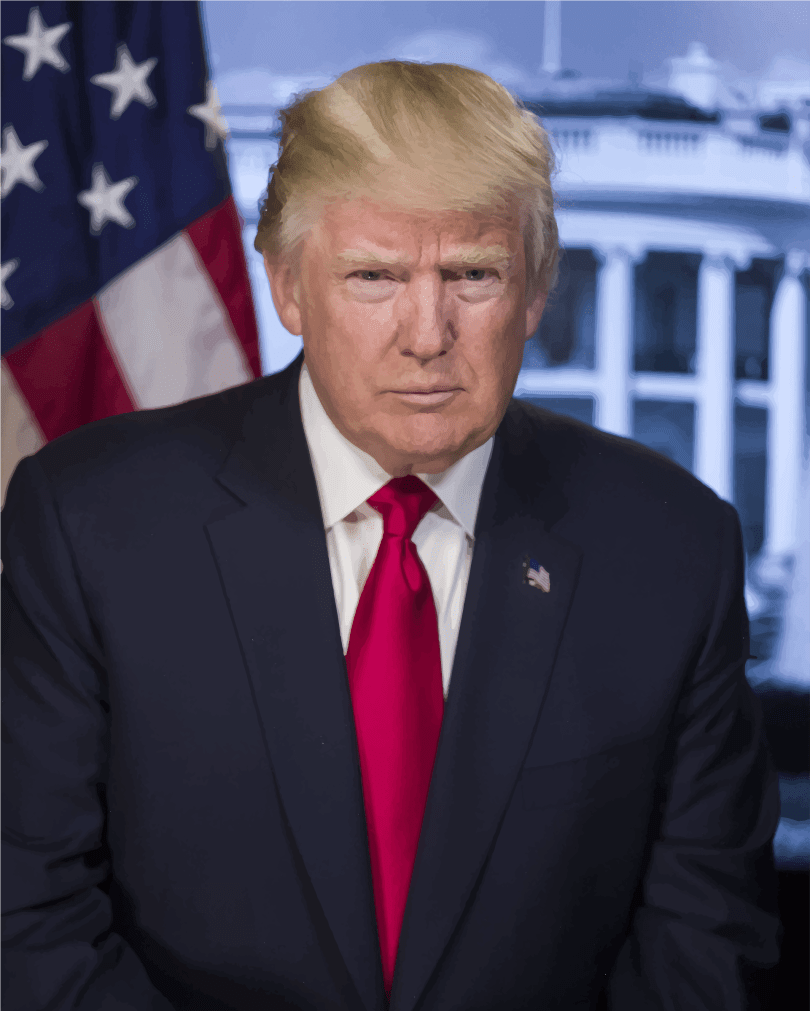
Trump’s Pages of Accomplishments

Looking at national polls and predictions, it’s easy to get discouraged about President Trump’s reelection prospects.  Even with Joe Biden losing his mind, and the pick of a radical, authoritarian Kamala Harris as his running mate, “Sleepy Joe” is managing to stay up by hunkering down.

On our side there’s grumbling that Trump hasn’t done enough—on immigration, on law and order—and those aren’t entirely warrantless grumbles.  Republicans squandered—perhaps intentionally—an opportunity to fund the construction of the border wall while they controlled both chambers of Congress.  John McCain pompously and vindictively voted to keep the odious Affordable Care Act in place, a clear parting shot at Trump.  Trump did not seem to offer a robust response to the CHAZ/CHOP fiasco, but is now belatedly defending federal property in Portland, Oregon.

Those critiques aside, it’s worth remembering what Trump has accomplished—and he wants you to be reminded.  That’s why he gave Breitbart a six-page document of his achievements.  They are substantial—and make him one of the greatest presidents of the last fifty years.

Read More »

Trump Takes Action on Big Tech

President Trump finally did it—after years of calls from blackballed conservatives, GEOTUS signed an executive order yesterday removing liability protections for social media companies that censor users based on their political views.

Here is a lengthy excerpt from Fox News‘s reporting:

The president’s order, which also cuts federal funding for social media platforms that censor users’ political views, came just two days after Twitter took the unprecedented step of slapping a “misleading” warning label on two of Trump’s tweets concerning the fraud risks of nationwide mail-in balloting. The move immediately backfired: Experts disputed that Trump’s tweet was actually misleading, in part because mail-in balloting has been linked to ongoing fraud; Twitter’s fact-check itself contained false statements; and Twitter failed to apply the standard of review to other users.

At Thursday’s signing ceremony, Trump called the fact-check “egregious,” and held up a photo of Twitter executive Yoel Roth, who heads up the site’s fact-checking and rules-making operation. Fox News reported on Wednesday that Roth has mocked Trump supporters, called Trump’s team “ACTUAL NAZIS,” slammed “scary trannies” in New York City, and called GOP Senate Majority Leader Mitch McConnell a “bag of farts.” (In a statement, Twitter did not dispute Fox News’ reporting, but called it “unfortunate.”)

“My executive order calls for new regulations under Section 230 of the Communications Decency Act to make it so that social media companies that engage in censoring any political conduct will not be able to keep their liability shield,” the president said.

Essentially, social media platforms have always had a choice:  either act as a publisher, in which case you’re liable for what users post, but you can remove and censor content as you see fit; or act as a neutral platform, in which case you’re protected from liability for what users post.  Twitter, Facebook, et. al., are trying to have the best of both worlds—ban political posts and users with which they disagree under the companies’ “Terms of Services,” while disclaiming responsibility for everything else.

Read More »

Free Speech in the Private Sector

Assaults on free speech may be the most pressing issue of our time.  Anyone reading this blog has surely witnessed the deplatforming of conservative figures under nebulous “community guidelines,” as well as the personal and professional ruin that tend to follow.

Indeed, I occasionally fear that my dashed-off ramblings might, in some none-too-distant Orwellian America, be misinterpreted or misapplied as “hate speech”—all it takes is the wrong person complaining.  Of course, this blog’s obscurity is perhaps my best defense—I’m too small to matter.  That said, that fear is one reason I’m pumping up alternative income streams and attempting to boost my SubscribeStar subscriber base; the authoritarian maw of the SJWs grows ever wider.

Read More »

Idaho’s Regulatory Reset

You can now support TPP at SubscribeStar.  Your support is appreciated, and makes daily posts possible.  Thank you!

The big, exciting news in conservatism this week is the sunsetting of all of Idaho’s state regulations.

It’s a curious situation:  all of Idaho’s regulations sunset annually, but the Idaho State Legislature usually renews all of them as a matter of course.  This year, after a contentious legislative sessions, the legislature failed to reauthorize the regulations, so the entire body of state regulations expires on 1 July 2019.

Libertarians and small government conservatives are rejoicing, and this retirement is, indeed, revolutionary—it’s essentially an opportunity to “reset” the State’s regulatory regime, starting from scratch.  That will provide a great deal of opportunity to reinstate what worked in a regulatory sense, and to keep the rest of the chaff on the threshing floor.

The Mercatus Center’s piece on the Idaho situation also points to another welcome change:  the burden of proof now shifts to new regulations, rather than those seeking the repeal of old ones:

Governor Brad Little, sworn into office in January, already had a nascent red tape cutting effort underway, but the impending regulatory cliff creates some new dynamics. Previously, each rule the governor wanted cut would have had to be justified as a new rulemaking action; now, every regulation that agencies want to keep has to be justified. The burden of proof has switched.

An enduring frustration for legislators seeking to cut regulations must be the “Helen Lovejoy Effect“:  constant emotional appeals that cutting or revising this or that rule will breed dire consequences of catastrophic, apocalyptic proportions.  The Idaho legislature’s fortunate lapse in consensus has flipped the script.

Another item of note here:  it’s intriguingly paradoxical how legislative disagreement and gridlock ultimately brought about an opportunity for real reform.  While most legislative gridlock seldom ends with such dramatically positive results, this situation demonstrates the usefulness of hung legislatures:  sometimes, getting nothing done is preferable to getting something destructive done.

From the perspective of liberty, a government not taking action is often the better outcome.  That’s why conservatives were so rankled when President Obama promised to govern via executive fiat (“I have a pen and a phone”) on the grounds that congressional gridlock necessitated such drastic action.  The Framers of the Constitution baked inefficiency into the cake:  our national legislature is supposed to act slowly and deliberately.

Of course, the total repeal of all regulations is not all sunshine and unicorn hugs.  Contra hardcore libertarians, some regulations are useful, and their benefits far exceed their costs (although the opposite is often likelier).  The challenge for Idahoans is to figure out how to get back the useful regulations without reinstating the corrosive ones.  To quote the Mercatus Center again:

The main constraint now facing Idaho state agencies is time—they could use more of it. Regulators have just two months to decide which rules should stay and which should go. With more time, they might be able to tweak and modernize those regulations deemed necessary; instead, many rules may simply be readopted without changes.

So, in the haste to reinstate beneficent regulations, the detrimental ones could also get thrown back in.  If that happens, Idaho will have squandered a virtually unprecedented opportunity to remake its regulatory regime into a more streamlined, pro-liberty apparatus.

If, however, Idaho can pull it off, it will serve as a model to other States looking to streamline their regulatory agencies and services.  That’s a promising outcome, and one that all lovers of small- and limited-government should endorse.

Support TPP at SubscribeStar.

Banned! Techno-Elites Deplatform Alex Jones

The explosive news Monday was that tech giants Facebook, Spotify, YouTube, and Apple banned Alex Jones and Infowars from their respective platforms.  While Jones is a controversial figure who peddles in rumor, conspiracy, and innuendo, the concerted action from separately-owned and -managed Silicon Valley entities is unsettling.

Historian Victor Davis Hanson wrote a piece for National Review arguing that Silicon Valley giants should be regulated—or even busted up—to prevent monopolistic and anti-competitive practices, drawing parallels to the muckraking reformers of the early twentieth century who brought down Standard Oil.   I’m wary of such solutions-by-government, but Hanson was anticipating a problem that has become all-too familiar:  the massive social and cultural clout the unmoored tech giants wield.

Steven Crowder of online late-night show Louder with Crowder often pokes fun at—and complains loudly about—the various murky “terms and services” and “community guidelines” rules that are ever-shifting in continuously updated apps and platforms.  A slight change in a Facebook algorithm—or a Twitter employee having a bad day—can lead to massive reductions in traffic for a YouTuber or blogger.  Reduced—or eliminated—traffic means less revenue.  YouTubers like Crowder who helped build the platform now find their videos demonetized for the most mysterious of reasons.

Candace Owens was kicked from Twitter because she rewrote recent New York Times hire and anti-white racist Sarah Jeong’s tweets by replacing disparaging uses of “white” with “black” or “Jew.”  Razorfirst posted a video some months ago of him literally just talking about nonsense for five minutes… and it was immediately demonetized.

Now Alex Jones is banned across multiple platforms from multiple platforms—which is absolutely chilling.  Jones is certainly not without controversy, and I wouldn’t take his ramblings to heart without a heaping helping of salt, but just because he’s a kinda nutty conspiracy kook who enjoys ripping his shirt off doesn’t make his situation any less terrible.  If we write off Jones because he was “asking for it” by being kooky, then we’re missing the whole point of free speech.

And, yes, the usual objections are inevitable:  “but, TPP, the First Amendment speech protections only apply to the government!  Companies can set whatever guidelines they want!  You can use some other platform!  He still has his website.”  Yes, yes, yes, and yes—all true.  Nevertheless, the arbitrary power we’ve voluntarily—if unwittingly—yielded to these tech elites is staggering.  And this preponderance of power may be where Hanson has a point.

Is not the function of the government to protect the rights of its citizens from threats and violations, both foreign and domestic?  In this case, arbitrary bans—particularly these coordinated attacks on controversial figures—seem to be a powerful means of preventing an individual and/or entity from delivering his message in the public square.  Like the street corner doomsayer, Alex Jones has a right to be heard, even if he’s sometimes insane (for me, the jury is out on Jones; I enjoy the entertainment value of his commentary, and I think he’s probably right about 80% of the time, but then he veers off into crisis actors, etc.—the danger of a man who is charismatic and convincing).

Today, it’s a relatively buffoonish character like Jones.  Tomorrow—who knows?  Do we really want to find out?  “Hate speech” is a code word for silencing conservatives.  It’s better to publish one racist screed from a lonely nut (not referencing Jones here, to be clear) than to muzzle millions because their innocuous, mainstream conservative viewpoint might been interpreted as a “dog-whistle.”

Sunlight is the best disinfectant, and it’s often better to give madmen the rope with which to hang themselves.  When we try to silence them, they only gain in credibility (indeed, when I read the news, I immediately went… to Infowars!).