Lazy Sunday LXI: The Tuck

You can’t cuck him—Tucker Carlson, that is, the pie-faced Fox News host with an infectiously boyish laugh and a gift for destroying Leftist shibboleths.

Tucker Carlson says that he’s not a populist—he’s an elitist—but that our current elites aren’t up to the job.  Further, they’re not even doing the job correctly; that is, our elites aren’t looking out for the interests of the people they govern, which is pretty much their only job.  Instead, they’re working for their own interests at our expense.

Well, that’s good enough for me.  An elitist on the outs with our current crop of “elites” is a populist in my book.  Carlson’s commentary certainly suggests as such.  This look back at my posts about his ideas will demonstrate that:

  • Tucker Carlson’s Diagnosis” (and “TBT: Tucker Carlson’s Diagnosis“) – This post was about a monologue Tucker gave in early 2019 (I think the monologue was actually delivered on my birthday).  That monologue really opened my eyes to the folly of pursuing economic efficiency at all costs.  A key quote from The Tuck:  “We are ruled by mercenaries, who feel no long-term obligation to the people they rule.”
  • You Can’t Cuck the Tuck” – This short piece was about “some cheeky remarks” Tucker made on a raunchy radio show over a decade ago—true but politically-incorrect statements not to be uttered in polite company (or where the social justice commissars can hear).  Rather than issuing a whimpering apology, The Tuck demonstrated his uncuckability and refused to apologize.  He’s still pulling in three million eyeballs a night.
  • You Can’t Cuck the Tuck: Immigration” – Another short post; in this one, Tucker calls out the folly of unlimited immigration of people who hate the United States, and points to Somalian immigrant Ilhan Omar as a “living fire alarm” to the American people.  Let’s wake up and ban immigration from places and cultures that hate everything we love.
  • Tucker Carlson’s Platform for Victory in 2020” – A sobering bit here from Tucker:  in order to win in 2020, Trump and Republicans need to improve people’s lives.  Tucker’s key insight is that whichever candidate and/or party makes it easier for a thirty-year old to get married and own a home is the candidate that is going to win in 2020.  Get on it, Republicans!
  • You Can’t Cuck the Tuck III: Liberty in The Age of The Virus” – I was worked up when I wrote this post, as was Tucker.  We keep watching our liberty die in exchange for the illusion of safety.  Tucker, in true fashion, offers a full-throated defense of liberty, and denounces the incompetent “experts” who keep insisting that we cower in fear.

That’s it for this weekend!  It’s Mother’s Day, so be sure to give Mom a call.

Happy Mother’s Day!

—TPP

Other Lazy Sunday Installments:

TBT: Election Results 2019

We’re in the midst of primary season—the most wonderful time of the year, until you realize that one of these jokers could become president—so I thought I’d look back to the results from the 2019 elections.  That’s an off-year election, but there are some important lessons from then.

The post below, “Election Results 2019,” largely focused on the Lamar Town Council elections.  My strategy was to vote for the two challengers, because the town government really dropped the ball on doing routine DHEC water tests (although our mayor—bless her heart—has been trying to resolve the issue).  I also intuited that one of the challengers would likely be a Republican/conservative, for reasons too politically incorrect to write here.

The big takeaway from the 2019 election is that if you let Democrats gain a monopoly on power, they will abuse it immediately.  That’s been the story of Virginia, a once-deep-red State that has gone quite blue, due to the preponderance of progressive population poured into Northern Virginia.

The legislature wasted little time in promising to ban and confiscate guns en masse.  That act of totalitarian pique may very well turn the State red in November, as the Trumpian masses have been jolted from their slumber.

We shall see.  But the moral is clear:  don’t give progressives power.  And we have to assume that every Democrat is a progressive.  A conservative Democrat is a unicorn in 2020.  This message is for those squishy suburban moms and “decorum” obsessed NeverTrumpers who think they’ll enjoy political moderation under a Democratic regime.

Don’t make the same mistake twice.  Vote Republican/Trumpian/populist/nationalist/conservative/immigration patriotic this November.  Your country is counting on you!

Yesterday Lamar, South Carolina held elections for Town Council.  Since our local paper doesn’t seem to be putting the results online, I thought I would post them here.

I drove by Town Hall last night to check the results, but they were still working on finalizing the results when I drove by, and I lacked the will to drag myself out of the house again.  But I swung by this morning and photographed the official receipt from the machine, as well as the handwritten results (akin to a student council election), which were posted to the front door:

My strategy of voting for the challengers in a “Jacksonian spirit of rotation in office” failed, as the two incumbents sailed to reelection.  As such, Town Council is unchanged.

Nationally, Republicans dominated races in Mississippi and Kentucky, except for the Kentucky governor’s race, which the Democrats won in a squeaker.  They won in part due to the incumbent governor’s unpopularity, but also because of the Libertarian spoiler, who siphoned enough votes away from the Republican to cost conservatives the election by about 5000 votes.  Thanks a lot, Libertarians—you cost conservatism a gubernatorial election (which the Dems will hold up as proof that Trump is losing support) for… what?  Getting John Hick’s name in the papers?  We’re at war with progressives, and all you care about is smoking weed naked.

Unfortunately, Virginia has fallen completely to the Democrats.  That’s not too surprising, given the swamp creatures in northern Virginia, but it’s sad to see the ancient bastion of Southern liberty fall to big government apparatchiks.

That’s it for today—a quick public service post.  Hopefully the good folks of Lamar can get the results without having to drive downtown now.

SubscribeStar Saturday: A Banner Week for Populism

Today’s post is a SubscribeStar Saturday exclusive.  To read the full post, subscribe to my SubscribeStar page for $1 a month or more.  For a full rundown of everything your subscription gets, click here.

It was a banner week for populism and national sovereignty.  At the time of this writing, it appears that the sham impeachment trial against President Trump is headed for a speedy acquittal, with the Senate voting 51-49 against hearing any further testimony from new witnesses.  Here’s hoping that complacent Republican voters get the message:  the Democrats will concoct any whimsy necessary to destroy not only President Trump, but any Republican who dares to challenge their progressive hegemony.  We can’t afford to let these people control a local PTA chapter, much less a chamber of Congress.

Across the pond, the British quest for independence from the managerial-authoritarian clutches of the European Union is finally complete.  After three-plus years of wrangling—and progressive attempts to overturn a fair referendum—Great Britain is finally free again.

The battle is far from over—indeed, it never is—but we could be witnessing a new birth of freedom and national sovereignty around the globe.

To read the rest of this post, subscribe to my SubscribeStar page for $1 a month or more.

TBT: Tucker Carlson’s Diagnosis

This week’s TBT looks back to a piece I wrote in January 2019 that summarized a segment Tucker Carlson did on his wildly popular show.  That segment really shaped my thinking on some economic and social issues (although other commentators and writers were already influencing my thinking in that direction).

Earlier this week, I wrote a piece about another Tucker segment that applied these concerns into a political platform, of sorts, one that moves beyond economic growth to real improvement for people’s lives.

This blog post was a bit shorter, so I’ll allow it to speak for itself.  It’s definitely worth watching the linked video in the piece, as it is the segment the post covers.

Here is January 2019’s “Tucker Carlson’s Diagnosis“:

recent monologue from Tucker Carlson’s Fox News program is blowing up the right-wing blogosphere, and understandably so.  Carlson has been a vocal critic of the neoliberal deification of economic efficiency at all costs.  I used to be a member of this cult, until the candidacy of Donald Trump (and lived experience) knocked the idealistic scales from my eyes.

Normally, it bugs me when people send me video clips to watch.  If they’re cutesy videos of the variety that drive clicks—think cats playing piano, or Goth versions of Christmas songs—I usually ignore them, no matter how hyped they are.  That’s not some virtue on my part; I just don’t want to take the time to watch them, especially on a cell phone (a pet peeve:  someone making me watch a video on their cell phone; I will refuse).

That said, I’m indulging in some hypocrisy:  you must watch this video as soon as you’re able.

For those of you that don’t want to take the time, here are some highlights:

  • Elites care only about maximizing economic efficiency, regardless of the human costs to individuals, families, and communities
  • That lust for efficiency drives income inequality, particularly benefiting the technology sector/Silicon Valley
  • “We are ruled by mercenaries, who feel no long-term obligation to the people they rule”—a key idea; I’ve read a similar analysis from controversial blogger Z-Man, in which he argues that leaders in a democracy are, inherently, renters rather than owners, and therefore are heavily tempted towards asset-stripping while in office, rather than building and maintaining a nation:  http://thezman.com/wordpress/?p=15929
  • Because of the hollowing out of American manufacturing and declining wages (again, due in part to the quest for efficiency), men struggle to find employment or to improve their wages
    • Because of that, rural parts of the country are dominated increasingly by healthcare and education, female-dominated fields
    • While better wages for women is fine, Carlson claims that—whether or not they should—women are less likely to marry men who earn less than them, therefore

These are just some of the most interesting insights, but Carlson sums up in fifteen minutes what would take a legion of hack bloggers like me hours or weeks to explain.

Again, I urge you to watch this video:  https://video.foxnews.com/v/5985464569001/?playlist_id=5198073478001#sp=show-clips

Tucker Carlson’s Platform for Victory in 2020

Tucker Carlson is the gift that keeps on giving.  In a segment from last week, the populist-friendly television host offered up a winning strategy for President Trump—and a warning.

In essence:  while economic numbers are very good, many of Trump’s base of supporters—the working and middle classes—are still struggling, or at least perceive that they are.  In a longer piece from Joel Kotkin (also on Carlson’s Daily Caller website), the author argues that the tensions between the Trumpian lower classes and the ascendant upper class is akin to the friction between the French Third Estate (the commoners) and the First and Second Estates (the aristocracy and the clergy) just prior to the French Revolution.

Read More »

Lazy Sunday XXIX: The New Criterion

Conservatives, especially conservative writers and publishers, tend to get so fixated on policy wonkery and political debates, we sometimes lose sight of culture.  One reason I appreciate blogger buddy photog’s blog, Orion’s Cold Fire, so much is that he makes room for reviews of sci-fi novels, Twilight Zone episodes, and the like.

One publication that makes culture the centerpiece of its mission is The New Criterion, which takes the idea of reviewing the best in art, literature, music, and drama very seriously.  I recently re-subscribed TNC after having a lapsed subscription for a couple of years, and I’m eager to get my first issue in forty-eight weeks.

With that in mind, this week’s Lazy Sunday is dedicated to pieces the writers at The New Criterion inspired:

  • Civilization is Worth It” – This piece discusses an excellent audio version of a piece about Rousseau’s ideas regarding civilization (that is to say, Rousseau argued civilization was the cause of all of our problems, and we were better of dancing around naked in caves).  It’s definitely worth a listen.
  • E.T.A. Hoffman & Romanticism” – This very short post covered a charming little essay about E.T.A. Hoffman, arguably the founder of the Romantic movement in literature, as well as a brief discussion of the consequences, both positive and negative, of the Romantic temperament, and the idea of the brooding, troubled artist.
  • The League of Nations” – Trans- and supranational organizations were all the rage in the twentieth century, and the League of Nations was the first—and the biggest flop—in this do-gooding, globalist trend.  The League of Nations was famously ineffective, which just meant we’d be saddled with an even worse organization, the United Nations, after the League failed to prevent the Second World War.  Now the European Union is creating a tyrannical empire of Belgian bureaucrats in the name of preventing a tyrannical empire of German bureaucrats from trying to conquer Europe again.  Yeesh.
  • The Good Populism” – The counter to the aforementioned tyrannical transnational organizations is good, healthy populism, the kind of middle-class, conservative revolutions that brought us the Declaration of Independence, the Constitution, and Donald Trump (among others).  Super historian and classicist Victor Davis Hanson makes the case for the “good populism,” as opposed to Bernie Bro socialistic populism, in this piece, one of the most popular TNC published in 2018.
  • New Criterion on Principles in Politics” – What’s more important—principles or victory?  That’s not exactly the gist of this piece, but it does examine the tricky debate taking place among the Right currently about how to handle deranged Leftists.  What are the limits of principles?  The David French model of always surrendering—but being polite while doing so—is clearly not an effective way to uphold conservative principles.

That’s it for this Sunday.  Enjoy some erudite cultural criticism!

–TPP

Other Lazy Sunday Installments:

The Boiling Potential of the Right

Blogger photog at Orion’s Cold Fire—the gift that keeps on giving—has yet another excellent post examining the state of the Right today.  In particular, photog poses the question:  “How Will the Deplorables Get Organized?

photog uses the analogy of a sword forged from various “metals”—parts of the coalition of the Right and the non-progressive side of politics.  His argument is that, during the Cold War, some metals were included in this grand alloy that didn’t blend well with the others, but they forged together well enough to make the sword that vanquished Communism.

However, those poorly-blended alloys—which he identifies as the GOP Establishment of Conservatism, Inc.—weakened the sword in a post-Cold War context, making the weapon ineffective.  A new metallurgist—photog doesn’t name who this is, but I suspect he means Trump, or perhaps the Trumpian Right—has discarded those unassimilable lumps, and has brought back in some of the metals that were rejected in the old days (the paleoconservatives, for example).

The new sword is still being forged; right now, it’s all boiling, kinetic potential, but it hasn’t hardened into cold, steely weapon capable of dealing a death blow to progressive lunacy.  The challenge, as photog sees it, is to bring together this energetic, chaotic new coalition into a disciplined, populist-nationalist (my words, not photog’s) movement with coherent aims.

Of course, photog notes it will not be easy.  Here’s a key passage from his post:

I’ve said that it needs to be done but I’m not trying to kid anyone into thinking it will be easy.  When I said that the New Right is like a boiling pot I wasn’t kidding.  Chaos and kinetic energy are the only rules and there is absolutely no consensus between the various groups that make it up.  They range from radical separatists who are busy storing ammo for the shooting war, to Tea Party civic nationalists who can’t figure out why John McCain didn’t get elected in 2008, to religious businessmen who want the government to stop persecuting them for their beliefs, to Rust Belt forgotten men who want to stop the globalists from putting the last nail into their economic coffins.  Herding cats would be a cakewalk in comparison.  But it will need to be done if we hope to avoid being back at the mercy of the Stupid Party.

In short, the task ahead is difficult, but necessary.  Otherwise, cucky GOPe figures will come back into control, and the Republican Party will continue to be controlled opposition.

That’s another key point that photog makes, and with which I strongly agree:  a third party is suicide.  The Trumpian Right has to take control of the Republican Party.  Trump’s brilliance as that he ran a third party campaign inside one of the two major parties.  He has been at least partially successful in turning the Republican Party into a vehicle for his policies, but GOP swells have also reined in the President.

Regardless, it’s crucial that Trump wins in 2020 if we want to see the hardening of this boiling new coalition.  If Trump loses, the clucking scolds of National Review, et. al., will waste no time in saying, “we told you so!”  It may be a generation again before a populist Republican has a shot again at the highest office in the land—we’ll be consigned to thirty years of cucky Bush-cons losing meekly to increasingly insane Democrats.

On the other hand, if Trump wins, we have a golden opportunity to cement the roiling new coalition into something enduring—an FDR-style grand realignment.

2020 is going to be an interesting year.

Reblog: Conan the Southerner?

I’m heading back from a glorious week in New Jersey today to return to my beloved South Carolina.  It was serendipitous, then, that I read this piece from the Abbeville Institute, “Conan the Southerner?

I recently stumbled upon the Abbeville Institute while doing some research on John Randolph of Roanoke for my History of Conservative Thought course.  It’s an institute dedicated to Southern history, and to presenting a more nuanced interpretation of the antebellum South.  Their blog features some dense, interesting bits of Southern history (I’m reading through a long-ish essay on “The South Carolina Federalists” that has taught me a great deal more about my State’s history in the period of the Early Republic), and champions constitutionalism, limited government, and a traditional way of life.

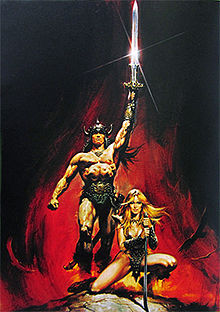
The Conan piece is an excellent—and fun—analysis of the Conan the Barbarian series of low-fantasy pulp novels, focusing on Conan creator Robert E. Howard and his Jacksonian roots in Texas.  The post’s author, Marine Corps Lieutenant Colonel Joel T. Leggett, argues that Howard’s Conan is a modern example of American mythology, one with distinctively Southern roots.

The essay is also useful as it offers a clear definition of Jacksonian principles, via historian Walter Russell Meade.  As we continue to attempt to define “populism” in the midst of Trumpian nationalism, I always relish a concise definition of the principles of the godfather of American populism, Andrew Jackson.

Meade, per Leggett, defines these principles as “self-reliance, equality, individualism, financial adventurism, and courage.”  Leggett then proceeds to demonstrate how the character of Conan embodies these qualities, and that Howard was chiefly concerned with promoting individual liberty.

That part of the essay is, for me, the most useful and enjoyable.  The qualities are certainly deeply American—and deeply Southern.  The “equality” is not the banal egalitarianism of our present age, which seeks to level off everything and everyone into conformist blandness, but the old equality of opportunity, in which every man can forge his destiny.

Tied with that is the notion of “financial adventurism.”  Leggett notes that Meade argued that “Jacksonians view money and wealth as a means to finance a lifestyle of self-definition.  The value of wealth is to enable you to be you, to live life to its fullest.”  This notion of financing “a lifestyle of self-definition” accords with my own long-term financial goals.  It also seems to be the direction that “free” speech is headed:  to exercise this right truly, one must have financial independence from social justice scolds.

And this, for Leggett, seems to be the core of Conan’s Southern Jacksonianism:  a desire for individual liberty, for a man to be able to live his life on his own terms.  Howard might have wrapped that ideal in a burly barbarian warrior-king who rose to rule a kingdom due to his own prowess, but it’s one every American should aspire towards.  In this way, Leggett makes a compelling case for Conan the Barbarian as a valuable piece of American mythology.

Ted Cruz on Ben Shapiro

It was a glorious weekend at Casa de Portly, deep in the heart of Dixie.  It was the kind of weekend that saw a lot of non-blog- and non-work-related productivity; in other words, I loafed a great deal, then did domestic chores around the house.

In case you missed it, on Saturday I released my Summer Reading List 2019.  If you want to read the whole list—and it’s quite good—you have to subscribe to my SubscribeStar page at the $1 level or higher.  There will be new, subscriber-exclusive content there every Saturday, so your subscription will continually increase in value.

Anyway, all that loafing and cleaning meant that I was unplugged from politics.  I did, however, manage to catch the Ben Shapiro Show “Sunday Special” with Texas Senator Ted Cruz.

I was a big fan of Cruz in the 2016 Republican presidential primaries, and I voted for him here in South Carolina.  Cruz intuited the populist mood of the electorate the way that President Trump did, and combined it with policy innovation and constitutionalism.

There’s a reason Cruz hung in there as long as he did against Trump:  he’s a canny political operator, but he also knew how to pitch a conservative message that was appealing to many voters.  I sincerely believe that had he clinched the nomination, he would have won the 2016 election (and, perhaps, by an even wider Electoral College margin than did Trump).

Cruz catches a lot of flack because he’s a little dopey and looks odd—a whole meme emerged in 2015-2016 claiming that Cruz was the Zodiac Killer—but he’s been an influential voice in the Senate.  He possesses a supple, clever mind, and has urged Republicans to make some bold, innovative reforms to the Senate (he vocally champions and has proposed a constitutional amendment for congressional term limits).

The hour-long interview with Ben Shapiro—which opens with a question about his alleged identity as the Zodiac Killer—shows how affable and relaxed Cruz really is.  I’ve never seen him appear more relaxed and genuine (and I never took him for a phony—I’ve seen him speak live at least once at a campaign rally in Florence, and spoke very briefly to him afterwards) than in this interview.

Granted, it’s friendly territory—Shapiro was a big supporter of Cruz in the primaries—but Cruz spelled out some important ideas, as well as his projections for 2020.  If you don’t have a full hour, fast forward to about the forty-minute mark for his discussion of Trump’s reelection prospects.

To summarize them briefly:  Cruz thinks it all comes out to turnout, and that Democrats will “crawl over broken glass” to vote against Trump.  He even points out that his own race against Democrat Robert Francis “Beto” O’Rourke was as close as it was because Beto ran against Trump more than he did against Cruz.  He also thinks Joe Biden is going to flame out, and one of the more radical, progressive Dems will clinch the nomination, making the prospect of a truly socialistic administration terrifyingly possible.

That said, Cruz is optimistic.  Discussing his own narrow victory over Beto in 2018, he points out Beto’s massive fundraising and staffing advantages (Cruz had eighteen paid staffers on his campaign; Beto had 805!), but explains that a barn-burning bus tour of the State of Texas pulled out conservative and middle-class voters in a big way for his reelection.

That points to one of Trump’s strengths:  the relentless pace with which he campaigns.  Trump held three and even four rallies a day in key battleground States in the final days of the 2016 election, which likely made the difference in Michigan, Wisconsin, and the Great White Whale of Republican presidential elections since the 1980s, Pennsylvania.  If Trump can get his pro-growth, pro-American message out there as effectively in 2020 as he did in 2016 and can excite voters who want to protect their nation and their prosperity, he could cruise to reelection.

Cruz’s optimism, tempered by practical challenges ahead for Republicans, really came through in the video.  Really, the entire interview reminded me why I liked Ted Cruz so much the first time.  I’d love to see him remain a major presence throughout the next five years, and to see him run for the presidency again in 2024 (him, or Nikki Haley).

Regardless, I encourage you to listen to this interview.  Take Cruz’s warning to heart:  don’t get complacent, because the Democrats aren’t.

Lazy Sunday XI: Walls

Today’s post marks twenty weeks of consecutive daily posts—140 days in a row.  I’ve written so many posts, I’m beginning to forget that I ever wrote some of them.  If you’d to support my daily scribbling, consider subscribing to my page on SubscribeStar.

Walls work.  We understand this fact on a visceral level—humans have been building walls around their cities and kingdoms since the dawn of civilization, and continue building them today.  The Israelites rebuilt the Jerusalem’s walls as a form of national and spiritual renewal.

The only legitimate question regarding a border wall along the US-Mexican border is technical in nature:  how do you build an effective barrier along thousands of miles of varied terrain?  Technical questions are difficult to solve, but that doesn’t invalidate the effectiveness of a wall once it’s completed.  Further, even tricky engineering problems are solvable.

Indeed, many of the questions that plague our nation are not difficult to answer—it’s just that the answers are unpleasant, or politically inconvenient.  When a Democrat argues that the construction of a border wall is not feasible from engineering standpoint, it’s a smokescreen.  The progressives are only concerned about expanding their voting base on the cheap, while supplying their techno-elite masters with cheap, quasi-slave labor.

With that in mind, this week’s Lazy Sunday looks back at my posts on all things wall-related.  It’s a sign of our times that anyone has had to write even this much about walls:

  • Walls Work” – the title says it all.  This piece looked at a piece from American Thinker that pointed out dramatically how effective border barriers are.  When Israel constructed a wall along its border with Egypt, “it cut illegal immigration to zero.”  I emphasize that part of the quotation in the original blog post just to make sure no one misses it.  In cast the Israeli example isn’t convincing enough, consider that the…
  • Hungarian Border Wall is 100% Effective” – yep, Hungary built a fence along its border with Serbia in the second half of 2015.  The number of immigrants entering Hungary fell from 138,396 to fifteen.  Look at those figures again, numerically and side-by-side:  138,396 -> 15.  My knowledge of scientific notation has eroded too much to write out the exact percentage of that drop, but let’s call it 100% – 15.

    Granted, Israel and Hungary both enjoy relatively short borders compared to the southern border of the United States.  But the results speak for themselves.  The billions saved in medicating, educating, housing, and detaining illegal immigrants would be worth the one-time, up-front investment.  Aren’t progressives always lecturing us about government “investments”?  Further, the upward force on wages—no longer flooded with cheap labor from abroad—would create an additional return on this crucial national security investment.

  • Buchanan on the National Emergency” – in order to fund construction of the border wall, President Trump controversially declared a national emergency in February, which then allowed him to shift around existing national security funds to build a section of the wall.  Conservatives were, understandably, dubious and concerned about this executive action, which they feared constituted executive overreach in the vein of President Obama’s “phone and a pen” rule by fiat.

    Pat Buchanan—ever the lucid, original thinker—takes Congress, not President Trump, to task.  As I point out in this piece, Buchanan argues that the president was merely using authority Congress granted him in the National Emergencies Act of 1976.

    And as I argued in the first essay on this list, President Trump has a constitutional duty to protect national security under his Article II powers.

  • Nehemiah and National Renewal” – this essay was the first of a two-part analysis of the Book of Nehemiah, and has been featured on Lazy Sunday lists before.  In this essay, I argue that, just as rebuilding Jerusalem’s walls was an act of national renewal for the Israelites, so building a border wall would be a firm sign of America’s renewed commitment to its values and sovereignty.  Of all the essays on this list, it’s the one I most recommend you read.
  • Walls Work, Part II: Sailer on Walls” – this post covered a book review by Steve Sailer, a recent feature of my “Dissident Write II” list of great writers.  Sailer reviewed Walls: A History of Civilization in Blood and Brick, by David Frye, which makes a compelling case that walls protect civilization, allow for civilization, and create stable societies.

    America enjoyed the luxury of two moats—the Atlantic and Pacific Oceans—for 150 years, before naval and aerial technology took those natural barriers away.  Now, we face a sinister, because subtle, existential threat in the form of mass illegal immigration.  A border barrier is one key step in stemming the flow—and of preserving our civilization.

    I’m hoping to pick up Frye’s book soon, and plan to write a detailed review of my own.  That review will likely be a SubscribeStar exclusive.

Enjoy your Sunday, and remember that “good fences make good neighbors.”

–TPP

Other Lazy Sunday Installments: