Monday Morning Movie Review: Stigmata (1999)

Our senior correspondent Audre Myers has been asking for a review of today’s film, Stigmata (1999), for at least a year now.  I can’t recall what prompted the initial request at this point, but it did engender some minor controversy from Ponty, who immediately expressed his disdain for the film.

We’ve been here before with Bicentennial Man (1999), a flick that Audre praised and Ponty panned (my take:  it’s pretty good, if a bit long).  So where will I fall this time around—Team Audre or Team Ponty?

Read More »

TBT: The Joys of Fasting

Yours portly had a particularly grueling school year last year, and I fell into my bad habit of overeating to cope with the stress.  Because of an unfortunate quirk in my schedule, I did not have time for lunch most day, which meant I would eat a large breakfast, then gorge myself during a morning planning period on whatever lunch I had packed.  I’d get home in the evenings very late and tired, and would proceed to eat even more.

Fortunately, I didn’t quite get to the “disgracefully fat 271.8 pounds” of the 2022-2023 school year, but I still chunked up a bit.  At the time of writing, I’m slowly dropping weight, and am down from about 260 pounds to around 252 pounds.

My approach, as always, is intermittent fasting and the elimination of most snacks.  Essentially, I skip breakfast; eat lunch around noon; and eat dinner around 6 PM.  If I have a particularly light lunch I might have a snack around 3 PM—a fig bar, for example—but that’s about it.

I’m not much of a “get-out-there-and-exercise” type, either, and with the brutal heat and humidity this summer, I’ve become quite sedentary, treating my house like it’s some kind of biodome habitat plopped onto the surface of Venus.  It reminds me of that Ray Bradbury short story, “All Summer in a Day,” in which Venusian schoolchildren only get two hours on the planet’s surface every seven years.

That’s how I’ve handled summer:  take Murphy out; go to lessons; do the bare minimum outside; get back inside.  It works, but I’ve become like George Costanza during “The Summer of George“—atrophying due to a lack of movement.

Well, I’ll be hoofing it again soon enough.

With that, here is 28 July 2023’s “The Joys of Fasting“:

Read More »

Guest Post: Brian Meredith: There’s No Such Thing as Bad Art

We have a new contributor here at The Portly Politico, a chap from jolly old England, Brian Meredith.  He’s a graphic designer by trade and is Internet friends with our own senior correspondent, Audre Myers.

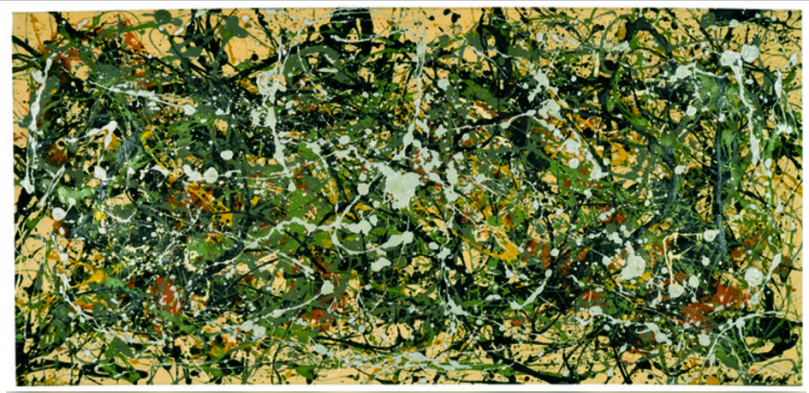
In this piece, “There’s No Such Thing as Bad Art,” Brian makes an essentially semantic argument:  if we glorify pieces we like or appreciate as “art,” we conversely consider “bad” pieces as “not art.”  Ergo, we cannot have “bad art” if art is definitionally whatever we define as “good.”

As Brian noted in an e-mail to me:  “I would like to make it clear that my intention was to write something about the use of language rather [than] about art itself and in particular the commonly-accepted assumption that the very idea of art confers status.”

It’s an interesting argument, and one that I think has its merits.  I disagree with the underlying premise, in that we can create things broadly termed “art” that are, indeed, quite poor in quality, either because of aesthetic choices or merely a lack of craftsmanship on the part of the artist.  There can be “art” of varying qualities.

But I think Brian is correct when we look at “art” as a term of social categorization—as a form of judgment.  In that regard, anything that we think is worthy of praise—even if from an objective or technical standpoint it is not very good—could be elevated to the status of “art,” as his argument is that society uses the term “art” almost exclusively as a term of praise.  As such, if enough rubes agree that, say, an ashtray is a work of art, it is merely laudatory “art,” and not “bad art,” which—again—cannot exist in this usage of the word.

That explains why there are plenty of poor craftspeople whose work is lauded as “art” because they are well-connected (as I have written about before on this blog).

Ultimately, this subjective, linguistic/definitional argument results in the kind of postmodern garbage we see coming out of art studios today.  I do not think Brian would agree with the sentiment he points out—he seems to be a diagnostician, not a physician, of this problem—but its existence is certainly real.  As such, because lay persons exclusively use the term “art” in a laudatory context, the result is that we do end up with a great deal of bad art, even if definitionally that’s impossible.

It’s an intriguing semantic argument, but like most semantic arguments, it seems like it too easily devolves into postmodern nonsense.  Again, I don’t think Brian is advocating for that, but is merely diagnosing the problem.

With that, here is Brian Meredith’s “There’s No Such Thing as Bad Art”:

Read More »

Monday Morning Movie Review: House on Haunted Hill (1959)

My blogger buddy photog at Orion’s Cold Fire posted last week about his favorite classic horror films, all of which are pre-1960.  It’s a great list, and one of his readers, War Pig, added in some more that go as late as the 1960s.  The black-and-white era was truly a golden age of horror, and many of the films on both lists holds up quite well.

The latest film chronologically on photog’s list is House on Haunted Hill (1959), a William Castle ghost story starring Vincent Price as a wealthy industrialist who offers cash-starved party guests $10,000 each if they can survive the night in the titular spook house.

I just happened to watch House on Haunted Hill last Wednesday night (24 July 2024) on Shudder, and while watching it, stumbled upon photog’s list.  I’ve seen the film before, but it really struck me this time how spooky it is, perfectly setting the tone and feel of a classic, almost Victorian, ghost story.

It also helped that it was a literal “dark and stormy night” while watching it.  The crisp black-and-white cinematography, coupled with the brooding atmosphere, made for perfect ghostly viewing.

Read More »

Monday Morning Movie Review: The Shining (1980)

With the passing of Shelley Duvall earlier this month, Shudder has offered up The Shining (1980), one of the best horror films ever captured on celluloid.  Stanley Kubrick’s adaptation of Stephen King’s 1977 novelwhich King famously hated, until he didn’t—has been analyzed to death, but like the ghosts of the Overlook Hotel, yours portly will offer up his own humble exorcism of these now-familiar haunts.

Read More »

TBT: Spotify Theft: Another Indie Musician’s Rant

I’ve released a lot of music this year.  As of the time of writing, I’ve released six albums (Firefly Dance, Epistemology, Leftovers II, Four Mages, Advanced Funkification, and Heptadic Structure), with a seventh on the way in August.

You can listen to and/or purchase my latest album, Heptadic Structure, at the following links:

The astute observer will notice that Spotify is not listed there.  There’s a reason for that.  While several of my older releases are on the platform, I stopped releasing new music to the platform in 2024.  The reason:  for tracks with fewer than 1000 plays per year, Spotify will take any unpaid streaming royalties for those tracks and pay them to musicians who do reach that milestone.

Note that that is 1000 plays on a track, not 1000 plays total.  In other words, I could have 999 plays on every one of my tracks, but not receive a single dime in accumulated royalties.  If one song reached 1000 plays, great—I’d get royalties for that song, but not the other songs that fell short of the 1000 streams minimum.

It’s theft, plain and simple.  I can’t be a party to it, so I am no longer uploading to Spotify.

It sucks, because I like the platform overall, and it’s the most popular streaming platform in the world.  As such, I’m missing out on a huge potential audience.  But I cannot condone the service’s theft of hard-earned royalties from hardworking artists, no matter how small those royalties might be.

With that, here is 15 November 2023’s “Spotify Theft: Another Indie Musician’s Rant“:

Read More »

VP Vance: A Worthy Successor

After the usual will-they-won’t-they of the vice presidential selection drama, President Trump delivered yet again, picking Ohio Senator and Hillbilly Elegy author J.D. Vance as his running mate.

The Vance pick is symbolic on a number of levels.  As a US Senator, he has focused on improving the lives of the forgotten men and women that President Trump champions.  He has rejected the siren song of the Establishment Uniparty.  He is very clearly the conservative populist in the Senate.

I receive an e-mail newsletter from The New York Times each morning at my work e-mail.  I am not fan of The New York Times, but I likely signed up for it because I needed to access some article for my students.  Regardless, the Tuesday, 16 July edition of The Morning newsletter makes a claim with which I agree:  in picking Vance, Trump was, essentially, picking his successor.

Read More »

Monday Morning Movie Review: Oldboy (2003)

As I noted last week, the Koreans know what they’re doing when it comes to making movies.  Some of the best horror movies I’ve watched in recent years have been either Korean or South American (and Spanish filmmakers are up there, too).  Needless to say, I’ve been on a bit of a Korean film kick.

After last week’s review of 2024’s Exhuma, I took Ponty’s advice and watched Oldboy (2003).  As Ponty promised, it is one twisted film, but absolutely exquisite.  I can see why he dubbed it his “favourite Korean movie.”

Read More »

Monday Morning Movie Review: Exhuma (2024)

There must be magic in Korea—and, according to the subject of today’s Monday Morning Movie Review, there might actually be—because the Korean film industry just keeps hitting homeruns.  Since the release of the Oscar-winning Parasite (2019) and the smash series Squid Game (2021), South Korean movies and television shows have been on the West’s radar.

Koreans seem to excel in the horror genre; indeed, I’d argue that both Parasite and Squid Game, while not precisely “horror” films, certainly have very strong horror and thriller elements.  They’re good, too, at putting messages into their art that feel both timely and organic, but never overtly preachy; Parasite and Squid Game both touched on issues of class, for example.

This week’s film, 2024’s Exhuma, is overtly a horror film, and also has a message embedded within it, as most horror does.  Instead of pointing out the disparities of class, however, Exhuma is a thoroughly nationalist film, in the way that East Asian nations embrace their national identities with a deep, ancestral reverence.

More importantly, it is an excellent—and scary!—film.

Read More »

Myersvision: Cryptid Epistemology – A Possible Second Chapter

On Wednesday I posted a piece entitled “Cryptid Epistemology,” which was more about academics’ desperate attempt to monopolize “truth” through a campaign against “disinformation” more than it was about searching for Bigfoot.  That said, the two topics are intertwined, and the piece is an exploration of why access to information, and the ability to parse and analyze that information, is so important.

What I admire about the more humble and intellectually honest side of the cryptid community is that they are open to the possibility that we don’t know everything.  Indeed, they carefully sift through thousands of hours of footage, interviews, blog posts, books, etc., in search of gold.  That they often come away with pyrite does not discourage them; instead, they keep looking, gently setting aside the few nuggets they find for further evaluation.

Maybe Bigfoot exists—maybe he doesn’t.  What’s important is that these folks, so often dismissed as kooks, are sharpening their minds and engaging in intense analysis of thousands of data points.  They are making healthy skeptics of themselves, even as they search for something at which most skeptics would scoff.

Who, I ask, is the real kook?  So many self-proclaimed “skeptics” are merely parroting the very same narrative that was spoon-fed to them in a high school history class, or in their freshman philosophy course at college.  They often do so with an air of condescension and derision, the sort of know-it-all-ism that derives from an excess of education but a dearth of wisdom.

The older I get, the more I realize how precious little any of us know.  Things that were taught to me as inerrant “truth” have turned out to be a vast panoply of lies and half-truths, assembled into a shambolic, Frankensteinian mess for the benefit of the government and corporations.

To give one rather benign but illustrative example, before I turn it over to Audre Myers:  as a kid, my elementary school teachers would, it seemed to me, forcefully and a bit angrily insist that the United States was moving to the metric system, and we’d all need to learn it so we could cope in a post-Imperial units world.  It was all nonsense, and even as little kids we all kind of knew it was a bit overblown.  Had our teachers said, “the metric system is important to learn because it is the standard in scientific research,” it would have been a.) truthful and b.) productive.  Instead, they tried to terrify us into thinking we’d all be European, holding our cigarettes like gay men and speaking Esperanto (yes, another lie they told us in elementary school).

To be fair, things that I have taught have turned out to be inaccurate.  The more I study history, for example, the more I realize that the narratives I teach—often derived from what my history teachers taught me—are often incomplete or even incorrect.  When teachers talk about creating lifelong learners, it is for a reason:  we can only get a small fraction of the Truth in our lives, and we should constantly undergo a refining process to purify our knowledge.

But I have overstayed my welcome in this overly long introduction.  Audre offers up an excellent continuation of “Cryptid Epistemology,” her own further refinement on the journey towards Truth:

Read More »