Yet Another Monday Morning Appeal

If you don’t want to read all of this post and just want to get the point where you give me your money via my SubscribeStar Page, here is the TL;DR pre-summary of the post below:

  • For $1/month, you get exclusive posts every Saturday.
  • For $3/month, you get the exclusive Saturday posts, and one edition of Sunday Doodles each month.
  • For $5/month, you get exclusive Saturday posts and Sunday Doodles every Sunday, as well as random exclusive content.
  • You can also subscribe at $10/month or, if you’re just looking to give me money, $50/month.  I’ll probably come wash your car (or call you and talk politics and culture) for that much.  Yeesh!

Last week I made another appeal for subscribers to my SubscribeStar Page.  Not wanting to write about the coronavirusagain—I decided to break my self-imposed “once-every-six-months” rule to bring you another shameless appeal for your support, because it didn’t work last week.

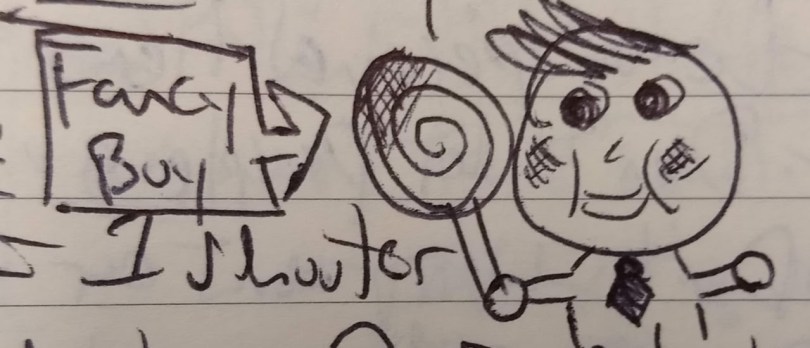
To sweeten the pot, I’m going to include some of the whimsical doodles that, up to this point, only $5 or higher subscribers can view.  These are my Sunday Doodle posts, of which there are currently twenty-two editions.

Here is a sample of the instantly classic artwork you’re missing:

To make it even more compelling, I’ve introduced a new $3 tier, “Fried Bologna.”  At that level, you’ll get all the great SubscribeStar Saturday posts of the $1 level, plus one monthly edition of Sunday Doodles (along with the $5 subscribers).

To recap:

  • For $1/month, you get exclusive posts every Saturday.
  • For $3/month, you get the exclusive Saturday posts, and one edition of Sunday Doodles each month.
  • For $5/month, you get exclusive Saturday posts and Sunday Doodles every Sunday, as well as random exclusive content.
  • You can also subscribe at $10/month or, if you’re just looking to give me money, $50/month.

These are tough times, so any support you can muster is appreciated.  If you are already a subscriber, thank you so much, and please send forward this post to friends and family that might be interested.  If not, please consider subscribing—even $1/month helps immensely.

Thank you again, and have a wonderful Monday!

—TPP

TBT: April Fool’s Day: A Retrospective

Last year marked the tenth anniversary of my unceremonious lay-off/non-renewal of my teaching contract.  It was the height of the Great Recession, and jobs were lean on the ground.  “Entry-level” positions called four a four-year degree and two-year’s (minimum) experience, yet holding an advanced degree was considered “overeducated” and could potentially disqualify an applicant for work.

It was the worst of all situations for a young man barely out of graduate school and just one year into his teaching career.  I was lucky, though, to have a good dad with a background in human resources and local government, who helped me find a decent job with the City of Sumter.  I was only out of work maybe three months, and had parents who were able and willing to support me during that period.

Even then, I was anxious to get out on my own again, not because I was chafing under my parents, but because I was keenly aware I was not being a man.  Instead of earning my own way in the world at twenty-four, I was living off the generosity of my parents.  That’s one of the myriad ways in which an economic downturn can take a spiritual toll on a young man.

Now it appears we’re on the precipice of another major economic catastrophe, this time thanks to the coronavirus and the stringent public health measures taken to slow its inexorable spread.  Things were really started to rev up again.  Even though the economic recovery began even as early as 2009, it didn’t feel like we were in a recovery until around 2017.  Trump’s election didn’t just buoy the stock market; it brought a sense of renewal, hope, and optimism to the United States.

Americans, especially younger Americans, don’t remember how bad the Great Recession was.  I feel for young college students who are just about to enter the workforce—I was there, too, not long ago.  I wish you could have enjoyed at least a few years of the good life.

On the plus side, we will get through this downturn, although I suspect it’s going to be far worse than the Great Recession.  We’ve never tried shutting off the entire economy before, then plugging it back in two weeks—or maybe a month, or three months—later.  Two weeks we may have seen things roaring back; maybe we will after a month.

But I can’t conceive of a rapid return to normality if it stretches much longer than that.  Small businesses are going to go under once they burn through their cash reserves.  The restaurant industry, along with the hundreds of thousands of waiters, cooks, busboys, hostesses, etc., it employs, is going to be changed for a long time.  That’s just one example among many.

I’m already feeling the effects on my private lesson business, which was booming before The Virus (although it was down a bit from its 2019 peak).  Right before The Virus hit, I had six consistent students at $30 per lesson, per week.  That’s not bad for supplemental income (at my peak, I had ten students, one for a $45 lesson, though I was only charging $25/lesson at that point).  Most of those cancellations are for the duration of The Virus, but once the plague has passed, the damaged economy will remain.  Some of those students will resume, but belt-tightening budgets are going to eliminate piano lessons fairly quickly, if I had to guess.

That said, I am blessed to have a steady job now, and will hopefully avoid any repeats of 1 April 2019.  The Great Recession left a mark on me, and it’s made me more prepared for this next downturn.

With that, here is 2019’s “April Fool’s Day: A Retrospective“:

Today is April 1, 2019, popularly known as April Fool’s Day.  It’s a day for good-natured pranking and mirthful fun, a bit like a poor man’s Halloween.

This April Fool’s Day holds a particular resonance for me, however.  It was ten years ago today that, in the midst of the Great Recession, I lost my job.

Technically, my teaching contract was not renewed.  I still had an obligation to finish out the year, which I did as best I could, but I would not be coming back.

I remember it vividly:  my school’s former headmaster told me he wanted to speak with me.  I went into his office, and he told me a few things:  the school was consolidating my classes into fewer sections; the school desperately needed money (the enrollment was around ninety-five kids, and things were so tight they needed the $28,000 going towards my salary); and the economy was not conducive to private school fundraising and tuition.

He told me that, as I’d studied history (he, too, was a history teacher), I knew how these kinds of economic downturns went.  I thought he was mentioning this as a bit of cold comfort, a sort of, “don’t worry, it won’t last long, a[nd] you’ll be okay.”  Instead, he continued, saying, “this thing could last an entire decade!”  Yikes!  Way to kick a man when he’s down.

I knew (or, at least, I hoped—the day isn’t over yet!) that I’d never have the opportunity, grim as it was, again, so I said, “Wait a minute—this isn’t just some elaborate April Fool’s joke, is it?”  He said, stone-faced, “I wish it were.”

So, there I was, facing imminent unemployment in the worst job market since the Great Depression, with only one year of teaching under my belt and a Master’s degree in United States Trivia.

We forget, living in the wonderful Trump economy, how hard it was back then.  Jobs were not to be found.  Remember going to gas stations, and people would start polishing your hubcaps against your will so they could sell you the cleaner?  That’s how bad it was—people were hawking hubcap polisher at rural gas stations to try to make ends meet.  “Entry level” jobs required two years of experience, at minimum, which no one fresh out of college plausibly had (unless they’d wisely done some kind of internship or work study).

Fortunately, with some help and coaching from my dad, I landed a job at the City of Sumter, after only three months of formal joblessness.  I was quite fortunate.  I managed the Sumter Opera House, where I learned to run live lights and sound.  I also met some interesting people, including the comedian Gallagher (that used to be an impressive anecdote, but now few people under thirty know who Gallagher is; it’s a shame).  He was an odd bird, which isn’t that surprising, given he made a career out of smashing fruits with a sledgehammer.

That job turned into a grind—remember, if you had a job, you had to do pretty much anything your employer demanded, lest you face termination—but I learned a great deal, and it landed me back at my old teaching gig, under a new headmaster, in 2011.

That experience—being jobless in the Great Recession—left an enduring mark on me.  My first year teaching, I definitely phoned it in.  I worked hard on lectures, of course, but beyond a little club for musicians, I didn’t do much extra.

My first year back in the classroom, in 2011, was completely different.  I was teaching World History, Government, Economics, History of American Popular Music (a course I created), and AP US History.  I had to do prep for all of them.

I was astonished how much American history I’d forgotten since high school and college (a pro-tip:  studying American history in graduate school is more about reading overly-detailed monographs about obscure bits of the story of America; when I took my exams to finish my Master’s, I essentially used information I learned in my eleventh-grade AP US History class).  I would spend hours on Sunday afternoons at the Thomas Cooper Library at the University of South Carolina writing up lesson plans.

Then, I became the de facto sound guy for school events after a talented tech kid graduated (I named an award after him, which I give to students who assist with our concerts and plays on the tech end).  It’s the ultimate in job security—no one else knows how to do it—but it’s also a major obligation—no one else knows how to do it.

Since then, I’ve grown a decent side hustle teaching private music lessons.  I also teach courses at a local technical college, mostly online, but some face-to-face.  In 2014, I taught Monday-Wednesday evenings, first from 6-7:15, then from 9-10:15 PM.  I’d come home, exhausted, and fall asleep in my recliner.  Thursdays felt like Saturdays because, even though I still had two days at the high school, it was the longest possible point before a grueling sixteen hour Monday rolled around.

I save constantly for retirement—I make the legal annual maximum contributions to my IRA, 403(b), and HSA—and spend very little money.  I still drive the same Dodge Caravan that I’ve had since 2006.  I will occasionally splurge and buy digital piano, but my saxophones are falling apart (literally—my pawn shop alto sax has a key falling off).  I occasionally worry that, on that glorious day when I do retire, I won’t know what to do with myself if I’m not working.

All that said, I have done everything possible to position myself against another recession, bad labor market, etc.  April 1, 2009, seems now like a distant memory, but it could all come back.  I’m reminded of The Simpsons episode where some repo men are repossessing property from a failed Dot Com start-up.  One of them says, “It’s a golden age for the repo business—one which will never end!” as he lights a cigar with a $100 bill.

It’s easy to fall into that mindset.  I’m optimistic for the future, but I’ll never take prosperity or security for granted again.  Constant hustling—booking new gigs, picking up more students, getting more classes, working maintenance on the weekends, leading summer camps, collecting songwriter and publishing royalties—is what it takes.

The Great Toilet Paper Shortage of 1973

Yesterday morning over at the blog Nebraska Energy Observer, NEO’s in-house guest writer, Audre Meyers, wrote a short, fun piece about prepping, “The Neo made me do it!,” in which she extolled the virtues of preparing ahead of time for disasters, rather then getting caught up in the frenzied mobs of panicked shoppers.  She wrote about some various and sundry items she needed to top off, including the increasingly-precious toilet paper, because “there are some things I simply refuse to do without!”

In reply, commenter “Scoop” referenced a similar toilet paper shortage in 1973 (and provided a handy link to a piece about the scare in a follow-up comment).  There’s even a documentary about it!

With the obligatory hat-tips squared away, let’s dive into this early 1970s TP shortage—one that mirrors our own mania for clean bums.  What is it about toilet paper—and the threat that it will disappear—that drives Americans to hysterics?

Read More »

Another Monday Morning Appeal

This post is a shameless but sincere appeal for support.  If you would like to support my work, consider subscribing to my SubscribeStar page.  Your subscription of $1/month or more grants you access to exclusive content every Saturday, including annual #MAGAWeek posts during the July Fourth week.  For just $5/month, you also get access to Sunday Doodles, my collection of bizarre, fun, and humorous doodles, as well as other surprise content.

If you’ve received any value from my scribblings, I would very much appreciate your support.  Belts are tightening with the rise of The Virus, so independent creators need your support now more than ever.  Thank you to those of you who are current subscribers.  If you’ve enjoyed your subscription, please share this post or my SubscribeStar page with other interested readers.

A little over six months ago, I wrote a “Monday Morning Appeal,” asking readers to pitch in a buck or two to help with the site.  As of this morning, I’m up to six subscribers to my SubscribeStar page, four at $1/month the level, and two at $5/month the level.

The blog is entering its sixty-fifth week of daily posts (I believe this morning’s appeal will mark the 456th consecutive daily entry).  I’m hoping to continue to with that daily pace, and to increase the amount of exclusive content on my SubscribeStar page.

As my school has transitioned to distance learning, I’m churning out video lectures at an astonishing rate.  I will soon begin uploading lectures of interest for $5/month subscribers.  That will include my survey-style overview of the Second World War, which includes five lectures and nearly three hours of content.  I also have two lectures on the New Deal.

The value of your subscription increases each week, as more content gets added.  This transition has also forced me to figure out how to record video and audio more efficiently, so the long-planned, never-delivered Portly Podcast could be in the works soon.

We may be looking at tough times ahead, and every dollar counts.  I appreciate every subscriber.  For the price of a large pizza over the course of a year ($12), you can support my work with $1/month.  Buy one fewer Cokes at the gas station each month, and you’re covered!

For the price of a synthetic oil change ($60), you can support the blog with $5/month.  Drop one visit to the People’s Republic of Starbucks and every month, and you can support quality content from a true American patriot.

If you’re feeling really generous, you can subscribe at the $10/month level, or the truly ludicrous $50/month level.  At this point, I’m still dreaming up perks for those levels, but if you’re just looking to be super generous, hey, I’ll take it.

Again, thank you to all of my readers, subscribers and non-subscribers alike, for your support.  Your comments and feedback are always welcome.  Keep sharing my stuff!

Happy Monday!

—TPP

Tucker Carlson’s Platform for Victory in 2020

Tucker Carlson is the gift that keeps on giving.  In a segment from last week, the populist-friendly television host offered up a winning strategy for President Trump—and a warning.

In essence:  while economic numbers are very good, many of Trump’s base of supporters—the working and middle classes—are still struggling, or at least perceive that they are.  In a longer piece from Joel Kotkin (also on Carlson’s Daily Caller website), the author argues that the tensions between the Trumpian lower classes and the ascendant upper class is akin to the friction between the French Third Estate (the commoners) and the First and Second Estates (the aristocracy and the clergy) just prior to the French Revolution.

Read More »

Free Speech in the Private Sector

Assaults on free speech may be the most pressing issue of our time.  Anyone reading this blog has surely witnessed the deplatforming of conservative figures under nebulous “community guidelines,” as well as the personal and professional ruin that tend to follow.

Indeed, I occasionally fear that my dashed-off ramblings might, in some none-too-distant Orwellian America, be misinterpreted or misapplied as “hate speech”—all it takes is the wrong person complaining.  Of course, this blog’s obscurity is perhaps my best defense—I’m too small to matter.  That said, that fear is one reason I’m pumping up alternative income streams and attempting to boost my SubscribeStar subscriber base; the authoritarian maw of the SJWs grows ever wider.

Read More »

The Enduring Legacy of Milton Friedman

One of the major debates on the Right over the past year or so has been the efficacy of libertarianism.  Part of that debate arises from disagreement about the role of government:  should it attempt to be neutral, as libertarians argue (which, we have seen, it is not), or should it act in the “common good” (or, as the Constitution puts it, the “common welfare”)?  In a world in which the Left wins victory after victory in the long culture wars, the assumptions of the “New Right” that arose following the Second World War are increasingly called into question.

Among those assumptions are libertarian economics.  Increasingly, conservatives are adopting a more suspicious view of concepts like supply-side economics and free-market capitalism.  That suspicion is not because capitalism is a failure, per se, but because it is almost too successful:  the wealth and prosperity it brings have also brought substantial social and cultural upheaval.  Because capitalism is an impersonal and amoral system, it doesn’t make value judgments about what is “good” or “bad” in the context of marketplace exchanges.  The Market itself is the highest “good,” so any hindrance to its efficiency is bad.

Ergo, we see arguments in favor of legalized prostitution, legalized hard drugs, legalized abortion, etc.  Again, if market efficiency is the greatest good, then why not allow these “victimless” activities?

Of course, unbridled libertarianism is doomed to fail, especially as it scales up.  Legalized hard drug use might keep junkies out of prison, but we don’t want heroine addicts buying their next hit at the grocery store.  Prostitution destroys families and the lives of the women (and men) involved, and spread disease.  Abortion is straight-up murder.

Capitalism cannot sustain itself in a vacuum.  It needs socially conservative behaviors and attitudes to sustain it.  If one wanted to live in a stateless libertarian paradise, one would need a small, tight-knit community in which everyone bought into the non-aggression principle and agreed to be honest in business dealings.  But as soon as one person decided not to abide by the unwritten social code, the entire experiment would unravel, like that scene in Demolition Man when the effeminate police force doesn’t know how to use force to subdue a violent criminal.

But for all of those critiques, capitalism remains the best system we’ve ever developed.  I agree with Tucker Carlson that the economy is a tool, not an ends to itself, but if government interferes too much with the tool, the tool is no longer effective.  If anything, the economy is a chainsaw:  too much regulation and the engine stalls and the blades become dull due to misuse and neglect; too little regulation and you lose an arm (or your life), even if you cut down a ton of trees in the process.

One of the most powerful books I ever read was Milton Friedman’s Capitalism and Freedom (1962).  It transformed the way I viewed the relationship between the government and economics.  Friedman would have a huge impact on my life and my thought.  While I don’t agree with all of his conclusions, I still largely accept his conclusions.

Friedman was a minimalist when it came to government power, but he still recognized some role for government:  maintaining the national defense, combating pollution, and fighting against infectious diseases.

Here is a 1999 interview with Milton Friedman, from the excellent Uncommon Knowledge series, hosted by Peter Robinson.  It highlights some common objections to libertarian economic ideas, as we as Friedman’s thoughtful, nuanced responses:

For what it’s worth, I’ll add that Peter Robinson is a fantastic interview.  He possesses that perfect quality in an interviewer:  he doesn’t steal the limelight.  I grew so weary of Eric Metaxas‘s interviews, not because his guests were uninteresting—he has great guests!—but because he can’t help but talk over them constantly (his penchant for campiness also goes a bit overboard, and I love that kind of cheesy stuff).  After listening to some of Peter Robinson’s interviews Sunday afternoon, I never found myself wishing he would shut up—always a good sign.

Regardless, these are some weighty issues.  I have been hard on libertarians over the past year because I think they tend to reduce complex issues to supply and demand curves, and I can’t help but notice how we keep losing ground in the culture wars by espousing endless process and slow persuasion (which seems to be stalling in its effectiveness).

On the other hand, I’m glad that conservatives don’t wield power the way progressives do; as Gavin McInnes once put it in a video (one I would never be able to locate now) after the 2016 election, Trump and conservatives have sheathed the sword of power.  Progressives, masters of psychological projection, expected Trump to come out swinging, because that’s what they would do.

I just don’t know how long we can delay them from swinging the sword again, and after Trump’s unlikely victory (and his likely reelection), I imagine progressives will no longer even engage in the pretense of even-handedness and fair play:  they will crush us relentlessly if given the chance, rather than face an uprising again.

Libertarianism doesn’t have the answer to what to do to prevent that scenario.  Unfortunately, I’m not sure any faction on the Right does—at least not in any way that is palatable.

God Bless Us, Every One: The Gift of the Trump Economy

Christmas Week is always full of blessings.  Thanks to the good folks at pro-MAGA news aggregator Whatfinger News (and a helpful tip from photog of Orion’s Cold Fire on how to submit links to them), The Portly Politico has seen its best week in terms of traffic all year.  Two pieces, “Napoleonic Christmas” and “Christmas and its Symbols” made the main page, leading both to surpass my previous top post for the year, “Milo on Romantic Music.”  Apparently, people still get riled up about Napoleon.

It’s also been a wonderful opportunity to spend time with family and to overeat lots of delicious, rich foods.  If you’ve never heard of the Appalachian delicacy “chocolate butter,” do yourself a favor and look it up.  Yes, it’s even better than the name suggests.

Of course, all of that good cheer requires a solid financial foundation.  And in his three years in office, President Trump has shattered records for unemployment, wage increases, and economic growth.  Economics isn’t everything, but the Trump economy is something for which we should give thanks.

Read More »

SubscribeStar Saturday: Shrinkflation

Today’s post is a SubscribeStar Saturday exclusive.  To read the full post, subscribe to my SubscribeStar page for $1 a month or more.

When Americans experience a sense that the world we live in is not what it should be, we’re often scolded for not being thankful for all of our material abundance.  Indeed, we are extremely blessed to live in an age with plenty of food, infrastructure, and novelties, and we accordingly enjoy a standard of living beyond the wildest dreams of most of our forebears.

That said, there’s a nagging sense that, for all that abundance, things are amiss.  There’s a strong tug of to that undercurrent among conservatives today.  Material abundance is great, but it hasn’t addressed deeper moral problems or battles in the culture wars, because those problems aren’t materialist in nature—they can’t be.

Even within the plane of the material world, things seem a bit off.  That was the crux of my post about the new Mustang, a redesign so beyond the scope of the name “Mustang” that it’s ludicrous to call it as such.  Everywhere we look, there seems to be disintegration and decay—of value, of standards, even of size.

To read the rest of this post, subscribe to my SubscribeStar page for $1 a month or more.

SubscribeStar Saturday: Culture Matters

Today’s post is a SubscribeStar Saturday exclusive.  To read the full post, subscribe to my SubscribeStar page for $1 a month or more.

An additional appeal, and an update:  starting tomorrow (Sunday, 10 November 2019), I’ll begin posting a Sunday Doodle for $5 and up subscribers.  I am a prolific doodler (yikes!), and, on the recommendation of my younger brother, I’m going to upload one or two every Sunday, but only to my SubscribeStar page.

The additional appeal:  I need one more subscriber to ensure that subscribers enjoy auto-renewal each month.  SubscribeStar requires five subscribers to enable auto-renewal as an anti-fraud measure.  If you or someone you know would be interested in a subscription, please forward them this link:  https://www.subscribestar.com/the-portly-politico.

Thank you for your support!

—TPP

Read More »