TBT: Why the Hate for Space Force?

An unintended theme of the blog this week has been space, with two posts on our galaxy and our place in it (read “Galaxy Quest” and “Galaxy Quest II“).  One of the first posts I wrote on the blog urged the United States to expand into space.

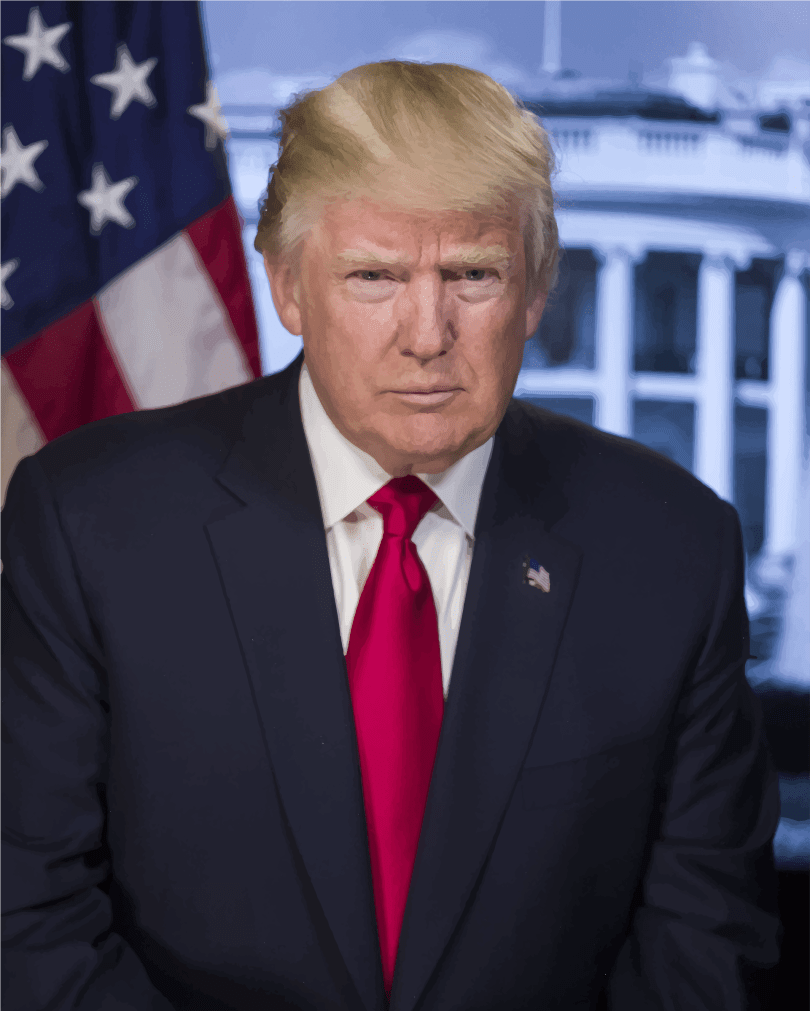
So I was thrilled, understandably, when President Trump announced the creation of Space Force.  What a brilliant idea—and one that the ten-year old boy in me celebrated right away.  Diligent readers will know that I voted for Newt Gingrich in the 2012 South Carolina Republican Party, and donated $100 to his campaign after he promised to put a colony on the moonby the end of my second term.”

Read More »

Galaxy Quest II: Cox Blogged

Following yesterday’s post on the galaxy, blogger buddy Bette Cox—who was also my predecessor as Secretary of the Florence County (SC) GOP—shot me an e-mail with links to some of her own writings on astronomy, the galaxy, and faith.  I wanted to share a few of those pieces with you today.

Bette is a prolific writer, and maintains a dizzying array of blogs.  She contacted me with some excellent feedback on my first Nehemiah essay, which prompted a follow-up incorporating her remarks.  She writes beautifully about faith at Esther’s Petition, and about the fulfillment of end-times prophecy at Tapister.

What I did not realize, until yesterday, is that Bette writes extensively about space—one of my favorite topics—at another blog Speaking of Heaven (her main blog, Bette Cox, is also dedicated to space).  Her writings about the intersection of space exploration and faith are particularly thought-provoking.

Read More »

Galaxy Quest

Our universe is massive—the adverb “unfathomably” usually modifies that descriptor.  It’s an apt adverb—we can’t conceive—fathom—how vast it is.

That said, we manage to possess some picture of our galaxy, the Milky Way, and our neighboring galaxies, even though we will likely never visit them, much less probe them.  So how do we know what the Milky Way looks like, when we’re in it?

Once again, Quora comes to the rescue.  There’s no way to photograph the Milky Way from the outside looking in, because we haven’t put any probes out that far (the pictures of galaxies we see is usually the Andromeda Galaxy, a spiral galaxy like our own).  Voyager 1, which was launched in 1977, exited the Solar System in 2011; astronomically speaking, that’s like getting to the end of the block on your way to the edge of the country.

Read More »

Memorable Monday: Veterans’ Day 2018, Commemoration of the Great War, and Poppies

Today is Veterans’ Day in the United States.  Veterans’ Day began as Armistice Day, which ended the First World War in 1918.

The past century was not great for Western civilization.  Most of the horror of the long twentieth century stemmed from the Great War and its mostly senseless destruction.  The sense of nihilism that engulfed the West—a civilization that was bestrode the world with confidence and panache—metastasized into the identity crisis of its nations today.

The piece below is adapted from a talk I gave to the Florence County, South Carolina GOP last year at its November 2018 monthly meeting.  I still think it’s one of the best Historical Moment talks I ever gave, but that’s mostly due to John McCrae’s powerful poem “In Flanders Fields“; the poem is reproduced in full below.

Thank you to all of our veterans for their service.

—TPP

Yesterday Americans, Europeans, and the world commemorated the 100th anniversary of the end of the Great War, what we call the First World War.  The Armistice that silenced the guns of one of the most brutal conflicts in human history was signed in the wee hours of 11 November 1918, but did not take effect until 11 AM—the eleventh hour of the eleventh day of the eleventh month.  That bit of numerical symmetry, while memorable, cost an additional 2738 lives, with 10,944 casualties—a pointless denouement to a destructive war.

Peace would ultimately come to Europe—after three prolongations of the Armistice—in 1920 with the ratification of the Treaty of Versailles (the United States, refusing to join the League of Nations, negotiated a separate treaty with Germany, the Treaty of Berlin, in 1921).  That treaty, which the Germans called the Diktat because of its severity, and because it pinned the war solely on the German Empire, was a reflection of the Armistice signed three years earlier.

In preparing tonight’s remarks, I came across an article that describes the first meeting between Marshall Foch, the commander-in-chief of the Allied forces, and Matthias Erzberger, a middle-aged German politician who had come to sue for peace.  The Frenchman looked stonily at the German peace delegation, and said, “Tell these gentlemen I have no proposals to make.”  Rather, Marshal Foch had a number of demands to issue, thirty-four in total, including Germany’s agreement to pay heavy reparations.

In hindsight, we know the folly of trying to squeeze blood and treasure from the turnip that was a starving, reduced Germany—and the radicalism it, in part, inspired.  But we have to understand, as best we can, the bitterness and weariness the Great War wrought.  Millions of men in Europe had lost their lives, or were maimed for life, fighting in the war.  The republican governments of France and Britain were not willing to accept peace without something to show for it; their people (and voters) would not have accepted it.  Indeed, Marshall Foch told his staff he intended “to pursue the Feldgrauen [field grays, or German soldiers] with a sword at their backs” until the moment the Armistice went into effect.  One cannot help but wonder that the fighting in this final hours was motivated, in part, by a mutual bloodlust, and an opportunity to settle scores one last time before the clock struck eleven.

From the grime and death of the Great War, however, grew new hope—a hope for peace, yes, but also a hope that humanity could avoid such a devastating conflict again.  That hope—and the enduring hope for a world built on peace and understanding—is poignantly symbolized in the flowering of the churned up “No Man’s Land,” the pock-marked area between Allied and German trenches.  Immortalized in Canadian Lieutenant-Colonel John McCrae’s “In Flanders Fields,” poppies were first flowers to bloom in that graveyard of Western civilization.  To this day, the crimson of the poppies serves as a reminder of the men who made the ultimate sacrifice for their countries, and that even in death, life endures.

I will close this somewhat grim Historical Moment with a brief reading of that poem; it can commemorate the men there far better than I:

In Flanders fields the poppies blow
Between the crosses, row on row,
That mark our place; and in the sky
The larks, still bravely singing, fly
Scarce heard amid the guns below.

We are the Dead. Short days ago
We lived, felt dawn, saw sunset glow,
Loved and were loved, and now we lie
In Flanders fields.

Take up our quarrel with the foe:
To you from failing hands we throw
The torch; be yours to hold it high.
If ye break faith with us who die
We shall not sleep, though poppies grow
In Flanders fields.

Lazy Sunday XXXV: Corporate Grind

Starting today, subscribers to my SubscribeStar page at the $5 level or higher will get an exclusive weekly doodle.  Just another perk of subscribing!

It’s been a very busy Sunday, the exact opposite of lazy. My little school hosts open houses for prospective parents and students about twice a year on Sunday afternoons, and as the go-to tech guy, I have slightly more to prepare than some of the other faculties.

I also play piano in my church on most Sunday mornings now (which I enjoy), and I play with a local jazz big band, which practices on Sunday afternoons (which I also enjoy).  Add it all up, and it made for a busy day.

So, with all that going on, not only is this Lazy Sunday late, it’s also focused on professional life—specifically, the rat race, the nine-to-five, the grind:

  • Meetings are (Usually) a Waste of Time” – One way I know that I’m getting old is that I’ve developed my own “best practices” for meetings.  I’ve sat through tons of pointless, lengthy meetings (and pointlessly lengthy ones), so I’ve come up approaches I attempt to stick to with meetings I run:  keep ’em short, limit it to two or three agenda items, and come in organized.
  • Phone it in Friday IV: Conferencing” – I despise meetings, but I love conferences—if they’re done well.  Just as there are best practices for meetings, there are best practices for conferences:  offer relevant sessions, keep the entire conference short in length, and have some decent food and coffee, appropriate for the length and nature of the conference.  A good conference is an opportunity to learn, network, and re-energize.
  • SubscribeStar Saturday: Culture Matters” – Culture matters!  That was the point of an excellent presentation I attended at the conference that occasioned the post above.  The presentation was specifically about the importance of growing and maintaining a healthy faculty culture, which largely means being thankful for faculty efforts, giving them the option to say no, and preventing burnout.  Read the whole thing with a subscription of just $1 a month!

That’s it!  A short, late Lazy Sunday after a decidedly busy Sabbath.

–TPP

Other Lazy Sunday Installments:

SubscribeStar Saturday: Culture Matters

Today’s post is a SubscribeStar Saturday exclusive.  To read the full post, subscribe to my SubscribeStar page for $1 a month or more.

An additional appeal, and an update:  starting tomorrow (Sunday, 10 November 2019), I’ll begin posting a Sunday Doodle for $5 and up subscribers.  I am a prolific doodler (yikes!), and, on the recommendation of my younger brother, I’m going to upload one or two every Sunday, but only to my SubscribeStar page.

The additional appeal:  I need one more subscriber to ensure that subscribers enjoy auto-renewal each month.  SubscribeStar requires five subscribers to enable auto-renewal as an anti-fraud measure.  If you or someone you know would be interested in a subscription, please forward them this link:  https://www.subscribestar.com/the-portly-politico.

Thank you for your support!

—TPP

Read More »

Phone it in Friday IV: Conferencing

It’s been a very busy week, and with a slew of lessons and some open mic nighting yesterday—plus an early start this morning—I was unable to get a post written last night to go live this morning.  Further, I attended a teachers’ conference in a city about 90 minutes from my school, so I was unable to sneak in any surreptitious blogging amid sessions.

For tomorrow’s SubscribeStar Saturday post, I’m going to write more about one of the conference sessions I attended, which was about the importance of faculty culture to the functioning of an independent school.  I think it holds within it some important lessons about culture more broadly, and is worth discussing in more detail.

For this evening, though, my time is quite limited, so I thought I would share some general reflections on today’s conference.  I’m scooting off to a very cold pressbox for the evening, from which I’ll be announcing a playoff football game, and getting some hastily-rehearsed singers out onto the field for a brief Veterans’ Day presentation.  When the head of your Board of Directors wants something, he gets it.

Read More »

TBT: Election Day 2018

Two days ago I wrote about Election Day 2019, and posted results yesterday.  In selecting this week’s , then, I thought I would look back to November 2018 to see what I’d cooked up.

Boy, were the pickings slim.  Other than the post below, I reblogged my annual Thanksgiving message, and posted a Veterans’ Day talk I delivered to the local Republican Party.  I’d really let the blog slide as I dove into another busy school year.

It’s amazing how quickly time flies.  Not only did losing the House “stymie” President Trump’s agenda; they’re straight-up impeaching him—their plan all along.  We managed to hold onto the Senate, but by a slimmer margin than I hoped.  I also don’t trust Mitt Romney for a minute, so I think we can slot him in with the Democrats.

Read More »

Election Day 2019

It’s Election Day 2019!  I’m sure there are all sorts of interesting elections happening all over the country, but for me, the big election is right in my backyard, in little Lamar, South Carolina (which just got a website!).

Lamar is holding elections for two at-large Town Council seats.  There are two incumbents and two challengers, and the election is non-partisan (for what it’s worth, I cast my two votes for the challengers, in the Jacksonian spirit of rotation in office).

I like to vote early (though not often—that’s a federal crime, and since I’m not a Democrat or an illegal alien, I’d get in trouble for doing so), because I never know if I’ll be home by the time polls close.  Polling in South Carolina always runs from 7 AM to 7 PM, which is a pretty substantial window.  So, I was there right at 7 AM, and was the fifth person from my precinct to cast a ballot.

What was really surprising were the new voting machines, about which I have mixed feelings.

Read More »

Trump Stands for Us

My blogger buddy photog at Orion’s Cold Fire is enduring some bleak New England weather.  Apparently, the bracing cold and gale force winds have sharpened his already-considerable analytical skills, as he’s been killing it lately with his posts.

He’s written a post, “The Unique Value of the Trump Presidency,” which perfectly encapsulates what Trump’s presidency means to the forgotten men and women of this country.  photog rattles off a laundry list of reasons different kinds of conservatives might like Trump—his judicial appointments, his less interventionist foreign policy, his trade war with China—but hones in on the key reason Trump matters:  “… there is actually a much more important aspect to the presidency of Donald Trump that should be emphasized.  He doesn’t despise us” (emphasis photog’s).

Read More »