Old-School Fun

While on vacation, the last thing I want to think or write about is all the unpleasantness in the world.  If I’m having fun (and, presumably, I am!), why not my loyal, dogged, faithful, persistent, lovable readers?  (After all that flattery, why not check out my SubscribeStar page, hmmm?)

My local paper ran a story on Monday about the discount cinema in Florence, the Julia 4.  Because fun is outlawed in The Age of The Virus (yes, yes, I know I’m at Universal Studios—it’s a joke), we can’t see movies anymore.  The Julia’s solution:  become a drive-in theater.

Read More »

Island Living

Hippies are annoying and filthy creatures, but you’ve got to hand it to them:  behind all the patchouli and Grateful Dead bootlegs, they’re a resourceful lot.

A Canadian couple in British Columbia, Catherine King and Wayne Adams, have been living for nearly three decades on a floating, man-made island off the western coast of Vancouver.  Like good hippies, they built the island—which weighs over one million pounds—from recycled materials, mostly lumber.  In a particularly Boomer hippie detail, Adams would trade artwork to fishermen for scraps of lumber and other cast-offs.

Read More »

Lazy Sunday LXX: Phone it in Fridays, Part IV

We’re rounding out the month of Phone it in Fridays this week with the tenth, eleventh, and twelfth editions.  I’ve intentionally avoided doing more PiiFs while going through them, although I’ll likely write more in the future (because they’re easy and quick), and there will likely a “Phone it in Fridays, Part V” at some point (because it’s easy and quick).

Like last week’s installment, The Virus cast a long, sickly shadow over these entries.  For a time, that’s pretty much all bloggers and the commentariat were discussing, to the point that it got boring and tiresome.  We also settled into our oppressive new normal like slowly boiling frogs, and now every trip to the grocery store looks like a Japanese subway station.

Here are Phone it in Fridays X, XI, and XII:

  • Phone it in Friday X: Coronavirus Conundrum, Part III: Working from Home” – One of the silver linings of The Age of The Virus was teaching from home.  At least, I quite enjoyed it—virtually all of my colleagues hated it.  I’m fortunate to teach in a field (History) that is easy to port to an online format, and I’ve been teaching online since 2015, so I have a good sense for the kind of feedback and communication necessary to make distance learning smoother for students (and myself).  This post had me musing about the future of work, and my hopes that we’d see more white-collar work done from home.
  • Phone it in Friday XI: Coronavirus Conundrum, Part IV: Liberty in the Age of The Virus” – One of the more astonishing aspects of the lockdowns, quarantines, shelter-in-place orders, mask ordinances, etc., was the ready compliance of most Americans to shutting down their lives.  I think everyone was copacetic to the “two weeks to flatten the curve” mantra, but that two weeks turned into “indefinite oppression because we said so.”  As cases have shot up in South Carolina, even our more conservative municipalities have put mask ordinances into place, albeit relatively mild, with tons of exemptions.  Had I won my that Town Council election on Tuesday, I would have voted against any such ordinances, on the grounds that a.) law enforcement doesn’t need to waste their time enforcing the unenforceable—and the non-criminal, and b.) mature adults and individual businesses in a free society can make their own best decisions about masks, etc.  Regardless, we all seemed to forget about the Constitution the minute a plague hit—unlike our plague-ridden ancestors.
  • Phone it in Friday XII: Good Reads” – The point of PiiF is to churn out some quick content on Fridays when I’m ready to relax for the weekend.  This PiiF ended up being one of the longest ones yet.  I read a ton of blogs every day, schedule-permitting, so I come across some good stuff from time to time.  This post shared great pieces from Rachel Fulton Brown, Z Man, and photog.

That’s it!  Twelve Fridays in one month of Sundays.  Lots of numbers divisible by 2 and 3 there.  I hope these PiiFs brought some joy to your life.

Happy Sunday!

—TPP

Other Lazy Sunday Installments:

Resist the Black Pill

Lately, it’s been easy to give in to despair.  Trump is way down in the polls, we’ve suffered reversals on DACA (and Trump’s own reversals on rescinding foreign student visas for colleges going online-only in the fall and on suspending foreign worker visas through the end of the year), BLM is murdering people for saying “All Lives Matter,” and so on.

Despair is a sin.  Like most situations in life, doing the opposite of what you feel is virtuous.  Wallowing in self-pity (or shouting angrily during one of Tucker Carlson‘s litanies of unpunished progressive malfeasance) is the emotionally satisfying approach, but it’s not very productive.

I’m noticing that a number of folks on our side of this great culture war are taking the “black pill.”  Z Man railed against Trump in this week’s podcast, and in a post earlier this week (which I referenced yesterday).  Milo had all-but written Trump off until the Roger Stone commutation.

Read More »

TBT: Flight 93 Election Follow-Up

It’s been a big election week for yours portly; even though I lost to a surprise write-in candidate, I feel pretty good about it.  It’s also, of course, a huge (yuge?) election year, with the fate of the United States dangling in the balance.

Right now, President Trump is down in the polls, and there’s a lot of black-pilled commentary on our side (I’m certainly guilty of it).  Z Man wrote a scatching post yesterday—entitled “Flight 93 Crashed“—that argues that Jeff Sessions’s defeat in the Alabama US Senate Republican primary to former football coach Tommy Tuberville marks the end of any significant, mainstream nationalist and immigration patriot influence in national politics.  Sessions was, indeed, a John the Baptist in the Senate, crying out in the wilderness of the cheap labor lobby, a lone voice for immigration restriction.

I do think President Trump has treated Sessions shabbily at times, but when Sessions recused himself from the Russia investigation, he allowed hostile forces to take the reins, resulting in two years and millions of wasted dollars on a politically-motivated investigation that nearly put Roger Stone in jail for a meaningless process “crime.”  More importantly, it stymied the Trump presidency, putting a stop to the energy and excitement of those early days of his administration.

Sessions was, I believe, doing what he thought was right, but his fatal error was he assumed we were still playing by the old playbook of political decorum and fair play.  By taking that path—however honorable in the particular—he unleashed incredibly dishonorable forces, albeit unintentionally.  To add insult to injury, Democrat Doug Jones won his Senate seat away from Judge Roy Moore, a huge hero for social and religious conservatives.

Read More »

Populism Wins

A major lesson of the 2016 election was that the neoliberal consensus of the prior thirty years was not the panacea its advocates claimed.  Trump’s candidacy was premised on the notion that the national government should work for the interests of the nation’s people, not on behalf of globalist concerns and aloof cosmopolitan elites.  Government could be reformed to strengthen the nation, rather than operating as the piggy bank for and protector of internationalists.

It’s interesting to reflect how entrenched the assumptions of neoliberalism were prior to 2015-2016.  When Trump began his historic campaign, virtually no one on the Right was talking about tariffs, other than Pat Buchanan (and a long essay on the necessity of a trade war with China that Oren Cass wrote for National Review in 2014).  The outsourcing of jobs overseas was assumed to be a short-term sacrifice that would result in more efficiency (ergo, lower prices on consumer goods) and more skilled jobs here.  We were a “nation of immigrants,” so we’d better throw the doors wide open.

With Trump’s election, a long-dormant populist wing reemerged, consisting both of conservative Republicans and disgruntled Democrats.  Tariffs became an important foreign and domestic policy tool.  A trade war with China soon began, and the United States renegotiated the NAFTA agreement with Mexico and Canada.  Manufacturing jobs began returning to the United States, and immigration laws began to be enforced (so long as those Hawaiian judges didn’t get in the way).  The economy, rather than contracting as the free trade hardliners warned, grew exponentially, and even now is recovering at a remarkable clip after The Age of The Virus temporarily sidelined it.

Read More »

Lazy Sunday LXIX: Phone it in Fridays, Part III

We’ve celebrated another with the  posts (here, here, here, and here).  Now we’re on the long march toward the 2020 election, which will hopefully be a triumphant landslide for GEOTUS Donaldus Magnus.

For now, it’s time to continue our month-long review of past Phone it in Friday posts.  This week makes for an odd trio:  the first post, “Phone it in Friday VII: Universal Studios,” looks back to a family trip to the Florida theme park at the end of February, on the eve of The Age of The Virus.  Only dimly did I realize at the time that we were living in the twilight days of The Before Times.

The next two posts both deal with The Virus, which dominated blog discussion in those early, fretful days of The Age of The Virus.  If we’re basing the quality of the posts on the lightheartedness and fun of the posts, then these match up nicely with their counterparts in the new Star Wars trilogy:  one good, fun movie (because it’s basically The New Hope) followed by two dreadful SJW escapades.

You can decide (especially you purple-haired schoolmarm star fleet captains out there):

  • Phone it in Friday VII: Universal Studios” – This post is the ultimate example of a “Phone it in Friday” post, as I slammed it out on my tiny netbook computer while babies were screaming (probably) in the hotel room.  It regales readers with some highlights from my family’s trip to Universal Studios, a rare during-the-school-year vacation.  It was worth burning through my three annual personal days, that’s for sure.  My brothers and our significant others and/or children will be heading back there later in the month, in fact.
  • Phone it in Friday VIII: Coronavirus Conundrum” – I wrote this a week after the Universal Studios post, when everything was still up in the air regarding The Virus, at least here in South Carolina.  We’d had very few cases by that point in SC, but the Pacific Northwest was getting hammered.  Ten days later, we transitioned to distance learning.  At the time, we didn’t know much about The Virus, other than it was China’s fault; as I wrote at the time, “My hope is that after all is done, China will be a pariah, no longer vaunted as a power on the rise, but maligned as a malicious, mendacious regime.”  We’ll see.
  • Phone it in Friday IX: Coronavirus Conundrum, Part II: Attack of The Virus” – The title of this post actually drew from the second episode of the Star Wars prequel trilogy, Attack of the Clones.  That afternoon, we had a huge, emergency faculty meeting to figure out distance learning.  Two days later, on Sunday, 15 March 2020, Governor McMaster announced that schools were shutting down through the end of March, and they ended up staying shut for the rest of the year (with distance learning, of course).  I also filed that day to run in Lamar’s Town Council election, which was supposed to be 12 May 2020, but will now be this Tuesday, 14 July 2020.  Wish me luck!

That’s it!  I would like to note that today’s post marks eighty weeks of consecutive posts, and the sixty-ninth edition of Lazy Sunday.  Wooooot!

Happy Sunday!

—TPP

Other Lazy Sunday Installments:

SubscribeStar Saturday: River and Stone

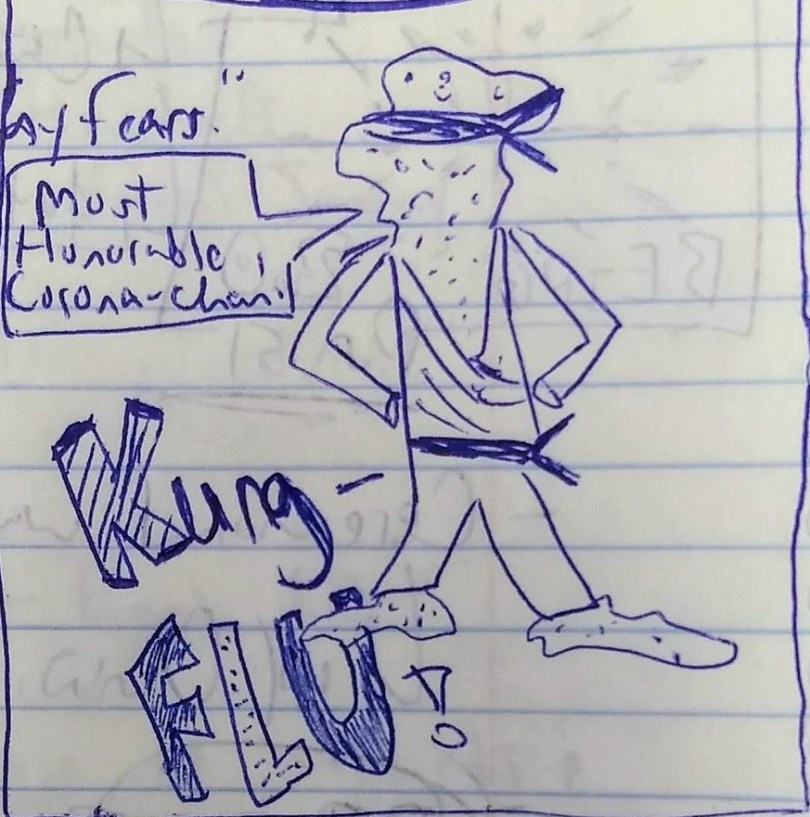
Today’s post is a SubscribeStar Saturday exclusive.  To read the full post, subscribe to my SubscribeStar page for $1 a month or more.  For a full rundown of everything your subscription gets, click here.  NEW TIER: $3 a month gets one edition of Sunday Doodles every month!

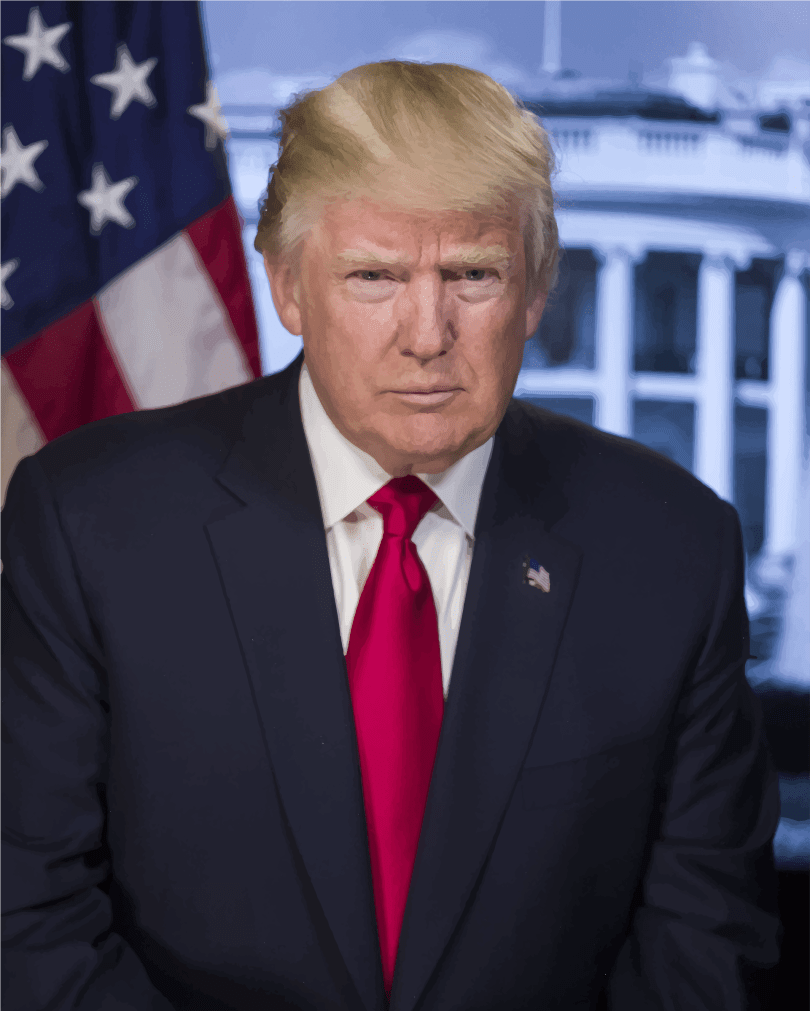
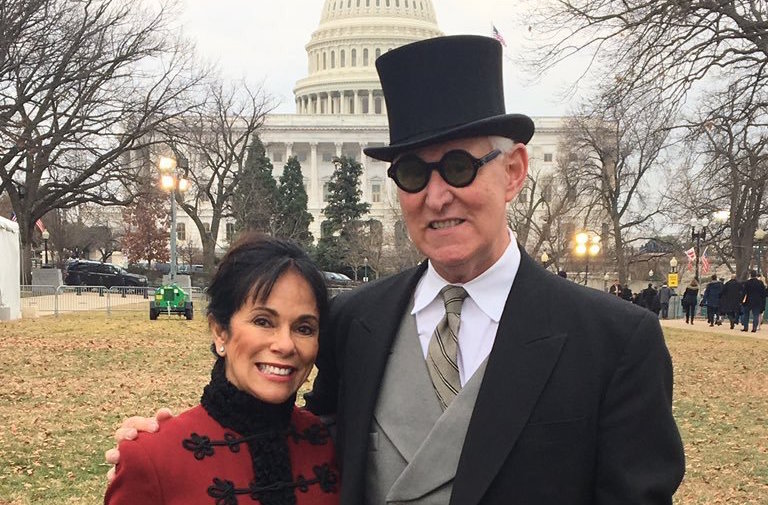
It’s been a great weekend to be an American.  Last night, mere days before he was scheduled to report to prison to serve a bogus sentence stemming from the even more bogus Mueller investigation, President Trump commuted Roger Stone‘s sentence.  That was a huge cause for celebration on the Right, and a blow against politically motivated criminal charges.

That was some much-needed good news on this side of our cultural civil war, after weeks of looting, corporate acquiescence to BLM, and traitorous Supreme Court rulings.  President Trump reversed a supreme injustice, but he also did right by a friend a long-time supporter.

On a personal note, I had the opportunity to go tubing down the Saluda River in Columbia, South Carolina this morning.  That was another adventure, one in which the stones were far deadlier than the non-existent process “crimes” of the vindicated Stone.

The rest of this post will be available on my SubscribeStar page the afternoon of Sunday, 11 July 2020.

To read the rest of this post, subscribe to my SubscribeStar page for $1 a month or more.

#MAGAWeek2020: Calvin Coolidge

This week is , my celebration of the men, women, and ideas that MADE AMERICA GREAT!  Running through this Friday, 10 July 2020, this year’s posts will be SubscribeStar exclusives.  If you want to read the full posts, subscribe to my SubscribeStar page for as little as $1 a month.  You’ll also get access to exclusive content every Saturday.

Americans have come to expect action-packed, robust presidents, those like Theodore Roosevelt, who enjoyed two parts in (here and here).  We want our presidents to be like Harrison Ford in Air Force One:  ready to take down the terrorists, saving his family and his country, single-handedly.

Part of that is a symptom of the aggrandizement of federal and executive power at the expense of States’ rights and legislative authority.  Indeed, Theodore Roosevelt is to blame, in part, for that centralization, though certainly not alone (his cousin Franklin did far more damage in that regard).  He’s also responsible—again, in part—for our vision of the president as a man of action.

So today’s feature provides a counterpoint to the charismatic, blustering force of TR.  He is a president who, to paraphrase historian Amity Shlaes, resisted the calls to “do something,” and instead did “nothing.”  He is largely forgotten today, although his connection to tax cuts brought him back to popular attention in 2017.

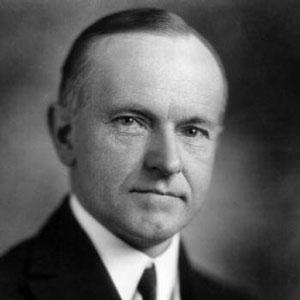
Today, celebrates the life and presidency of a man of few words, but of great significance:  Calvin Coolidge.

To read the rest of today’s post, head to my SubscribeStar page and subscribe for $1 a month or more!

TBT^4: Happy Birthday, America!

It’s a bit late to commemorate Independence Day (and I did it already on Saturday), but it’s (read installments here, here, and here), and it seemed fitting to dedicate this edition of TBT to America’s Birthday.

I’m reblogging a reblog of a reblog from the old site.  Last year’s post was “TBT^2,” or “TBT Squared.”   Well, to be mathematically consistent, I had to square that square, which I think makes it “TBT^4,” or “TBT to the power of four.”  I sure hope I’m right.  Regardless, next year will be “TBT^16,” and so on.

I like the layer of commentary, like my piddling blog posts are Talmudic commentaries on other rabbinical commentaries (or, since I’m Christian, Biblical commentaries on other Biblical commentaries of the Bible).  It’s interesting seeing how what’s changed over the years in this throwback posts.

For example, last Independence Day I had my first SubscribeStar subscriber.  That was fun!  I was also in New Jersey—one of the nicer trips I’ve taken.  This year, it was a Southern Fourth, with lots of barbecue and hash.

On a more somber note, America has seen better days—but also far worse.  I have to remind myself of that latter point, as it’s easy to get black-pilled and give into despair.  It’s a commentary on the softness of my own life that today’s ructions—piddling when compared to conflicts of the past—seem insurmountable.

But even if America is on the rocks in some areas, God is still in control.  We’re still the greatest country in the world, despite what the BLM and AntiFa ingrates think.  To be quite frank, if they hate America so much, they’re welcome to move.

With that, here are past Independence Day posts:

“TBT^2: Happy Birthday, America!” (2019)

It’s Independence Day in the United States!  God Bless America!

I hope everyone has been enjoying #MAGAWeek2019.  Remember, you can read those full entries only on SubscribeStar with a $1/mo. or higher subscription.  Your subscription also includes exclusive access to new content every Saturday, as well as other goodies from time to time.

I’m happy to announce, too, that I have my first subscriber.  You, too, can support my work for just $1 a month (or more).  That’s the price of a large pizza if you paid for it over the course of an entire year—you can’t beat that!

In case you’ve missed them, so far has commemorated our second President, John Adams; our first Secretary of Treasury, Alexander Hamilton; and our national cuisine, fast food.  You can also check out all of #MAGAWeek2018’s entries.

This Fourth of July I’m in New Jersey, and spent a great day yesterday at Coney Island in New York City.  Despite not liking rollercoasters, I rode the historic The Cyclone, which was first constructed in 1927.  I also visited the New York Aquarium, and tried a cheese dog at the original Nathan’s Famous hot dog stand, the one that will host America’s favorite hot dog-eating contest today.  It was all quite touristy, but very fun.

To commemorate the Fourth of July, I’m reheating last year’s TBT feature, itself a reblogging of a classic Fourth of July post from 2016.

Enjoy your independence, and God Bless America!

–TPP

“TBT: Happy Birthday, America!”  (2018)

Two years ago, I dedicated my Fourth of July post to analyzing Lincoln’s Gettysburg Address.  In the spirit of MAGA Week 2018—and to preserve the TPP TBT tradition—I’m re-posting that classic post today.

A major theme of the blog posts from that summer was the idea of America as a nation, an idea I still find endlessly compelling.  The election of President Trump in November 2016 has reinvigorated public debates about the nature of American nationalism, as well as revived, at least partially, a spirit of unabashed patriotism.

As a child, I took it for granted that America was a special place.  When I learned American history as a child, I learned the heroic tales of our Founders.  While revisionist historians certainly have been correct in pointing out the faults of some of these men, I believe it is entirely appropriate to teach children—who are incapable of understanding such nuance—a positive, patriotic view of American history.  We shouldn’t lie to them, but there’s nothing wrong with educating them that, despite its flaws, America is pretty great.

“Happy Birthday, America!” (2016)

Today the United States of America celebrates 240 years of liberty.  240 years ago, Americans boldly banded together to create the greatest nation ever brought forth on this earth.

They did so at the height of their mother country’s dominance.  Great Britain emerged from the French and Indian War in 1763 as the preeminent global power.  Americans had fought in the war, which was international in scope but fought primarily in British North America.  After Britain’s stunning, come-from-behind victory, Americans never felt prouder to be English.

Thirteen short years later, Americans made the unprecedented move to declare their independence.  Then, only twenty years after the Treaty of Paris of 1763 that ended the French and Indian War, another Treaty of Paris (1783) officially ended the American Revolution, extending formal diplomatic recognition to the young United States.  The rapidity of this world-historic shift reflects the deep respect for liberty and the rule of law that beat in the breasts of Americans throughout the original thirteen colonies.

America is founded on ideas, spelled out in the Declaration of Independence and given institutional form and legal protection by the Constitution.  Values–not specific ethnicity–would come to form a new, distinctly American nationalism, one that has created enduring freedom.

***

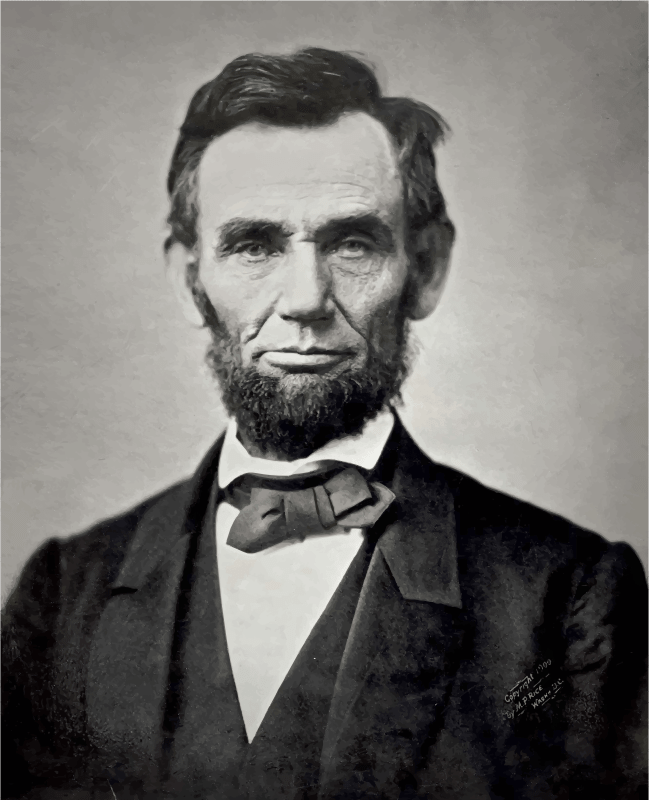
Rather than rehash these ideas, however, I’d instead like to treat you to the greatest political speech ever given in the English language.  It’s all the more remarkable because it continues to inspire even when read silently.  I’m writing, of course, about Abraham Lincoln’s Gettysburg Address.  Here is the transcript (Source:  http://www.gettysburg.com/bog/address.htm):
“Four score and seven years ago, our fathers brought forth on this continent a new nation: conceived in liberty, and dedicated to the proposition that all men are created equal.“Now we are engaged in a great civil war. . .testing whether that nation, or any nation so conceived and so dedicated. . . can long endure. We are met on a great battlefield of that war.“We have come to dedicate a portion of that field as a final resting place for those who here gave their lives that that nation might live. It is altogether fitting and proper that we should do this.

“But, in a larger sense, we cannot dedicate. . .we cannot consecrate. . . we cannot hallow this ground. The brave men, living and dead, who struggled here have consecrated it, far above our poor power to add or detract. The world will little note, nor long remember, what we say here, but it can never forget what they did here. It is for us the living, rather, to be dedicated here to the unfinished work which they who fought here have thus far so nobly advanced.

“It is rather for us to be here dedicated to the great task remaining before us. . .that from these honored dead we take increased devotion to that cause for which they gave the last full measure of devotion. . . that we here highly resolve that these dead shall not have died in vain. . . that this nation, under God, shall have a new birth of freedom. . . and that government of the people. . .by the people. . .for the people. . . shall not perish from the earth. “

 ***
The Gettysburg Address is elegant in its simplicity.  At less than 300 words, it was a remarkably short speech for the time (political and commemorative speeches often ran to two or three hours).  Yet its power is undiminished all these years later.  President Lincoln was only wrong about one thing:  the claim that the “world will little note, nor long remember, what we say here” has proven untrue.
I will likely write a deeper analysis of the Address in November to commemorate its delivery; in the meantime, I ask you to read and reread the speech, and to reflect on its timeless truths.
God Bless America!
–TPP

To read different versions of the Gettysburg Address–there are several versions extant–check out this excellent page from Abraham Lincoln Online:  http://www.abrahamlincolnonline.org/lincoln/speeches/gettysburg.htm.