Ever since President Trump ordered the creation of Space Force earlier this week, I’ve read a lot of snarky Facebook posts and the like mocking the idea.
Some of these posts consist of the usual arm-chair analysis: “Trump did it to distract from the child separation crisis!” and the like (if you look at the timing of the child separation crisis issue, though, it seems like something Democrats ginned up to distract from the IG report released last week).
Much of what I’m reading, though, consists essentially of, “Wow, what a stupid idea. Like we need to have a military in space,” or the more bleeding-heart, “Why do we want to dominate space. LOVE TRUMPS HATE!” That latter one is usually followed up with a link to the Wikipedia entry for the Outer Space Treaty of 1967, as if some Gene Rodenberry-style, early Star Trek-esque treaty is going to keep the ChiComs from building a death laser on the moon (don’t laugh—the Chinese are just wily enough to do it). I’m tired of people using the name of a meaningless treaty in lieu of an actual argument.
When did we stop dreaming? What happened to that Gene Rodenberry-style, early Star Trek-esque drive for space exploration? I realize much of this animosity toward the idea is knee-jerk partisanship: bearded hipsters who probably still sleep in Star Wars pajamas hate Trump so much that they can’t get behind this amazing idea. If Obama had ordered it, they’d be throwing craft beer tasting parties sponsored by Blue Moon.
But I also suspect that Americans aren’t dreaming big anymore. I read a little bit by National Review‘s Charles C. W. Cooke some years ago in which he talked about how great his WiFi-enabled gadgets were, and he essentially argued that we needed to appreciate the future we have instead of the sci-fi rock opera vision of the future we want (R2-D2 playing the bass guitar, taking summer vacation on the moon, using lightsabers, etc.).
While I am incredibly thankful that I can find clips like the one above in mere seconds (even if it is in another language)—and to have vast storehouses of human knowledge mere keystrokes away—does that really mean that’s all there is? Is it ungrateful to say, “Hey, this is incredible—how about even more cool innovations?”
Space is the final—and endless—frontier. As such, it will be the next battleground of human conflict. Instead of laughing at the idea of Space Force, let’s figure out how to make it an efficient, effective fighting force to ensure that liberty endures beyond the 21st century—and our pale, blue dot.
On 10 June 2016, I posted this short piece on the idea—taken from the famous Margaret Thatcher quotation—that “America was created by philosophy.” This post was part of an ongoing examination of American nationalism, which I believe is distinct from other forms of nationalism. Over the past two years, I have grown more convinced that culture plays a key role in defining a national identity, but I still believe in the ideational notion of America, that one can adopt the ideas of America to become part of the national fabric.
In a future post, I will likely explore further the fracturing of that national fabric, as it seems there are increasingly two—and, perhaps, three—cultures competing with one another, making even everyday communication strained. Conservatism and Progressivism represent two opposing worldviews that share almost entirely different philosophical and cosmological foundations. Unchecked immigration, especially from the Third World, represents another potential cultural bloc. Without time to assimilate—to be “baked into” America’s national culture and to absorb American ideals—that third group presents its own threat to national unity, and to the very concept of liberty itself.
***
Near the end of my last post, I included a quotation from the late British Prime Minister Margaret Thatcher. To recap, it was her famous dictum that “Europe was created by history. America was created by philosophy.” What exactly does that mean, and why is it important?
As I also pointed out in my last post, European nationality (and, by extension, the European nation-state) is built on notions of blood and soil. In other words, being French means you are descended from a group of people broadly defined as “French” and you reside within the French “hexagon” (or at least claim that as your home). Obviously, not every European nation-state still pursues this model–in some cases to their detriment–but some, like Italy, strenuously do.
(Post-colonialism, being “French” includes many people outside of this geographic region, and now the French would more broadly define their nationality through shared language and culture–a model that moves closer to what I perceive to be the American model of nationalism).
In the United States–or, more specifically, in colonial British North America–Americans had a unique opportunity to define their national identity far more broadly. Indeed, one could argue Americans did so out of necessity: colonial British North America was a tapestry of cultures, languages, and ethnic groups. Most hailed from the British Isles and Northern Europe, but the 18th century saw large influxes of Germanic and Scotch-Irish immigrants, not to mention the unfortunate forced immigration of the trans-Atlantic African slave trade. Most were Protestant of various stripes–the German settlers in particular brought a rich and baffling array of spiritualism and religiosity to a young America–but Catholics and even a small number of Jews also made the trek to the colonies.
The massive Irish and German immigration brought by the Irish Potato Famine and the failed democratic revolutions of 1848, respectively, brought even more diversity to the land at that point known as the United States, and so-called “New Immigration” after the Civil War saw immigrants from Italy, Lithuania, Poland, Russia, Greece, and beyond.
By the time those “New Immigrants” began arriving in the 1870s until the tide was stemmed in the 1920s, the United States had already developed a model for nationality born of its colonial experience. Indeed, the young United States proclaimed its nationality at the very moment it proclaimed its independence from Great Britain.
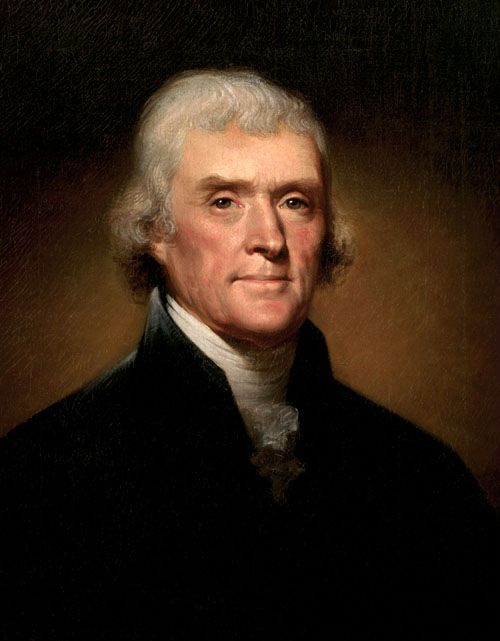
In writing the Declaration of Independence, Thomas Jefferson laid down the framework for what it means to be an American. Jefferson, like all of the Founding Fathers, believed in the universal rights of men, rights derived not from any worldly, temporal authority, but from God Himself. Every civics student is familiar with the ringing declaration that “We hold these truths to be self-evident, that all men are created equal, that they are endowed by their Creator with certain unalienable Rights, that among these are Life, Liberty and the pursuit of Happiness.” Herein we see the roots of American values, birthed through the centuries by the tenacity of independent-minded Englishmen and bolstered by the more admirable claims of the Enlightenment.
However, many modern readers miss the first paragraph of the Declaration, which opens with the phrase “When in the Course of human events….” This seemingly innocuous phrase holds within it deep wells of significance. Jefferson here is saying that these ideals and rights are not specific to one place or one time. The “human” here refers, rather, to all of humanity. The phrase “in the Course of human events” refers to the timeless quality of these values–the self-evident truths of the Declaration apply yesterday, tomorrow, and forever–ad infinitum.
This simple phrase, then, goes a long way in explaining why the young United States was able to hold together in spite of its broad diversity of ethnic groups and religions, while the similarly diverse Austro-Hungarian Empire, which attempted to balance the interests of different ethnic groups by favoring some and oppressing others, ultimately collapsed. The universal truths of the Declaration, espousing universal rights bestowed by the very Creator of the universe, give all men the opportunity to live their lives as they wish, confident in their liberty and free to pursue happiness and fulfillment as they please.
No doubt this philosophy of God-given liberty has bolstered the United States economically, allowing it become the richest, most prosperous nation on Earth–surely a carrot for future and continued immigration. Ultimately, however, the most successful and fulfilled Americans, both native-born and immigrant, are those that come to embrace the core philosophy of the American experience.
A sad note in parting: the increasing ignorance of these God-given rights, and the increasing balkanization of the American nationhood into favored classes and victim groups as a result of said ignorance, is undermining the universal vision of the Founders. America today looks more and more like the Austro-Hungarian Empire of the early 20th-century: decadent and splendid on the surface, but torn by internal turmoil and ethnic strife within.
To avoid a similar state, the United States must make a concerted effort to revive the Founders’ understanding of the American philosophy enshrined in the Declaration of Independence.
President Trump was nominated by two members of Norway’s Progress Party, a conservative party that supports lower taxes and limited immigration, so it’s no surprise on that front, and it’s still a long way from winning the coveted Prize itself.
I was, initially, a Trump skeptic, and I voted for Texas Senator Ted Cruz in the South Carolina primaries the following February. When Trump first announced, I wrote him off—as so many others—as a joke. I appreciated his boldness on immigration, but I still thought the PC Police and the campus Social Justice Warriors were firmly in control of the culture, and that no one could speak hard truths.
I also remembered his brief flirtation with running in 2012, and thought this was just another episode in what I learned was a long history of Trump considering a presidential bid. At the South Carolina Republican Party’s state convention earlier in 2015, I asked two young men working on Trump’s pre-campaign (this was before The Announcement) if he was really serious this time. The two of them—they looked like the well-coifed dreamboat vampires from the Twilight franchise—both assured me that Trump was for real, and I left with some Trump stickers more skeptical than ever (note, too, that this was before the distinctive but simple red, white, and blue “Trump” lawn signs, and definitely before the ubiquitous “Make America Great Again” hats).
I even briefly—briefly!—considered not voting for Trump, thinking that he was not a “real” conservative. I still don’t think he’s a conservative in the way, say, that a National Review columnist is (although, the way they’ve gotten so noodle-wristed lately, that’s a good thing; I’ve just about lost all respect for David French’s hand-wringing, and Kevin Williamson went off the deep-end), but rather—as Newt Gingrich would put it—an “anti-Leftist.” That’s more than enough for me.
But my conversion to Trump came only belatedly. I can still find a notebook of notes from church sermons in which I wrote, “Ted Cruz won the Wyoming primary. Thank God!” in the margins.
Then something happened—something I predicted would happen on the old TPP site—and I couldn’t get enough of the guy. It wasn’t a “road to Damascus” epiphany. I started listening to his speeches. I read up on his brilliant immigration plan (why haven’t we taxed remittances yet?). I stopped taking him literally, and began taking him seriously.
And I noticed it happening in others all around me. Friends who had once disdained the Republican Party were coming around on Trump. Sure, it helped that Secretary Hillary Clinton was a sleazebag suffused with the filth of grasping careerism and political chicanery. But more than being a vote against Hillary, my vote—and the vote of millions of other Americans—became a vote for Trump—and for reform.
Trump made politics interesting again, too, not just because he said outrageous stuff on live television (I attended his rally in Florence, South Carolina before the SC primaries, and I could feel his charisma from 200 feet away; it was like attending a rock concert). Rather, Trump busted wide open the political orthodoxy that dominated both political parties at the expense of the American people.
Take trade, for example. Since World War II, both Democrats and Republicans have unquestioningly supported free trade. Along comes Trump, and suddenly we’re having serious debates again about whether or not some tariffs might be beneficial—that maybe it’s worth paying a little more for a stove or plastic knick-knacks if it means employing more Americans.
That’s not even to mention Trump’s legacy on immigration—probably the most pressing issue of our time, and one about which I will write at greater length another time.
Regardless, after over 500 days in office, the record speaks for itself: lower taxes, fewer regulations, greater economic growth, greater security abroad. At this point, the only reasons I can see why anyone would hate Trump are either a.) he’s disrupting their sweet government job and/or bennies; b.) they don’t like his rhetorical style, and can’t get past it (the Jonah Goldbergite “Never Trumpers”—a dying breed—fall into this group); or c.) they’re radical Cultural Marxists who recognize a natural foe. Folks in “Option B” are probably the most common, but they’re too focused on rhetoric and “decorum”—who cares if he’s mean to Justin Trudeau if he gets results? The folks in “Option C” are willfully ignorant, evil, or blinded by indoctrination.
As the IG report from last Thursday revealed—even if it wouldn’t come out and say it—the Deep State is very, very real. That there were elements within the FBI willing to use extralegal means to disrupt the Trump campaign—and, one has to believe, to destroy the Trump presidency—suggests that our delicate system of checks and balances has been undermined by an out-of-control, unelected federal bureaucracy. Such a dangerous threat to our republic is why we elected Trump.
President Trump, keep draining the swamp. We’re with you 100%.
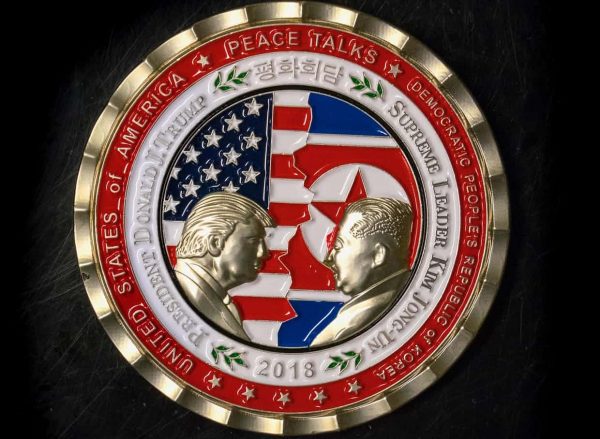
Wow, what a week. President Trump met in Singapore with North Korean dictator Kim Jong-un, an historical meeting the effects of which we still don’t fully know or understand. Will Kim stick to his pledge to denuclearize the Korean Peninsula? Can we trust him? Is President Trump playing another masterful round of 4-D chess, or simply legitimizing a brutal regime and its evil leader?
Questions abound, as do interpretations. Ben Shapiro at The Daily Wire (video below) argues that conservatives are getting too excited, too soon, and purely on a partisan basis. While I do think we should proceed with caution—the Kim family has promised denuclearization eight times before—there is reason for optimism.
Historically, I would point to Mikhail Gorbachev’s 1988 visit to the United States, in which he fell in love with the country. The same criticisms abounded then—“human rights abuses!,” “gulags!,” etc.—and, while those criticisms were as true for the Soviet Union as they are—and even more so!—for the Kim regime, the door was opened for diplomacy, leading to the Intermediate-Range Nuclear Force (INF) Treaty. Ultimately, the Soviet Union collapsed, largely peacefully.
Kim seems to have some similarities to Gorbie, and some key differences from other authoritarian and totalitarian regimes in the world today. For example, Kim seems genuinely to love Western culture—he hangs out with Dennis Rodman, he eats McDonald’s (clearly).
North Korea is certainly a terrible, totalitarian place, but the old ideology of Juche seems quaint. No one is going to blow themselves up to wear coveralls made from refined clay.
Cuba, too, is an old-school Cold War frontier, but the Obama administration got nothing from Cuba when it lifted the embargo—not even the release of political dissidents! The Cuba analogy fails, too, because we’ve already defanged Cuba, and have nothing to gain from opening up relations. Keep grinding out the sanctions there, for the sake of Cubans.
Consider, too, President Richard Nixon’s “opening” of China in the 1972. He met with the bloodiest dictator of the 20th century, Chinese Chairman Mao Zedong, which caught the ire of conservatives and anti-Communists in the West. While Mao’s atrocities and lethal policies were devastating to human life and contributed to the annals of misery Communism has inflicted upon humanity, Nixon and Henry Kissinger realized the diplomatic opportunity that presented itself, and took the plunge. China is still authoritarian and aggressive, but it’s beginning to fit in with the respectable, stable nations of the world.
Similarly, North Korea must be a liability to China, which is surely fed up with its tin-pottery. While China dreads seeing a unified Korean Peninsula, that might be better than dealing with a client-state that is becoming less of a strategic asset and more of a liability. Trump’s “war of words” last summer—including the hilarious “my button is bigger” tweet—played the game that Kim and the ChiComs understand. That’s why the President and Kim met, and why Kim will come to the United States.
That brings us back to Gorbie’s 1988 visit—just as he was enamored by the USA, I predict that Kim will be similarly blown away (and not via assassination, as Ben Shapiro mused about in one of his recent podcasts [Note: I watch Shapiro’s podcast, The Ben Shapiro Show, daily, and at the time of writing I could not find in which recent podcast he talked about assassinating foreign leaders, but he quipped that he disagreed with the Carter-era prohibition on taking out particularly wicked heads of state; I’m just not willing to go back through hours of video to find it]).
Have you ever seen recent immigrants from other countries that have this really one-dimensional idea of America? They think it’s all fast cars, hot babes, overweight cowboys, New York City, and rap music—and they eat it up, assimilating whole-hog in the most cartoonish way possible. I would not be surprised if Kim took the same route. He’s already chillin’ with Dennis Rodman. Homeboy’s going to be wearing a Chance the Rapper ballcap and eating French fries by the end of his first round of golf at Mar-a-Lago.
And what of Dennis Rodman? My earliest memory of D-Rod was a picture of him sporting bright green hair and a bunch of piercings—keep in mind, this was probably the 1990s, when the average person didn’t color his hair and get covered in tattoos (“this one represents my individuality”)—and I always assumed he was a crazy attention hog. When I heard he was hanging out with Kim Jong-un, I figured he’d gone full Jane Fonda.
But… maybe he really was trying to create understanding between the United States and North Korea. Maybe he was trying to bridge a gap across political systems and cultures. And—maybe it worked.
I’ve watched Rodman’s interview with CNN’s Chris Cuomo (video below)—the one in which Rodman is sporting a “Make America Great Again” hat—and I don’t think his tears are fake. When I saw the clip originally on The Ben Shapiro Show, I was in awe. Here was a guy whose heart was open for all to see on national television. When he said (paraphrasing) “Even when no one would believe and no one would listen, I kept going, because I believed we could work out our differences,” my jaw dropped.
How many times, as a conservative in a progressive culture, have you felt alone, but you kept soldiering on, knowing that there was hope, that what you believed was right, even when you couldn’t articulate it in the face of overwhelming opposition? I doubt I’ll ever write this again, but in that moment, I identified with Dennis Rodman. I understood him.
Do not take anything I’ve written here as a trivialization of North Korea or the Kim family’s decades of atrocities. The people of North Korea are brainwashed and abused, put to death for exchanging James Bond DVDs, starving because their terrible government doesn’t function properly, and their leaders have purposefully isolated them from the world. It’s an hellacious place, and we shouldn’t legitimize an evil, totalitarian despot.
BUT—if President Trump can sway Kim Jong-un, and begin the liberalization of North Korea—if not the reunification of the Korean Peninsula—it will do the most since the opening of China in 1972 to improve the lives of millions of people. The North Korean people will be brought out of the darkness and into the community of nations.
Yes, China is still authoritarian, and denies its people their basic political and civil rights, but North Korea can have the chance to forge its own path forward. South Korea was under a military dictatorship until the 1980s; it’s now one of the freest, most prosperous nations in the world (and really good at Starcraft).
Only time will tell. My prayers go out to the people of North Korea, and I urge my readers to pray for them, as well—and that President Trump and Kim Jong-un have the wisdom and discretion to act in the best interest of liberty.
Back in 2016, I wrote a series of essays on the then-approaching Brexit vote. Just like the American presidential election that autumn, there was a great deal of misinformation and obfuscation about the “Leave” side—the Leavers were racist and xenophobic; voting “Leave” would cause the world to collapse and the Universe to fold in upon itself; boorish working-class Brits would rebel once they realized they’d lost their sweet European Union bennies.
Of course, the Brexit vote was a major blow against supranational tyranny, and a major victory for liberty and national self-interest. The European Union does not function like the United States and its federal system of semi-sovereign entities; rather, it’s largely ruled and governed by a small cadre of unelected, hyper-progressive, cosmopolitan bureaucrats with little regard for national differences or interests.
It was this philosophical and foundational tack that I sought to take with Brexit. Brexit was not a policy matter that presented two sets of pros-and-cons, although that was part of the discussion. Rather, Brexit posed a fundamental question: does a nation have the right to determine its own national destiny—to act in its own self-interest, as it and its people see fit? Further, did the European Union provide a framework in which nations could maintain sovereignty while enjoying the benefits of union?
I believe the Brexit vote—and the ongoing discussions about what Brexit will look like—reflected these timeless questions, and though the vote has long-since passed, the topic maintains a perennial quality for those interested in political philosophy.
To that end, I’ll be compiling, re-editing, and otherwise modifying my 2016 Brexit essays into a new eBook, Tyranny Denied: Reflections on Brexit. I’ll also be adding some chapters and historical notes.
That book, along with my long-planned eBook on social conservatism, Values Have Consequences, should appear later this summer or autumn—just in time for Christmas.
Today in South Carolina, hundreds of thousands of voters will head to the polls to vote in either the Democratic or Republican primaries. In the spirit of this time-honored and precious American right, I’d like to explore the Republican Party’s history of defending and expanding the franchise.
Democrats are fond of accusing Republicans of a “war on women” and of attempting to “silence minority voters.” But a brief glance at the historical record suggests otherwise.
Republicans were key in pushing for the ratification of the 15th Amendment, which granted all men, regardless of race, the right to vote. Ratified in 1870, the amendment immediately faced resistance in the heavily-Democratic South of the Reconstruction era. Both white and black Republicans in the South faced persistent repression at the hands of groups like the Ku Klux Klan and the Redeemers, who used intimidation and even violence to prevent Republicans from voting.
In response, President Ulysses S. Grant signed the Enforcement Acts, which included the Ku Klux Klan Act, in 1870-1871. These acts made it a federal offense to suppress voters through violence or intimidation, and ensured Republican victories in a number of States in the post-bellum Deep South.
Fifty years after the ratification of the 15th Amendment, Republicans once again pushed to expand this franchise, this time through the longsuffering women’s suffrage movement. The Republican-controlled government of Wyoming first extended the right to vote to women in all elections in 1869, and a number of States—mostly in the Old West—followed suit, but Democratic recalcitrance had stalled further efforts towards women’s suffrage in other States.
While progressive Democratic President Woodrow Wilson reluctantly came to support women’s suffrage as a wartime measure—after initially opposing giving women the right to vote—the major push for women’s suffrage was a Republican one. The vote over ratification came down to a single Tennessee State legislator, Harry T. Burn, who cast the tie-breaking vote in favor of ratification—making Tennessee the required 36th State to ratify and, therefore, amend the Constitution—after his mother wrote to admonish him to “Hurray and vote for suffrage. Don’t forget to be a good boy.” The son dutifully complied, and women all over the nation gained the right to vote.
Democrats deride sensible voter ID laws and other attempts to clean up elections as insidious attempts to suppress minority voters, while steadfastly ignoring their own checkered past of overt, often violent, suppression.
Fortunately, the Republican Party has consistently stood firm against such suppression, expanding and protecting the franchise for millions more Americans.









 The Portly Politico