TBT: Progressivism and Political Violence

It’s another late post today, as my post-New Jersey schedule is still a bit wonky.  I just got done with a twelve-hour stint of uncling, so there was barely time to eat lunch, much less write a blog post—even a quick TBT feature.

Given the recent attacks on conservative journalist Andy Ngo, it seems apropos to dedicate this week’s to one of my classics of the modern, TPP 3.0 era:  “Progressivism and Political Violence.”  I wrote this essay back in June 2018, and I’ve probably linked to it more than any other post I’ve ever written, because it touches upon so much of the Left’s pathos.

I wrote at the time that, if the Left lost all the arms of the government, they would use extreme violence to accomplish their ends.  That was before I fully appreciated how extensive and pervasive the Deep State truly is—the Left is so entrenched, it can never really be out of power in the current state of play.

Read More »

#MAGAWeek2019: President Trump’s Independence Day Speech

It’s #MAGAWeek2019 here at The Portly Politico.  Each day’s post will be a SubscribeStar exclusive.  For a subscription of $1/month, you gain exclusive to each day’s posts, as well as exclusive content every Saturday throughout the rest of the year.  Visit my SubscribeStar page for more details.

I was not planning on writing about President Trump’s incredible Independence Day speech as part of , mainly because I try to keep these posts historical.  The speech was so powerful, though, and so educational in a historical sense, it and President Trump have earned a spot (alongside the president’s favorite food) as part of my annual celebration of American greatness.

Read More »

#MAGAWeek2019: John Adams

It’s here at The Portly Politico.  Each day’s post will be a SubscribeStar exclusive.  For a subscription of $1/month, you gain exclusive to each day’s posts, as well as exclusive content every Saturday throughout the rest of the year.  Visit my SubscribeStar page for more details.

Yesterday’s edition of looked briefly at the career of our first Secretary of Treasury, Alexander Hamilton.  Hamilton’s controversial financial proposals helped put the nation on a sound financial footing, but also created a rift between loose constructionist Federalists, who favored a national bank and closer commercial ties with Great Britain and protective tariffs, and the strict constructionist Democratic-Republicans, who wanted a nation of small, independent farmers and more diffused power.

Alongside Hamilton in the new Federalist Party was another important figure, one somewhat maligned by history, but who has enjoyed a revival of reputation thanks to a popular HBO miniseries and a thorough treatment from popular historian David McCullough:  our second President, John Adams.

Read More »

Lazy Sunday XVI: #MAGAWeek2018

This week marks the beginning of , my celebration of the men, women, and ideas that MADE AMERICA GREAT!  Starting Monday, July 1 and running through Friday, July 5, this year’s posts will be SubscribeStar exclusives.  If you want to read the full posts, subscribe to my SubscribeStar page for as little as $1 a month.  You’ll also get access to exclusive content every Saturday.

To celebrate , this edition of Lazy Sunday features the four essays from #MAGAWeek2018.  They pull from my years of teaching and reading American history, and I hope you enjoy reading them as much as I enjoyed writing them.

1.) “George Washington” – The Father of Our Country!  Social justice bleeding hearts and historical revisionists have striven for years to cast Washington and the other Founders as greedy slave owners who wrote a wicked, capitalistic Constitution to preserve their own power.  What a cartoonishly stupid view of American history!  George Washington was an able leader, and demonstrated a trait that the modern Left would do well to learn:  mercy.

2.) “John Quincy Adams” – John Quincy Adams was a terrible president, and suffered from the aloof elitism of our modern coastal elites (he was even staged against the Trump of his time, the populist hero Andrew Jackson).  That said, he was the best Secretary of State this nation ever had (so don’t be too hasty in drawing comparisons between him and Secretary Hillary Clinton).  JQA crafted America’s expansion across the continent with adept skill.  Read all about it in my lengthy biography.

3.) “Thomas Jefferson & The Declaration of Independence” – Jefferson is, other Washington, Madison, Hamilton, and a handful of other Founders, our most important Founding Father.  He wrote the Declaration of Independence, with its lofty ideals of God-given rights and liberty.  He was a Renaissance Man, talented in many areas, and while he harbored a naive support for the French Revolution (and revolutions generally), his philosophic mind bequeathed to the world a document that is a thunderclap for liberty here and abroad.

4.) “Limited Government” – This post largely focused on the Madisonian system of the Constitution.  I fear that we no longer truly live under the constitutional order that Madison and the fifty-four other Framers created, as our insidious Deep State and bureaucratic elite resist the results of elections and despise the very citizens they are charged to serve.  Let us hope the spirit of 1787 will move Americans again to insist upon the restoration of limited government.

Enjoy this look back at our nation’s history, and stay tuned for more entries this week!

–TPP

Other Lazy Sunday Installments:

Summer Reading: The Story of Yankee Whaling

I released the Portly Politico Summer Reading List 2019 on my SubscribeStar page a few weeks ago, which features a few books I highly recommend.

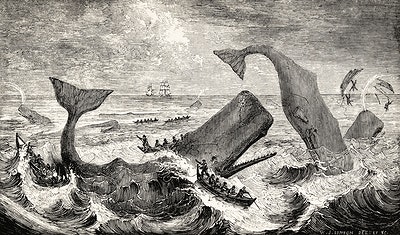
After dashing off yesterday’s post on Sunday night, I picked up a little book I’ve had in my private collection for some years now, The Story of Yankee Whaling.  It’s part of the now-defunct American Heritage Junior Library series of history books for young readers, and it’s a charming little volume about the grand adventures and brutal lives of whalers in colonial and nineteenth-century America.

The first edition of the book was published in 1959, but my edition is a slender paperback edition from 1965.  It is rich in primary source documentation, as well as sketches and woodcuts from the high watermark of whaling.  The author is Irwin Shapiro, who worked closely with Edouard A. Stackpole, the then-curator of the Mystic Seaport Marine Historical Association in Mystic, Connecticut.

Read More »

Southern Conservatism: John Randolph of Roanoke

MAGA Week 2019 is one week away!  Get ready to celebrate America all week long!  This year, all MAGA Week posts will be exlusive to my SubscribeStar page, so subscribe today!  $1 a month gets you full access to all posts, including new content every Saturday.

As my History of Conservative Thought course rolls on, I’m learning more about the forgotten byways and overgrown, stately ruins of the various branches of conservatism.  Students this week are reading a couple of documents from John Adams and Alexander Hamilton, the two founders of the Federalist Party, and key to the passage of the Constitution.  Hamilton, the author of the bulk of the pro-ratification Federalist Papers, also created the financial system upon which the United States functions today.

Hamilton and Adams have both enjoyed renewed interest in recent years, Hamilton due to the smash Broadway musical about his life, and Adams from a critically-acclaimed HBO series (one that, sadly, takes some unnecessary artistic license with the past).  In the case of Hamilton, American history students are often enthusiastic to get to him in my AP US History course, and Hamilton mega-fans often know more about the first Secretary of Treasury than I do.

But we’re reading a speech from another important figure from American history, albeit one largely forgotten:  John Randolph of Roanoke.

Read More »

SubscribeStar Saturday: Christians Protect Other Faiths

There’s been a debate raging on the Right between David French and Sohrab Ahmari that is ostensibly about civility in the political arena.  What it’s really about is a struggle for who will dominate conservatism:  the plucky culture warriors of the populist, Trumpian Right, or the hand-wringing sellouts of Conservatism, Inc.

That’s a story for another SubscribeStar Saturday, but is relevant to this topic.  Ahmari and other First Things writers signed their names to a manifesto in March detailing their resistance to and struggle against the prevailing liberal-progressive orthodoxy.  In his controversial follow-up piece, “Against David French-ism,” Ahmari soundly rejects hyper-individualism (and the kind of weak-willed ineffectualism of libertarian solutions to political and social problems) and vaguely calls for a state more attuned to Christian principles.

Critics are accusing him of advocating for a Catholic theocracy, which is, of course, completely unworkable in the pluralistic United States.  But I don’t think that’s precisely what Ahmari has in mind (although it’s a bit unclear).  He is correct that the United States was founded to be an implicitly Christian country.

To read more, subscribe to my SubscribeStar page for $1 a month or higher.  Surely you want to read how I support such a sweeping claim, yes?

McClay & Sheaffer on American History

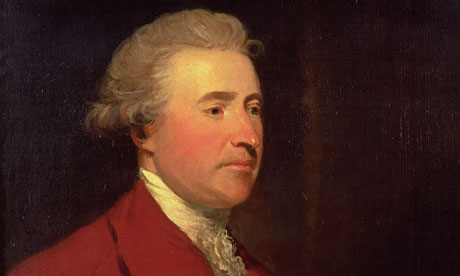
It’s been a history-packed week for yours portly.  Tuesday morning my History of Conservative Thought students and I continued our examination of Edmund Burke, the great Member of Parliament and godfather of Anglosphere conservatism.  Burke foresaw the radical nature of the French Revolution well before the guillotining began.

On Thursday, I had the opportunity to substitute a colleague’s summer course, Terror and Terrorism, a popular course he’s run for several summers now.  Students in that course read excerpts from John Jacques Rousseau’s Social Contract (PDF, the same one the students read, in part), a political philosophy perhaps the polar opposite of Burkean traditionalism.

Rousseau’s theory of the “general will” is, I would argue, responsible for the radicalism of the French Revolution—which wrought the Bolshevik (Russian) Revolution, the Maoist revolutions of the Great Leap Forward and the Cultural Revolution, and on and on.  There’s a reason one of my Conservative Thought students claims that “the French Revolution was the first Communist revolution,” by which he means it contained within it the collectivist ideals of Rousseau’s general will.

But I digress.  In the spirit of all that historical musing, I thought I’d recommend two pieces I’ve read recently about the historian’s craft, and the dangers of applying a progressive lens to our understand of the past.

The most recent piece is a post from Practically Historical, entitled “Expunging Our Past.”  Gordon Sheaffer‘s pithy historical posts are enlightening and engaging, and fits with an argument he makes in this post:

“History should be popular.  Our past must be understood by the citizenry- historical studies targeted only at academics cannot be how we measure the discipline.  There is a way to make history insightful and enjoyable.”

Amen!  One of my great frustrations while in graduate school was the ponderous relativism inherent in the jargon-laden, hyper-focused monographs we were forced to read.  I certainly acknowledge the usefulness and necessity of thoroughly researching a small corner of our historical experience, but what happened to the grand, sweeping histories of the eloquent generalist?

When I was a younger man, I relished reading accessible (but, nevertheless challenging) works of history, especially broad overviews of a time period or nation.  It’s fascinating to learn about the minutiae, to be sure, but a good historian should be able to give the broad strokes and the colorful details.

But the real point of Sheaffer’s piece is that the progressive revisionists are attempting to reduce American history to a Marxist (and Manichean) story of class struggle.  That trend dates back to Progressive Era historian Charles Beard, who famously argued that the Constitution was merely an economic arrangement that benefited the wealthy Framers, protecting their wealth and privilege at the expense of the common man.

Archfiend (and political scientist, not historian) Howard Zinn continued that theme in the popular-but-inaccurate A People’s History of the United States, which has sadly been adopted in many school districts across the country as an American history textbook.  Zinn presented American history as a procession of plutocrats exploiting the working people and racial minorities for personal aggrandizement, rather than the rich tapestry of hard-working yeoman and laborers who really built the country under the protective auspices of the Constitution.

Just as Burke was the antidote to Rousseau, so historian Wilfred McClay serves as a corrective to the partisan excesses of Zinn.  He’s written a new textbook, Land of Hope, which strives to be a “well-written and appealing history of the United States that, while being informed by the best scholarship, does not lose sight of the big picture about our nation’s admirable and exceptional history.”

McClay argues that without a proper foundation in our own nation’s history, we are unable to govern ourselves.  Quite true:  I would argue that a large part of our current national discontent and brutal culture war is that we have two very different visions of America.  The one is an America that is strong, liberty-loving, fair-minded, and great; the other is of an America that is exploitative, prejudiced, greedy, and callous.

That’s why I’ve long argued that simply requiring students to take an American history course to graduate from high school and/or college isn’t enough to move the needle.  It does no good if the course is a collection of progressivist pabulum or a crash-course in victim studies.  There’s no guarantee your high school history teacher—likely certified from a progressive education program—will actually teach American history fairly or accurately, much less your community college adjunct.

There are a ton of choice tidbits in this interview McClay gave to Encounter Books, the publisher of Land of Hope, but here’s a good excerpt on Zinn:

Encounter: Howard Zinn said that his goal in writing A People’s History of the United States was to create a “quiet revolution” in our understanding of American history. Did he succeed in that endeavor?

McClay: Yes and no. He succeeded in unsettling many aspects of the consensus in which American historical writing was embedded. He did this to an astonishing degree, particularly since he was not himself a historian. But he did not succeed in providing a substitute account of American history that goes beyond simplistic melodrama. Most honest historians will acknowledge that, even if they are sympathetic to Zinn’s leftist politics.

Encounter: Why was Zinn’s account so popular?

McClay: It is engagingly written, and gives a simple-minded, moralistic, account of the past as the struggle between the white hats and the black hats, the Children of Light and the Children of Darkness. For some people, including many Americans who have felt disillusioned by our national flaws, this has been irresistible.

He also rails against the AP US History exam, which used to the “gold standard,” as he puts it, but which has suffered due to constant “tinkering with the exam, and interjection of themselves into what teachers actually teach in AP courses.”  I teach APUSH, and what McClay writes is absolutely true.  It’s bad enough teaching to a test every year—you don’t have the opportunity to luxuriate in the warm waters of historical detail—and it’s worse when the College Board tries to alter the exam every five minutes.

To close, one more powerful quotation from McClay:

Students should learn that history is not merely an inert account of self-explanatory details, but is a task of reflection that calls to our deepest sense of our humanity. And learning our history, the history of our own country, is part and parcel of learning who we are, and learning about the society of which we are already a part.

Again, I say, amen!

History of Conservative Thought Update: Edmund Burke

A bit of a delayed post today, due to a busier-than-usual Monday, and the attendant exhaustion that came with it. The third meeting of my new History of Conservative Thought class just wrapped up, and while I should be painting right now, I wanted to give a quite update.

Last week, we began diving into the grandfather of modern conservatism, Edmund Burke. Burke prophetically saw the outcome of the French Revolution before it turned sour, writing his legendary Reflections on the Revolution in France in 1789 as the upheaval began. Burke argued that the French Revolution ended the greatness of European civilization, a Europe that governed, in various ways, its respective realms with a light hand, and a sense of “moral imagination.”

To quote Burke reflecting on the Queen of France:

“I thought ten thousand swords must have leaped from their scabbards to avenge even a look that threatened her with insult. But the age of chivalry is gone. That of sophisters, economists, and calculators, has succeeded; and the glory of Europe is extinguished forever. Never, never more, shall we behold that generous loyalty to rank and sex, that proud submission, that dignified obedience, that subordination of the heart, which kept alive, even in servitude itself, the spirit of an exalted freedom. The unbought grace of life, the cheap defence of nations, the nurse of manly sentiment and heroick enterprise is gone! It is gone, that sensibility of principle, that chastity of honour, which felt a stain like a wound, which inspired courage whilst it mitigated ferocity, which ennobled whatever it touched, and under which vice itself lost half its evil, by losing all its grossness.”

What a powerful excerpt! The “sophisters, economists, and calculators,” indeed, reign in the West. What Burke was driving at here was that the rationalistic, abstract bureaucrats who would abandon tradition in their quest for a perfect society would sacrifice everything that made their country great, and life worth living.

Burke was also arguing that there is more to obedience to a government or king than the mere threat of power. People are invested in their country and society—and willing to submit to authority—because of organic culture from which it grows. Uprooting the great tree of tradition in favor of abstract foundations merely destroys the tree, and plants its seedlings in shallow ruts of stone. What grows will be anemic and pitiful by comparison.

Volumes could and have been written about Burke, but I’ll leave it here for now. Next week we’re getting into the development of Northern and Southern conservatism, which should make for some pre-Independence Day fun.

TBT: Reality Breeds Conservatism

Yesterday’s post, “Conservative Inheritance,” explored the deep grounding of conservatism in hard-won experience.  Rather than existing as an ideology–a framework built upon abstract principles derived in a rationalistic vacuum—per se, conservatism is the product of concrete, empirical observation.

As I’m teaching my summer course, The History of Conservative Thought, I’m delving deeper into this understanding of conservatism.  Last week I wrote about the Russell Kirk’s six characteristics of conservatism, which my students and I discussed (and which they’re writing about for today).  While preparing that lesson, I was struck by the assertion that conservatism is not an ideology.

For so long, I’d been conditioned to think of it that way—and to think of our cultural and political battles as fundamentally ideological.  I still think there is a great deal of truth to that, as the modern Right battles against a progressivism imbued with a Cultural Marxist teleology (apologies, philosophy majors, if I’m misusing that word).  But conservatives must be aware that, by playing by the Left’s rules, we’re implicitly accepting the Left’s frame.

Regardless, all of these ideas and debates were circulating in my mind as I considered this week’s feature.  I landed, finally, on a piece entitled “Reality Breeds Conservatism” from last June.  The piece is not so much about ideological battles, but about a study (linked below) that argued that fewer risks made people more “liberal”—more willing to take risks—while greater risks made people more “conservative”—less willing to take risks.

Great insights there, Washington Post.  Yeesh.

Anyway, here is June 2018’s “Reality Breeds Conservatism“:

There’s a piece in the Washington Post about how progressives (“liberals,” as the article puts it) and conservatives think differently.  Like many such pieces, it essentially reduces conservatives to being more fearful, and touts that, in the absence of fear, conservatives become liberal.

I don’t entirely disagree with the basic findings of the Yale researchers; beloved Canadian psychologist Jordan Peterson makes similar claims.  Peterson argues that progressives are risk-takers, the ones who explore over the mountain or innovate new businesses, while conservatives are the managers (and conservators) of the new institutions that arise from innovation.

Obviously, this basic analysis is a generalization, a reduction that makes it a little easier to understand the world around us.  As such, there are broad exceptions:  we all know conservatives who fight hard in the culture wars, who build new businesses, and who support new ideas or techniques—many at great personal, financial, and political risk.

Meanwhile, progressives politically are still clinging to the same failed ideas that have motivated their policy proscriptions for decades—increasing the minimum wage, expanding the welfare state, pushing identity politics.

That said, the article linked above—which chillingly says “we conducted an experiment to turn conservatives into liberals” in the title—points to the fear factor as the key to determining conservative vs. progressive viewpoints.  In doing so, it points to said experiment, which is deeply flawed at its core.

To wit:  researchers conducted an online poll (a bit iffy) of 300 U.S. residents, only 30% of whom were Republicans.  Two-thirds of the survey-takers were women, and 75% were white, with an average age of 35.  This collection isn’t exactly heavy on conservatives to begin with, and it’s unclear who was offered the opportunity to take the survey, which itself has a verysmall sample size.  I’m picturing a group of undergraduate psychology chicks posting a link to a SurveyMonkey survey on Facebook, which is about the amount of rigor I would expect from the “academic” social sciences these days.

Besides the small sample size and lack of diversity, the core flaw is the methodology.  Those surveyed were asked to imagine a scenario in which they were given one of two superpowers:  half were granted the power to fly, the other half granted the power “to be completely safe, invulnerable to any harm.”  The participants then completed the aforementioned survey.

What they found was not all that surprising, although the researchers feign as such:  it turns out that, in the absence of physical harm, conservatives become much more progressive, which—in the context of this study—basically means that they’re more open to people or situations that are different from them, and therefore inherently riskier.

Well, duh—in the absence of objective reality—to be free of any risk of physical harm, broadly-defined—I would partake in all sorts of risky activities that I would be reluctant to attempt when the threat is real.  That’s because I wouldn’t bear the costs of any of those risky actions (and as someone who broke a wrist falling from a ladder last fall, I can say that those costs are very high).

The late Kenneth Minogue wrote an essay in 2001 entitled “The New Epicureans,” in which he pointed out that, historically, only the very wealthy—the aristocratic elites of society—could afford to partake in risky behaviors, things like casual sex, drug abuse, and the like—while the rest of us plebes had to adopt a more Stoical approach to life—avoiding undue risk, living life cleanly and simply, dutifully serving our families and communities.

With broadly-spread wealth and widely-available contraceptives, however, modern chumps can mitigate the risks of a “live fast, die young” lifestyle in the same way ancient elites could—to an extent. What used to be the self-indulgent indolence of a very small group (the hated 1%!) has now become the self-destruction of a majority of modern Westerners.  And, of course, it doesn’t work out well, as most folks don’t have the means to pay for their immoral-but-convenient choices.

While we might be able to avoid more of the consequences of our actions—and, therefore, participate more eagerly in the temptations of a hedonic existence—there are still consequences, often dire ones.  I’ll write about some of these in my upcoming eBook, Values Have Consequences:  Why the West Needs Social Conservatism, but take one lethal example:  abortion.

What could more self-destructive, for more selfish ends, than to snuff out a human life?  Looking at this in the most dispassionately, economic way possible, it boils down to a calculation:  do I buckle down and adopt the Stoic lifestyle necessary to provide for this new life, thereby sacrificing my own personal enjoyment, or do I get rid of this “clump of cells” and avoid the huge costs and time-commitments of childrearing?  The major legal hurdles being removed via the disastrous Roe v. Wade ruling—and in the absence of a deep-rooted moral framework—many women, sadly, have opted for the latter option (which many, sadly, come to regret).

So, yes, if you strip away external costs and the threat of pain, people of any political or temperamental persuasion will indulge in more risk-tasking, for good and for ill, and might be more welcoming of strangers or alternative lifestyles.

But a healthy dose of Stoic skepticism about life is not detrimental.  We should not live our lives in fear, but we should govern sensibly—for example, by enforcing our national borders.  In short, conservatism is rooted profoundly in reality—it responds to real threats, prepares for real dangers, and seeks to build a life that, rather than relying on vague abstractions, grows organically from the nature of things as they are.

***

One final note:  the study found that, when witnessing acts of physical violence or hearing about one group or another causing trouble, liberals will become more conservative, even if temporarily.  This was true of the original “neocons” in the 1960s and 1970s, who were “mugged by reality.”

I believe it also holds true for those soft-liberals and centrists who saw the electoral chicanery, cultural division, racialized politics, and violent tactics of the Left in the 2016 election; having been “mugged” once again, they voted for a safety and reform.

Thank God Trump is a risk-taker.