Passing of Bernard Bailyn

Last week, legendary historian of colonial America Bernard Bailyn passed away at the age of 97, making his own voyage into the next life.  Blogger buddy Gordon Sheaffer at Practically Historical wrote a brief but effective tribute to Bailyn earlier this week.

As Sheaffer wrote Monday:

No other scholar impacted the study of the American Revolution more than Bailyn. His masterwork, The Ideological Origins of the American Revolution, continues to challenge readers 50 years after it was published. Bailyn was able to express the unique qualities of American civilization without politicizing the history with talk of exceptionalism.

I have not read—to my great shame and discredit—The Ideological Origins of the American Revolution, but I have read Bailyn’s The Peopling of British North America: An Introduction, a much shorter work that serves as an introduction to a larger study on the settlement of British North America.  The book is so good, and gives such a flavor for the various peoples that settled in the original thirteen colonies, I once assigned it as summer reading for my very first AP US History class back in 2011.  It’s an accessible book, but it was a bit much for rising high school sophomores.

That said, I’ve been searching for my copy this morning in my classroom, without any luck.  Hopefully it will turn up soon.  My dad and I were talking about Bailyn’s death, as there was a small bit about it in the newspaper, and he expressed interest in reading it.  I also wouldn’t mind rereading it, as I haven’t done so in nearly a decade.

Even so, bits of it stick out to me.  Near the end of the book, Bailyn briefly explores the odd religious sects, mostly German, that came to the colonies.  I distinctly recall him writing about a self-proclaimed prophet or sage living in a cave in Pennsylvania.  There were multiple sects and utopian movements and cults and denominations popping up in British North America during the First Great Awakening, which reached its peak sometime in the 1740s and greatly influenced the American Revolution.

In an age of toppling statues and lurid efforts to erase our national history and faith (to be replaced with… what?), Bailyn’s works take on increased importance.  Let us hope he isn’t summarily cancelled like everything else that is good, decent, and doesn’t inherently hate America.

Walkin’

Yesterday morning, longtime Nebraska Energy Observer contributor Audre Myers shared a charming post, “Walking …“—a reflection of the late 1960s and Woodstock.  Regular commenter Scoop posted an achingly nostalgic response that sums up the significance of Woodstock to that cohort of early Boomers—it was the last incandescent burst of rock ‘n’ roll’s triumph before petering out in the 1970s (which, I would argue, is when hard rock got good).

The tug of nostalgia is a strong one.  I’m only thirty-five, and I already feel it from time to time.  Indeed, I’ve always been a sucker for nostalgia, which a psychologist might argue is one of the reasons I studied history.  Perhaps.  I also just enjoy learning trivia.

Regardless, Audre’s post caught my attention because I have been contemplating the literal, physical act of walking lately (although I often take metaphorical strolls down memory lane, too).  I’ve put on a bit of weight in The Age of The Virus, so I’ve taken up walking as a way to complement a regimen of calorie counting (which is more of a loose, back-of-the-envelope calorie guesstimate each day).

I’m trying to get in around two miles of focused walking a day, mostly around Lamar.  Although work commitments don’t always make that possible, I do find that simply going about my work results in around two miles of walking in aggregate.  I’m curious to see what my step totals will be once the school year resumes, and I’m dashing about between classes, pacing the rows of students, and striding across the boards as I teach.

I’m not a runner, by any means.  My older brother loves to run, and has the physique to show for it.  More power to him, but I know myself well enough to know it’s not something I want to do.  Runners swear oaths to running’s efficacy and delights, but gasping for breath in 100-degree weather with maximum humidity doesn’t appeal to me.  Walking at a brisk clip in that weather, though, is at least bearable—once I’ve embraced the stickiness and the sweat, I can go for a couple of miles easily, and sometimes three or four.

Read More »

Rest in Peace, Herman Cain

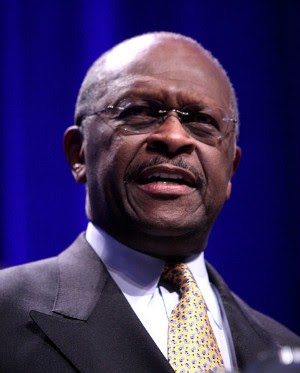
Yesterday, former Godfather’s Pizza CEO and 2012 Republican presidential primary candidate Herman Cain passed away after a long struggle against The Virus.  Cain was 74.

Breitbart calls Cain a “Conservative firebrand,” which was apparent to anyone following the crowded 2011-2012 Republican presidential primaries.  Like 2016, that was a crowded primary field, with tons of conservative darlings and Establishment types alike jumping into the field.  Back in those days, everybody thought Barack Obama was going to be the next Jimmy Carter—an ineffectual, overly-progressive one-termer.  The economy stunk, Obama seemed out of his depth, and conservatives were united and motivated to get out and vote.

Herman Cain quickly set himself apart from the rest of the crowd, though—he wasn’t a career politician, but a successful businessman (according to John Derbyshire, Cain is also somewhat a mathematical genius).  He put out his bold “9-9-9 Plan“—flat, nine percent national sales, income, and corporate tax rates.  Cain’s reasoning:  “If ten percent is good enough for God, nine percent is good enough for the federal government.”  Yes, it was a bit far-fetched, but it was catchy, and in an era of high corporate and income taxes—both of which undermined American business competitiveness domestically and abroad—it resonated with voters.  The implicit reference to the biblical tithe also let voters know Cain was a devoted Christian, which was a welcome change from the open hostility of the Obama administration to religious liberty.

Read More »

Law and Order?

It’s an election year, in case you’d missed that point, and our man Trump is up for reelection.  Trump is not doing well in the polls at the moment, but George H. W. Bush was similarly down against Michael Dukakis at this point in 1988, and won in a blowout victory.  Of course, Dukakis was an exceptionally feeble and excessively nerdy politician, and Lee Atwater’s Willie Horton ad was a gutsy, effective attack on Dukakis’s program of weekend release for prisoners.

1988 was also a very different America.  Even 2016 seems like another world.  Trump’s election was the paradigm shift of our age, spawning four years of constant resistance from progressives and neocons alike.  Joe Biden, like Hillary Clinton before him, enjoys the full support of the media and the institutions; even in his advancing senility, they are determined to drag him into the White House, where he will serve as a dull-witted, mentally-diminished puppet for every crazy Left-wing policy ever concocted in the faculty lounge of a women’s studies department.

Read More »

#MAGAWeek2020: Calvin Coolidge

This week is , my celebration of the men, women, and ideas that MADE AMERICA GREAT!  Running through this Friday, 10 July 2020, this year’s posts will be SubscribeStar exclusives.  If you want to read the full posts, subscribe to my SubscribeStar page for as little as $1 a month.  You’ll also get access to exclusive content every Saturday.

Americans have come to expect action-packed, robust presidents, those like Theodore Roosevelt, who enjoyed two parts in (here and here).  We want our presidents to be like Harrison Ford in Air Force One:  ready to take down the terrorists, saving his family and his country, single-handedly.

Part of that is a symptom of the aggrandizement of federal and executive power at the expense of States’ rights and legislative authority.  Indeed, Theodore Roosevelt is to blame, in part, for that centralization, though certainly not alone (his cousin Franklin did far more damage in that regard).  He’s also responsible—again, in part—for our vision of the president as a man of action.

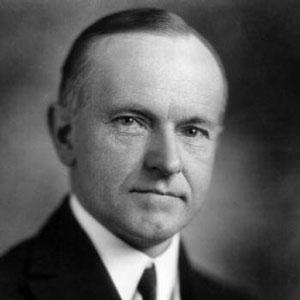
So today’s feature provides a counterpoint to the charismatic, blustering force of TR.  He is a president who, to paraphrase historian Amity Shlaes, resisted the calls to “do something,” and instead did “nothing.”  He is largely forgotten today, although his connection to tax cuts brought him back to popular attention in 2017.

Today, celebrates the life and presidency of a man of few words, but of great significance:  Calvin Coolidge.

To read the rest of today’s post, head to my SubscribeStar page and subscribe for $1 a month or more!

#MAGAWeek2020: Theodore Roosevelt, Part II

This week is , my celebration of the men, women, and ideas that MADE AMERICA GREAT!  Running through this Friday, 10 July 2020, this year’s posts will be SubscribeStar exclusives.  If you want to read the full posts, subscribe to my SubscribeStar page for as little as $1 a month.  You’ll also get access to exclusive content every Saturday.

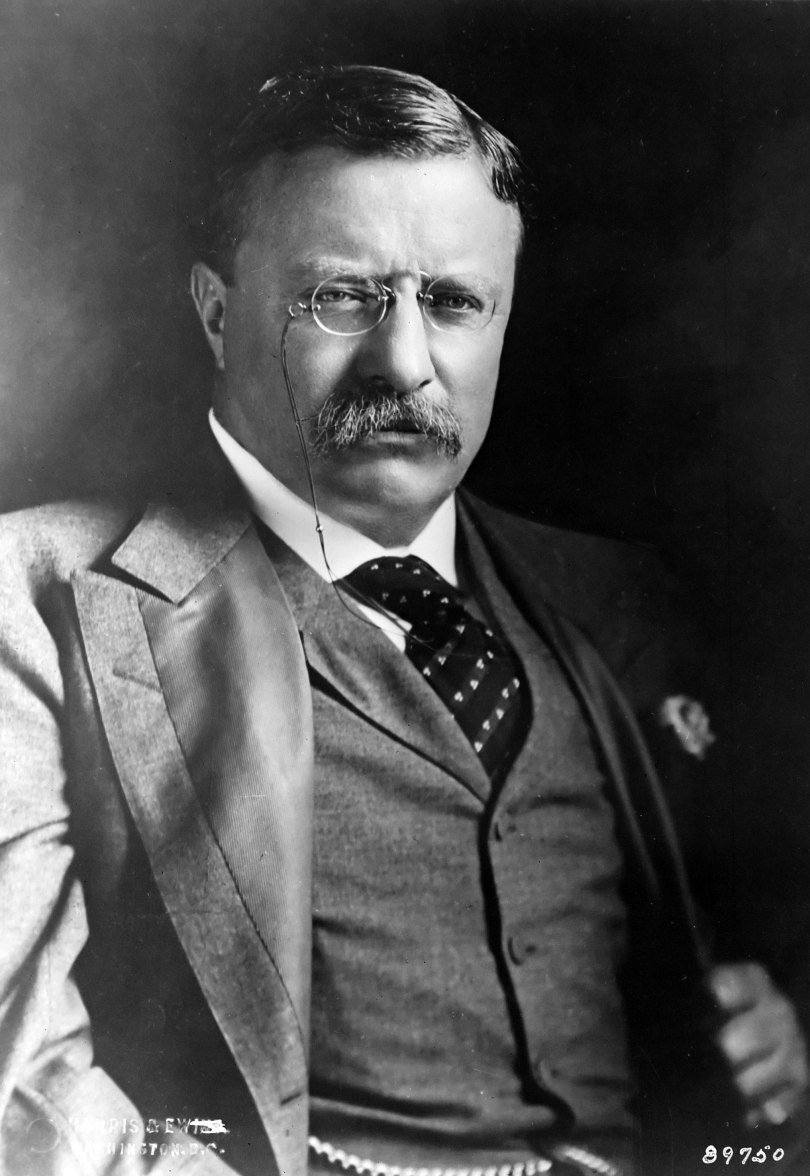
Yesterday featured Part I of this two-part biography of President Theodore Roosevelt.  Part I dealt largely with Roosevelt’s life and achievements outside of the presidency; today’s post will examine his accomplishments as President of the United States.

Upon the death of William McKinley—a great, if now neglected, president in his own right—the young Theodore Roosevelt ascended to the presidency.  Old Guard Republicans had sought to smother Roosevelt’s career in national politics with a long, dull tenure as Vice President.  Now—thanks to the tragedy of an assassin’s bullet—Roosevelt took the “bully pulpit.”

Roosevelt was a Progressive, in the context of the time—he embraced a number of ideas Progressive reformers pushed—but he was also fundamentally conservative.  Roosevelt sought to conserve America’s promise of a “square deal to every man,” a promise that was seriously threatened.

To read the rest of today’s post, head to my SubscribeStar page and subscribe for $1 a month or more!

TBT: Southern Conservatism: John Randolph of Roanoke

A lodestar of modern conservatism is that the federal government is too powerful and overreaching, and that power should be devolved back to the States and local governments.  That such devolution rarely occurs, even under Republican presidents, is just further evidence of how entrenched the bureaucratic class is within the Beltway swamp.  It’s easy to see the extension of federal power since the New Deal programs of the 1930s and the government’s control of the economy during the Second World War, followed by Johnson’s Great Society and various big government schemes to solve our problems.

But these concerns about the growth of federal power are not new, and there were already grumblings about them in the earliest years of the Republic.  In yesterday’s History of Conservative Thought session, we analyzed John Randolph of Roanoke‘s “King Numbers” speech, in which the aging but feisty Virginia decried the overreach of federal power—in 1830!

The occasion for Randolph’s speech was the Virginia Constitutional Convention of 1829-1830, in which the State sought to revise its constitution with a number of—as Randolph called them—“innovations,” including age requirements to serve in the Virginia House of Delegates (25) and the State Senate (30).  Another proposed change was the elimination of property qualifications to vote.

Randolph vehemently opposed these reforms on the grounds that the Virginia Constitution in its then-current form was the greatest charter of government ever conceived, and that it had been wholly sufficient in serving as the sole block on the expansion of federal power.  Randolph also argued that the US Constitution, rather than dealing with the external issues of national defense and regulating foreign affairs and commerce, had instead turned its focus inwards, seeking to regulate the States.

It’s fascinating to read now, nearly two hundred years later, Randolph’s antebellum arguments against the aggrandizement of federal power, at a point when the federal government under the Constitution was barely forty-years old.  One of Randolph’s most interesting points was that, regardless of what the Constitution said it was designed to do, the reality was much different.

One of the students asked what Randolph would think if he saw things today, and I said, “He’d probably have a stroke.”  Far from being the last stand against and check on federal authority, Virginia now is the compliant handmaiden to federal expansion, as Northern Virginia is the home of the Swamp People that operate the federal bureaucracy.

It’s unfortunate that we’ve forgotten Randolph today.  Even in his own time, he was considered somewhat of an eccentric.  But eccentrics make life interesting, and this one certainly issued some strong warnings, even at that early date, about the danger of excessive federal power and the erosion of States’ rights.

With that, here is 24 June 2019’s “Southern Conservatism: John Randolph of Roanoke“:

As my History of Conservative Thought course rolls on, I’m learning more about the forgotten byways and overgrown, stately ruins of the various branches of conservatism.  Students this week are reading a couple of documents from John Adams and Alexander Hamilton, the two founders of the Federalist Party, and key to the passage of the Constitution.  Hamilton, the author of the bulk of the pro-ratification Federalist Papers, also created the financial system upon which the United States functions today.

Hamilton and Adams have both enjoyed renewed interest in recent years, Hamilton due to the smash Broadway musical about his life, and Adams from a critically-acclaimed HBO series (one that, sadly, takes some unnecessary artistic license with the past).  In the case of Hamilton, American history students are often enthusiastic to get to him in my AP US History course, and Hamilton mega-fans often know more about the first Secretary of Treasury than I do.

But we’re reading a speech from another important figure from American history, albeit one largely forgotten:  John Randolph of Roanoke.

Randolph of Roanoke, sometimes considered the “American Burke,” was part of the Virginia planter aristocracy and a staunch republican, in the sense that he opposed centralization of power while supporting a strict interpretation of the Constitution and a limited government at every level.  He was one of the so-called “Old Republicans,” a group within the dominant Democratic-Republican Party of the Jeffersonian and Jacksonian era that adhered strictly to the Constitution, and which believed the States possessed a check on the federal government’s power.

He was also a traditionalist, and his powerful “King Numbers” speech at the Virginia Constitutional Convention in 1829-1830 represents a hearty endorsement of conservative principles, prudently applied.

Randolph of Roanoke makes several important points in the speech, but two stick out to me immediately:  his detestation for the tyranny of majority (the “King Numbers” referenced throughout the speech), and his love of Old Virginia.  On the latter point, he was quite eloquent:  not only did he argue that Virginia was a bulwark against an overreaching federal government (remember, he’s making this point in 1830), he also notes that its constitution was entirely sufficient to the task.

He argues early in the speech that there is no need to change Virginia’s constitution, because no one had brought any provable objections against it!  It’s the essence of a conservative argument.  Further, Randolph of Roanoke decried the mania for what he called “innovation,” a kind of reform-for-reform’s-sake, at the expense of the tried-and-true.

As to the tyranny of the majority, Randolph of Roanoke points in “King Numbers” to the absurdity of giving some men or factions greater power simply because they can win by one or two votes.  He uses examples—unfamiliar to many modern readers—of the Tariff of 1816 (one of my tariffs the Southern planters and yeoman farmers alike found odious and burdensome) and the Missouri Compromise of 1820, the latter passing by a mere two votes.

We praise “democracy” now, but the Founders of our nation feared unbridled democracy as a form of mob rule, which would inevitably yield tyranny at the hands of a charismatic demagogue.  Randolph of Roanoke makes the rather compelling point that even in representative government, mere majoritarianism can be quite destructive, as the side with the majority actually benefits if it can seize that majority by a narrow margin:  that’s just more of their opponents who lose!

Randolph of Roanoke, like many men of his time and station, was an unapologetic defender of slavery, which likely accounts for part of his fall from our curricula (although he emancipated all of his slaves upon his death).  His anti-nationalism (in the sense that he was opposed to a powerful federal government) is also at odds with the prevailing trend in American history textbooks to applaud whenever the national government aggrandized itself at the expense of the States.

Regardless, we would do well to read him again.  He was, even for his time, a bit of an oddball, but his quick wit and vast depth of knowledge, as well as his love his State (he believed Virginia was the great inheritor of Greco-Roman and British Common Law) were inspiring to his fellow Virginians.  They could be inspiring for us, too, and all lovers of liberty.

Fifty Years of Radical Violence

On the Right, we tend to point to the 1960s as the decade when everything went wrong—the rise of the counterculture, the anti-war movement, the radicalization of campuses.  Or we’ll look back to the Progressive Era of the first two decades of the twentieth century, or the Frankfurt School that introduced “Cultural Marxism” to our universities.  Deep students of ideological infiltration will point to the American infatuation with German Idealists and the German model for higher education.

But in focusing so intensely on the 1960s, we overlook the following decade—the sleazy, variety show-filled 1970s.  Of course, what we think of as the cultural and social upheaval of the 1960s really occurred mostly in early 1970s.  Indeed, I suspect that so much of the romanticizing (on the Left) of the 1960s is because of the Civil Rights Movement, which now holds a place of uncritical holiness in our national mythology.  It probably also has to do with the dominance of early Baby Boomers in media and the culture for so long—they built the counterculture, and they still idealized their youthful misadventures as tenured radicals.

Regardless, good old Milo posted a link on his Telegram feed urging followers to “Read this.”  “This” was a book review, of sorts, of Days of Rage: America’s Underground, the FBI, and the Forgotten Age of Revolutionary Violence by Bryan Burrough.  In his review of the book, author Brian Z. Hines writes that

Days of Rage is important, because this stuff is forgotten and it shouldn’t be. The 1970s underground wasn’t small. It was hundreds of people becoming urban guerrillas.  Bombing buildings: the Pentagon, the Capitol, courthouses, restaurants, corporations. Robbing banks. Assassinating police. People really thought that revolution was imminent, and thought violence would bring it about.

Read More »

Hungry Like the Wolf

I’m puppy-sitting today, watching my parents’ ten-week-old rat terrier while they’re working and attending various doctors’ appointments.  I pray that the day I go to the doctor and various specialists as frequently as my parents do is still decades away.

Dogs are interesting critters.  It’s kind of amazing that our ancient ancestors domesticated wolves and bred them to hunt on behalf of humans, instead of merely hunting humans.  It’s even more interesting how breeding for selective traits led to various breeds.  There’s a whole art and science to animal husbandry that is fascinating.

The rat terrier, for instance, is the result of various combinations of terriers (for hunting), greyhounds (for speed), and chihuahuas (for compactness—the rat terriers had to be small enough to get into rat holes).  According to my dad, who has become something of an authority on the breed since getting the puppy, rat terriers used to be very common in the United States—most farmers had one or two to help kill pests.  Theodore Roosevelt kept one named Scamp around the White House to kill mice (although Scamp may have been a different variation of terrier).

Of course, the question that interests me is thus:  if we domesticated dogs once, couldn’t we do it again from their cousins, wolves?  Naturally, there’s no need to do it again—it was surely a long process—but doing so would help us to understand how difficult domestication was, and why our ancient ancestors thought it was worth the effort.

Read More »

Cancelling Jesus

Yesterday, I wrote about the destruction of statues of American leaders—the destruction of American history.  My position is that tearing down virtually any statue—Confederate, Union, Theodore Roosevelt, etc.—is the untenable erasure of our nation’s history.  Further, the historic illiteracy of the woke SJWs has seen the defenestration of statues of abolitionists—an absurdity for groups that claim to be fighting against the legacy of slavery.

In that context, I made a big deal about the toppling of a statue of Abraham Lincoln.  Lincoln has assumed something of a demigod status in American history, one that glosses over some of the thorny issues of how to respond to the secession of the Southern States (a real question at the time was, having opted into the Constitution, could States later opt out; for a good biographical read on that issue, check out “A Voice of Reason” by John Marquardt at the Abbeville Institute).  Lincoln was certainly a man with many noble qualities, and a keen constitutional mind.  The toppling of his statues is the height of insanity—or nearly so.

In my haste, I neglected the even more egregious calls to destroy statues and stained glass windows depicting The most important Figure in world historyJesus Christ.

Read More »