SubscribeStar Saturday: Homecoming Week

Today’s post is a SubscribeStar Saturday exclusive.  To read the full post, subscribe to my SubscribeStar page for $1 a month or more.

It was a wild Halloween Week for yours portly.  Halloween itself saw a tornado warning while trick-or-treating with the little ones, before the typically muggy weather turned into a frosty All Saints’ Day overnight.  Brrrr!

Meteorological phenomena aside, it was also Homecoming Week at the little private school where I teach.  That brings its own mix of fun and tornadoes.

To read the rest of this post, subscribe to my SubscribeStar page for $1 a month or more.

Hump Day Hodgepodge: Testing Reflections

It’s a busy week here in the world of yours portly.  The end of the first quarter is approaching rapidly, so every spare moment has been dedicated to chipping away at a mountain of history quizzes and tests.  Needless to say, it’s slow going.

As such, school is on my mind—as it is pretty much every waking moment of August through May.  Fellow teachers will understand that teaching is a profession that consumes your mental energy constantly.

Today the school is undertaking the pre-administration of the PSAT, the l’il brother of the SAT, which I proctored this weekend.  Pre-administration is the process whereby students bubble in all of the sensitive personal information on an elaborate Scantron so they can receive their scores—and send them to the gaping maw of the academic-industrial complex.

Read More »

SubscribeStar Saturday: SATurday

Today’s post is a SubscribeStar Saturday exclusive.  To read the full post, subscribe to my SubscribeStar page for $1 a month or more.

Continuing with a recent theme, today’s SubscribeStar Saturday post is all about what I did this weekend—well, at least this Saturday.

After a long, productive week at school—which saw my team of super nerds win their Quiz Bowl regional competition on Thursday—I woke up before the dawn to head back to school.  I signed up to proctor the SAT, the dreaded standardized test that is part of the grand kabuki theatre of higher education admissions.

To read the rest of this post, subscribe to my SubscribeStar page for $1 a month or more.

Tom Steyer’s Belt

When I was in college, I formed this ridiculous pseudo-band with a suitemate of mine (who has, apparently, now gone down some dark roads) called Blasphemy’s Belt, which my bio on another band’s website refers to as an “electro-pop humor duo.”  I can’t remember how we came up with the name—our music wasn’t particularly or purposefully blasphemous (or good), and while we wore belts, they weren’t outrageous (just to keep our pants up)—but it was apparently catchy enough that people picked up on it.

The Belt never performed live, other than for an annoyed roommate, and a highly grating pop-up concert (at least, that’s what hipsters would call it nowadays) on our floor’s study room, but we generated enough buzz to get people to vote for us in a “Best of Columbia” survey in The Free Times.  We didn’t win anything, but it was an object lesson in how enough hype can make people believe you have substance when you really don’t.

That’s my self-indulgent way to introduce some literal navel-gazing—at Democratic hopeful and wealthy scold Tom Steyer‘s virtue-signalling, sanctimonious belt.

Read More »

Monday Morning in America

The Portly Politico is striving towards self-sufficiency.  If you would like to support my work, consider subscribing to my SubscribeStar page.  Your subscription of $1/month or more gains you access to exclusive content every Saturday, including annual #MAGAWeek posts.  If you’ve received any value from my scribblings, I would very much appreciate your support.

The couple of weeks I’ve been feeling bleak about the future.  I’m a declinist by nature when it comes to the macro view, but the micro was starting to get to me.  How do we get through to people?  We don’t have the luxury for the old days of slow, steady relationship building and piecemeal red-pilling.  Further, it seems every step we take forward, the culture takes three steps back.

I wrote as much on Saturday, in a post where I gave full-vent to the frustrations I’ve experienced.  One of the problems with writing daily (and under self-imposed deadlines) is that it’s easy to let your emotions about recent events take over.  I’d been giving way to despair, and it started twisting my analysis.

Read More »

SubscribeStar Saturday: The Misinformation Gap

Today’s post is a SubscribeStar Saturday exclusive.  To read the full post, subscribe to my SubscribeStar page for $1 a month or more.

I’ve been pondering an important problem facing conservatives and the Dissident Right this week: the preponderance of misinformation percolating in the media and, by extension, the culture more generally. My perception—based on personal experience, reading the scene, and the mere fact that anyone is still voting for gun-stealing baby killers—is that there exists a major misinformation gap between most Americans and the Truth.

While it seems that more and more Americans are gradually taking the proverbial “red pill” and are awakening to the grim reality of progressive cultural and political dominance, most are still blissfully ignorant of what is happening to the country. High-profile events or issues—a terrorist attack, for example, or a kid tranny giving lap dances to grown men—can stir the masses temporarily, but there’s no thoughtful connection of such events to the broader cultural, political, and historical context.

To read the rest of this post, subscribe to my SubscribeStar page for $1 a month or more.

250th Day Update

Today’s post marks 250 days of consecutive posting.  That’s a major milestone in my ongoing project to blog daily, which I last commemorated in a substantial way at Day 101.  With this post, I’m a mere 115 days away from reaching a year of daily posts.  So close, and yet—so far.

I tried to find a word that meant “250 days” in the way that bicentennial means “200 years,” or sesquicentennial means “150 years” (from those words, I reason that 250 years would be a “sesquibicentennial”).  My search proved fruitless, though I did learn that 250 is the number of men that rebelled against Moses in Numbers 26:10 (thank you, Wikipedia).

Read More »

Saturn: The Creepiest Planet?

Some time ago, I somehow ended up subscribed to daily updates from Quora.com, the website where users can submit answers to other users’ questions.  Apparently, I told Quora that I like dinosaurs, because most of the featured questions in my daily digest are about evolution.

Lately, however, I’ve been receiving more questions—and answers!—about astronomy.  I love space exploration, and I dream of one day walking on the surface of the moon.  It’s an outlandish dream, and one that I know is unlikely to ever be fulfilled, but I yearn for that opportunity.

So I was thrilled to see the kind of question that the science scolds on Quora hate—qualitative, rather than purely quantitative, in nature.  The question, simply, was thus:  “What is the creepiest planet in our solar system?

Read More »

Remembering 1519

The start of the school year always means the start of the grand narrative of American history.  It dawned on me some years ago that, over the course of roughly 180 days, I undertake an annual, oral retelling of the story of the United States.  One day, I plan to record my lectures, taking the best bits, and compiling them into a lengthy podcast series.  After that, I’ll never have to teach again!

Regardless, the story always starts the same:  a brief overview of the pre-Columbian Americans (what we used to call “Indians,” and more clumsily “Native Americans”), followed up with Spanish exploration from Christopher Columbus through Hernan Cortez and on.

A major part of those early lessons is the encounter of the bloodthirsty Aztecs and the gold-mad Spaniards.  Students love the story of the advanced Aztecs, sacrificing humans to ensure the sunrise, and the arrival of the fiery-haired Cortez and his ragtag band of conquistadors and buccaneers.

Read More »

TBT: Lincoln on Education

This week’s TBT feature was also in last Sunday’s “Lazy Sunday XXIV – Education.”  With the school year in full swing, it’s always enjoyable to look back at the benefits of education—a reminder of why getting education right is so important.

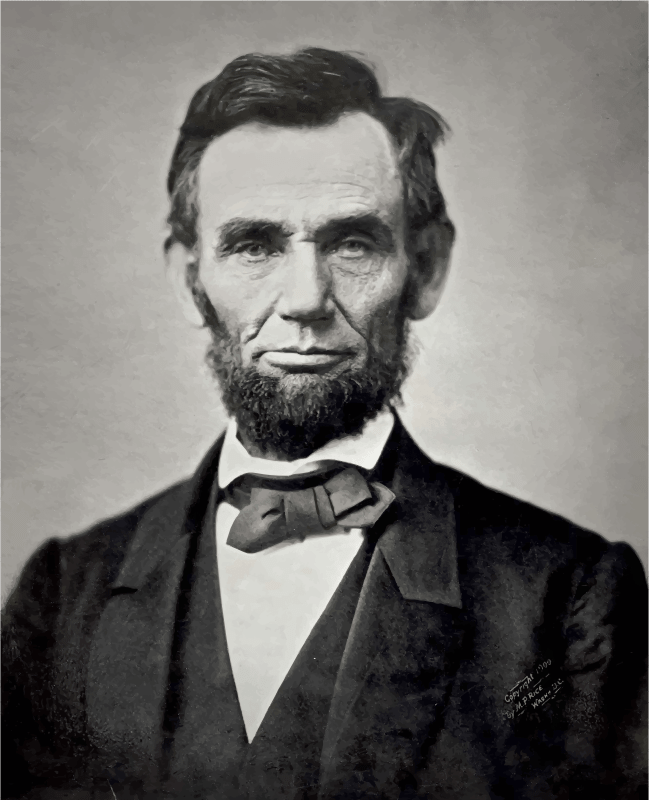
Abraham Lincoln was largely self-educated, and he was motivated, it seems, by both a desire to improve his condition in life, and by a genuine love of learning.  As an avid reader myself, I can related to the anecdote (relayed below) of young Abe walking around with “a book in his hand or in his pocket.”

This little piece was an “Historical Moment,” a monthly feature for the Florence County (SC) GOP’s public events.  If I recall correctly, the FCGOP Chairman skipped over my segment in the program (presumably by mistake, but perhaps to save time), so while I wrote this brief talk for the September 2018 meeting, I did not deliver it publicly until the October meeting (it was published on this blog in September).

I hope you’ll find this adaptation of my talk enjoyable.  Here is “Lincoln on Education“:

We’re gathered here tonight to hear from members of and candidates for School Board; in that spirit, I’d like to speak briefly about education, particularly the education of the first Republican President, Abraham Lincoln.

From what I’ve read, Lincoln’s entire formal education consisted of around a year of schooling.  He would have a week or two here and there throughout his childhood in Kentucky and Indiana, and then return to working on the family’s farm.

Despite little formal education, Lincoln taught himself throughout his life.  He loved to read, and would read deeply on a variety of subjects, obtaining books whenever and wherever he could.  One of his contemporaries commented that “I never saw Abe after he was twelve that he didn’t have a book in his hand or in his pocket. It didn’t seem natural to see a feller read like that.”  When he sat for the bar exam, he’d read law books on his own time to prepare.

Lincoln also believed in education as a source of patriotism, morality, and self-improvement—what we might call “upward mobility.”  He was not a man who wanted to stay on the farm, and his self-education was a means to escape poverty.

If you’ll indulge me, I’d like to quote Lincoln at length from his 1832 speech “To the People of Sangamo County”:

“Upon the subject of education, not presuming to dictate any plan or system respecting it, I can only say that I view it as the most important subject which we as a people can be engaged in. That every man may receive at least, a moderate education, and thereby be enabled to read the histories of his own and other countries, by which he may duly appreciate the value of our free institutions, appears to be an object of vital importance, even on this account alone, to say nothing of the advantages and satisfaction to be derived from all being able to read the scriptures and other works, both of a religious and moral nature, for themselves. For my part, I desire to see the time when education, and by its means, morality, sobriety, enterprise and industry, shall become much more general than at present, and should be gratified to have it in my power to contribute something to the advancement of any measure which might have a tendency to accelerate the happy period.”

Here we can see Lincoln’s belief that education lays the foundation for patriotism—we understand our freedoms better when we understood what they cost, and that others lack them.  We see, too, the power of education to teach us the virtuous and the good.  From that morality flows, as Lincoln said, “sobriety, enterprise, and industry,” the tripartite tools to improve our material conditions.

Patriotism, morality, and industry—these were the three benefits of education Lincoln espoused.  Coming from the man who wrote the Gettysburg Address, I think we should take Lincoln’s views on education seriously.