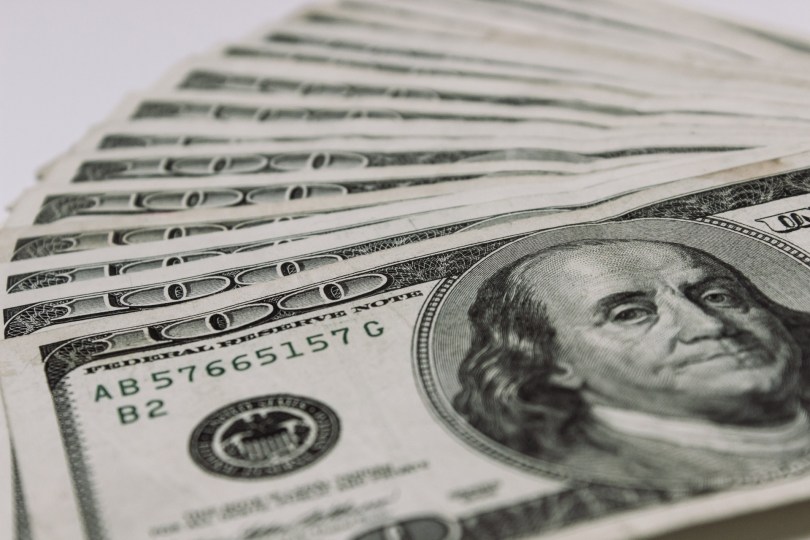
Counting Blessings

After writing yesterday’s blog post about our diminished prosperity, I was quite upset.  I am an emotional sort, given my brooding artistic temperament, and I should know by now that complaining about money and the state of the world will only work me up—or, perhaps, down—into a blue funk (or, occasionally, a purple rage).

So today’s post is meant to be a yellow counterpoint.  It’s easy for me to fixate on negatives.  That’s pretty much the nature of blogging and commentating about politics and culture.  And while I am optimistic for the future, I am a declinist:  I can’t help but notice that much of culture is, at best, a stagnant swamp (hiding away the occasional orchid); at worst, it’s a swamp draining into a desert.

But enough that.  Today’s post is about counting blessings.

Read More »

Cass on Our Diminished Income

Way back in The Before Times, in the Long, Long Ago, before The Age of The Virus, Oren Cass presented a series of sixteen tweets, asking this question:  “How is that our economic statistics suggest workers have been making slow but steady progress in recent decades, while popular perception is that their family finances are coming under increasingly untenable pressure?”

Cass also wrote about the issue in greater detail in American Affairs and in a lengthy paper for the Manhattan Institute.  That question—why does it feel like it’s harder to make ends meet now, even though inflation is low and we’re wealthier?—is one of the gnawing concerns of modern-day America.

Read More »

TBT: End the Income Tax

Last week I went through the annual ritual of paying my income taxes.  For the second year in a row, it’s been a painful experience.  I’m finally at the point in my life where I end up owing money to the federal government, which has only made me more conservative, if that was possible.

Part of the problem is that I slam so much money into my retirement (the legal annual maximum each year into my HSA, my 403(b), and my traditional IRA) that even with increases to my federal withholding, I still fall short.  It’s because a good chunk of my income in 2019 came from private music lessons, gig guarantees, tips, and merch sales at gigs.  I brought in around $9099 from those combined (with the lion’s share of that revenue coming from private music lessons).  My brother tells me I’m probably going to have to start filing quarterly, although The Virus has pretty much killed that side business for the time being.

My taxes took hours to complete, too, as I painstakingly recreated all the mileage I drove for lessons and gigs (now chastened, I am going to maintain a mileage log in my vehicle).  Combined, I drove around 6011.4 miles last year just for lessons and gigs.  WHOA!

Of course, the IRS is now privy to all of that information.  I keep a very detailed budget, and carefully track every transaction, cash or otherwise.  And, naturally, no good deed goes unpunished.

Wouldn’t a national sales tax be easier, and less invasive?  Or maybe a restoration of the old-school tariff regimes of the nineteenth century?  Sure, the congressional battles over tariffs nearly brought South Carolina’s secession in 1832-33, but I’d rather importers pay more (yes, yes—I know the costs will passed on to me, the consumer) than have to divulge my every move to the feds.  Plus, I’d gladly pay another couple of hundred bucks for my washing machine if it means an American worker gets a job and can have some pride in working.

Anyway, the tax man has gotten his share, and I’ve received a decent refund from the great State of South Carolina, so that eases the pain.  Of course, I’m still patiently awaiting my inflationary TrumpBux.  I suppose beggars can’t be choosy about their government’s preferred form of institutional shakedown.

With that, here is 15 April 2019’s “End the Income Tax“:

Today is tax day.  Despite President Trump’s signature tax reform, I ended up owing money to the feds for the first time in my adult life (although I’ll be getting a bit back from the State of South Carolina).

The income tax used to be unconstitutional in our Republic.  Indeed, the primary way that federal government gained revenue was from tariffs on imported goods and excise taxes on certain products, like whiskey.  Alexander Hamilton advocated for high protective tariffs to protect young domestic industries from British manufacturers, who were “dumping” cheap British goods into the infant nation (a practice China has taken up today).  Only during times of war, such as the American Civil War, did Americans have to endure a tax on incomes.

Like most odious, liberty-killing measures, the income tax was a Progressive Era project, ratified in the 16th Amendment (followed shortly thereafter by the 17th Amendment, which made US Senators directed elected, and the 18th Amendment, which prohibited the manufacture, sale, and distribution of alcohol).  Progressive reformers assured Americans that only a very small proportion of Americans would ever pay the income tax, which was graduated from the beginning.

That claim was true… for the first year.  Immediately, Congress began ratcheting up tax rates and requiring more Americans to pay it.  Governments are hard-pressed not to exploit a newfangled method of raising revenue.

The income tax is not all bad:  it’s a more stable source of revenue that tariffs, which depend upon foreign imports.  No imports, no taxation.  Advocates for the graduated income tax, like Tennessee Congressman and future Secretary of State Cordell Hull, argued that, in the event of a major war in Europe (which broke out a year after the 16th Amendment was ratified), international trade would fall, bringing collected duties down with it.  That was a prescient observation, and a strong argument in favor of some kind of domestic tax.

That said, the income tax is incredibly invasive.  Every year, I lament that the federal government has to collect so much information about me:  where I worked during the fiscal year, how I saved my money, etc.

According to Scott Rasmussen, 52% of Americans favor repealing the 16th Amendment.  Count me among them.  The income tax gives the government far too much influence over our lives, and the federal tax code is so byzantine and full of carve-outs and exemptions, it’s become the purview of the well-connected.  It’s become a corporatist monstrosity.

What would replace the income tax?  Given that it’s likely never to be repealed—governments don’t typically diminish their power (or access to other people’s money)—the question is largely academic.  Still, it’s worth considering.

While I think tariffs can serve a useful purpose (see also: bringing China to heel), and that there’s an argument for some mild protectionism, high protective tariffs like Republicans championed after the Civil War would be ruinous to trade.  The deadweight loss (destroyed economic activity) associated with tariffs—especially from the inevitable retaliatory tariffs other nations would pass in response—would do more harm than good, and could result in a Smoot-Hawley Tariff of 1930 situation (i.e., the Great Depression).

The only realistic alternative that I see currently (from my admittedly myopic position) is a national sales tax.  There are some serious drawbacks to this approach, to be sure, but it would be the cleanest, most efficient way to generate revenue.

A national sales tax would encourage saving and work, both of which are currently disincentivized under our current tax regime.  Instead, purchases would be disincentivized, which would hurt sales, but encourage people to hold onto more of their money.  Further, it would not require the government to keep elaborate tabs on every worker; the Internal Revenue Service could be greatly reduced, or even eliminated.

Of course, any tax is a necessary evil, and a national sales tax would make it more difficult for high sales tax States to raise revenue (as it would limit those States’ ability to increase their taxes if necessary).  It would also slow purchasing, and necessarily raise prices (by definition, especially if you’re tacking 15-25% on top of a good).  There’s also the question of whether a sales tax should just apply to consumer goods, or if it should be an uber-expensive value-added tax, with each economic transaction along the chain of production getting taxed.

Those are sticky questions for wonkier types than I to sort out.  But wouldn’t it be nice to build an economy on the production of real value—of stuff—rather than one built on ever-expanding sales, purchasing on credit, and debt financing?

Regardless, the federal income tax is a major imposition, an invasive intruder that enters our lives every April, borrowing from us (without interest!) throughout the year, and intimidating us with the looming threat of disruptive audits.  It seems everyone would be happier—even, in a way, the feds!—if it were eliminated.

TBT: The Human Toll of Globalization

One of the more interesting developments in conservatism since Trump’s rise in 2015-2016 has been a reevaluation of our basic economic policy.  Much of the ideas debated originated, in our modern political era, with Pat Buchanan.  For decades, the assumption among conservatism was that economic efficiency was the highest good, as it lowered costs and eliminated or reduced government overreach.

That was a reasonable set of assumptions when our nation shared a common culture, and when the United States dominated global markets hegemonically.  But the goal of reducing the size of government morphed pathologically into the mad worship of Efficiency above all else.  We sold out social capital—stable families, cohesive communities, robust civil society—for quick cash.

That’s the gist of Z-Man’s post today, “Middle-Man Conservatism.”  Tucker Carlson has similarly touched upon the woeful consequences of worshiping Efficiency-for-its-own-sake.  Sure, Americans possess a pioneering spirit—we’ll move to the oil fields in North Dakota if we have to do so—but we’re still motivated by the same things other humans are:  family, community, belonging.  Gutting our communities to save fifty bucks on a washing machine is a ludicrous trade-off.

Read More »

TBT: Brack Friday Bunduru: Workers Need a Break

I’m on vacation this week, burning through my precious personal days in order to spend some time in Florida with the family.  Normally, I wouldn’t feature such a recent post for TBT (I try to do posts that are at least six months old), but when going through my archives for vacation-themed posts, this was the closest fit I could find… even if it’s not Thanksgiving.

Regardless, I increasingly believe that workers need time off.  I understand the economics of time off—it’s only possible with a great degree of efficiency and wealth—so I’m not unrealistic about it.  It just seems that people should be able to take off Christmas and a few other key days.  Just as folks will “unplug” from social media for twenty-four hours, shouldn’t we be able to escape work, even for a day?

Speaking of social media, it does seem that cell phones and e-mail have made it impossible to escape work.  I have never worked a job that truly stopped at 5 PM.  That’s likely true for most Americans.  The ability to be connected constantly means that people expect you to be available constantly—there’s never truly a moment that I feel at rest.

Perhaps that’s a person problem, and my pathetic generation is particularly anxious and afraid of a ringing phone, but Lord knows I hate getting a call during my free time, limited as it is.  There’s always the fear that it’s going to be some tedious, work-related issue.  Such issues always seem to pop up right before, or even during, a break.

Oh, well.  I can’t complain—or, at least, I shouldn’t.  Work is a blessing.  But like all good things, you can have too much of it.

With that, here’s “Brack Friday Bunduru: Workers Need a Break“:

Thanksgiving has come and gone, and Christmas‘s time—an ever-expanding season that stretches into September—has finally arrived.  Today is Black Friday, the consumerist threshold that formally inaugurates the Christmas (shopping) season.

Black Friday, much like the holiday season it ushers in, has slowly stretched beyond its one-day window.  First, the expansion went into Small Business Saturday, then Cyber Monday.  Next came Giving Tuesday—a bit of charitable giving to close out the mad dash for savings.  Once you’ve spent all of your money in big box stores on Friday, at the dying mom and pop joint in your town, and everything else on Amazon on Monday, whatever is left goes to the United Way.

Now Black Friday even bleeds into Thanksgiving Day itself.  Doorbuster sales with lines forming up at 2 AM on Black Friday is spectacle enough; now, stores opening Thanksgiving afternoon or evening try to squeeze more revenue from zealous shoppers.

As a schoolteacher, I’m spoiled:  with the exception of two years of my life, I’ve been involved in education in some way, which means I’ve always gotten a glorious Thanksgiving holiday.  It rankles me, though, when service folks are denied even one day to relax and spend with their families (until I need to buy something at 8 PM on a Thursday, and that Thursday turns out to be Thanksgiving).

“They should get a better job, Portly.”  Okay, sure, a perk of teaching, for example, is all the crazy days off; a perk of a professional job is to vacation or flex-time.  Federal employees have to work on Black Friday, but they get every second- and third-tier holiday on the calendar as a paid vacation day, so I don’t feel much sympathy for them (plus, they work for the federal government).

But even taco jockeys and the weird, pushy old gay sales clerk at Macy’s need a day off to spend with their families (or, in the case of the weird old gay guy at Macy’s—an actual person I have in mind—his little lapdog, Snickers—that part is pure speculation on my part).  There will always be those who want to work on Thanksgiving for that sweet golden time, of course, but wouldn’t it be worth it to shut everything down for a day or two?

Yes, if you work in retail, you’re going to work Black Friday.  All the more reason—before clocking in for a twelve-plus-hour shift—to have the day of Thanksgiving completely off.  Gotta have time to sleep off that turkey and dressing, at the very least.

Christmas is another one where I often forget—cozy in my cosseted bubble of quasi-academia—that most people work the day before and/or after Christmas.  The idea of working the day after Christmas seems like a death sentence, but that’s not as bad as working on Christmas itself.  Whatever Ebeneezer Scrooge is forcing his employees to work on Christmas Day should probably be imprisoned.

The folks in Medieval Europe had the right idea—dozens of feast days to celebrate this or that minor saint or hero.  They probably went too far in the other direction, going overboard with merriment.  I’m sure there’s a happy medium.

Today, we modern Americans work our fingers to the bone.  That’s one reason we’re great, and I’m a firm believer in hard work.  All the more reason, then, to take a day or two during this time of year to slow down and relax a bit.  We hustle and bustle through the Christmas season with such rapidity and motion, we don’t take the time to savor it.

Shutting down everything but essential services—God Bless police officers and emergency medical personnel for being there on Christmas and Thanksgiving—would be an admirable goal for at least Christmas Eve and Christmas Day, as well as Thanksgiving.  Open your store up at 12:00 AM on Black Friday if you want, but don’t make your employees come in until right at that moment.

These are just some stream-of-consciousness thoughts I’ve had as I’m wrestling with questions about the proper balance between work and life.  But hard workers could use a little downtime with their families during the Christmas season.

Nevada Feels the Bern

Well, the Commies and “natural conservatives” in Nevada have spoken, and it looks like Bernie Sanders is going to sweep the state’s caucuses.  That means he’s currently leading in Democratic delegates heading into South Carolina’s primaries this Saturday.

Joe Biden appears to be in second place, somewhat surprisingly, with l’il Pete Buttigieg in third.  That’s going to make South Carolina a big showdown between Sanders and Biden.  Biden is banking on blacks in South Carolina to buoy his flailing campaign.  Buttigieg will likely flame out (no pun intended) in SC, and the rest of the South, because of those same voters—blacks do not like homosexuality.

All that said, Bernie appears to be in the driver’s seat.  While folks are predicting Trump will mop the floor with the ancient socialist, a Sanders nomination is a very dangerous development.

Read More »

Best SOTU Ever II: Extra Most Bestest

Dang.  Trump just keeps getting better and better.  If you thought last year’s State of the Union Address was good, then listen to THIS:


President Trump turned last night’s State of the Union Address into prime time television.  It was informative, persuasive, and downright entertaining.

Indeed, I can already picture the wags at National Review and other NeverTrump and Trump-skeptical outlets tut-tutting that Trump’s address is “beneath the decorum of the office” and the like.  Talk about a bunch of scrooges.

It was a powerful speech.  Trump started detailing all of the accomplishments of the past few years, with a specific focus on the improved conditions of black America.  That’s a clever way to put the pressure on Democrats:  compared to President Obama’s abysmal economic record, President Trump—so often slandered, unfairly, as a “racist”—has done far more to improve the lives of black Americans.

Read More »

TBT: Tucker Carlson’s Diagnosis

This week’s TBT looks back to a piece I wrote in January 2019 that summarized a segment Tucker Carlson did on his wildly popular show.  That segment really shaped my thinking on some economic and social issues (although other commentators and writers were already influencing my thinking in that direction).

Earlier this week, I wrote a piece about another Tucker segment that applied these concerns into a political platform, of sorts, one that moves beyond economic growth to real improvement for people’s lives.

This blog post was a bit shorter, so I’ll allow it to speak for itself.  It’s definitely worth watching the linked video in the piece, as it is the segment the post covers.

Here is January 2019’s “Tucker Carlson’s Diagnosis“:

recent monologue from Tucker Carlson’s Fox News program is blowing up the right-wing blogosphere, and understandably so.  Carlson has been a vocal critic of the neoliberal deification of economic efficiency at all costs.  I used to be a member of this cult, until the candidacy of Donald Trump (and lived experience) knocked the idealistic scales from my eyes.

Normally, it bugs me when people send me video clips to watch.  If they’re cutesy videos of the variety that drive clicks—think cats playing piano, or Goth versions of Christmas songs—I usually ignore them, no matter how hyped they are.  That’s not some virtue on my part; I just don’t want to take the time to watch them, especially on a cell phone (a pet peeve:  someone making me watch a video on their cell phone; I will refuse).

That said, I’m indulging in some hypocrisy:  you must watch this video as soon as you’re able.

For those of you that don’t want to take the time, here are some highlights:

  • Elites care only about maximizing economic efficiency, regardless of the human costs to individuals, families, and communities
  • That lust for efficiency drives income inequality, particularly benefiting the technology sector/Silicon Valley
  • “We are ruled by mercenaries, who feel no long-term obligation to the people they rule”—a key idea; I’ve read a similar analysis from controversial blogger Z-Man, in which he argues that leaders in a democracy are, inherently, renters rather than owners, and therefore are heavily tempted towards asset-stripping while in office, rather than building and maintaining a nation:  http://thezman.com/wordpress/?p=15929
  • Because of the hollowing out of American manufacturing and declining wages (again, due in part to the quest for efficiency), men struggle to find employment or to improve their wages
    • Because of that, rural parts of the country are dominated increasingly by healthcare and education, female-dominated fields
    • While better wages for women is fine, Carlson claims that—whether or not they should—women are less likely to marry men who earn less than them, therefore

These are just some of the most interesting insights, but Carlson sums up in fifteen minutes what would take a legion of hack bloggers like me hours or weeks to explain.

Again, I urge you to watch this video:  https://video.foxnews.com/v/5985464569001/?playlist_id=5198073478001#sp=show-clips

Tucker Carlson’s Platform for Victory in 2020

Tucker Carlson is the gift that keeps on giving.  In a segment from last week, the populist-friendly television host offered up a winning strategy for President Trump—and a warning.

In essence:  while economic numbers are very good, many of Trump’s base of supporters—the working and middle classes—are still struggling, or at least perceive that they are.  In a longer piece from Joel Kotkin (also on Carlson’s Daily Caller website), the author argues that the tensions between the Trumpian lower classes and the ascendant upper class is akin to the friction between the French Third Estate (the commoners) and the First and Second Estates (the aristocracy and the clergy) just prior to the French Revolution.

Read More »

Milo on Generation Joker

Earlier this week, I finally had the opportunity to watch Joker, the movie that DC got right (I also watched black-and-white indie film The Lighthouse, which I also heartily recommend).  It’s one of those films that has stuck with me, as I keep contemplating its title character’s woeful arc.

That’s unusual for a superhero movie.  I’m not a film snob, and I enjoy the action-packed, high-gloss hilarity of [insert Marvel Cinematic Universe movie here].  But I’ve usually forgotten most of the details of those superhero movies by the time I get home from the theater.

Joker is different.  Indeed, I wouldn’t even call it a “superhero” (or even a super villain) movie.  Yes, it’s the origin story of the The Joker, Batman’s greatest rival.  It does follow some of the tropes of the standalone superhero flick:  the discovery of the character’s powers (in this case, a 38 Special and mental illness), his utilization of those powers, and his full acceptance of his new role.

But it’s more than a superhero flick.  It’s the brooding, angsty cry of a generation.

Read More »