This weekend was full of family time for yours portly (thus the delayed post). Celebrating my youngest nephew’s first birthday with generations of family members and like-minded friends reminded me not only of the importance of family, but also of how refreshing it is to be among people who share your basic beliefs.
I’ve written about this phenomenon a number of times in my vast archives of blog posts, but it’s a topic that could use a longer treatment. A major struggle facing conservatives and traditionalists today is a sense of social and cultural isolation that can be downright suffocating at times. But we should avoid the black-pilled mentality of nihilistic despair, not only because it’s what our enemies want, but because it’s simply not true.
It’s been another busy weekend for yours portly. SubscribeStar readers, I have not forgotten about you, even though I’ve failed to deliver on yesterday’s still delayed post. I will have a post up this evening, after I’ve logged this edition of Lazy Sunday.
I’m actually on a glorious four-day weekend from school, so you’d think I’d have loads of time to get posts done. In fact, this Sunday has been anything but lazy, with church, four piano lessons, and a jazz band rehearsal now in the books.
This weekend has seen a great deal of time with my family, however, as my youngest nephew celebrated his first birthday yesterday. Time with family is always rejuvenating, and helps maintain the closest of bonds and the most basic unit of human organization. Our excessive focus on the individual has, at times, come at the cost of the older, stronger emphasis on the family as the basic unit of society.
To that end—and in the spirit of one-year olds’ birthday celebrations—here are some old posts, all throwbacks to the original TPP Blogger page, about family:
“Family Matters” – a lengthy post detailing the decline of the traditional family structure, and arguing for the benefits of family-formation.
“Family Matters Follow-Up Part I: Divorce and Marriage; Sex Education” – the “Family Matters” post generated a good bit of discussion on Facebook (back when I had the guts to post these to my personal profile page), especially among the sorts that don’t understand what a generalization is. So this piece detailed some of the questions, comments, and objections that came up in the wake of the original.
“Family Matters Follow-Up Part II: The Welfare State and the Crisis of the Family” – the welfare state has had an extremely deleterious effect on the family, particularly black families, which are barely anything such, with nearly 3/4ths of black children born out-of-wedlock. Much of that decline is cultural and social in nature, but it also derives from bad government policy and perverse economic incentives. Even worse, it’s spreading: over half of children born to women under thirty today are born without a father present.
That’s it for this weekend, folks! Be sure to hug your parents, grandparents, children, nieces, nephews, aunts, uncles, cousins, etc., and keep outbreeding the childless progressives.
The post below, “Election Results 2019,” largely focused on the Lamar Town Council elections. My strategy was to vote for the two challengers, because the town government really dropped the ball on doing routine DHEC water tests (although our mayor—bless her heart—has been trying to resolve the issue). I also intuited that one of the challengers would likely be a Republican/conservative, for reasons too politically incorrect to write here.
The big takeaway from the 2019 election is that if you let Democrats gain a monopoly on power, they will abuse it immediately. That’s been the story of Virginia, a once-deep-red State that has gone quite blue, due to the preponderance of progressive population poured into Northern Virginia.
The legislature wasted little time in promising to ban and confiscate guns en masse. That act of totalitarian pique may very well turn the State red in November, as the Trumpian masses have been jolted from their slumber.
We shall see. But the moral is clear: don’t give progressives power. And we have to assume that every Democrat is a progressive. A conservative Democrat is a unicorn in 2020. This message is for those squishy suburban moms and “decorum” obsessed NeverTrumpers who think they’ll enjoy political moderation under a Democratic regime.
Don’t make the same mistake twice. Vote Republican/Trumpian/populist/nationalist/conservative/immigration patriotic this November. Your country is counting on you!
Yesterday Lamar, South Carolina held elections for Town Council. Since our local paper doesn’t seem to be putting the results online, I thought I would post them here.
I drove by Town Hall last night to check the results, but they were still working on finalizing the results when I drove by, and I lacked the will to drag myself out of the house again. But I swung by this morning and photographed the official receipt from the machine, as well as the handwritten results (akin to a student council election), which were posted to the front door:
My strategy of voting for the challengers in a “Jacksonian spirit of rotation in office” failed, as the two incumbents sailed to reelection. As such, Town Council is unchanged.
Nationally, Republicans dominated races in Mississippi and Kentucky, except for the Kentucky governor’s race, which the Democrats won in a squeaker. They won in part due to the incumbent governor’s unpopularity, but also because of the Libertarian spoiler, who siphoned enough votes away from the Republican to cost conservatives the election by about 5000 votes. Thanks a lot, Libertarians—you cost conservatism a gubernatorial election (which the Dems will hold up as proof that Trump is losing support) for… what? Getting John Hick’s name in the papers? We’re at war with progressives, and all you care about is smoking weed naked.
Unfortunately, Virginia has fallen completely to the Democrats. That’s not too surprising, given the swamp creatures in northern Virginia, but it’s sad to see the ancient bastion of Southern liberty fall to big government apparatchiks.
That’s it for today—a quick public service post. Hopefully the good folks of Lamar can get the results without having to drive downtown now.
Trump delivered an amazing State of the Union address Tuesday night—the best I have ever heard in my own lifetime, as well as the most entertaining. That incredible, lively address—a celebration of America and her greatness—was followed Wednesday by Trump’s acquittal in the Senate on both of the flagrant, fallacious impeachment charges. President Trump and the American people are riding high.
Before Tuesday night’s address, I thought the 2019 SOTU was the “Best SOTU Ever.” Now it’s fallen to a respectable second place slot—perfect for this week’s TBT feature:
I was wrong, as were most conservative (and some progressive) commentators: President Trump was right to hold out for a real State of the Union Address, rather than reviving the Jeffersonian tradition of the written address.
It was an address that was optimistic and accurate. Unlike most SOTU addresses, which tend to be tedious attempts to inflate small bits of good news beyond all reasonable proportions, Trump’s 2019 address described, in detail, just how great America is, and how far we’ve come in two short years.
It’s little wonder Speaker of the House Nancy Pelosi wanted to cancel the speech: how do Democrats respond to that? The first part of the speech was full of positive economic news, news that can’t be ignored or denied. The president detailed explosive wage and job growth, including the lowest unemployment rates for black, Hispanic, and Asian Americans in history.
Beyond the economic good news—and the vow that the United States will never be a socialist country—it was a fun speech (well, it was a bit long, and dragged a smidge, but not much). Even Democrats started getting up and dancing around at one point! Congress sang “Happy Birthday” to a Holocaust survivor. President Trump cut some jokes, and was clearly having a blast. As any performer knows, if you’re having fun on stage, the people in the audience will have fun, too.
If you missed the speech, go to YouTube, shut the office door, and fire that baby up while you file TPS reports. You won’t regret it.
As I wrote yesterday, it’s been a good week for populism and national sovereignty. It’s easy to get caught up in the myriad defeats on our side, and it’s frustrating that we seem to rally only at the last possible moment to prevent total catastrophe, but it’s worthwhile to look back at our victories from time to time.
To that end, this edition of Lazy Sunday is dedicated to looking back at some conservative victories. One of the pieces looks back at our greatest Secretary of State, who although was a part of the totalizing New England faction that dominates progressive thought today, also helped created our national borders with his diplomatic finesse.
“Independence Day” – This post was a brief celebration of Great Britain’s final exit from the blight that is the European Union. Hip, hip, hooray!
“Trump Stands for Us” – This piece linked to an essay from my blogger buddy photog, “The Unique Value of the Trump Presidency“; both photog’s original and my commentary are worth reading. There’s a popular meme that shows President Trump sitting sternly, pointing directly at the viewer, with a caption that reads something along the lines of, “They’re not after me, they’re after YOU; I’m just in the way.” Boy, does that speak volumes. As photog points out, President Trump truly does stand with us, the American people. In part, he does that simply by not despising us the way our elites do.
“Mueller Probe Completed, Trump Vindicated” – Before the Ukraine impeachment hoax, there was the Russian collusion hoax. How soon we forget. While Mueller declined to write in his report that Trump could be fully vindicated, he also couldn’t make a case for Russian collusion. Trump did nothing wrong! After the Senate acquits GEOTUS this week, I wonder what scary Slavic country they’ll pick next. Maybe they’ll allege that President Trump is in league with Viktor Orban in Hungary? That would make me support him even more!
“#MAGAWeek2018 – John Quincy Adams” – A bit of an outlier here, but I wrote a fairly lengthy rundown of John Quincy Adams—probably our best Secretary of State, and one of our worst presidents—back in summer 2018 as part of #MAGAWeek2018. JQA and his New England Puritan ilk can probably be faulted for many of the one-size-fits-all solutions progressives plague us with today (although he would have recoiled at what progressives want), but he was a genius in terms of foreign policy, and he was a sincere nationalist, in the best sense of that amorphous term: he wanted to make American great, physically and economically. It’s a worthwhile read to get some more insights into a largely forgotten historical figure.
That’s it for today! Let’s keep winning in 2020, and KEEP AMERICA GREAT!
I purchased a new vehicle a couple of weeks ago. Since then, I’m seeing Nissan Versa Notes everywhere (and they are not terribly common). We’ve all experienced this sensation before: we learn a new word, for example, and suddenly we hear it spoken frequently, when before it went unheard.
I’ve listened to a lot of Molyneux’s videos. He’s not my favorite commentator, and he can be a bit rambling (not that I can judge him too harshly for that), but his demeanor and style are endearing, and his output is insanely prolific. Within hours of a major news event, he’ll have a detailed, lengthy video breaking down the relevant information. On top of all that, he hosts a live call-in show, from which he’ll derive videos that often ninety minutes in length. It helps that his callers often have entertainingly tragic problems.
A picture is worth a thousand soyboys. I sent this article to my younger brother, sister-in-law, and girlfriend yesterday, and my brother commented, “The entire aesthetic of the lady officiant makes me think of one of these dystopian sci-fi settings where there’s one secular religion imposed by the State.” Amen.
I will add: the bride’s (Darcy’s) reaction to winning the coin toss speaks volumes. She’s clearly gloating at winning an arbitrary coin toss that strips her husband of his last remaining shred of masculine dignity. And the look on the groom’s (Jeff’s) face suggests he is not pleased with the outcome.
Of course, Jeff will never admit this fact. Here is a particularly cringe-inducing excerpt:
At the altar of their Dec. 14 wedding, they flipped a brass, engraved medallion, one side with Darcy’s last name, and the other with Jeff’s surname.
“It’s fair. I am a graduate student in economics at Florida State and I think about fairness,” Jeff told the Palm Beach Post.
“Being with someone who was willing to start the marriage from a creative and teamwork and fair place felt like a really good first step toward an equal partnership,” Darcy, a nurse-midwife, added.
When the time came, it was Darcy’s name that won out. Mr. and Mrs. Ward were thrilled with the result.
“You could say I won,” Jeff said. “I was the one who received something new.”
The phrase “I am a graduate student in economics at Florida State and I think about fairness” perfectly encapsulates the clueless virtue-signalling of noodle-wristed academics. Jeff is saying, “I’m smart, so I know better than centuries of tradition.”
His claim that he “won” because he “received something new” is protesting too much. Jeff knows that what he and his wife have done is ludicrous—otherwise it wouldn’t make the New York Post—and emasculating, so he’s attempting to save face with a ex post facto justification.
The hyphenation of last names, or wives keeping their maiden names, may seem like a small personal choice, but it’s one of the thousand little cuts against traditional marriage. Marriage is the coming together of two people into one, with the husband as the spiritual leader. Taking her husband’s last name is a significant demonstration of devotion and fidelity. It also serves the practical purpose of confirming paternity and keeping fathers responsible to their children.
It might seem like I’m making a big deal over a small decision—“it’s just a name, TPP.” Well, what’s in a name? Surely there is some symbolic and practical significance to taking a husband’s name.
Further, I’d be more amenable to such arguments if we hadn’t seen the systematic destruction of marriage over the last 100 years. That destruction began with baby steps. Anything we can do to shore up traditional marriage is a positive good.
I completely understand the special cases: academics retaining their maiden names professionally, for example. But a wife should not begrudge her husband for becoming one with him—that’s a recipe for a failed marriage. Besides, no kid wants to be saddled with a hyphenated last name.
Let’s hope Jeff and Darcy make it. My instincts tell me they won’t. Darcy is clearly the “man” in this relationship, and Jeff is not. Whether they realize it or not, that’s going to breed a great deal of unhappiness and strife.
One of the major debates on the Right over the past year or so has been the efficacy of libertarianism. Part of that debate arises from disagreement about the role of government: should it attempt to be neutral, as libertarians argue (which, we have seen, it is not), or should it act in the “common good” (or, as the Constitution puts it, the “common welfare”)? In a world in which the Left wins victory after victory in the long culture wars, the assumptions of the “New Right” that arose following the Second World War are increasingly called into question.
Among those assumptions are libertarian economics. Increasingly, conservatives are adopting a more suspicious view of concepts like supply-side economics and free-market capitalism. That suspicion is not because capitalism is a failure, per se, but because it is almost too successful: the wealth and prosperity it brings have also brought substantial social and cultural upheaval. Because capitalism is an impersonal and amoral system, it doesn’t make value judgments about what is “good” or “bad” in the context of marketplace exchanges. The Market itself is the highest “good,” so any hindrance to its efficiency is bad.
Ergo, we see arguments in favor of legalized prostitution, legalized hard drugs, legalized abortion, etc. Again, if market efficiency is the greatest good, then why not allow these “victimless” activities?
Of course, unbridled libertarianism is doomed to fail, especially as it scales up. Legalized hard drug use might keep junkies out of prison, but we don’t want heroine addicts buying their next hit at the grocery store. Prostitution destroys families and the lives of the women (and men) involved, and spread disease. Abortion is straight-up murder.
Capitalism cannot sustain itself in a vacuum. It needs socially conservative behaviors and attitudes to sustain it. If one wanted to live in a stateless libertarian paradise, one would need a small, tight-knit community in which everyone bought into the non-aggression principle and agreed to be honest in business dealings. But as soon as one person decided not to abide by the unwritten social code, the entire experiment would unravel, like that scene in Demolition Man when the effeminate police force doesn’t know how to use force to subdue a violent criminal.
But for all of those critiques, capitalism remains the best system we’ve ever developed. I agree with Tucker Carlson that the economy is a tool, not an ends to itself, but if government interferes too much with the tool, the tool is no longer effective. If anything, the economy is a chainsaw: too much regulation and the engine stalls and the blades become dull due to misuse and neglect; too little regulation and you lose an arm (or your life), even if you cut down a ton of trees in the process.
One of the most powerful books I ever read was Milton Friedman’s Capitalism and Freedom (1962). It transformed the way I viewed the relationship between the government and economics. Friedman would have a huge impact on my life and my thought. While I don’t agree with all of his conclusions, I still largely accept his conclusions.
Friedman was a minimalist when it came to government power, but he still recognized some role for government: maintaining the national defense, combating pollution, and fighting against infectious diseases.
Here is a 1999 interview with Milton Friedman, from the excellent Uncommon Knowledge series, hosted by Peter Robinson. It highlights some common objections to libertarian economic ideas, as we as Friedman’s thoughtful, nuanced responses:
For what it’s worth, I’ll add that Peter Robinson is a fantastic interview. He possesses that perfect quality in an interviewer: he doesn’t steal the limelight. I grew so weary of Eric Metaxas‘s interviews, not because his guests were uninteresting—he has great guests!—but because he can’t help but talk over them constantly (his penchant for campiness also goes a bit overboard, and I love that kind of cheesy stuff). After listening to some of Peter Robinson’s interviews Sunday afternoon, I never found myself wishing he would shut up—always a good sign.
Regardless, these are some weighty issues. I have been hard on libertarians over the past year because I think they tend to reduce complex issues to supply and demand curves, and I can’t help but notice how we keep losing ground in the culture wars by espousing endless process and slow persuasion (which seems to be stalling in its effectiveness).
On the other hand, I’m glad that conservatives don’t wield power the way progressives do; as Gavin McInnes once put it in a video (one I would never be able to locate now) after the 2016 election, Trump and conservatives have sheathed the sword of power. Progressives, masters of psychological projection, expected Trump to come out swinging, because that’s what they would do.
I just don’t know how long we can delay them from swinging the sword again, and after Trump’s unlikely victory (and his likely reelection), I imagine progressives will no longer even engage in the pretense of even-handedness and fair play: they will crush us relentlessly if given the chance, rather than face an uprising again.
Libertarianism doesn’t have the answer to what to do to prevent that scenario. Unfortunately, I’m not sure any faction on the Right does—at least not in any way that is palatable.
It’s (sort of) the start of a new decade, and every blogger and tin-pot commentator (like yours portly) has been putting out prediction posts for the decade. My good friend and fellow blogger Bette Cox has written not one, but two posts about the coming decade, based on her prayer-conversation with God.
That said, I thought I’d play to my strengths and instead write about The Twenties—the 1920s. Yes, it’s a bit hackneyed, but looking back at the past can be instructive of where we are now, if not what our futures hold.
Note to subscribers: due to a heavy rehearsal schedule today, this post may not be completed until later this evening. Thank you for your patience.
It’s hard to believe it, but Christmas is nearly here! As a child, the anticipation seemed too much to bear, and the calendar from Halloween to Christmas seemed to stretch into endless, soggy days.
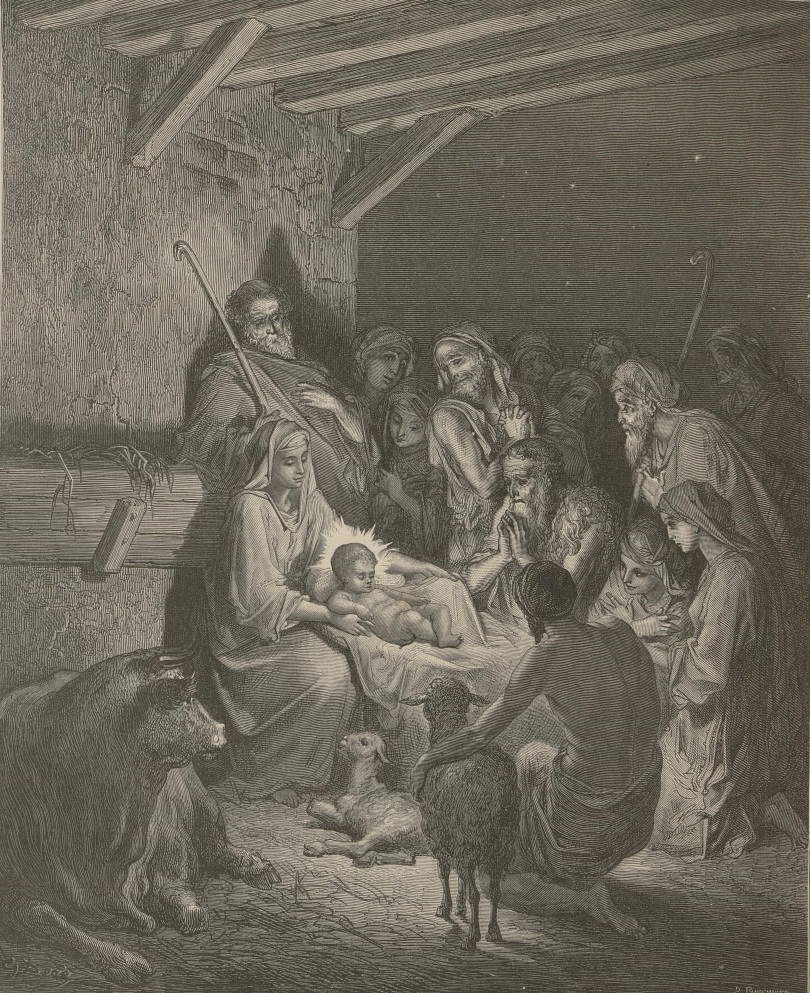
Christmas Eve is always the most magical, mystical part of Christmas time. Popular depictions of Jesus’ Birth take place, presumably, on Christmas Eve—the angels bursting into the black, silent night above Bethlehem. The whole event is supernatural—the Virgin Birth, the Star guiding the way to the manger, the angels appearing to the shepherds and singing. Tradition has it that even the animals in the manger talked at the moment of Christ’s birth (at exactly midnight, of course). If the rocks can cry out, singing praises to Him, why not some donkeys?










 The Portly Politico