Size Matters

The big Christmas concert has come and gone.  It was pretty wild week, but now we’re on the downward slope.

When I first started doing these little Christmas concerts, we had maybe 100 students at the school.  There were no dance classes, and drama was kind of tacked onto English.  The focus was on the music, and in such a small environment, everything was simpler:  setup, planning, logistics.  It was all accomplished more informally.

Now the student body has nearly tripled in size.  With that growth has come added complexity.  Put it all in a gymnasium during basketball season—the sport third to only baseball and hockey for numbers of games and practices—and it makes for a herculean task.

Read More »

TBT: “Silent Night” turns 200

The Christmas season—and a pending Christmas concert—has seen me waxing melodic on the holiday’s wonderful music.  As such, today’s TBT is predictable (if anyone were interested in predicting such a thing):  it’s a look back at a short post about the 200th anniversary of the classic carolSilent Night.”

Like “Joy to the World,” “Silent Night” is one of my favorite carols.  It’s sweet and simple, but can also be rocked up (the 6/8 time signature and three-chord structure lend the tune to bluesy interpretations, and I’ll occasionally slide in some blue notes when playing the song instrumentally).

It looks like it won’t make it into our Christmas program this year—a rarity—but I’ll be sure to make room for it next year.  Its more operatic cousin, “O Holy Night,” will be our finale, though.  I’ve always linked the two tunes mentally because of their similar names and themes (and they’re both in 6/8).  “O Holy Night” really lends itself to a hard rock interpretation, as my annual “O Holy (To)Night” cover version attests.

Without further adieu, here is Christmas 2019’s “‘Silent Night’ turns 200” (now closing in on 201):

One of my favorite Christmas carols, “Silent Night,” turns 200 this Christmas season.

The carol was originally written as a poem in the aftermath of the Napoleonic Wars by a village priest, Joseph Mohr, in the village of Oberndorf, Austria, in 1816. Two years later, Mohr approached the town’s choirmaster and organist, Franz Xaver Gruber, to set the poem to music. Gruber agreed, and the carol enjoyed its first performance to a small congregation, which universally enjoyed its simple sweetness.

Since then, the humble hymn has spread far and wide, and is probably the most recognizable Christmas carol globally today. It’s been covered (likely) thousands of times; it’s certainly become a staple of my various Christmas performances.

This simple, sweet, powerful carol beautifully tells the story of Christ’s birth, as well as the import of that transformative moment in history, that point at which God became Flesh, and sent His Son to live among us.

As much as I enjoy classic hard rock and heavy metal, nothing can beat the tenderness of “Silent Night”—except the operatic majesty of “O, Holy Night,” objectively the best Christmas song ever written.

Merry Christmas, and thank God for sending us His Son, Jesus Christ.

Midweek Update

It’s crunch time here at Portly HQ.  As such, today’s post will be very brief.

I’ve been writing a lot about Christmas and music lately—’tis the season, after all.  You can catch up on yesterday’s post about “Joy to the World,” as well as Sunday’s look back at my Dokken album reviews from Christmas 2018.

One reason for the Christmas music focus is that my students have their big Christmas Concert this Friday.  It’s always a great deal of fun, and we try to go for a homemade Trans-Siberian Orchestra vibe (if only I could get the administration to spring for some laser lights and pyrotechnics).

As an independent musician and a music teacher (I also teach history), I find myself playing the role of concert impresario quite a bit.  One lesson I’ve learned is that the money people—the producers—will always have their notes and revisions, often last-minute.  Your well-oiled, tried-and-true concert formula can often get totally upended with changes.  Learning to roll with the punches is hard, but necessary.

Read More »

Joy to the World

The musical mood continues here at The Portly Politico—as does the joy (check out my “Joy of” posts here, here, and here).  The Christmas season always lifts my spirits, and the boost from my piece on Milo and Romantic music has further buoyed them (if you’d like to elevate my mood to transcendent heights, consider purchasing some of my music).

With yesterday’s post on Christmas carols, I thought it might be interesting to look deeper into the most joyous of them all:  Isaac Watts‘s “Joy to the World.”

Read More »

The Joy of Christmas Carols

Christmas puts me in a musical mood. For one, I’m somewhat contractually-obligated to put on a Christmas concert, which will consume most of my free time this week, so I’d better embrace the Christmas spirit—or else. But it’s not hard to get excited about the iconic music of the season.

(Also, Milo Yiannopoulos—the actual Milo—shared my post about his views on Romantic music, which helped make it the most trafficked post of the year so far. That was incredibly gracious of him to do, and it’s further boosted my excitement for playing and writing about music.)

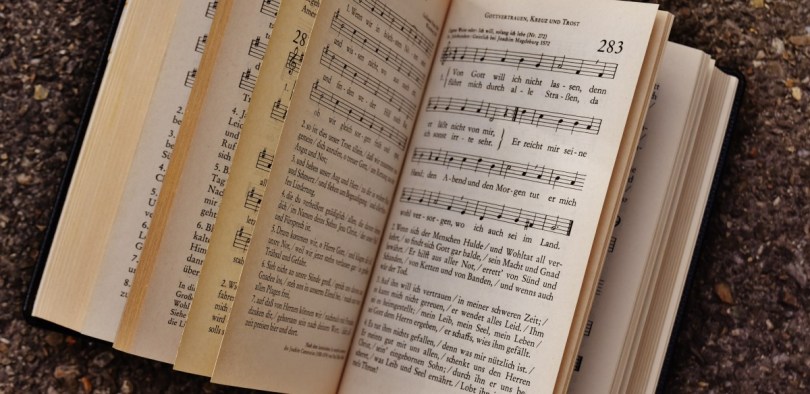
As I wrote in an earlier blog post on hymnals, I’ve gradually taken over piano playing at my little Free Will Baptist church. We sing many of the traditional hymns that were written and popularized in the nineteenth and twentieth centuries, as well as some earlier selections. Shape-note hymns are often hard to play, with big intervalic leaps in the melodies and surprisingly complex harmonies.

Take that melodic variety and harmonic complexity and multiply it by a factor of ten, and you’ve got Christmas carols.

Read More »

Milo on Romantic Music

The Christmas season always gets me excited for music, because there are so many wonderful carols and hymns about the birth of Jesus.  I will write more on the topic of Christmas carols later on in the month, but today I wanted to touch on a really niche topic:  Milo Yiannopoulos‘s love of Romantic-era music.

What got me on this topic is not just my musical mood; it was an epic Telegram thread Milo had going about… classical music.

Read More »

Cyber Monday Musings

Today’s post is a glorified sales pitch.  ‘Tis the season, after all.  If you want to get to the punchline, head over to my SubscribeStar page and subscribe for $1/month to unlock all of my SubscribeStar Saturday posts.  For $5/month, you get fresh doodles every Sunday, as well as other random bonuses.  The most recent $5 post included an MP3 of an original composition from Electrock Retrospective, Volume I: Dance Party.  More goodies to come!

Well, the glorious Thanksgiving Week is over.  The blog Didact’s Reach opened today’s post with the observation that this Monday is “doubly terrible”—after four or five days of heavy eating, sleeping, and shopping, nobody wants to be back at the grind.

This morning officially kicks off the busiest two weeks of the school year for yours portly:  a middle school drama production gets into tech rehearsals (and opens) this week, and our big, over-the-top Christmas concert is ten school days away—yikes!  That’s why I call Thanksgiving “the eye of the storm”—the brief calm before the craziness of December hits.  As the tech guy and music teacher at my little school, it’s an unusually busy season.  My online course hits their exam this week, too, so those grades are coming due.

But that’s all tedium that will get done one way or the other.  As for today, it’s Cyber Monday!

Read More »

Lazy Sunday XXXVII: Best of the Reblogs, Part II

Thanksgiving is almost here!  Regular readers will by now know of my love for Halloween, which is second only to Christmas in my heart.  But Thanksgiving is definitely up there in the Top Five, at least—sandwiched neatly between the former two, a brief taste of the Christmas togetherness and relaxation to come.

This week’s Lazy Sunday continues with some of my favorite reblogged posts.  As I wrote last week, one of the simple joys of blogging is making friends with other bloggers.  Maybe one day we can all meet up at some kind of blogging convention.

This week’s reblogs feature two from Practically Historical, a blog dedicated to historical topics, mostly American History.  The other is from Quintus Curtius, a classicist and world traveler (not to mention a former Marine) who writes beautifully about forgotten chunks of the distant past.  He revives the old tradition of the great antiquarians, much to our benefit.

  • Reblog: Lincoln and Civil Liberties” – This post is an examination of Lincoln’s decision to arrest pro-secessionist legislators in Maryland, in order to prevent the State from seceding from the Union.  He examines John Merryman, for whom the case Ex Parte Merryman is named, and notes Merryman was actively engaged in leading an armed militia in Maryland against federal authority.  Yikes!
  • Reblog: Quintus Curtius, ‘On Living Near the Ocean’” – This essay on the ocean really struck a chord with me.  Quintus Curtius is a strong writer, and his examination of the ways that people respond to living near the water are fascinating.  On the one hand, people enjoy the vigorous health of the salt air and good seafood, but maritime towns tend to be breeding grounds for shabbiness and dingy criminality (see also:  Myrtle Beach).  A worthy read.
  • Reblog: Practically Historical on the Electoral College” – Gordon Sheaffer of Practically Historical delivers again with an excellent examination and defense of the Electoral College.  He has a great takedown for the anti-EC crowd, who argue that individual votes are all that matter:  he argues that we should think of the EC like a series of baseball games.  Yes, the highest score wins individual games, but the wins are what matter.  A team can win ten games by one run each, while another team can win nine games by ten runs each; what matters are the wins, not the overall scoring.

That’s it for this week. Enjoy the fleeting glory of your weekend, and enjoy the short workweek!

Happy Sunday!

—TPP

Other Lazy Sunday Installments:

Lazy Sunday XXXIV: The Desperate Search for Meaning Series

Next to Halloween and Christmas, today is the most wonderful of the year—it’s the day that the clock falls back an hour!  Sure, that means I’ll never see the sun for the next few months, as I’ll spend the dwindling daylight hours inside a classroom, but at least I got an extra hour of sleep this morning.

This week saw a good bit of reflecting on what is important in life (like ghost stories), so I thought it would be a good opportunity to reflect on “The Desperate Search for Meaning” series of posts.  It will also help to aggregate those posts into one place.

  • The Desperate Search for Meaning” – The post that started this impromptu series (and the subject of this week’s Flashback Friday featurette), this essay was about a New Age healer, Audrey Kitching, who exploited vulnerable women into working in slave-like conditions.  Kitching bamboozled these women with her gauzy, neo-spiritualist babble; her thin sense of meaning of belonging roped them in, as they desperately attempted to fill a void in their lives—and that doesn’t even include all the women who bought Kitching’s fraudulent products.  It’s a sad story, one I think is indicative of our times.
  • The Desperate Search for Meaning, Part II” – This piece was about a crazy old lady who believes that cancer can be extruded from the body through a series of energy-channeling motions—at least on the surface.  The real focus was that, while this old loon was going through her bizarre ritual, she espoused a cult of death:  having babies is bad because of overpopulation.  It’s the religion of environmentalism, one of the several cults of modern progressivism.  It is a deadly ideology that is, essentially, anti-human.
  • The Desperate Search for Meaning, Part III: Progressive Power Crystal” – This post looked at an LA Times piece on New Age spirituality, and how it was replacing traditional Christianity as the “faith” of young Americans.  That’s all tied up with progressivism’s imperial and totalitarian ambitions—all off these anti-Christian, anti-American movements are of a piece, serving similar ends.  As I write at the end of the post:

    “Even if our elites aren’t specifically Satanists, they’re certainly not Christians.  Their religion is progressivism, an jumble of ideologies that, at bottoms, rejects Christianity and its view of human nature.  Their gods are power and envy—just like Lucifer.”

  • The Desperate Search for Meaning IV: Vanity” – This piece pulled from a sermon my pastor gave on Ecclesiastes, one of my favorite books of the Bible.  Ecclesiastes is a work of philosophy, in which King Solomon examines his life and finds that all of his pursuits are, ultimately, meaningless:  he will die, and everything he experienced and built will eventually disappear.  Therefore, his only true meaning comes through God.  It’s the earliest form of Christian existentialism ever written (with apologies to Søren Kierkegaard).  It’s also a powerful reminder that this world, in which we are so involved, is fleeting.

That’s it for this Sunday.  Going back through this posts really makes my soul ache for the people that fall for New Age nonsense and neo-paganism.  Good thing I’ve found the One True Faith—the Southern branch of the Free Will Baptist denomination. 😀

Happy Sunday!

—TPP

Other Lazy Sunday Installments:

On Ghost Stories

Yesterday’s post about Father Robert Morey’s courageous stand for the unborn really took off.  Thank you to readers for sharing the post, and thanks to those of you who left comments.  Please continue to keep Father Bob in your prayers.  —TPP

It’s Halloween!  Well, at least it’s All Hallow’s Eve Eve, but that’s close enough for some ghoulishly delicious ghost stories.

I love a good ghost story.  The Victorians did the genre best, but many writers since have honed it further, adding their own unique twists and scares.  Even Russell Kirk, the great conservative philosopher, was a fan of ghost stories.  Indeed, his bestselling book was a ghost story.

For the Victorians, ghost stories were told at Christmastime.  This timing, while peculiar to modern readers, makes sense intuitively—Christmas is a time for remembering the past, in part (perhaps especially) our honored dead (just ask Washington Irvingif he comes by to haunt you).  The “ghosts” of departed loved ones linger closely during those long, frosty nights.  The inherent nostalgia of Christmas and the winter season—and bundling up next to a crackling fire—sets the perfect mood for ghostly tales.

Nevertheless, what other time of year can beat Halloween for a good tale of witches and werewolves; of monsters and mummies; of ghouls, goblins, and ghosts?

Read More »