TBT: Hard Rock Reviews on Orion’s Cold Fire

Every year my school puts on an over-the-top Christmas concert, which is just eight days away (yikes!).  Since Christmas is the most important holiday of the year (second only to Easter in its theological significance for Christians), my belief is that we should honor Jesus’ birth with an epic rock concert.

We do all the heartwarming holiday classics (including the best Christmas song ever written, “O, Holy Night”).  We also will take a timeless 70s or 80s hard rock classic and either a.) put it into a medley of Christmas tunes and/or b.) change the lyrics to Christmas ones.  For example, one year we took Dio’s “Holy Diver” and linked it to “Joy to the World.”  We then changed the opening lyric of “Holy Diver/You’ve been down too long in the midnight sea” to “Merry Christmas!/You’ve been down too long in the Arctic Sea.”  And so on.

Anyway, in the spirit of the Christmas season, I thought I’d dig up a real deep cut:  my review of Rainbow’s Down to Earth that I wrote for Orion’s Cold Fire, when I was contributing to photog’s website more regularly.  Once I started on this year of blogging, I lacked the time to do these reviews, but I’ll hopefully write some more this Christmas (if photog will have me).

This TBT features two posts:  the post on this blog about the review, and the review itself as it appears on Orion’s Cold Fire.

Enjoy, Merry Christmas, and rock on!

—TPP

Post on The Portly Politico Linking to the Album Review

Blogger photog has graciously agreed to publish some of my short music reviews on his blog, Orion’s Cold Fire. Specifically, I’m contributing reviews of classic hard rock and heavy metal albums, genres that I believe represent the artistic and technical pinnacles of rock and roll.

My first review, of Rainbow’s 1979 album Down to Earth, is available now on OCF. Check it out—and rock on!

Review of Down to Earth on Orion’s Cold Fire

Linkhttps://orionscoldfire.com/index.php/2018/12/19/the-portly-politicos-review-of-rainbows-down-to-earth/

The good folks at Orion’s Cold Fire have generously allowed me the opportunity to contribute to the site.  I write primarily about politics, economics, and history at https://theportlypolitico.wordpress.com, but as a “semi-pro” musician (and a full-time music teacher), I enjoy occasionally critiquing music.  The purpose of this feature is to review classic 70s and 80s-era hard rock and heavy metal albums.  Why such a specific genre and time period?  Essentially, I believe this genre represents the pinnacle of rock music.  With its confluence of blues, acid rock, country-western, and all the other distinct musical “flavors” of the mid-twentieth century, rock and roll reached its greatest artistic and technical summits during the “classic rock” era.  I’ll write further about that contentious claim at a later date; but now, let’s boogie!

When considering an album to review, I more or less use this criteria:  does it sound like hard rock/heavy metal?  Have I listened to it enough to comment upon it?  And does it rock?  That’s not the best criteria, as it predisposes me to writing glowing reviews of every album, but there you have it—the highly unscientific approach I take to writing about music I generally love.

All that aside, my first album review for Orion’s Cold Fire was a no-brainer:  1979’s Down to Earth by Rainbow.  This album perfectly encapsulates the direction of rock music at that crucial turning point between punk and the New Wave of British Heavy Metal.

Down to Earth was the first and only Rainbow album to feature Graham Bonnet on lead vocals, who replaced legendary metal vocalist Ronnie James Dio.  Rainbow’s guitarist and mastermind, Ritchie Blackmore, was notorious for sacking musicians on a whim, so most of the album’s personnel was wildly different than even the previous Rainbow release.

Regardless, this album rocks.  While he’s no Dio, the songs on Down to Earth are uniquely suited for Bonnet’s vocals—probably because he wrote the melodies after the band had already recorded all of the tracks.

The album’s big hit—and Rainbow’s first hit single—is “Since You Been Gone,” a Russ Ballard-penned tune that strikes the right balance between rock and pop.  The chorus is catchy as the flu, but like any good hard rock song, the pre-chorus build really sets up the triumphant release of the chorus beautifully.  Listen to the bass and guitar after the line “Your poison letter, your telegram” and you’ll see what I mean.

That said, my favorite tracks are the opening and closing numbers, “All Night Long” and “Lost in Hollywood,” respectively.  Musically, they rock, and “Lost in Hollywood” passes what I call the “drive test”—I drive much faster when listening to it.  It also features some of Rainbow’s signature neoclassical embellishments, pointing to the rise of neoclassical metal.

Lyrically, they’re fairly depressing commentaries of the rock ‘n’ roll lifestyle, not to mention the Sexual Revolution.  “All Night Long” is sung from the point of view of a jaded, lonely rocker, searching the crowd for a babe to spend the night with him (the most poignant line, from the third verse: “I know I can’t stand another night on my own”).  “Lost in Hollywood” describes a man so dedicated to rock, he’s lost the woman who makes it all worthwhile.

There are some less memorable tracks—the neoclassically-inflected “Eyes of the World” is a commentary on humanity’s rapacious capacity for violence and waste, but is a bit ponderous; “Makin’ Love” has its moments, but is forgettable—but, from start to finish, Down to Earth is as good an introduction to classic hard rock as I can conceive.  Crank it up!

Cyber Monday Musings

Today’s post is a glorified sales pitch.  ‘Tis the season, after all.  If you want to get to the punchline, head over to my SubscribeStar page and subscribe for $1/month to unlock all of my SubscribeStar Saturday posts.  For $5/month, you get fresh doodles every Sunday, as well as other random bonuses.  The most recent $5 post included an MP3 of an original composition from Electrock Retrospective, Volume I: Dance Party.  More goodies to come!

Well, the glorious Thanksgiving Week is over.  The blog Didact’s Reach opened today’s post with the observation that this Monday is “doubly terrible”—after four or five days of heavy eating, sleeping, and shopping, nobody wants to be back at the grind.

This morning officially kicks off the busiest two weeks of the school year for yours portly:  a middle school drama production gets into tech rehearsals (and opens) this week, and our big, over-the-top Christmas concert is ten school days away—yikes!  That’s why I call Thanksgiving “the eye of the storm”—the brief calm before the craziness of December hits.  As the tech guy and music teacher at my little school, it’s an unusually busy season.  My online course hits their exam this week, too, so those grades are coming due.

But that’s all tedium that will get done one way or the other.  As for today, it’s Cyber Monday!

Read More »

Lazy Sunday XXXVIII: Best of the Reblogs, Part III

The Lazy Sundays roll on!  Today marks the first Sunday of Advent season, as we metaphorically prepare for the Birth of Our Lord and Savior, Jesus Christ.  But instead of doing a compilation of heartwarming holiday posts, we’re soldiering on with our “Best of the Reblogs” (see Part I and Part II).

  • Reblog: The Normalization of Ugliness Inevitably Becomes The Denigration of Beauty” – This post was a reblog from the ultra-controversial Chateau Heartiste website, which was so full of edgelord red pillery that the SJWs at WordPress finally pulled the plug.  While there was some truly despicable stuff at CH, it also hosted some hard, gut-punching Truths.  The original post argued that we’ve gone to the extreme of accepting all sorts of grotesqueries not just as people, but as the new standard of beauty—to the point that having objectively beautiful people in advertisements is seen as “hate speech.”  Of course we should love all people, but we don’t—and shouldn’t—pretend that everyone is pretty, or that every lifestyle is healthy.
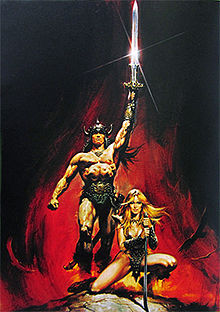
  • Reblog: Conan the Southerner?” – One of the many great posts from The Abbeville Institute, this bit of literary history detailed the development of Conan the Barbarian, and the muscular barbarian’s creator’s origins and upbringing in hardscrabble Texas.  Conan is not just a wildman from the steppes; he’s a man of the Old South.
  • Galaxy Quest II: Cox Blogged” – I wrote a post, “Galaxy Quest,” about our attempts to understand the vastness of our own galaxy.  Longtime blog (and real life) friend Bette Cox linked me to some of her own work on astronomy and cosmology, and this post was an attempt to bring those writings to a (slightly) wider audience.  I’ve been reading Bette’s material for about a year, and had no idea how much she wrote about astronomy, cosmology, and space.

That’s it for this week’s Lazy Sunday.  Enjoy the start of the Christmas season.

Ho ho ho!

—TPP

Other Lazy Sunday Installments:


Cybertruck

Last week, troubled electric automaker Tesla announced Elon Musk’s latest brainchild, the Cybertruck.  The Cybertruck—the name of which I am sure is meant to evoke the dystopian sci-fi genre cyperpunk—features a rolled steel and titanium exoskeleton that looks like a Nintendo 64 polygonal rendering of an automobile.

It’s unorthodox design aside, I honestly can’t make up my mind on whether or not I like this vehicle.  Last week I lamented the new electric Mustang, not because it is electric, but because it’s a hatchback.  The title of that piece was “New Mustang is a Sign of the Times,” and my point was that everything awesome seems to be deteriorating.

Does the Tesla Cybertruck fit that trend?  Is it a horrible monstrosity?  Or is it a daringly original vehicle?

I’m not sure.

Read More »

On Ghost Stories

Yesterday’s post about Father Robert Morey’s courageous stand for the unborn really took off.  Thank you to readers for sharing the post, and thanks to those of you who left comments.  Please continue to keep Father Bob in your prayers.  —TPP

It’s Halloween!  Well, at least it’s All Hallow’s Eve Eve, but that’s close enough for some ghoulishly delicious ghost stories.

I love a good ghost story.  The Victorians did the genre best, but many writers since have honed it further, adding their own unique twists and scares.  Even Russell Kirk, the great conservative philosopher, was a fan of ghost stories.  Indeed, his bestselling book was a ghost story.

For the Victorians, ghost stories were told at Christmastime.  This timing, while peculiar to modern readers, makes sense intuitively—Christmas is a time for remembering the past, in part (perhaps especially) our honored dead (just ask Washington Irvingif he comes by to haunt you).  The “ghosts” of departed loved ones linger closely during those long, frosty nights.  The inherent nostalgia of Christmas and the winter season—and bundling up next to a crackling fire—sets the perfect mood for ghostly tales.

Nevertheless, what other time of year can beat Halloween for a good tale of witches and werewolves; of monsters and mummies; of ghouls, goblins, and ghosts?

Read More »

SubscribeStar Saturday: Aiken Amblings

Today’s post is a SubscribeStar Saturday exclusive.  To read the full post, subscribe to my SubscribeStar page for $1 a month or more.

It’s been quite a nice week, Hurricane Dorian notwithstanding.  Last night I called my first varsity football game (I’ve been calling junior varsity games for a few years now), and I am eternally grateful to the eagle-eyed coaches in the pressbox who fed me some of my best lines.

After the game—a blowout of such proportions that the second half instituted a “running clock,” which meant an abbreviated evening for yours portly—I drove to my hometown of Aiken, in the western part of South Carolina.  My destination for the weekend:  the large arts and crafts fair known as Aiken’s Makin’.

To read the rest of this post, subscribe to my SubscribeStar page for $1 a month or more.

Rudyard Kipling’s “The Mother Hive”

To start yesterday’s History of Conservative Thought class, I had students skim through Rudyard Kipling’s 1908 short story “The Mother Hive.”  I stumbled upon the reading in our class text, Russell Kirk’s The Portable Conservative Reader.

It is a grim little fable that warns about the perils of progressivism infiltrating a proud but weakened nation.  In the story, a deadly wax-moth sneaks into a large but bedraggled beehive during a moment of confusion.  She quickly steals away to the cell of the youngest bees, who have yet to take their first flight.  There, she fills their impressionable heads with gentle words and promises of a glorious future, all while covertly laying her eggs.

One young bee, Melissa, who has just returned from her first flight, is suspicious of the beautiful stranger’s soothing words, but the wax-moth plays the victim and insists that she’s only spreading her “principles,” not the eggs of her hungry future children.

Read More »

Ocarina of Time Soundtrack Review

While I was up in New Jersey—I’m mentioning that about as frequently as Ben Shapiro mentioning that his wife is a doctor—my older brother sent me a review of the original soundtrack for The Legend of Zelda: Ocarina of Time.  I highly recommend you check out both the review and the soundtrack.

Ocarina of Time was the major Legend of Zelda release for the Nintendo 64 (N64), and it was an instant classic.  It’s also a testament to the strength of its soundtrack that I never really appreciated how different composer Koji Kondo‘s pieces were for the game.

Read More »

Reblog: Conan the Southerner?

I’m heading back from a glorious week in New Jersey today to return to my beloved South Carolina.  It was serendipitous, then, that I read this piece from the Abbeville Institute, “Conan the Southerner?

I recently stumbled upon the Abbeville Institute while doing some research on John Randolph of Roanoke for my History of Conservative Thought course.  It’s an institute dedicated to Southern history, and to presenting a more nuanced interpretation of the antebellum South.  Their blog features some dense, interesting bits of Southern history (I’m reading through a long-ish essay on “The South Carolina Federalists” that has taught me a great deal more about my State’s history in the period of the Early Republic), and champions constitutionalism, limited government, and a traditional way of life.

The Conan piece is an excellent—and fun—analysis of the Conan the Barbarian series of low-fantasy pulp novels, focusing on Conan creator Robert E. Howard and his Jacksonian roots in Texas.  The post’s author, Marine Corps Lieutenant Colonel Joel T. Leggett, argues that Howard’s Conan is a modern example of American mythology, one with distinctively Southern roots.

The essay is also useful as it offers a clear definition of Jacksonian principles, via historian Walter Russell Meade.  As we continue to attempt to define “populism” in the midst of Trumpian nationalism, I always relish a concise definition of the principles of the godfather of American populism, Andrew Jackson.

Meade, per Leggett, defines these principles as “self-reliance, equality, individualism, financial adventurism, and courage.”  Leggett then proceeds to demonstrate how the character of Conan embodies these qualities, and that Howard was chiefly concerned with promoting individual liberty.

That part of the essay is, for me, the most useful and enjoyable.  The qualities are certainly deeply American—and deeply Southern.  The “equality” is not the banal egalitarianism of our present age, which seeks to level off everything and everyone into conformist blandness, but the old equality of opportunity, in which every man can forge his destiny.

Tied with that is the notion of “financial adventurism.”  Leggett notes that Meade argued that “Jacksonians view money and wealth as a means to finance a lifestyle of self-definition.  The value of wealth is to enable you to be you, to live life to its fullest.”  This notion of financing “a lifestyle of self-definition” accords with my own long-term financial goals.  It also seems to be the direction that “free” speech is headed:  to exercise this right truly, one must have financial independence from social justice scolds.

And this, for Leggett, seems to be the core of Conan’s Southern Jacksonianism:  a desire for individual liberty, for a man to be able to live his life on his own terms.  Howard might have wrapped that ideal in a burly barbarian warrior-king who rose to rule a kingdom due to his own prowess, but it’s one every American should aspire towards.  In this way, Leggett makes a compelling case for Conan the Barbarian as a valuable piece of American mythology.

State of the Portly Update – Summer 2019

As of today, my glorious summer vacation has begun.  Time to whip out the Hawaiian shirts.  Everyone knows the three best reasons to teach:  June, July, and August.

In all seriousness, I thought it would be useful to do a “State of the Blog” update now that TPP 3.0 has been going strong for nearly a year.  With summer ahead, it’s an opportunity to work on the blog a bit more, and to get cracking on some long-delayed eBook ideas.

With daily posting, I’ve found that readership has gradually increased.  It seems that I get the most views when I have posts ready to go at 6:30 AM, perhaps because they’re in readers’ inboxes when they awake.  I’ve also been sharing links to relevant posts in comments on more prominent bloggers’ pieces, which has really driven traffic to the site.

The daily readership on average has gone from around thirteen per day at the beginning of the year to around twenty-two per day.  The overwhelming majority of readers are from the United States, but I’ve had visitors from all over the world (even one guy from Nepal!).

As far as changes to the site, most everything will stay the same.  I’ll continue to post daily (schedule-permitting), maintaining my average of ~670 words a day (but, of course, focusing on quality, not quantity… hopefully).

One minor change:  I’ll be designating Saturdays as “SubscribeStar Saturdays.”  I’ll give a short “teaser” of the Saturday post on this website, then link to my SubscribeStar page for the rest of the post.  Subscribers will have instant access to these posts.

One of the first posts there will be my 2019 Summer Reading List.  I haven’t done one since 2016’s list, which was quite well-received, and I’m overdue for a new one.

Re: SubscribeStar:  as I start pushing out some longer-form essays and short eBooks, subscribers at the $5-per-month level and above will gain access to those works as they’re published (likely as PDFs) as part of their subscription.

I’m still kicking around the Portly Podcast idea, which will mainly depend on my schedule this summer.

Speaking of, outside the blog I’m running a course called History of Conservative Thought.  I’ve had the idea for this course in the back of my mind for some years now, but decided to offer it this summer at the little private school where I teach.  This first run will be an independent study, but I’ll be sharing some updates on the course as we go through the history of conservatism.  We’re starting, of course, with the American and French Revolutions, particularly with Edmund Burke, as well as the question “what is a conservative?”  I’m quite excited.

On the non-political front, I’m gearing up some more gigging.  I’m also working on some new songs; perhaps I can slam out another EP or a full-fledged album one of these days.  If you want to learn more about my musical noodling, visit my website, or listen to my tunes on Bandcamp.  I wrote an entire song cycle about the rise and fall of civilizations… with unicorns!

That’s it for today.  Back to regular programming tomorrow.

Happy Summer!

–TPP