Tucker Carlson’s Platform for Victory in 2020

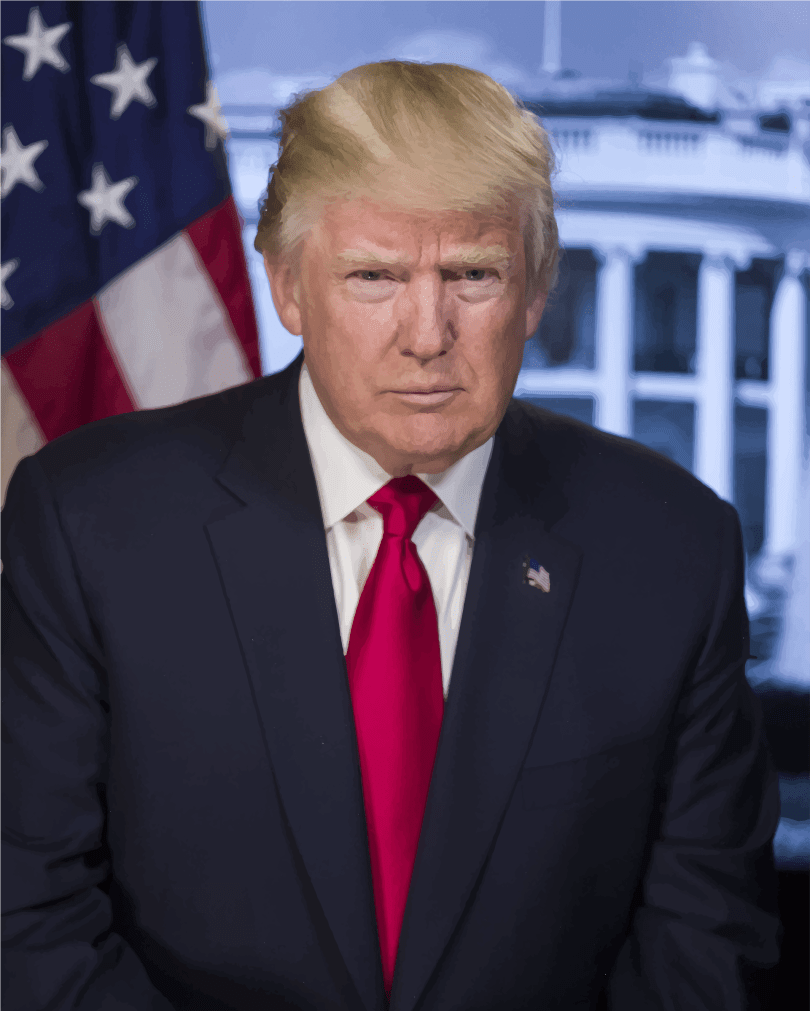
Tucker Carlson is the gift that keeps on giving.  In a segment from last week, the populist-friendly television host offered up a winning strategy for President Trump—and a warning.

In essence:  while economic numbers are very good, many of Trump’s base of supporters—the working and middle classes—are still struggling, or at least perceive that they are.  In a longer piece from Joel Kotkin (also on Carlson’s Daily Caller website), the author argues that the tensions between the Trumpian lower classes and the ascendant upper class is akin to the friction between the French Third Estate (the commoners) and the First and Second Estates (the aristocracy and the clergy) just prior to the French Revolution.

Read More »

God Bless Us, Every One: The Gift of the Trump Economy

Christmas Week is always full of blessings.  Thanks to the good folks at pro-MAGA news aggregator Whatfinger News (and a helpful tip from photog of Orion’s Cold Fire on how to submit links to them), The Portly Politico has seen its best week in terms of traffic all year.  Two pieces, “Napoleonic Christmas” and “Christmas and its Symbols” made the main page, leading both to surpass my previous top post for the year, “Milo on Romantic Music.”  Apparently, people still get riled up about Napoleon.

It’s also been a wonderful opportunity to spend time with family and to overeat lots of delicious, rich foods.  If you’ve never heard of the Appalachian delicacy “chocolate butter,” do yourself a favor and look it up.  Yes, it’s even better than the name suggests.

Of course, all of that good cheer requires a solid financial foundation.  And in his three years in office, President Trump has shattered records for unemployment, wage increases, and economic growth.  Economics isn’t everything, but the Trump economy is something for which we should give thanks.

Read More »

Size Matters

The big Christmas concert has come and gone.  It was pretty wild week, but now we’re on the downward slope.

When I first started doing these little Christmas concerts, we had maybe 100 students at the school.  There were no dance classes, and drama was kind of tacked onto English.  The focus was on the music, and in such a small environment, everything was simpler:  setup, planning, logistics.  It was all accomplished more informally.

Now the student body has nearly tripled in size.  With that growth has come added complexity.  Put it all in a gymnasium during basketball season—the sport third to only baseball and hockey for numbers of games and practices—and it makes for a herculean task.

Read More »

SubscribeStar Saturday: The Tedium of (Teaching) Slavery

Today’s post is a SubscribeStar Saturday exclusive.  To read the full post, subscribe to my SubscribeStar page for $1 a month or more.  For a full rundown of everything your subscription gets, click here.

A major part of American history was, of course, slavery.  As I typed that sentence, I nearly wrote “the unfortunate legacy of slavery,” though we’re still living that, just not in the way the race-baiters and social justice warriors claim.

But phrases like “the unfortunate legacy of slavery” have become incredibly cliched.  It and similar phrases (“slavery is our great national sin”) act as magic talismans, incantations that, when invoked, protect the speaker (presumably) from the ultimate curse, the label of “racist.”

Of course, slavery was wrong, and slavery is immoral.  It was our great national sin (paid for, as Lincoln pointed out in his Second Inaugural Address, with the blood “drawn by the sword” in the American Civil War).  It continues to have an “unfortunate legacy,” in that race-baiting charlatans continue to blame it for virtually every pathology in black American culture.

Dang it… I screwed up the incantation with that last bit.  I’d better kiss my job goodbye right now.

To read the rest of this post, subscribe to my SubscribeStar page for $1 a month or more.

Lazy Sunday XXXVII: Best of the Reblogs, Part II

Thanksgiving is almost here!  Regular readers will by now know of my love for Halloween, which is second only to Christmas in my heart.  But Thanksgiving is definitely up there in the Top Five, at least—sandwiched neatly between the former two, a brief taste of the Christmas togetherness and relaxation to come.

This week’s Lazy Sunday continues with some of my favorite reblogged posts.  As I wrote last week, one of the simple joys of blogging is making friends with other bloggers.  Maybe one day we can all meet up at some kind of blogging convention.

This week’s reblogs feature two from Practically Historical, a blog dedicated to historical topics, mostly American History.  The other is from Quintus Curtius, a classicist and world traveler (not to mention a former Marine) who writes beautifully about forgotten chunks of the distant past.  He revives the old tradition of the great antiquarians, much to our benefit.

  • Reblog: Lincoln and Civil Liberties” – This post is an examination of Lincoln’s decision to arrest pro-secessionist legislators in Maryland, in order to prevent the State from seceding from the Union.  He examines John Merryman, for whom the case Ex Parte Merryman is named, and notes Merryman was actively engaged in leading an armed militia in Maryland against federal authority.  Yikes!
  • Reblog: Quintus Curtius, ‘On Living Near the Ocean’” – This essay on the ocean really struck a chord with me.  Quintus Curtius is a strong writer, and his examination of the ways that people respond to living near the water are fascinating.  On the one hand, people enjoy the vigorous health of the salt air and good seafood, but maritime towns tend to be breeding grounds for shabbiness and dingy criminality (see also:  Myrtle Beach).  A worthy read.
  • Reblog: Practically Historical on the Electoral College” – Gordon Sheaffer of Practically Historical delivers again with an excellent examination and defense of the Electoral College.  He has a great takedown for the anti-EC crowd, who argue that individual votes are all that matter:  he argues that we should think of the EC like a series of baseball games.  Yes, the highest score wins individual games, but the wins are what matter.  A team can win ten games by one run each, while another team can win nine games by ten runs each; what matters are the wins, not the overall scoring.

That’s it for this week. Enjoy the fleeting glory of your weekend, and enjoy the short workweek!

Happy Sunday!

—TPP

Other Lazy Sunday Installments:

TBT: The Influence of Christianity on America’s Founding

My high school American history classes are getting into the American Civil War—or the War of Northern Aggression, or the War for Southern Independence, or whatever you’d like to call it—this week, so we’ve been talking about beginnings a good bit.  The Civil War had deep roots that go back not just to the 1840s or 1850s, and not even to the Constitutional Convention in 1787.

Indeed, the fundamental division dates back to the English Civil War in the 1648, when the Puritan Roundheads under Oliver Cromwell ousted and beheaded Charles I, and established the English Republic (which—the English having little taste for radicalism or dictatorships, fortunately collapses in 1660 with the restoration of the Stuart monarchs).  Loyalists to the king and the monarchical order were the aristocratic Cavaliers.  Those same Puritans of East Anglia settled heavily in Massachusetts following the Pilgrims’ famous landing at Plymouth Rock, and the Cavaliers—in body and spirit—dominated the tidewater plantations of the South.

Read More »

New Mustang is a Sign of the Times

Before diving into today’s post, I’d like to give a YUGE “thank you” to Nebraska Energy Observer for reblogging yesterday’s postHis commentary on my post and Leslie Alexander’s moving personal essay adds greatly to the discussion of modern alienation, and gives me some encouragement in these dark days.

Everything awesome goes to crap.  That’s the thought I had yesterday when reading fridrix’s brief post lamenting the new electronic Ford Mustang, the Ford Mustang Mach-E.

Electric cars are fine, although environuts shouldn’t delude themselves that driving these battery-powered vehicles are saving the environment (it’s pedantic to point out, but batteries require a great deal of mining to get the metals necessary to build them, and the electricity to charge them comes from coal-, oil-, and nuclear-power, so it’s not like you’re truly making an end-run around fossil fuels).  But a Ford Mustang shouldn’t be an  electric car; at least, it shouldn’t be one that looks like this iteration.

Read More »

TBT: Why the Hate for Space Force?

An unintended theme of the blog this week has been space, with two posts on our galaxy and our place in it (read “Galaxy Quest” and “Galaxy Quest II“).  One of the first posts I wrote on the blog urged the United States to expand into space.

So I was thrilled, understandably, when President Trump announced the creation of Space Force.  What a brilliant idea—and one that the ten-year old boy in me celebrated right away.  Diligent readers will know that I voted for Newt Gingrich in the 2012 South Carolina Republican Party, and donated $100 to his campaign after he promised to put a colony on the moonby the end of my second term.”

Read More »

Memorable Monday: Veterans’ Day 2018, Commemoration of the Great War, and Poppies

Today is Veterans’ Day in the United States.  Veterans’ Day began as Armistice Day, which ended the First World War in 1918.

The past century was not great for Western civilization.  Most of the horror of the long twentieth century stemmed from the Great War and its mostly senseless destruction.  The sense of nihilism that engulfed the West—a civilization that was bestrode the world with confidence and panache—metastasized into the identity crisis of its nations today.

The piece below is adapted from a talk I gave to the Florence County, South Carolina GOP last year at its November 2018 monthly meeting.  I still think it’s one of the best Historical Moment talks I ever gave, but that’s mostly due to John McCrae’s powerful poem “In Flanders Fields“; the poem is reproduced in full below.

Thank you to all of our veterans for their service.

—TPP

Yesterday Americans, Europeans, and the world commemorated the 100th anniversary of the end of the Great War, what we call the First World War.  The Armistice that silenced the guns of one of the most brutal conflicts in human history was signed in the wee hours of 11 November 1918, but did not take effect until 11 AM—the eleventh hour of the eleventh day of the eleventh month.  That bit of numerical symmetry, while memorable, cost an additional 2738 lives, with 10,944 casualties—a pointless denouement to a destructive war.

Peace would ultimately come to Europe—after three prolongations of the Armistice—in 1920 with the ratification of the Treaty of Versailles (the United States, refusing to join the League of Nations, negotiated a separate treaty with Germany, the Treaty of Berlin, in 1921).  That treaty, which the Germans called the Diktat because of its severity, and because it pinned the war solely on the German Empire, was a reflection of the Armistice signed three years earlier.

In preparing tonight’s remarks, I came across an article that describes the first meeting between Marshall Foch, the commander-in-chief of the Allied forces, and Matthias Erzberger, a middle-aged German politician who had come to sue for peace.  The Frenchman looked stonily at the German peace delegation, and said, “Tell these gentlemen I have no proposals to make.”  Rather, Marshal Foch had a number of demands to issue, thirty-four in total, including Germany’s agreement to pay heavy reparations.

In hindsight, we know the folly of trying to squeeze blood and treasure from the turnip that was a starving, reduced Germany—and the radicalism it, in part, inspired.  But we have to understand, as best we can, the bitterness and weariness the Great War wrought.  Millions of men in Europe had lost their lives, or were maimed for life, fighting in the war.  The republican governments of France and Britain were not willing to accept peace without something to show for it; their people (and voters) would not have accepted it.  Indeed, Marshall Foch told his staff he intended “to pursue the Feldgrauen [field grays, or German soldiers] with a sword at their backs” until the moment the Armistice went into effect.  One cannot help but wonder that the fighting in this final hours was motivated, in part, by a mutual bloodlust, and an opportunity to settle scores one last time before the clock struck eleven.

From the grime and death of the Great War, however, grew new hope—a hope for peace, yes, but also a hope that humanity could avoid such a devastating conflict again.  That hope—and the enduring hope for a world built on peace and understanding—is poignantly symbolized in the flowering of the churned up “No Man’s Land,” the pock-marked area between Allied and German trenches.  Immortalized in Canadian Lieutenant-Colonel John McCrae’s “In Flanders Fields,” poppies were first flowers to bloom in that graveyard of Western civilization.  To this day, the crimson of the poppies serves as a reminder of the men who made the ultimate sacrifice for their countries, and that even in death, life endures.

I will close this somewhat grim Historical Moment with a brief reading of that poem; it can commemorate the men there far better than I:

In Flanders fields the poppies blow
Between the crosses, row on row,
That mark our place; and in the sky
The larks, still bravely singing, fly
Scarce heard amid the guns below.

We are the Dead. Short days ago
We lived, felt dawn, saw sunset glow,
Loved and were loved, and now we lie
In Flanders fields.

Take up our quarrel with the foe:
To you from failing hands we throw
The torch; be yours to hold it high.
If ye break faith with us who die
We shall not sleep, though poppies grow
In Flanders fields.

Phone it in Friday IV: Conferencing

It’s been a very busy week, and with a slew of lessons and some open mic nighting yesterday—plus an early start this morning—I was unable to get a post written last night to go live this morning.  Further, I attended a teachers’ conference in a city about 90 minutes from my school, so I was unable to sneak in any surreptitious blogging amid sessions.

For tomorrow’s SubscribeStar Saturday post, I’m going to write more about one of the conference sessions I attended, which was about the importance of faculty culture to the functioning of an independent school.  I think it holds within it some important lessons about culture more broadly, and is worth discussing in more detail.

For this evening, though, my time is quite limited, so I thought I would share some general reflections on today’s conference.  I’m scooting off to a very cold pressbox for the evening, from which I’ll be announcing a playoff football game, and getting some hastily-rehearsed singers out onto the field for a brief Veterans’ Day presentation.  When the head of your Board of Directors wants something, he gets it.

Read More »