
A Discourse on Disclaimers

Yesterday, I wrote about the current child separation policy—and the issue of illegal immigration more broadly.  I initially thought about approaching the topic with delicacy and tact, scaffolding my argument with ample disclaimers about sympathy for the situation of the children, etc. (and, in a flippant way, I did).

But the whole delicate, walking-on-eggshells, tightrope-walk performance of disclaimers is wearying, and I decided to go off half-Coultered instead.  We live in an age in which voicing any controversial (usually conservative) opinion requires pages of tedious disclaimers along the lines of “while I agree that [controversial topic here] is bad, I would argue [very narrow, logically-consistent exception to the badness of the controversial topic].”

This practice gets old fast.  To be an open conservative these days means enduring more litmus tests and grilling than a Supreme Court nominee—and that’s just to be able to function socially in mainstream society.

robert-bork
Robert Bork—one of my intellectual heroes

What does one get for one’s trouble?  Only a very few people take the time to appreciate subtlety of argument.  The Cultural Marxist, social justice warrior approach to any disagreement is to attack every position relentlessly on axiomatic grounds, rather than hearing out the opposing viewpoint in full and digesting it completely.

The effect is that to even make a controversial argument—no matter how balanced, well-researched, or logical—is to invite wholesale scorn and derision, up to and including expulsion from polite circles.  The true goal of this monolithic dismissal of anything outside of the fashionable-for-the-moment social justice “mainstream” is to silence critics and opposing viewpoints, hoping that the tedium and weariness will simply shut up dissent.

Sometimes, it works, and it worked for a very long time (until Donald Trump hit the scene).  Indeed, immediately after the 2016 presidential election, the tension of full-blown Trump Derangement Syndrome made it impossible to even engage in good-natured ribbing with Clinton supporters.  After eight years of spiking the football in cultural victory after cultural victory, the Left couldn’t take the shock of defeat in stride.

Post-Trump, however, some things have improved.  As Charles Norman wrote in an essay at Taki’s Magazine (“Trapped in the Closet,” 15 June 2018), “Courage is contagious.”  Once candidate Trump exposed the cracks in the Cult. Marx. framework, free speech began to get off life support.

In that essay, Norman quotes Paul Johnson; I’ll replicate that quotation here (emphasis Norman’s):

“…it’s good news that Donald Trump is doing so well in the American political primaries. He is vulgar, abusive, nasty, rude, boorish and outrageous. He is also saying what he thinks and, more important, teaching Americans how to think for themselves again.”

Trump was not the first to lead the way.  Polemicist Ann Coulter, philosopher Richard Weaver, commentator Ben Shapiro, Supreme Court nominee Robert Bork, National Review founder William F. Buckley, Jr., President Ronald Reagan—the list goes on and on.  Each laid a stone in the forgotten byway of liberty that brought us to where we are today.  Our Founding Father’s cut the path, especially with the First Amendment and its free-speech safeguards, which are virtually unique in the world.

***

To close, I’ll share a brief personal anecdote:  I remember being at some soiree not long ago, and was talking with a parent of some former students.  Somehow, the discussion turned to politics.  There’s always a brief moment in such situations that feels like you’re about to jump off a diving board, and you’re either going to land in water, or a lava-filled shark tank (don’t ask me how the sharks survive; that they do makes them all the more sinister).

I reluctantly-but-hopefully discussed the positive legacy of President Trump; I landed in a pool of soft marshmallow fluff.  He, too, was quietly enthusiastic, and we spent the next half-hour relishing having found a fellow traveler.  That’s what being a pro-Trump conservative—even in the rural South!—is like sometimes.  When you meet another one, it’s like encountering another human being on what you thought was a deserted island.

So, enough disclaimers.  Enough of this endless qualifying.  Let’s have real, gutsy conversations again.  Let’s say controversial things loudly, especially if they’re true.

In short, everybody lighten up!
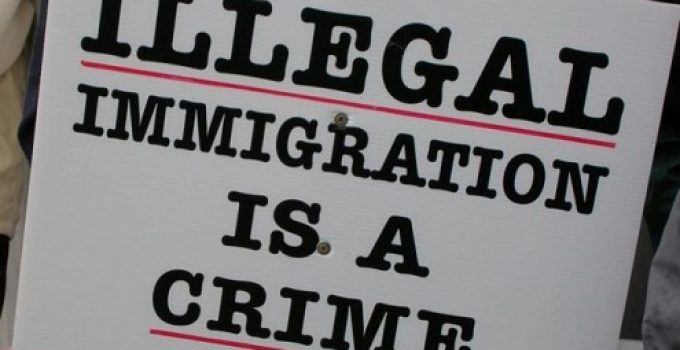
Open Borders is the Real Moral Crisis

I typically avoid wading into fashionable-for-the-moment moral crusades, but the hysteria over children being separated from their parents at the border is ludicrous, and demonstrates the typical “facts over feelings” emotionalism that mars our immigration debate.  That feel-goodism is why we’re even in this mess—if it can be characterized as such—in the first place.

Because I’ll be deemed a monster—“Won’t somebody please think of the children!“—for not unequivocally denouncing this Clinton-era policy, I’ll issue the usual, tedious disclaimers:  yes, it’s all very tragic; yes, it could be handled better; yes, I would have been terrified to be separated from my parents at such a young age; etc.

Now that the genuflecting to popular pieties is out of the way, let me get to my point:  this entire situation would be a non-issue if we had simply enforced our immigration laws consistently for the past thirty years.  President Trump isn’t the villain here (if anything, Congress is—they can take immediate action to change the policy or come up with some alternative—but I don’t even think they’re wrong this time); rather, the villains are all those who—in the vague name of “humanity” and “human rights”—ignored illegal immigration (or, worse, actively condoned it).

Sadly, it is an issue.  But what else are we to do?  Years of non-enforcement have sent the implicit but clear message to potential illegal immigrants that we don’t take our own borders (and, by extension, our national sovereignty and rule of law) seriously, and that if you’re sympathetic enough, you’ll get to skip the line.  Folks come up from Mexico and Central America fully expecting that, after some brief official unpleasantness, they can dissolve into the vastness of the United States and begin sending remittances back to their relatives—who may then pull up stakes and come.

Further, sneaking into the country illegally is a crime, and the United States has every right to enforce its laws, including those pertaining to immigration.  Mexico, similarly, has that right—and uses it unabashedly to police its own border (or to let Central American migrants waltz through on their way to the Estados Unidos).  Naturally, the punishment for breaking laws is often detainment, and the kiddies don’t join dad in his cell.

To give a common example:  what happens to the children of, say, an American heroin dealer when he’s arrested and sentenced to ten years in a drug bust?  His children—if they have no relatives willing or able to take them in—go into the foster care system.  It’s tragic, it’s terrible, but it’s part of the price of committing a felony.  No one wants it to happen, but it’s a consequence of one’s actions.  This reason is why crime is so detrimental to society at large, even beyond the immediate victims.

Unfortunately, a combination of winking at immigration enforcement (“eh, come on—you won’t get deported”), feel-good bullcrap (as my Mom would call it), and Emma Lazarus Syndrome (trademarked to The Portly Politico, 2018) have contributed to the current nightmare situation.  Now that an administration is in office that actually enforces the duly legislated law of the land—and at a point at which the problem has ballooned to epic proportions due to past lax enforcement—the problem is far thornier and more consumed with emotional and moral peril.

As any self-governing, self-sufficient adult understands, sometimes doing what is necessary is hard.  I do feel for these children who are stripped from their parents arms (although, it should be noted, usually for only a matter of hours), but who cares about my feelings?  We can have compassion for those who try to arrive here illegally, as well as their children, without attempting to take on all of their problems, and without sacrificing our national sovereignty and our laws in the process.

The United States is the most generous nation in the world—and the most prosperous—but we cannot take everyone in; to do so would not make everyone else better off, but would rather destroy what makes America the land of compassion, liberty, prosperity, and charity that it is.

***

For further reference, I recommend the following videos, the first from the brilliant Ben Shapiro, the second from Dilbert creator Scott Adams:

I’d also recommend this piece from National Review columnist Richard Lowry, which is quite good:  https://www.nationalreview.com/2018/05/illegal-immigration-enforcement-separating-kids-at-border/

And, finally, this piece from Conservative Review‘s Daniel Horowitz, which explains the true moral toll of illegal immigration—and misplaced compassion—very thoroughly:  https://www.conservativereview.com/news/the-immorality-of-the-open-borders-left/