SubscribeStar Saturday: Controlling Spending

Today’s post is a SubscribeStar Saturday exclusive.  To read the full post, subscribe to my SubscribeStar page for $1 a month or more.

It’s been a crazy week, with President Trump successfully maneuvering the ultra-progressive “Squad” of Congresswomen Ilhan Omar, Alexandria Ocasio-Cortez, Rashida Tlaib, and Ayanna Pressley as the faces of the entire Democratic Party.

Lost in the shuffle—indeed, what seems to be an afterthought for most politicians and Americans now—is excessive government spending.  Virtually all of the major Democratic candidates for president in 2020 endorse policies like Medicare for All that would balloon an already-engorged federal deficit (around $22 trillion, I believe).  President Trump, for all of his successes with deregulation and trimming bureaucratic fat, has not done much to cut the budget substantially—indeed, he didn’t even campaign on cutting entitlement spending.

To read the rest of this post, subscribe to my SubscribeStar page for $1 a month or more.

Lazy Sunday XVIII: SubscribeStar Posts

For the past few weeks I’ve been pushing my SubscribeStar page more regularly, as readers have no-doubt noticed.  I’ve picked up one subscriber; naturally, I hope more will sign up!

Here’s the pitch:  I post a new, original essay exclusively to my SubscribeStar page every Saturday.  I also made #MAGAWeek2019 a SubscribeStar exclusive—that’s four posts about people or ideas that made America great (this year’s listJohn Adams, Alexander Hamilton, President Trump’s Independence Day Speech, and fast food).  For just $1/month, you get access to these essays.

To put that in perspective:  I’ll probably buy a pizza today for $12.  That’s what a one-year subscription to my SubscribeStar page will cost.  That’s at least fifty-two (52) original pieces, not including bonus content and current and future posts.

Even if you can’t read them on the Saturday they’re released, they will always be there!  And with new content every week, your subscription gains value with each post.  Right now there are ten SubscribeStar exclusive posts, including the #MAGAWeek2019 ones, and that number will continue to grow.

I’ll also post additional special content from time-to-time, in the vein of the #MAGAWeek2019 posts.  The long-contemplated Portly Politico Podcast, should it ever launch, will also be exclusive to SubscribeStar.

With all that said, this week’s edition of Lazy Sunday is dedicated to looking at the great SubscribeStar Saturday posts that are already on the site (excluding the #MAGAWeek2019 posts, which were the subject of last week’s Lazy Sunday).

  • The Portly Politico Summer Reading List 2019” – The long-awaited successor to “The Portly Politico Summer Reading List 2016,” this list of recommended summer reads will give you plenty of conservative brain food to feed your mind and your soul.  I give detailed reviews of my four recommendations.
  • Asserting Conservatism” – This essay argues for defining conservatism in positive—that is, on its own—terms, rather than as merely against the Left.  Standing athwart history, shouting “STOP” was a necessary step in the Buckleyite days of old-school National Review, when international Communism threatened to infiltrate and topple our institutions.  Culture Marxists have accomplished what Soviet Marxists could not, and it’s time to push back, not merely stem the tide.  Doing so will require a vigorous articulation and defense of conservatism—and a willingness to fight against Leftists.
  • Christians Protect Other Faiths” – Christianity gets a bad shake, considering it built Western civilization (with an alley-oop from ancient Greece, Rome, and Israel).  The tolerance Christianity teaches is a boon to believers of other faiths, as Christ teaches conversion through persuasion, and the basic dignity of all people, Jew and Gentile.
  • Immigration and Drugs” – This piece pulls from a couple of posts at VDARE.com, which linked illegal immigration from south of the United States border to the opioid crisis.  One solution from the author:  bomb the poppy fields in Mexico, not just Afghanistan.
  • Mid-Atlantic Musings” – During #MAGAWeek2019, I was in New Jersey.  This post is a reflection of my visit (spoiler alert:  I very much enjoyed it).  It also details my one-day trip to Coney Island, which is basically Myrtle Beach in Brooklyn.
  • The Real Color of Environmentalism is Red, Not Green” – Yesterday’s post, in which I compare Congresswoman Alexandria Ocasio-Cortez’s ludicrous Green New Deal to President Franklin Delano Roosevelt’s original New Deal.  Both rely on excessive federal and executive power, and the Green will ruin the economy and our nation just the way the original one did.

So, there you have it!  There’s a lot of great material, with more coming every Saturday.  Please consider subscribing to my SubscribeStar page for just $1 (or more!) per month to gain access to these and other essays.

Happy (and Lazy!) Sunday!

–TPP

Other Lazy Sunday Installments:

SubscribeStar Saturday: The Real Color of Environmentalism is Red, Not Green

Today’s post is a SubscribeStar Saturday exclusive.  To read the full post, subscribe to my SubscribeStar page for $1 a month or more.

Environmentalism is an easy target for the Right, but radical environmentalists are dogmatic and effective at advancing their anti-humanity agenda. “Climate change”—and before that, “global warming” and “global cooling”—have been tools for advancing Marxism and statism for over fifty years.

Environmentalism is one of the many gods in the polytheistic pantheon of pagan progressivism. It fits in nicely with some of the other deities in Leftism’s cosmology, such as Abortion and Open Borders: “don’t procreate because babies use up too many resources and there are starving children in Guatemala—bring them in instead!”

To read the rest of this post, subscribe to my SubscribeStar page for $1 a month or more.

TBT: Progressivism and Political Violence

It’s another late post today, as my post-New Jersey schedule is still a bit wonky.  I just got done with a twelve-hour stint of uncling, so there was barely time to eat lunch, much less write a blog post—even a quick TBT feature.

Given the recent attacks on conservative journalist Andy Ngo, it seems apropos to dedicate this week’s to one of my classics of the modern, TPP 3.0 era:  “Progressivism and Political Violence.”  I wrote this essay back in June 2018, and I’ve probably linked to it more than any other post I’ve ever written, because it touches upon so much of the Left’s pathos.

I wrote at the time that, if the Left lost all the arms of the government, they would use extreme violence to accomplish their ends.  That was before I fully appreciated how extensive and pervasive the Deep State truly is—the Left is so entrenched, it can never really be out of power in the current state of play.

Read More »

You Can’t Cuck the Tuck: Immigration

Consistent with my own posts on immigration, and particularly Somalian immigration, Tucker Carlson nails it (see the video in the Tweet below):

Read More »

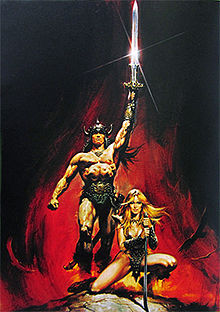
Reblog: Conan the Southerner?

I’m heading back from a glorious week in New Jersey today to return to my beloved South Carolina.  It was serendipitous, then, that I read this piece from the Abbeville Institute, “Conan the Southerner?

I recently stumbled upon the Abbeville Institute while doing some research on John Randolph of Roanoke for my History of Conservative Thought course.  It’s an institute dedicated to Southern history, and to presenting a more nuanced interpretation of the antebellum South.  Their blog features some dense, interesting bits of Southern history (I’m reading through a long-ish essay on “The South Carolina Federalists” that has taught me a great deal more about my State’s history in the period of the Early Republic), and champions constitutionalism, limited government, and a traditional way of life.

The Conan piece is an excellent—and fun—analysis of the Conan the Barbarian series of low-fantasy pulp novels, focusing on Conan creator Robert E. Howard and his Jacksonian roots in Texas.  The post’s author, Marine Corps Lieutenant Colonel Joel T. Leggett, argues that Howard’s Conan is a modern example of American mythology, one with distinctively Southern roots.

The essay is also useful as it offers a clear definition of Jacksonian principles, via historian Walter Russell Meade.  As we continue to attempt to define “populism” in the midst of Trumpian nationalism, I always relish a concise definition of the principles of the godfather of American populism, Andrew Jackson.

Meade, per Leggett, defines these principles as “self-reliance, equality, individualism, financial adventurism, and courage.”  Leggett then proceeds to demonstrate how the character of Conan embodies these qualities, and that Howard was chiefly concerned with promoting individual liberty.

That part of the essay is, for me, the most useful and enjoyable.  The qualities are certainly deeply American—and deeply Southern.  The “equality” is not the banal egalitarianism of our present age, which seeks to level off everything and everyone into conformist blandness, but the old equality of opportunity, in which every man can forge his destiny.

Tied with that is the notion of “financial adventurism.”  Leggett notes that Meade argued that “Jacksonians view money and wealth as a means to finance a lifestyle of self-definition.  The value of wealth is to enable you to be you, to live life to its fullest.”  This notion of financing “a lifestyle of self-definition” accords with my own long-term financial goals.  It also seems to be the direction that “free” speech is headed:  to exercise this right truly, one must have financial independence from social justice scolds.

And this, for Leggett, seems to be the core of Conan’s Southern Jacksonianism:  a desire for individual liberty, for a man to be able to live his life on his own terms.  Howard might have wrapped that ideal in a burly barbarian warrior-king who rose to rule a kingdom due to his own prowess, but it’s one every American should aspire towards.  In this way, Leggett makes a compelling case for Conan the Barbarian as a valuable piece of American mythology.

Lazy Sunday XVII: #MAGAWeek2019

This past week was #MAGAWeek2019 here at The Portly Politico.  Each day’s post was a SubscribeStar exclusive.  For a subscription of $1/month, you gain exclusive to each day’s posts, as well as exclusive content every Saturday throughout the rest of the year.  Visit my SubscribeStar page for more details.

In case you missed anything from #MAGAWeek2019, this week’s edition of Lazy Sunday is dedicated to catching you up on what you missed.  But remember, you only get a teaser of each post; to read the full posts, you have to subscribe to my SubscribeStar page for $1/month or more.  That includes exclusive content every Saturday, too, like yesterday’s review of my trip to New Jersey and Coney Island, NYC, “Mid-Atlantic Musings.”

But enough sales pitches.  Here were the highlights from #MAGAWeek2019:

  • Fast Food” – After a long day on the road last Sunday, I decided to do something fun and lighthearted to kick off #MAGAWeek2019.  President Trump famously loves fast food, even feeding it to the Clemsux National Championship football team in vast quantities.  I, too, appreciate good fast food, and marvel at its ability to provide a filling, calorie-rich meal at an affordable price.  You can read more of my high cholesterol musings on the topic at my SubscribeStar page.
  • Alexander Hamilton” – Hamilton engenders a great deal of debate between decentralist Jeffersonians (such as myself) and centralists, but his influence on and importance to America’s early political and financial formation cannot be denied—indeed, it should be celebrated.  Jefferson and Madison were probably correct, constitutionally, on the issue of the national bank—Congress had no explicit constitutional authority to create such an institution—but Hamilton’s financial reforms placed the nation on solid financial footing, ensuring the United States had the financial infrastructure in place for explosive growth and expansion.
  • John Adams” – John Adams is an unappreciated Founder and Framer, though David McCullough’s magisterial biography of the second President of the United States has done much to lift Adams’s profile.  Adams served the United States ably as our Commander in Chief during his single term, staving off a full-blown war with France while protecting American mercantile shipping on the high seas.
  • President Trump’s Independence Day Speech” – On a particularly star-spangled Fourth of July, President Trump delivered a powerhouse of an Independence Day speech.  Not only were the multiple flyovers of military aircraft impressive (ending, of course, with the Blue Angels soaring majestically over the National Mall), the speech itself was a masterclass in what I dub “old, patriotic American history.”  It’s well worth watching—and reading my full analysis on my SubscribeStar page.

Other Lazy Sunday Installments:

TPP Review: First Half of 2019

It’s been a busy week for yours portly as I’ve been on uncle duty.  The little ones are back to their folks, and TPP is wiping away the baby spittle and Cheerios dust—and, hopefully, getting back on schedule.

This Monday, July 1 will kick off , which will be a SubscribeStar exclusiveJust subscribe to my SubscribeStar page for $1 a month or more to get access to these posts about the men, women, and ideas that made America great [again]!  And don’t forget tomorrow is SubscribeStar Saturday, the day of the week subscribers get a post just for them.

July 1 will also mark the halfway point of this year, so I thought I’d use tonight’s post to do a little looking back.  This post will be the 180th consecutive post, which means I have an entire secondary school academic year’s worth of posts in 2019.  I might should start compiling those into a book—the Portly Manifesto, perhaps?

Regardless, here are the five most viewed posts of 2019 up to this point.  Enjoy!

5.) “Nehemiah and National Renewal” – Not only is this post about Nehemiah, the great leader of the Israelites who coordinated the rebuilding of Jerusalem’s dilapidated walls in the face of overwhelming opposition, a reader favorite; it’s one of my favorites as well.  Nehemiah trusted in God, and when God commanded him to rebuild the walls, Nehemiah did so faithfully.  The parallels with the Trumpean program of building a wall and seeking national renewal are hard to miss.  I also wrote a fairly popular follow-up to this post, which explores the spiritual aspects of Nehemiah more thoroughly.

4.) “Hump Day Hoax” – This post garnered a great deal of attention because I linked to it in the “comments” section of GOPUSA, a conservative news and opinion website.  The site featured a piece on my adopted home town’s mayor, who claimed that the heavy pollen on her car was part of a deliberate hate crime.  You can’t make this stuff up.  In the wake of the Jussie Smollett hoax, it seemed at the time like Her Dishonor the Mayor was grasping for some race-based discrimination fame of her own.  I’m pretty sure my mayor reported the story to Newsweek herself, even though county and State law enforcement confirmed that the mystery substance was, indeed, pollen.  Gesundheit!

3.) “Secession Saturday” – This post explored the totalitarian nature of Leftism, particularly the idea that, should our cold cultural civil war ever turn hot, the Left would never allow for a peaceful separation.  Even though they hate us, part of that hate is due to their unwillingness to let us live our lives as we see fit.  As such, there would never be an amicable parting of ways, because progressives can’t stand for people to disagree with them.

2.) “Gay Totalitarianism” – This piece pulled from—as all of my best posts do—the excellent American Greatness website.  It explored a couple of hoaxes involving gays or lesbians concocting incidents of violence to garner media attention and fawning support, all in the service of pushing an increasingly unhinged queer agenda.  Jussie Smollett’s ability to stage a ridiculously clumsy “hate crime” against himself, then to walk scot-free, shows how being gay, black, and famous serves as a talisman against even criminal prosecution.

1.) “The Desperate Search for Meaning” – The most popular post of this year owes its popularity to clicks from Dalrock’s blog.  I posted the link to it in a comment on one of his pieces, and his superior content and traffic spilled over to this piece, which focused on the antics of a New Age charlatan and her female acolytes.  The posts discusses how people (and, in this context, specifically women) are desperately searching for something deeper than empty materialism, to the point that they will endure abuse and slave-like work conditions for the chance to be close to someone offering spiritual fulfillment, even if it’s counterfeit.

So, there you have it.  I hope you’ve enjoyed the blog this year.  Here’s hoping I can keep the momentum going.

Happy Fourth of July!

–TPP

Southern Conservatism: John Randolph of Roanoke

MAGA Week 2019 is one week away!  Get ready to celebrate America all week long!  This year, all MAGA Week posts will be exlusive to my SubscribeStar page, so subscribe today!  $1 a month gets you full access to all posts, including new content every Saturday.

As my History of Conservative Thought course rolls on, I’m learning more about the forgotten byways and overgrown, stately ruins of the various branches of conservatism.  Students this week are reading a couple of documents from John Adams and Alexander Hamilton, the two founders of the Federalist Party, and key to the passage of the Constitution.  Hamilton, the author of the bulk of the pro-ratification Federalist Papers, also created the financial system upon which the United States functions today.

Hamilton and Adams have both enjoyed renewed interest in recent years, Hamilton due to the smash Broadway musical about his life, and Adams from a critically-acclaimed HBO series (one that, sadly, takes some unnecessary artistic license with the past).  In the case of Hamilton, American history students are often enthusiastic to get to him in my AP US History course, and Hamilton mega-fans often know more about the first Secretary of Treasury than I do.

But we’re reading a speech from another important figure from American history, albeit one largely forgotten:  John Randolph of Roanoke.

Read More »