TBT: Romney’s Perfidy Runs in the Family

As a bit of a mea culpa for my positive post about Mitt Romney’s pro-natalism plan, I thought I’d atone by looking back to one of my better posts:  a detailed rundown of the Romney family’s long history of waffling on important issues, and attempting to play both sides of the political spectrum simultaneously.

Romney’s father, George Romney, was one of a (thankfully) dying breed:  the Rockefeller Republicans.  These “moderate” and liberal Republicans essentially were a paler echo of the postwar Democratic Party:  they espoused heavy spending, government intervention, and socially progressive policies, just in a more toned-down manner than their more overtly progressive colleagues in the opposing party.

In this post, I review Romney the Elder’s infamous “brainwashing” interview, in which he claimed his earlier pro-Vietnam War position was due to a thorough “brainwashing” by the United States military.  It was a politically catastrophic and bizarre statement, and one that demonstrated yet another of Romney’s shifting positions to fit with the tenor and fashions of the time.

And so it continues with Romney the Younger, who voted this week to proceed with the farcical impeachment trial against a man who is no longer holding office.  Romney will yet again bask in temporary accolades for his “courage” and “bipartisanship” in the press, before they return to reviling him for being a Republican.

At this point, why can’t these Republican squishes—Romney, Murkowski, Collin, et. al.—just show their true colors and join the Democratic Party?

But I digress.  Here is 6 January 2019’s “Romney’s Perfidy Runs in the Family“:

Read More »

TBT: Beethoven’s Sixth Symphony

I’ve been on a major classical and Romantic music kick lately, dedicating the last three Fridays specifically to the music of the Romantic Period (here, here, and here).

As such, I thought it would be apropos to look back at a piece I wrote last January about Beethoven and his masterful Sixth Symphony.  The occasion for that piece was the South Carolina Philharmonic‘s Sunday matinee performance of their popular Beethoven and Blue Jeans concert—back in The Before Times when we still had live music.  The program, as I wrote at the time, was “‘Beethoven’s Greatest Hits,'” featuring Beethy’s Symphony No. 5 in C Minor and Symphony No. 6 in F Major.

The Sixth, often called the “Pastoral,” is one of my favorites.  I’m a sucker for programmatic music, and there are programmatic elements embedded in the titles of each of the symphony’s movements, but the music sounds like the countryside.

But I covered all of this a year ago, so why repeat myself (except that I’m doing that below… hmm…)?  Here is January 2020’s “Beethoven’s Sixth Symphony“:

Read More »

The Joy of Romantic Music II: Bedřich Smetana’s “The Moldau”

Last Friday I wrote of the beauty and power—the sheer joy—of Romantic music, a topic I’ve covered once before on this blog.  In writing last week’s post, I noted briefly that Romantic music is nationalistic, which was certainly true in a number of cases.

Europe following the French Revolution and the Napoleonic Wars was a hotbed of political activity and nationalist sentiment.  The Congress of Vienna (1815) redrew the map of Central Europe, reducing the hundreds of German principalities, bishoprics, duchies, baronies, and the rest into about a dozen political units, hoping these larger Germanic kingdoms would serve as a bulwark against future French aggression.  They did, and more—under the steady Realpolitik of German Chancellor Otto von Bismarck, Prussia gradually grew to unite these new lands into the Second Reich—a unified Germany.

Meanwhile, smaller nations chafed under Austrian or French influence.  Bohemia—now part of the Czech Republic—fought against Austrian political rule and the German language that came with it.  Bohemians championed the revival of their native Czech language, and began revisiting Czech folklore and music as the resting place of the national spirit.

This process was not unique to Bohemia or the Czechs, but today’s featured piece, Czech composer Bedřich Smetana‘s The Moldau, is a prime of example of how nationalist musical ideas can capture beautifully a sense of a place, while also transcending national identity and borders.

Read More »

Memorable Monday: Happy MLK Day 2019 – Suggested Reading

It’s another Reverend Doctor Martin Luther King, Jr. Day here in the United States, which means another day off for those of us in the cushier fields (in my case, education).  As I wrote in last year’s MLK Day post, it’s a holiday “that feels like an excuse to have a little taste of the recently-departed Christmas holiday.”  I went on in the post to contend that

Contra the whole “make it a day ON” virtue-signalers, [MLK Day] really is the perfect day to crank up the heat, brew some coffee, and enjoy reading with some fried eggs (over medium, please) and toast (and, for us Southerners, a hearty helping of grits).  It’s one of the last taste[s] of the hygge before the warm weather creeps back in (which occurs sometime in late February or early March here in South Carolina).

Here’s to the hygge, my friends.  In the spirit of wintry coziness and relaxation, I decided to look back to my first MLK Day post from 2019, which offered up some suggested reading.  Some of the suggestions I made are a bit dated, like the Conrad Black piece on Brexit, while others are solid perennially (such as photog’s reviews of The Twilight Zone).

Well, the more things change, the more they stay the same.  Here is January 2019’s very brief “Happy MLK Day 2019 – Suggested Reading“:

Happy Martin Luther King, Jr. Day, TPP readers!  I don’t have a full post today, just this quick message wishing you all a happy and safe day off (for those of you fortunate enough to be off).  Last Monday’s post about race would probably have been better saved for today, so feel free to go back and read it.

If you’re looking for some good reading on your day off, check out my list of favorite writers, or my old 2016 Summer Reading List.  In case you missed it, I’d also recommend this piece on Marxist infiltration in Great Britain.  And blogger photog at Orion’s Cold Fire is reviewing EVERY episode of The Twilight Zone, which is quite entertaining (read the first episode review).

Also in Great Britain/Brexit news:  Conrad Black has an optimistic piece about Brexit that I’ve yet to digest; stay tuned for analysis.

Finally, if you haven’t yet gotten around to it, check out Tucker Carlson’s 3 January 2019 monologue (a nice birthday present for yours truly).

We’ll be back to our regularly scheduled bloviating tomorrow.

agriculture barley field beautiful close up

Tip The Portly Politico

Support quality commentary on politics, education, culture, and the arts with your one-time donation. ***NOTE: This box is NOT a subscription to my SubscribeStar Page; it is for a one-time donation/tip via PayPal. To subscribe to my SubscribeStar page, use this URL: https://subscribestar.com/the-portly-politico ***

$1.00

Flashback Friday: Christmas and its Symbols

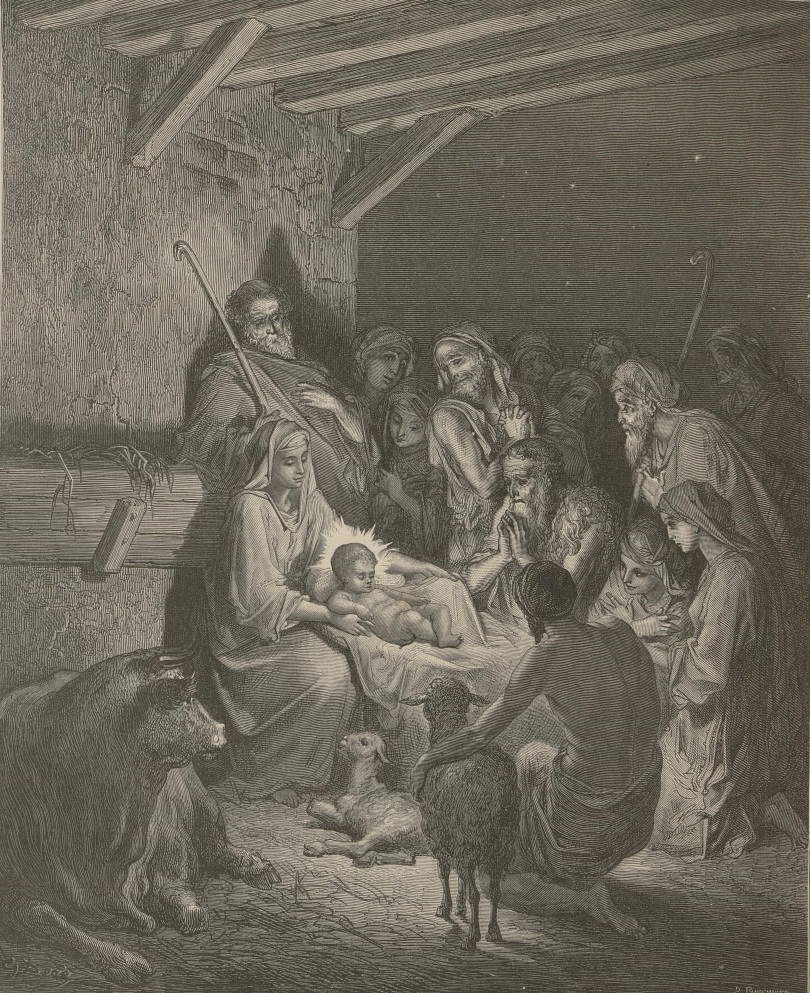
It’s Christmas!  Another magical day to celebrate the birth of our Lord and Savior, Jesus Christ.

2020 was a tough year, but Christ is mightier than The Virus.  Thank God—literally!—for sending His Son.

Have a wonderful, safe, loving Christmas Day.  God Bless all of your for your support and generosity, and for being such amazing readers.

Here’s 25 December 2019’s “Christmas and its Symbols“:

Read More »

TBT: Christmas Eve

Here we are—another Christmas Eve.  It’s a night full of magic, mysticism, and wonder—the Light and holy version of Halloween, when the tenuous division between our corporeal existence and the supernatural world is thin.

Last year I wrote of my family’s Christmas Eve traditions, which are changing up a bit again this year.  In lieu of the usual evening candlelight service, we’re going to an afternoon service at a church in my younger brother’s neck of the woods.  Afterwards, we’ll be enjoying Chinese food—a newer tradition for us—and some fondue, a tradition from my sister-in-law’s side of the family.  We’re beginning to sound like 1970s Jews on Christmas.

Here’s wishing you and yours a very Merry Christmas tomorrow—and some Christmas Eve merriment tonight!  With that, here is 24 December 2019’s “Christmas Eve“:

Read More »

Happy 250th Birthday, Beethoven!

Today marks the 250th birthday of Ludwig van Beethoven, one of the greatest composers of all time.  Beethoven’s name is usually mentioned in a triumvirate of major composers, the musical holy trinity that also includes Bach and Mozart. (curiously, composers I’ve never written about in their own right on this blog).

Beethoven was a key figure in the transition from the Classical period—the time of Mozart, Haydn, et. al.—and the Romantic period, which saw the emergence of composers like Chopin and Saint-Saëns.  Classical music is renowned for its preciseness, its almost mathematical symmetry.  Romantic music, on the other hand, is less predictable, more flowing and emotive.  It was Beethoven who expanded classical music’s possibilities—for example, stretching symphonic form to unforeseen lengths (his symphonies are, on average, much longer than those of Mozart and Haydn, and Beethoven wrote substantially fewer of them)—and introduced new extremes of mood and dynamics into music.

Read More »

SubscribeStar Saturday: The Mainstreaming of Secession

Today’s post is a SubscribeStar Saturday exclusive.  To read the full post, subscribe to my SubscribeStar page for $1 a month or more.  For a full rundown of everything your subscription gets, click here.

The American experiment in self-government is at perhaps its lowest ebb since the 1850s, a decade whose division and partisan rancor rival our own.  That decade’s statesmen’s failures to address sectional tensions—and, ultimately, to reconcile two fundamentally incompatible views of the world—resulted in the secession of eleven States that no longer believed the national government was acting in accordance with the Constitution.

It brings me no joy to make such a grim assessment, nor to contemplate what comes next as a result, but it is a necessary task.  My sincerest wish is that our great Union remain intact, and that we see some restoration of constitutionalism.  An increase in States’ rights and federalism—greater sovereignty at the State level and less power at the federal level—would go a very long way in resolving at least some of our national issues.

Unfortunately, I and others are increasingly drawing the conclusion that such a restoration is, at best, extremely unlikely and, at worst, impossible in an age of totalizing progressivism.  When even Rush Limbaugh is musing about secession (H/T to photog at Orion’s Cold Fire) and a George Mason law professor is writing seriously on the subject, we can no longer laugh off the notion.  Secession may be the future.

To read the rest of this post, subscribe to my SubscribeStar page for $1 a month or more.

Hark! The Herald Angels Sing

Last December I dedicated several posts to reviewing and analyzing some of my favorite Christmas carols.  It’s the season for playing and singing them, and the more I dive into their histories, the more I appreciate them.

One carol that escaped my notice last year was “Hark! The Herald Angels Sing.”  It’s one of my favorites, so I’m surprised I didn’t write about it (although it did enjoy the spotlight in my Christmas Day post).

Apparently, my pastor noticed—not that I didn’t write about it on this blog, which I’m certain he doesn’t know exists, but that I didn’t play it at church.  In one of his sermons, he said, “One of my favorite carols is ‘Hark! The Herald Angels Sing.’ I didn’t hear it this Christmas season.  I don’t know why they didn’t play it, but…” and then he went on to make whatever point he wanted to make.  Of course, all he had to do was ask, and I would have played it!

Read More »

Pearl Harbor Remembrance Day 2020

When writing this morning’s post about “Away in a Manger,” I completely neglected to mention or recognize the anniversary of the Japanese attack on Pearl Harbor on 7 December 1941.  That attack—premised on the ludicrous idea that attacking America would cow our nation into re-opening trade exports to Japan’s thirsty navy—brought the United States into the Second World War, with Adolf Hitler foolishly declaring war on the United States three days after the Japanese attack.  The attack also resulted in 2403 American deaths, both military and civilian, as well as the destruction of a huge chunk of America’s Pacific Fleet.

The world is a very different place than it was in 1941.  In scanning Pearl Harbor headlines, one Business Insider headline seemed indicative of our fear of death:  that daily deaths last week were higher than the number of deaths on the “date which will live in infamy.”  Never mind that the nation’s population is substantially larger and more elderly (and, dare I say, less healthy) than it was in 1941.  The Virus is a quasi-mystical force to be feared, so we huddle alone in our homes and avoid contact (ironically engaging in the very Japanese activity of mask-wearing).

By contrast, the response from Americans in 1941 was valorous.  Hundreds of thousands of young men volunteered.  My own paternal grandfather, who was only sixteen at the time, enlisted.  He did so by purchasing a huge Bible, and then filled out the family genealogy by antedating his birth by two years.  He then took the Bible and kicked it around in the dust of the road to give it the appearance of age, and presented the Bible and its doctored genealogy to the recruiting office.  Pretty soon he making air supply runs for Uncle Sam.

What would happen now if the ChiComs the West Coast (actually, that might save the Republic…)?  I have a hard time believing soy boys would be rushing to enlist.  After all, they’ve been indoctrinated into believing our nation is a wicked tool of imperialism.  They’d probably welcome our new Chinese overlords.

But perhaps the Spirit of ’41 is still strong in America.  I like to think it is, at least here in the South.

Regardless, let us never forget the men who gave their lives that day, and throughout the war.  They defeated great evil, and made America great.

God Bless.

—TPP