Five Dollar Friday: Trump Florida Poll Watch

Today’s post is a new exclusive for $5 and higher subscribers to my SubscribeStar page.  Five Dollar Fridays will be a regular feature heading into the 2020 election, with unique analysis of and insights into the presidential and other national, State, and local elections.

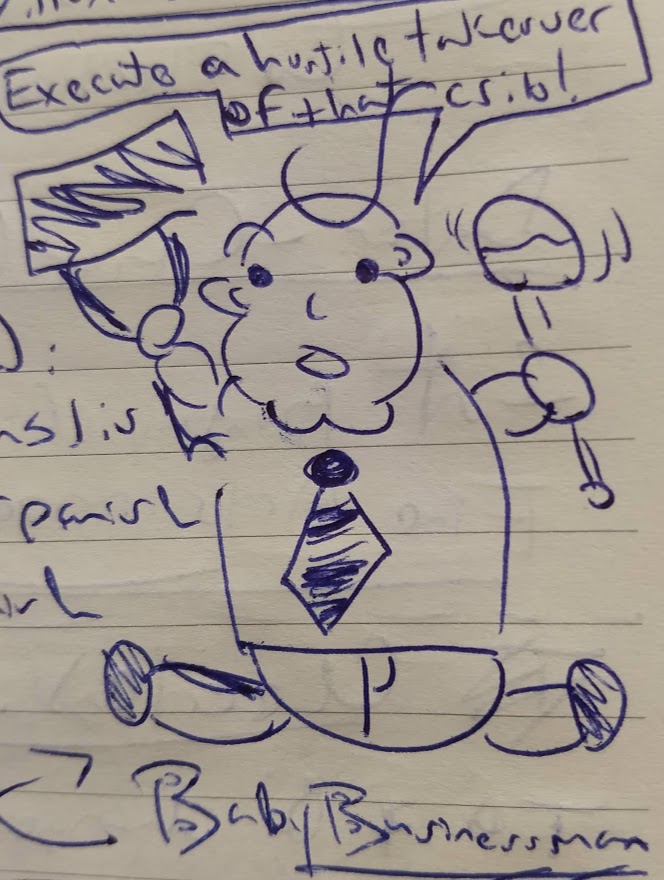
Also, I am pleased to announce I have reached eight subscribers!  Half of subscribers are at the $5 level, and already enjoy weekly installments of Sunday Doodles.  Of course, I’ll continue posting exclusive content every Saturday for $1 subs and higher.

Since the 2000 election’s infamous “hanging chads” and Bush v. Gore, Florida has been the quintessential swing State, the make-or-break for presidential hopefuls, and a must-win for any Republican candidate.  It’s a tricky State, as it’s really three States in one.

North Florida is basically like the rest of the South:  pine barrens and good ol’ boys.  That’s Trump Country.  Southern Florida is a melange of New York Jews and Cubans, the former of which are firmly in the Democratic fold, the latter of which historically have voted Republican, but have begun to shift blue over the last decade.  Central Florida is a mix of both regions, it seems.

In the 2016 Florida GOP primary, Trump demolished the Sunshine State’s favorite son, Senator Marco Rubio by 18.68%.  The general election was much closer, with Trump winning 49.02% to Secretary Clinton’s 47.82% (Libertarian goofball Gary Johnson won 2.2%, which very nearly spoiled Trump’s narrow victory)—a margin of just over 100,000 votes.

Trump’s win in Florida early on election night surely fed into the electric momentum of that historic night.  While other States—think Pennsylvania, Wisconsin, and Michigan—have gained in importance for President Trump, Florida still remains a critical State, central to the president’s path to reelection.

Fortunately, recent polling—and some interesting nautical events—suggest that President Trump is well-positioned to a repeat victory on the peninsula.  It may even be bigger this time.

To read the rest of this post, subscribe for $5 or higher to my SubscribeStar page.

Donate to The Portly Politico

Support quality commentary on politics, education, culture, and the arts with your one-time donation.

$5.00

TBT: High-Tech Agrarianism

Lately I’ve been heavily focused on yard work, as my lawn and flower beds were resembling an abandoned lot more than a well-maintained lawn.  As such, I’ve had small-scale farming on the brain more lately, even though the only edibles I planted were one forlorn banana pepper plant and some oregano (although the celosia leaves are edible before the plants flower).

Naturally, my mind returned to this March 2020 essay, “High-Tech Agrarianism.”  It’s perhaps a testament to how much we have adjusted to The Age of The Virus that I did not go out and till my half-acre, instead letting it loose to its recent weedy state.

Reading over this essay, which I wrote in the week after South Carolina schools shut down, it’s interesting how much I’ve mellowed on The Virus.  I was skeptical of it beforehand, but when schools were shuttered for the last two months of the academic year, the sense that something big was wrong only grew.  The most remarkable aspect of The Virus is that, even with shutdowns, the economy kept going, and there’s not the same sense of depressing listlessness that reigned during the Great Recession.

Of course, the economic fallout may very well be delayed, and I’m in a much better position financially and professionally this time around than I was in 2009.  The government distributing $1200 checks and propping up businesses probably smoothed out the economic disruption a bit, too.

It’s also interesting that other than wearing masks and sanitizing ourselves and our things constantly, life seems to be marching on more normally.  The True Believers in The Virus scold large gatherings, but people want to be together.  We can limit crowds only so much—people are going to congregate.

The Age of The Virus aside, the idea of tilling suburban and small town acreage is a prudent, if difficult, job.  I still maintain it’s a better use of land than a lawn.  Instead of mowing and edging, put that effort towards watering, weeding, and fertilizing.  Crops look good—and taste good, too.

That last paragraph probably highlights my ignorance about agriculture—something I’m working on as I flirt more and more with the idea of converting my yard into arable square feet.  We’ll see where I am in another six months.

Here’s “High-Tech Agrarianism“:

The coronavirus situation—which I am convinced is both quite serious, but also inspiring some huge overreactions—has created a world that feels almost entirely different than it did even a few days ago.  This time last week, I was convinced that the whole thing was way overblown, and that life would largely continue apace, minus some school closures here and there.

By Friday evening I was growing more concerned, as everything began to get closed or cancelled.  I proctored the SAT Saturday morning and even went out of town that evening.  At that point, I thought the risk of my school closing was greater than it had been even two or three days before, but I still figured it was a relatively remote possibility.

Then Governor McMaster announced the closure of all South Carolina public schools (I teach at a private school, but we always follow gubernatorial closures)—and a bunch of other stuff shut down.  I picked up dinner at a Hardee’s in Florence, South Carolina Monday evening after a guitar lesson, and it was surreal—everything was gone from the front, and the cashier had to give me a lid and straw according to their new cleanliness guidelines.

(Let’s take a moment to thank all those service industry folks and long-distance truckers who are continuing to work and risking exposure; they are unsung heroes.  Also, spare a thought to people in those industries that are out-of-work at the moment.  They need our love and charity now more than ever.)

That’s all to say that, in a remarkably short period of time, the United States has undergone a major paradigm shift.  The world of Saturday, 14 March 2020 at 2 PM—when I emerged from the cocoon of extended time SAT testing—was a different than the world of Wednesday, 18 March 2020 at 9 PM (when I’m writing this very belated blog post).

One trend—that I think will be positive if it endures—is the implicit rejection of globalism.  People are suddenly awakening, dramatically, to the manifold downsides of open borders and excessive global economic integration.  Suddenly, localism is back in vogue.

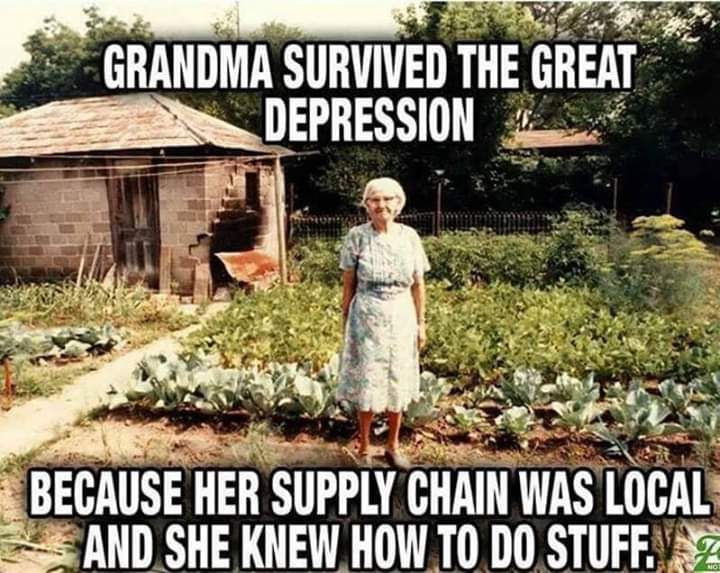
One of my musician friends, a bit of a Sandersnista hippie-dippie type (but attractive enough to get away with it) has been posting Left-leaning memes consistently throughout this crisis.  But one meme caught my eye:
Grandma - Local Supply Chain

Here’s good ol’ Granny tending her garden.  The meme is right:  I know from family lore that my Mamaw and Papaw fed themselves, their children, and a lot of other folks in the mountains of southwestern Virginia during the Depression with chickens and crops they raised themselves.

That got me thinking:  could America see the return of widespread of homesteading, or some modern-day version of Jeffersonian agrarianism?

I was pondering this question on my way to church tonight (yes, yes, social distancing, etc., but it’s a small church, and we had a very small turnout, so I’m sure it was fine to attend), driving through the fields on the outskirts of Lamar.  I began pondering the notion of a society with our level of information technology, but that saw most Americans farming or gardening for at least a small bit of their sustenance.

Such a system would be “high-tech agrarianism”—it would combine modern technology, especially information technology like the Internet, with millions of freehold agriculturalists.  Yes, we’d still have the huge mega-farms, we’d have people working in offices, etc.  But people would be making good use of their land, too, growing crops instead of grass.

Of course, I then began to ponder if such a society could have ever developed organically.  My instinct is no—it required the massive integration of local, regional, and national economies to raise production efficiency to the point that we can have widespread, niche-y specialization in tens of thousands of fields.  Greater efficiency fed into greater technological advancement, which in turn led to greater efficiency—and on and on and on, in a revving upward cycle.

But now we’re staring down this virus, which is leading governments all over the world to close stores, cancel events, lay off workers, turn away elderly patients, and on and on.  Those long, efficient supply chains are massively disrupted.  People are hoarding toilet paper and bread in the hopes of riding out likely (and, in some places, actual) quarantines.

I’m assuming life will return to normal… eventually.  But when?  So far, many of my assumptions about the pandemic have been incorrect (it turns out this time, the media wasn’t just crying wolf—well, not entirely, anyway; it still seems that some of this panicked response is driven by ridiculous media spin and speculation).  If we continue down this road of greater and greater decentralized isolation, people are either going to riot, or figure out how to provide for themselves.

In such a world, maybe high technology and small-scale farming could work keyboard-in-glove.  I’ve long advocated for some return to a simpler, more agrarian, more localized life.

Of course, I’m romanticizing America’s Jeffersonian past.  Farming is hard—and risky (of course, that hardness made our nation great).  I certainly don’t know anything about it—another truth to the meme above.  Also, if we’d continued as a mostly farming nation, we wouldn’t have the means to fight this virus, or to figure out how to fight it.

That said, converting your half-acre lawn into a garden full of corn, squash, peppers, lettuce, cabbage, beans, berry bushes, etc., seems like a far more productive use of your little plot of land, and one that could save your life and the lives of others in a pinch.  That seems sensible.

We could also do with some can-do gumption, like Granny had.

Home Depot is operating on shortened hours, but they’re remaining open.  Maybe now is the time to buy a roto-tiller.

Donate to The Portly Politico

Support quality commentary on politics, education, culture, and the arts with your one-time donation.

$5.00

Gardening

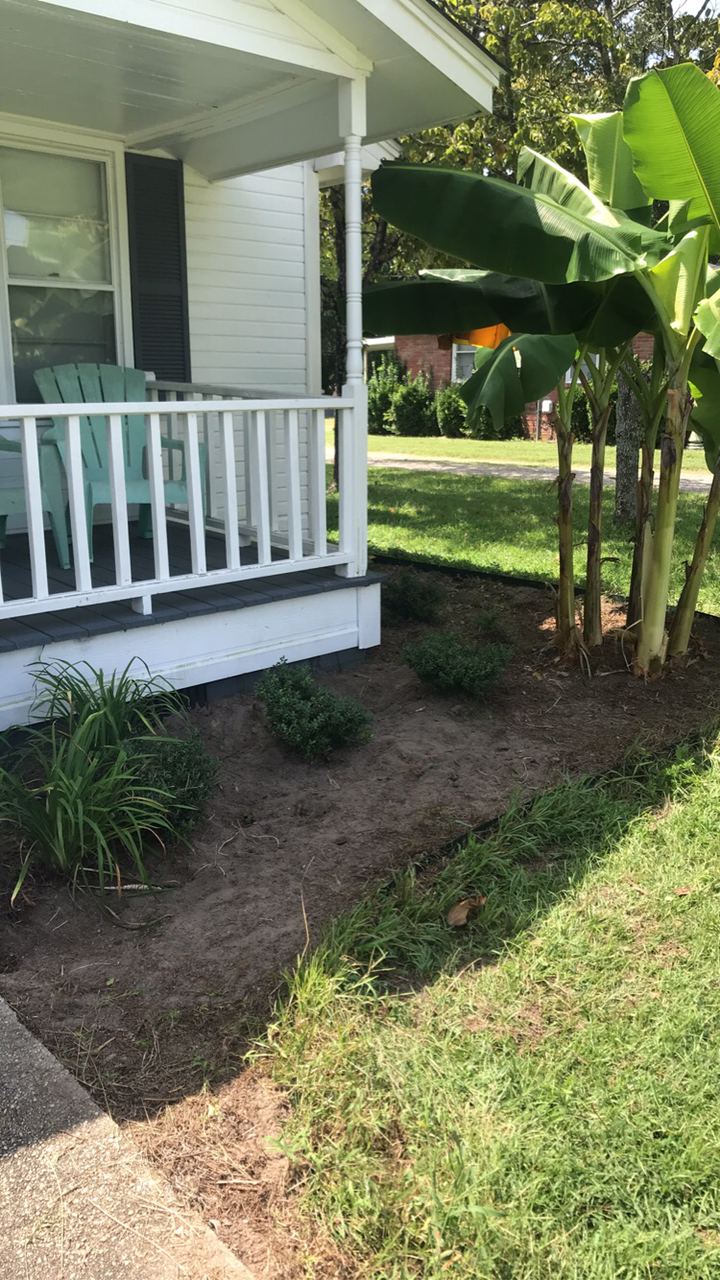
We’re back into the full swing of things after the glorious three-day weekend.  As I noted in various weekend posts, I spent much of the Labor Day holiday gardening.  My house was starting to look haunted, the weeds were growing so high:

Flower Beds - Before

My girlfriend took the weeding with gusto, while I raked out pine straw and debris.  I also pulled and cut some gargantuan weeds from my woefully neglected grapevines (which are, nevertheless, producing big, fat grapes).  After a couple of hours the beds were much improved:

Flower Beds - During

As with many home improvement projects, there’s the tedious part—in this case, weed-pulling—and then there’s the fun part.  For us, the fun part was going to Home Depot and Lowe’s to find plants to beautify the beds.  Over the course of two days, we found some beautiful options, including some colorful mums.

Read More »

Music Among the Stars

Back in 1977, NASA launched Voyager I, which is some 14 million miles from Earth.  The super nerds behind the mission stowed two golden records on board.  Those golden records included various selections to represent life on Earth, from “Johnny B. Goode” to nature sounds to classical music.

Over the Labor Day weekend a colleague e-mailed me Classical Archivesweekend newsletter, which includes some musings about why humans developed the ability to create—and their interest in—music.  The newsletter features the blog posts “Can E.T. Carry a Tune?” and “Music for Extraterrestrials… Sampling the Music Selected for NASA’s Voyager I.”

The former explores the possible deep origins of humanity’s music-making abilities.  It posits several theories developed from evolutionary biology.  As  a Christian, I find these explanations ultimately wanting, though they each make interesting points (the second proposed theory, for example, suggests “that music arose because it was a social glue that helped our ancestors bond with one another and with a group”).  Music serves many purposes, even if those purposes are not strictly utilitarian (and even then music can serve that function, such as coordinating workers’ movements via work songs).

Chiefly, though, music is intended to praise God.  Like the other arts, music is God’s grant of a small sliver of His Creative potential to His Creation—Tolkien’s “sub-creation” of Middle Earth serving as a prime literary example.  The highest form of musical expression, then, lifts up songs of praise to God.

Read More »

Memorable Monday IV: Happy Labor Day [2020]!

It’s Labor Day 2020 here in the United States, and it’s been a productive weekend for yours portly.  My girlfriend and I completely recreated my weed-strewn flower beds, and I felt like my parents—wandering around the garden centers of Lowe’s and Home Depot looking for cypress mulch and discount flowers.

Today, I put down some more mulch, and the beds are looking quite nice.  I also swept out my barn—filled with the corpses of roaches caught in the latest defogger blast—and did some light vehicle maintenance.  The in-cabin air filter in my little Nissan Versa Note SV desperately needed replacement, and I can now breathe easier knowing a clean filter is in place.  I vacuumed out the car, too, and took the opportunity to hose down its filters and various components, which are now drying outside.

Looking back to my Labor Day post for 2019, it’s striking to note the difference in my activities.  That Labor Day I played video games; this Labor Day, I’ve been a productive adult American.  Granted, I was sick, but perhaps I’m finally growing up.

Regardless, the rest of today will be spent relaxing a bit, as well as doing some planning and grading for the short school week ahead.  Next weekend I plan to hit the yard with a new battery-powered string trimmer, pending its shipment and weather permitting.  It’s interesting how I will put these necessary home improvement projects off for weeks, but when I finally get to them, I don’t want to stop!  Such is the joy of homeownership.

With that, here is last year’s Labor Day post, “Happy Labor Day 2019!“:

It’s Labor Day here in the United States, a day to celebrate the hardworking men and women that make our country great.  Yes, I’m sure a holiday engineered by labor unions (like the radical nineteenth-century union the Knights of Labor) has some seedy progressive origins, but I think we can all appreciate a Monday off.

It’s been a pleasant weekend here at the Casa de Portly.  All the ambitious plans to grade and catch up on work predictably flew out the window, and I’ve gotten loads of much-needed rest.  My hacking cough is virtually gone, and I’m feeling rested and relaxed—a rare sensation for yours portly.

I also rediscovered a fun little turn-based strategy game that has devoured some of my time this weekend:  Delve Deeper, from Lunar Giant.  You manage a team of five dwarfs as they “delve deeper” (get it?) into critter-infested mines, all while competing against other, AI-controlled teams to mine and loot the most treasure.  It’s simple and not exceptionally deep, but it’s quite fun.

I’ve also played some Left 4 Dead 2 with the boys, and watched the heartbreaking finale of the USC-UNC game.  Knocking off top-seeded Alabama in a couple of weeks is looking less and less likely.  Ugh…—but Go Cocks!

That’s it for today.  We’ll be back to history, politics, and the culture wars tomorrow.  For now, enjoy some downtime with your family, and try not to think about the collapse of Western civilization for at least one three-day weekend.

Your portly,

TPP

Donate to The Portly Politico

Support quality commentary on politics, education, culture, and the arts with your one-time donation.

$5.00

Lazy Sunday LXXVII: Rural America

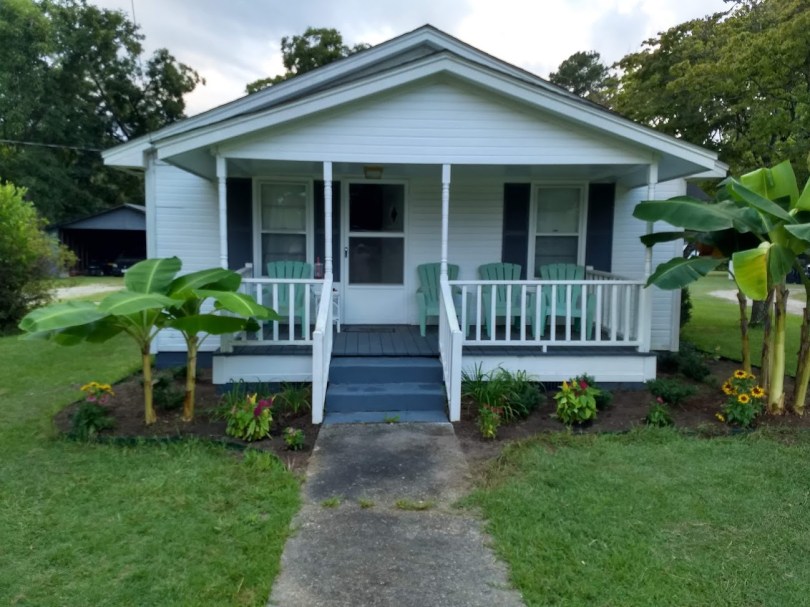
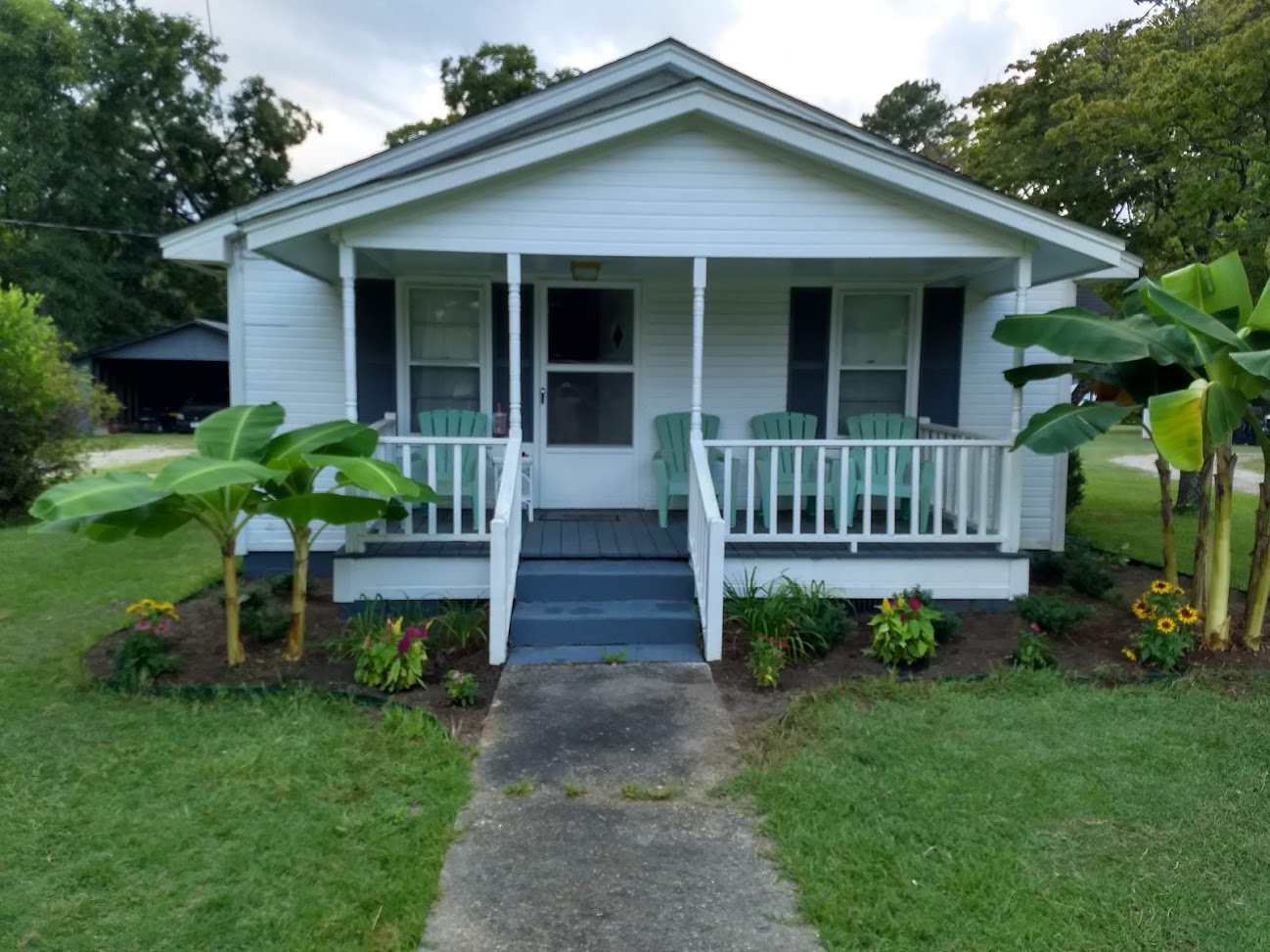
After a week of incredibly hot weather here in South Carolina, Saturday brought a blessed drop in both the temperature and humidity—a foretaste of autumn.  My girlfriend and I spent Saturday weeding my disgracefully overgrown flower beds, which were mostly weeds strangling the life out of everything but the hardiest of perennials (and my robust banana trees).  We then did some new plantings (with a few more to put in, as well as some mulch).  The results were pretty good:

Lamar House - After Planting, 5 September 2020

It felt good to get our hands (and clothes, and faces) dirty, digging through the dirt and nurturing plant life.  My mother is an expert gardener, so I’ve picked up a few simple techniques from her; otherwise, we just bought flowers we liked and plopped ’em in with some in-ground bedding soil and a some water.  Fingers crossed that everything survives.

My mind has been on the soil lately, and our connection to it.  I have a fondness—perhaps a tad romantic—for country life.  With current trends in the cities—rising home prices, rising property taxes, and rising urban violence—country life seems like an attractive, even inevitable, alternative.

As such, I thought I’d dedicate this week’s Lazy Sunday to some pieces about rural America:

  • TBT: Rustics Have Opinions, Too” – This piece dates way back 2009, when the blog was in its first iteration on Blogger, and I was still enthralled with “Randian-libertarian economic” philosophy.  Such are the follies of youth.  However, I did notice even then the deep disdain of limousine liberals for the rest of us here in “flyover country,” a disdain that, at least in part, accounts for the TEA Party movement and the Trumpian revolt of 2016.
  • High-Tech Agrarianism” – When The Virus hit, people were in a tizzy about having enough toilet paper and food.  People gained a renewed interest in gardening as a source of sustenance, not just beauty.  In this post, I mused about a possible return to small-scale homesteading, coupled with our advanced information technology.  Essentially, I posited a world in which people still work, albeit increasingly from home and on more flexible hours, and can use their time to tend to small crops to supplement their diets.
  • SubscribeStar Saturday: The Future is Rural” – One of two recent posts on the lure of rural America and small town life, I argue here that life in the country offers many attractive incentives for working families.  Not only are cities pushing people away with high prices and crime; the country is ready to take in telecommuters who earn good money but want a low cost of living in a safe, healthy environment.
  • SubscribeStar Saturday: Small Town Natalism” – The second post in my Saturday series about small town and rural living, this post is a preliminary sketch of a policy proposal:  applying nationalistic, pro-birth natalist policies to the small town context.  Instead of wasting money on seldom-used public facilities, local governments could offer a stipend to married families with children to encourage increased birth rates.  That would grow towns organically and attract new residents, thereby broadening the tax bases in often distressed rural areas.

That’s it for this week.  The garden is calling to me.  Time to put down some mulch!

—TPP

Other Lazy Sunday Installments:

Small Town Natalism

Today’s post is a SubscribeStar Saturday exclusive.  To read the full post, subscribe to my SubscribeStar page for $1 a month or more.  For a full rundown of everything your subscription gets, click here.

Last Saturday I argued that “The Future is Rural.”  With the rise in urban violence (that seems to turn up every presidential election year) and unsustainable living costs, coupled with the spread of telecommuting and improved Internet access, I predict that more and more Americans will flee to the countryside.

Even with the tide turning in favor of rural and small town life, local and county governments can take some proactive steps to attract residents.  If the goal is to attract working families consisting of committed parents, localities need to get creative.

The usual approach to building up revenue in small towns is to spend lavishly on parks and sports fields.  Large cities famously subsidize the NFL with billions in stadium construction, but small towns routinely fall into these construction boondoggles.  The premise is that new softball fields will bring in summer travel leagues, generating local tourism dollars, which is always how new ball fields are sold to the public.  Of course, the maintenance of these facilities are added into a locality’s annual budget, becoming recurring expenses, on top of the initial cost of production, which is often debt-financed.

Rather than spend public money on baseball diamonds and—even worse—soccer fields, small towns hoping to attract working families should use that money for something far more precious:  children.

To read the rest of this post, subscribe to my SubscribeStar page for $1 a month or more.

Donate to The Portly Politico

Support quality commentary on politics, education, culture, and the arts with your one-time donation.

$10.00

Phone it in Friday XIV: TPP Self-Promotion Bonanza

It’s been another busy week for yours portly, and Labor Day Weekend has arrived just in time.  When I’m falling asleep at 8:30 PM after a day of non-stop teaching, it’s time to recuperate.

Also, when I went to check out my school’s football field sound system, the powered amplifier went up in smoke!  I spent all of my planning periods (and most of my lunch) jury-rigging a sound system from an ancient amplifier I found in a back closet.  It’ll get us through the first home game tonight, but it isn’t ideal.

As such, I figured I’d take today to give some blog updates, and to do a bit of shameless self-promotion.  Readers will know that the blog now has the new, spiffy, convenient URL, theportlypolitico.com.  That seems to have helped with traffic and search engine visibility, as I’ve been getting more hits since forking over $52 to WordPress.  On Wednesday evening—for no apparent reason!—I had a massive traffic spike:

2 September 2020 Stats Spike

I’m still planning on doing some “Five-Dollar Friday” posts for $5 and higher subs to my Subscribe Star page.  Those posts will include exclusive election season commentary.  As the 2020 election gets closer, be on the lookout for those posts.  Of course, I’ll continue with $1/month content on Saturdays.

On the music front, today is the first Friday of the month, so Bandcamp is once again waiving their commission on sales.  In other words, if you purchase any of my tunes TODAY (Friday, 4 September 2020), I get the full value of the purchase (minus PayPal’s transaction) fee.

Speaking of PayPal, WordPress has a nifty new PayPal block:

Donate to The Portly Politico

Support quality commentary on politics, education, culture, and the arts with your one-time donation.

$10.00

You can also send donations here, or you can subscribe to my SubscribeStar page.  If you send me a donation, I’ll e-mail you a bunch of my SubscribeStar posts in a PDF (just don’t forget to include an e-mail in the transaction process).

As for the blog, it’s been a blast to maintain lately.  The biggest thing you can do to support it is to share my posts far and wide.  If you read something and like it, please pass it along to someone else.

That’s all for this Friday.  I’ve got to head home, shower off the filth of sound guy troubleshooting, and get ready for tonight’s game.  Be praying for a running clock, as kickoff is at 8 PM (!).

Happy Friday!

—TPP

TBT: The Joy of Autumn

It is—to use a Southern expression—hotter than blue blazes here in South Carolina, as it always is in early September.  Lately, the extreme heat and humidity have made any outdoor activities unbearable, at least for yours portly.  The air is thick and muggy.

But there is some relief in sight.  We’ve had some rainy days here and there that have given brief—fleetingly brief!—tastes of autumn.

Autumn is, by far, my favorite season.  After the brutal oppression of summer, autumn is a welcome relief.  Autumn in South Carolina is brief, but lovely—the days are warm, the nights crisp.  The season makes it stately arrival fashionably late, usually late in October or early in November (though Halloween always manages to be hot; just once I want an Indiana Halloween!).

The cooler weather brings with it better smells:  pumpkins and spices replace the persistent smell of cut grass and sweat.  Food tastes better in autumn, too.  There’s a reason candy apples are an autumnal fair food:  that thick, sugary, caramel coating wouldn’t last in the humidity of summer.  There’s also the pies:  pecan and pumpkin, of course, but also sweet potato.

Oh, and there’s college football.  The SEC hasn’t (yet) betrayed fans like the West Coast conferences.

So, here’s hoping autumn returns sooner rather than later to South Carolina this year.  With that hope—and prayer—in mind, whip out the pumpkin spice and enjoy November 2019’s “The Joy of Autumn“:

Read More »

Things That Go Bump in the Night

Audre Myers over at Nebraska Energy Observer always has some interesting observations about the world around us (indeed, once a week she writes a post called “Random Observations“—check it out).  Her latest post—the whimsically titled “ooOOoo – BOO!“—explores the world beyond our observation, the world of ghosts, spirits, demons, and “haints.”  It’s also the world of angels, and of God.

Myers makes a point that that really hit me when I was in college taking a senior seminar history course called “Society and the Supernatural”:  that as Christians, if we believe in the Holy Trinity, we also have to believe in a broader supernatural world.  For Christians, there is ample scriptural evidence of not just the presence of the Holy Spirit, but also of angels—with their own hierarchy and roles—and demons, those fallen angels that joined Lucifer in his prideful rebellion against God.  The Bible speaks often of “principalities” and spirits that rule over ungodly nations.

How far beyond Scripture such supernatural creatures extend is a source of speculation and debate, and I suspect we won’t truly know until we’re on the other side.  There is a danger in exploring the non-godly supernatural, as it opens spiritual doors within us that could make us susceptible to demonic influence—or, at the extremes, possession.  Compulsive sinning can have the same effect, but messing with the occult—even out of an innocent curiosity to understand that world better—seems far likelier to result in catastrophic unintended consequences.

What I did learn in that college course, though, was that at least one member of the Scottish Enlightenment (whose name and work I cannot locate—blast!) expended a great deal of energy trying to discover fairies (apparently, people are still looking for them).  He reasoned that if fairies, giants, and other mythical creatures of Scottish folklore existed, that would prove the existence of the supernatural.  If the supernatural is real, God is real; if God is real, then fairies can exist.

Our groping, grasping attempts to understand the supernatural are, well, natural—it’s certainly a fascinating subject.  But the Bible makes it clear what fate awaits us if we accept Christ—and what awaits us if we reject Him.

Still, I do not discount out-of-hand the possibility of supernatural presences beyond what we know from Scripture.  I don’t want to go poking around in their domains for the reasons stated above, but it’s intellectually arrogant and shortsighted to assume we know everything.  That’s the folly of our modern age—we applaud ourselves for demystifying the world, yet we’re more lost and in the dark than ever.

And what of those Scottish fairies?  Surely their existence is more than the feeble attempts of ancient minds to explain the natural world, as the priests of scientism and materialism would argue.  No, there is too much anecdotal evidence—across thousands of years and cultures—to discount the existence of such things.

All I know is that Jesus is alive—and all this talk of ghosts has me excited for Halloween.