Screwed by SCOTUS

My brother sent me a meme the other day:  a picture of nine Clarence Thomases under the heading “The Ideal Supreme Court“:

Memes are often pithy statements of the Truth, and, boy, this one nails it.  Given the treacherous and boneheaded rulings from the Supreme Court this week—particularly from perennial traitor Chief Justice John Roberts, joined in one ruling with milquetoast toady Neil Gorsuch—we could do for a Court full of Clarence Thomases.  Such a Court would understand the Constitution and the role of the Supreme Court in relation to it better than any Court we’ve had since the 1920s.

Read More »

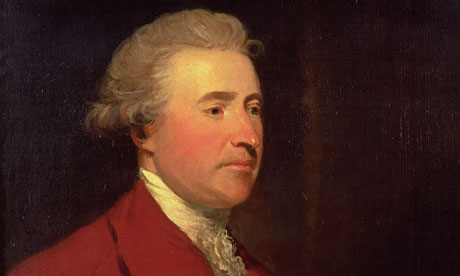
TBT: History of Conservative Thought Update: Edmund Burke

The Summer 2020 session of History of Conservative Thought is really going well.  Yesterday, the three young man each gave brief presentations on three excerpts from Edmund Burke’s writing, summarizing Burke’s main points and ideas.

It was made for a lively, far-ranging discussion.  One of the students is taking another summer course, Terror and Terrorism, a popular summertime offering from one of my colleagues.  I had the pleasure to fill-in last summer for the French Revolution portion of that class while my colleague was away at an AP Summer Institute.  Apparently, that course just covered the French Revolution again, so it dovetailed nicely with our discussion of Burke’s Reflections on that bloody affair.  We had a good time contrasting Burkean “ordered liberty” and Rousseau’s “general will.”

As such, I thought this edition of TBT could look back to Summer 2019’s HoCT update, “History of Conservative Thought Update: Edmund Burke“:

A bit of a delayed post today, due to a busier-than-usual Monday, and the attendant exhaustion that came with it. The third meeting of my new History of Conservative Thought class just wrapped up, and while I should be painting right now, I wanted to give a quite update.

Last week, we began diving into the grandfather of modern conservatism, Edmund Burke. Burke prophetically saw the outcome of the French Revolution before it turned sour, writing his legendary Reflections on the Revolution in France in 1789 as the upheaval began. Burke argued that the French Revolution ended the greatness of European civilization, a Europe that governed, in various ways, its respective realms with a light hand, and a sense of “moral imagination.”

To quote Burke reflecting on the Queen of France:

“I thought ten thousand swords must have leaped from their scabbards to avenge even a look that threatened her with insult. But the age of chivalry is gone. That of sophisters, economists, and calculators, has succeeded; and the glory of Europe is extinguished forever. Never, never more, shall we behold that generous loyalty to rank and sex, that proud submission, that dignified obedience, that subordination of the heart, which kept alive, even in servitude itself, the spirit of an exalted freedom. The unbought grace of life, the cheap defence of nations, the nurse of manly sentiment and heroick enterprise is gone! It is gone, that sensibility of principle, that chastity of honour, which felt a stain like a wound, which inspired courage whilst it mitigated ferocity, which ennobled whatever it touched, and under which vice itself lost half its evil, by losing all its grossness.”

What a powerful excerpt! The “sophisters, economists, and calculators,” indeed, reign in the West. What Burke was driving at here was that the rationalistic, abstract bureaucrats who would abandon tradition in their quest for a perfect society would sacrifice everything that made their country great, and life worth living.

Burke was also arguing that there is more to obedience to a government or king than the mere threat of power. People are invested in their country and society—and willing to submit to authority—because of organic culture from which it grows. Uprooting the great tree of tradition in favor of abstract foundations merely destroys the tree, and plants its seedlings in shallow ruts of stone. What grows will be anemic and pitiful by comparison.

Volumes could and have been written about Burke, but I’ll leave it here for now. Next week we’re getting into the development of Northern and Southern conservatism, which should make for some pre-Independence Day fun.

Dystopia

In my darker moods, I can’t help but notice in what a bleak future we live.  Sure, there are many elements of America that still exist, and some of which are strong, at least in some parts of the country.  But things like constitutionalism, rule of law, respect for wisdom, faith, and a great deal many other wonderful items are daily disrespected, ignored, and/or abused.

I’ve been on a kick lately of watching dystopian films, that genre—next to zombie movies—that Americans love best.  Last week I watched the 1974 cult classic Zardoz (starring an out-of-work Sean Connery), a film that shouldn’t exist given the nature of studio politics (it’s a rare example of a studio saying, “Make whatever you want,” and the director took it seriously).  I also watched the less classic Equilibrium (2002), starring Christian Bale.

Zardoz explores a distant future in which frosty, immortal, aloof, and bored elites, the Eternals, live in perpetual paradise while employing vicious, gun-toting Brutals to exterminate the excess population of Earth.  Equilibrium tells the story of a society, Libria—a mash-up of America and Britain, it seems—that, in order to prevent a fourth global war, outlaws all emotions, on the premise that art and literature inflame men’s passions to destructive degrees.

While it might not qualify as a “dystopian” film, I also viewed the Coen Brothers’ classic Barton Fink (1991), about the titular writer—a successful Broadway playwright who writes theatrical productions about, of, and for “the common man“—who cashes in on his success with a move to Los Angeles to write for Capitol Pictures, where he immediately develops writers’ block.  Fink is a 1940s Jewish intellectual who pontificates frequently about his desire to tell the grubby, realistic stories of everyday people, yet he keeps ignoring his shabby hotel neighbor, Charlie Meadows, an insurance salesman who tells Fink repeatedly, “I could tell you some stories.”

Read More »

Funcling II

Today’s post is extremely belated (and short) because I spent the day being a fun uncle with my niece and nephews, all of whom are under the age of five.  As you can imagine, I’m a bit drained, though not as much as usual.  Perhaps resting for two weeks has increased my stamina, rather than causing all of my minuscule muscle mass to atrophy a la George Costanza’s ill-conceived “Summer of George.”

With all the chaos swirling about in the ether of our civic life, spending time with family always reminds me of the truly important things in life.  Of course, that also makes me even angrier with white hot rage when I ponder the would-be progressive overlords who seek to destroy everything I love and cherish simply because I have the “wrong” politics, skin color, and sexual orientation.  If some child molester in drag gets hired to read storybooks to my niece and nephews at their local library (they wouldn’t be there in the first place, of course, but you know how these programs can pull a bait-and-switch on you), I’ll be the pitchfork-wielding peasant leading the mob to eject Frankenstein’s Monster from the premises.

Read More »

The Magna Carta Turns 805

Good old Scott Rasmussen’s Number of the Day observes that King John signed the venerable Magna Carta 805 years ago today.  The beleaguered king signed the great charter essentially at sword point, as his barons had him cornered at Runnymede on 15 June 1215.

The Magna Carta’s history is a fascinating one.  King John challenged the document’s legitimacy almost immediately, but his son reaffirmed it.  Essentially, the Magna Carta was not a sweeping guarantee of the rights of all Englishmen; rather, it was a guarantee of the rights of a narrow band of English nobility (the aforementioned barons), and that the king was subject to his own laws.  No taxes could be levied on the nobility without their consent.

It took another four hundred-odd years, during the events leading up to and following the English Civil War, for the Magna Carta to be applied more broadly.  The Stuart monarchs sought to aggrandize the monarchy, turning it into a form of absolute monarchy in the mode of the French kings.  Parliament—jealous of its prerogatives—dug up the Magna Carta and used it in its legal case against absolute monarchy.

Read More »

Lazy Sunday LXV: Rioting

The rioting and looting in major American cities continues as mobs continue to demand—and get—the “defunding” (effectively, the abolition) of police departments and occupy city blocks as “autonomous zones.”  It’s a dark time for the United States, but we’ve been through worse and have survived.  I’ve been a bit blackpilled these past couple of weeks with everything going on, but it’s important to remember that God is in control.

It’s also important that we don’t forget about these violations when the Leftist mobs inevitably (one hopes) disintegrate in a couple of weeks or so.  As such, this week’s Lazy Sunday looks back at some of my recent posts on the looters:

  • Disorder” – Americans love to focus on our rights and our freedoms, but we often do so at the cost of understanding our obligations that flow from those rights.  We also tend to neglect that Burkean wisdom that liberty, to be truly liberty, must be ordered.  One of the most shocking elements of these riots is the continued violation of legitimate authority—of order.  The disorder and chaos these looters have unleashed threatens not just real people and property, but the very foundations of a stable, free society.
  • Lessons from the Riots” – In school, occasionally some student will have the perennial insight that “we can’t all get in trouble.”  As usual, the Code of the School Yard has some kernel of Truth to it.  The Leftists have demonstrated that their sheer numbers (as well as having all of officialdom on their side in some of these cities) have made them somewhat impervious to police action.  But a determined show of resistance from conservatives can bolster the police and keep wild Lefties at bay.
  • Dignity” – Never grovel to the Left.  It does not work, and they will only demand more.  Maintain your dignity.  Apologizing to the Left is like being a medieval flagellant, constantly whipping yourself in a vain attempt at progressive salvation.
  • SubscribeStar Saturday – Leftist Utopia” – The “Capitol Hill Autonomous Zone,” or “CHAZ,” is an example of Leftist mob foolishness that is so cartoonish, it’s as if a conservative created it as a rhetorical straw man in some collegiate debate.  Unfortunately, this cartoonish nightmare is all too real—and the animation is coming our way if we don’t act now.

Well, that’s it for this Sunday.  Hopefully it’s not too much of a downer.  On the plus side, the horrid humidity here in South Carolina has broken, at least briefly, so it’s possible to go outside again without immediately gaining a dewy aura of salty sweat.

Happy Sunday!

—TPP

Other Lazy Sunday Installments:

SubscribeStar Saturday: Leftist Utopia

Today’s post is a SubscribeStar Saturday exclusive.  To read the full post, subscribe to my SubscribeStar page for $1 a month or more.  For a full rundown of everything your subscription gets, click here.  NEW TIER: $3 a month gets one edition of Sunday Doodles every month!

As the nation continues to burn and authorities cede ground, rioters in Seattle, Washington have established the so-called “Capitol Hill Autonomous Zone,” or “CHAZ,” an area of around six-to-ten city blocks in downtown Seattle in which the mob rules.  Seattle municipal officials have essentially given up the area to the rioters, allowing them to setup their own Leftist utopia.

Besides representing the wholesale abandonment of authority, law, and order, it’s also a fascinating bit of political science.  What happens when a group of ideological hooligans are allowed carte blanche to run a section of a city?

The results are in, and it doesn’t look good for CHAZ.

To read the rest of this post, subscribe to my SubscribeStar page for $1 a month or more.

If the South Woulda Won

Amid all the upheaval of the past few weeks, conservatives are wondering, “What next?” and “Where did we go wrong?”  There are multiple answers to both questions.  To the latter, there are the familiar suspects:  the 1960s, the Progressive Era of the early twentieth century, the influence of the Frankfurt School of Cultural Marxism, etc.

One possible answer—one that’s been pushed aside in our historically incompetent and racially hypersensitive era—is the victory of the Union in the American Civil War.  I wrote extensively about “The Cultural Consequences of the American Civil War” a few weeks ago; in that essay, I wrote that

…[T]he biggest legacy of the American Civil War was that it marked the victory of a certain Yankee political philosophy and political economy over the rest of the country. The North and the South took fundamentally different views of the world….

…[T]he larger point was that the South existed in a far more traditional version of the world than the Yankee.

The Yankee, instead, came from a Puritanical/Calvinist perspective. Weaver argued that the Southerner recognized and named evil, but rather than try to stamp it out—thereby breeding a multitude of smaller, more insidious evils—he sought to fence it off, to mark it. The Northern Puritan sought to eradicate evil–thus the radical abolitionist impulse (in the context of the Civil War), on down to the modern-day “Puritanism” of the SJWs, for whom nothing is ever good enough.

Immediately after the Civil War, the South, being out of national politics in the Reconstruction Era, could not stop the political-economic alliance of the North and West, which put into place high protective tariffs and expanded federal authority….

And so on.  Essentially, the victory of the Union, which brought many material blessings, and the moral good of abolishing slavery, also brought with it the totalizing influence of Yankee imperialism and the erosion of legitimate States’ rights at the expense of expanding federal power.

Read More »

TBT: Conservative Inheritance

With the Summer 2020 session of History of Conservative Thought in full swing, I’ve been reviewing the Summer 2019 archives pertaining to the course.  Among the various class summaries and overviews of great conservative thinkers, I came across this short essay, “Conservative Inheritance.”

I’d largely forgotten about it, which is a shame—I think it might be one of my better analytical pieces (although you, dear reader, will be the ultimate judge).  I go back to the dominance of “Rooseveltian liberalism” following the Second World War, and how conservatism morphed into a political program that largely accepted the premises of that liberalism, but acted as something like the more cautious junior partner—“a tapping of the brakes, not a full stop or reversal” of liberalism.

The debate over what exactly is conservatism has grown thornier and more immediate over the last year.  There is a sense among the intellectual Right that the prevailing orthodoxy of Buckleyism is inadequate and outmoded, that it can’t really address the problems of our age and culture.  Indeed, this essay explores the idea that conservatives essentially abandoned the culture in favor of political victories.  The sad commentary on that decision, which made sense in the 1950s and 1960s, is that our political victories are hollow.  Without the culture, political victory merely forestalls progressive dominance for a season—the brakes are tapped, but the machine doesn’t stop.

These are sobering but necessary ideas to consider.  I spoke with a friend on the phone earlier in the week; he claimed that traditional conservatives and Christians have lost the culture wars.  I prefer to think that we’re losing the culture wars, but that there is still hope of a rear-guard action or some kind of renewal.  Either way, it’s an uphill battle, a Pickett’s Charge.

With that, here is June 2019’s “”Conservative Inheritance“:

Read More »