


It’s been a pretty crazy week, and the weekend has only eased up slightly. Last week’s Lazy Sunday was all about small town living, and about how valuable social peace is to maintaining a healthy society.
I’ve been harping on this idea a great deal lately. Politics is an abyss, and staring into it for too long and too often starts to distort and twist one’s perspective. In some ways, avoiding the topic twists the perspective of those who are not staring into the abyss, as I wrote about yesterday. Nevertheless, it gets tiring—indeed, soul-sucking—to focus on politics constantly.
Additionally, I am increasingly in a state of despair about the ultimate direction of our nation and culture. President Trump has been a welcome, God-given reprieve, but even his efforts have been repeatedly stymied, even by those within the party he remolded into his own image. Even normal ideas are increasingly considered “radical,” and we can’t even discuss problems openly anymore in a polite setting. I am a declinist by nature, but this is just ridiculous.
So, in the midst of this deepening despair—and this sense that, in abandoning God, He’s abandoned us to our fate—I’ve been trying to write more about lighter topics. Perhaps it’s a bit of buoyant distraction as the ship slowly descends into the murky depths of irreversible darkness, or maybe it’s the recognition that there’s more to life than petty political squabbles (although most of those squabbles are increasingly theological battles for the soul of the West), but I’ve found that writing about Saturn is more enjoyable.
With that in mind, here’s a grab-bag of portly bric-a-brac:
- “The Bull on the Roof” – I wrote this post on my phone—never an enjoyable endeavor—while watching my little niece and nephew one evening (they lived, so I guess I wasn’t too negligent). It’s about a delightful little piece of classical music from 1920, before modern classical music turned into atonal trash and killed the genre. I wish music composition schools were still churning out composers who could write stuff like this piece.
- “Funcling” – I love being an uncle. My little niece and two nephews are fun (and exhausting) to watch and to play with, and their imaginations are amazing. This piece was about their obsession with pretending to be various Nintendo characters, mostly Kirby and sundry Pokemon.
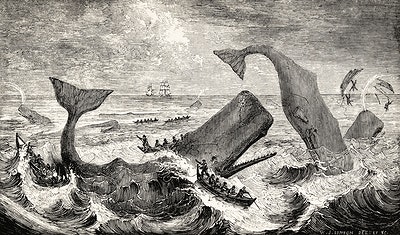
- “Summer Reading: The Story of Yankee Whaling” – I read this little book over the summer, and loved it. Written for children in the late 1950s, the book is an historical overview of the defunct whaling industry, an industry that built and fueled New England and America. They don’t write history like this anymore; now, the book would be full of hand-wringing about whales being endangered species due to overhunting. None of that in this book: whales are powerful creatures, and men need to make a living. Adventure ensues.
- “Saturn: The Creepiest Planet?” – Other than Earth, Saturn is the best planet (and, next to Earth, the creepiest, it seems). I dream of being able to visit other planets. In fact, I get perturbed when talking to scientists because they’re such buzzkills about space exploration. “You would be crushed instantly, TPP, if you tried to fly into Saturn’s gaseous core” (even that sentence mocking them is probably riddled with errors to which they would object)—yeah, I know! Let me suspend disbelief for a minute. Better yet, come up with some solutions. I’m sick of nerds telling me that putting plants and potting soil on the moon won’t terraform it. Figure it out! Aren’t we paying you to make science-fiction a reality?
That’s it for this week. Don’t let politics suck your soul away. Maybe God will hear our cries for help and do something; maybe not. Regardless, spend time with family, read good books, and listen to good music—and try to enjoy yourself as the ship goes down.
—TPP
Other Lazy Sunday Installments:
- Lazy Sunday – APR Pieces
- Lazy Sunday II – Lincoln Posts
- Lazy Sunday III – Historical Moments
- Lazy Sunday IV – Christianity
- Lazy Sunday V – Progressivism, Part I
- Lazy Sunday VI – Progressivism, Part II
- Lazy Sunday VII – Deep State
- Lazy Sunday VIII – Conservatism
- Lazy Sunday IX – Economics, Part I
- Lazy Sunday X – Economics, Part II
- Lazy Sunday XI – Walls
- Lazy Sunday XII – Space
- Lazy Sunday XIII – Immigration
- Lazy Sunday XIV – Gay Stuff
- Lazy Sunday XV – Work
- Lazy Sunday XVI – #MAGAWeek2018
- Lazy Sunday XVII – #MAGAWeek2019
- Lazy Sunday XVIII – SubscribeStar Posts
- Lazy Sunday XIX – Music
- Lazy Sunday XX – The Laziest Sunday
- Lazy Sunday XXI – Travel
- Lazy Sunday XXII – Reading
- Lazy Sunday XXIII – Richard Weaver
- Lazy Sunday XXIV – Education
- Lazy Sunday XXV – Techno-Weirdos
- Lazy Sunday XXVI – Small Town Living
 The Portly Politico