Lazy Sunday VIII: Conservatism

Today marks the last day of my glorious Spring Break, so it’s back to the races tomorrow.  I’m a bit under-the-weather, so today’s Lazy Sunday is going to be a quick one.

I’ve been mulling over some big questions lately about the state of the conservative movement, and what constitutes “conservatism.”  I’m planning on offering a course this summer called The History of Conservative Thought, and with the current state of flux in politics generally, it seems like a useful exercise.

As the Right continues to define itself, bolster its coalition, and attempt to rollback the seemingly inexorable gains of the Progressive Left, it’s all-the-more critical that conservatives understand who we are, where our ideas come from, and how we can win hearts and minds going forward.

With that, here are three pieces—two directly about the state of the Right, one about the deeper ideas that pulsate through conservative thought—for “Lazy Sunday VIII: Conservatism”:

That’s it for a quick Lazy Sunday (it is lazy, after all).  I’ll be back tomorrow, hopped up on Mucinex.

Other Lazy Sunday Installments:

The Impermanence of Knowledge and Culture: The Great Library and Notre Dame

On Sunday, blogger and antiquarian Quintus Curtius posted a piece about the famed Great Library at Alexandria.  The Library is considered one of the Seven Wonders of the Ancient War, and its destruction is an event that stands as one of the great cautionary tales of history.

Except, as Curtius points out, it wasn’t a single event.  Historians point to the accidental burning in 48 B.C., when Julius Caesar’s men’s burned Pompey’s fleet, and the flames spread, consuming a substantial portion of the Library’s connections.  Curtius mentions other events that may have damaged the Library, including Emperor Theodosius II’s decree to destroy pagan temples and buildings.

But, significantly, Curtius argues that it was centuries of neglect that destroyed the Great Library, rather than one single, spectacular event.  The burning of the Library in 48 B.C. makes for a dramatic story, but lack of maintenance, poor funding, and corrupt officials, Curtius contends, ultimately destroyed the Library.

To quote Curtius (emphasis is his):

The point is that libraries, like all institutions of culture, must be maintained and refurbished by every generation.  As I see it, the evidence points to a stark truth that tells us much about human nature.  The primary destroyer of the library, and perhaps of most cultural artifacts, was apathy.  How does this happen, in practice?  It is very simple.  It happens the same way official neglect happens today.  A new king or government minister would have said to himself, “I don’t think we need to allocate funds to the Alexandrian Library right now.  I have other priorities.  I would rather spend the money on ships, the army, or my new summer retreat.”  And this is how it starts.

Apathy—a general lack of care and concern for our cultural artifacts—destroys them far more effectively than book burnings.  Death by a thousand insouciant cuts, rather than the dramatic thrust of the sword, causes all things to wither away.

Having read Curtius’s piece (and a podcast related to it, which I cannot now locate), I very much had this topic on my mind when I heard about the tragic fire at the Notre Dame Cathedral on Monday.  I did not realize that the great cathedral is 850-years old.

Let that sink in:  it’s stood for nearly a millennium, surviving the Wars of Religion in France; the Thirty Years’ War; and the First and Second World Wars.  It also survived the French Revolution, which saw many churches destroyed or converted into blasphemous “Temples of Reason” throughout Paris and France.

Notre Dame is a powerful symbol of Western Civilization:  a bold testament of the faith and piety of a once-proud, Christian people.  A civilization that believes in itself and its God builds and maintains an edifice like Notre Dame.

We don’t yet know the source of the Notre Dame fire (at least, I don’t), and I’ve heard and read several explanations, from the careless (a dropped cigarette) to the, if true, quite wicked (Islamic terrorism; to reiterate, I am not claiming this was the cause of the fire, just that I’ve heard it insinuated).

What we do know is that France’s president, Emmanuel Macron, has promised to rebuild the destroyed roof and upper level of the cathedral “in a way consistent with our modern diverse nation.”  I let out a moan of despair upon reading that phrase.

Notre Dame is a not a symbol of a “modern diverse nation,” nor should it be.  The only universalism it embodies is Christ’s universal Love for all of humanity.  Beyond that, it is a symbol of the French people, and of Christendom.  I am not convinced that the “diverse” Maghreb and Bedouin tribesman of the banlieues are deserving of that patrimony.

The West is constantly bending over backwards to accommodate foreign cultures in a show of cosmopolitan hospitality, but the favor is never returned.  Unassimilated migrants and “refugees” don’t deserve architectural “representation” in a building that never would have been built were it not for Charles “The Hammer” Martel.

Knowledge and culture are both one generation away from darkness.  Westerners should understand the deep roots of our civilization, and protect it at all costs.  That means teaching it to our children, and instilling them a love of and reverence for our institutions, culture, and faith.

Proud Boys

An enduring challenge for conservatives is the constant campaign of disinformation from the Left regarding our organizations, tactics, and beliefs.  Conservatives are limited to a few bastions of barely-tolerated resistance:  the Republican Party, the Cato Institute, National Review, etc., organizations that fastidiously hold to an ever-more-narrow range of acceptable discourse.

That, of course, is a huge source of President Trump’s appeal—he smashed through the barriers the Right’s enemies imposed upon it, and it won him the presidency.  You could feel Americans breathing a nearly-audible sigh of relief that, finally, someone was saying the things we were all told we weren’t supposed to say.

It was in the heady days of 2016, then, that edgy, fun-loving dissidents like Milo Yiannopoulos and Gavin McInnes rose to prominence in the conservative movement.  McInnes tells some sordid stories about his wild, punk rock past, but largely his advice would have been deemed commonsensical just sixty years ago:  get married, have kids, work hard, love God, love Western civilization and the freedom it brings.

Now, uttering some of those same tenants gets you sent to the cultural gulags.  Take, for instance, McInnes’s fraternal organization, the cheekily-named Proud Boys.  The organization has come under fire lately as an allegedly sexist, racist, xenophobic order (it allows men, women, immigrants, and all races to join), and because it is proudly “Western chauvinist,” meaning it champions Western civilization as the best civilization.  Given Western civilization’s inherently universalist claims to human rights and liberty, it’s clearly open to all peoples of all backgrounds who accept its basic premises.

Primarily, however, it’s been criticized for engaging in self-defense.  Instead of taking beatings from radical, violent Antifa terrorists, the Proud Boys fight back.  Their whole maxim is that they don’t start fights, but they will fight back in self-defense.

Not surprisingly, noodle-wristed hand-wringers of the NR persuasion foppishly bemoan this completely reasonable response to unwarranted assaults with their usual appeals to decorum (the comments on that linked piece are instructive of how out-of-touch NR has become even with its own readers).  “Just take the beating” is apparently the primary admonishment.

While we could certainly have some discussion about Christ’s famous instruction to “turn the other cheek,” it seems completely permissible to strike back at the masked hooligan waving a piece of rebar at you.

At the risk of breaking my general injunction against telling people to watch lengthy videos twice in one month, I’d refer you to this excellent explanation from McInnes himself:

https://youtu.be/DGrPjx2V_TA

To alleviate the unnecessary legal suffering of some of the group’s members, McInnes reluctantly but decisively backs out of the organization.

For further reading, here is Milo’s piece about the libelous death of the Proud Boys:  https://www.dangerous.com/50463/i-too-must-bid-adieu-to-the-proud-boys-a-spunky-pro-western-mens-club-defamed-to-death/


“Silent Night” turns 200

One of my favorite Christmas carols, “Silent Night,” turns 200 this Christmas season.

The carol was originally written as a poem in the aftermath of the Napoleonic Wars by a village priest, Joseph Mohr, in the village of Oberndorf, Austria, in 1816. Two years later, Mohr approached the town’s choirmaster and organist, Franz Xaver Gruber, to set the poem to music. Gruber agreed, and the carol enjoyed its first performance to a small congregation, which universally enjoyed its simple sweetness.

Since then, the humble hymn has spread far and wide, and is probably the most recognizable Christmas carol globally today. It’s been covered (likely) thousands of times; it’s certainly become a staple of my various Christmas performances.

This simple, sweet, powerful carol beautifully tells the story of Christ’s birth, as well as the import of that transformative moment in history, that point at which God became Flesh, and sent His Son to live among us.

As much as I enjoy classic hard rock and heavy metal, nothing can beat the tenderness of “Silent Night”—except the operatic majesty of “O, Holy Night,” objectively the best Christmas song ever written.

Merry Christmas, and thank God for sending us His Son, Jesus Christ.

TBT: The European Union is NOT the United States

With Brexit back in the news—and Theresa May’s recent no-confidence test—it seemed like an opportune time to revisit this old chestnut from the 2016 era of the TPP blog.

Brexit should have been easy—the people voted, Europe can’t plausibly force Britain to stay in, so Britain’s out!  Great Britain owes the European Union nothing.  As I argued in 2016, Europe needs Britain.  Some kind of trade agreement could have been hammered out, as well as some basic understanding about moving between Great Britain and the EU.

I realize these issues are more complicated than I’m making them out to be, but, ultimately, can’t Britain just rip off the Band-Aid and be done?  It seems like that would be imminently doable.  Of course, that’s not what the globalist masters of Britain’s cosmopolitan elite want.

Perhaps Britons will soon get their true, hard-fought, “hard” Brexit.  I still think they struck a powerful blow against supranational tyranny, and have inspired similar movements in Europe.  The world feels much different today, in the waning hours of 2018, than it did in that hot, sticky summer of 2016.

Post-Brexit (yes, yes, I know I promised on Wednesday that I’d be moving away from Brexit posts, and you’ll soon find I wasn’t lying… completely), I’ve heard several arguments that boil down to “the European Union is good because unity will make Europe stronger.  Just look at the United States!  It was a mess under the Articles of Confederation, but came together to become a world power under the Constitution.”

The comparison is tempting and not without merit.  Certainly, the United States benefited greatly when the sovereign States ceded some of their power–such as that over the coinage and printing of money and defense–to the national government.  Putting the power to regulate interstate commerce eliminated the practice of States placing different tariff levels on British goods, for example, and aided in the creation of of a common national market.  The formation of the Supreme Court, and the subsequent creation of the federal judiciary under the Federal Judiciary Act of 1789, allowed States to adjudicate disputes more fairly.  Why couldn’t Europe achieve the same “more perfect union” with its goal of “ever closer union”?

“American nationalism derives primarily from a shared set of ideas.”

Unfortunately for Europhiles, the comparison breaks down quickly upon closer inspection.  There are three key areas of difference between the United States and the vision of a “United States of Europe”:  common language and culture; a common legal tradition grounded in the rule of law; and a legacy of representative, democratic-republicanism.  The young United States possessed these three qualities; modern Europe lacks them.

The first point–common language and culture–will be a contentious one.  There are myriad, if predictable, objections:  Americans came from many sources, not just England;  colonials expanded into territories that either belonged to American Indians, or to European competitors (notably the Dutch and the Swedes, but also the Spanish and French); settlers to different parts of British North America came from different cultural and religious groups in the British Isles; and so on.  Indeed, German almost became the official language of a young United States.

I discussed the ethnic and religious diversity of colonial and early republican America at some length in my essay “Created By Philosophy,” and previously argued that American nationalism derives primarily from a shared set of ideas (in “American Values, American Nationalism“).  However, despite this vivid and ubiquitous diversity, English culture and values ultimately became the overwhelming norm in British North America, and morphed into a distinctly American identity in the 18th century (though one that was, until independence, decidedly English).  English may not be the constitutionally official language of the United States, but it is the lingua franca of the nation (and the world), and has been so for centuries.  Every wave of immigrants (until relatively recently) has understood that mastery of English is a prerequisite to long-term success in and assimilation to American culture.

English Protestantism–infused with Scottish Calvinism and German piety–was a unifying force in the colonies.  When the First Great Awakening hit in the late 18th century, it cemented America’s culture, even as it spawned multiple new denominations.  The ultimate denominator, however, was a broadly Protestant Christian worldview (one that gradually and unevenly came to tolerate, and then to accept, Catholics, Jews, and believers and non-believers of all stripes).

“English Protestantism… was a unifying force in the colonies.”

The story of America, ideally, is that of unity within a culture that values diversity of viewpoints, but insists upon an acceptance of a basic, common, Judeo-Christian morality; thus, “E Pluribus Unum.”  That morality, in turn, informs the legal system, one descended from centuries of English common law.  Respect for the rule of law–the notion that no man, even the king, is above the law–guided the English people toward increasing freedom.

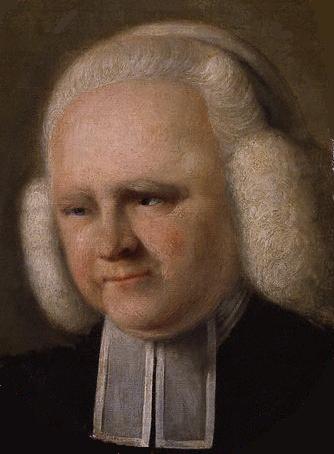
Evangelist George Whitefield knew how to preach to the masses of British North America, and he had the hair to prove it.

So, too, did it lead Americans to their independence.  The American Revolution–and the various conflicts between colonial assemblies and royal governors–of the 18th century in many ways echoed the struggles between Parliament and the Stuart monarchs in 17th-century England.  Americans did not revolt because they rejected bad tea or because they resented taxation–they revolted because they weren’t represented.  Americans did not have a say in the taxes that were (not unfairly) levied on the colonies to help pay for the French and Indian War (the similarities to the Leave campaign should be obvious).  Rule of law was circumvented, and Americans would not abide such a trampling of their rights

Thus, we come to the English–and then American–commitment to representative rule.  The United States really took the lead here, though Great Britain began expanding the franchise and reforming parliamentary representation in the 19th century as white manhood suffrage became the norm in Jacksonian America.  (Here’s a fun aside:  there used to exist parliamentary seats that represented places with no people in them.)  Regardless, the notion that the people should be represented in their government–and should be able to hold it accountable with fair, free, and frequent elections–is an important part of America’s constitutionally-limited, representative, federal republic.

Europe as an entity lacks all of these qualities.  Yes, certain members states have some of these qualities to varying degrees, but the European Union as a whole is sorely lacking in these areas.

Culture and Language:  The United States had the unique opportunity to create a nation afresh.  Europe has had no such luxury, and seems to be inexorably divided into different languages and cultures.  This division is not necessarily bad, but it makes unity much more difficult.  It explains the natural struggle against “ever closer union,” a struggle that is often visceral because people sense there is something artificial and disingenuous about the Europhile vision of a united Europe.  There are, after all, still traditionalists living (and voting) throughout Europe.

 “[S]ecularism is the new, unifying religion of Europe.”

The long, oft-ancient histories of these nations makes it even more difficult for them to share a common worldview.  Even secular, progressive Europe still experiences the lingering cultural effects of centuries of faith.  France might have thrown out God with the French Revolution, but the “First Daughter of the Church” is still suffused, albeit in a subtle, weakened way, with centuries of faith.  Such a faith culture, even hollowed out, will naturally, if imperceptibly, struggle to  reconcile itself with that of other, contradictory traditions.

I suspect this explains why the European Union seems hell-bent on advancing as many socially progressive causes as possible:  secularism is the new, unifying religion of Europe.  But there will always be push-back against this dehumanizing, nihilistic vision of man’s place in the universe.

Language, too, transmits the ideas and values of a people.  I am no linguist, but–unlike French theorists like Jacques Derrida–I believe that words have power and transmit meaning.  Such meaning is deep, part of the warp and woof of life.  Why else would educated societies devote so much time to learning and analyzing language and literature?  There’s no need to read Shakespeare if you just want to a basically literate workforce.  No, there must be some power in language.  Linguistic diversity, therefore, is a beautiful thing, but it also means that different cultural values are transmitted differently throughout Europe.  No one associates Russian, for example, with greater freedom and sober living.

But I digress.

Rule of Law:  Of course different nations in Europe have rule of law (except Belarus).  The European Union, however, does not.  Yes, it might have European law, but this law is promulgated by an unelected committee of elites, figures who don’t identify strongly with their nations of origin, but rather with a vague, secular-progressive idea of Europe, one that barely tolerates dissent or input from the people.  Furthermore, how does one reconcile, say, French civil law with English common law?  The deep divisions of history are huge hurdles to overcome.

Representative Government:  As I’ve stated many times, the European Union is not representative.  That’s why the Brexit vote was so important, and why it has drawn so many comparisons to the American Revolution:  the normal people of Britain rose up against an unelected, unaccountable elite and boldly proclaimed their right to self-determination.  Brits seized back the ability to hold their elected leaders accountable.

The elite, Europhile vision of a United States of Europe is one of non-representative, coerced redistribution.  Give the proles bread and circuses, and they will submit on bended knee to the edicts of Brussels.  Remember, the “Remain” side of the Brexit debate was primarily premised on maintaining access to EU goodies, not about the people’s ability to choose such a course.

Nothing could be further from the vision of America’s Founders and Framers.  They possessed a healthy skepticism about unbridled democracy, but recognized that the people were the source of government’s authority; that the people govern themselves most effectively; and that the people should be able to hold their leaders accountable.  Yes, liberty comes at a price–many prices, in fact.  One of those is the ever-present risk that the people will make mistakes.

Inevitably, they will.  But a common, tolerant culture; a shared respect for the rule of law; and an understanding of the rights and responsibilities of republican government will guide voters to wisdom more often than folly.

Self-government does not always fit neatly into the schemes of elite technocrats and busy-body regulators.  But it ultimately makes for a happier, freer, and more prosperous society.

Civilization is Worth It

The New Criterion, which I have touted before on this site, is an excellent, conservative publication dedicated to the arts and culture in all their forms.  I picked up a subscription (since lapsed, sadly) a couple of years ago at a deep discount, and enjoyed its strong, engaging writing immensely.  I don’t know anything about—nor have I ever seen—an opera, but the critics at New Criterion make me want to attend one.

One great resource at New Criterion is their “Media” page, which includes all of their audio articles.  These are articles read aloud by professional readers, and they make for wonderful listening while you’re going about your day, from painting walls to picking through the soggy remnants of your life.

Monday evening, New Criterion posted an audio article written by the publication’s editors.  It’s title:  “Is Civilization Overrated“?  Their conclusion, by way of reductio ad absurdum, is that, no, it isn’t, but I highly recommend you give it a listen; there’s a lot of John-Jacques Rousseau bashing, as the piece explores the destructive philosopher’s impish assertion that we were all better off foraging for berries and getting killed by saber-toothed tigers.

That question, though—is civiliation “overrated” or “worth it”—is an interesting one nonetheless.  I suspect that most everyone would say, “Well, sure,” and not give it much more thought.  But the contra argument is, at least fleetingly, interesting.  It’s also highly instructive of the thought-process of the modern Left.

I occasionally adjunct teach at a local technical college, and some years ago I had the opportunity to teach the first portion of Western Civilization survey course.  That course, naturally, started with a quick overview of prehistoric times and people in the Near East, and what pre-agricultural societies were probably like.  We then looked at the Neolithic Revolution and the rise of settled or semi-nomadic agriculture.

It was at this point that I caught a subtle but distinctive bit of the “civilization-isn’t-worth-it” mindset.  The textbook—which, sadly, I cannot quote from directly because flooding displaced me from my humble, scholarly bungalow—featured a section that went something like this:  with the advent of agriculture and settled societies came social hierarchies (true); that increase inequality (true enough, but the book makes it seem like an inherently negative development), including inequality between genders (that probably existed before agriculture); and settled agriculture began environmental degradation (again, probably true, but it also meant more human lives entering the world).

The whole passage—which I will have to quote at length when I have the book back in my possession—heavily insinuates that civilization was a raw deal; that the whole thing was a sham to bamboozle the weak into following the strong; and that men and women somehow existed in a mythical state of equality that would make the most strident radical feminist cry tears of pure Subaru Outback engine oil.

This mindset, I suspect, pervades a chunk of the modern Left, who un-ironically decry global warming (or is it cooling, or climate change?) while jetting around in gas-guzzling private jets to climate conferences.  There’s a certain naturalistic fallacy at play that is highly seductive, but ultimately facile.

I remember a conversation with my father when I was maybe seventeen, an age full of angsty brooding and doughy fatness.  I basically said, “Dad, I feel like I shouldn’t have to worry about trigonometric functions, and instead should let those motivated to solve them do it while I live in a state of naturalistic ecstasy” (okay, that wasn’t verbatim what I said, but you get the gist of it).  At seventeen, such an idea is seductive, and largely reality—someone else is bringing in the money while you play Civilization II instead of doing your math homework—but you grow out of it.

Except, apparently, for academics, the only folks educated enough to believe in fifty-three different genders and that “democratic” socialism works.  I (thankfully) grew out of my whining, which was really just an elaborate scheme to avoid doing any actual work myself—which might be the motivating factor behind Leftism after all.

Regardless, civilization seems imminently worth it.  Just ask anyone who has ever had a loved one saved through the miraculous technology of modern medicine.  Consider, too, that you’re probably reading this piece while streaming music from your phone, checking the weather, and eating a breakfast you didn’t have to kill with your bare hands after running it down for eight hours.

Are you wearing glasses right now?  At one point, you probably would have been left in the cold to die—your weakness was too costly for the rest of the tribe.  Do you have weird, probably made-up gluten allergies?  Well… maybe you would have been okay in a pre-agricultural age, but they still should have shunned you.

Ultimately, I’d much rather live in a world that produced J.S. Bach than a Stone Age pit full of atonal grunting.  It says something about the state of our civilization that the atonal grunts are back in vogue.

Hyper-dependence on technology is not without its pitfalls, and we should work to improve civilization to work more efficiently and to put humanity first (only after God), but a base reversion to an anarchic, Rousseauian “state of nature” is a fool’s dream.  It would only result in more death and heartache.

So get out there and compose some sonatas.  Civilization is worth it!