A Little Derb’ll Do Ya: Haydn’s “Derbyshire Marches”

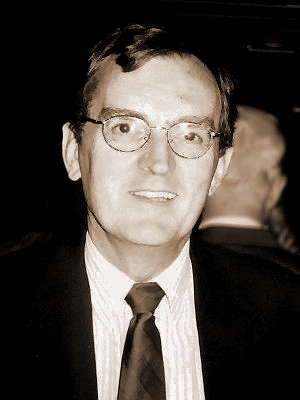
My Saturday morning ritual involves “sleeping in” until about 8:30 AM, brewing some coffee, and listening to Radio Derb, John Derbyshire’s weekly podcast for VDare.com.  Derb goes back for years—he used to write for National Review, before they kicked him out for writing “The Talk: Nonblack Version” for Taki’s Magazine.

I first found out about him and his controversial essay from NR, back when I was a devout print subscriber, amid the heady days when campus protests were novel enough to be terrifying.  NR ran a little blurb about Williams College cancelling a scheduled talk from Derb, and I’ve been listening to his podcast—an entertaining mix of news, science, political and cultural commentary, and updates on the president of Turkmenistan—ever since.

Read More »

Saturn: The Creepiest Planet?

Some time ago, I somehow ended up subscribed to daily updates from Quora.com, the website where users can submit answers to other users’ questions.  Apparently, I told Quora that I like dinosaurs, because most of the featured questions in my daily digest are about evolution.

Lately, however, I’ve been receiving more questions—and answers!—about astronomy.  I love space exploration, and I dream of one day walking on the surface of the moon.  It’s an outlandish dream, and one that I know is unlikely to ever be fulfilled, but I yearn for that opportunity.

So I was thrilled to see the kind of question that the science scolds on Quora hate—qualitative, rather than purely quantitative, in nature.  The question, simply, was thus:  “What is the creepiest planet in our solar system?

Read More »

Gelernter Gives up Darwinism

Yale Computer Science professor and—as I found out today—Trump supporter David Gelernter has given up on Darwinism, finding it to be a “beautiful” but flawed theory.  Gelernter acknowledges that species make small adjustments based on their environment, etc.—adaptation—and that Darwin was correct in that regard, but that the process of new species developing from existing ones is mathematically impossible, even if the universe is trillions of years old.

For conservative Christians, skepticism of Darwin’s theory of evolution is something you keep quietly to yourself, lest you’re mocked roundly, or that you militantly espouse, which tends to turn people away—they tune out.  Regardless, the world at large has bought into Darwinism completely, even with holes in the theory (like the lack of a plethora of pre-Crambrian fossils that should, according to Darwin’s theory that all life descended from a common ancestor, be present given the Cambrian Explosion).

Read More »

Lazy Sunday XXIII: Richard Weaver

I’ve been fan-boying a great deal lately about Richard Weaver.  He’s one of my favorite authors, even though I’ve read comparatively little of his work.  Weaver died during the prime of his academic career, but before his premature death he managed to bequeath a rich heritage of scholarly works about literature, religion, and his beloved Dixie.

As I’ve written again and again, I always enjoy rereading the introduction to Weaver’s Ideas Have Consequences, and hope to reread the entire book again soon.  The introduction sums up the modern West’s maladies starkly and clearly, tracing their origins to the nominalism of William of Occam.

I found one podcast in which two conservative commentators summarize and discuss the book, chapter-by-chapter; it’s a good, quick overview if you’ve got fifty minutes in the car:

That said, while I reference Weaver quite a bit, I actually have not written as many posts about him and his work as I thought.  Nevertheless, while I’m in the midst of my annual Weaver Fest, I thought it would be the perfect time to give the great academic his own Lazy Sunday:

1.) “Capitalism Needs Social Conservatism” – a #TBT post from the TPP 2.0 era, this post was part of a series on social conservatism, which I dubbed the “red-headed stepchild” of modern conservatism.  The post is more inspired by Weaver than it is about him, but I mention the paradox of prosperity near the end when I discuss Weaver’s drunk.

That’s my phrase for a metaphor Weaver employs near the end of the introduction to Ideas Have Consequences in which he compares modern society to a drunk.  The more inebriated and alcoholic the drunk becomes, the less capable he is of doing the work necessary to feed his addiction.  So it is with modern man—the more he luxuriates in excess and comfort, the less willing he is to do the uncomfortable work necessary to sustain his opulence.

2.) “Back to School with Richard Weaver” – the subject of last Thursday’s TBT, this little piece was from a 2014 Facebook post in which I quoted from “The South and the American Union,” an essay from Weaver’s Southern Essays.  It contrasts the Southerner’s “Apollonian” worldview of fixed limits and “permanent settlement” to the ceaseless striving and progression of the Northern, “Faustian” worldview.  It’s a fascinating dichotomy that, while controversial, certainly rings true to Southerners like yours portly.

3.) “The Portly Politico Summer Reading List 2016” – my classic, original reading list; naturally, Ideas Have Consequences tops the list!  As I wrote at the time, if you’re going to read just one book this summer, make it Ideas Have Consequences!

4.) “Ideas Have Consequences – Introduction” – I wrote this little summary for my History of Conservative Thought course.  It’s my quick rundown to help breakdown the main ideas from the introduction to high school juniors.  Hopefully it worked!

Well, that’s it.  Enjoy Weaver Fest 2019!  It’s back to school for me tomorrow.

–TPP

Other Lazy Sunday Installments:

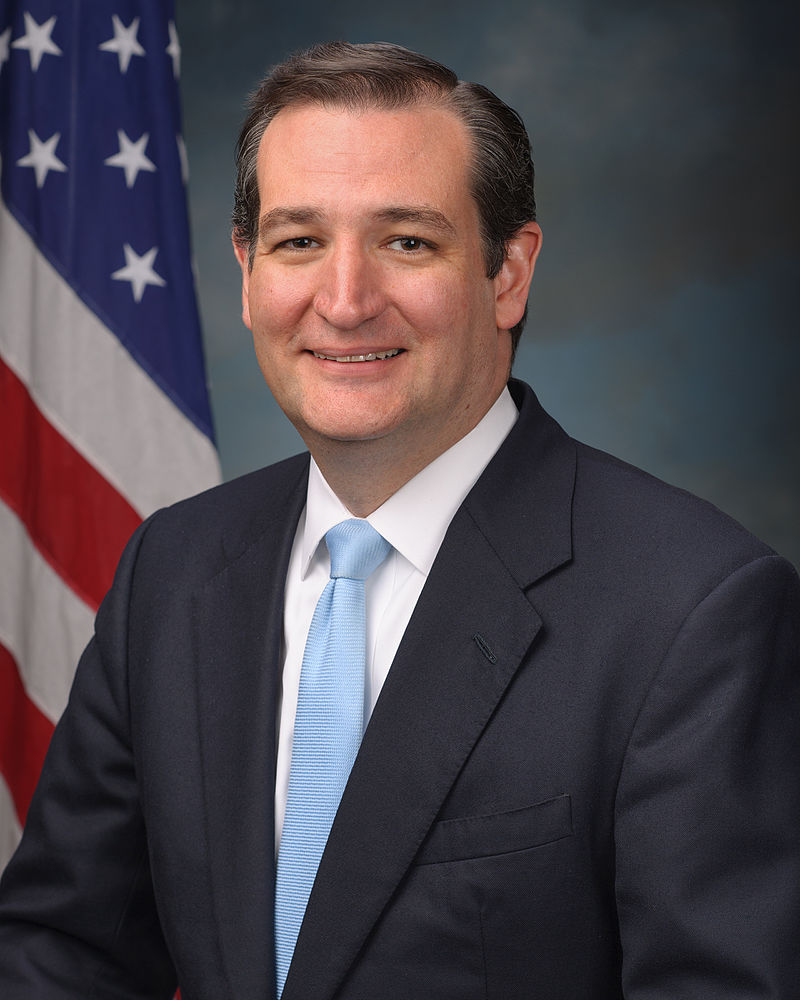
Ted Cruz on Ben Shapiro

It was a glorious weekend at Casa de Portly, deep in the heart of Dixie.  It was the kind of weekend that saw a lot of non-blog- and non-work-related productivity; in other words, I loafed a great deal, then did domestic chores around the house.

In case you missed it, on Saturday I released my Summer Reading List 2019.  If you want to read the whole list—and it’s quite good—you have to subscribe to my SubscribeStar page at the $1 level or higher.  There will be new, subscriber-exclusive content there every Saturday, so your subscription will continually increase in value.

Anyway, all that loafing and cleaning meant that I was unplugged from politics.  I did, however, manage to catch the Ben Shapiro Show “Sunday Special” with Texas Senator Ted Cruz.

I was a big fan of Cruz in the 2016 Republican presidential primaries, and I voted for him here in South Carolina.  Cruz intuited the populist mood of the electorate the way that President Trump did, and combined it with policy innovation and constitutionalism.

There’s a reason Cruz hung in there as long as he did against Trump:  he’s a canny political operator, but he also knew how to pitch a conservative message that was appealing to many voters.  I sincerely believe that had he clinched the nomination, he would have won the 2016 election (and, perhaps, by an even wider Electoral College margin than did Trump).

Cruz catches a lot of flack because he’s a little dopey and looks odd—a whole meme emerged in 2015-2016 claiming that Cruz was the Zodiac Killer—but he’s been an influential voice in the Senate.  He possesses a supple, clever mind, and has urged Republicans to make some bold, innovative reforms to the Senate (he vocally champions and has proposed a constitutional amendment for congressional term limits).

The hour-long interview with Ben Shapiro—which opens with a question about his alleged identity as the Zodiac Killer—shows how affable and relaxed Cruz really is.  I’ve never seen him appear more relaxed and genuine (and I never took him for a phony—I’ve seen him speak live at least once at a campaign rally in Florence, and spoke very briefly to him afterwards) than in this interview.

Granted, it’s friendly territory—Shapiro was a big supporter of Cruz in the primaries—but Cruz spelled out some important ideas, as well as his projections for 2020.  If you don’t have a full hour, fast forward to about the forty-minute mark for his discussion of Trump’s reelection prospects.

To summarize them briefly:  Cruz thinks it all comes out to turnout, and that Democrats will “crawl over broken glass” to vote against Trump.  He even points out that his own race against Democrat Robert Francis “Beto” O’Rourke was as close as it was because Beto ran against Trump more than he did against Cruz.  He also thinks Joe Biden is going to flame out, and one of the more radical, progressive Dems will clinch the nomination, making the prospect of a truly socialistic administration terrifyingly possible.

That said, Cruz is optimistic.  Discussing his own narrow victory over Beto in 2018, he points out Beto’s massive fundraising and staffing advantages (Cruz had eighteen paid staffers on his campaign; Beto had 805!), but explains that a barn-burning bus tour of the State of Texas pulled out conservative and middle-class voters in a big way for his reelection.

That points to one of Trump’s strengths:  the relentless pace with which he campaigns.  Trump held three and even four rallies a day in key battleground States in the final days of the 2016 election, which likely made the difference in Michigan, Wisconsin, and the Great White Whale of Republican presidential elections since the 1980s, Pennsylvania.  If Trump can get his pro-growth, pro-American message out there as effectively in 2020 as he did in 2016 and can excite voters who want to protect their nation and their prosperity, he could cruise to reelection.

Cruz’s optimism, tempered by practical challenges ahead for Republicans, really came through in the video.  Really, the entire interview reminded me why I liked Ted Cruz so much the first time.  I’d love to see him remain a major presence throughout the next five years, and to see him run for the presidency again in 2024 (him, or Nikki Haley).

Regardless, I encourage you to listen to this interview.  Take Cruz’s warning to heart:  don’t get complacent, because the Democrats aren’t.