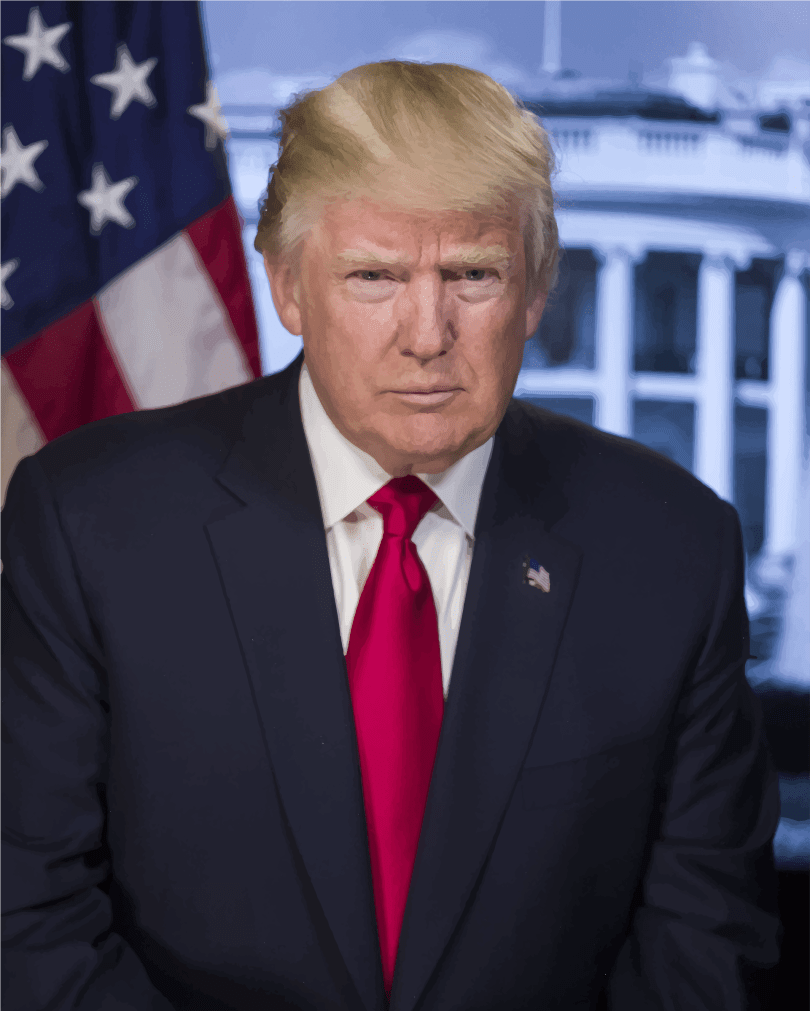
Buchanan on the National Emergency

One of my favorite writers, paleocon Pat Buchanan, has a piece on one of my favorite sites, Taki’s Magazine, about President Trump’s recent declaration of a national emergency.  That national emergency, you’ll recall, will allow the President to use existing funds within the federal bureaucracy to build a border wall, thereby circumventing Congress’s lackluster appropriation of funds for that purpose.

Critics argue that the president is undermining our Constitution, with its careful balance of powers between the branches, specifically its delegation of the “power of the purse” to Congress.  While I certainly share some of those concerns, Buchanan points out that Trump’s national emergency is only the latest (and one of the mildest) in a long line of the executive overreach.

More crucially, Buchanan places the blame for the extension of the executive power at Congress‘s feet.  In this regard, Buchanan is correct:  Congress, with the support of an activist federal judiciary, long ago realized that it could farm out key legislative functions to the executive branch (specifically, the federal bureaucracy), and thereby avoid catching the blame for the nation’s problems.  In the process, the executive and judicial branches have arrogated greater powers to themselves (thus, the tug-of-wars between unelected federal judges and the Trump administration on virtually every policy).

To quote Buchanan at length:

Yet while presidents have acted decisively, without congressional authorization and sometimes unconstitutionally, Congress has failed to defend, and even surrendered, its legitimate constitutional powers.

Congress’s authority “to regulate commerce with foreign nations” has been largely ceded to the executive branch, with Congress agreeing to confine itself to a “yeah” or “nay” vote on whatever trade treaty the White House negotiates and sends to the Hill.

Congress’s authority to “coin money” and “regulate the value thereof” was long ago transferred to the Federal Reserve.

Congress’s power to declare war has been ignored by presidents since Truman. Authorizations for the use of military force have replaced declarations of war, with presidents deciding how broadly they may be interpreted.

In declaring the national emergency Friday, Trump rested his case on authority given the president by Congress in the National Emergencies Act of 1976.

As I wrote over the weekend, I believe the president acted within his the scope of Article II of the Constitution in issuing the national emergency, as it pertains to powers inherent in the office of the executive:  national defense and border security.  I’m not completely comfortable with this method for funding a border wall, and I think the president and congressional Republicans blew an opportunity to build the wall during the two years of Republican control of the federal government, but action needed to be taken.

Buchanan’s piece is titled, chillingly, “Why Autocrats are Replacing Democrats.”  To answer his own question, he argues that voters internationally are weary of the plodding democratic process, and are eager for leaders who will deliver solutions to their problems.  Buchanan claims that republican forms of government have failed to fulfill their most basic functions—border and immigration control, national security, etc.—and the people demand solutions—action.

I don’t think President Trump is an autocrat or a fascist.  I also don’t entirely blame him for using powers Congress has delegated to his office.  Up to this point, President Trump has stayed very much within defined constitutional limits in the exercise of his authority.

We should, however, be ever vigilant about—and always on guard against—executive overreach.  While I think the president acted within accepted constitutional bounds here—and relied upon the poor decisions of a past Congress to shore up his case for the national emergency—I hope this method of governance does not became de rigeur habit, as it did under the Obama administration.

On the plus side, we’re getting a wall!

Video: Z-Man on 2020 Democratic Hopefuls

A quick post today—and for real this time—but this one will take you a little over an hour to digest.  Dissident Right blogger and podcaster Z-Man‘s latest video gives a detailed rundown of the current and prospective slate of 2020 Democratic candidates for the presidency, what he calls the “Tribal Circus“:

I’m not usually one to insist you watch a video, but Z-Man’s video is the best comprehensive analysis I’ve seen or read about the Democratic field so far.  In a no-nonsense, quite politically-incorrect way, Z-Man breaks the field down into the competing “tribes” of the Democrats, such as the “Festive Tribe” (Hispanics), the Angry Woman Tribe, etc.

His basic analysis is that Kamala Harris is probably the biggest threat, not because the American people will like or care about her radical policies, but because she ticks off some important boxes:  she’s “black” (she’s half Jamaican and half Asian, but these inconvenient genetic details won’t matter much to the general population) and a woman.  He also argues that she comes across as shrill and “b*tchy,” and thinks that will hurt her, but he has some concerns about her ability in the general election.

Late in the podcast he touches on Congresswoman Tulsi Gabbard, who has become a bit of a pariah on the Left because of her stance on Syria and her meeting with Bashar al-Assad.  Z-Man hopes that, at the very least, Gabbard makes it onto the debate stage, not because he thinks she can win (he explicitly states that she won’t be able to win), but because he wants to see the resulting meltdown on stage as she and her opponents snipe each other.

For what it’s worth, I’m #MAGA, all-aboard the Trump Train, etc.  President Trump would have to eat a baby on live TV for me to not vote for him in 2020.  That said, if I had to live some kind of nightmare scenario in which only a Democrat could be president, I’d probably go with Gabbard (naturally, I’d do way more research before making that pick).  My reasoning is not solid at this point, but she’s sacrificed actual political capital in order to stand up against religious bigotry from other Congressmen.

Unless that was a calculated move in advance of a presidential bid to win over moderates, I can’t see how she had anything to gain from such a move.  It seems like a principled stand.

Regardless, enjoy Z-Man’s video on this lazy Sunday morning.  God Bless!

Walls Work

It’s going to be a very quick post today.  While I’m enjoying an unexpectedly lengthy Winter Break—a perk of being a teacher, and why our complaints, while legitimate, should be taken with a grain of salt—I’m also quite busy outside of the mildly Dissident Right/”Alt-Lite” blogosphere.  I played a very fun solo gig last night at a coffee shop in my neck of South Carolina, and tonight I’ll be playing alto saxophone with an old-school, swingin’ big band.  I’m heading out for soundcheck and rehearsals for that soon, thus the quick post (gotta keep the streak alive!).

American Thinker posted a piece this week on the utility of border walls—how they’re popping internationally, and how they’re incredibly effective: https://www.americanthinker.com/blog/2019/02/a_fenceless_border_is_defenseless.html

Some international examples from the piece (emphasis added):

According to a February 2018 American Renaissance article, between 1945 and 1961, over 3.5 million East Germans walked across the unguarded border.  When the wall was built, it cut defections by more than 90 percent.  When Israel in January 2017 completed improvements to the fence on its border with Egypt to keep out terrorists and African immigrants, it cut illegal immigration to zero.  In 2015, The Telegraph reported on the construction of a 600-mile “great wall” border by Saudi Arabia with Iraq to stop Islamic State militants from entering the country.  The wall included five layers of fencing with watchtowers, night-vision cameras, and radar cameras.  Finally, a September 2016 article in the Washington Post reported on the new construction of a mile-long wall at Calais.

In case you missed it, the key line there is “[w]hen Israel… completed improvements to the fence on its border with Egypt… it cut illegal immigration to zero.”

Cut it to zero.  No one can plausibly argue against the effectiveness of a border wall.  Yes, ports of entry are a problem, too, but those are merely the documented cases of illegal entry.  The reason those numbers are so prominent in the debate (besides being a useful cudgel against the commonsense of a border wall) is because we have numbers—at least, more accurate numbers—for illegal entries at ports of entry as opposed to illegal entries at the porous southern border.

Again, that’s just commonsense, but it’s easy to lose in the debate.  It’s hard to fight data with data when you don’t have an accurate count—and an accurate count of illegal border crossings is, by definition, impossible!

What we do know is that illegal crossings are up—why else would there be hordes of coyote-led migrants marching en masse to the border—and a wall is a quick, cost-effective way to relieve border agents to focus on other areas.

Those hordes—as much as we can and should sympathize with their plight—represent a direct assault on our borders and national sovereignty.  If we let some come through illegally, simply because they come in large numbers, then the floodgates open.

In that context—that of a foreign invasion—the President’s decision to declare a national emergency seems to be entirely in keeping with his powers under Article II of the Constitution.

While I think he should have gotten Congress to act sooner when Republicans controlled both chambers of Congress (although, let’s be honest here:  many congressional Republicans are doing the bidding of the US Chamber of Commerce and the cheap labor lobby when it comes to border security—they want to assure a steady stream of near-slave labor for their donors), this crisis needs to be met with the full force of the Commander-in-Chief’s war-waging powers.

For the fullest explanation of that approach, read this piece from Ann Coulter.  Coulter is a controversial figure, but I think her assessment of the Constitution is accurate here.

I find “national emergencies” and broad applications of presidential powers constitutionally distasteful; however, a core responsibility of the executive is to execute the laws, including immigration laws, and to protect and guard national borders.  If Congress won’t pony up for border security, President Trump must use every power at his disposal as Commander-in-Chief to defend the nation.  That’s pretty much his entire job!

Well, it looks like this post was as long as any other.  I type pretty quickly when I’m in rant-mode, and nothing gets me there faster than illegal invasion.

Godspeed, President Trump.  Please be more attentive to this issue going forward—it’s why we elected you!

More Good News: Tom Rice on the State of the Economy

My Congressman, Tom Rice of SC US House District 7, laid out the incredible impact President Trump and the Republican tax cuts have had on the American economy.  It’s worth taking five minutes to watch his testimony to the Ways and Means Committee of Congress, in which he discusses how dramatically the economy has improved in two years—after ten years of moribund “recovery”:

Congressman Rice gives a shout-out to Florence-Darlington Technical College and its diesel mechanics program, as well as Horry-Georgetown Technical College.  Our education system is a complete mess, but if we can get over our fixation on sending everyone to college, we’re poised to train skilled workers for high-tech manufacturing jobs, which are exploding in demand for qualified employees.

Most notably, he points out that Marion County—the poorest county in South Carolina—has seen its unemployment rate fall from ~9% to a little over 4% in two years.  Marion County is ~56% black, so that directly benefits the quality of life of black Americans in the county.

It’s little wonder that a recent Rasmussen poll put President Trump at a 52% approval rating.  President Trump’s reforms—passing tax cuts, fighting for better trade deals, and slashing regulations—have energized the American economy dramatically.

Flight 93 Election Follow-Up

In September 2016, just two months prior to Donald Trump’s unlikely-but-historic election to the presidency, Michael Anton, writing under the pseudonym “Publius Decius Mus,” penned a groundbreaking essay, one that sounded like a thunderclap through the Right, and which doubtlessly swayed a number of independents.  The now-famous essay was “The Flight 93 Election,” and it spelled out the high stakes of the then-pending election.  If you haven’t read it, do so now.

(If my proposed History of Conservative Thought summer course makes, it will be one of the readings for the final week of class, which will cover the 2016 election and the various branches of conservative and Dissident Right thought surrounding the election.)

Anton has a new piece now, “What We Still Have to Lose” (thanks to photog at Orion’s Cold Fire for linking to this piece on his excellent blog), which serves as a follow-up of sorts to his original essay.  The piece serves as reminder of what is still at stake for the United States, and to promote, somewhat mildly, Anton’s new book, After the Flight 93 Election:  The Vote that Saved America and What We Still Have to Lose.

According to Anton, critics of the original essay argued that he had no positive view for America, and merely argued that electing Trump was a desperation play—gamble on the dark horse, because the known evil of Hillary Clinton is too great—to prevent further disaster.  Anton concedes that even he underestimated candidate Trump, and that President Trump has exceeded his expectations.

As such, Anton sets out in this essay (an excerpt from the book) that he does, indeed, possess a positive vision for how America and conservatism can advance.  This essay doesn’t get much into that vision, but it does highlight that there is still much to lose.

To prove that point—and to defend against claims of “apocalypticism” in his analysis of the 2016 election—Anton points to the infamous Kavanaugh confirmation hearings:

What the Kavanaugh affair has made clearer to me than ever is that the Left will not stop until all opposition is totally destroyed. The harm they do to people, institutions, mores, and traditions is, in their view, not regrettable though unavoidable collateral damage; it is rather an essential element of the project. It’s a bit rich to be accused by nihilists of lacking a positive vision. But such is life in 2018. To stand up for truth, morality, the good, the West, America, constitutionalism, and decency is to summon the furies.

America cannot long go on like this. Something’s gotta give, and something will. What that “something” will be depends in no small part on the actions of men and women of good character, good judgment, and goodwill. Among the most heartening things I’ve seen in my lifetime was the way the president, the Republican establishment, and most of the conservative movement stood together in the face of what a few took to calling “the Flight 93 Confirmation.” In that instance, justice was done. Many more tests are coming. Victory will require not just spirit and spine but the right arguments that explicate the right principles.

I agree that “something’s gotta give.”  I generally despise using the verb “to feel” in writing—it’s weak and transient—but I certainly feel as though we’re on the verge of some cataclysmic paradigm shift.  The political and cultural atmosphere certainly seem different since the 2016 election, and the Left is showing its true colors—its penchant for violence, its destruction of the reputation of an innocent man, its dominance of Silicon Valley to deplatform rivals—as the levers of power slip away.

I’ll have to pick up Anton’s book to read more of his vision for America.  If it’s as bold as his “The Flight 93 Election” essay, it could wake up many more Americans to the continued perils we face from a bitter, Cultural Marxist Left.


Happy Monday: President Trump’s Approval Rating at 52%

It’s a damp, dreary Monday morning here in South Carolina, but we’re all smiles here at The Portly PoliticoRasmussen’s daily presidential tracking poll has President Trump at 52%, Trump’s highest approval ratings since shortly after his Inauguration.  That puts President Trump two points above President Barack Obama’s approval ratings for the same point in his presidency.

39% “Strongly Approve” and “Strongly Disapprove” of President Trump’s performance, giving him a “Presidential Approval Index rating of 0,” according to Rasmussen’s poll.

I’ve followed the Rasmussen daily tracking poll intermittently since President Trump’s inauguration in 2017, and it’s heartening to see the Presidential Approval Index rating at 0 (it’s been negative most of Trump’s presidency).

The president’s tour de force State of the Union performance surely has helped his numbers.  It seems, too, that ending the government shutdown has improved his approval ratings, and the promise of a deal to prevent another one this Friday probably helps.  If the $5.7 billion the president requested for border barriers at key points on the US-Mexican border is part of the deal, Trump will be sitting pretty with his base and independents (that said, I rather relish another extended shutdown, just to slow the Deep State down a bit).

Public opinion polls are fickle, especially daily ones, but if Trump can keep this momentum going, he’ll have no problem winning reelection in 2020.  November 2020 is still a lifetime away, and I have concerns about some of the declared Democratic hopefuls, but you can’t argue with a robust economy, a strong national defense, and greater border security.

Secession Saturday

Care of photog at Orion’s Cold Fire, here’s a thought-provoking piece by Christopher Roach of American Greatness, “The Left Won’t Allow a Peaceful Separation“: https://amgreatness.com/2019/01/21/the-left-wont-allow-a-peaceful-separation/

Roach touches on some of the same points I bring up in my essay “Progressivism and Political Violence,” in which I diagnose some of the well-known pathologies of the Left, including its tendency towards totalitarianism. That impulse is why the Left is never content to adopt the Right’s “live and let live” mentality. Thus, the willingness to eat their own (as in the Northam non-troversy), to demonize young conservatives, to harass conservatives at dinner, and to denounce anyone who doesn’t believe whatever the latest frontier of social justice is this week.

The idea that America is in a “cold civil war”—one that is turning increasingly hot—isn’t nothing new (sadly). Controversial Dissident Right figure John Derbyshire calls it a conflict between “goodwhites”—the limousine liberals and soccer moms who think Trump is mean and who want to virtue-signal to minorities to appear cool and progressive—and “badwhites”—the rest of us folks in “flyover country” who largely want to be left alone to enjoy our faith, family, and liberty in peace.

That the cold, cultural civil war may turn hot is a cause of concern to many folks on the Right and Left. I shudder to contemplate it. Roach, in his piece, argues that a peaceful separation may one day be the result of our current Kulturkampf, but he is pessimistic that the Left would willingly let anyone leave, due to its totalitarian nature.

He also points out that, though we often forget it, the United States is, itself, a product of secession—from merry old England. As I often point out to my students, the question of whether or not States were bound permanently to the Constitution was an open question until 1865. The Jeffersonian “compact theory” argued, essentially, that the States had formed the Union and “opted in” to the Constitution. The big, open question prior to the American Civil War, then, was thus: having opted in to this arrangement, did States have the ability to opt out? A straightforward reading of the Declaration of Independence suggests heavily that, in certain extreme circumstances, they might be able to do so.

As I’ve long told my students, the Civil War answered that question conclusively by force of arms. Now, States sue the federal government through their respective attorney generals’ offices should there be any conflicts between them and the feds.

That said, as I’ve grown older, I’ve come to realize that no political question is ever truly “settled,” and no political arrangement—even one as enduring and amazing as our federal constitutional republic—can last forever. The idea of secession could be given a renewed lease should the federal government continue to overextend its authority, and should the culture wars deepen and darken.

To be clear, I’m not advocating for secession or anything of the sort. I’m merely exploring—in a very brief way—a complex idea that is, in the balance, not entirely without merit. Regardless of the motivations for the American Civil War, the notion of States’ rights—an entirely constitutional idea, per the Tenth Amendment—and of “compact theory” are quite sound, and could enjoy renewed credibility.

There is much to chew on and mull over here. I recommend you read Roach’s piece and make up your own mind. Feel free to leave comments below.

Happy Saturday!

–TPP

Best SOTU Ever

I was wrong, as were most conservative (and some progressive) commentators:  President Trump was right to hold out for a real State of the Union Address, rather than reviving the Jeffersonian tradition of the written address.

The president’s State of the Union speech was a tour de force:  he spoke eloquently of America’s role in advancing civil and human rights; the sanctity of human life, born and unborn; the economic development of the United States in the last two years; and the crisis at the border.

It was an address that was optimistic and accurate.  Unlike most SOTU addresses, which tend to be tedious attempts to inflate small bits of good news beyond all reasonable proportions, Trump’s 2019 address described, in detail, just how great America is, and how far we’ve come in two short years.

It’s little wonder Speaker of the House Nancy Pelosi wanted to cancel the speech:  how do Democrats respond to that?  The first part of the speech was full of positive economic news, news that can’t be ignored or denied.  The president detailed explosive wage and job growth, including the lowest unemployment rates for black, Hispanic, and Asian Americans in history.

Beyond the economic good news—and the vow that the United States will never be a socialist country—it was a fun speech (well, it was a bit long, and dragged a smidge, but not much).  Even Democrats started getting up and dancing around at one point!  Congress sang “Happy Birthday” to a Holocaust survivor.  President Trump cut some jokes, and was clearly having a blast.  As any performer knows, if you’re having fun on stage, the people in the audience will have fun, too.

If you missed the speech, go to YouTube, shut the office door, and fire that baby up while you file TPS reports.  You won’t regret it.

The Facts on the Border Crisis

As I’ve learned more about immigration—and especially since reading Pat Buchanan’s Death of the West—I’ve come to believe it is the defining crisis of this moment in American history.  The debate is not, as it has been in the past, primarily around how much immigration is desirable; rather, the question has morphed beyond reason into “does a wealthy nation have the right to define and enforce its own immigration laws?”

That used to be axiomatic to what it meant to be a nation:  by definition, a nation had the right to defend its borders, and—of course!—to have them!

Now, there’s a twisted logic that, because the United States has loads of wealth (and won tons of land from Mexico in the Treaty of Guadelupe-Hidalgo, after we soundly defeated them and captured Mexico City), we somehow have a moral obligation to surrender our sovereignty to every hard-luck case in the Western Hemisphere (and beyond).

America is a melting pot, but if you dump a bunch of salt into the soup all at once, it becomes inedible—the salt takes over.

Case in point:  the aforementioned Mexican War.  That conflict had its root in the Texas Revolution, in which the Republic of Texas gained its independence in 1836.  Texas was a province of Mexico, and the Mexican government wanted to encourage settlement, so it invited Southern yanquis to move in with their slaves.

Those American settlers had two requirements:  they had to convert to Catholicism (the official state religion of Mexico), and they had to become Mexican citizens.  A handful of token conversions later, and the Texans were in.

In 1829, Mexico abolished slavery throughout its territories.  The slaveholding Texans protested; rather than face the threat of secession of its unassimilated but wealthy minority, the Mexican government relented, granting unprecedented, asymmetrical “states’ rights” to Texas.

While Mexicans resented Texas’s special treatment, everything was fine until the military dictator General Lopez de Santa Anna rose to power.  Santa Anna vowed to end Texas’s exemption from federal law.  When he moved to enforce his decree with the Mexican Army, the Texans declared independence; after their defeat at the Alamo, American volunteers flooded in to help Texas gain its independence.

The moral of the story here is clear:  a large minority of unassimilated foreigners successfully ignored the laws of their host country, before ultimately breaking off to form a short-lived nation, before annexing into the nation of their native culture.

Mexico is playing the same playbook in reverse; indeed, some Mexican radicals call the influx of unassimilated, illegal migrants into the southwestern United States the reconquista, or “reconquest.”

Death of the West is the best feature-length discussion of that process.  For a shorter, more immediate discussion of the impact of illegal alien migration, the White House has published a page of statistics about the crisis at the border: https://www.whitehouse.gov/briefings-statements/crisis-southern-border-urgent-ignore/

Stop screwing around—and build the wall!

The Good Populism

I’ve been kicking around a course idea for a couple of years now:  History of Conservative Thought.  I’ll be offering the course this summer for high school students; if it “makes” (gets enough enrollment to run), I’ll have to put together a quality syllabus.  The scope of the course will essentially begin with the Enlightenment and the American and French Revolutions, and extend to the present populist-nationalist movements in Europe and the United States.

I have a few ideas for course readings already, including Richard Weaver‘s Ideas Have Consequences and excerpts from Milton and Rose Friedman’s Free to Choose.  I also need to include some shorter readings, and I’ll probably include a couple of podcast episodes.  Of course, with only eight weeks, it’ll be a fairly focused course (if you have any recommendations for readings or possible topics, leave a comment below, or e-mail me).

We’ll see if it makes.  Regardless, one reading I will definitely include is a popular essay from New Criterion; indeed, it was their most popular essay in 2018.  The piece, “The Good Populism” by ancient historian Victor Davis Hanson, is a consideration of healthy, middle-class populist movements in the United States.

Populism—like its cousin, nationalism—suffers from a public relations problem.  Hanson argues effectively that there are different kinds of populism, and it shouldn’t, by default, be considered a bad word.  Conservatives tend to get hung up on populism as an essentially Leftist phenomenon—think corrupt Louisiana Governor Huey Long in the 1930s, or Senator Bernie Sanders or Congressbabe Alexandria Ocasio-Cortez today—while progressives link it to nationalism, which they perceive as inherently fascistic.

In fact, as Hanson argues, the “good” populism is the populism of the middle-class, those who love their country, want to enjoy the fruits of their labor, and generally want their values and property to be protected.  To quote Hanson:

The antithesis to such radical populism was likely thought by ancient conservative historians to be the “good” populism of the past—and what the contemporary media might call the “bad” populism of the present: the push-back of small property owners and the middle classes against the power of oppressive government, steep taxation, and internationalism, coupled with unhappiness over imperialism and foreign wars and a preference for liberty rather than mandated equality. Think of the second century B.C. Gracchi brothers rather than Juvenal’s “bread-and-circuses” imperial Roman underclass, the American rather than the French Revolution, or the Tea Party versus Occupy Wall Street.

Since Trump’s triumphant rise in 2015-2016, we’ve seen the reinvigoration of this kind of “good populism,” which was dormant for many years, but smoldering below the surface.

Grab a cup of coffee and give yourself fifteen minutes to read Hanson’s essay.  It’s a great discussion of a much-maligned, oft-misunderstood term: https://www.newcriterion.com/issues/2018/6/the-good-populism-9842