TPP Review: First Half of 2019

It’s been a busy week for yours portly as I’ve been on uncle duty.  The little ones are back to their folks, and TPP is wiping away the baby spittle and Cheerios dust—and, hopefully, getting back on schedule.

This Monday, July 1 will kick off , which will be a SubscribeStar exclusiveJust subscribe to my SubscribeStar page for $1 a month or more to get access to these posts about the men, women, and ideas that made America great [again]!  And don’t forget tomorrow is SubscribeStar Saturday, the day of the week subscribers get a post just for them.

July 1 will also mark the halfway point of this year, so I thought I’d use tonight’s post to do a little looking back.  This post will be the 180th consecutive post, which means I have an entire secondary school academic year’s worth of posts in 2019.  I might should start compiling those into a book—the Portly Manifesto, perhaps?

Regardless, here are the five most viewed posts of 2019 up to this point.  Enjoy!

5.) “Nehemiah and National Renewal” – Not only is this post about Nehemiah, the great leader of the Israelites who coordinated the rebuilding of Jerusalem’s dilapidated walls in the face of overwhelming opposition, a reader favorite; it’s one of my favorites as well.  Nehemiah trusted in God, and when God commanded him to rebuild the walls, Nehemiah did so faithfully.  The parallels with the Trumpean program of building a wall and seeking national renewal are hard to miss.  I also wrote a fairly popular follow-up to this post, which explores the spiritual aspects of Nehemiah more thoroughly.

4.) “Hump Day Hoax” – This post garnered a great deal of attention because I linked to it in the “comments” section of GOPUSA, a conservative news and opinion website.  The site featured a piece on my adopted home town’s mayor, who claimed that the heavy pollen on her car was part of a deliberate hate crime.  You can’t make this stuff up.  In the wake of the Jussie Smollett hoax, it seemed at the time like Her Dishonor the Mayor was grasping for some race-based discrimination fame of her own.  I’m pretty sure my mayor reported the story to Newsweek herself, even though county and State law enforcement confirmed that the mystery substance was, indeed, pollen.  Gesundheit!

3.) “Secession Saturday” – This post explored the totalitarian nature of Leftism, particularly the idea that, should our cold cultural civil war ever turn hot, the Left would never allow for a peaceful separation.  Even though they hate us, part of that hate is due to their unwillingness to let us live our lives as we see fit.  As such, there would never be an amicable parting of ways, because progressives can’t stand for people to disagree with them.

2.) “Gay Totalitarianism” – This piece pulled from—as all of my best posts do—the excellent American Greatness website.  It explored a couple of hoaxes involving gays or lesbians concocting incidents of violence to garner media attention and fawning support, all in the service of pushing an increasingly unhinged queer agenda.  Jussie Smollett’s ability to stage a ridiculously clumsy “hate crime” against himself, then to walk scot-free, shows how being gay, black, and famous serves as a talisman against even criminal prosecution.

1.) “The Desperate Search for Meaning” – The most popular post of this year owes its popularity to clicks from Dalrock’s blog.  I posted the link to it in a comment on one of his pieces, and his superior content and traffic spilled over to this piece, which focused on the antics of a New Age charlatan and her female acolytes.  The posts discusses how people (and, in this context, specifically women) are desperately searching for something deeper than empty materialism, to the point that they will endure abuse and slave-like work conditions for the chance to be close to someone offering spiritual fulfillment, even if it’s counterfeit.

So, there you have it.  I hope you’ve enjoyed the blog this year.  Here’s hoping I can keep the momentum going.

Happy Fourth of July!

–TPP

TBT: [Four] Years of Excellence

President Trump officially kicked off his 2020 reelection campaign earlier this week, and it’s been almost exactly one year since the post below.  I’ve been quite impressed with President Trump, who has governed far more conservatively than I and many other conservatives could have ever hoped.  While there is still much to be done on immigration—border crossings have accelerated due to misguided progressive policies that encourage child trafficking—and the wall seems to be more an abstraction than a concrete reality, Trump has slashed taxes, created jobs, and strengthened national security.

Trump has also stacked the federal courts with conservative-leaning judges and justices.  And that’s in the face of progressive aggression and Deep State coup attempts.

His record speaks for itself.  President Trump has taken the reins of the Republican Party and has done much to shore up the Republic.  Here’s looking to four more years—and to Keeping America Great!

Father’s Day—16 June 2018—marked three years since President Donald Trump’s now-legendary descent down the golden escalator at Trump Tower, following by his controversial but true-to-form announcement that he would be seeking the Republican Party’s nomination for President.

I was, initially, a Trump skeptic, and I voted for Texas Senator Ted Cruz in the South Carolina primaries the following February.  When Trump first announced, I wrote him off—as so many others—as a joke.  I appreciated his boldness on immigration, but I still thought the PC Police and the campus Social Justice Warriors were firmly in control of the culture, and that no one could speak hard truths.

I also remembered his brief flirtation with running in 2012, and thought this was just another episode in what I learned was a long history of Trump considering a presidential bid.  At the South Carolina Republican Party’s state convention earlier in 2015, I asked two young men working on Trump’s pre-campaign (this was before The Announcement) if he was reallyserious this time.  The two of them—they looked like the well-coifed dreamboat vampires from the Twilight franchise—both assured me that Trump was for real, and I left with some Trump stickers more skeptical than ever (note, too, that this was before the distinctive but simple red, white, and blue “Trump” lawn signs, and definitely before the ubiquitous “Make America Great Again” hats).

I even briefly—briefly!—considered not voting for Trump, thinking that he was not a “real” conservative.  I still don’t think he’s a conservative in the way, say, that a National Review columnist is (although, the way they’ve gotten so noodle-wristed lately, that’s a good thing; I’ve just about lost all respect for David French’s hand-wringing, and Kevin Williamson went off the deep-end), but rather—as Newt Gingrich would put it—an “anti-Leftist.”  That’s more than enough for me.

But my conversion to Trump came only belatedly.  I can still find a notebook of notes from church sermons in which I wrote, “Ted Cruz won the Wyoming primary.  Thank God!” in the margins.

Then something happened—something I predicted would happen on the old TPP site—and I couldn’t get enough of the guy.  It wasn’t a “road to Damascus” epiphany.  I started listening to his speeches.  I read up on his brilliant immigration plan (why haven’t we taxed remittances yet?).  I stopped taking him literally, and began taking him seriously.

And I noticed it happening in others all around me.  Friends who had once disdained the Republican Party were coming around on Trump.  Sure, it helped that Secretary Hillary Clinton was a sleazebag suffused with the filth of grasping careerism and political chicanery.  But more than being a vote against Hillary, my vote—and the vote of millions of other Americans—became a vote for Trump—and for reform.

Trump made politics interesting again, too, not just because he said outrageous stuff on live television (I attended his rally in Florence, South Carolina before the SC primaries, and I could feel his charisma from 200 feet away; it was like attending a rock concert).  Rather, Trump busted wide open the political orthodoxy that dominated both political parties at the expense of the American people.

Take trade, for example.  Since World War II, both Democrats and Republicans have unquestioningly supported free trade.  Along comes Trump, and suddenly we’re having serious debates again about whether or not some tariffs might be beneficial—that maybe it’s worth paying a little more for a stove or plastic knick-knacks if it means employing more Americans.

That’s not even to mention Trump’s legacy on immigration—probably the most pressing issue of our time, and one about which I will write at greater length another time.

Regardless, after over 500 days in office, the record speaks for itself:  lower taxes, fewer regulations, greater economic growthgreater security abroad.  At this point, the only reasons I can see why anyone would hate Trump are either a.) he’s disrupting their sweet government job and/or bennies; b.) they don’t like his rhetorical style, and can’t get past it (the Jonah Goldbergite “Never Trumpers”—a dying breed—fall into this group); or c.) they’re radical Cultural Marxists who recognize a natural foe.  Folks in “Option B” are probably the most common, but they’re too focused on rhetoric and “decorum”—who cares if he’s mean to Justin Trudeau if he gets results?  The folks in “Option C” are willfully ignorant, evil, or blinded by indoctrination.

As the IG report from last Thursday revealed—even if it wouldn’t come out and say it—the Deep State is very, very real.  That there were elements within the FBI willing to use extralegal means to disrupt the Trump campaign—and, one has to believe, to destroy the Trump presidency—suggests that our delicate system of checks and balances has been undermined by an out-of-control, unelected federal bureaucracy.  Such a dangerous threat to our republic is why we elected Trump.

President Trump, keep draining the swamp.  We’re with you 100%.

Deportemal II: Trump Vows Mass Deportations

On Monday, President Trump announced the deportation of millions of illegal aliens beginning “next week,” vowing that ICE agents would remove such aliens “as fast as they come in.”

Here are the two pertinent tweets from the president:

Critics and supporters alike are asking for details on how Immigration and Customs Enforcement will process the millions here illegally.  As I write this post, I’ve just listened to part of Ben Shapiro’s podcast on the announcement; he argues that a surgical, case-by-case approach is preferable, as some illegal aliens possess skills we would want in the United States.

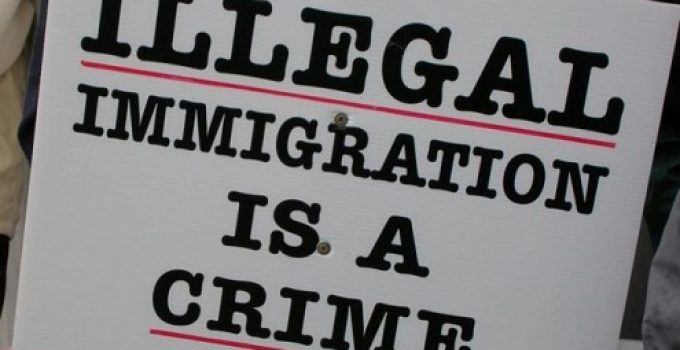
While I appreciate Shapiro’s measured response, I can’t agree.  As I wrote in “Deportemal,” the time for half-measures has passed.  A lengthy review process of the millions of illegal aliens—which could be anywhere from 11 to 33 million (PDF; that document shows an illegal population of 12 million as of 2015), and maybe higher (that no one can know for sure is a major part of the problem)—would bog down for years, if not decades.  Another visa process ladled on top of inherent law-breaking will merely exacerbate the problem.

Consider:  our current catch-and-release system—migrants show up to one court date, get a temporary visa and orders to report back to court, then disappear into the countryside, never darkening an immigration court again—already gives migrants an easy in.  Essentially, touching American soil is like tagging home base:  once you’re here, you’re in.

Now, imagine adding an individual review process to that.  First, you’d have to assume good-faith on the part of illegals in the country.  They have virtually no incentive to come to another hearing.  Yes, they have the opportunity to be absolved of their illegal status (I’m assuming that’s what Shapiro is proposing), but if they think they don’t, they’ll avoid the process.

Second, a whole cottage-industry of gaming the individual amnesty system will emerge.  Lawyers skilled in the ins-and-outs of this fresh bureaucratic hell will profit at the expense of their countrymen and poor illegals.  Appeals—and you know with the federal government there would be a lengthy appeals process—would linger on for months, even years, further adding to the administrative load of ICE and our courts.

If we were dealing with a few thousand people, we could demonstrate some mercy and approach this issue with a lighter touch.  Unfortunately, we’ve failed to enforce our border laws for so long that we’ve allowed this crisis to metastasize, to the detriment of American citizens and potential immigrants alike.

Republicans squandered a golden opportunity to make some real strides on immigration reform during the 2017-2019 congressional session.  President Trump has moved mountains since then via constitutional executive orders and international diplomacy, particularly his threat of slapping hefty, incremental tariffs on Mexico.  Increased enforcement of Mexico‘s southern border has, according to Shapiro, already eased the number of arrests on the American border.

In the wake of President Trump’s massive 2020 reelection campaign launch last night in Orlando, Florida, it is imperative for immigration patriots to run (and win!) in 2020, and for Americans to support Trump’s reelection.  It’s our best hope to resolve this crisis, to the benefit of Americans and the world.

For more of my writing on immigration, check out “Lazy Sunday XIII: Immigration.”

Consider supporting the blog at my SubscribeStar page.  $1/mo. gets you exclusive access to new posts every Saturday.

SubscribeStar Saturday: Asserting Conservativism

As I’ve been developing my History of Conservative Thought course, one of my goals is to define “conservatism” positively; that is, on it’s own terms, and not merely as a reaction to progressivism.  Too often—including on this blog—we conservatives define our movement as what we’re against, rather than what we support.

That’s understandable, in part, for two reasons:  the Left’s vicious tactics are hard to ignore, and what we think of as “conservatism” is often the other side of a liberal coin.

On that second point:  conservatives often struggle to hold truly distinct positions because we’ve embraced the underlying assumptions of liberalism.  This explains the much-derided tendency of National Review to write headlines such as “The Conservative Case for [Deranged Leftist Policy Here].”  Conservatism, Inc., is also obsessed with policing our side, punching to the right as frequently as the left (take for instance, Kevin Williamson’s piece on the Crowder demonetizing situation; Williamson can barely wait to insult Crowder as “stupid” and childish, even as he feigns to defend the YouTube star).

We also tend to see compromise as part of the hurly-burly of electoral politics, so in a practical sense, we do so out of a good-faith understanding that our political opponents will do the same.  The Kavanaugh hearings largely dispelled that myth once and for all, as Lindsey Graham’s powerful reaction to that witch-hunt demonstrated.

Such is the theme of Angelo Codevilla’s latest piece, “A Conservative Resistance?”  Thanks to photog at Orion’s Cold Fire for linking to it.  Readers will recall that I wrote some months ago about Codevilla’s excellent essay on secession.

To read the rest of this post, subscribe at $1 or more on my SubscribeStar page!

Other SubscribeStar Saturday Posts:

TBT: Reality Breeds Conservatism

Yesterday’s post, “Conservative Inheritance,” explored the deep grounding of conservatism in hard-won experience.  Rather than existing as an ideology–a framework built upon abstract principles derived in a rationalistic vacuum—per se, conservatism is the product of concrete, empirical observation.

As I’m teaching my summer course, The History of Conservative Thought, I’m delving deeper into this understanding of conservatism.  Last week I wrote about the Russell Kirk’s six characteristics of conservatism, which my students and I discussed (and which they’re writing about for today).  While preparing that lesson, I was struck by the assertion that conservatism is not an ideology.

For so long, I’d been conditioned to think of it that way—and to think of our cultural and political battles as fundamentally ideological.  I still think there is a great deal of truth to that, as the modern Right battles against a progressivism imbued with a Cultural Marxist teleology (apologies, philosophy majors, if I’m misusing that word).  But conservatives must be aware that, by playing by the Left’s rules, we’re implicitly accepting the Left’s frame.

Regardless, all of these ideas and debates were circulating in my mind as I considered this week’s feature.  I landed, finally, on a piece entitled “Reality Breeds Conservatism” from last June.  The piece is not so much about ideological battles, but about a study (linked below) that argued that fewer risks made people more “liberal”—more willing to take risks—while greater risks made people more “conservative”—less willing to take risks.

Great insights there, Washington Post.  Yeesh.

Anyway, here is June 2018’s “Reality Breeds Conservatism“:

There’s a piece in the Washington Post about how progressives (“liberals,” as the article puts it) and conservatives think differently.  Like many such pieces, it essentially reduces conservatives to being more fearful, and touts that, in the absence of fear, conservatives become liberal.

I don’t entirely disagree with the basic findings of the Yale researchers; beloved Canadian psychologist Jordan Peterson makes similar claims.  Peterson argues that progressives are risk-takers, the ones who explore over the mountain or innovate new businesses, while conservatives are the managers (and conservators) of the new institutions that arise from innovation.

Obviously, this basic analysis is a generalization, a reduction that makes it a little easier to understand the world around us.  As such, there are broad exceptions:  we all know conservatives who fight hard in the culture wars, who build new businesses, and who support new ideas or techniques—many at great personal, financial, and political risk.

Meanwhile, progressives politically are still clinging to the same failed ideas that have motivated their policy proscriptions for decades—increasing the minimum wage, expanding the welfare state, pushing identity politics.

That said, the article linked above—which chillingly says “we conducted an experiment to turn conservatives into liberals” in the title—points to the fear factor as the key to determining conservative vs. progressive viewpoints.  In doing so, it points to said experiment, which is deeply flawed at its core.

To wit:  researchers conducted an online poll (a bit iffy) of 300 U.S. residents, only 30% of whom were Republicans.  Two-thirds of the survey-takers were women, and 75% were white, with an average age of 35.  This collection isn’t exactly heavy on conservatives to begin with, and it’s unclear who was offered the opportunity to take the survey, which itself has a verysmall sample size.  I’m picturing a group of undergraduate psychology chicks posting a link to a SurveyMonkey survey on Facebook, which is about the amount of rigor I would expect from the “academic” social sciences these days.

Besides the small sample size and lack of diversity, the core flaw is the methodology.  Those surveyed were asked to imagine a scenario in which they were given one of two superpowers:  half were granted the power to fly, the other half granted the power “to be completely safe, invulnerable to any harm.”  The participants then completed the aforementioned survey.

What they found was not all that surprising, although the researchers feign as such:  it turns out that, in the absence of physical harm, conservatives become much more progressive, which—in the context of this study—basically means that they’re more open to people or situations that are different from them, and therefore inherently riskier.

Well, duh—in the absence of objective reality—to be free of any risk of physical harm, broadly-defined—I would partake in all sorts of risky activities that I would be reluctant to attempt when the threat is real.  That’s because I wouldn’t bear the costs of any of those risky actions (and as someone who broke a wrist falling from a ladder last fall, I can say that those costs are very high).

The late Kenneth Minogue wrote an essay in 2001 entitled “The New Epicureans,” in which he pointed out that, historically, only the very wealthy—the aristocratic elites of society—could afford to partake in risky behaviors, things like casual sex, drug abuse, and the like—while the rest of us plebes had to adopt a more Stoical approach to life—avoiding undue risk, living life cleanly and simply, dutifully serving our families and communities.

With broadly-spread wealth and widely-available contraceptives, however, modern chumps can mitigate the risks of a “live fast, die young” lifestyle in the same way ancient elites could—to an extent. What used to be the self-indulgent indolence of a very small group (the hated 1%!) has now become the self-destruction of a majority of modern Westerners.  And, of course, it doesn’t work out well, as most folks don’t have the means to pay for their immoral-but-convenient choices.

While we might be able to avoid more of the consequences of our actions—and, therefore, participate more eagerly in the temptations of a hedonic existence—there are still consequences, often dire ones.  I’ll write about some of these in my upcoming eBook, Values Have Consequences:  Why the West Needs Social Conservatism, but take one lethal example:  abortion.

What could more self-destructive, for more selfish ends, than to snuff out a human life?  Looking at this in the most dispassionately, economic way possible, it boils down to a calculation:  do I buckle down and adopt the Stoic lifestyle necessary to provide for this new life, thereby sacrificing my own personal enjoyment, or do I get rid of this “clump of cells” and avoid the huge costs and time-commitments of childrearing?  The major legal hurdles being removed via the disastrous Roe v. Wade ruling—and in the absence of a deep-rooted moral framework—many women, sadly, have opted for the latter option (which many, sadly, come to regret).

So, yes, if you strip away external costs and the threat of pain, people of any political or temperamental persuasion will indulge in more risk-tasking, for good and for ill, and might be more welcoming of strangers or alternative lifestyles.

But a healthy dose of Stoic skepticism about life is not detrimental.  We should not live our lives in fear, but we should govern sensibly—for example, by enforcing our national borders.  In short, conservatism is rooted profoundly in reality—it responds to real threats, prepares for real dangers, and seeks to build a life that, rather than relying on vague abstractions, grows organically from the nature of things as they are.

***

One final note:  the study found that, when witnessing acts of physical violence or hearing about one group or another causing trouble, liberals will become more conservative, even if temporarily.  This was true of the original “neocons” in the 1960s and 1970s, who were “mugged by reality.”

I believe it also holds true for those soft-liberals and centrists who saw the electoral chicanery, cultural division, racialized politics, and violent tactics of the Left in the 2016 election; having been “mugged” once again, they voted for a safety and reform.

Thank God Trump is a risk-taker.

Ted Cruz on Ben Shapiro

It was a glorious weekend at Casa de Portly, deep in the heart of Dixie.  It was the kind of weekend that saw a lot of non-blog- and non-work-related productivity; in other words, I loafed a great deal, then did domestic chores around the house.

In case you missed it, on Saturday I released my Summer Reading List 2019.  If you want to read the whole list—and it’s quite good—you have to subscribe to my SubscribeStar page at the $1 level or higher.  There will be new, subscriber-exclusive content there every Saturday, so your subscription will continually increase in value.

Anyway, all that loafing and cleaning meant that I was unplugged from politics.  I did, however, manage to catch the Ben Shapiro Show “Sunday Special” with Texas Senator Ted Cruz.

I was a big fan of Cruz in the 2016 Republican presidential primaries, and I voted for him here in South Carolina.  Cruz intuited the populist mood of the electorate the way that President Trump did, and combined it with policy innovation and constitutionalism.

There’s a reason Cruz hung in there as long as he did against Trump:  he’s a canny political operator, but he also knew how to pitch a conservative message that was appealing to many voters.  I sincerely believe that had he clinched the nomination, he would have won the 2016 election (and, perhaps, by an even wider Electoral College margin than did Trump).

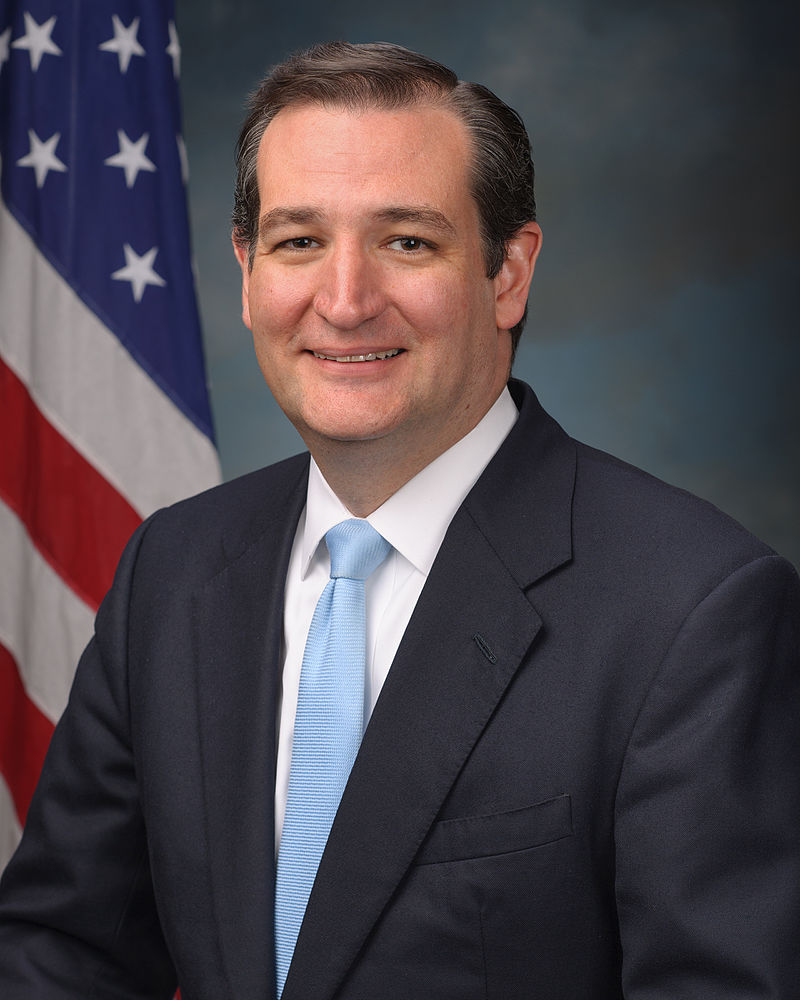
Cruz catches a lot of flack because he’s a little dopey and looks odd—a whole meme emerged in 2015-2016 claiming that Cruz was the Zodiac Killer—but he’s been an influential voice in the Senate.  He possesses a supple, clever mind, and has urged Republicans to make some bold, innovative reforms to the Senate (he vocally champions and has proposed a constitutional amendment for congressional term limits).

The hour-long interview with Ben Shapiro—which opens with a question about his alleged identity as the Zodiac Killer—shows how affable and relaxed Cruz really is.  I’ve never seen him appear more relaxed and genuine (and I never took him for a phony—I’ve seen him speak live at least once at a campaign rally in Florence, and spoke very briefly to him afterwards) than in this interview.

Granted, it’s friendly territory—Shapiro was a big supporter of Cruz in the primaries—but Cruz spelled out some important ideas, as well as his projections for 2020.  If you don’t have a full hour, fast forward to about the forty-minute mark for his discussion of Trump’s reelection prospects.

To summarize them briefly:  Cruz thinks it all comes out to turnout, and that Democrats will “crawl over broken glass” to vote against Trump.  He even points out that his own race against Democrat Robert Francis “Beto” O’Rourke was as close as it was because Beto ran against Trump more than he did against Cruz.  He also thinks Joe Biden is going to flame out, and one of the more radical, progressive Dems will clinch the nomination, making the prospect of a truly socialistic administration terrifyingly possible.

That said, Cruz is optimistic.  Discussing his own narrow victory over Beto in 2018, he points out Beto’s massive fundraising and staffing advantages (Cruz had eighteen paid staffers on his campaign; Beto had 805!), but explains that a barn-burning bus tour of the State of Texas pulled out conservative and middle-class voters in a big way for his reelection.

That points to one of Trump’s strengths:  the relentless pace with which he campaigns.  Trump held three and even four rallies a day in key battleground States in the final days of the 2016 election, which likely made the difference in Michigan, Wisconsin, and the Great White Whale of Republican presidential elections since the 1980s, Pennsylvania.  If Trump can get his pro-growth, pro-American message out there as effectively in 2020 as he did in 2016 and can excite voters who want to protect their nation and their prosperity, he could cruise to reelection.

Cruz’s optimism, tempered by practical challenges ahead for Republicans, really came through in the video.  Really, the entire interview reminded me why I liked Ted Cruz so much the first time.  I’d love to see him remain a major presence throughout the next five years, and to see him run for the presidency again in 2024 (him, or Nikki Haley).

Regardless, I encourage you to listen to this interview.  Take Cruz’s warning to heart:  don’t get complacent, because the Democrats aren’t.

What is Conservatism?

Today I’m launching a summer class at my little private school here in South Carolina.  The course is called History of Conservative Thought, and it’s a course idea I’ve been kicking around for awhile.  Since the enrollment is very small, this first run is going to be more of an “independent study,” with a focus on analyzing and writing about some key essays and books in the conservative tradition.  I’ll also be posting some updates about the course to this blog, and I’ll write some explanatory posts about the material for the students and regular readers to consult.  This post will be one of those.

Course Readings:

Most of the readings will be digitized or available online at various conservative websites, but if you’re interested in following along with the course, I recommend picking up two books:

1.) Richard Weaver‘s Ideas Have Consequences ($6.29):  this will be our “capstone” reading for the summer.
2.) The Portable Conservative Reader (edited by Russell Kirk):  we’ll do some readings from this collection, including Kirk’s “Introduction” for the first week.

Course Scope:

I’ll be building out the course week-to-week, but the ultimate goal is to end with 2016 election, when we’ll talk about the break down of the postwar neoliberal consensus, the rise of populism and nationalism in the West, and the emergence of the Dissident Right.

After the introductory week, we’ll dive into Edmund Burke, then consider the antebellum debates about States’ rights.  I haven’t quite worked out the murky bit during the Gilded Age, but we’ll look at the rise of Progressivism in the early twentieth century, then through the conservative decline during the Great Depression and the Second World War.

After that, it’s on to Buckley conservatism and fusionism, as well as the challenges of the Cold War and international communism.  Paleoconservatives like Pat Buchanan and (if I’m feeling edgy) Sam Francis will get shout-outs as well.

Week 1:  What is Conservatism?

That’s the basic outline.  For the first day, we’re going to look at the question in the title:  what is conservatism?  What makes one a conservative?  Feel free to comment below on your thoughts.

After we see what students think conservatism is, we’ll begin reading through Russell Kirk’s “Introduction” in The Portable Conservative Reader.  It’s an excellent overview of the question posed.  The first section of the lengthy “Introduction” is entitled “Succinct Description,” and it starts with the question, “What is conservatism?”

Not being one to reinvent what others have done better—surely that is part of being a conservative (see Principle below)—I wanted to unpack his six major points.  Kirk argues that though conservatism “is no ideology,” and that it varies depending on time and country, it

“may be apprehended reasonably well by attention to what leading writers and politicians, generally called conservative, have said and done…. to put the matter another way, [conservatism] amounts to the consensus of the leading conservative thinkers and actors over the past two centuries.”

Kirk condenses that grand tradition into six “first principles,” derived largely from British and American conservatives.  To wit:

1.) Belief in a Transcendent Moral Order – conservatives believe there is higher authority or metaphysical order that human societies should build upon.  As Kirk puts it, a “divine tactic, however dimly descried, is at work in human society.”  There is a need for “enduring moral authority.”  The Declaration of Independence, for example, draws on the concept of “natural law” to complain about abuses of God-given rights.  The implication is that a good and just society will respect God’s natural law.

2.) The Principle of Social Continuity – Kirk puts this best:  “Order and justice and freedom,” conservatives believe, “are the artificial products of a long and painful social experience, the results of centuries of trial and reflection and sacrifice.”

As such, the way things are is the product of long, hard-won experience, and changes to that social order should be gradual, lest those changes unleash even greater evils than the ones currently present.  Conservatives abhor sudden upheaval; to quote Kirk again:  “Revolution slices through the arteries of a culture, a cure that kills.”

3.) The Principle of Prescription, or the “wisdom of our ancestors” – building on the previous principle, “prescription” is the belief that there is established wisdom from our ancestors, and that the antiquity of an idea is a merit, not a detraction.  Old, tried-and-trued methods are, generally, preferable to newfangled conceptions of how humans should organize themselves.

As Kirk writes, “Conservatives argue that we are unlikely, we moderns, to make any brave new discoveries in morals or politics or taste.  It is perilous to weigh every passing issue on the basis of private judgment and private rationality.”  In other words, there is great wisdom in traditions, and as individuals it is difficult, in our limited, personal experience, to comprehend the whole.

It’s like G. K. Chesterton’s fence:  you don’t pull down the fence until you know why it is built.  What might seem to be an inconvenience, a structure no longer useful, may very well serve some vital purpose that you only dimly understand, if at all.

4.) The Principle of Prudence – in line with Principles and , the conservative believes that politicians or leaders should pursue any reforms only after great consideration and debate, and not out of “temporary advantage or popularity.”  Long-term consequences should be carefully considered, and rash, dramatic changes are likely to be more disruptive than the present ill facing a society.  As Kirk writes, “The march of providence is slow; it is the devil who always hurries.”

5.) The Principle of Variety – the “variety” that Kirk discusses here is not the uncritical mantra of “Diversity is Our Strength.”  Instead, it is the conservative’s love for intricate variety within his own social institutions and order.

Rather than accepting the “narrowing uniformity and deadening egalitarianism of radical systems,” conservatives recognize that some stratification in a society is inevitable.  Material and social inequality will always exist—indeed, they must exist—but in a healthy, ordered society, each of these divisions serves its purpose and has meaning.  The simple craftsman in his workshop, while materially less well-off than the local merchant, enjoys a fulfilling place in an ordered society, one that is honorable and satisfying.  Both the merchant and the craftsmen enjoy the fruits of their labor, as private property is essential to maintaining this order:  “without private property, liberty is reduced and culture is impoverished,” per Kirk.

This principle is one of the more difficult to wrap our minds around, as the “variety” here is quite different than what elites in our present age desire.  Essentially, it is a rejection of total social and material equality, and a celebration of the nuances—the nooks and crannies—of a healthy social order.  “Society,” Kirk argues, “longs for honest and able leadership; and if natural and institutional differences among people are destroyed, presently some tyrant or host of squalid oligarchs will create new forms of inequality.”

Put another way:  make everyone equal, and you’ll soon end up with another, likely worse, form of inequality.

6.) The Principle of the Imperfectibility of Human Nature – unlike progressives, who believe that “human nature” is mutable—if we just get the formula right, everyone will be perfect!—conservatives (wisely) reject this notion.  Hard experience demonstrates that human nature “suffers irremediably from certain faults…. Man being imperfect, no perfect social order ever can be created.”  An Utopian society, assuming such a thing were possible, would quickly devolve into rebellion, or “expire of boredom,” because human nature is inherently restless and rebellious.

Instead, conservatives believe that the best one can hope for is “a tolerably ordered, just and free society, in which some evils, maladjustments, and suffering continue to lurk.”  Prudent trimming of the organic oak tree of society can make gradual improvements, but the tree will never achieve Platonic perfection (to quote Guns ‘n’ Roses:  “Nothing lasts forever, even cold November rain”).

Conclusion

Kirk stresses in the rest of the introduction that not all conservatives accept or conform to all of the six principles again; indeed, most conservatives aren’t even aware of these principles, or may only dimly perceive them.

That’s instructive:  a large part of what makes one conservative is lived experience.  “Conservatism” also varies depending on time and place:  the social order that, say, Hungary seeks to preserve is, of necessity, different than that of the United States.

Conservatism, too, is often a reaction to encroaching radicalism.  Thus, Kirk writes of the “shop-and-till” conservatism of Britain and France in the nineteenth century:  small farmers and shopkeepers who feared the loss of their property to abstract rationalist philosophers and coffeeshop radicals, dreaming up airy political systems in their heads, and utterly detached from reality.

If that sounds like the “Silent Majority” of President Richard Nixon’s 1968 and 1972 elections—or of President Trump’s 2016 victory—it’s no coincidence.  The great mass of the voting public is, debatably, quietly, unconsciously conservative, at least when it comes to their own family, land, and local institutions.  Those slumbering hordes only awaken, though, when they perceive their little platoon is under siege from greater forces.  When they speak, they roar.

But that’s a topic for another time.  What do you think conservatism is? Leave your comments below.

–TPP

Leftism in a Nutshell

You’ve got to admire the balls of the Left.  Yes, their wild policy prescriptions come from a combination of ignorance, wickedness, and magical thinking, but that doesn’t stop them from putting out some crazy ideas.

Take this piece from Gavin McInnes’s former rag, Vice:  “The Radical Plan to Save the Planet by Working Less.”  The headline says it all:  let’s just not work so hard, gah!

Naturally, click-bait headlines like that don’t tell the full story.  The “degrowth” movement the piece discusses is classic progressivism:  we should support a robust public transportation system and give generous welfare benefits so people can spend less time working.

The “degrowth movement” is an inversion of Obama-era economic thinking.  Recall the sluggish recovery following the Great Recession, and how Obama informed us that low-growth was the “new normal” we’d all have to learn to love in America.  Now that the economy is roaring under President Trump, progressives are flipping the script:  “oh, wait, too much growth is a bad thing because climate change!”

Like most Leftist economic ideas, it’s premised on denying people choice and subsidizing loafing with generous bennies:

Degrowth would ultimately mean we’d have less stuff: not as many people working and producing materials, so not as many brands at the grocery store, less fast fashion, and fewer cheap and disposable goods. Families would perhaps have one car instead of three, you’d take a train instead of a plane on your vacation, and free time wouldn’t be filled with shopping trips but with non-money-spending activities with loved ones.

Practically, this would also require an increase in free public services; people won’t have to make as much money if they don’t have to spend on healthcare, housing, education, and transportation. Some degrowthers also call for a universal income to compensate for a shorter work week.

I’m all about saving money and avoiding empty consumerism.  I’ve written that there is more to an economy than faceless efficiency units slaving away for plastic crap from China.  I’m not unsympathetic to the idea of taking more time for family and personal edification (as a good deal of the workweek is wasted in meetings and busy work).

But this “degrowth movement” is absurd.  It’s all premised on a government somehow funding a massive welfare state as the citizenry becomes less productive.  Even the sympathetic economist they interview for this ideological puff piece argues that cutting growth to reduce carbon emissions would only have a marginal impact environmentally, but would be devastating socially and economically.

It just goes to show you that the Left hates the idea of hard work.  For them, work is an imposition, and we’d all be better off enjoying endless relaxation and luxury.  It’s the seduction of never-ending childhood: a paternalistic state provides all the goodies so we can watch TV and pursue pleasure all day.

Work is ennobling.  It’s important to earn a living wage for honest, valuable, productive work.  But beyond that, work provides a sense of purpose and accomplishment (I think this is particularly true for men, although women derive great satisfaction from work, too, especially the difficult, important work of raising children).  There is an identity to holding a job, and a sense of satisfaction from doing that job well.

Can one enjoy a good quality of life by pursuing a more minimalist approach?  Yes, of course:  if anything, Americans spend far too much money, a good deal of it on empty baubles.

There is a simple joy to minimalism, and I enjoy “spending” money on savings (it’s very satisfying to watch savings and investments grow).  But subsidizing lollygagging and calling it “investing in infrastructure” is not the sign of a great nation or civilization.

Patriots Fill Gap in Border Wall

As the federal government struggles to fulfill its basic duties, private citizens are increasingly taking matters into their own hands.  I wrote awhile ago about the GoFundMe page to fund the border wall.  That project is still underway, but seems to have stalled well short of its goal of raising $1 billion.

But there is hope.  The organization connected to that fundraising project, We Build the Wall, constructed a half-mile of wall along a notorious gap on the New Mexico border.

A half-mile is precious little along a border hundreds of miles in length, but it is something.  Further, the specific half-mile section the wall protects is a heavily-crossed gap in existing border fencing.  From The Daily Wire:

The half-mile segment of border wall, the group says, closes a gap frequently used to smuggle both people and drugs. [Former Kansas Secretary of State Kris] Kobach added that on a “typical night” around 100 migrants and $100,000 worth of illegal narcotics passed through the half-mile hole.

The Trump Administration was working on a plan to construct around 234 miles of steel fencing, effectively sealing off the southern border with a “border wall,” but attempts to secure funding for the project have stalled. Congress refused to agree to any funding for the border wall beyond the $1.6 billion promised in the 2018 budget, and President Donald Trump’s “national emergency” declaration — which would have detoured funding to the border wall from other Army Corps of Engineers projects — was halted by a judge pending ongoing litigation.

This excerpt brings up another important point:  the consistent obstruction from Democrats and activist judges of President Trump’s America First agenda.  Even with the declaration of a national emergency, the president has been blocked from making substantial progress on the border wall.

Of course, Republicans passed up a golden opportunity to act on the border wall in 2017 or 2018.  Voters need to send a strong message to candidates in both parties that getting control of the border is important.  Tax cuts and economic growth are wonderful, but for American citizens to benefit, we need strong border security, including a robust deportation system.

I’m encouraged to see private citizens banding together to solve their problems when the government won’t—few things are more American.  Nevertheless, it’s the federal government’s constitutional responsibility to protect our national sovereignty.  It shouldn’t slough off that responsibility and hope that good-willed patriots will pick up the slack.

TBT: Open Borders is the Real Moral Crisis

I’ve been writing quite a bit about immigration lately, as it’s the major issue facing the West today.  Our leaders’ inabilities to address the crisis of immigration suggests their ineffectiveness—and, perhaps, their callous indifference to the damage unrestricted and illegal immigration wreak.

President Trump rose to national prominence and won the presidency campaigning on fixing illegal immigration.  His efforts so far have been a mixed bag, as duplicitous, progressive judges overreach from their elitist perches and block Trump’s efforts at reform.

It seems a distant memory now, but all the faux-outrage from the Left just a year ago was about the “child separation” business at the border.  One still reads some echoes of those melodramatic headlines, but the underlying problem has gone unaddressed.

In fact, it’s gotten worse:  immigrants now realize that if they cross the border with a minor child, they can be swept into the interior of the country.  Once an illegal immigrant is in the nation, it’s incredibly difficult to get him out again.

It’s a sad testament that President Trump and Congress have been unable to accomplish more on this front.  As such, it’s shame that this week’s TBT still sounds all-too-familiar.

Here is “Open Borders is the Real Moral Crisis“:

I typically avoid wading into fashionable-for-the-moment moral crusades, but the hysteria over children being separated from their parents at the border is ludicrous, and demonstrates the typical “facts over feelings” emotionalism that mars our immigration debate.  That feel-goodism is why we’re even in this mess—if it can be characterized as such—in the first place.

Because I’ll be deemed a monster—“Won’t somebody please think of the children!“—for not unequivocally denouncing this Clinton-era policy, I’ll issue the usual, tedious disclaimers:  yes, it’s all very tragic; yes, it could be handled better; yes, I would have been terrified to be separated from my parents at such a young age; etc.

Now that the genuflecting to popular pieties is out of the way, let me get to my point:  this entire situation would be a non-issue if we had simply enforced our immigration lawsconsistently for the past thirty years.  President Trump isn’t the villain here (if anything, Congress is—they can take immediate action to change the policy or come up with some alternative—but I don’t even think they’re wrong this time); rather, the villains are all those who—in the vague name of “humanity” and “human rights”—ignored illegal immigration (or, worse, actively condoned it).

Sadly, it is an issue.  But what else are we to do?  Years of non-enforcement have sent the implicit but clear message to potential illegal immigrants that we don’t take our own borders (and, by extension, our national sovereignty and rule of law) seriously, and that if you’re sympathetic enough, you’ll get to skip the line.  Folks come up from Mexico and Central America fully expecting that, after some brief official unpleasantness, they can dissolve into the vastness of the United States and begin sending remittances back to their relatives—who may then pull up stakes and come.

Further, sneaking into the country illegally is a crime, and the United States has every right to enforce its laws, including those pertaining to immigration.  Mexico, similarly, has that right—and uses it unabashedly to police its own border (or to let Central American migrants waltz through on their way to the Estados Unidos).  Naturally, the punishment for breaking laws is often detainment, and the kiddies don’t join dad in his cell.

To give a common example:  what happens to the children of, say, an American heroin dealer when he’s arrested and sentenced to ten years in a drug bust?  His children—if they have no relatives willing or able to take them in—go into the foster care system.  It’s tragic, it’s terrible, but it’s part of the price of committing a felony.  No one wants it to happen, but it’s a consequence of one’s actions.  This reason is why crime is so detrimental to society at large, even beyond the immediate victims.

Unfortunately, a combination of winking at immigration enforcement (“eh, come on—you won’t get deported”), feel-good bullcrap (as my Mom would call it), and Emma Lazarus Syndrome(trademarked to The Portly Politico, 2018) have contributed to the current nightmare situation.  Now that an administration is in office that actually enforces the duly legislated law of the land—and at a point at which the problem has ballooned to epic proportions due to past lax enforcement—the problem is far thornier and more consumed with emotional and moral peril.

As any self-governing, self-sufficient adult understands, sometimes doing what is necessary is hard.  I do feel for these children who are stripped from their parents arms (although, it should be noted, usually for only a matter of hours), but who cares about my feelings?  We can have compassion for those who try to arrive here illegally, as well as their children, without attempting to take on all of their problems, and without sacrificing our national sovereignty and our laws in the process.

The United States is the most generous nation in the world—and the most prosperous—but we cannot take everyone in; to do so would not make everyone else better off, but would rather destroy what makes America the land of compassion, liberty, prosperity, and charity that it is.

***

For further reference, I recommend the following videos, the first from the brilliant Ben Shapiro, the second from Dilbert creator Scott Adams:


I’d also recommend this piece from National Review columnist Richard Lowry, which is quite good:  https://www.nationalreview.com/2018/05/illegal-immigration-enforcement-separating-kids-at-border/

And, finally, this piece from Conservative Review‘s Daniel Horowitz, which explains the true moral toll of illegal immigration—and misplaced compassion—very thoroughly:  https://www.conservativereview.com/news/the-immorality-of-the-open-borders-left/