Destroying Marriage with the Flip of a Coin

Today’s post is something straight out of Dalrock’s excellent blog:  a couple in Florida decided to take the last name of whoever won a coin toss.

Here is the image from the article:

A picture is worth a thousand soyboys.  I sent this article to my younger brother, sister-in-law, and girlfriend yesterday, and my brother commented, “The entire aesthetic of the lady officiant makes me think of one of these dystopian sci-fi settings where there’s one secular religion imposed by the State.”  Amen.

I will add:  the bride’s (Darcy’s) reaction to winning the coin toss speaks volumes.  She’s clearly gloating at winning an arbitrary coin toss that strips her husband of his last remaining shred of masculine dignity.  And the look on the groom’s (Jeff’s) face suggests he is not pleased with the outcome.

Of course, Jeff will never admit this fact.  Here is a particularly cringe-inducing excerpt:

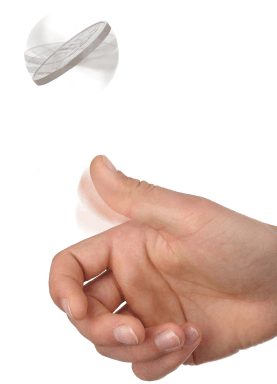
At the altar of their Dec. 14 wedding, they flipped a brass, engraved medallion, one side with Darcy’s last name, and the other with Jeff’s surname.

“It’s fair. I am a graduate student in economics at Florida State and I think about fairness,” Jeff told the Palm Beach Post.

“Being with someone who was willing to start the marriage from a creative and teamwork and fair place felt like a really good first step toward an equal partnership,” Darcy, a nurse-midwife, added.

When the time came, it was Darcy’s name that won out. Mr. and Mrs. Ward were thrilled with the result.

“You could say I won,” Jeff said. “I was the one who received something new.”

The phrase “I am a graduate student in economics at Florida State and I think about fairness” perfectly encapsulates the clueless virtue-signalling of noodle-wristed academics.  Jeff is saying, “I’m smart, so I know better than centuries of tradition.”

His claim that he “won” because he “received something new” is protesting too much.  Jeff knows that what he and his wife have done is ludicrous—otherwise it wouldn’t make the New York Post—and emasculating, so he’s attempting to save face with a ex post facto justification.

The hyphenation of last names, or wives keeping their maiden names, may seem like a small personal choice, but it’s one of the thousand little cuts against traditional marriage.  Marriage is the coming together of two people into one, with the husband as the spiritual leader.  Taking her husband’s last name is a significant demonstration of devotion and fidelity.  It also serves the practical purpose of confirming paternity and keeping fathers responsible to their children.

It might seem like I’m making a big deal over a small decision—“it’s just a name, TPP.”  Well, what’s in a name?  Surely there is some symbolic and practical significance to taking a husband’s name.

Further, I’d be more amenable to such arguments if we hadn’t seen the systematic destruction of marriage over the last 100 years.  That destruction began with baby steps.  Anything we can do to shore up traditional marriage is a positive good.

I completely understand the special cases:  academics retaining their maiden names professionally, for example.  But a wife should not begrudge her husband for becoming one with him—that’s a recipe for a failed marriage.  Besides, no kid wants to be saddled with a hyphenated last name.

Let’s hope Jeff and Darcy make it.  My instincts tell me they won’t.  Darcy is clearly the “man” in this relationship, and Jeff is not.  Whether they realize it or not, that’s going to breed a great deal of unhappiness and strife.

I hope I’m wrong, for their sake.

Christmas and its Symbols

It’s Christmas!  Imagine “Hark! The Herald Angels Sing” played on an uptempo French horn and a crackling fire.  That’s how I imagine Christmas morning—like a 1970s Christmas variety show.

In all seriousness, it’s truly the most wonderful time of the year.  Christ is born!  It’s a day for celebrating His Birth with family and friends.  Just like the Wise Men of yore, we exchange presents to celebrate (and to stimulate the economy).

Read More »

Christmas Eve

It’s hard to believe it, but Christmas is nearly here!  As a child, the anticipation seemed too much to bear, and the calendar from Halloween to Christmas seemed to stretch into endless, soggy days.

Christmas Eve is always the most magical, mystical part of Christmas time.  Popular depictions of Jesus’ Birth take place, presumably, on Christmas Eve—the angels bursting into the black, silent night above Bethlehem.  The whole event is supernatural—the Virgin Birth, the Star guiding the way to the manger, the angels appearing to the shepherds and singing.  Tradition has it that even the animals in the manger talked at the moment of Christ’s birth (at exactly midnight, of course).  If the rocks can cry out, singing praises to Him, why not some donkeys?

Read More »

Lazy Sunday XLI: Food

‘Tis the season for excessive consumption, dear readers.  For a blog with a synonym for “fat” in the title, I’ve yet to feature a Lazy Sunday about food.

Well, that’s about to change.  Here are four succulent pieces about food—and my favorite vice, gluttony:

  • #MAGAWeek2019: Fast Food” – One of the pieces from MAGAWeek 2019 (all exclusive to my SubscribeStar Page with a $1/month subscription), this little essay is an ode to the glories of fast food.  Fast food truly is a modern-day miracle, bringing together advancements in agriculture, food preparation, logistics, etc., into one gloriously low-priced, high-fat package.
  • The Future of Barbecue” – The inspiration for this post was a piece at the Abbeville Institute, which detailed the deleterious effect of “mass,” or mass-market, barbecue chains on mom and pop barbecue joints, as well as the tradition of community barbecue.  It’s one of the many interesting chapters in the negative consequences of unbridled economic growth and efficiency at the cost of tradition and community.
  • Shrinkflation” – Another SubscribeStar Saturday exclusive, this piece examines the shrinking size of beloved foodstuffs.  Did you know a two-liter Coke isn’t really two-liters anymore?  Ever noticed how Twinkies don’t seem as big as they used to appear?  Well, in an effort to cut cost (and, presumably, to bamboozle consumers), many food processors cut the sizes of their products in order to hide cost increases from customers.  I’ve had the gnawing feeling lately that the future we live in is far less amazing than it’s supposed to be; here’s another example of reality disappointing us yet again.
  • Bologna” – I was really stretching when I wrote this post (just this past Friday), but, well, I love bologna.  In our current age of hyper-politicization, even the sandwich meat we consume says something about socio-economic status and our outlook on life.  Bologna is the humble mystery meat of the workingman, and I cherish its delicious, cost-effective flavor.

That’s it!  I’m looking forward to stuffing my face with gleeful abandon over the next few days (you know, to celebrate the Birth of Jesus).  Then I’ve got to reverse course; my jeans are ever-snugger, and my double-chin has slowly made a comeback.  Yikes!

Happy Eating—and Merry Christmas!

—TPP

Other Lazy Sunday Installments:

Milo on Romantic Music

The Christmas season always gets me excited for music, because there are so many wonderful carols and hymns about the birth of Jesus.  I will write more on the topic of Christmas carols later on in the month, but today I wanted to touch on a really niche topic:  Milo Yiannopoulos‘s love of Romantic-era music.

What got me on this topic is not just my musical mood; it was an epic Telegram thread Milo had going about… classical music.

Read More »

Happy Halloween!

It’s Halloween!  All the build-up, all the ghost stories, it’s finally here!

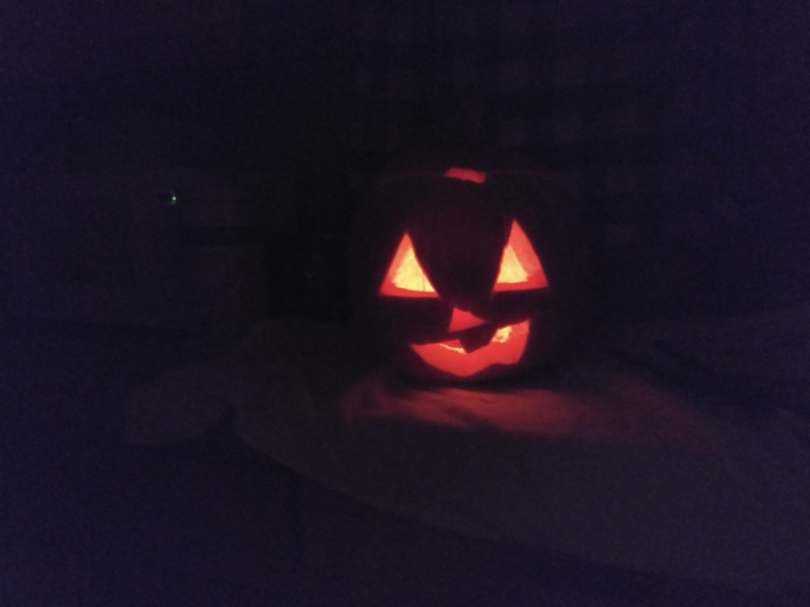
Last night I took the opportunity to carve my one of the two pumpkins I picked up earlier in the month ($4 a pop!).  He’s the cheeky little guy pictured above, and in the photo collage below (I’m getting fancy with the production values in this post).

His brother was stolen off my front porch Wednesday night.  I’d just gotten in bed and switched off the lights when I heard some tires squealing.  Thinking it was one of my neighbor’s buddies hydroplaning on the wet street, I didn’t think much of it, until my neighbor began shouting for me minutes later!

Read More »

On Ghost Stories

Yesterday’s post about Father Robert Morey’s courageous stand for the unborn really took off.  Thank you to readers for sharing the post, and thanks to those of you who left comments.  Please continue to keep Father Bob in your prayers.  —TPP

It’s Halloween!  Well, at least it’s All Hallow’s Eve Eve, but that’s close enough for some ghoulishly delicious ghost stories.

I love a good ghost story.  The Victorians did the genre best, but many writers since have honed it further, adding their own unique twists and scares.  Even Russell Kirk, the great conservative philosopher, was a fan of ghost stories.  Indeed, his bestselling book was a ghost story.

For the Victorians, ghost stories were told at Christmastime.  This timing, while peculiar to modern readers, makes sense intuitively—Christmas is a time for remembering the past, in part (perhaps especially) our honored dead (just ask Washington Irvingif he comes by to haunt you).  The “ghosts” of departed loved ones linger closely during those long, frosty nights.  The inherent nostalgia of Christmas and the winter season—and bundling up next to a crackling fire—sets the perfect mood for ghostly tales.

Nevertheless, what other time of year can beat Halloween for a good tale of witches and werewolves; of monsters and mummies; of ghouls, goblins, and ghosts?

Read More »

Halloween Week!

It’s the week of Halloween!  I love Halloween—it’s second only to Christmas and maybe Thanksgiving for my favorite holiday.  Poor Halloween suffers—as countless others have already noted in casual conversations all month—due to Commercial Christmas’s imperialism, so it doesn’t really get its proper due anymore, but it’s a fun event worth celebrating.

As is typical for Halloween in South Carolina, the crisp, autumnal weather is gone; in its place is uncomfortably warm, sticky mugginess.  As a child, I always dreamed of the spooky, chilly Halloween nights I would read about in books, the kind of night where you really could believe ghosts are tickling your spine, witches are abroad, and skeletons are playing their rib cages as xylophones.

Instead, Halloween in South Carolina is always hot and wet.  As a plump child with glasses, I could never wear a mask for long, as my chubby breathing in the swampy air would fog up my thick glasses, my costume quickly becoming a burdensome chore (mostly for my parents) instead of a joyfully freeing disguise.  It looks like I’ll be treated to lots of back sweat and foggy lenses again this year.

Read More »

The Future of Barbecue

The good folks at the Abbeville Institute have a great piece (originally published at The American Conservative) about the most beloved and controversial of Southern foodstuffs:  barbecue.

Barbecue, as author John Shelton Reed points out, is highly localized.  For me—and any true South Carolinian—the One True ‘Cue is mustard-based pulled pork barbecue from South Carolina.  It’s definitely not beef brisket or anything with ketchup.  It should come from a place that’s only open three or four days a week, and is served with hash and rice.

Unfortunately, much like the “old, weird America” whose passing John Derbyshire regularly mourns, traditional barbecue—regardless of the regional variety—is being shoved out by “mass barbecue,” the kind served up in chains that look like the inside of Uncle Moe’s Family Feedbag.

Read More »

Lazy Sunday XXIII: Richard Weaver

I’ve been fan-boying a great deal lately about Richard Weaver.  He’s one of my favorite authors, even though I’ve read comparatively little of his work.  Weaver died during the prime of his academic career, but before his premature death he managed to bequeath a rich heritage of scholarly works about literature, religion, and his beloved Dixie.

As I’ve written again and again, I always enjoy rereading the introduction to Weaver’s Ideas Have Consequences, and hope to reread the entire book again soon.  The introduction sums up the modern West’s maladies starkly and clearly, tracing their origins to the nominalism of William of Occam.

I found one podcast in which two conservative commentators summarize and discuss the book, chapter-by-chapter; it’s a good, quick overview if you’ve got fifty minutes in the car:

That said, while I reference Weaver quite a bit, I actually have not written as many posts about him and his work as I thought.  Nevertheless, while I’m in the midst of my annual Weaver Fest, I thought it would be the perfect time to give the great academic his own Lazy Sunday:

1.) “Capitalism Needs Social Conservatism” – a #TBT post from the TPP 2.0 era, this post was part of a series on social conservatism, which I dubbed the “red-headed stepchild” of modern conservatism.  The post is more inspired by Weaver than it is about him, but I mention the paradox of prosperity near the end when I discuss Weaver’s drunk.

That’s my phrase for a metaphor Weaver employs near the end of the introduction to Ideas Have Consequences in which he compares modern society to a drunk.  The more inebriated and alcoholic the drunk becomes, the less capable he is of doing the work necessary to feed his addiction.  So it is with modern man—the more he luxuriates in excess and comfort, the less willing he is to do the uncomfortable work necessary to sustain his opulence.

2.) “Back to School with Richard Weaver” – the subject of last Thursday’s TBT, this little piece was from a 2014 Facebook post in which I quoted from “The South and the American Union,” an essay from Weaver’s Southern Essays.  It contrasts the Southerner’s “Apollonian” worldview of fixed limits and “permanent settlement” to the ceaseless striving and progression of the Northern, “Faustian” worldview.  It’s a fascinating dichotomy that, while controversial, certainly rings true to Southerners like yours portly.

3.) “The Portly Politico Summer Reading List 2016” – my classic, original reading list; naturally, Ideas Have Consequences tops the list!  As I wrote at the time, if you’re going to read just one book this summer, make it Ideas Have Consequences!

4.) “Ideas Have Consequences – Introduction” – I wrote this little summary for my History of Conservative Thought course.  It’s my quick rundown to help breakdown the main ideas from the introduction to high school juniors.  Hopefully it worked!

Well, that’s it.  Enjoy Weaver Fest 2019!  It’s back to school for me tomorrow.

–TPP

Other Lazy Sunday Installments: