TBT: The Alabama Special Election, Principles, and Persecution

Back in 2017, I was enthusiastic about the candidacy of Judge Roy Moore as he ran for US Senate in a special election in Alabama.  Moore is a darling of social conservatives because of his willingness to challenge flawed higher court rulings on the establishment of religion.  He famously refused to remove a monument of the Ten Commandments from the Alabama State Supreme Court in defiance of a federal court ruling, and was elected back to the bench after being removed for his defiance.

I relished the idea of this bumptious, no-nonsense Christian in the US Senate, and after he won the Republican nomination in a heated campaign against Establishment GOP favorite Luther Strange, I figured he would coast to an easy win.

Then, of course, the Left brought out the knives, and heretofore unspoken allegations of sexual misconduct from the murky past surfaced.  Remember, Moore ran in multiple races, often as a controversial and high-profile figure, without any of these allegations ever surfacing.  What made this race different?

In this piece from December 2017, I argue that Moore was railroaded, and that while some of the stories of his age-disparate relationships with teenage girls were likely true, they all seemed relatively benign given the times (the swingin’ 1970s).  My basic takeaway was, and is, this:  the worst of the allegations against Moore also was the most incongruous from others; Moore was super respectful to the other girls who mention dating him; and several of the girls were eager to date a successful, older attorney.  Essentially, it’s highly unlikely he did anything illegal or wrong; he was just a dude who liked dating girls in their late teens.  That’s a big unusual, but he wasn’t breaking any laws at the time.

With the modern Left, though, yesterday’s unorthodox peccadilloes become today’s wicked heresies (and vice-versa).  That Moore is a fundamentalist, evangelical Christian made him an even more appealing target for character assassination.  The noodle-wristed hand-wringers of Conservatism, Inc., were all too willing to fall over themselves proving to the Left that they, too, were good guys with their denunciations of Moore.

Here, then, is 2017’s “The Alabama Special Election, Principles, and Persecution“:

The campaign of Alabama Senate candidate Judge Roy Moore is reeling after allegations that, in the 1970s and 1980s, Moore dated several teenage girls.  The Washington Post article that broke the news focuses on Leigh Corfman, who alleges that Moore approached her at the courthouse in Etowah County, Alabama, when she was only fourteen-years old.  After obtaining her phone number, Corfman claims Moore met with her and forced her to touch him over the underwear.

Several other women also told the Washington Post that they dated Moore while he was in his early 30s and they in their late teens.  These other women were between sixteen and eighteen (sixteen is the legal age of consent in Alabama), and report that their dates with the young deputy district attorney were respectful, involving no physical contact beyond hugging and kissing.  One of the women even said her mother was thrilled that her daughter was dating a successful attorney.

Judge Moore denied all of the allegations, but each day seems to bring some fresh revelation or twist.  He has since said that he may have dated some teenagers of legal age when he was younger.  The truth is difficult to discern, but here is what we do know:

  • Four women–all above the legal age of consent–reported that Moore was respectful (one noted that after her mother forbid her from dating an older man, their relationship ended, apparently without any further fanfare).
  • Leigh Corfman, who was fourteen at the time of the alleged groping, was the only woman accusing Moore of any explicitly illegal and illicit sexual activity.
  • Tina Johnson emerged a few days into the controversy, alleging that Moore grabbed her butt in 1991. (Link)
  • Judge Moore has been married to his wife, Kayla Moore, who is younger than him by fourteen years, for decades.  She has defended her husband fiercely in the face of these accusations.
  • Moore has run multiple local and statewide campaigns–many of them controversial–and no allegations have emerged during any of these (highly contentious) campaigns.
  • Moore is a boogeyman for the political Left, and something of a Jacksonian folk hero for the Right.  He famously refused to remove a monument of the Ten Commandments from the grounds of the Alabama Judicial Building after a federal court ruled it constituted an establishment of religion (Alan Keyes eloquently denounced that federal court order in a classic essay–and, for my students, perennial Government class assignment–entitled “On the Establishment of Religion:  What the Constitution Really Says“), leading to his removal from the Alabama Supreme Court in 2003.

    He was reelected to the Alabama Supreme Court ten years later, only to be removed again in 2016 for refusing to comply with the Supreme Court’s dubious decision in Obergefell v. Hodges, the landmark case that read into the Constitution a heretofore unwritten and unrecognized right for same-sex couples to marry.

  • Moore was favored by the Bannonite-wing of the Republican Party (if such a thing exists) in the intense Republican primary run-off battle against Senator Luther Strange, who had been appointed to fill the vacant seat after Jeff Sessions was tapped to serve as Attorney General in the Trump administration.  The Republican Establishment–notably Senate Majority Leader Mitch McConnell, but also President Trump–supported Strange, while Moore was cast as the “Trumpian” candidate.
Those last two points raise my eyebrows.  Here’s a man who is no stranger to (political) controversy, the consummate culture warrior in an age when every political battle seems to connect to cultural and social values.  Moore’s firm religious convictions make him evil in the eyes of progressive Democrats, and embarrassing to well-heeled, Establishment, country-club Republicans.

It’s no secret that the Washington Post endorsed Moore’s opponent, Democrat Doug Jones.  Then the Post sought out women who claim to have had encounters with Moore.  For a heavily left-leaning publication hoping to humiliate the sitting president and the Republican Party in a deep red state, the temptation to go after a popular but controversial populist figure would have to have been palpable.

The disdain of the Establishment Republicans for Moore (and, by extension, President Trump) could explain the fervor with which they have gone after Moore, calling for him to resign within mere hours of the Post‘s story breaking.  It’s as though McConnell was just waiting for something like this to cross his desk, so he and other RINOs could rush out to denounce Moore and try to twenty-three-skidoo in their preferred candidate.

It seems that Republican leadership has succumbed to the same mania for virtue-signalling that dominates the Left.  I can barely read National Review–formerly one of my favorite publications–because of its consistently noodle-wristed editorializing whenever any populist-oriented Republican speaks out of turn.  Just read David French’s off-putting essay on “creepy Christianity” here.  With friends like these, who needs enemies?

The worst of the accusations–the groping of the fourteen-year old and the incident in 1991–don’t seem to fit the pattern of the stories the other women told the Post.  I’m fully willing to concede that, based on what we’re learning now, a young Roy Moore dated some girls in their late teens.  He married a woman fourteen years his junior.  Clearly, he had a taste for younger women, but he hasn’t committed adultery, as one of his most vocal critics, Senator John McCain, did, and his relationships, by all accounts, were above-board.  He’s remained faithful–as far as we know–to his wife.

“For a heavily left-leaning publication hoping to humiliate the sitting president and the Republican Party in a deep red state, the temptation to go after a popular but controversial populist figure would have to have been palpable.”

It may seem unorthodox now–and I am certainly not advocating that thirty-two-year old men start dating sixteen-year olds!–but such age-disparate relationships were more common and socially acceptable forty years ago.  For a fuller examination of this point, I refer you to Frank J. Tipler’s piece at American Thinker; read it here.

Regardless, the Left has no logical grounds for objection.  How can a philosophical and political movement that endorses every sexual arrangement imaginable stand against legal, age-disparate, consenting relationships and maintain even a modicum of internal consistency?  Again, this is no endorsement of such relationships, but if you’re the party of transgender, bisexual, polyamorous, gay, lesbian, queer, inter-species rights, how can you draw the line here?  You’ve already run miles past it.

Ultimately, squeamish National Review-and-Establishment types are claiming the moral high ground, arguing that a US Senate seat isn’t worth sacrificing principles.  At this point, though, their haste to condemn Moore smacks of moral cowardice and political opportunism.  Are they not going to at least entertain the idea that the man is innocent, or was just a bit unorthodox in his dating habits forty years ago?  Rather than try to scuttle a still-popular candidate before he barely has a chance to defend himself, could not McConnell and other Senate Republicans attempt to reach out to the Moore campaign?  Even if he’s not your style of Republican, you could learn to work with him, rather than prome to expel him from the Senate if he wins!

This video from Stefan Molyneux (below; WARNING–NSFW) gets down to brass tacks:  preserving the Republican’s razor-thin majority in the Senate is worth showing some political backbone, rather than allowing a partial-birth abortion-supporting Democrat to snag the seat.

https://youtu.be/pk6ci1xzxuQ

This election suggests that Establishment Republicans, for all their talk of decorum and principles, are sometimes little better or different than their Democratic opponents.  They don’t want a scrappy culture warrior  And despite some dire poll numbers, the accusations may not stick:  according to RCP polling, Moore was up 3 points over Jones (as of 14 November), though he has fallen to a far more dicey 0.8% lead (as of 16 November, the date this post was written).  That’s within the margin of error, though certainly not the double-digit lead Republicans want in Alabama.  More on those poll numbers, and my analysis of them, to come.

If we learn that Moore did indeed assault Leigh Cofrman, than I’ll retract my defense of him immediately.  But for now, we have no consistent pattern of bad behavior, and what appears to be some very powerful opponents arrayed against a man who has suffered professionally for his beliefs.  From where I’m sitting, Judge Moore’s treatment looks more like persecution than justice.
TBT: Ted Cruz – Conservative Hero, or Traitor to His Party?

Given Mitt Romney’s perfidious WaPo op-edit seemed germane to look back to a seemingly forgotten moment from the 2016 Republican National Convention:  Ted Cruz’s convention speech in which he did not endorse (or, as I noted, not not-endorsed) nominee Donald Trump.  While Senator Cruz has become a steadfast supporter of President Trump’s agenda, at the time it was unclear where the conservative firebrand stood on Trump’s candidacy.

Cruz’s speech in 2016, however, was different in tone, tenor, and emphasis than Senator Romney’s traitorous op-ed.  Cruz fought a grueling series of primaries and caucuses against Trump.  Trump had insulted Cruz’s wife’s looks—a point Cruz made to a group of angry Texans who questioned why the Senator had not endorsed the candidate outright.  And Cruz largely aligned, in practice, with Trump’s policies, albeit in a more conventionally Conservative, Inc. way.

Romney, on the other hand, reeks of the kind of Jeff Flake/Bob Corker Republican who will undermine Trump’s agenda given the slightest chance, in exchange for the fleeting applause of the mainstream media.

Much of the analysis below assumed a stronger, more enduring Never Trump movement within the Republican Party, as well as a less successful Trump presidency.  Trump, fortunately, has exceeded expectations.  His successes on tax cuts, foreign policy, the judiciary, and elsewhere have taken the wind out of neocon sails, and energized the populist-nationalist conservative movement.

With that, here is my lengthy analysis of Senator Cruz’s fateful, mostly forgotten, speech:

On Wednesday, 20 July 2016, Texas Senator Ted Cruz delivered a speech at the Republican National Convention in Cleveland, Ohio, in which he congratulated his primary opponent and Republican presidential nominee Donald Trump on his victory, then urged voters to “vote your conscience” in November.  Boos filled the arena.

What convention delegates were booing was not the admonition to vote their conscience–for many of them, that means voting for Donald Trump–but the lack of an explicit endorsement from Senator Cruz to endorse Trump.

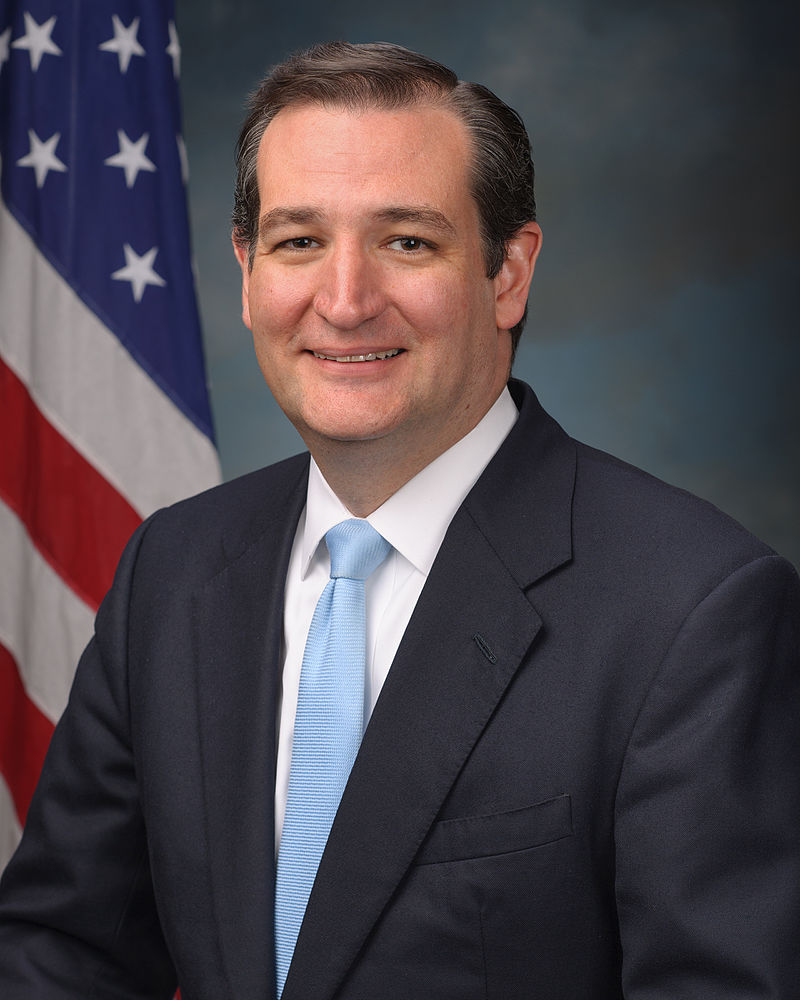
Ted Cruz – not the Zodiac Killer, but almost in as much trouble.
(Image Source:  By Frank Fey (U.S. Senate Photographic Studio) – Office of Senator Ted Cruz, Public Domain, https://commons.wikimedia.org/w/index.php?curid=25195114)

Immediately, two camps formed:  the majority pro-Trump camp, and the dwindling minority of Never Trumpers.  Within the former there are, broadly, two groups:  die-hard Trump fans, who have supported the candidate since last summer; and more tepid supporters who have given their support to Trump because they support their party’s nominee, they won’t support Hillary Clinton, they support elements of Trumpism, or some combination of the three.

The latter camp–I suspect–will continue to lose momentum now that the nomination process is complete.  Some of those voters will reluctantly vote for Trump for fear that a Clinton presidency will irrevocably shift the Supreme Court toward constitutional adaptavism and judicial activism.  Some will vote third-party, probably for Libertarian candidate Gary Johnson, or not vote at all.  A very small minority will vote for Clinton.

The kerfuffle highlights well the tensions inherent in party politics:  when does loyalty to party overcome adherence to principles, and vice-versa?

How these two groups have interpreted Cruz’s speech is predictable.  For the pro-Trump/party unity crowd, they see Cruz’s non-endorsement as a traitorous, duplicitous swipe at the nominee and his supporters, someone who went back on his word to endorse the winner of the primary process.

For the anti-Trump side, Cruz is a hero who stands on principle, even in the face of overwhelming pressure from his party to support explicitly the GOP nominee.  They argue that his pledge to support the candidate became null and void when the Trump campaign attacked Cruz’s wife, Heidi, and insinuated that his father was involved in the Kennedy assassination.

The kerfuffle highlights well the tensions inherent in party politics:  when does loyalty to party overcome adherence to principles, and vice-versa?  To what extent should a voter temper his principles for the sake of political advantage, expediency, or compromise?

These are difficult questions, and they did not start with the 2016 election cycle.  Movement conservatives were frustrated, for example, with the 2008 and 2012 GOP nominees.  They perceived Arizona Senator John McCain and Massachusetts Senator Mitt Romney, respectively, as being inconsistently conservative.  Some conservatives refused to vote for those candidates; many did.  Some voted for them enthusiastically, reasoning that their flaws were better than accepting the progressivism of President Barack Obama, or changing their thinking to align with the candidates.  Others did so more reluctantly.

***

(Full disclosure–and a disclaimer:  I voted for Senator Cruz in the 2016 South Carolina GOP primary.  The analysis to follow does not represent an endorsement or criticism of Senator Cruz’s speech or positions, but rather is an attempt–as fully as possible–at an objective analysis of the reasons for his position, and the consequences of it.  Angry advocates of both sides take note.)

So, which is it?  Is Ted Cruz a hero of the conservative movement, standing on principle at the expense of party unity?  Or is he an opportunistic traitor to the Republican Party?

It’s a tricky question, and both sides have merit.  The pro-Trump majority is broadly correct that, having committed to endorsing the ultimate nominee, Cruz should hold up that endorsement, as many other Republicans have done, if reluctantly.  Take, for example, Speaker of the House Paul Ryan, who has endorsed Trump, but also been quick to criticize the nominee when his statement’s violated Ryan’s principles.

“…while Cruz didn’t outright endorse Trump, he didn’t not endorse him, either, and in no way maimed Trump.  If anything, he mostly hurt himself.”

On the other hand, Cruz in no way denigrated Donald Trump, or even suggested that voters should not vote for him.  Given in any other context, his speech would have received uproarious applause and plaudits from conservatives.  It did not explicitly fulfill his pledge to support the nominee, but it did not seek to criticize or harm the nominee overtly.

Lost in this debate–and in media coverage of the Cruz incident–was one of the best moments of party unity and statesmanship, which came when former Speaker of the House Newt Gingrich started his speech by saying, essentially, that Senator Cruz had encouraged voters to vote their conscience for the candidate most likely to uphold the Constitution.  As Gingrich put it, the only viable candidate for president who would plausibly do so is Trump.

Some may object that Newt’s entreaty was a neat verbal trick, or point out the possibility of voting third-party (though Gary Johnson isn’t viable), but it demonstrated his ability to think on his feet and his skills at diplomacy.  He was able to restore some sense of decorum and unity to the proceedings.

In short, while Cruz didn’t outright endorse Trump, he didn’t not endorse him, either, and in no way maimed Trump.  If anything, he mostly hurt himself.

***
That gets to another question, one that I think is equally interesting:  what, if anything, did Cruz hope to gain from this speech?  Some will say it was free of any political motivation, but that seems unlikely.  Call me a cynic, but I think Cruz has his eye on the future.
I suspect–and, naturally, I could be very wrong–that Cruz is setting himself to win over the support of conservatives who either won’t vote for Trump, or will vote for him with deep misgivings.  He’s also looking for those voters who are becoming more enthusiastic about Trump, but have lingering feelings that they’ve had to talk themselves into liking the candidate a bit too much.  If anything goes majorly wrong in a Trump presidency, these voters may turn to Cruz in four or eight years.
Whether Hillary Clinton or Donald Trump wins in November, Cruz will cast himself as the principled conservative who took a stand when the overwhelming force of his party’s opinion pressured him to do otherwise.  In the event of a Clinton victory, Cruz will attempt to win the GOP nomination in 2020.  In the event of a Trump victory, Cruz is betting on Trump making enough mistakes that enthusiasm for him sours, and in their hour of need, Republicans will say, “this was the man with the wisdom to resist.”  That’s a much tougher path, as it is extremely difficult to challenge successfully an incumbent president for his party’s nomination.
In both cases, it’s assuming an awful lot, and if the reaction at the Quicken Loans Arena Wednesday night is any indication, Cruz miscalculated badly.  But politics is a fickle mistress, and the political scene could look very different in four years.
***
Will Cruz’s speech galvanize the dwindling Never Trump forces?  Or will he spur more conservatives to support the party as a rallying cry against him?  Will he be blamed for splitting the party if Clinton wins?  Or will his gambit pay off, with voters of some distant election year seeing in him a man of principle?
These are interesting questions; ultimately, they are for the voters to decide.

TBT: The European Union is NOT the United States

With Brexit back in the news—and Theresa May’s recent no-confidence test—it seemed like an opportune time to revisit this old chestnut from the 2016 era of the TPP blog.

Brexit should have been easy—the people voted, Europe can’t plausibly force Britain to stay in, so Britain’s out!  Great Britain owes the European Union nothing.  As I argued in 2016, Europe needs Britain.  Some kind of trade agreement could have been hammered out, as well as some basic understanding about moving between Great Britain and the EU.

I realize these issues are more complicated than I’m making them out to be, but, ultimately, can’t Britain just rip off the Band-Aid and be done?  It seems like that would be imminently doable.  Of course, that’s not what the globalist masters of Britain’s cosmopolitan elite want.

Perhaps Britons will soon get their true, hard-fought, “hard” Brexit.  I still think they struck a powerful blow against supranational tyranny, and have inspired similar movements in Europe.  The world feels much different today, in the waning hours of 2018, than it did in that hot, sticky summer of 2016.

Post-Brexit (yes, yes, I know I promised on Wednesday that I’d be moving away from Brexit posts, and you’ll soon find I wasn’t lying… completely), I’ve heard several arguments that boil down to “the European Union is good because unity will make Europe stronger.  Just look at the United States!  It was a mess under the Articles of Confederation, but came together to become a world power under the Constitution.”

The comparison is tempting and not without merit.  Certainly, the United States benefited greatly when the sovereign States ceded some of their power–such as that over the coinage and printing of money and defense–to the national government.  Putting the power to regulate interstate commerce eliminated the practice of States placing different tariff levels on British goods, for example, and aided in the creation of of a common national market.  The formation of the Supreme Court, and the subsequent creation of the federal judiciary under the Federal Judiciary Act of 1789, allowed States to adjudicate disputes more fairly.  Why couldn’t Europe achieve the same “more perfect union” with its goal of “ever closer union”?

“American nationalism derives primarily from a shared set of ideas.”

Unfortunately for Europhiles, the comparison breaks down quickly upon closer inspection.  There are three key areas of difference between the United States and the vision of a “United States of Europe”:  common language and culture; a common legal tradition grounded in the rule of law; and a legacy of representative, democratic-republicanism.  The young United States possessed these three qualities; modern Europe lacks them.

The first point–common language and culture–will be a contentious one.  There are myriad, if predictable, objections:  Americans came from many sources, not just England;  colonials expanded into territories that either belonged to American Indians, or to European competitors (notably the Dutch and the Swedes, but also the Spanish and French); settlers to different parts of British North America came from different cultural and religious groups in the British Isles; and so on.  Indeed, German almost became the official language of a young United States.

I discussed the ethnic and religious diversity of colonial and early republican America at some length in my essay “Created By Philosophy,” and previously argued that American nationalism derives primarily from a shared set of ideas (in “American Values, American Nationalism“).  However, despite this vivid and ubiquitous diversity, English culture and values ultimately became the overwhelming norm in British North America, and morphed into a distinctly American identity in the 18th century (though one that was, until independence, decidedly English).  English may not be the constitutionally official language of the United States, but it is the lingua franca of the nation (and the world), and has been so for centuries.  Every wave of immigrants (until relatively recently) has understood that mastery of English is a prerequisite to long-term success in and assimilation to American culture.

English Protestantism–infused with Scottish Calvinism and German piety–was a unifying force in the colonies.  When the First Great Awakening hit in the late 18th century, it cemented America’s culture, even as it spawned multiple new denominations.  The ultimate denominator, however, was a broadly Protestant Christian worldview (one that gradually and unevenly came to tolerate, and then to accept, Catholics, Jews, and believers and non-believers of all stripes).

“English Protestantism… was a unifying force in the colonies.”

The story of America, ideally, is that of unity within a culture that values diversity of viewpoints, but insists upon an acceptance of a basic, common, Judeo-Christian morality; thus, “E Pluribus Unum.”  That morality, in turn, informs the legal system, one descended from centuries of English common law.  Respect for the rule of law–the notion that no man, even the king, is above the law–guided the English people toward increasing freedom.

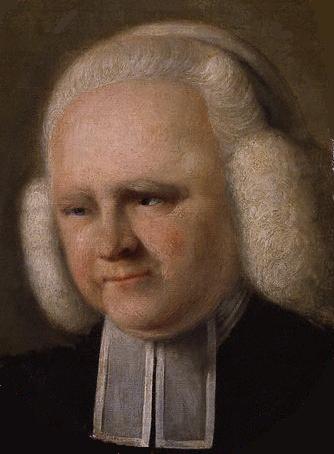
Evangelist George Whitefield knew how to preach to the masses of British North America, and he had the hair to prove it.

So, too, did it lead Americans to their independence.  The American Revolution–and the various conflicts between colonial assemblies and royal governors–of the 18th century in many ways echoed the struggles between Parliament and the Stuart monarchs in 17th-century England.  Americans did not revolt because they rejected bad tea or because they resented taxation–they revolted because they weren’t represented.  Americans did not have a say in the taxes that were (not unfairly) levied on the colonies to help pay for the French and Indian War (the similarities to the Leave campaign should be obvious).  Rule of law was circumvented, and Americans would not abide such a trampling of their rights

Thus, we come to the English–and then American–commitment to representative rule.  The United States really took the lead here, though Great Britain began expanding the franchise and reforming parliamentary representation in the 19th century as white manhood suffrage became the norm in Jacksonian America.  (Here’s a fun aside:  there used to exist parliamentary seats that represented places with no people in them.)  Regardless, the notion that the people should be represented in their government–and should be able to hold it accountable with fair, free, and frequent elections–is an important part of America’s constitutionally-limited, representative, federal republic.

Europe as an entity lacks all of these qualities.  Yes, certain members states have some of these qualities to varying degrees, but the European Union as a whole is sorely lacking in these areas.

Culture and Language:  The United States had the unique opportunity to create a nation afresh.  Europe has had no such luxury, and seems to be inexorably divided into different languages and cultures.  This division is not necessarily bad, but it makes unity much more difficult.  It explains the natural struggle against “ever closer union,” a struggle that is often visceral because people sense there is something artificial and disingenuous about the Europhile vision of a united Europe.  There are, after all, still traditionalists living (and voting) throughout Europe.

 “[S]ecularism is the new, unifying religion of Europe.”

The long, oft-ancient histories of these nations makes it even more difficult for them to share a common worldview.  Even secular, progressive Europe still experiences the lingering cultural effects of centuries of faith.  France might have thrown out God with the French Revolution, but the “First Daughter of the Church” is still suffused, albeit in a subtle, weakened way, with centuries of faith.  Such a faith culture, even hollowed out, will naturally, if imperceptibly, struggle to  reconcile itself with that of other, contradictory traditions.

I suspect this explains why the European Union seems hell-bent on advancing as many socially progressive causes as possible:  secularism is the new, unifying religion of Europe.  But there will always be push-back against this dehumanizing, nihilistic vision of man’s place in the universe.

Language, too, transmits the ideas and values of a people.  I am no linguist, but–unlike French theorists like Jacques Derrida–I believe that words have power and transmit meaning.  Such meaning is deep, part of the warp and woof of life.  Why else would educated societies devote so much time to learning and analyzing language and literature?  There’s no need to read Shakespeare if you just want to a basically literate workforce.  No, there must be some power in language.  Linguistic diversity, therefore, is a beautiful thing, but it also means that different cultural values are transmitted differently throughout Europe.  No one associates Russian, for example, with greater freedom and sober living.

But I digress.

Rule of Law:  Of course different nations in Europe have rule of law (except Belarus).  The European Union, however, does not.  Yes, it might have European law, but this law is promulgated by an unelected committee of elites, figures who don’t identify strongly with their nations of origin, but rather with a vague, secular-progressive idea of Europe, one that barely tolerates dissent or input from the people.  Furthermore, how does one reconcile, say, French civil law with English common law?  The deep divisions of history are huge hurdles to overcome.

Representative Government:  As I’ve stated many times, the European Union is not representative.  That’s why the Brexit vote was so important, and why it has drawn so many comparisons to the American Revolution:  the normal people of Britain rose up against an unelected, unaccountable elite and boldly proclaimed their right to self-determination.  Brits seized back the ability to hold their elected leaders accountable.

The elite, Europhile vision of a United States of Europe is one of non-representative, coerced redistribution.  Give the proles bread and circuses, and they will submit on bended knee to the edicts of Brussels.  Remember, the “Remain” side of the Brexit debate was primarily premised on maintaining access to EU goodies, not about the people’s ability to choose such a course.

Nothing could be further from the vision of America’s Founders and Framers.  They possessed a healthy skepticism about unbridled democracy, but recognized that the people were the source of government’s authority; that the people govern themselves most effectively; and that the people should be able to hold their leaders accountable.  Yes, liberty comes at a price–many prices, in fact.  One of those is the ever-present risk that the people will make mistakes.

Inevitably, they will.  But a common, tolerant culture; a shared respect for the rule of law; and an understanding of the rights and responsibilities of republican government will guide voters to wisdom more often than folly.

Self-government does not always fit neatly into the schemes of elite technocrats and busy-body regulators.  But it ultimately makes for a happier, freer, and more prosperous society.

#TBT: It’s a Thanksgiving Miracle

It’s Thanksgiving Day 2018, and I have much to thank God for this year:  a new home, a good job, eight (and counting) private music students, President Trump, and a mostly-functioning left wrist.  I’ve also lost about fifty-one (51) pounds since early June.  Sure, the midterms were a bit of a stalemate, but the GOP kept the Senate.

In that spirit, below is 2017’s “It’s a Thanksgiving Miracle,” a post about surviving a pretty nasty (and stupid) fall from an extension ladder onto a concrete pad.  I wrote that post just a few days after the fall, and expressed my thanks to God for sparing me worse injuries.  The wrist is mostly healed now (I can play bass, guitar, and piano again, though the wrist gets agitated after playing bass or guitar after about thirty minutes), although it will probably never be back to 100%.  There’s still a gnarly scar on my left leg, though the leg itself is fine (the scar, unfortunately, doesn’t look cool or dangerous; it’s just kind of a scary gash).

We have much to be thankful for this year.  Enjoy some time today with your families (or the good folks at Waffle House or Golden Corral).

God bless.

–TPP

This past Saturday, I fell from a ladder while hanging Christmas lights…. I shattered my left wrist—it’s called a distal radius fracture—and gashed my left leg. My head was also hurt, but there was no damage to my brain.

The fall was about 10-12 feet onto concrete. It could have been much, much worse; I am very thankful it wasn’t.

The doctor at the ER and the nurse practitioner both told me I would almost certainly need surgery due to the nature of my fracture. I saw the orthopedist Tuesday, and he was able to set the fracture to an “acceptable” state.

America’s Favorite Food


Setting the fracture without surgery was a major answer to prayer. I go back on 5 December for a follow-up; if the setting takes, I’ll get a flexi-cast. If not, I’ll have to have surgery.

That’s all to say that my posting will be [limited] for a time, as typing is rather tedious (I’m “typing” this post on my cell phone–the predictive text actually makes it faster). I’ll continue to do my best to deliver quality content and thoughtful analysis, just in shorter and less frequent chunks.

I am very thankful to our Creator, the Lord Jesus Christ, for extending His Hand of protection and healing; He has already worked miracles during my recovery through the prayers of many friends and family (not to mention the capable hands of my excellent orthopedic surgeon). I’m grateful to be alive!

God Bless, and Happy Thanksgiving!

–TPP

TBT: Kid Rock – The People’s Senator

Michigan held its primaries Tuesday, and Trump-backed candidate John James won the Republican Party’s nomination for US Senate.  In that spirit—and in the spirit of how often pundits like myself—and especially myself—get it wrong, today’s TBT TPP looks back to my piece from July 2017 about rap-rocker Kid Rock‘s short-lived—and insincere—candidacy for Senate.

When Rock announced, I believed he was completely serious—and the prospect excited me.  Like a number of other conservative commentators, I got caught up in the hype, not to mention the sheer spectacle, of a potential Kid Rock Senate run.  I went so far to order a “Kid Rock for US Senate” bumper sticker that still graces my van’s liftgate (that set me back about $12 after the outrageous shipping costs).

There’s a cautionary tale here, and it’s an important counterpoint to yesterday’s post’s plea for conservatives to support some of our less orthodox warriors, like Milo Yiannopoulos.  There is a tendency on the more populist-leaning Right to fall for the charms of the “conservative celebrity” du jour—Ben Carson back in 2014-15, Sarah Palin in 2008, Chris Christie during his first gubernatorial run, Milo, etc.  Indeed, we elected Donald Trump—more of an anti-Leftist than a Buckleyite conservative—President of the United States (woo-hoo!).

The point is, we shouldn’t always begin thrusting political ambitions upon everyone roughly to the right of the Clintons who enjoy pop culture success and some name recognition.  We are, understandably, starved for celebrities on the Right—that’s why Kanye West’s endorsement of Trump and their shared “dragon energy” excited so many of us—but for most local, State, and even federal elections, voters tend to want someone who will actually represent their interests, not just a cool, hilarious figure.

Of course, I still think Kid Rock should have run, and I feel a bit betrayed (and more than a little foolish) that he was having a laugh at us the whole time.  He certainly made his potential candidacy sound quite serious, and I still believe that, had he run, he would have had an excellent chance of unseating the Democratic incumbent, Senator Debbie Stabenow.

Political wags and armchair pundits–like yours truly–have been abuzz about the possibility of a Kid Rock Senate run in 2018.  He’d be running against Democratic incumbent Senator Debbie Stabenow–if he can win the Republican primaries–in a Trump-style insurgency campaign.

Immediate speculation focused on Kid Rock’s website, www.kidrockforsenate.com, and whether or not the Detroit rocker was serious, or just boosting publicity for his music.  Kid Rock (real name Robert Ritchie) is offering campaign apparel on the website, including bumper stickers.

I purchased a bumper sticker ($5… plus $6.99 shipping) and it billed to Warner Brothers, not a “Kid Rock for Senate” campaign committee.  Nevertheless, Kid Rock appears to be serious:  he’s made an announcement at www.kidrock.com (link).

The announcement is straight out of Trump’s playbook:  he goes after “fake news,” promises to be “a voice for tax paying, hardworking AMERICANS,” and invokes “We the People.”

Kid Rock is a populist at heart, and we’re living in a populist moment.

There’s not much to add to what’s already been said, but I’ll go out on a limb and say that Kid Rock should definitely run–and I think he can win.  As Michigan native Jordan Gehrke writes at The Federalist:

“The Michigan Senate race will be the most-watched campaign in America in 2018 if he runs. It’s got everything: celebrity, a battleground Trump won in 2016 and must win again to get re-elected, a conventional, disciplined, well-funded Democrat, a re-run of 2016, and a trailer for 2020, all rolled into one.”  (Link)

Naturally, the Establishment is poo-pooing Kid Rock’s potential run as the “dumbing down” of America.  Sure, he’s crude, he’s crass, he’s kind of trashy–but he really seems to care about the people of Michigan.  And they love him.  While it’s unlikely that any Republican will ever win Detroit in its current state, none has the opportunity to suck up votes in the city better than hometown hero Kid Rock.  With the support from rural Michigan–bona fide Trump Country–Kid Rock could best a powerful, well-funded Democratic incumbent.  A new poll from the Trafalgar Group has Kid Rock winning the Republican primary against potential opponents handily, and within the margin of error against Stabenow

Kid Rock is a populist at heart, and we’re living in a populist moment.  His care for the common man shows in his music career; for years, he’s been giving big concerts (with some big-name opening acts, like Foreigner) for just $20 a ticket.  In the face of ever-rising concert ticket prices, that concern for his fans’ wallets spoke volumes.  That’s the same kind of connection with the “little guy” that could propel him into office on a platform of government transparency and reform.

Regardless, one thing is for sure–if Kid Rock runs, 2018 will be the most exciting midterm election season in years.

TBT: Economics: A Human Science

The unofficial, unintentional theme of this week’s posts have been about economics in general (other than Tuesday’s SCOTUS piece)—the power of tax cuts, the potential upsides to tariffs, etc.  In that spirit, I thought for week’s post about diving back into a piece that reflects my gradually evolving thinking about economics.

The summer before my sophomore year of college, I read the second edition of Milton Friedman’s Capitalism and Freedom, a work that completely revolutionized how I thought about the world and economics.  Free-market principles became my lodestar, and colored my ideology for a decade.  Indeed, I still adhere to these principles when it comes to economic questions.

However, as I grew older and (hopefully) more experienced, I began to realize that neoliberal economic theory, while elegant, is not always hard-and-fast, and that there are many more wrinkles to economic issues than appear at first glance.  I don’t believe in overcomplicating things—again, cutting taxes tends to stimulate economic growth—but most issues contain a frisson of nuance that is easy to miss.

I’d long held to the idea that free trade is a largely unalloyed good, and that the short-term costs of lost jobs or reduced wages in some industries domestically would be made up for by increased efficiency of production and the rise of new, better industries.  Sure, there’d be some friction in the duration, but people will manage, and we can always throw some funds for reeducation their way.

While I think such disruption is inevitable, I don’t think we should embrace it so blindly that we forget about the people who find themselves out of work, or in a position that they can’t modify their skillsets to find a new job.  I live in the rural South, and there are hundreds of little towns that dried up once the mill the left, the railroad shut down, or the big family farms sold off.  Part of that story is the onward march of Time and economic progress—and the drama of human history.  But part of it is the story of globalist elites selling out Middle America.

This situation is not one merely of tariffs, taxes, and the like, but also of a radical ideology that would see national borders dissolved and massive immigration—even illegal immigration—encouraged.  I am libertarian on many issues, but the pitfall of modern economic libertarianism—and there are many—is that it only conceives of issues in terms of economic efficiency (and, if you get right down to it, it’s inverted Marxism, to the extent that, for Marxists, everything is about economics—or, more properly, materialism).  And, yes, generally greater efficiency means greater quality of life, but economics is not always the clean, elegant science that its proponents claim it to be.

To that end, I argue that economics, properly considered, should be considered part of the humanities, as it deals in a direct, visceral way with the people’s lives.

I don’t know the precise balancing act, or what should be achieved.  I highly recommend reading Patrick J. Buchanan’s The Death of the West for a more complete treatment of how to revive wages for workers while maintaining a high degree of quality and efficiency.  I don’t agree with all of Buchanan’s proposals, which are heavily influenced by Catholic social teachings, but there is an appeal to the idea that, if the government is going to interfere in the economy (and it is, and does), then it should be in favor of workers and families, not at their expense.

Finally, I wrote this essay in the context of the Brexit vote—which I intend to write an eBook on soon—and the arguments I was hearing about the economic catastrophe Brexit would be (that hasn’t been the case yet).  I argued, essentially, that the liberty and national sovereignty are more important than sweet European Union bennies and transfer-of-wealth payments.  The EU is a despicable organization as it currently operates, and as a lover of liberty, I’m thrilled to see nationalist-populist movements rising in major European countries.  I don’t agree with all of these groups or their policies (many of which are socialistic in nature), but the impulse towards greater national sovereignty is, in general, a healthy one in our age of excessive globalization and unelected supranational tyrants.

With that lengthy introduction, I give you 24 June 2016’s “Economics: A Human Science“:

If you’ve read my blog the past couple of weeks, you know that I am strongly in favor of Brexit, or Great Britain voting to “Leave” the European Union.  I’ve laid out my reasons here and here.  As I write this post, results are trickling in on that historic vote, and I am intermittently checking them with great interest–and not a small bit of trepidation.  Right now (about 10:30 PM EST/-5 GMT), “Leave” has a slight edge, but the outcome is too close to call.

Already, though, the British pound and the euro have taken a beating in value, as gold prices soar (this blog is conservative in viewpoint, so I probably should start urging you to buy gold, guns, and freeze-dried food reserves; sourcehttp://www.bloomberg.com/news/articles/2016-06-23/pound-surge-builds-as-polls-show-u-k-to-remain-in-eu-yen-slips).  One of the major bogeymen of the “Remain” side in the referendum was the threat of economic downturn.  As I conceded in both of my previous posts on Brexit, there will no doubt be major economic disruption should Britain vote to “Leave.”  However, a (likely temporary) drop in the value of the pound sterling is a price well paid for restored national sovereignty.

God Save the Queen… and Great Britain from the clutches of Eurozone bureaucrats

As conservatives, we’re accustomed to viewing economics–or, at least, economic growth–as a positive good.  After all, we believe in the power of free markets to satisfy human needs and desires, and to innovate new ideas and products that alleviate human suffering, drudgery, and toil.  Conservative politicians tend to focus on job growth and prudent deregulation–often coupled with tax and spending cuts–as perennial, bread-and-butter issues that directly affect voters’ pocketbooks for the better.

 “…these [fiscal] policies are not about making gobs of cash… but about what those gobs can do to improve lives.”

But economics, like much else, is not a means unto itself.  The reason conservatives like economic growth–besides, well, making money–is that it demonstrably improves people’s lives.  Deregulation, similarly, can work beneficially (if you doubt me, just ask anyone who has ever dealt with the Affordable Care Act and the Department of Health and Human Services).  In essence, these policies are not about making gobs of cash–although that is certainly nice–but about what those gobs can do to improve lives.

Thus, we have a stark contrast between the organic, healthy, occasionally unpredictable economic growth of a free market and the regimented, inequitable, limited economic growth of progressive corporatism.  Our current economic environment, I fear, is far closer to the latter than the former.  Complex, heavy regulations benefit larger firms and discourage the formation of smaller, newer firms by raising the upfront costs of entry.  Perverse incentives raise the costs of healthcare for young, fit Americans, while making it unrealistically cheaper for older, sicker, chubbier patients.  Overly-generous social safety benefits (some of which, like the food stamp program SNAP, the government actively advertises and encourages people to use) discourage able-bodied Americans from pursuing work.

I could go on (and on… and on).  In short, conservatives are used to being correct on principle and on economic outcomes.  Typically, conservative fiscal policies align with, rather than try to manipulate, economic realities, so the outcomes of those policies tend to be both principled and positive.

“As fiscal conservatives… let us never lose sight of the human side of economics.”

In the case of Brexit, however, the quest for restored sovereignty–a stand on an important first principle–will result in some negative economic outcomes.  A major argument of the “Remain” side is that staying in the European Union will preserve Britain’s economic stability and ensure it a place in a European common market.

Such an argument is seductive, but it leads to a gilded cage.  Nobel Prize-winning economist Milton Friedman famously said that economic freedom is a necessary precursor to, though not a guarantor of, political freedom.  With Brexit, the axiom is almost reversed–by reclaiming its political freedom, Britain will then be able to pursue renewed economic freedom.

As fiscal conservatives–or those that support free markets, freer trade, and light regulations–let us never lose sight of the human side of economics.  We too often treat economics as a science.  Instead, it should find a home alongside the humanities.

Our chief aim should be to unleash human potential.  So liberated, its creativity and ingenuity can lift human life to greater heights.

We already have a model:  we’ve been doing it in the United States for over 200 years.

TBT: American Values, American Nationalism

Each Thursday, I’ll be digging through the Portly Politico Archives to bring you classic content from the old Blogger site.  This week’s essay re-launched the blog back in 2016.  Two years later, I still believe that our nation is built on ideas, rather than links of common blood, though I have to come to believe, too, that our borders are crucial, and that the Anglo-Saxon traditions of rule of law are essential to the maintenance of our republic.  While those traditions derived from a particular people—the English—they are inherently universalist in nature, and with the right cultural, religious, and moral framework, can be adopted by any people that will accept them.

That universality does require certain pre-conditions.  As I point out to my students, it took 561 years from the Magna Carta in 1215 to the Declaration of Independence in 1776, and the development of ideals of liberty and rule of law from a feudal arrangement to a universal declaration of individual rights occurred within the framework of English culture.

That’s why, for example, unchecked levels of immigration, both legal and illegal, undermine the delicate social and historical fabric of our nation.  It takes time for people to assimilate to these ideals, and some ethnic and cultural groups do so more quickly than others (for example, Jamaicans and East Indians in Britain were model assimiliationists, while Pakistani Muslims still struggle to assimilate—or even choose actively not to do so—into British culture and society).  But, ultimately, I do believe the ideational notion of American nationalism holds true in general—but we probably shouldn’t keep trying to plant modern democratic-republics in the Middle East (more on that another time).

Without further ado, here is 2016’s “American Values, American Nationalism“:

I’ve been teaching American history and government for six years (and continuously since 2011).  Part of my regular teaching duties includes US Government, a standard survey course that covers the Constitution, federalism, the three branches of the federal government, and other topics of interest.  It’s a simple, semester-long course that, while not terribly novel, is absolutely essential.

Before we even read the Preamble to the Constitution, though, I introduce the students to the idea of America.  This lesson plan is not a unique creation; it comes from the textbook Government By the People by David Magleby and Paul Light, which I used to use for the course (I don’t know Magleby and Light’s political leanings, but the book is a fairly straightforward and useful primer on the mechanics of US government).  I follow the authors’ course by starting with what they call the “Five Core Values” of America, which are as follows:

1.) Individualism

2.) Popular Sovereignty

3.) Equality of Opportunity

4.) Freedom of Religion

5.) Economic Liberty

Why do I start each semester in this fashion?  I’ve found that many Americans—and not just teenagers and young adults—aren’t exactly sure what makes American special.  Sure, many can point to our military dominance and our economic clout, but during a time when both appear to be losing ground to other nations, we can’t solely make our case on those grounds.

Others might point to our superior educational system, our extensive infrastructure, or our superior health.  The United States certainly is blessed with these qualities, but study after study shows that we’re falling behind the rest of the world academically, and everyday experience (especially here in South Carolina) demonstrates that our roads are crumbling.  And don’t get me started on the mess that is the Affordable Care Act.

So if we can’t rest our claims for American greatness on these grounds—or, if we can only hope to do so temporarily—what really does make the United States special?  Is American exceptionalism only truly relatively, as President Obama implied in April 2009 when he proclaimed, “I believe in American exceptionalism, just as I suspect that the Brits believe in British exceptionalism and the Greeks believe in Greek exceptionalism”?

The answer—as you’ve probably guessed—are the very values listed above, the values enshrined in our founding documents, in our political culture, and in our hearts.  The powerful but fragile legacy of liberty handed down from English common law, these values still energize the United States.

What makes the United States unique, too, is that these values form the basis of our sense of nationhood.  No other nation—at least, not prior to the declaration of the United States in 1776—can claim a similar basis.

The term “nation” itself refers to a specific tribal or ethnic affiliation based on common blood, and usually linked to a specific (if often ill-defined) bit of soil.  The nation-states of modern Europe followed this course; for example, French kings over centuries gradually created a “French” national identity, one that slowly subsumed other ethnic and regional identities (Normans, Burgundians, etc.), into a single, (largely Parisian) French culture and nation.

The United States, on the other hand, is not a nation built on ties of blood and soil (although we do owe a huge debt of gratitude to the heritage of Anglo-Saxon political culture for our institutions), but, rather, founded on ideas, ideas that anyone can adopt.

We believe, further, that these ideals are universal, and are not, ultimately, specific to our place and time.  Sure, some countries might lack the institutional stability and political culture to sustain a constitutional republic like ours, but, ultimately, we believe that any people, anywhere in the world, can come to adopt our American values.

The concept of American nationhood, therefore, is flexible and adaptive to many contexts, but is ultimately grounded in firm absolutes.  Often these values butt up against one another, or there is disagreement about their importance.  When, for example, does the will of the individual become so out-sized that it threatens, say, popular sovereignty, or freedom of religion?

The Constitution was designed to adjudicate these disputes fairly and transparently—with a Supreme Court acting in good faith and in accord with the Constitution—to protect individual rights from the tyranny of the majority, and to protect the majority from the tyranny of minority special interest groups.

In this regard, perhaps, American nationalism has faltered.  The consistent undermining of our carefully balanced constitutional order—the centralization of federal power, the aggrandizement of the executive and judiciary, the delegation of legislative powers to the federal bureaucracy, the equivocation of Congress—has served to damage our national identity and our national values, turning the five core values above into distorted perversions of their proper forms.

To wit:

1.) Individualism—the protection of the individual’s rights—has become a grotesque, licentious individualism without any consequences, one that expects the state to pick up the tab for bad decisions, which can no longer be deemed “bad.”  Alternatively, actual constitutional rights are trampled upon in the name of exorcising “hate speech.”

2.) Popular sovereignty—authority flowing upward from the people—has been flipped on its head, becoming, instead, a top-down sovereignty of the enlightened technocrats and un-elected government bureaucrats.

3.) Equality of opportunity—an equality that recognizes that everyone is different but enjoys the same legal and constitutional safeguards to fail and to succeed—morphs into equality of outcome, a radical form of egalitarianism that brought us the worst excesses of the French and the Russian Revolutions, and ultimately breeds authoritarianism and demagoguery.

4.) Freedom of religion—the most important of our constitutional rights, as it rests both at the foundation of our republic and of our very souls, the freedom of conscious itself–now becomes a vague “freedom of worship,” which is really no freedom at all.  Religious observation is to be a strictly private affair, one (impossibly) divorced from our public lives.

5.) Economic liberty—the freedom to spend and earn our money as we please, with a token amount paid in taxes to support the infrastructure we all use and to maintain the military and police that protect our freedoms abroad and domestically–becomes excessive economic regulation, with many potential economic opportunities simply regulated out of existence.  Rather than laws forming in response to new technologies or ideas, regulations are crafted to protect existing firms and well-connected special interests.

With such a distorted view of our national values and our rights—stemming, in many cases, from ignorance of them—many Americans find it difficult to articulate what exactly it means to be an American.  In this light, problems like illegal (and, in some cases, excessive legal) immigration take on a whole new tenor:  how can we expect foreign migrants to adopt our values—to become part of the American nationif we ourselves cannot articulate what American nationhood and values are?

The solution starts with proper education and a realignment of our thought toward the proper definitions and forms of our values.  As Margaret Thatcher said, “Europe was created by history. America was created by philosophy.”  Understanding our national philosophy—our “Five Core American Values”—will allow us to rediscover our exceptional nationhood.