TBT: Southern Conservatism: John Randolph of Roanoke

A lodestar of modern conservatism is that the federal government is too powerful and overreaching, and that power should be devolved back to the States and local governments.  That such devolution rarely occurs, even under Republican presidents, is just further evidence of how entrenched the bureaucratic class is within the Beltway swamp.  It’s easy to see the extension of federal power since the New Deal programs of the 1930s and the government’s control of the economy during the Second World War, followed by Johnson’s Great Society and various big government schemes to solve our problems.

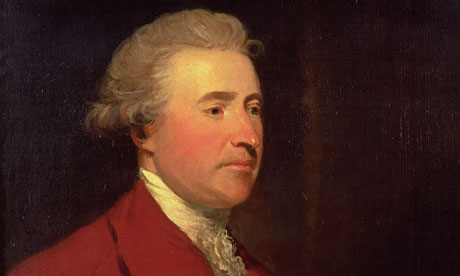
But these concerns about the growth of federal power are not new, and there were already grumblings about them in the earliest years of the Republic.  In yesterday’s History of Conservative Thought session, we analyzed John Randolph of Roanoke‘s “King Numbers” speech, in which the aging but feisty Virginia decried the overreach of federal power—in 1830!

The occasion for Randolph’s speech was the Virginia Constitutional Convention of 1829-1830, in which the State sought to revise its constitution with a number of—as Randolph called them—“innovations,” including age requirements to serve in the Virginia House of Delegates (25) and the State Senate (30).  Another proposed change was the elimination of property qualifications to vote.

Randolph vehemently opposed these reforms on the grounds that the Virginia Constitution in its then-current form was the greatest charter of government ever conceived, and that it had been wholly sufficient in serving as the sole block on the expansion of federal power.  Randolph also argued that the US Constitution, rather than dealing with the external issues of national defense and regulating foreign affairs and commerce, had instead turned its focus inwards, seeking to regulate the States.

It’s fascinating to read now, nearly two hundred years later, Randolph’s antebellum arguments against the aggrandizement of federal power, at a point when the federal government under the Constitution was barely forty-years old.  One of Randolph’s most interesting points was that, regardless of what the Constitution said it was designed to do, the reality was much different.

One of the students asked what Randolph would think if he saw things today, and I said, “He’d probably have a stroke.”  Far from being the last stand against and check on federal authority, Virginia now is the compliant handmaiden to federal expansion, as Northern Virginia is the home of the Swamp People that operate the federal bureaucracy.

It’s unfortunate that we’ve forgotten Randolph today.  Even in his own time, he was considered somewhat of an eccentric.  But eccentrics make life interesting, and this one certainly issued some strong warnings, even at that early date, about the danger of excessive federal power and the erosion of States’ rights.

With that, here is 24 June 2019’s “Southern Conservatism: John Randolph of Roanoke“:

As my History of Conservative Thought course rolls on, I’m learning more about the forgotten byways and overgrown, stately ruins of the various branches of conservatism.  Students this week are reading a couple of documents from John Adams and Alexander Hamilton, the two founders of the Federalist Party, and key to the passage of the Constitution.  Hamilton, the author of the bulk of the pro-ratification Federalist Papers, also created the financial system upon which the United States functions today.

Hamilton and Adams have both enjoyed renewed interest in recent years, Hamilton due to the smash Broadway musical about his life, and Adams from a critically-acclaimed HBO series (one that, sadly, takes some unnecessary artistic license with the past).  In the case of Hamilton, American history students are often enthusiastic to get to him in my AP US History course, and Hamilton mega-fans often know more about the first Secretary of Treasury than I do.

But we’re reading a speech from another important figure from American history, albeit one largely forgotten:  John Randolph of Roanoke.

Randolph of Roanoke, sometimes considered the “American Burke,” was part of the Virginia planter aristocracy and a staunch republican, in the sense that he opposed centralization of power while supporting a strict interpretation of the Constitution and a limited government at every level.  He was one of the so-called “Old Republicans,” a group within the dominant Democratic-Republican Party of the Jeffersonian and Jacksonian era that adhered strictly to the Constitution, and which believed the States possessed a check on the federal government’s power.

He was also a traditionalist, and his powerful “King Numbers” speech at the Virginia Constitutional Convention in 1829-1830 represents a hearty endorsement of conservative principles, prudently applied.

Randolph of Roanoke makes several important points in the speech, but two stick out to me immediately:  his detestation for the tyranny of majority (the “King Numbers” referenced throughout the speech), and his love of Old Virginia.  On the latter point, he was quite eloquent:  not only did he argue that Virginia was a bulwark against an overreaching federal government (remember, he’s making this point in 1830), he also notes that its constitution was entirely sufficient to the task.

He argues early in the speech that there is no need to change Virginia’s constitution, because no one had brought any provable objections against it!  It’s the essence of a conservative argument.  Further, Randolph of Roanoke decried the mania for what he called “innovation,” a kind of reform-for-reform’s-sake, at the expense of the tried-and-true.

As to the tyranny of the majority, Randolph of Roanoke points in “King Numbers” to the absurdity of giving some men or factions greater power simply because they can win by one or two votes.  He uses examples—unfamiliar to many modern readers—of the Tariff of 1816 (one of my tariffs the Southern planters and yeoman farmers alike found odious and burdensome) and the Missouri Compromise of 1820, the latter passing by a mere two votes.

We praise “democracy” now, but the Founders of our nation feared unbridled democracy as a form of mob rule, which would inevitably yield tyranny at the hands of a charismatic demagogue.  Randolph of Roanoke makes the rather compelling point that even in representative government, mere majoritarianism can be quite destructive, as the side with the majority actually benefits if it can seize that majority by a narrow margin:  that’s just more of their opponents who lose!

Randolph of Roanoke, like many men of his time and station, was an unapologetic defender of slavery, which likely accounts for part of his fall from our curricula (although he emancipated all of his slaves upon his death).  His anti-nationalism (in the sense that he was opposed to a powerful federal government) is also at odds with the prevailing trend in American history textbooks to applaud whenever the national government aggrandized itself at the expense of the States.

Regardless, we would do well to read him again.  He was, even for his time, a bit of an oddball, but his quick wit and vast depth of knowledge, as well as his love his State (he believed Virginia was the great inheritor of Greco-Roman and British Common Law) were inspiring to his fellow Virginians.  They could be inspiring for us, too, and all lovers of liberty.

TBT: The Price of Freedom: A Good Attorney

One of the harsh realities for conservatives these days is that the only true guarantee of your rights is deep pockets and a good attorney.  With the direction things are heading, that’s even truer today than when I wrote this post one year ago.

Indeed, I think the Masterpiece Cakeshop guy got sued again, but at this point, I’m not even sure.  There are endless combinations of protected and preferred identities at this point, so I’m sure refusing to bake a cake for a Wookie Life Day banquet will result in fines from the Colorado Civil Rights Commission.

Read More »

TBT: History of Conservative Thought Update: Edmund Burke

The Summer 2020 session of History of Conservative Thought is really going well.  Yesterday, the three young man each gave brief presentations on three excerpts from Edmund Burke’s writing, summarizing Burke’s main points and ideas.

It was made for a lively, far-ranging discussion.  One of the students is taking another summer course, Terror and Terrorism, a popular summertime offering from one of my colleagues.  I had the pleasure to fill-in last summer for the French Revolution portion of that class while my colleague was away at an AP Summer Institute.  Apparently, that course just covered the French Revolution again, so it dovetailed nicely with our discussion of Burke’s Reflections on that bloody affair.  We had a good time contrasting Burkean “ordered liberty” and Rousseau’s “general will.”

As such, I thought this edition of TBT could look back to Summer 2019’s HoCT update, “History of Conservative Thought Update: Edmund Burke“:

A bit of a delayed post today, due to a busier-than-usual Monday, and the attendant exhaustion that came with it. The third meeting of my new History of Conservative Thought class just wrapped up, and while I should be painting right now, I wanted to give a quite update.

Last week, we began diving into the grandfather of modern conservatism, Edmund Burke. Burke prophetically saw the outcome of the French Revolution before it turned sour, writing his legendary Reflections on the Revolution in France in 1789 as the upheaval began. Burke argued that the French Revolution ended the greatness of European civilization, a Europe that governed, in various ways, its respective realms with a light hand, and a sense of “moral imagination.”

To quote Burke reflecting on the Queen of France:

“I thought ten thousand swords must have leaped from their scabbards to avenge even a look that threatened her with insult. But the age of chivalry is gone. That of sophisters, economists, and calculators, has succeeded; and the glory of Europe is extinguished forever. Never, never more, shall we behold that generous loyalty to rank and sex, that proud submission, that dignified obedience, that subordination of the heart, which kept alive, even in servitude itself, the spirit of an exalted freedom. The unbought grace of life, the cheap defence of nations, the nurse of manly sentiment and heroick enterprise is gone! It is gone, that sensibility of principle, that chastity of honour, which felt a stain like a wound, which inspired courage whilst it mitigated ferocity, which ennobled whatever it touched, and under which vice itself lost half its evil, by losing all its grossness.”

What a powerful excerpt! The “sophisters, economists, and calculators,” indeed, reign in the West. What Burke was driving at here was that the rationalistic, abstract bureaucrats who would abandon tradition in their quest for a perfect society would sacrifice everything that made their country great, and life worth living.

Burke was also arguing that there is more to obedience to a government or king than the mere threat of power. People are invested in their country and society—and willing to submit to authority—because of organic culture from which it grows. Uprooting the great tree of tradition in favor of abstract foundations merely destroys the tree, and plants its seedlings in shallow ruts of stone. What grows will be anemic and pitiful by comparison.

Volumes could and have been written about Burke, but I’ll leave it here for now. Next week we’re getting into the development of Northern and Southern conservatism, which should make for some pre-Independence Day fun.

TBT: Conservative Inheritance

With the Summer 2020 session of History of Conservative Thought in full swing, I’ve been reviewing the Summer 2019 archives pertaining to the course.  Among the various class summaries and overviews of great conservative thinkers, I came across this short essay, “Conservative Inheritance.”

I’d largely forgotten about it, which is a shame—I think it might be one of my better analytical pieces (although you, dear reader, will be the ultimate judge).  I go back to the dominance of “Rooseveltian liberalism” following the Second World War, and how conservatism morphed into a political program that largely accepted the premises of that liberalism, but acted as something like the more cautious junior partner—“a tapping of the brakes, not a full stop or reversal” of liberalism.

The debate over what exactly is conservatism has grown thornier and more immediate over the last year.  There is a sense among the intellectual Right that the prevailing orthodoxy of Buckleyism is inadequate and outmoded, that it can’t really address the problems of our age and culture.  Indeed, this essay explores the idea that conservatives essentially abandoned the culture in favor of political victories.  The sad commentary on that decision, which made sense in the 1950s and 1960s, is that our political victories are hollow.  Without the culture, political victory merely forestalls progressive dominance for a season—the brakes are tapped, but the machine doesn’t stop.

These are sobering but necessary ideas to consider.  I spoke with a friend on the phone earlier in the week; he claimed that traditional conservatives and Christians have lost the culture wars.  I prefer to think that we’re losing the culture wars, but that there is still hope of a rear-guard action or some kind of renewal.  Either way, it’s an uphill battle, a Pickett’s Charge.

With that, here is June 2019’s “”Conservative Inheritance“:

Read More »

TBT: What is Conservatism?

I’m still struggling with fever and migraines, although both seem to be improving and growing milder.  Fortunately, I received word today that I do not have The Virus.  So now I have to get to the bottom of whatever malady plagues me.

Yesterday I launched the Summer 2020 session of History of Conservative Thought online; you can read about our discussion here.  As such, it seemed a good time to look back 2019’s What is Conservatism?,” the first post from the Summer 2019 run.

The post here details Russell Kirk’s “Introduction” to The Portable Conservative Reader, which has also been repackaged as “Ten Conservative Principles.”  It’s an important essay that details the general principles and attitudes of the conservative as he attempts to make sense of the world.

It’s influential, too, though Kirk’s influence has suffered somewhat versus Buckley-style fusionism.  The Z Man dedicated an entire podcast to the essay a few weeks ago.

It’s well worth a read.  But for now, here’s my summary of it in “What is Conservatism?“:

Today I’m launching a summer class at my little private school here in South Carolina.  The course is called History of Conservative Thought, and it’s a course idea I’ve been kicking around for awhile.  Since the enrollment is very small, this first run is going to be more of an “independent study,” with a focus on analyzing and writing about some key essays and books in the conservative tradition.  I’ll also be posting some updates about the course to this blog, and I’ll write some explanatory posts about the material for the students and regular readers to consult.  This post will be one of those.

Course Readings:

Most of the readings will be digitized or available online at various conservative websites, but if you’re interested in following along with the course, I recommend picking up two books:

1.) Richard Weaver‘s Ideas Have Consequences ($6.29):  this will be our “capstone” reading for the summer.
2.) The Portable Conservative Reader (edited by Russell Kirk):  we’ll do some readings from this collection, including Kirk’s “Introduction” for the first week.

Course Scope:

I’ll be building out the course week-to-week, but the ultimate goal is to end with 2016 election, when we’ll talk about the break down of the postwar neoliberal consensus, the rise of populism and nationalism in the West, and the emergence of the Dissident Right.

After the introductory week, we’ll dive into Edmund Burke, then consider the antebellum debates about States’ rights.  I haven’t quite worked out the murky bit during the Gilded Age, but we’ll look at the rise of Progressivism in the early twentieth century, then through the conservative decline during the Great Depression and the Second World War.

After that, it’s on to Buckley conservatism and fusionism, as well as the challenges of the Cold War and international communism.  Paleoconservatives like Pat Buchanan and (if I’m feeling edgy) Sam Francis will get shout-outs as well.

Week 1:  What is Conservatism?

That’s the basic outline.  For the first day, we’re going to look at the question in the title:  what is conservatism?  What makes one a conservative?  Feel free to comment below on your thoughts.

After we see what students think conservatism is, we’ll begin reading through Russell Kirk’s “Introduction” in The Portable Conservative Reader.  It’s an excellent overview of the question posed.  The first section of the lengthy “Introduction” is entitled “Succinct Description,” and it starts with the question, “What is conservatism?”

Not being one to reinvent what others have done better—surely that is part of being a conservative (see Principle  below)—I wanted to unpack his six major points.  Kirk argues that though conservatism “is no ideology,” and that it varies depending on time and country, it

“may be apprehended reasonably well by attention to what leading writers and politicians, generally called conservative, have said and done…. to put the matter another way, [conservatism] amounts to the consensus of the leading conservative thinkers and actors over the past two centuries.”

Kirk condenses that grand tradition into six “first principles,” derived largely from British and American conservatives.  To wit:

1.) Belief in a Transcendent Moral Order – conservatives believe there is higher authority or metaphysical order that human societies should build upon.  As Kirk puts it, a “divine tactic, however dimly descried, is at work in human society.”  There is a need for “enduring moral authority.”  The Declaration of Independence, for example, draws on the concept of “natural law” to complain about abuses of God-given rights.  The implication is that a good and just society will respect God’s natural law.

2.) The Principle of Social Continuity – Kirk puts this best:  “Order and justice and freedom,” conservatives believe, “are the artificial products of a long and painful social experience, the results of centuries of trial and reflection and sacrifice.”

As such, the way things are is the product of long, hard-won experience, and changes to that social order should be gradual, lest those changes unleash even greater evils than the ones currently present.  Conservatives abhor sudden upheaval; to quote Kirk again:  “Revolution slices through the arteries of a culture, a cure that kills.”

3.) The Principle of Prescription, or the “wisdom of our ancestors” – building on the previous principle, “prescription” is the belief that there is established wisdom from our ancestors, and that the antiquity of an idea is a merit, not a detraction.  Old, tried-and-trued methods are, generally, preferable to newfangled conceptions of how humans should organize themselves.

As Kirk writes, “Conservatives argue that we are unlikely, we moderns, to make any brave new discoveries in morals or politics or taste.  It is perilous to weigh every passing issue on the basis of private judgment and private rationality.”  In other words, there is great wisdom in traditions, and as individuals it is difficult, in our limited, personal experience, to comprehend the whole.

It’s like G. K. Chesterton’s fence:  you don’t pull down the fence until you know why it is built.  What might seem to be an inconvenience, a structure no longer useful, may very well serve some vital purpose that you only dimly understand, if at all.

4.) The Principle of Prudence – in line with Principles and , the conservative believes that politicians or leaders should pursue any reforms only after great consideration and debate, and not out of “temporary advantage or popularity.”  Long-term consequences should be carefully considered, and rash, dramatic changes are likely to be more disruptive than the present ill facing a society.  As Kirk writes, “The march of providence is slow; it is the devil who always hurries.”

5.) The Principle of Variety – the “variety” that Kirk discusses here is not the uncritical mantra of “Diversity is Our Strength.”  Instead, it is the conservative’s love for intricate variety within his own social institutions and order.

Rather than accepting the “narrowing uniformity and deadening egalitarianism of radical systems,” conservatives recognize that some stratification in a society is inevitable.  Material and social inequality will always exist—indeed, they must exist—but in a healthy, ordered society, each of these divisions serves its purpose and has meaning.  The simple craftsman in his workshop, while materially less well-off than the local merchant, enjoys a fulfilling place in an ordered society, one that is honorable and satisfying.  Both the merchant and the craftsmen enjoy the fruits of their labor, as private property is essential to maintaining this order:  “without private property, liberty is reduced and culture is impoverished,” per Kirk.

This principle is one of the more difficult to wrap our minds around, as the “variety” here is quite different than what elites in our present age desire.  Essentially, it is a rejection of total social and material equality, and a celebration of the nuances—the nooks and crannies—of a healthy social order.  “Society,” Kirk argues, “longs for honest and able leadership; and if natural and institutional differences among people are destroyed, presently some tyrant or host of squalid oligarchs will create new forms of inequality.”

Put another way:  make everyone equal, and you’ll soon end up with another, likely worse, form of inequality.

6.) The Principle of the Imperfectibility of Human Nature – unlike progressives, who believe that “human nature” is mutable—if we just get the formula right, everyone will be perfect!—conservatives (wisely) reject this notion.  Hard experience demonstrates that human nature “suffers irremediably from certain faults…. Man being imperfect, no perfect social order ever can be created.”  An Utopian society, assuming such a thing were possible, would quickly devolve into rebellion, or “expire of boredom,” because human nature is inherently restless and rebellious.

Instead, conservatives believe that the best one can hope for is “a tolerably ordered, just and free society, in which some evils, maladjustments, and suffering continue to lurk.”  Prudent trimming of the organic oak tree of society can make gradual improvements, but the tree will never achieve Platonic perfection (to quote Guns ‘n’ Roses:  “Nothing lasts forever, even cold November rain”).

Conclusion

Kirk stresses in the rest of the introduction that not all conservatives accept or conform to all of the six principles again; indeed, most conservatives aren’t even aware of these principles, or may only dimly perceive them.

That’s instructive:  a large part of what makes one conservative is lived experience.  “Conservatism” also varies depending on time and place:  the social order that, say, Hungary seeks to preserve is, of necessity, different than that of the United States.

Conservatism, too, is often a reaction to encroaching radicalism.  Thus, Kirk writes of the “shop-and-till” conservatism of Britain and France in the nineteenth century:  small farmers and shopkeepers who feared the loss of their property to abstract rationalist philosophers and coffeeshop radicals, dreaming up airy political systems in their heads, and utterly detached from reality.

If that sounds like the “Silent Majority” of President Richard Nixon’s 1968 and 1972 elections—or of President Trump’s 2016 victory—it’s no coincidence.  The great mass of the voting public is, debatably, quietly, unconsciously conservative, at least when it comes to their own family, land, and local institutions.  Those slumbering hordes only awaken, though, when they perceive their little platoon is under siege from greater forces.  When they speak, they roar.

But that’s a topic for another time.  What do you think conservatism is? Leave your comments below.

–TPP

TBT: Hustlin’: Minecraft Camp 2019

It’s been a week to talk about video games (I even found a downloadable version of SimEarth that runs in DOSBox, which is one of the nerdier sentences ever written), and my annual Minecraft Camp is less than two weeks away, The Virus permitting.  As such, I thought I’d look back to last summer’s post about camp for this week’s TBT.

The post mostly goes into some of my side gigs, and talks about the weather (we had a blessedly pleasant spring this year, unlike 2019).  My private lessons have died down a bit due to The Virus, but I’m hoping to get those going again soon.

That’s about it by way of preamble.  I’m still recovering from the after effects of this little stomach bug.  The plumbing is fine, but I’m still a bit weak.  Hopefully I’ll be 100% by the time you read this post, and posts will get back to their usual quality soon enough.

With that, here is 2019’s “Hustlin’: Minecraft Camp 2019“:

The June slump has hit, as people are less interested in news and politics and going outside.  It’s been a gorgeous few days here in South Carolina.  I left the house Wednesday morning and it was cold.

For non-Southerners, allow me to explain:  here in the Deep South, our only true season is summer, which runs from late March through Thanksgiving.  I’ve seen people mow their lawns a week before Christmas.  If we’re lucky we get a mild summer.  After an oppressively muggy May, a morning in the low 60s is a blessed reprieve here in the Palmetto State.

But talking about the weather is probably why my numbers are down, so I’ll move on to another non-politics-related topic:  my penchant for hustlin’.  Readers know that I have a few gigs running at any time, including private music lessons, adjunct teaching, my History of Conservative Thought summer course, and playing shows.  I also paint classrooms and do sweaty manly maintenance work at my little school when I’m not molding minds.  And while it doesn’t pay anything yet, I’m hoping to get a few bucks for my writing.

But perhaps my favorite side gig is an annual tradition:  my school’s annual Minecraft Camp.  A former school administrator started the camp, and I’ve carried it on for some years now.

For the uninitiated, Minecraft is basically LEGOs in video game form.  The genius creation of programmer Markus Persson, the game places players in a massive sandbox world, with the objective being… anything!  There are no timers (other than a day and night cycle), no goals, and no ending.  Players generate a theoretically endless world from scratch, and proceed to build—craft—their way to civilization (or endless PVP battles).

Players can activate Creative Mode, which allows for endless flights of fancy, with access to every block and resource in the game, or they can play in Survival, which is exactly what it sounds like:  players hide from (or fight) monsters at night, hunt for or grow food, and have to keep their health up.

Minecraft has enjoyed ubiquity since its release in 2011—it’s the best-selling video game of all time—and when we started Minecraft Camp back in the day (I think it was summer 2013 or 2014, but I’m not sure), it was HUGE.  The game has inspired probably tens of thousands of mods, from simple additions like extra monsters or types of blocks, to total conversions that completely rebuild the game’s mechanics.

With the rise of Fortnite a year ago, the game seemed to wane in popularity, but it’s apparently enjoying a resurgence:  our camp was up to twelve Crafters from a low of about four or five last year.  It gets absolutely chaotic at times—like during our final camp PVP battle, and a hectic boss fight against a gigantic, camper-created Creeper named “Creeperzilla,” that saw kids shouting nearly at the top of their lungs with unabashed glee—but it’s also beautiful to see the creativity of young children.  I am constantly amazed to see what they create.

And, let’s face it, there are worse ways to make an extra buck than playing video games with a group of creative eight-to-thirteen-year olds.  It definitely beats raking up old pine straw and spraying Roundup on cracks in the parking lot.

You can check out our camp’s blog here:  https://tbcsminecraft.wordpress.com/

TBT: Bologna

When you’ve been blogging daily for over 500 days, you sometimes get writer’s block—or just don’t have anything interesting to say.  It’s rare, as there’s almost always something happening that ticks me off.  But as I’ve noted, in The Age of The Virus, it’s a more common occurrence.

Think about it:  politics right now boils down to the media misreporting President Trump’s statements about The Virus, and to the question “should we reopen or stay closed” (the correct answer:  reopen)?  There are no major cultural events.  In general, it’s a bit of a blogging malaise.

A wise woman, fellow blogger Bette Cox, once advised me to write when I had something to say, not just merely for the purpose of churning out content or to meet an arbitrary daily counter.  She probably has a point, but in my youthful impudence, I’ve ignored her and have slammed out post after post, some good, some terrible, and a few truly great.

This week’s TBT is one of those posts that grew out of a need to publish something to keep my WordPress daily streak counter going (there are days where I feel enslaved to that arbitrary computer counter, which is really just me being enslaved to my own expectations).  It’s a test of a writer, though, to see if one can turn straw into gold—or, in this case, bologna into filet mignon.

You be the judge—did my ode to America’s lunch meat rise to the level of blog-worthiness (keeping in mind that the bar for blogging is pretty low)?  Or is it just cold cuts twisting in the wind?

Regardless, here is December 2019’s “Bologna“:

The long national nightmare is over.  No, not the impeachment farce; it’s the end of the semester!  Grades are in the books, work is done, and teachers and students are heading out for two weeks of glorious Christmas Break.

It’s been an eventful week.  As the House was fulminating about Trump’s alleged “crimes,” I was playing a gig with our community jazz band.  I play second alto sax with the group, but I asked to sing a song on this concert.

It’s long been a dream of mine to sing with a full jazz swing band behind me, and that dream came true Wednesday evening.  I sang Andy Williams’s “It’s the Most Wonderful Time of the Year,” and was a nervous wreck (if you’ve seen the lyrics to that tune, you’ll understand why—what a mouthful!).  But I got through it admirably enough, even with a low-grade sinus infection.

The gig was during the dinner hour at a large church in town.  The first alto player indicated how hungry he was, and wondered if he could get a plate.  I told him (unhelpfully) that I’d eaten a bologna sandwich in my car before coming in (which sounds like a joke and/or the most mundane, pathetic detail in the world, but it was true).  All the old guys in the band—it’s a swing band, so there are a lot of them—expressed their enthusiasm for bologna sandwiches, and asked how it was prepared:  did I use mustard?  “Nope, Duke’s mayonnaise, with cheese.”  Murmurs of approval followed.

I am a great lover of bologna.  My brothers still express frustration that, as a child, I would often opine that on Sunday nights, I would rather go home and eat a bologna sandwich than go out to eat (eating out was a rarity in those days)—thus undermining their cause to eat a deliciously fatty meal at, say, Shoney’s (rest in peace).  It’s probably terrible for you—all the reject parts of the Big Three sandwich meat animals (beef, pork, and chicken) rolled into one beautiful, red plastic-lined disc of processed flavor (one of my students called it a “hot dog pancake”)—but with a slice of American cheese and some mustard or mayonnaise, it’s delicious.

My students hate bologna, and tend to express disgust if they discover I’ve been eating it.  I can only assume that, living in more prosperous times, they’re used to eating lunches full of kale and couscous, and deli-cut meat from a high-end grocer’s counter.  Material wealth has robbed them of the opportunity to enjoy an American staple.

My older bandmates’ reactions were telling.  They were all quite wistful about their childhood bologna sandwiches, probably back in those high-trust times when children who looked and talked like each other and lived near their extended families ran around barefoot in fields and neighborhoods until the sun went down.  Most of them look to be in better shape than me, and they grew up eating processed reject meat.

Being on a tight budget, bologna is a godsend.  It’s cheap (around $1.50 for twelve slices of Gwaltney at the local Piggly Wiggly) and filling.  It’s great fried with an egg for breakfast, or slathered in Duke’s on white bread at lunch.

All quite different from the congressional bologna served up earlier this week.  Talk about a bunch of overstuffed, fake trash.  I bet Nancy Pelosi would faint if someone asked her to eat a bologna sandwich.  GEOTUS Trump—a lover of fast food, and fit as a fiddle—would chow down with workmen on a construction site, no questions asked.

America should be for the bologna eaters, God bless ’em.  It’s the meat of the workingman.  Kale only ever brought anyone misery.

TBT: 250th Day Update

Yesterday marked the 500th consecutive post on The Portly Politico—a substantial milestone, I will argue, at the risk of tooting my own proverbial horn.  Making it to that mark—when I only intended to write for the thirty-one days of January 2019—has me looking back at the course the blog has taken in those 500 days.

As such, today I wanted to look back at the now-halfway mark—to the “250th Day Update“—for TBT.  It’s another exercise in girly self-indulgence.  I promise, the blog will have some more manly substance for you tomorrow.

One reward of blogging is that it’s interesting to look back and see what has changed—and what has stayed the same.  This post came near the beginning of the academic year, that point where teachers (and most students) are still full of optimism and vigor.  Appropriately, this look back is coming at the end of that long, unusually arduous academic year.

It is interesting to note that it’s been 251 days since an Internet outage from my incredibly unreliable ISP.  Let’s hope I didn’t just jinx it.

Well, enough of that navel-gazing.  Let’s look back to the navel-gazing of days passed with “250th Day Update“:

Today’s post marks 250 days of consecutive posting.  That’s a major milestone in my ongoing project to blog daily, which I last commemorated in a substantial way at Day 101.  With this post, I’m a mere 115 days away from reaching a year of daily posts.  So close, and yet—so far.

I tried to find a word that meant “250 days” in the way that bicentennial means “200 years,” or sesquicentennial means “150 years” (from those words, I reason that 250 years would be a “sesquibicentennial”).  My search proved fruitless, though I did learn that 250 is the number of men that rebelled against Moses in Numbers 26:10 (thank you, Wikipedia).

It’s a slow season with politics; outside of the trade war and the Democratic clown show, there’s not a great deal happening.  That’s why I wrote about Saturn on Wednesday: it was the most interesting topic I could find.  Now that Labor Day has come and gone, and with the first of the primaries mere months away, the political news should start heating up.

It’s partially my own fault.  Rather than listening to talk radio and keeping up with the news, I’ve been reading for pleasure, and listening to a book on tape.  I’ll be writing a couple of reviews soon based on that reading, one of Spotted Toad’s book on education, the other on Milo’s book Middle Rages, which is a collection of essays about the SJWs’ struggle to control Medieval Studies (and, thereby, the heart and soul of our interpretation of Western Civilization).

Eastern South and North Carolina endured Hurricane Dorian yesterday, which largely—and thankfully—brushed the coast with some buffeting winds and persistent rains, but it was no worse than a blustery, rain-swept day any other time of the year, perhaps with a bit more melodrama.  The Bahamas weren’t so lucky; here, the worst was a day out of school.  With my Internet downyet again—I was somewhat stymied in my quest to avoid grading, but I eventually got around to grading a large stack of AP United States History quizzes that I’d been delaying—just in time for a new stack of forty-nine fresh quizzes to come in today.  Yikes!

This weekend my real hometown (not my adopted one) hosts Aiken’s Makin’, a large craft fair.  After a late night of prep school football action—I’ll be debuting behind the “golden mic” (we spray-painted a microphone gold in homage to Rush Limbaugh) as announcer for the varsity team tonight, moving up from, though continuing with, my duties as the junior varsity announcer—I’ll be heading to Aiken to enjoy the quaint woodworking and funnel cakes.

So, all in all, life is going well—an important reminder as we opine about civil war and social instability.  I’m finally—finally—over my lengthy respiratory malady, and seem capable of both singing and teaching properly again.  If I can ever escape the ever-multiplying football schedule, I’ll book some gigs soon.

That’s enough navel-gazing for now.  Thank you for all of your support these last 250 days; here’s to (at least!) another 115!

—TPP

TBT: Sailer and Spotted Toad on Education

The grand experiment in online learning continues apace, although it is (somewhat thankfully) reaching its summer-bound conclusion.  Unlike many colleagues and teachers I’ve spoken with about the hasty transition, I have thoroughly enjoyed the distance learning experience, but I am thankful for the advent of summer.

Recording lectures can be a marathon effort, not unlike actual classroom teaching, requiring rapid shifting from one topic to the next.  I try to record “horizontally”—that is, I try to record multiple lectures for the same class or subject at once—rather than “vertically”—recording for each day’s classes—as “horizontal” recording allows my mind to stay fixed on a single track, but this week I’ve been a “vertical” recorder.  Yesterday I recorded a review lecture on Jefferson’s presidency (with a dash of Madison and the origins of the War of 1812), then a review lesson on Congress, then a Music lesson about the Phrygian mode.  I call myself a “Renaissance Man” in the post below; I might be right!

Of course, almost all of teaching is, as one colleague recently put it, “rebuilding a plane while it’s in mid-air.”  A beautiful, gleaming craft takes off confidently in August; by Labor Day, you’re buffing out the first spots and adjusting the navigational systems; by October, you’ve replaced the entire fuselage.  Christmas is a lonely island in the South Pacific where you refuel and make calculations for the next leg of the journey, which feels like flying over 6000 miles of ocean with no land in site.  From January to Spring Break the plane pretty much gets rebuilt entirely, until it’s no longer properly the plane you begin with.

By summer, you’re flying the glider the Wright Brothers flew at Kitty Hawk, and not the F-16 or B-52 or 747 you started with for the year.  Not only that, but your canvas wings are punctured and your tail-fin is missing.  You’re not even worried about saving the plane at this point—you’re just trying to land somewhere without killing yourself or anyone else.

But I digress.  It’s been, overall, a pleasant experience since day one, for reasons detailed elsewhere, and my Kitty Hawk glider is looking more like an F-16 at this point in the year than it usually does.

In casting about for this week’s edition of TBT, I stumbled upon this post from nearly a year ago, a look at Steve Sailer’s review of blogger (and former NYC science teacher) Spotted Toad‘s book 3 Ways of Going on a Field Trip: Stories about Teaching and Learning, which I read shortly after writing this blog post.  The book is a short read, and quite good, as it details the challenges a young Toad faced in adapting to the chaos of an inner city Middle School Science classroom.

With my own summer vacation approaching, and the blog focusing more and more lately on education, I’m kicking around the idea of putting together an eBook with my own reflections on teaching, with some unorthodox proposals about what the field could look like in the future.  Spotted Toad’s work could be a source of inspiration.

Regardless, here is May 2019’s “Sailer and Spotted Toad on Education“:

Demographer Steve Sailer has a review on Taki’s Magazine of a new book from blogger Spotted Toad.  The book, 13 Ways of Going on a Field Trip: Stories about Teaching and Learning, is a narrative memoir detailing Toad’s decade teaching in public schools in the Bronx.

Sailer, a dedicated statistician in his own right, lauds Spotted Toad’s statistics-laden blog, but points out that his memoir eschews statistics in favor of narrative.  This focus on narrative, as Sailer points out, does not detract from the book’s insights about education, but makes them more viscerally real for the lay reader.

Based on Sailer’s summary of the book (which I plan to purchase and read soon), Spotted Toad’s teaching experience led him to insights similar to my own; that is, that administrators and school boards spend too much time chasing education fads and pushing a romantic narrative about teaching, rather than just getting out of the way and letting teachers… well, teach.

Toad was hired as part of the once-fashionable Teach for America program, which placed young, enthusiastic idealists into poor school districts, usually in tough inner city schools.  The theory was that bad or lazy teachers weren’t engaged enough, so schools needed an injection of Dead Poets’ Society-inspired young’uns who would bend heaven-and-earth to reach urban youths.

Sailer speculates about why Teach for America was so popular in the latter part of the last decade, and suggests that it’s because upper-middle class New York Times readers forwarded glowing articles about TFA to their out-of-work, overly-educated kids.

That somewhat comports with my own experience, as I briefly considered joining TFA upon finishing graduate school at the height of the Great Recession.  I think it’s even more accurate to say it was popular because it promised work during a time when few people could find it, and didn’t require lengthy additional years of education and training.

Sailer pooh-poohs the idea that TFA could create qualified teachers, and he’s not entirely wrong—the program was certainly overly optimistic about its own efficacy—but I think the apprenticeship model of “learning on the job” is one of the better ways to learn the craft.  Most education classes are a joke, and other than a few useful pedagogical insights, my impression is that many of them are indoctrination camps for the latest progressive educational fads.  I’d much rather have a “pure” young teacher learning the ropes with the assistance of battle-hardened veterans in the trenches than to have that teacher languish away in a series of Two-Minute Hates for another couple of years.

Indeed, that’s been my big complaint with the State of South Carolina’s alternative certification program.  We have a teacher shortage, but you want me to shell out cash and three years of my time to teach in a crummy public school?  No thanks.  How about adopt my proposal to grant automatic certification to any private school teacher with three years of teaching experience and a Master’s degree in a relevant field, or with five years and a Bachelor’s?  That would solve the problem more quickly, and would bring a number of qualified teachers into public schools quickly.

My premise is that credentials don’t make a good teacher; classroom experience does.  I’m generally anti-guildist, as I fancy myself a bit of a Renaissance Man.  Of course, that comes from my personal experiences professionally:  out of necessity, I’ve taught a slew of social studies courses, as well as music at different levels, for nearly a decade.  I would have benefited from some education classes to learn solid pedagogical methods in some areas (particularly music education), but I’ve picked up many of these methods through trial-and-error, and sheer force of will.  When you have to get twenty inexperienced middle school musicians to play a Christmas concert, you figure out how to make it work (and sound good).

Regardless, Spotted Toad’s experiences hit upon some common problems in education, particularly education policy.  Toad writes of the coming-and-going educational fads and programs, some supported by big-wigs like Bill Gates, that are championed, implemented hastily (and at great profit to the companies that market and develop these programs), and then abandoned in five years when some new, shiny trend emerges.

Take a moment to read Sailer’s review this morning, as it offers some interesting insights into the push-and-pull of education policy, and an interesting, if sad, retrospective on the bungled federal efforts in the Bush and Obama Administrations to address education in the United States.

That said, for all the doom-and-gloom surrounding discussion of education in America, Sailer ends on a positive note:

For example, as I’ve pointed out over the years, on the international PISA school tests, Asian-Americans do almost as well as Northeast Asian countries, white Americans outscore most white countries other than Finland and few other northern realms, Latino-Americans outperform all Latin American countries, and African-Americans beat the handful of black Caribbean countries that even try the test.

We Americans do spend a lot to achieve these educational results, but our outcomes by global standards are much less terrible than most Americans assume. (In particular, Indian states that have tried the PISA bomb it, scoring at sub-Saharan levels.)

At least we’re beating our peers in other countries—usually.

Lazy Sunday LX: Music, Part II – Gigging

The past week was largely dedicated to music, as Bandcamp waived the commission it takes on sales of musicians’ work on Friday, 1 May 2020.  All of those posts—which were essentially extended ad copy—may have helped remind folks to pick up my full discography (still just $15.75), so I appreciate your patience.

Even more than your patience, I appreciate your support.  As of this morning, ten of you—and I know every single one of you (thanks, family and friends)—purchased tunes, nine of those being the full discography.  At a time when the traditional avenues for musicians to earn money, like gigs and private lessons, have pretty much dried up, your support means a great deal.

Those ten sales are, I won’t hesitate to admit, the first I’ve made in a decade on Bandcamp.  Perhaps I could have twisted arms more tightly in the past, or my music is, ultimately, more forgettable (or, even worse, bad) than I care to admit.  But I’m listening to Electrock II: Space Rock again for the first time in a few years while writing this post, and it’s pretty dang good!

Regardless, given the momentum, I figured today I’d look back wistfully at past “Gig Days”:

  • Gig Day!” (and “TBT: Gig Day!“) – I wrote this post the day of a comeback gig at Crema Coffee Bar, a coffee shop in Hartsville, South Carolina in summer 2018.  I’d broken my wrist the prior Thanksgiving Week, and had largely let my music lapse, other than some occasional open mic appearances.  That summer, I arose like a phoenix, and began playing (and writing) again regularly for the first time in a loooong year.  This post covers my elaborate pre-show rituals in detail.
  • Gig Day II” (and “TBT: Gig Day II“) – This post was about my first big road gig since my broken wrist:  heading up to The Juggling Gypsy in Wilmington, North Carolina.  That gig came amid a great deal of chaos in my life, as my old apartment had flooded—again—and I was living (temporarily, thankfully) in a sleazy motel near I-95.  Talk about living the musicians’ life, eh?
  • Gig Day III” – I love Halloween.  October always seems to shoot by in a blur of busyness, so each October I try to slow down and appreciate the month (which, if we’re lucky, will occasionally feel autumnal).  To that end, I try to put on some kind of Halloween-themed show.  In 2019, that was my “Halloween Spooktacular” at The Purple Fish Coffee Company in Darlington, South Carolina.  It was (contrary to expectations) very well-attended, and my buddy John (twelve-string Takamine guitar) and my student Trystan (drums) sat in with me; it might for quite a show (including a lengthy cover of “Thriller” complete with jammy sax solo).

Well, hopefully live will return to normal-ish soon, and I can get back on the road.  I love playing gigs, from singing pop tunes in the background of an engagement party to standing on coffee tables singing “Delilah.”  Sometimes, I even get paid to do it!

Anyway, I’m off to play piano at church.  They’re broadcasting the service to people’s cars, so I will (apparently) be one of three people in the actual sanctuary, playing hymns from the digital keyboard as people pull up.  Sounds fun to me!

Happy Sunday!

—TPP

Other Lazy Sunday Installments: