SubscribeStar Saturday: Graduation Season 2024

Today’s post is a SubscribeStar Saturday exclusive.  To read the full post, subscribe to my SubscribeStar page for $1 a month or more.  For a full rundown of everything your subscription gets, click here.

Graduation season has matriculated for yours portly.  Indeed, college graduations have already been rolling on for a few weeks now, with a flurry of graduation photos and heartfelt Facebook posts accompanying the accomplishments of young people across the land.  My school observed a graduation ceremony for our eighth graders last night, continuing the long-standing tradition of watering down “graduation” to apply to any milestone.  Never mind kindergarten graduation ceremonies; pretty soon we’ll be having graduation ceremonies for when youngsters leave the house to head to school for the first time.

Regardless, it is a season of joy and celebration, and there is something to be said for all of that pomp and circumstance (and the constant playing of Elgar’s “Pomp and Circumstance No. 1,” which is echoing across the land even as I write, I’d wager).  Nowadays graduations are largely an opportunity for mothers to take thousands of pictures of their children (which likely explains the explosion of “graduations” referenced earlier), but they still hold certain symbolic and cultural importance.

To read the rest of this post, subscribe to my SubscribeStar page for $1 a month or more.

SubscribeStar Saturday: Universal Studios 2024

Today’s post is a SubscribeStar Saturday exclusive.  To read the full post, subscribe to my SubscribeStar page for $1 a month or more.  For a full rundown of everything your subscription gets, click here.
Last weekend my family made one of our iconic pilgrimages to Universal Studios in Orlando, Florida.  I took a couple of personal days earlier this week (burning through the rest of them for the soon-to-end school year) and we enjoyed an extended visit.  It was the first time since August that all of us were there—my parents, both of my brothers, my sister-in-law, my niece, and two nephews.  Nine people in Universal Studios is fun and logistically difficult at the same time—ha!

As I’ve written on this blog before (and in my highly unsuccessful book Arizonan Sojourn, South Carolinian Dreams: And Other Stories), Universal Studios is the proverbial “happy place” for yours portly.  I don’t require much excitement, but there is something comforting about strolling through Universal Studios and Islands of Adventure, even in painfully hot Florida weather.  It’s also the one place yours portly truly cuts loose financially, where I allow myself some budgetary leeway and enjoy the fruits of my considerable labors.

This trip we tried something a bit different.  My younger brother, the family’s “cruise director,” as I call him, has hit upon a unique strategy for getting the most out of Universal Studios in a limited amount of time via gaming the on-site hotel perks.  It made it feasible for a large group of people during a busy weekend to experience most of both parks (Universal Studios and Islands of Adventure) in two full days.

To read the rest of this post, subscribe to my SubscribeStar page for $1 a month or more.

SubscribeStar Saturday: Spring Concert 2024 Postmortem

Today’s post is a SubscribeStar Saturday exclusive.  To read the full post, subscribe to my SubscribeStar page for $1 a month or more.  For a full rundown of everything your subscription gets, click here.
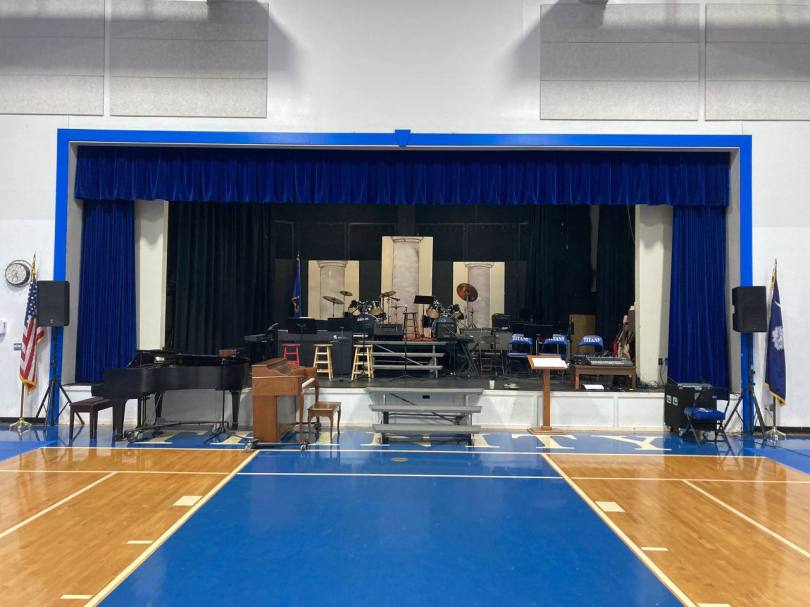
My students’ big Spring Concert was this past Tuesday, 30 April 2024—the perfect way to finish out a super busy month.  T.S. Elliott wrote in The Wasteland that “April is the cruellest month,” and for yours portly, it’s true—it’s my busiest month of the year at work, and I always seem to come down with a gnarly sinus infection during the height of it, largely (I suspect) due to exhaustion.

But April is also the coolest month because my students get to showcase their talents at our awesome concert.  This year’s concert was overstuffed with goodness, like a really comfortable, worn couch that also produces high quality rock ‘n’ roll.

Perhaps that’s not the most elegant or eloquent metaphor.  What I mean is that the concert was long, but good.  The length was the result of structural issues:  we had to incorporate Dance, Choir, my Middle School and High School Ensembles, and various soloists.  Rather than trim the fat (and, to be clear, there wasn’t much fat to trim) and shortchange my students, I leaned into it, producing a concert that was a bit over two hours.

To be clear, my goal is always to get to one hour, maybe ninety minutes.  Seventy-five minutes is a good compromise.  But with the Choir director insisting on featuring five beautiful but laborious choral pieces, and Dance students doing their arrhythmic gesticulating, it tends to pad out the runtime.  My thought is, why should my students suffer because we’ve expanded our offerings in the performing arts?

My administration was not pleased with the length, but as I pointed out to them, it’s the same as going to a varsity baseball game on a Tuesday night, and we never complain about those.  Further, my Karen-esque boss hosts two large, lengthy beauty pageants each year, also on school nights, which easily match or exceed the length of my concert.  Quite frankly, I’m tired of compromising on this issue.  If athletics and the boss get whatever they want when it comes to length of programs, I’m going to pursue the same tactic.

But I digress.  That’s material probably best left behind the paywall, but I’m pretty ticked off at my administration right now, and frankly don’t care if they stumble upon this rant.  Regardless, the concert was awesome, and my students did extremely well.  Seriously, it was the best one yet.

To read the rest of this post, subscribe to my SubscribeStar page for $1 a month or more.

SubscribeStar Saturday: Heptadic Structure

Today’s post is a SubscribeStar Saturday exclusive.  To read the full post, subscribe to my SubscribeStar page for $1 a month or more.  For a full rundown of everything your subscription gets, click here.

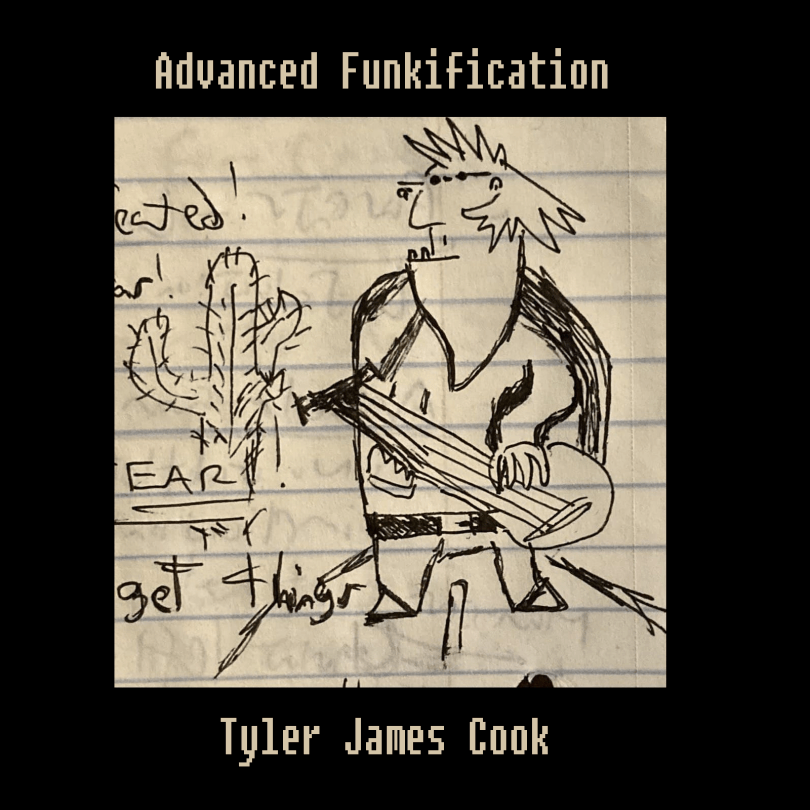
Yours portly took a brief break from composing to catch up on some other work, but I’m back to composing, albeit not with quite the same intensity as during the late winter months.  I released Leftovers II earlier this month, and Four Mages is coming very soon (2 May 2024).  I’ve also completed a funk album, Advanced Funkification, which is coming on 7 June 2024.

If you’d like to listen to Leftovers II, you can find it at the following sites:

I figured that was a pretty good slate of releases, and that I might take a rest.  But then I started jotting down a little melody in the incredibly rare (and, admittedly, self-indulgent) time signature of 7/16:

Heptadic Structure Prewriting

What resulted was the piece “Heptadic Structure.”  The piece itself is exactly twenty-one written measures (although it’s technically longer with repeats).

That gave me an idea:  if I wrote seven pieces in 7/X time consisting of twenty-one measures each, I’d have a total of 147 measures of music.  14 + 7 = 21.  There’s a beautiful mathematical symmetry there.

Why 21?  It’s the multiple of 3 and 7.  Three represents the Holy Trinity; seven is God’s Number, a heavenly number.  So 21 is a reference to the Trinity and Heaven.

I came upon the term “Heptadic Structure” when looking for a title for this piece.  Apparently, the concept of a heptadic structure is nothing new, and is a major concept in the rather esoteric field of Biblical numerology.  The argument is that various portions of the Bible breakdown in mathematically consistent and beautiful ways, always with the number 7.  It’s a fascinating concept, one about which I only possess a passing familiarity, but I love these mathematical structures.  Maybe it’s all a grand coincidence—or, more likely, it’s all part of God’s Grand Design.

To read the rest of this post, subscribe to my SubscribeStar page for $1 a month or more.

SubscribeStar Saturday: Chasing Pokémon at the Egg Scramble

Today’s post is a SubscribeStar Saturday exclusive.  To read the full post, subscribe to my SubscribeStar page for $1 a month or more.  For a full rundown of everything your subscription gets, click here.

My sweet niece recently forced me to download Pokémon Go to my cellphone in that self-serving way that women do when they want something:  she wanted me to be able to send her gifts, and to have another phone on which she can play the game (to be clear:  she does not have her own cellphone; she plays on her mom’s phone).  Being the agreeable and easily buffaloed uncle that I am, I obliged.  We downloaded the game and merrily went about catching Pokémon, the lovable little monsters from the smash hit video game franchise.

A week or two later she texted me (again, from her mom’s phone) asking me to be her friend in the game.  I was teaching a piano lesson.  After about fifteen minutes, she wrote, “I’ve been waiting on you for quite awhile. 😠”  Again, being the agreeable and buffaloed etc., etc., I hastily figured out how to accept her little request (it’s harder than it should be!) and we started sending each other little presents in the game.

That was the extent of my Pokémon Go-ing for a few weeks.  I grew up playing the Pokémon games and loved them—I still do!—but I didn’t think much about this little mobile app that seemed to have reached its peak in the first two or three months following its release in 2016.

Then Spring Break hit and, while yours portly kept fairly busy, I still had a good bit of downtime.  I also found myself taking a lot of walks with my dad.  While he’s technically retired, he still works part-time as the town administrator for a small town here in South Carolina, and conducts a great deal of his business on the phone while walking the dogs (perhaps the most Boomer work habit conceivable; they love being on the phone as much as us Millennials hate it).  That got me looking for something to do with my hands while he dictated life-changing decisions to bureaucratic functionaries, so I pulled out Pokémon Go.

To read the rest of this post, subscribe to my SubscribeStar page for $1 a month or more.

SubscribeStar Saturday: The King in Yellow Review

Today’s post is a SubscribeStar Saturday exclusive.  To read the full post, subscribe to my SubscribeStar page for $1 a month or more.  For a full rundown of everything your subscription gets, click here.

The artwork for today’s post is the cover of the instrumental piece “Yellow Knight,” from my upcoming release Four Mages.  The album releases on 2 May 2024, and a YouTube video for “Yellow Knight” (linked above) will go live on 14 May 2024.

Recently I purchased a copy of Robert W. Chambers’s The King in Yellow, a classic work of “weird fiction” that would inspire writers like H.P. Lovecraft.  It’s a book I’ve wanted to read for sometime, especially with the idea of a malevolent play that is so terrible and beautiful, it drives anyone who reads it mad.  That play, of course, is the titular The King in Yellow, the text of which—beyond a couple of snippets—is never quoted in the book.

The book is a collection of ten stories, the first four of which share the thread of the infamous play.  The rest of the book consists of stories that take place mostly in Paris, specifically the Latin Quarter, and revolves around the lives of young American art students in the City of Light.  Indeed, Chambers published In the Quarter, a collection of stories about the Bohemian lives of the Latin Quarter’s residents, a year prior to the publication of The King in Yellow.

The four proper TKiY stories are quite good, and succeed as horror stories that unsettle, more than they scare.  The hidden gems of this collection, however, are the Latin Quarter stories, which depict a freewheeling, fun-loving period in French history before the unhappy days of the First World War ruined France and the West forever.

I reviewed one of those stories, “The Street of the First Shell,” earlier this week.  Today, I’d like to examine the entire book, which really is two shorter books in one.  There are the stories clearly connected to the “Yellow King” mythos.  The rest are all stories that take place in the Latin Quarter.  Unlike “The Street of the First Shell,” however, most of the rest are comedic romances, though some are a bit heavier than others.

To read the rest of this post, subscribe to my SubscribeStar page for $1 a month or more.

This post contains Amazon Affiliate links.  Any purchases made through those link result in a bit of additional revenue for yours portly, at no additional cost to you.

SubscribeStar Saturday: Disco Elysium

Today’s post is a SubscribeStar Saturday exclusive.  To read the full post, subscribe to my SubscribeStar page for $1 a month or more.  For a full rundown of everything your subscription gets, click here.

I recently picked up the “final cut” of Disco Elysium during the Steam Spring Sale at the amazing price of $9.99 (it usually MRSPs for $39.99).  It’s a game I’d heard about since its release in 2019, but always with an air of mystery around it.  It’s a roleplaying game, yes, but totally different from the typical fantasy-inspired roleplaying worlds of, say, The Elder Scrolls series or even the sci-fi roleplaying of Cyberpunk 2077 or Starfield (Ponty’s promised a review of CP2077, and I am quite excited to read it).

There have been non-fantasy roleplaying games before, to be sure, and even those that take place in the modern-ish world.  Disco Elysium, however, is unlike any other game I’ve ever played, roleplaying or otherwise, and after just a few hours of gameplay—and having not even solved the first case yet!—I love it.

It also turns out the game can be had on consoles—and much more affordably than the default Steam price.  Amazon has it on the Nintendo Switch ($25), the Playstation 4 (marked down $16.90 at the time of writing), and the XBox One ($24).  If I’d known it was on the Switch I likely would have got for that console (and may still do so), but I think the game is meant to be played on the PC.  That said, I can tell it’s quite console-friendly based on the controls.

What sets Disco Elysium apart from other games, I think, is that most of the game is dialogue—with your own mind.  And not just one, unified mind, but your character’s entire nervous system.  It is probably the closest simulation I’ve ever experienced to what goes on in my mind, although I’m not a drug-addled 70s-style super cop down on his luck.

To read the rest of this post, subscribe to my SubscribeStar page for $1 a month or more.

This post contains Amazon Affiliate links.  Any purchases made through those link result in a bit of additional revenue for yours portly, at no additional cost to you.

SubscribeStar Saturday: Sartorial Decline

Today’s post is a SubscribeStar Saturday exclusive.  To read the full post, subscribe to my SubscribeStar page for $1 a month or more.  For a full rundown of everything your subscription gets, click here.

People are not dressing well anymore.

I’ll include myself in that assessment.  When I first started teaching, I wore a coat and tie every day, although I’d shed the coat pretty quickly.  On Fridays, when teachers were allowed to wear jeans, I’d make myself wear a tie if I wore jeans, as a compromise (that also used to be my stage look—jeans, sports coat, tie).

Since The Age of The Virus, everything has loosened up.  I happily wear polo shirts—tucked in!—to work most everyday, aside from the six weeks of frosty winter we sometimes get in South Carolina.  Fiddling around in an un-air-conditioned football pressbox in August is far more pleasant when I’m not wearing a long-sleeve button-up with a goofy tie.

Indeed, teachers can now wear jeans, so long as they are of a darker hue, any day of the week.  My female colleagues avail themselves of this privilege fairly shamelessly.  As I descend elegantly into middle age, I’ve adopted the uniform of my people:  five-pocket workman’s slacks with a tucked-in polo or short-sleeve button-up shirt.

What has stirred my sartorial ire is not form-fitting jeans or polo shirts, but the prevalence of pajamas—yes, outright pajamas—among the general population.

To read the rest of this post, subscribe to my SubscribeStar page for $1 a month or more.

SubscribeStar Saturday: Advanced Funkification

Today’s post is a SubscribeStar Saturday exclusive.  To read the full post, subscribe to my SubscribeStar page for $1 a month or more.  For a full rundown of everything your subscription gets, click here.

My forays into avant-garde, self-indulgent composing continues unabated.  While I have not been able to do as much of it the past two weeks, I did manage to jot down some funky grooves.

I made it out to open mic night this past Tuesday, 12 March 2024 for the first time in a very long time.  It was a serendipitous evening:  two of my former students were in attendance, both on their respective college’s spring breaks.  One was busking his way from Maine down to Savannah, Georgia, before heading back up the East Coast—a very interesting, albeit exhausting, adventure.  The other was decompressing in a more traditional fashion, rusticating at his parents’ place while recovering from a very difficult semester.  My jaundiced eye picked up right away that he is burned out.

So is yours portly.  My Spring Break can’t get here fast enough, but it’s still two weeks in the future.  I have hit that point in the school year where the neediness and learned helplessness of modern teenagers is wearing on me, and while I love all of my students, I’m ready to have a few days of not seeing them.

But I digress.  During open mic, I popped open my music journal and, in some bits of staff paper not covered over with notes from lessons, jotted down some funky lines:

“Open Mic Funk I” Original Manuscript, 12 March 2024
“Open Mic Funk II” Original Manuscript, 12 March 2024
“Open Mic Funk IIII” Original Manuscript, 12 March 2024

During a blessed half-day Wednesday (during which we had intermittent parent-teacher conferences in the afternoon), I plugged these rhythms into NoteFlight, and managed to arrange three groovy tracks.

To read the rest of this post, subscribe to my SubscribeStar page for $1 a month or more.

SubscribeStar Saturday: SCISA Music Festival 2024

Today’s post is a SubscribeStar Saturday exclusive.  To read the full post, subscribe to my SubscribeStar page for $1 a month or more.  For a full rundown of everything your subscription gets, click here.

This past Thursday was the annual South Carolina Independent School Association (SCISA) Music Festival, a major event for my music students each year.  The Music Festival is an opportunity for students to perform solo and ensemble pieces for judges.  The judges are typically doctoral students at the University of South Carolina School of Music, and they often give excellent, detailed feedback to students.

Students can earn one of three scores:  a Gold/Superior/I; a Silver/Excellent/II; or a Bronze/Good/III.  Even students who earn a Gold/Superior often get invaluable comments (in other words, not just things like, “That was amazing!” without further elaboration, although that does happen occasionally).  While I stress to my students that our aim is to get a Gold on our performances, the real value lies in 1.) challenging ourselves as musicians in the first place and 2.) taking constructive feedback to heart so that we can improve as musicians.

I also make sure they know that simply playing at the Festival is a testament to their courage as performers, as it is very difficult to expose one’s self to criticism, even when that criticism is designed to help us improve.  For me, signing up and working hard to prepare a solo is the most important victory; everything else is icing on the cake.

That said, I am very pleased to announce that both my Middle School and High School Instrumental Ensembles earned Golds for their performances.  The Middle School Music Ensemble performed an instrumental arrangement of Giuseppe Verdi’s “La donna è mobile” from his opera Rigoletto (you can purchase sheet music of my now-award-winning arrangement here, here, and here).  The High School Music Ensemble played the jazz standard “Autumn Leaves.”

Our Choir Director had a great day, too:  her choir earned a Gold, and each of her vocal soloists earned Gold as well.

Here is the (rather dry) update I sent to my administration after school, which I am sure they have blasted out onto social media by this point:

On Thursday, 7 March 2024, forty-two (42) student-musicians travelled to the SCISA Music Festival at the USC School of Music in Columbia, South Carolina to perform adjudicated solo and ensemble pieces. Students competed in the categories of Small Vocal Ensemble, Small Instrumental Ensemble, Large Instrumental Ensemble, Vocal Solo, Drum Solo, Piano Solo, Guitar Solo, and Violin Solo.

The Small Vocal Ensemble, the Small Middle School Instrumental Ensemble, and the Large High School Instrumental Ensemble all earned Gold (Superior) ratings.

Vocal soloists earned five (5) Gold ratings, two (2) Silver ratings, and one (1) Bronze rating.

Instrumental soloists earned eight (8) Gold ratings, three (3) Silver ratings, and one (1) Bronze rating.

In total, students gave twenty-three (23) musical performances, earning sixteen (16) Gold/Superior ratings, five (5) Silver/Excellent ratings, and two (2) Bronze/Good ratings.

The results demonstrate the musical talents of the [school’s] student body, and speak to the cultivation of those talents in the Music program.

So, what does it take to get such results?  Let’s dive in.

To read the rest of this post, subscribe to my SubscribeStar page for $1 a month or more.