The Hispanization of Rural America

This weekend I drove through some very rural parts of western South Carolina to check out some small-town festivals (Subscribe Star subscribers will get the full story this Saturday, and read my ode to candy apples, which this same trip also inspired).  My route took me north from Aiken through Ridge Spring, South Carolina, then up through Chappells and Saluda to Clinton, located on the cusp of the Upstate.  Then it was a 90-minute drive back south through Saluda, Chappells, and Johnston on the way back to Aiken.

Most of this section of South Carolina is farmland, dotted with small towns or unincorporated communities.  Some of these towns were once thriving little railroad junctions, or the communities of prosperous farmers or textile mills.

Now, they often feature quaint but dilapidated downtowns (often full of barber shops and wig stores, but plenty of boarded-up windows), a few stately old homes, and a great deal of poverty.

What I noticed on this most recent trip, however, was the clear uptick in Hispanic residents and businesses.

Read More »

The Future of Barbecue

The good folks at the Abbeville Institute have a great piece (originally published at The American Conservative) about the most beloved and controversial of Southern foodstuffs:  barbecue.

Barbecue, as author John Shelton Reed points out, is highly localized.  For me—and any true South Carolinian—the One True ‘Cue is mustard-based pulled pork barbecue from South Carolina.  It’s definitely not beef brisket or anything with ketchup.  It should come from a place that’s only open three or four days a week, and is served with hash and rice.

Unfortunately, much like the “old, weird America” whose passing John Derbyshire regularly mourns, traditional barbecue—regardless of the regional variety—is being shoved out by “mass barbecue,” the kind served up in chains that look like the inside of Uncle Moe’s Family Feedbag.

Read More »

Lazy Sunday XXIII: Richard Weaver

I’ve been fan-boying a great deal lately about Richard Weaver.  He’s one of my favorite authors, even though I’ve read comparatively little of his work.  Weaver died during the prime of his academic career, but before his premature death he managed to bequeath a rich heritage of scholarly works about literature, religion, and his beloved Dixie.

As I’ve written again and again, I always enjoy rereading the introduction to Weaver’s Ideas Have Consequences, and hope to reread the entire book again soon.  The introduction sums up the modern West’s maladies starkly and clearly, tracing their origins to the nominalism of William of Occam.

I found one podcast in which two conservative commentators summarize and discuss the book, chapter-by-chapter; it’s a good, quick overview if you’ve got fifty minutes in the car:

That said, while I reference Weaver quite a bit, I actually have not written as many posts about him and his work as I thought.  Nevertheless, while I’m in the midst of my annual Weaver Fest, I thought it would be the perfect time to give the great academic his own Lazy Sunday:

1.) “Capitalism Needs Social Conservatism” – a #TBT post from the TPP 2.0 era, this post was part of a series on social conservatism, which I dubbed the “red-headed stepchild” of modern conservatism.  The post is more inspired by Weaver than it is about him, but I mention the paradox of prosperity near the end when I discuss Weaver’s drunk.

That’s my phrase for a metaphor Weaver employs near the end of the introduction to Ideas Have Consequences in which he compares modern society to a drunk.  The more inebriated and alcoholic the drunk becomes, the less capable he is of doing the work necessary to feed his addiction.  So it is with modern man—the more he luxuriates in excess and comfort, the less willing he is to do the uncomfortable work necessary to sustain his opulence.

2.) “Back to School with Richard Weaver” – the subject of last Thursday’s TBT, this little piece was from a 2014 Facebook post in which I quoted from “The South and the American Union,” an essay from Weaver’s Southern Essays.  It contrasts the Southerner’s “Apollonian” worldview of fixed limits and “permanent settlement” to the ceaseless striving and progression of the Northern, “Faustian” worldview.  It’s a fascinating dichotomy that, while controversial, certainly rings true to Southerners like yours portly.

3.) “The Portly Politico Summer Reading List 2016” – my classic, original reading list; naturally, Ideas Have Consequences tops the list!  As I wrote at the time, if you’re going to read just one book this summer, make it Ideas Have Consequences!

4.) “Ideas Have Consequences – Introduction” – I wrote this little summary for my History of Conservative Thought course.  It’s my quick rundown to help breakdown the main ideas from the introduction to high school juniors.  Hopefully it worked!

Well, that’s it.  Enjoy Weaver Fest 2019!  It’s back to school for me tomorrow.

–TPP

Other Lazy Sunday Installments:

Friday Night Recommendation: The Abbeville Institute

The Internet is a vast place, with a niche for everything.  It’s interesting to consider how much import users put into their own little online worlds—they know everything about what makes their little corner of the web tick, or click—but, if you’re outside of that niche, it’s almost like it doesn’t exist.  It’s like planets filled with intelligent life that cannot perceive or know one another, except when one spunky interstellar craft stumbles upon a distant world.

Regardless, this phenomenon certainly exists online, which explains, in part, why some Americans know everything wicked the progressive Left is unleashing upon our world, while others are blissfully unaware of their impending dooms.  One website that is doing yeomen’s work on our side is the Abbeville Institute.

Read More »

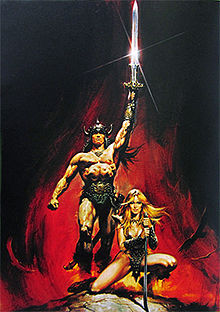
Reblog: Conan the Southerner?

I’m heading back from a glorious week in New Jersey today to return to my beloved South Carolina.  It was serendipitous, then, that I read this piece from the Abbeville Institute, “Conan the Southerner?

I recently stumbled upon the Abbeville Institute while doing some research on John Randolph of Roanoke for my History of Conservative Thought course.  It’s an institute dedicated to Southern history, and to presenting a more nuanced interpretation of the antebellum South.  Their blog features some dense, interesting bits of Southern history (I’m reading through a long-ish essay on “The South Carolina Federalists” that has taught me a great deal more about my State’s history in the period of the Early Republic), and champions constitutionalism, limited government, and a traditional way of life.

The Conan piece is an excellent—and fun—analysis of the Conan the Barbarian series of low-fantasy pulp novels, focusing on Conan creator Robert E. Howard and his Jacksonian roots in Texas.  The post’s author, Marine Corps Lieutenant Colonel Joel T. Leggett, argues that Howard’s Conan is a modern example of American mythology, one with distinctively Southern roots.

The essay is also useful as it offers a clear definition of Jacksonian principles, via historian Walter Russell Meade.  As we continue to attempt to define “populism” in the midst of Trumpian nationalism, I always relish a concise definition of the principles of the godfather of American populism, Andrew Jackson.

Meade, per Leggett, defines these principles as “self-reliance, equality, individualism, financial adventurism, and courage.”  Leggett then proceeds to demonstrate how the character of Conan embodies these qualities, and that Howard was chiefly concerned with promoting individual liberty.

That part of the essay is, for me, the most useful and enjoyable.  The qualities are certainly deeply American—and deeply Southern.  The “equality” is not the banal egalitarianism of our present age, which seeks to level off everything and everyone into conformist blandness, but the old equality of opportunity, in which every man can forge his destiny.

Tied with that is the notion of “financial adventurism.”  Leggett notes that Meade argued that “Jacksonians view money and wealth as a means to finance a lifestyle of self-definition.  The value of wealth is to enable you to be you, to live life to its fullest.”  This notion of financing “a lifestyle of self-definition” accords with my own long-term financial goals.  It also seems to be the direction that “free” speech is headed:  to exercise this right truly, one must have financial independence from social justice scolds.

And this, for Leggett, seems to be the core of Conan’s Southern Jacksonianism:  a desire for individual liberty, for a man to be able to live his life on his own terms.  Howard might have wrapped that ideal in a burly barbarian warrior-king who rose to rule a kingdom due to his own prowess, but it’s one every American should aspire towards.  In this way, Leggett makes a compelling case for Conan the Barbarian as a valuable piece of American mythology.

Southern Conservatism: John Randolph of Roanoke

MAGA Week 2019 is one week away!  Get ready to celebrate America all week long!  This year, all MAGA Week posts will be exlusive to my SubscribeStar page, so subscribe today!  $1 a month gets you full access to all posts, including new content every Saturday.

As my History of Conservative Thought course rolls on, I’m learning more about the forgotten byways and overgrown, stately ruins of the various branches of conservatism.  Students this week are reading a couple of documents from John Adams and Alexander Hamilton, the two founders of the Federalist Party, and key to the passage of the Constitution.  Hamilton, the author of the bulk of the pro-ratification Federalist Papers, also created the financial system upon which the United States functions today.

Hamilton and Adams have both enjoyed renewed interest in recent years, Hamilton due to the smash Broadway musical about his life, and Adams from a critically-acclaimed HBO series (one that, sadly, takes some unnecessary artistic license with the past).  In the case of Hamilton, American history students are often enthusiastic to get to him in my AP US History course, and Hamilton mega-fans often know more about the first Secretary of Treasury than I do.

But we’re reading a speech from another important figure from American history, albeit one largely forgotten:  John Randolph of Roanoke.

Read More »