The Invasion and Alienation of the South

A few weeks ago, I wrote about the changing, dying rural communities I observed on a trip through western South Carolina.  You’re not supposed to say as much, but I don’t like that the culture and the world I grew up in are changing.  I’m not sure when it became taboo to say, “This is my home and these are my kin,” but apparently that’s no longer acceptable if you’re a conservative Christian in the American South, especially if you’re a white man.

Around the time I wrote that post, I stumbled upon two excellent posts from the Abbeville Institute that express that sentiment beautifully.  One, “Stranger in a Strange Land” by Leslie Alexander, is a poetic, heartbreaking glimpse at a personal sense of alienation:  the writer, a Louisiana native with deep roots, finds herself adrift in Dallas, a land that lacks not only has “no regional culture here—one of common language, mores and manners–there is not even an American one.”

The other, from Nicole Williams, is a more technical and historical dive into the emergence of the “New South,” the story of how an economically devastated postbellum region, in a search for economic opportunity, ultimately sold its culture and identity for a mess of pottage.  The title says it all:  “What Price Prosperity?

Read More »

Lazy Sunday XXXII: Festivals

This fall, I’ve been hitting up a number of small-town festivals in an attempt to get out more to see the forgotten by-ways of rural South Carolina.  I work pretty hard during the week (indeed, most of today will dedicated to finalizing first quarter report grades), so I’m making a point of enjoying my weekends more.

To that end, this week’s Lazy Sunday will look back at some recent festival-going.  I should note that the full versions of these pieces are Subscribe Star exclusives; to read them in full requires a subscription of $1 a month or more to my Subscribe Star page.

  • Aiken Amblings” – This piece detailed my trip to my hometown for Aiken’s Makin’, a sprawling, two-day crafts festival that brings vendors from all over the Southeast to ply their wares.  I have fond memories of this festival from my childhood, and it’s still a major fall event.
  • Yemassee Shrimp Festival 2019” – This post is all about a long day trip to tiny Yemassee, South Carolina, for the Yemassee Shrimp Festival.  The trip also included stops at the historic Old Sheldon Church ruins and St. James the Greater Catholic Church in Ritter, South Carolina.
  • Candy Apples” – My paean to a typically autumnal fair food, the sticky, tart candy apple.  We had some good ones last weekend.
  • Festival Circuit: Ridge Spring Harvest Festival and Clinton Scots & Brats” – Yesterday’s post detailed a two-for-one festival day—my trip to the Ridge Spring Harvest Festival and Clinton, South Carolina’s Scots & Brats celebration, the latter of which was the source of the candy apples that inspired the previous Saturday’s post.

Hopefully there will be more festivals to come.  For now, I’ve got to get back to grading.

Happy Sunday!

—TPP

Other Lazy Sunday Installments:

One-Way Cosmopolitanism

A major theme—perhaps clumsily conveyed—of yesterday’s post was that Americans should be able to keep their culture and local identity without shame.  As I noted, struggling rural communities are particularly susceptible to being swept away by large-scale immigration, legal or otherwise.  Thus, we see small South Carolina towns gradually hispanicize, turning into little replicas of various Latin American cultures, rather than the old Southern culture that predominated.

One often hears that Americans should be tolerant and open-minded to other cultures, and to extend maximum understanding and patience.  That is a generous and worthy view:  I don’t expect the Chinese foreign exchange students at our school to speak accent-less English and understand liberty their first day off the plane.  In that instance, we go out of our way to attempt to understand the cultural background from which those students came.

It’s another matter, though, when it involves the permanent or long-term relocation of foreign aliens to our land.  Remember the expression, “When in Rome, do as the Romans do?”  That rule always seems to apply to Americans—who are routinely criticized for being uncouth abroad—but never to any other ethnic group, and especially not to cultures outside of the West.

It’s an enduring frustration of mine:  one-way cosmopolitanism.

Read More »

The Hispanization of Rural America

This weekend I drove through some very rural parts of western South Carolina to check out some small-town festivals (Subscribe Star subscribers will get the full story this Saturday, and read my ode to candy apples, which this same trip also inspired).  My route took me north from Aiken through Ridge Spring, South Carolina, then up through Chappells and Saluda to Clinton, located on the cusp of the Upstate.  Then it was a 90-minute drive back south through Saluda, Chappells, and Johnston on the way back to Aiken.

Most of this section of South Carolina is farmland, dotted with small towns or unincorporated communities.  Some of these towns were once thriving little railroad junctions, or the communities of prosperous farmers or textile mills.

Now, they often feature quaint but dilapidated downtowns (often full of barber shops and wig stores, but plenty of boarded-up windows), a few stately old homes, and a great deal of poverty.

What I noticed on this most recent trip, however, was the clear uptick in Hispanic residents and businesses.

Read More »

The Future of Barbecue

The good folks at the Abbeville Institute have a great piece (originally published at The American Conservative) about the most beloved and controversial of Southern foodstuffs:  barbecue.

Barbecue, as author John Shelton Reed points out, is highly localized.  For me—and any true South Carolinian—the One True ‘Cue is mustard-based pulled pork barbecue from South Carolina.  It’s definitely not beef brisket or anything with ketchup.  It should come from a place that’s only open three or four days a week, and is served with hash and rice.

Unfortunately, much like the “old, weird America” whose passing John Derbyshire regularly mourns, traditional barbecue—regardless of the regional variety—is being shoved out by “mass barbecue,” the kind served up in chains that look like the inside of Uncle Moe’s Family Feedbag.

Read More »

Sanford Announces Presidential Bid

Former South Carolina Governor and Congressman for SC-1, Mark Sanford, announced Sunday that he is seeking the Republican presidential nomination in 2020 against incumbent President Donald Trump.  When Fox News host Chris Wallace asked Sanford why, he said that “We need to have a conversation on what it means to be a Republican.”

Sanford’s ostensible desire is to draw attention to America’s massive national debt, and our political unwillingness to address the ever-expanding, elephantine gorilla in the room.  But as local radio personality and former Lieutenant Governor Ken Ard said on his show this morning, Sanford is shining a bright light on himself as much as he is on the national debt.

Read More »

TBT: Deluge

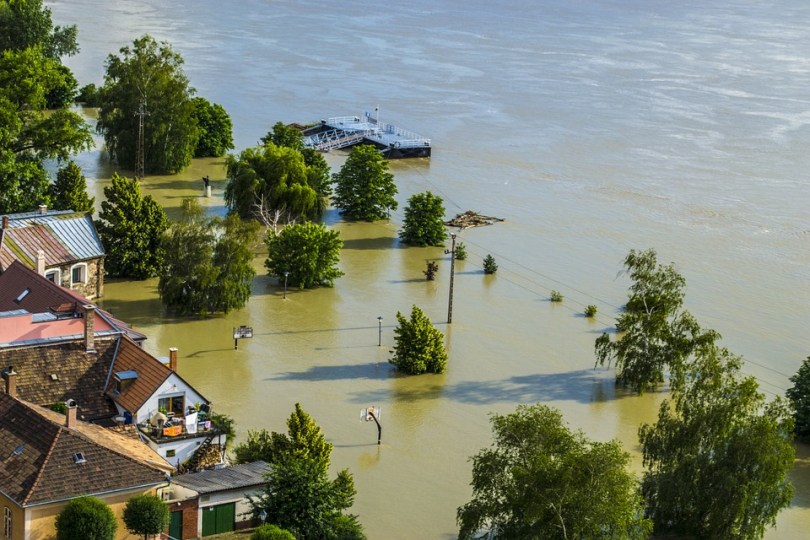
Hurricane Dorian is roaring its way up the eastern seaboard today, and the Pee Dee region of South Carolina, where I live, is due to get several inches of rain and some high, heavy winds.  I’m praying that the storm passes through quickly and as easterly as possible, so as to minimize damage from the winds and flooding.  If the storm stalls, two or three inches of rain in Darlington County, South Carolina could become substantially more.

I’m no stranger to flooding.  Back when Hurricane Matthew hit in 2016, my old place flooded about eight inches up the walls, destroying many of my worldly possessions, and afflicting my clothes and other belongings with a faint mildewy stench that never really went away.

Two years later, my old apartment—“a Handi House in two rednecks’ backyard,” as my younger brother put it—was flooded again in a torrential downpour—a pop-up rainstorm that dumped around ten inches of water onto Florence, South Carolina in the span of an hour.

Read More »

Friday Night Recommendation: The Abbeville Institute

The Internet is a vast place, with a niche for everything.  It’s interesting to consider how much import users put into their own little online worlds—they know everything about what makes their little corner of the web tick, or click—but, if you’re outside of that niche, it’s almost like it doesn’t exist.  It’s like planets filled with intelligent life that cannot perceive or know one another, except when one spunky interstellar craft stumbles upon a distant world.

Regardless, this phenomenon certainly exists online, which explains, in part, why some Americans know everything wicked the progressive Left is unleashing upon our world, while others are blissfully unaware of their impending dooms.  One website that is doing yeomen’s work on our side is the Abbeville Institute.

Read More »

Sailer and Spotted Toad on Education

Demographer Steve Sailer has a review on Taki’s Magazine of a new book from blogger Spotted Toad.  The book, 13 Ways of Going on a Field Trip: Stories about Teaching and Learning, is a narrative memoir detailing Toad’s decade teaching in public schools in the Bronx.

Sailer, a dedicated statistician in his own right, lauds Spotted Toad’s statistics-laden blog, but points out that his memoir eschews statistics in favor of narrative.  This focus on narrative, as Sailer points out, does not detract from the book’s insights about education, but makes them more viscerally real for the lay reader.

Based on Sailer’s summary of the book (which I plan to purchase and read soon), Spotted Toad’s teaching experience led him to insights similar to my own; that is, that administrators and school boards spend too much time chasing education fads and pushing a romantic narrative about teaching, rather than just getting out of the way and letting teachers… well, teach.

Toad was hired as part of the once-fashionable Teach for America program, which placed young, enthusiastic idealists into poor school districts, usually in tough inner city schools.  The theory was that bad or lazy teachers weren’t engaged enough, so schools needed an injection of Dead Poets’ Society-inspired young’uns who would bend heaven-and-earth to reach urban youths.

Sailer speculates about why Teach for America was so popular in the latter part of the last decade, and suggests that it’s because upper-middle class New York Times readers forwarded glowing articles about TFA to their out-of-work, overly-educated kids.

That somewhat comports with my own experience, as I briefly considered joining TFA upon finishing graduate school at the height of the Great Recession.  I think it’s even more accurate to say it was popular because it promised work during a time when few people could find it, and didn’t require lengthy additional years of education and training.

Sailer pooh-poohs the idea that TFA could create qualified teachers, and he’s not entirely wrong—the program was certainly overly optimistic about its own efficacy—but I think the apprenticeship model of “learning on the job” is one of the better ways to learn the craft.  Most education classes are a joke, and other than a few useful pedagogical insights, my impression is that many of them are indoctrination camps for the latest progressive educational fads.  I’d much rather have a “pure” young teacher learning the ropes with the assistance of battle-hardened veterans in the trenches than to have that teacher languish away in a series of Two-Minute Hates for another couple of years.

Indeed, that’s been my big complaint with the State of South Carolina’s alternative certification program.  We have a teacher shortage, but you want me to shell out cash and three years of my time to teach in a crummy public school?  No thanks.  How about adopt my proposal to grant automatic certification to any private school teacher with three years of teaching experience and a Master’s degree in a relevant field, or with five years and a Bachelor’s?  That would solve the problem more quickly, and would bring a number of qualified teachers into public schools quickly.

My premise is that credentials don’t make a good teacher; classroom experience does.  I’m generally anti-guildist, as I fancy myself a bit of a Renaissance Man.  Of course, that comes from my personal experiences professionally:  out of necessity, I’ve taught a slew of social studies courses, as well as music at different levels, for nearly a decade.  I would have benefited from some education classes to learn solid pedagogical methods in some areas (particularly music education), but I’ve picked up many of these methods through trial-and-error, and sheer force of will.  When you have to get twenty inexperienced middle school musicians to play a Christmas concert, you figure out how to make it work (and sound good).

Regardless, Spotted Toad’s experiences hit upon some common problems in education, particularly education policy.  Toad writes of the coming-and-going educational fads and programs, some supported by big-wigs like Bill Gates, that are championed, implemented hastily (and at great profit to the companies that market and develop these programs), and then abandoned in five years when some new, shiny trend emerges.

Take a moment to read Sailer’s review this morning, as it offers some interesting insights into the push-and-pull of education policy, and an interesting, if sad, retrospective on the bungled federal efforts in the Bush and Obama Administrations to address education in the United States.

That said, for all the doom-and-gloom surrounding discussion of education in America, Sailer ends on a positive note:

For example, as I’ve pointed out over the years, on the international PISA school tests, Asian-Americans do almost as well as Northeast Asian countries, white Americans outscore most white countries other than Finland and few other northern realms, Latino-Americans outperform all Latin American countries, and African-Americans beat the handful of black Caribbean countries that even try the test.

We Americans do spend a lot to achieve these educational results, but our outcomes by global standards are much less terrible than most Americans assume. (In particular, Indian states that have tried the PISA bomb it, scoring at sub-Saharan levels.)

At least we’re beating our peers in other countries—usually.

TBT: A New Hope

The TBT two weeks ago was about former South Carolina Governor and Congressman Mark Sanford, whose political career was a roller coaster of (often humorous) controversy.  While going through the deep-but-scant archives from the TPP 1.0 era (circa 2009-2010), I came across an old TPP “Two-Minute Update” about Sanford’s successor in the governor’s office:  Nikki Haley.

The post, which dates to 17 June 2009, was about the then-unknown Haley, at the time a State Representative from Bamberg, South Carolina.  I remember reading about Haley and being impressed immediately.  I assumed she was a long-shot—remember, this was before Trump and only shortly after Obama, so political upsets by unlikely outsiders were still considered rare—but I had an inkling that she could win it all.  As is rarely the case when calling elections, I was right.

As I’ve noted many times in these TBT pieces, it’s fascinating looking back to just ten years ago and noting how much the political and cultural landscape has changed.  Nikki Haley would go on to win the South Carolina gubernatorial election in 2010 after a tough primary, in which she suffered a number of malicious, mendacious attacks (one blogger even claimed to have had an “inappropriate physical relationship” with her).

I remember even lifelong Republicans voting for Haley’s Democratic opponent, Vincent Sheheen, in a fairly close election.  I can’t fully remember what the concern was, although the sense I got was that she was perceived as too much of a firebrand.

You have to recall:  these were the early days of the Obama Administration, when people still believed in the possibility of political compromise with the Left.  Ideological conservatives like Sanford and Haley were seen as a bit “tacky” (the same way Trump is by Establishment Republicans now), and I suspect that VP candidate Sarah Palin’s endorsement of Haley probably made her gauche-by-association.  Also, Sheheen cast himself (as a statewide Dem in SC must) as a congenial moderate.

Long-story short:  Haley destroyed Sheheen in a 2014 rematch, and then famously was appointed the United States’ United Nations Ambassador when President Trump took office in 2019.  That elevated Lieutenant Governor Henry McMaster—the first public official in South Carolina to endorse Trump during the campaign—to the governor’s office.

Haley had been opposed to Trump, favoring Florida Senator and robot Marco Rubio in the SC primaries in 2016, but she served as one of our gutsiest UN Ambassadors since Daniel Patrick Moynihan.

After Trump, I’m hoping that Haley throws her hat into the ring for the Republican presidential nominations in 2024.  Isn’t it time we had a woman president?

So, here is 2009’s “Two-Minute Update: A New Hope,” which is shorter by far than this preamble:

I was pleasantly surprised to read about a fresh new face in South Carolina politics, gubernatorial candidate Nikki Haley, a State Representative from Bamberg. The daughter of immigrants, Haley appears to be the philosophical heiress-apparent to Governor Mark Sanford’s brand of fiscal conservatism. While it’s still pretty early in the game–the next gubernatorial election isn’t until 2 November 2010–Haley looks to be a promising candidate for supporters of Sanford’s commitment to limited government and political responsibility.

Again, it’s too early for The Portly Politico to give its support to any one candidate, but I will certainly have my eye on Haley’s candidacy over the next seventeen months. Hopefully she will be spared the ire that is so often heaped upon conservative female politicians by the liberal news media (see also: Sarah Palin).

For more information on State Representative Haley, check out this excellent write-up by Moe Lane at www.redstate.com“Speaking with Nikki Haley – (R-CAN, SC-GOV).”