TBT: Six Long Years

I’m still indulging in the unrealistic decadence of Spring Break’s unlimited freedom.  After a long Wednesday painting, I decided to go with an unorthodox pick for this week’s TBT.  Indeed, I’ve mined out the best of the old TPP blog; pretty soon I’ll be reposting pieces from this iteration of it, what I call “TPP 3.0.”  The benefit of daily posts is that I have a good bit of windbaggery to pull from.

Today’s TBT hearkens back to the dawn of the TPP 2.0 era, when I relaunched the blog after a six- (in reality, a seven-) year hiatus.  I was down on Fripp Island, a place that always seems to get the literary juices flowing.  There’s something about sitting at a dark, wooden desk in a study at the beach that channels some Pat Conroy-esque inspirado.

Anyway, it was there that I decided to do thrice-weekly posts for the duration of the summer.  The posts then were much longer than the average posts now.  These days, I average around 600 words on a post.  In those days, I was churning out 1200-1500 words three times a week.  There’s a reason I started the TBT weekly feature:  I wrote some quality content back in those days.

The post you’re about to read, “Six Long Years,” was a quick set of reflections on the very eventful years that passed from 2010-2016.  The world changed rapidly during the Obama Administration; we often forget how quickly and how much.  I can still remember, vividly, when many States—including deep blue ones!—voted against legalizing same-sex marriage.  Now, even suggesting what was the norm less than ten years ago would be grounds for deplatforming, doxxing, and SJW Twitter (and real) mobs otherwise destroying your life.

Now, even 2016 seems like an eternity ago.  Trump’s election that November was a “through-the-looking-glass” moment.  Who knows what the next six years might hold?

There’s no way to know.  Regardless, here is 2016’s “Six Long Years“:

A lot can happen in six years.

When I last posted on this blog, I announce that Nikki Haley had been elected Governor of South Carolina.

That was November of 2010.  Think about what was going on at that time:

– Democrats still controlled the Senate, but had just lost the House to the rising T.E.A. Party insurgency.

– The Affordable Care Act had been passed, but would not go into effect until 2013 (2014, as it turned out, due to the executive fiat of the Department of Health and Human Services).

– The Great Recession was, from a technically economic standpoint, over, but the much-vaunted Obama recovery was still frustratingly anemic at best, and virtually invisible to many Americans.

– President Barack Obama hadn’t completely divided the country along race, class, and gender lines, and his disastrous foreign policy hadn’t completely crippled American power and prestige abroad.

What a difference six years make.  Here are some highlights:

– Nikki Haley not only began her first gubernatorial term in 2011; she handily won reelection in 2014 in a landslide victory against her 2010 opponent, Vincent Sheheen.  The relatively unknown upstart from Bamberg made good on her promise to grow the State economically.  She guided the state through the horrible Charleston Nine massacre in 2015; adroitly handled the resultant push to remove the Confederate Flag from the Statehouse grounds; and entered VP buzz for the carnival-like 2015-2016 presidential election season.

– The Democrats lost control of the Senate after an unexpected Republican surge in the 2014 midterm elections, which cemented the gains of 2010 and showed Americans’ growing dissatisfaction with the Affordable Care Act in particular and the Obama administration’s equivocating in general.  This victory came despite an unpopular government shut-down (led by the brilliant Senator Ted Cruz of Texas) in 2013 and former Massachusetts Governor Mitt Romney’s drubbing in the 2012 presidential election.

– Racial wounds that had mostly scabbed over were ripped open once again–this time with the president dumping plenty of salt on them.  Alleged police misconduct in Ferguson, Missouri and beyond brought out protestors in droves… despite the fact that many of these unfortunate events were not racially motivated (although some, such as the death of Eric Garner in New York City, highlighted the perils of excessive force and regulations).  Baltimore caught fire, Ferguson was ablaze, and the big losers were small black business owners who saw their stores looted amid cries for racial and social justice.

– The American college campus, always a training school for Leftist ideologues, became a breeding ground for illiberal Progressives, those who loudly (and sometimes violently) suppressed freedom of speech if such speech was deemed unacceptable or “hateful” (the latter often taking a rather protean definition).  Dovetailing with the rise in identity politics (see the previous bullet point), campus multiculturalism took on a dangerously Balkanized flavor, one that denounced the First Amendment and, in the process, heterosexual white men in favor of a vague commitment to skin-deep “diversity” (unless you’re transgender, in which case you can be whatever you feel like at any given moment).

– Out of all this craziness came the largest, most talented field of Republican presidential hopefuls in the nation’s history.  With seventeen (!) candidates, Republicans were treated to a wealth of talent—but also a great deal of muckraking, mudslinging, and intense political maneuvering.  From this crowded field emerged an unlikely victor:  business mogul Donald J. Trump.  In one of the biggest twists in American political history, a non-ideological, brash, gutsy-but-not-very-detail-oriented, and always-controversial reality television star won the nomination of an increasingly conservative Republican Party.  Put another way, a thrice-married, formerly-pro-Clinton, formerly-pro-choice New Yorker beat out a born-again, pro-life Texan.

Needless to say, it’s been pretty crazy.

With everything that’s happened, I realized that it’s time to get back into this world of political commentary.  The unique character of the 2016 presidential election alone has me salivating (be on the lookout for my brief overview of the 2015-2016 presidential nomination process).  There are so many questions:  what will become of the Republican Party?  Can Trump win the election (for what it’s worth, I think he can)?  Will Hillary manage to hold off socialist Bernie Sanders?  How will Trump and Clinton go after each other?  Should conservatives support Trump, or back a third-party candidate (for reasons I’ll explain in a future post, I’ll say “yes, with some caveats” to the first part and “no” to the second)?  What would a viable third-party candidacy look like—if such a thing is possible?

There’s a lot to talk about.

So, strap in and brace yourself—it’s going to be one heck of a ride.

All the best,

The Portly Politico

Irish Troll

For Saint Patrick’s Day, the GOP sent out a cheeky tweet of Beto O’Rourke’s mugshot from a DUI incident (the senatorial hopeful tried to flee the scene, but bypassers stopped him from doing so) that occurred when he was 26.  The tweet (embedded below) features O’Rourke sporting a cartoon leprechaun hat and sign board reading “PLEASE DRINK RESPONSIBLY”:

That is some grade-A trolling right there.  John Nolte of Breitbart breaks down the brilliance of the tweet, and why it works on so many levels, viscerally.  He also catalogs the outrage from the Left and the noodle-wristed Establishment/Never Trump “Right.”

In my mind, the tweet succeeds most immediately in two ways:  it highlights O’Rourke’s sordid past, and it draws attention to his lame attempt to Hispanicize himself by going by “Beto” instead of “Robert” (how’s this for an Irish Catholic name:  his real name is Robert Francis O’Rourke).

As Nolte points out, Leftists gleefully roasted George W. Bush for his youthful DUI.  But Bush took the hit, paid his dues to society, and redeemed himself.  Perhaps O’Rourke has made his peace with God about this issue—we can’t know his heart—but he walked away from the DUI scot-free.  The two-tiered justice system that punishes conservatives and lets well-connected libs walk free was at work once again.

One of the more ludicrous criticisms from the Right is that the tweet is “racist.”  Please.  The tweet isn’t suggesting that Irishmen are drunks; it’s suggesting that this particular Irishman actually was.  The only reason they call O’Rourke an “Irishman” in the tweet is, again, because he’s desperately pretending to be another ethnicity to get votes.

It’s the same story with Massachusetts Senator Elizabeth Warren.  When President Trump calls her “Pocahontas” (he should call her “Fauxcahontas,” but the point remains), he’s not making fun of Native Americans; he’s drawing attention to Warren’s use of (falsified) Native American heritage to get an edge in her professional and academic career.  If anything, Warren and O’Rourke are the ones using race as a political tool, not the Republicans and Trump.

None of that should need saying, but that’s why small-time bloggers like me have stuff to write about every day:  if it were as obvious as it seems to us, it wouldn’t need saying.

Oh, well.  Kudos to the GOP for some excellent, cheeky, fun-filled trolling.  It’s the most harmless kind of effective trolling possible.  Remember:  that tweet didn’t hurt anyone, except for maybe O’Rourke’s already-tarnished reputation.  But Robert Francis O’Rourke did risk harm to real people with his actions.  His policies—like radically open borders and deconstruction of existing border barriers—would risk countless more lives.

Let’s hope this dweeb flames out, and soon.

Election Day 2018

This blog has fallen dormant—has it often seems to do—during the height of election season.  A savvy, dedicated blogger would churn out the bulk of his content when the news comes fast and fresh, and folks are seeking out information about candidates—not during the middle of summer, the deadest time for political news, outside of some primary elections.

But, hey, that’s what makes The Portly Politico unique.

What won’t make it unique is this admonition:  VOTE.  Ideally—and if you’re a reader of this blog, this might go without saying—vote for Republicans.

I went out to vote this morning—the last time at my current precinct, as I’ve recently moved to the countryside (after two floods, it was time)—and it was hoppin’.  I arrived around 7:05 AM EST, and there was a line out the door.  I finished voting around 7:40 AM EST—that’s how many people were there to vote.

I’ve never experienced a midterm election this year.  Both sides are highly energized.  It feels like a presidential election.

I’ll refrain from offering detailed analysis at this point (I think Republicans will pick up some Senate seats, but the House is a complete toss-up), but this election—to recycle another cliché, but only because it’s true—is of the utmost importance.

If Republicans lose the House (which, I’ll confess, seems likely, albeit by a narrow margin), it will certainly stymie President Trump and the GOP’s conservative agenda.  The prospect of returning Congresswoman Nancy Pelosi to the Speaker position is also terrifying.

If Republicans lose the Senate, it will be utterly catastrophic.  You can kiss conservative Supreme Court nominees goodbye.  If you’re the most anti-Trumpist #NeverTrumper neocon that ever lived, you’ve gotta hold your nose and vote Republican for that reason alone.

If we lose both… well, I shudder to contemplate the kangaroo court of baseless investigations and accusations that Democratic Congress will unleash.  Impeachment might not result in removal, but the fraying fabric of our political system would be rent asunder as Democratic knives stab any opposition.

This election is a referendum on Trump and Trumpism, yes, but it’s also a series of choices:  the Constitution, or lawlessnessCapitalism, or communism.  Rule by the people, or rule by an entrenched, technocratic elite.

Get out there and vote, folks—especially Republicans!

Democrats Favor Socialism

Republicans and conservatives have long understood that many Democrats [not-so?] secretly harbor a love for socialism, and that socialistic policies are their end-goal.  As I wrote in “Democrats Show Their True Colors,” “democratic” socialism has been growing in popularity in the Democratic Party, and the party has tapped into its progressive roots and lurched violently to the Left.

Scott Rasmussen’s #Number of the Day today backs this trend up with hard numbers.  He writes that 57% of Democrats have a positive view of socialism, while only 47% have a positive view of capitalism.  That 47% figure is down from 56% just two years ago.

71% of Republicans, on the other hand, view capitalism positively, while 16% of RINOs view socialism favorably.  I don’t understand how any Republican can view socialism favorably; I suspect they view “socialism” as “limited government-run enterprises,” like the Tennessee Valley Authority or the Department of Motor Vehicles.  I can’t imagine many of them support true, complete government ownership of property and the means of production.

These trends toward socialism on the Left make Republican victory—as unlikely as it might be—in the 2018 midterm elections all-the-more crucial.

Historical Moment – The Formation of the Republican Party

I’ve missed two days—this past Friday and yesterday—due to back-to-school insanity, coupled with returning to my flood-prone abode (and celebrating my niece’s third birthday).  School starts back Wednesday, and some online courses I teach at a local technical college launched yesterday, so I may be adopting a new posting schedule soon—probably one or two pieces a week, or some shorter posts.  Stay tuned.

In the meantime, here is a transcript of remarks I gave to the Florence County Republican Party last night.  Our guest speaker for our monthly program was South Carolina Republican Party Chairman Drew McKissick, a man with a genius for grassroots organizing.  As such, I decided to talk about the formation of the Republican Party back in 1854.  Enjoy!  –TPP

There is some disagreement about exactly when and where the Republican Party first originated.  The national GOP website says the Party came into being in Jackson, Michigan, on 6 July 1854.  The anti-slavery convention, also called the “Under the Oaks” convention because the conventioneers met in an oak grove, nominated statewide candidates, and their Convention Platform read, “we will cooperate and be known as REPUBLICANS.”

The South Carolina GOP website, on the other hand, points to a meeting in Ripon, Wisconsin, earlier in 1854, where a group of abolitionists met to fight the expansion of slavery, although it also mentions the Jackson, Michigan convention was when the Party was “formally organized.”  Two years later, Philadelphia hosted the first Republican National Convention, which nominated John C. Fremont as the first Republican candidate for President.

Regardless of where the GOP formally began, the climate for its formation was eerily similar to our own political situation.  The “peculiar institution” of slavery bitterly divided the country.  The Kansas-Nebraska Act of 1854, the brainchild of Democratic Senator Stephen Douglas of Illinois, proposed applying “popular sovereignty” to western territories; essentially, territories would decide whether to allow slavery, or remain “free soil.”

That Act embroiled Kansas in a bloody guerrilla war between pro-slavery “Fire-Eaters” and radical abolitionists, the latter of whom sent “Beecher’s Bibles”—rifles—to free soilers attempting to keep the territory free.  In 1856, John Brown, the deranged abolitionist, and his sons massacred pro-slavery advocates with swords in the Pottawatomie Massacre, a retaliation for an earlier attack on the abolitionists.

The old Whig Party, originally organized in protest over the policies Democratic President Andrew Jackson, collapsed over the issue of slavery and “popular sovereignty.”  The conditions were ripe for a new party to emerge, one dedicated to “Free Soil, Free Labor, and Free Men” (not quite as catchy as “Make America Great Again,” but it explained the Republican Party’s platform succinctly).

Over the course of the 1850s, the young Republican Party spread rapidly throughout Northern States, bringing together abolitionists, anti-slavery Democrats, and other constituencies disillusioned with the Democratic Party’s policies on slavery and the economy.  The Republican Party from its inception opposed the expansion, if not always the outright abolition, of slavery, and hoped to keep it out of any new territories.  Southern Democrats so feared a Republican victory, they threatened to secede from the Union should a Republican President be elected.

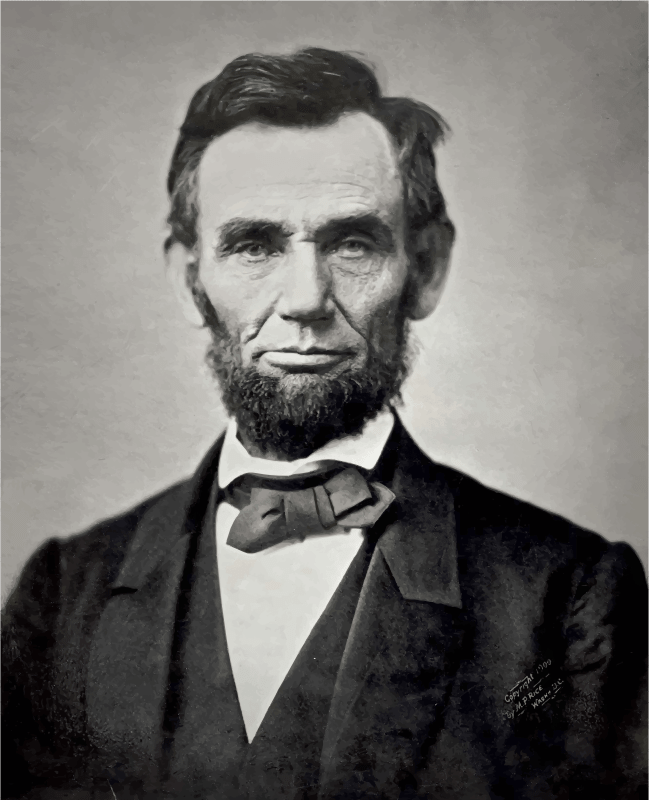
Of course, Abraham Lincoln became the first Republican elected in a four-way race in 1860—the Democratic Party split into Northern and Southern wings, while the Constitutional Union Party gained votes in the Upper South and Appalachia—and South Carolina seceded in December 1860.

Our first President was a good one, though, and the Republican Party has endured ever since, continuing to fight for the unborn, the working man and woman, and the values that make our country great.