TBT^2: It’s a Thanksgiving Miracle!

Dang, it’s been another year already.  Yikes!  Last year I wrote about the updates since the tragic weekend before Thanksgiving 2017.  The year after my fall was eventful, as I detail below (my commentary on the original post from the old website is in italics).

Looking back, 2019 has been pretty solid, too.  I’ve been a bit morose in a few posts lately, but the beauty of Thanksgiving is it helps clarify the mind—we’re told to focus on what we’re thankful for, and it seems to work.

Read More »

TBT: The Influence of Christianity on America’s Founding

My high school American history classes are getting into the American Civil War—or the War of Northern Aggression, or the War for Southern Independence, or whatever you’d like to call it—this week, so we’ve been talking about beginnings a good bit.  The Civil War had deep roots that go back not just to the 1840s or 1850s, and not even to the Constitutional Convention in 1787.

Indeed, the fundamental division dates back to the English Civil War in the 1648, when the Puritan Roundheads under Oliver Cromwell ousted and beheaded Charles I, and established the English Republic (which—the English having little taste for radicalism or dictatorships, fortunately collapses in 1660 with the restoration of the Stuart monarchs).  Loyalists to the king and the monarchical order were the aristocratic Cavaliers.  Those same Puritans of East Anglia settled heavily in Massachusetts following the Pilgrims’ famous landing at Plymouth Rock, and the Cavaliers—in body and spirit—dominated the tidewater plantations of the South.

Read More »

Lazy Sunday XXXIV: The Desperate Search for Meaning Series

Next to Halloween and Christmas, today is the most wonderful of the year—it’s the day that the clock falls back an hour!  Sure, that means I’ll never see the sun for the next few months, as I’ll spend the dwindling daylight hours inside a classroom, but at least I got an extra hour of sleep this morning.

This week saw a good bit of reflecting on what is important in life (like ghost stories), so I thought it would be a good opportunity to reflect on “The Desperate Search for Meaning” series of posts.  It will also help to aggregate those posts into one place.

  • The Desperate Search for Meaning” – The post that started this impromptu series (and the subject of this week’s Flashback Friday featurette), this essay was about a New Age healer, Audrey Kitching, who exploited vulnerable women into working in slave-like conditions.  Kitching bamboozled these women with her gauzy, neo-spiritualist babble; her thin sense of meaning of belonging roped them in, as they desperately attempted to fill a void in their lives—and that doesn’t even include all the women who bought Kitching’s fraudulent products.  It’s a sad story, one I think is indicative of our times.
  • The Desperate Search for Meaning, Part II” – This piece was about a crazy old lady who believes that cancer can be extruded from the body through a series of energy-channeling motions—at least on the surface.  The real focus was that, while this old loon was going through her bizarre ritual, she espoused a cult of death:  having babies is bad because of overpopulation.  It’s the religion of environmentalism, one of the several cults of modern progressivism.  It is a deadly ideology that is, essentially, anti-human.
  • The Desperate Search for Meaning, Part III: Progressive Power Crystal” – This post looked at an LA Times piece on New Age spirituality, and how it was replacing traditional Christianity as the “faith” of young Americans.  That’s all tied up with progressivism’s imperial and totalitarian ambitions—all off these anti-Christian, anti-American movements are of a piece, serving similar ends.  As I write at the end of the post:

    “Even if our elites aren’t specifically Satanists, they’re certainly not Christians.  Their religion is progressivism, an jumble of ideologies that, at bottoms, rejects Christianity and its view of human nature.  Their gods are power and envy—just like Lucifer.”

  • The Desperate Search for Meaning IV: Vanity” – This piece pulled from a sermon my pastor gave on Ecclesiastes, one of my favorite books of the Bible.  Ecclesiastes is a work of philosophy, in which King Solomon examines his life and finds that all of his pursuits are, ultimately, meaningless:  he will die, and everything he experienced and built will eventually disappear.  Therefore, his only true meaning comes through God.  It’s the earliest form of Christian existentialism ever written (with apologies to Søren Kierkegaard).  It’s also a powerful reminder that this world, in which we are so involved, is fleeting.

That’s it for this Sunday.  Going back through this posts really makes my soul ache for the people that fall for New Age nonsense and neo-paganism.  Good thing I’ve found the One True Faith—the Southern branch of the Free Will Baptist denomination. 😀

Happy Sunday!

—TPP

Other Lazy Sunday Installments:

Warrior for Life

Per yesterday’s post, my intent was to share a spooky ghost story with readers today.  However, some major news broke locally that has important national and spiritual implications.

Father Robert E. Morey, the priest at Saint Anthony’s Catholic Church in Florence, South Carolina, denied former Vice President Joe Biden Communion at the 9 AM Sunday Mass.  Father Morey wrote that “Holy Communion signifies we are one with God, each other and the Church. Our actions should reflect that. Any public figure who advocates for abortion places himself or herself outside of Church teaching.”

Read More »

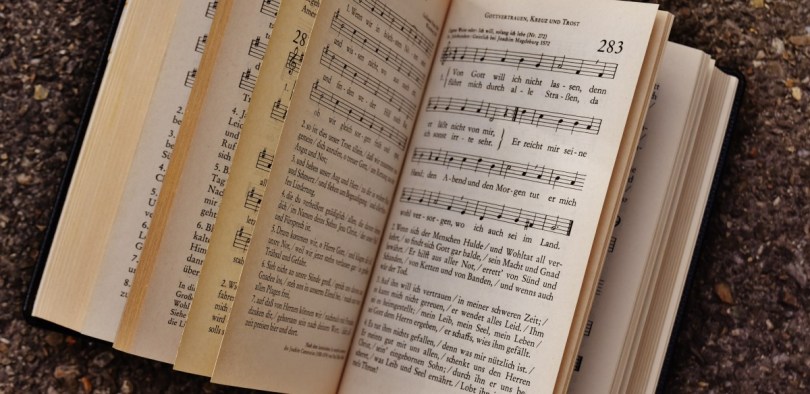
The Joy of Hymnals

I recently started playing piano for Wednesday night and some Sunday services at my little Free Will Baptist Church.  My church has about thirty or forty attendees on a good Sunday morning, so it’s slim pickings for pianists.

The little old lady who had been playing is very feeble, and she managed to miss more accidentals than a seventh-grade clarinet player due to her failing hearing and eyesight.  As such, she was eager to pass off the monkey’s paw of church piano playing to someone else.

As such, I’ve gradually improved my sightreading.  More importantly, I’ve enjoyed the opportunity to reacquaint myself with some wonderful old hymns—and to learn some for the first time.

Read More »

SubscribeStar Saturday: The Stakes of the Culture War

A special note:  today’s SubscribeStar Saturday is probably the most important essay I’ve written this year.  I encourage to read it with your subscription of $1/mo. or more.  If you’re unable to pitch in, send me a message and I’ll e-mail you a PDF.

Today’s post is a SubscribeStar Saturday exclusive.  To read the full post, subscribe to my SubscribeStar page for $1 a month or more.

Over the past couple of weeks, the stakes of the culture war have really hit home for me.  As I wrote last weekend, the “misinformation gap” between regular voters and reality seems overwhelming.

I’ve long held that building individual relationships can change lives, and can undo a great deal of brainwashing, and I have anecdotal proof:  through patient dialogue and loving guidance (and prayer), I helped guide a former student away from progressive extremism and bisexuality (it was a male student, so it’s impossible for him to be truly bisexual, anyway).  He’s now a girl-loving populist and, while he’s not totally on the Trump Train, he’s longer a Bernie Bro.

But that kind of patient, incremental relationship-building, while critical, is too slow for our present crisis.  It’s also incredibly wearying because it’s so labor-intensive, and because of the immensity of the project:  there’s a lot of brainwashing to undo, and most of what needs to be unwashed is quite subtle.

To read the rest of this post, subscribe to my SubscribeStar page for $1 a month or more.

SubscribeStar Saturday: Christians Protect Other Faiths

There’s been a debate raging on the Right between David French and Sohrab Ahmari that is ostensibly about civility in the political arena.  What it’s really about is a struggle for who will dominate conservatism:  the plucky culture warriors of the populist, Trumpian Right, or the hand-wringing sellouts of Conservatism, Inc.

That’s a story for another SubscribeStar Saturday, but is relevant to this topic.  Ahmari and other First Things writers signed their names to a manifesto in March detailing their resistance to and struggle against the prevailing liberal-progressive orthodoxy.  In his controversial follow-up piece, “Against David French-ism,” Ahmari soundly rejects hyper-individualism (and the kind of weak-willed ineffectualism of libertarian solutions to political and social problems) and vaguely calls for a state more attuned to Christian principles.

Critics are accusing him of advocating for a Catholic theocracy, which is, of course, completely unworkable in the pluralistic United States.  But I don’t think that’s precisely what Ahmari has in mind (although it’s a bit unclear).  He is correct that the United States was founded to be an implicitly Christian country.

To read more, subscribe to my SubscribeStar page for $1 a month or higher.  Surely you want to read how I support such a sweeping claim, yes?

Somali Shenanigans

Mass immigration and open borders are huge problems, but their costs are sometimes difficult to see.  Generally, Americans take a rosy view of immigration, as it conjures up images of plucky Irishmen crammed onto ships, chuffing past Ellis Island.  We’re the melting pot—people of different creeds and races come here, each contributing some distinct spices to the stew, but ultimately subsuming into the larger cultural heritage and mores of the host country.  Learn English, learn the Constitution, follow the rules, and you’re golden.

Of course, that all assumes the assimilability of the immigrants.  Back in those rose-tinted Ellis Island days, waves of Irish, Italian, and Eastern European immigrants (not to mention Chinese and Japanese migrants to California) caused great consternation, as each ethnic tribe and nationality stuck to its own.  With the National Origins Act of 1924, that great wave of migration trimmed to a trickle, with quotas favoring immigration from Western Europe.  Combined with the national struggles of the Great Depression and the Second World War, those migrants had time to get “baked in” to the national pie, and emerged full Americans.

Consider, too, that these immigrants came to the United States at a time when there was significant friction by doing so.  Many of them would never return to their home countries, or would do so only many decades later.  Lacking the access to mass, global communications networks, many of them never saw or heard from their relatives and families again.

Today, immigrants are able to communicate seamlessly with their relatives back home—a wonderful marvel of our modern-age.  They can also hop a jet plane and be back in hours (or get here quickly).  That same friction is no longer present to the same extent as it was 100 years ago.

Couple that with massive legal and illegal immigration, and the push to assimilate begins to vanish rapidly.  That push becomes more of a gentle nudge, if that.  Why learn English and the local customs when you can be surrounded by your hombres from back home?

Let’s go a step further:  what if your host culture no longer promotes or defends the rightness of its own beliefs and values?  Instead, it promotes multiculturalism and diversity as self-evident goods.  The official and cultural messages are no longer “assimilate” and “respect our laws, values, and God,” but instead become, “do your own thing” and “we’re nothing special—we don’t even really believe this stuff.”  Suddenly, there’s no compelling reason to assimilate into a culture that lacks confidence in itself.

Take all of that and add in a culture that does have some conviction in the rightness—and righteousness—of itself, and you’ve got the makings of a cloistered, insular community of unassimilable immigrants in your midsts.

Such is the situation in Minnesota with the Somali “refugees” living there.  They are, almost universally, devout Muslims.  They are also what the cool kids call “visible minorities”—they’re black—which serves as a further impediment to assimilation.  Islam in its most fundamental form is, essentially, at odds with Western civilization.  The very existence of Sharia law conflicts directly with the Constitution.  It’s all a recipe for disaster.

Indeed, the situation in “Little Mogadishu“—the Somalian neighborhood in the Minneapolis-St. Paul area—is a miniature form of the Islamic migrant crisis Europe has endured for years now.  Like the banlieues of France and Belgium, Somalian Muslims have created their own ethnic enclave in the heart of a State once dominated by Swedes and Germans.

Little Mogadishu is, sadly, following the pattern of other Muslim-dominated areas in the West.  It’s crime rate is through the roof, growing 56% in 2018.  Most of that increase is due to gang violence between competing Somali street gangs.

Minnesota—in a suicidal display of “Upper Midwestern Nice”—has encouraged the accumulation of Somalis into its State, creating a powerful ethnic voting bloc that holds increasing sway over the Democratic-Farm-Labor Party (the technical appellation for the Democratic Party in Minnesota).  Freshman Congresswoman Ilhan Omar, who can barely speak English without an anti-Semitic accent, is a troubling figure to have walking the highest corridors of power.  She’s a political figure ripped straight out of sub-Saharan

That’s had lethal consequences, too, such as Somali police officer Mohammed Noor’s fatal shooting of Australian Justine Damond.  That killing drew attention to what was likely an unfortunate diversity-hire.  The Minneapolis Police Department is, apparently, attempting to hire more Somali officers to improve community outreach in Little Mogadishu, but why did the city allow such an alien enclave to develop in the first place?

That incident at least received coverage from the mainstream media.  What didn’t was this piece from InfoWars, which details (with police documents) the antics of a group of eight or ten Somali teens.  It seems these precocious, vibrant youngsters were spreading diversity with hammers and pipes in an attempt to rob elderly white people.

Some of these attacks are, no doubt, the result of typical inner-city gang violence.  But the insidious influence of radical Islamism is alive in well in the environs of this Minneapolis banlieue.  Fox News calls it “the terrorist recruitment capital of the US.”  Ami Horowitz, in a jaw-dropping YouTube video, demonstrates that Somali Americans believe Sharia law is preferable to (and, by implication, should replace) America’s constitutional law.

So, how does the United States avoid replicating the errors of Europe and Minnesota?  Tighter immigration restrictions would be a key first step.

Another would be more drastic, and unlikely politically.  Indeed, were it to succeed, the precedent it established could be destructive in the long-run to religious liberty.  I’ll elaborate:

Article VI of the Constitution states that “no religious Test shall ever be required as a Qualification to any Office or public Trust.”  That is a beautiful statement in favor of religious liberty.

That said, Islam may very well be the grand exception.  It is a faith that is fundamentally incompatible with the faith, culture, and laws of the West.  It has no desire to reform (indeed, it may lack the ability to do so), and it contains within it no separation of church and state.  The faith of Islam is the law code.

As such, one could argue it may be necessary to amend the Constitution to ban Muslims from serving in higher office.  That is a bold step, and one that I shrink away from even as I ponder it.  But can there be any guarantee of loyalty from followers of a religion that is so hostile to American and Western values?

Of course, the flaw in this approach is that individual Muslims are, like lapsed Catholics and Protestants, sometimes easygoing about their faith.  At the same time, even lax Muslims have a tendency to radicalize quickly.  Just look at the Boston Marathon bomber, who went from being a pot-smoking loser to killing innocent people in the blink of an eye.

Regardless, the West has to wake itself up to the real, existential threat Islam represents.  We’ve spent nearly 1400 years fighting against its aggressive expansion—the Battle of Tours, the defense at the gates of Vienna, the Reconquista—only now to invite the invaders in with open arms?

A few hundred Muslim immigrants a year is no big shakes.  But if we adopt Europe’s “come one, come all” approach, we’ll lose everything that makes our country great, and free.

The Decline of Religion in America

A frequent topic of this blog is religion, specifically Christianity, and its influence on American society and Western Civilization.  Many of the problems we face as a nation are the result not only of bad government policy or dangerous ideologies, but are metaphysical and spiritual in nature.  As Paul writes in Ephesians 6:12, “For we wrestle not against flesh and blood, but against principalities, against powers, against the rulers of the darkness of this world, against spiritual wickedness in high places.” (KJV)

As such, two pieces caught my eye this week, both dealing with the decline of religion in the West generally and the United States specifically.  One is from Dissident Right blogger Z Man, “Religion Versus Capitalism“; the other is a syndicated column by Daniel Davis, “America is Still Highly Religious, So Why Do We Keep Liberalizing?”  Both offer different answers to the question posed by the latter question.

For Davis, the problem is that, while Americans are more religious than our European counterparts, and that we say we want a greater role for religion in society, our theology is bad—infected (my term) by the social justice and Cultural Marxist platitudes of our age.

Americans embrace “feel-good Christianity,” what I call the “Buddy Christ” version of our faith:  Jesus was just a cool hippie who wanted everybody to love each other, man.  In this distorted version of the Gospel, sin isn’t a grave threat, but simply “missing the mark”—you’ll do better next time, kiddo.  Keep practicing sinning and eventually you’ll hit that mark!

(I’ve actually heard this argument from some Evangelical preachers, mostly of the hip, non-denominational type.  They get so caught up in the root of the word “sin” as “missing the mark” in the context of target practice, they inadvertently give blanket license to sin, as grace is abundant, so God will forgive you—an early heresy that the Apostle Paul addressed directly.  “Missing the mark” trivializes the gravity of sin, making it sound like “oops! My bad!”  If the “mark” is righteousness, then missing the mark is pretty serious.)

Davis points out the pitfalls of this “feel-good Christianity,” and our propensity to make God fit our worldview, instead of us trying to accept and embrace His:

What we have in America is a radical separation of God from “reality”—the real world that we claim to live in. It’s not that we reject “God” per se, but we reject a God who comes with a certified worldview package—a God who orders the universe, sets moral norms, defines our being, and binds our consciences to a moral code in this world—today.

We’ve kept God, but jettisoned the traditional package.

The problem is, this is almost the same as rejecting God completely. If believing in God has no impact on the way we view realities in this world—whether they be gender, marriage, or who counts as a person worthy of dignity and respect—then what God are we even worshipping?

Could it be that the atheists are right when they accuse us of worshipping a God of our own making?

Davis also links to a website, The State of Theology, which highlights the disconnect between professions of faith and what Christians—including Evangelicals!—actually believe.  Part of the problem is “feel-good” theology, but a big part is simple biblical ignorance.  Americans pay lip service, according to The State of Theology, to core precepts of Christianity, but don’t seem to understand them at a deeper level or apply them to their daily lives.

Z Man—who I believe is Catholic and Catholic-educated, though he stated in one podcast that he hasn’t been to church in years—approaches the problem from a different angle.  He argues, essentially, that the proliferation of capitalist materialism is at odds, fundamentally, with Christianity and other religions, and the West has embraced materialism as its true faith.

He also links the decline of religion to a decline in fertility rates, and notes that as nations have become more integrated in the global economy, they’ve become less religious and less fertile.  There are myriad possible explanations for declining birthrates in developed societies, but Z Man’s theory is intriguing.  As material wealth increases and the profit motive becomes the “highest good,” religiosity declines.  With the decline of traditional religious values comes less of an emphasis on family formation.

For Z Man, the problem is that we worship materialism—he argues that libertarianism is the irrational, passionate “religion” of capitalistic materialism—in place of God.  To quote his piece at length:

In a system where the highest good is a profit, then all other considerations must be secondary. Lying, for example, is no longer strictly prohibited. The seller will no longer feel obligated to disclose everything to the buyer. The seller will exaggerate his claims about his product or service. Buyers, of course, will seek to lock in sellers into one way contracts based on information unknown the other seller. The marketplace, at its most basic level, is a game of liar’s poker, where all sides hope to fool the other.

Religion, in contrast, also assumes certain things about people, but seeks to mitigate and ameliorate them. Generally speaking, religion assumes the imperfection of man and sees that imperfection as the root cause of human suffering. While those imperfections cannot be eliminated, the negative effects can be reduced through moral codes, contemplation and the full understanding of one’s nature. Religions, outside of some extreme cults, are not about altering the nature of man, but rather the acceptance of it.

I would argue that capitalism does not necessarily lead to liars—how do you build business if you gain a reputation for dishonesty?—but capitalism definitely needs the traditionalism of orthodox religion to work for long.  In the absence of the moral framework that socially and religiously conservative values supply, capitalism can easily become an orgiastic free-for-all of mendacious exchanges and swindling.

Indeed, China’s autocratic capitalism is a prime example of a state using the mechanism of capitalism in a moral vacuum to aggrandize its own power.  Wags and particularists will argue that China’s system is not true capitalism, but rather a corporatist perversion, which is certainly accurate—but the United States has its share of cronyistic arrangements.  To be clear, there is a world of difference separating China’s increasingly totalitarian brand of corporatism and America’s more mundane system of well-heeled lobbyists, but the Chinese example clearly demonstrates what happens when you value pure materialism at the expense of everything else.

While I don’t completely accept Z Man’s analysis, I do think he makes a solid point.  Christians should never subvert true faith in Christ to the false god of capitalist materialism.  Indeed, such faith is merely the more benign face of a two-sided Marxist coin.

Both unbridled libertarianism and full-throated Communism are premised on a materialist worldview that discounts the metaphysical.  The former allows religion to exist as a largely private, subjective concern, so long as it doesn’t get too insistent about its truth claims.  The latter seeks to destroy any loyalty to anything other than the state—or the “Party,” or “Dear Leader,” etc.  The former is certainly preferable to the latter, but both ultimately will leave followers unfulfilled.

The Church—Orthodox, Catholic, High Protestant, Evangelical Protestant, etc.—needs to commit itself fully to foundational biblical Truth.  We should be reading and debating Augustus and Aquinas, not to mention the Gospels and Paul’s Epistles.  Preachers need to move beyond the mega-church formula of glossy advertising campaigns, Sunday morning rock concerts, and blandly inoffensive, pop-culture-laden sermons.

Instead, unabashedly proclaim the Gospel.  Denounce abortion from the pulpit.  Call out homosexuality.  Call out radical Islamism and progressivism as the existential threats they are to Western Civilization.  Deus Vult!

The Impermanence of Knowledge and Culture: The Great Library and Notre Dame

On Sunday, blogger and antiquarian Quintus Curtius posted a piece about the famed Great Library at Alexandria.  The Library is considered one of the Seven Wonders of the Ancient War, and its destruction is an event that stands as one of the great cautionary tales of history.

Except, as Curtius points out, it wasn’t a single event.  Historians point to the accidental burning in 48 B.C., when Julius Caesar’s men’s burned Pompey’s fleet, and the flames spread, consuming a substantial portion of the Library’s connections.  Curtius mentions other events that may have damaged the Library, including Emperor Theodosius II’s decree to destroy pagan temples and buildings.

But, significantly, Curtius argues that it was centuries of neglect that destroyed the Great Library, rather than one single, spectacular event.  The burning of the Library in 48 B.C. makes for a dramatic story, but lack of maintenance, poor funding, and corrupt officials, Curtius contends, ultimately destroyed the Library.

To quote Curtius (emphasis is his):

The point is that libraries, like all institutions of culture, must be maintained and refurbished by every generation.  As I see it, the evidence points to a stark truth that tells us much about human nature.  The primary destroyer of the library, and perhaps of most cultural artifacts, was apathy.  How does this happen, in practice?  It is very simple.  It happens the same way official neglect happens today.  A new king or government minister would have said to himself, “I don’t think we need to allocate funds to the Alexandrian Library right now.  I have other priorities.  I would rather spend the money on ships, the army, or my new summer retreat.”  And this is how it starts.

Apathy—a general lack of care and concern for our cultural artifacts—destroys them far more effectively than book burnings.  Death by a thousand insouciant cuts, rather than the dramatic thrust of the sword, causes all things to wither away.

Having read Curtius’s piece (and a podcast related to it, which I cannot now locate), I very much had this topic on my mind when I heard about the tragic fire at the Notre Dame Cathedral on Monday.  I did not realize that the great cathedral is 850-years old.

Let that sink in:  it’s stood for nearly a millennium, surviving the Wars of Religion in France; the Thirty Years’ War; and the First and Second World Wars.  It also survived the French Revolution, which saw many churches destroyed or converted into blasphemous “Temples of Reason” throughout Paris and France.

Notre Dame is a powerful symbol of Western Civilization:  a bold testament of the faith and piety of a once-proud, Christian people.  A civilization that believes in itself and its God builds and maintains an edifice like Notre Dame.

We don’t yet know the source of the Notre Dame fire (at least, I don’t), and I’ve heard and read several explanations, from the careless (a dropped cigarette) to the, if true, quite wicked (Islamic terrorism; to reiterate, I am not claiming this was the cause of the fire, just that I’ve heard it insinuated).

What we do know is that France’s president, Emmanuel Macron, has promised to rebuild the destroyed roof and upper level of the cathedral “in a way consistent with our modern diverse nation.”  I let out a moan of despair upon reading that phrase.

Notre Dame is a not a symbol of a “modern diverse nation,” nor should it be.  The only universalism it embodies is Christ’s universal Love for all of humanity.  Beyond that, it is a symbol of the French people, and of Christendom.  I am not convinced that the “diverse” Maghreb and Bedouin tribesman of the banlieues are deserving of that patrimony.

The West is constantly bending over backwards to accommodate foreign cultures in a show of cosmopolitan hospitality, but the favor is never returned.  Unassimilated migrants and “refugees” don’t deserve architectural “representation” in a building that never would have been built were it not for Charles “The Hammer” Martel.

Knowledge and culture are both one generation away from darkness.  Westerners should understand the deep roots of our civilization, and protect it at all costs.  That means teaching it to our children, and instilling them a love of and reverence for our institutions, culture, and faith.