The Joy of Renaissance Music: Palestrina’s “Pope Marcellus” Mass

It’s another school year, which means another year going through the history of Western music in Pre-AP Music Appreciation.  This week we’re diving into Renaissance music, after spending last week covering the music of the Middle Ages.

Contrary to popular belief, the Middle Ages were not a period of depressing darkness, but rather a lively age.  I certainly wouldn’t want to be a peasant pushing an ox cart full of dung, but that peasant knew his place in the universe, in the sense that he knew he was part of an ordered cosmos with God at both its head and its center.

More on that another time, but I mention it to note that the Renaissance would not have been possible without that long age of faith in the Middle Ages.  Still, the Renaissance Period—variably dated, but starting roughly sometime in the fifteenth century, and extending to the seventeenth century—was a period of increased interest in the art and literature of ancient Greece and Rome, especially the human realism depicted in the art of those great civilizations, both a continuation of and a departure from the Middle Ages.

It also saw the declining influence of the Catholic Church in Europe, especially in the wake of the Protestant Reformation of the sixteenth century.  As Protestantism and other social forces broke the Church’s monopoly on education and its dominance over art and music, Catholicism mounted a Counter-Reformation, aimed at both reducing the influence of Protestantism and reforming real abuses within the Roman Church.

That effort, naturally, involved revisions to music.  Catholic priests denounced the increasingly theatrical nature of church music, decrying it as distracting from the simple message of the Gospel and the sacred Latin text, instead serving as gaudy entertainment for Mass goers.  Much like the megachurch arena rock concerts of today, services had become garish and maudlin, a reflection of the corruption within the Church.

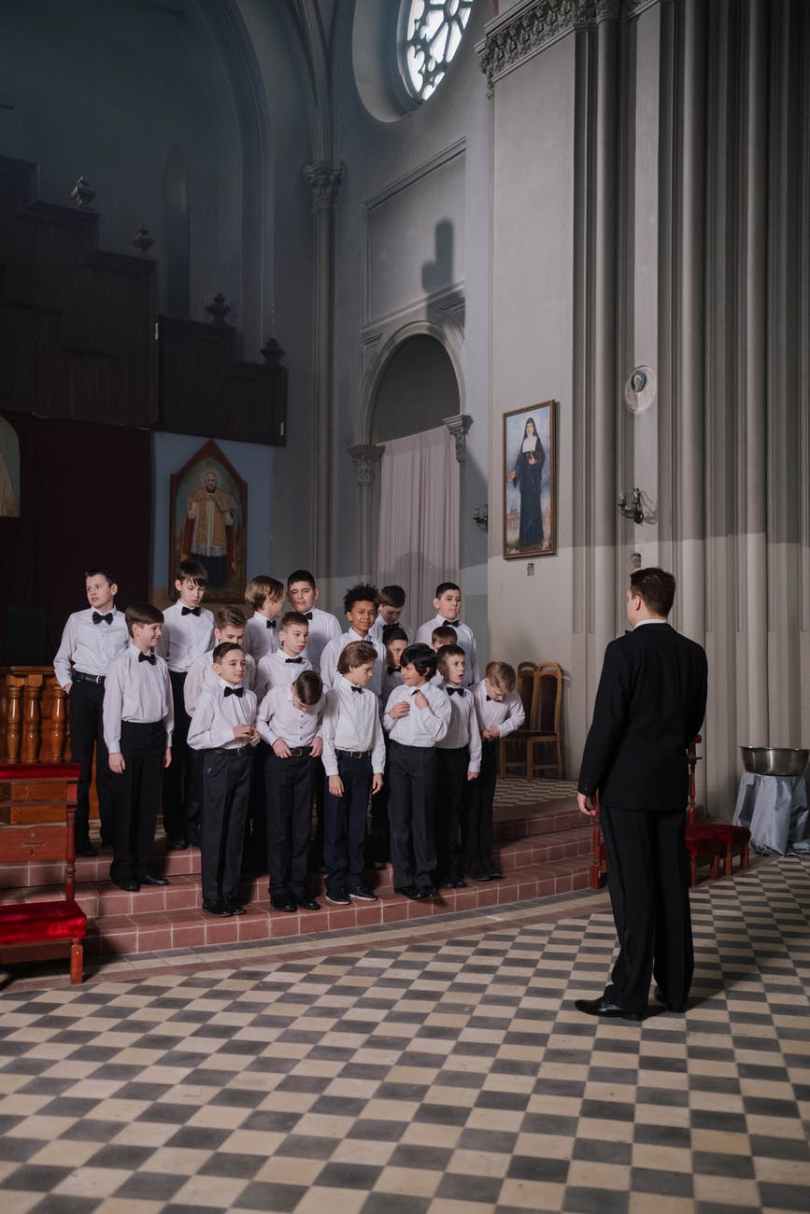
It was in this context that Giovanni Pieluigi da Palestrina composed his greatest works.  According to Roger Kamien in Music: An Appreciation (the eighth brief edition, which I use with my students), Palestrina composed some 104 masses and 450 other sacred works, and his music became, essentially, the gold standard of church music until modern times (“masses” in the musical context are works built around five sung prayers, the Kyrie, Gloria, Credo, Sanctus, and Agnus Dei, not to be confused with the Catholic service).

Read More »

TBT: How the Reformation Shaped the World

It’s a brand new year, and I’m excited for what it holds.  For this week’s TBT, I looked back to the first post of 2019—which then snowballed into a year-and-counting of daily posts.

This piece drew inspiration from a Pager U video (links below), and featured some of my off-the-cuff reflections on the influence of the Protestant Reformation.

I’ll let the original speak for itself.  Here is 2019’s “How the Reformation Shaped the World“:

There’s a video up on Prager University called “How the Reformation Shaped the World” (PDF transcript for those who prefer to read).  Stephen Cornils of the Wartburg Theological Seminary gives an adequate, broad overview of the impact of the Protestant Reformation (albeit with some noise about Martin Luther’s anti-Semitism, which, while accurate, smacks of throwing a sop to politically-correct hand-wringers).  You can view the video in full below.

I’ve written about the influence of Christianity (and it was, notably, Protestant Christianity) on the founding of America, and I’ve discussed how shared Protestantism helped create an American identity.  Indeed, I would argue that, without Protestantism, there would be no America, as such.

I would also argue—perhaps more controversially—that America’s commitment to Protestantism as opposed to Catholicism allowed the nation to avoid the anticlerical upheavals seen in France and other predominantly and officially Catholic countries.  While there were official, established churches at the State level into the 19th-century—which I wrote about in “The Influence of Christianity on America’s Founding“—the lack of federal establishment, and the general movement towards greater religious liberty, ensured a proliferation of Protestant denominations in the early Republic.

Catholicism inherently insists upon a top-down hierarchy of control.  Luther’s view of man’s relation to God is horizontal, as Bishop James D. Heiser argues in his extended sermon The One True God, the Two Kingdoms, and the Three Estates (one of my Christmas gifts, incidentally, and a good, quick read for just $5).  That is, every man is accountable to God directly, and is responsible for accepting Christ and maintaining his relationship with God.  That horizontal, rather than vertical, relationship infuses Western Civilization with a sense of individualism, the effects of which have been far-reaching and both positive and negative.

Regardless, the impact of the Protestant Reformation is staggering to consider.  The Catholic Church in the 16th century was an increasingly sclerotic and corrupt institution, one that had fallen from its great height as the pacifying influence upon a barbaric, post-Roman Europe (of course, the Counter Reformation reinvigorated and, in part, helped purify the Church).  With the advent of the printing press and translations into national languages, conditions were ripe for an explosion of religious reform in the West.  The ripple effects of the Reformation still pulse through Western life and culture.

That said, I’m not anti-Catholic, nor is that the intent of this post.  In today’s political and theological climate, committed followers of Christ must band together, be they Catholic or Protestant.  I don’t “buy” Catholic theology in toto, but I respect the Catholic Church’s longstanding traditions and consistent institutional logic.  Thomas Aquinas’s cosmological argument in the Summa Theologica is pretty much what I learned growing up as an Evangelical Protestant.  And I’m broadly sympathetic to the traditional Catholic argument that the Reformation busted up the orderly cosmos of medieval European society (see Richard Weaver‘s various essays for further elucidation of this idea).  A side effect of the Reformation naturally includes many of the cons of modernity.

Ultimately, too, Christians face the double-threat of modern progressive ideology and radical Islamism.  I’ve written about the former in detail, but not so much the latter.  For the moment, suffice it to say that the two are temporary, uneasy, but powerful allies against a traditionalist, conservative, Christian worldview, and both are deeply antithetical to Western values and culture.

These are some broad and slapdash thoughts, ones which I will gradually develop in future posts as necessary.  Any useful resources or insights are welcome—please share in the comments.

Happy New Year!

Lazy Sunday XXXIV: The Desperate Search for Meaning Series

Next to Halloween and Christmas, today is the most wonderful of the year—it’s the day that the clock falls back an hour!  Sure, that means I’ll never see the sun for the next few months, as I’ll spend the dwindling daylight hours inside a classroom, but at least I got an extra hour of sleep this morning.

This week saw a good bit of reflecting on what is important in life (like ghost stories), so I thought it would be a good opportunity to reflect on “The Desperate Search for Meaning” series of posts.  It will also help to aggregate those posts into one place.

  • The Desperate Search for Meaning” – The post that started this impromptu series (and the subject of this week’s Flashback Friday featurette), this essay was about a New Age healer, Audrey Kitching, who exploited vulnerable women into working in slave-like conditions.  Kitching bamboozled these women with her gauzy, neo-spiritualist babble; her thin sense of meaning of belonging roped them in, as they desperately attempted to fill a void in their lives—and that doesn’t even include all the women who bought Kitching’s fraudulent products.  It’s a sad story, one I think is indicative of our times.
  • The Desperate Search for Meaning, Part II” – This piece was about a crazy old lady who believes that cancer can be extruded from the body through a series of energy-channeling motions—at least on the surface.  The real focus was that, while this old loon was going through her bizarre ritual, she espoused a cult of death:  having babies is bad because of overpopulation.  It’s the religion of environmentalism, one of the several cults of modern progressivism.  It is a deadly ideology that is, essentially, anti-human.
  • The Desperate Search for Meaning, Part III: Progressive Power Crystal” – This post looked at an LA Times piece on New Age spirituality, and how it was replacing traditional Christianity as the “faith” of young Americans.  That’s all tied up with progressivism’s imperial and totalitarian ambitions—all off these anti-Christian, anti-American movements are of a piece, serving similar ends.  As I write at the end of the post:

    “Even if our elites aren’t specifically Satanists, they’re certainly not Christians.  Their religion is progressivism, an jumble of ideologies that, at bottoms, rejects Christianity and its view of human nature.  Their gods are power and envy—just like Lucifer.”

  • The Desperate Search for Meaning IV: Vanity” – This piece pulled from a sermon my pastor gave on Ecclesiastes, one of my favorite books of the Bible.  Ecclesiastes is a work of philosophy, in which King Solomon examines his life and finds that all of his pursuits are, ultimately, meaningless:  he will die, and everything he experienced and built will eventually disappear.  Therefore, his only true meaning comes through God.  It’s the earliest form of Christian existentialism ever written (with apologies to Søren Kierkegaard).  It’s also a powerful reminder that this world, in which we are so involved, is fleeting.

That’s it for this Sunday.  Going back through this posts really makes my soul ache for the people that fall for New Age nonsense and neo-paganism.  Good thing I’ve found the One True Faith—the Southern branch of the Free Will Baptist denomination. 😀

Happy Sunday!

—TPP

Other Lazy Sunday Installments:

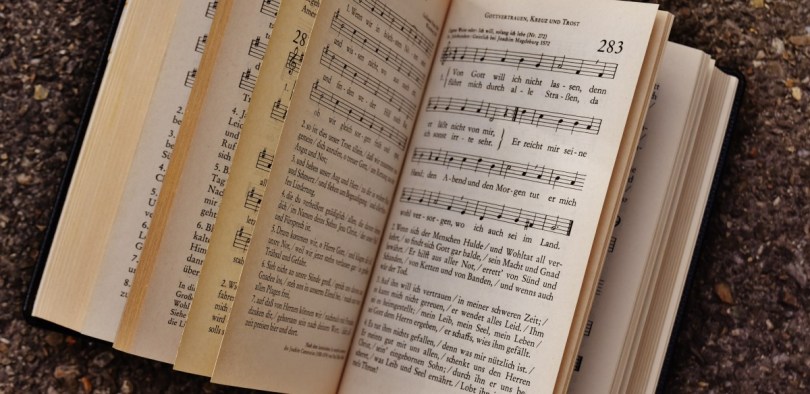
The Joy of Hymnals

I recently started playing piano for Wednesday night and some Sunday services at my little Free Will Baptist Church.  My church has about thirty or forty attendees on a good Sunday morning, so it’s slim pickings for pianists.

The little old lady who had been playing is very feeble, and she managed to miss more accidentals than a seventh-grade clarinet player due to her failing hearing and eyesight.  As such, she was eager to pass off the monkey’s paw of church piano playing to someone else.

As such, I’ve gradually improved my sightreading.  More importantly, I’ve enjoyed the opportunity to reacquaint myself with some wonderful old hymns—and to learn some for the first time.

Read More »

How the Reformation Shaped the World

There’s a video up on Prager University called “How the Reformation Shaped the World” (PDF transcript for those who prefer to read).  Stephen Cornils of the Wartburg Theological Seminary gives an adequate, broad overview of the impact of the Protestant Reformation (albeit with some noise about Martin Luther’s anti-Semitism, which, while accurate, smacks of throwing a sop to politically-correct hand-wringers).  You can view the video in full below.

I’ve written about the influence of Christianity (and it was, notably, Protestant Christianity) on the founding of America, and I’ve discussed how shared Protestantism helped create an American identity.  Indeed, I would argue that, without Protestantism, there would be no America, as such.

I would also argue—perhaps more controversially—that America’s commitment to Protestantism as opposed to Catholicism allowed the nation to avoid the anticlerical upheavals seen in France and other predominantly and officially Catholic countries.  While there were official, established churches at the State level into the 19th-century—which I wrote about in “The Influence of Christianity on America’s Founding“—the lack of federal establishment, and the general movement towards greater religious liberty, ensured a proliferation of Protestant denominations in the early Republic.

Catholicism inherently insists upon a top-down hierarchy of control.  Luther’s view of man’s relation to God is horizontal, as Bishop James D. Heiser argues in his extended sermon The One True God, the Two Kingdoms, and the Three Estates (one of my Christmas gifts, incidentally, and a good, quick read for just $5).  That is, every man is accountable to God directly, and is responsible for accepting Christ and maintaining his relationship with God.  That horizontal, rather than vertical, relationship infuses Western Civilization with a sense of individualism, the effects of which have been far-reaching and both positive and negative.

Regardless, the impact of the Protestant Reformation is staggering to consider.  The Catholic Church in the 16th century was an increasingly sclerotic and corrupt institution, one that had fallen from its great height as the pacifying influence upon a barbaric, post-Roman Europe (of course, the Counter Reformation reinvigorated and, in part, helped purify the Church).  With the advent of the printing press and translations into national languages, conditions were ripe for an explosion of religious reform in the West.  The ripple effects of the Reformation still pulse through Western life and culture.

That said, I’m not anti-Catholic, nor is that the intent of this post.  In today’s political and theological climate, committed followers of Christ must band together, be they Catholic or Protestant.  I don’t “buy” Catholic theology in toto, but I respect the Catholic Church’s longstanding traditions and consistent institutional logic.  Thomas Aquinas’s cosmological argument in the Summa Theologica is pretty much what I learned growing up as an Evangelical Protestant.  And I’m broadly sympathetic to the traditional Catholic argument that the Reformation busted up the orderly cosmos of medieval European society (see Richard Weaver‘s various essays for further elucidation of this idea).  A side effect of the Reformation naturally includes many of the cons of modernity.

Ultimately, too, Christians face the double-threat of modern progressive ideology and radical Islamism.  I’ve written about the former in detail, but not so much the latter.  For the moment, suffice it to say that the two are temporary, uneasy, but powerful allies against a traditionalist, conservative, Christian worldview, and both are deeply antithetical to Western values and culture.

These are some broad and slapdash thoughts, ones which I will gradually develop in future posts as necessary.  Any useful resources or insights are welcome—please share in the comments.

Happy New Year!