Cybertruck

Last week, troubled electric automaker Tesla announced Elon Musk’s latest brainchild, the Cybertruck.  The Cybertruck—the name of which I am sure is meant to evoke the dystopian sci-fi genre cyperpunk—features a rolled steel and titanium exoskeleton that looks like a Nintendo 64 polygonal rendering of an automobile.

It’s unorthodox design aside, I honestly can’t make up my mind on whether or not I like this vehicle.  Last week I lamented the new electric Mustang, not because it is electric, but because it’s a hatchback.  The title of that piece was “New Mustang is a Sign of the Times,” and my point was that everything awesome seems to be deteriorating.

Does the Tesla Cybertruck fit that trend?  Is it a horrible monstrosity?  Or is it a daringly original vehicle?

I’m not sure.

Read More »

SubscribeStar Saturday: Shrinkflation

Today’s post is a SubscribeStar Saturday exclusive.  To read the full post, subscribe to my SubscribeStar page for $1 a month or more.

When Americans experience a sense that the world we live in is not what it should be, we’re often scolded for not being thankful for all of our material abundance.  Indeed, we are extremely blessed to live in an age with plenty of food, infrastructure, and novelties, and we accordingly enjoy a standard of living beyond the wildest dreams of most of our forebears.

That said, there’s a nagging sense that, for all that abundance, things are amiss.  There’s a strong tug of to that undercurrent among conservatives today.  Material abundance is great, but it hasn’t addressed deeper moral problems or battles in the culture wars, because those problems aren’t materialist in nature—they can’t be.

Even within the plane of the material world, things seem a bit off.  That was the crux of my post about the new Mustang, a redesign so beyond the scope of the name “Mustang” that it’s ludicrous to call it as such.  Everywhere we look, there seems to be disintegration and decay—of value, of standards, even of size.

To read the rest of this post, subscribe to my SubscribeStar page for $1 a month or more.

On Ghost Stories

Yesterday’s post about Father Robert Morey’s courageous stand for the unborn really took off.  Thank you to readers for sharing the post, and thanks to those of you who left comments.  Please continue to keep Father Bob in your prayers.  —TPP

It’s Halloween!  Well, at least it’s All Hallow’s Eve Eve, but that’s close enough for some ghoulishly delicious ghost stories.

I love a good ghost story.  The Victorians did the genre best, but many writers since have honed it further, adding their own unique twists and scares.  Even Russell Kirk, the great conservative philosopher, was a fan of ghost stories.  Indeed, his bestselling book was a ghost story.

For the Victorians, ghost stories were told at Christmastime.  This timing, while peculiar to modern readers, makes sense intuitively—Christmas is a time for remembering the past, in part (perhaps especially) our honored dead (just ask Washington Irvingif he comes by to haunt you).  The “ghosts” of departed loved ones linger closely during those long, frosty nights.  The inherent nostalgia of Christmas and the winter season—and bundling up next to a crackling fire—sets the perfect mood for ghostly tales.

Nevertheless, what other time of year can beat Halloween for a good tale of witches and werewolves; of monsters and mummies; of ghouls, goblins, and ghosts?

Read More »

Lazy Sunday XVIII: SubscribeStar Posts

For the past few weeks I’ve been pushing my SubscribeStar page more regularly, as readers have no-doubt noticed.  I’ve picked up one subscriber; naturally, I hope more will sign up!

Here’s the pitch:  I post a new, original essay exclusively to my SubscribeStar page every Saturday.  I also made #MAGAWeek2019 a SubscribeStar exclusive—that’s four posts about people or ideas that made America great (this year’s listJohn Adams, Alexander Hamilton, President Trump’s Independence Day Speech, and fast food).  For just $1/month, you get access to these essays.

To put that in perspective:  I’ll probably buy a pizza today for $12.  That’s what a one-year subscription to my SubscribeStar page will cost.  That’s at least fifty-two (52) original pieces, not including bonus content and current and future posts.

Even if you can’t read them on the Saturday they’re released, they will always be there!  And with new content every week, your subscription gains value with each post.  Right now there are ten SubscribeStar exclusive posts, including the #MAGAWeek2019 ones, and that number will continue to grow.

I’ll also post additional special content from time-to-time, in the vein of the #MAGAWeek2019 posts.  The long-contemplated Portly Politico Podcast, should it ever launch, will also be exclusive to SubscribeStar.

With all that said, this week’s edition of Lazy Sunday is dedicated to looking at the great SubscribeStar Saturday posts that are already on the site (excluding the #MAGAWeek2019 posts, which were the subject of last week’s Lazy Sunday).

  • The Portly Politico Summer Reading List 2019” – The long-awaited successor to “The Portly Politico Summer Reading List 2016,” this list of recommended summer reads will give you plenty of conservative brain food to feed your mind and your soul.  I give detailed reviews of my four recommendations.
  • Asserting Conservatism” – This essay argues for defining conservatism in positive—that is, on its own—terms, rather than as merely against the Left.  Standing athwart history, shouting “STOP” was a necessary step in the Buckleyite days of old-school National Review, when international Communism threatened to infiltrate and topple our institutions.  Culture Marxists have accomplished what Soviet Marxists could not, and it’s time to push back, not merely stem the tide.  Doing so will require a vigorous articulation and defense of conservatism—and a willingness to fight against Leftists.
  • Christians Protect Other Faiths” – Christianity gets a bad shake, considering it built Western civilization (with an alley-oop from ancient Greece, Rome, and Israel).  The tolerance Christianity teaches is a boon to believers of other faiths, as Christ teaches conversion through persuasion, and the basic dignity of all people, Jew and Gentile.
  • Immigration and Drugs” – This piece pulls from a couple of posts at VDARE.com, which linked illegal immigration from south of the United States border to the opioid crisis.  One solution from the author:  bomb the poppy fields in Mexico, not just Afghanistan.
  • Mid-Atlantic Musings” – During #MAGAWeek2019, I was in New Jersey.  This post is a reflection of my visit (spoiler alert:  I very much enjoyed it).  It also details my one-day trip to Coney Island, which is basically Myrtle Beach in Brooklyn.
  • The Real Color of Environmentalism is Red, Not Green” – Yesterday’s post, in which I compare Congresswoman Alexandria Ocasio-Cortez’s ludicrous Green New Deal to President Franklin Delano Roosevelt’s original New Deal.  Both rely on excessive federal and executive power, and the Green will ruin the economy and our nation just the way the original one did.

So, there you have it!  There’s a lot of great material, with more coming every Saturday.  Please consider subscribing to my SubscribeStar page for just $1 (or more!) per month to gain access to these and other essays.

Happy (and Lazy!) Sunday!

–TPP

Other Lazy Sunday Installments:

Gig Day!

Happy Friday, TPP Readers!  In lieu of my usual politically-charged antics, I thought I’d give you a brief glimpse into my non-political life.  Normally, that wouldn’t be very interesting—a hairy man watching YouTube videos in his underwear—but today is different:  it’s Gig Day!

When I’m not molding minds, I’m rocking faces.  “Rocking faces” is a relative term; my music is mostly piano-based pop-rock, and I shout out at performances, “Are you ready to soft rock?”  My music has been compared to Elton John, Meat Loaf, Ben Folds, and “Weird Al” Yankovic (how’s that for a mix).  Click those last two links to listen on Spotify, and I’ll earn ~$0.00011 per stream.

Anyway, that’s enough shameless self-promotion.  Because I’m writing this after a late night at an open mic, and because I’m excited to play my first major show since breaking my wrist last November (“major show,” again, being a relative term), I decided to take you on a tour of Gig Day rituals, and give you a break from politics.  We’ll get to how President Trump didn’t commit treason when he declined to diss the leader of a major nuclear power during a joint press conference next week.

The day of a show is always a bit electric.  I’ll spend this morning painting the floor of a boys’ locker room, but the tension and energy will be building even as I’m slopping paint.  The real magic happens after that.  I’ll come home and begin my elaborate pre-show rituals.

First, I’ll “sweat lodge it” in my little cottage for a short period.  This technique involves not running my flimsy air-conditioning units, while my body sweats out the impurities.  I’ll drink copious amounts of icy water, and probably run through some tunes.  I’m a very physical performer, and I get hot when I play, so the A/C will come on at some point during this phase.

After that, if all is good, I’ll begin packing everything into my twelve-year old minivan.  For a coffee house show like this, I’ll bring the following:

  • Keyboard (duh), mic stand, my beautiful Sennheiser microphone, and any necessary cables
  • A couple of tip jars
  • Merchandise, including my album and some sweet Tyler James Cook “Flamin'” t-shirts
  • A few Sharpies to sign autographs—because my fans deserve my signature immortalized in permanent marker

Next, I’ll take a purifying shower that will start off hot, then end ice-cold.  There’s no physiological reason for this method—I just like to cool down dramatically in the heat of the summer.  The A/C will be blasting pure frostiness by this point.

Then, I dress.  Tonight’s duds include this shirt:

Star Wars Shirt

My usual attire—even in the summer—consists of a long-sleeve button-up, jeans, dress-casual shoes, a sports coat, and tie (I used to play outdoor gigs in this get-up, minus the sports coat, but that was insane in South Carolina summers).  I’m sporting the above short-sleeve button-up because one of my weight-loss goals was to fit into it comfortably by the time I played this show.  I’ll probably still wear a tie with it.

Once everything is packed and ready to go—and after I’ve inventoried to make sure everything is packed (I once played a pool party gig without a mic stand; we had to suspend the mic from its cable over a support beam in the pop-up tent I was under)—I hit the road.  For today’s show, I’m picking up my buddy John, who will be joining me on this bill.

I like to arrive a solid hour before showtime, if not earlier.  It doesn’t take long to setup my minimal rig, but you never know what you’ll find.  I’ve played shows where the stage doubles as a dining area during normal business hours, and have had to move furniture just to set up my gear.  This timing also allows for a decent soundcheck, and gives me a chance to get my tip jars arranged as I want them.  Most importantly, it provides time to sort through music, tweak my setlist, and generally calm down before it’s showtime.

Finally—I play the gig!  Obviously, my favorite part, usually followed by some post-show camaraderie with friends and TJC mega-fans at that great, modern Southern institution, Cook Out.  John and I typically do a post-mortem of the show during our meal.

That’s a lot of navel-gazing, to be sure, but we’ll be back to our normal programming Monday.  I don’t play nearly as many gigs as I used to play, but it’s a decent way to earn a few extra bucks doing something I love.

If you’d like to learn more, visit www.tjcookmusic.com.

***

A final, parting coda:  I’m toying with the idea of doing a sort of “reverse house concert” later in the fall.  Unlike a typical house concert, where a host invites an artist to play, charges admission to friends, and puts the artist up for the night (usually with a free meal), I’d host a super-exclusive, very intimate show in my little place.

For context, I live in a 525-square foot cottage that’s packed to the gills with books, keyboards, and the like.  I’ve recorded a few “Kitchen Concerts” with John and another pal, Steve O (not the one you’re thinking about), a la NPR’s “Tiny Desk” concerts.  John and I would post up in the kitchen, and I’ll sell maybe six-to-eight tickets, with people piling in super-close.  We’d have some light h’ordeuvres, then commence a-rockin’.

The idea is that it’d be the ultimate fan experience, but we’d also livestream the concert on Facebook or Periscope for those unable to attend.  It would certainly be a unique experience.

What do you think?  Good idea?  Stupid to shove a bunch of people into a lonely man’s bungalow?  If you were interested in such an event, how much would you pay for a ticket?  $5?  $10?  $15?

Thanks for your feedback—and rock on!

TBT: Capitalism Needs Social Conservatism

On Tuesday, I wrote about the “Human Toll of Globalization“—the dire consequences, both economic and moral, that befall a community when its primary economic engine is gutted through a naïve faith in unbridled free trade and globalization.  Another title for that piece might be almost a mirror of this essay’s from 2016:  “Civil Society Needs Cash.”

I don’t want to take that argument too far, though.  In the case of Danville, Virginia—and countless other American towns that have seen their prosperity flee abroad, or to bicoastal urban cloisters—a decaying economy wrought decaying morality, civil society, and civic pride.  That would suggest that prosperity, in and itself, cannot sustain true morality and virtue.

Indeed, as I argue in the essay below, “Capitalism Needs Social Conservatism,” excessive prosperity and material comfort breed a kind of moral complacency, what Kenneth Minogue likened to widespread Epicureanism (an excellent essay, and well worth reading if you don’t mind subscribing to The New Criterion, which is also worth the price).  Richard Weaver—one of my intellectual heroes—compared the material comfort of the then-mid-twentieth-century West to a drunk who, having grown addicted to alcohol, and requiring ever-greater quantities of it, no longer has the capacity to obtain the very substance he craves.

Milton Friedman famously argued that economic liberty is a necessary precursor to political liberty.  Similarly, I would argue that morality and virtue are necessary pillars to sustaining economic liberty for any length of time.  Indeed, George Washington argued that religion and public morality were “indispensable” to a self-governing republic.

In my mind, the orthodox libertarian (in the political sense, not the “free-will” libertarianism of the free-will-versus-determinism debate in modern philosophy) commits the same error as the orthodox Marxist in relying too much on economic analysis of behavior.  The idea of the “rational man” or “man as a rational animal” is a uniquely modern concept, and while Westerners have tried hard to shoe-horn themselves into that mold, the inner, teeming depths of our souls are still pre-rationalist.  We need God, and we still live according to symbols, rituals, and virtues.

As I wrote in 2016, “Without moral common ground and shared values that stress self-control, liberty rapidly turns to libertinism.  Libertinism without a great deal of wealth leads to shattered lives, which in turn wreck families and communities.”  I’ll explore these ideas further in my upcoming eBook, Values Have Consequences.

***

For the past week, I’ve written about the decline of the nuclear family, with follow-up posts about divorce and sex education, and about the negative impact of the of the welfare state on family formation.  These post have generated some wonderful discussions and input from followers, and I’ve been surprised by their popularity.

As I wrote in “Values Have Consequences,” I’m devoting Friday posts to discussions of social conservatism.  Social conservatism is increasingly the red-headed stepchild of the traditional Republican “tripod” coalition that also includes national security and economic conservatives (with the rise of Trump, populist nationalism could count as a fourth leg).  Politically, this marginalization makes some sense, as it’s not likely that fifty or sixty years of cultural attitudes and values will be changed at the ballot box.

Nevertheless, social conservatism is an important leg of the tripod.  Indeed, I would argue that the three coalitions are not at odds, but create logical synergies that allow each leg to stand.  The stool is much more stable when the three legs work together.

Economic conservatism–by which I mean the belief that freer markets, fewer and lighter regulations, and lower taxes, or what is more properly called neoliberalism (after the classical liberalism of the 18th-century thinkers like Adam Smith)–is wonderful and hugely important.  It’s led to massive gains domestically and globally, lifting untold millions off people out of poverty.  It allows people to enjoy a greater variety of goods and labor-saving devices, and provides more leisure time (and plenty of things to do during that time).

But free markets unmoored from guiding principles, strong and stable institutions, and the rule of law can morph into mindless Mammon worship.  Without a shared sense of trust and belief in human dignity, capitalism becomes cold and abstract.

Further, full-fledged economic liberalization without the limiting principles applied by constitutionalism and a morality supported by strong families and a robust civil society can lead to socially-destructive disruptions and behaviors.

As I’ve argued many times, making mistakes or bad choices is the necessary price of liberty.  But for self-government to work effectively–and to avoid social instability–a healthy dose of social conservatism is the best medicine.

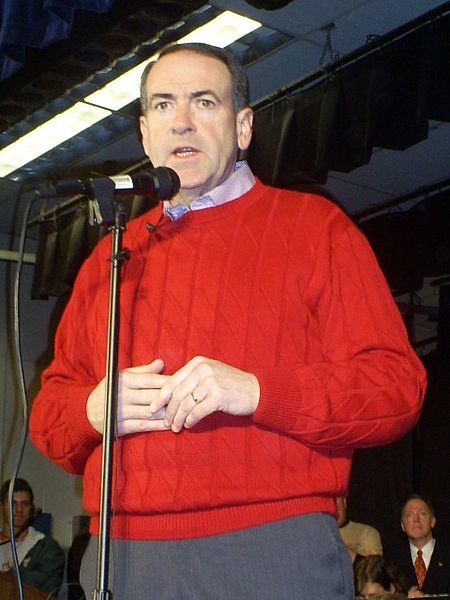
Former Arkansas Governor Mike Huckabee wears the most socially conservative outfit ever; later, he played bass on Fox News.
(Image Sourcehttps://en.wikipedia.org/wiki/File:Huckabeemike.JPG; photo by Craig Michaud)

To offer an illustration from recent history, contrast the post-Soviet experiences of Poland (and most of Eastern Europe) with that of Russia.  Despite decades under Communism–an ideology that was aggressively atheistic, stressing loyalty to the state and Communist Party over all else–Poland roared back into the West.  It adopted neoliberal (modern conservative) economic policies, and was one of the few European nations not to suffer severely during the Great Recession.

Russia similarly adopted “shock therapy” after the Soviet Union collapsed for good in 1991.  Rather than experiencing a huge economic boom, however, well-connected former Communists and others close to the old regime made off like bandits, leaving most Russians left holding the bag.

What’s the difference?  For one, the Russians lived under Communism for nearly a generation longer than the Poles, meaning there were several generations of downtrodden, state-dependent Russians by the time the USSR collapsed.  Many of these Russians were unable to adjust to a free-market system after living in a closed economy for so long.

Another key difference–and one that I think is extremely significant–is that Russians lost any scrap of civil society they might have possessed prior to the Bolshevik takeover in late 1917.  Civil society–the institutions between the basic family unit and the government, like churches, schools, clubs, civic organizations, etc.–was automatically preempted when every club, organization, or activity became part of the Soviet government.  The severely crippled (and, as I understand it, collaborationist) Russian Orthodox Church was unable or unwilling to push back against Soviet rule, providing little in the way of a spiritual alternative to the totalizing influence of Communism.

“[F]ree markets unmoored from guiding principles, strong and stable institutions, and the rule of law can morph into mindless Mammon worship.”

Poland, on the other hand, managed to maintain its deep Catholic faith.  The Catholic Church as an international organization (and with powerful, influential popes, most notably the Polish anti-Communist John Paul II) could never be wiped out completely by Soviet Communism.  Further, the Poles formed the Solidarity trades union movement, which offered an alternative to official Communist organizations.

Thus, after the dissolution of the Soviet Union, Poland emerged with a strong civil society anchored in a richly Christian worldview and ethic.  The shared sense of morality–one that stresses mutual respect, the dignity of human life, and the importance of honesty–allowed the complex deals and uptempo economic exchanges of capitalism to occur smoothly and rapidly.  From these civil and religious values came a firmer grasp of and respect for the rule of law, making predictable economic activity and long-term planning possible.

Russia, on the other hand, devolved into a fast-paced, nationwide run on the national cupboard.  Those with good connections grabbed whatever public funds and goodies they could.  Normal Russians couldn’t figure out why their government checks and free lunches stopped coming, and couldn’t understand why (or how) to pay taxes.  With the collapse of the Soviet Union, all civic organizations ceased to exist, because they were all part of the Soviet government.  Without any civil society or other enduring institutions to model good behavior and to stress and enforce moral values, Russia struggled–and continues to do so–to adapt to global capitalism and democracy.  Not surprisingly, they’ve turned to a dictatorial strongman for guidance.

***

What of the American context?  As I’ve written before, I’m skeptical of full-fledged libertarianism–what I would broadly define as the marriage of economically conservative and socially liberal views–because it fails to acknowledge the need for strong moral values to uphold its own economic assumptionsLiberty and self-government can only really work when coupled with self-imposed order and restraint.  Without moral common ground and shared values that stress self-control, liberty rapidly turns to libertinism.  Libertinism without a great deal of wealth leads to shattered lives, which in turn wreck families and communities.

Eventually, unbridled, unchecked lasciviousness–even among (formerly) responsible adults–results in social chaos, requiring a dwindling number of hardworking, honest, and thrifty individuals to pay for the ramifications of poor moral choices that have been magnified many times over.

“[L]ibertarianism… fails to acknowledge the need for strong moral values to uphold its own economic assumptions.  Liberty and self-government can only really work when coupled with self-imposed order and restraint.”

Capitalism’s blessing of unparalleled abundance is also a potential curse.  Without a strong civil society that stresses good moral values–and without proper historical perspective–it becomes easy to take that abundance for granted.

That abundance also allows, for a time, more and more individuals to pay for the price of bad decisions.  Prior to the modern era, few people were wealthy enough to risk the negative consequences of immorality.  Now, Americans and Westerners enjoy a level of material comfort and well-being that can absorb at least some of the unpleasantness of questionable choices.  Over time, however, that security breaks down.

Richard Weaver likened the situation to an alcoholic who is so addicted to his drink, he’s unable to do the work necessary to pay for his addiction.  The more he needs the alcohol, the less capable he becomes of obtaining it.  Likewise, the more individuals become addicted to luxuries, the less able they are to work hard to maintain them.

To avoid the fate of Weaver’s drunk, we must recognize the importance of social conservatism.  While we should maximize individual liberty as much as possible, and within the bounds of the Constitution, we should also stress the moral and religious underpinnings that make that liberty both possible and responsible.

An Open Letter to Papa John’s Pizza

Disclaimer—sigh:  I do not endorse racist ideologies or unnecessarily racist language, but I support free speech.  People shouldn’t go around using racial slurs, and may face professional and social consequences for doing so, even though it’s protected speech.  That said, I also believe nuance and context matter greatly.  It’s for the non-nuanced- or contextually-minded reader that I include this brief disclaimer, which I hate is even something I have to consider doing in an allegedly free country.

Pizza is a big part of modern American history, one of those beautiful examples of “cultural appropriation” that took the thin-crusted Neapolitan peasant street-food, improved upon it greatly, and made it a staple for all classes and races in the United States.

While everyone and their brother has their own opinions about the best slice and where to get it, my favorite of the “chain delivery pizza joints” (not to be confused with generally-superior ma-and-pop local pizza joints—or the Aiken-Augusta-area chain Pizza Joint) is, hand’s down, Papa John’s.

Sunday afternoon, I received “An open Letter from Papa John’s CEO, Steve Ritchie” in my e-mail.  Apparently, Papa John’s founder John Schnatter said The Forbidden Word, and has been forced out of his company.

You can read the full-text of Ritchie’s letter here.  A key line (emphasis added):

Racism and insensitive language – no matter the context – will not be tolerated at any level of our company. Period.

I began looking around to see what exactly Schnatter said.  What I found is that, yes, he used The Forbidden Word—in reference to Kentucky Fried Chicken’s beloved Colonel Sanders, on a conference call with a company training him on how to handle public relations better.

In essence, Schnatter was asked in a role-playing exercise how he would handle a situation similar to his remarks about the NFL National Anthem protests.  Schnatter had spoken out publicly about the protests, arguing—correctly—that they were hurting Papa John’s sales (Papa John’s has long been the official pizza of the NFL, so poor NFL ratings meant poor pizza sales; I’ve often enjoyed the ridiculously good deals they put out during football season).  As such, he’d already put a target on his back for progressive Social Justice Warriors.

As for the use of The Forbidden Word, Schnatter responded that Colonel Sanders used it, and then related a story about racial violence he witnessed or heard about as a boy in Indiana.  He wasn’t endorsing such violence, but intended it to show that he detested it.

Apparently, some employees of the public relations firm, Laundry Service, were offended, and—wow, wouldn’t you know it!—his use of The Forbidden Word was leaked.

Now he’s no longer working for the company he founded, and 120,000 employees (not to mention Papa John’s stockholders) are going to suffer.

I’m not holding Schnatter blameless here—he should know in the twenty-first century that a.) the Leftist mob doesn’t care about nuance, they just want another scalp and b.) you’re not allowed as a white man to say a word that thickly marinates every modern rap song—but a lot of employees, many of them black, might face layoffs because a handful of people got upset and leaked the contents of a confidential, training-based conference call.

It just goes to show that no one is safe, in any forum, at any time, ever.

In response to all this non-troversy, I took a moment to write a reply to Mr. Ritchie.  Here is the text in full:

Dear Mr. Ritchie,

Thank you for your e-mail.  I was unaware of the Papa John’s non-troversy until I received this e-mail.

From what I can tell from the news reports, John Schnatter may have been a tad careless with a culturally-taboo word, but he meant no ill-intent.

I suspect, rather, that he’s been crucified—the latest victim of such—on the cross of political correctness gone mad.  Given his past statements about NFL protestors hurting NFL ratings—and, by extension, your company’s pizza sales—he put a target on his back too tempting for the Social Justice Warriors to ignore, as he dared to make a truthful observation about one of their sacred cows.

Those statements, too, may have been unwise in a business context (even leaving out the possible racial component–and I don’t think arguing that players should abide by League rules is an inherently racist idea—it’s probably not a good idea to criticize publicly a major business partner), but they don’t warrant the kind of scorched-earth response that Mr. Schnatter has endured.

I am sorry to hear that his remarks have hurt actual people—the employees and franchisees of Papa John’s.  Surely you can agree that that’s the only tangible damage that has occurred here.  Otherwise, no person, of any race, was actually harmed by Mr. Schnatter’s use of the “N” word in an in-house conference call that, as I understand it, was a training session for avoiding future public-relations imbroglios (oops!).  In that context especially, shouldn’t the one receiving the training have additional leeway to learn without fear of some SJW ruining his life?

I hope that your employees will continue to make excellent pizza, as they have done for years, and will not be overly burdened by the kabuki theatre of your diversity initiatives.  I understand that, as a major company, you have to do your token genuflecting to the gods of multiculturalism and political-correctness, even though I’d personally rather see your Board grow some cajones and say, “Sorry for the misunderstanding and if anyone was offended, but the remarks have been taken out of context.  We serve pizza for all people, and while we don’t condone racism, we do support free speech, and believe that everyone should lighten up a bit—preferably over a slice of Papa John’s pizza.”

Sincerely,

Tyler James Cook

The cost of doing business seems to be never uttering anything remotely controversial, ever.  Schnatter was doomed the moment he pointed out—again, correctly—that the NFL was losing viewership because of the politicized National Anthem protests.  Yes, he shouldn’t have said The Forbidden Word—even in the context of quoting someone else, it’s not allowed according to current social mores—but it was just a matter of time before the Twitter mobs, Social Justice Warriors, white knights, or overly-sensitive consultants (Laundry Service is designed to train people not to make public faux pas; surely they’ve had clueless clients before that needed teaching) brought him down.

Why can’t we just enjoy pizza without it becoming an exercise in political posturing?

Fallout 76 Announcement Increases Tourism to West Virginia

My morning ritual involves drinking coffee from a Teenage Mutant Ninja Turtles mug (you may want to reconsider how much you take my analysis to heart, dear reader) and watching various podcasts/vlogs on YouTube, usually Ben Shapiro (or one of his colleagues), Steven Crowder, or Scott Adams.

So, one morning this week I saw an ad featuring the tantalizing E3 trailer for Fallout 76.  For the uninitiated, the Fallout series of games posits an alternate future in which the United States and China slugged it out in a thermonuclear war during the mid-twentieth century, and decades (or centuries) later humanity emerges from various “vaults” (elaborate, underground bomb shelters) to reclaim the radioactive wastelands around them.

https://www.youtube.com/watch?time_continue=1&v=M9FGaan35s0

The E3 Trailer for Fallout 76.  You should watch it at the very least for the great cover of John Denver’s “Take Me Home, Country Roads

Yes, it’s all quite nerdy, but when you’re a ten-year old boy trapped in a hairy man’s body—and have read a lot of Cold War history—it’s the kind of thing that gets you excited in the morning.

What really excited me about this announcement is that Fallout 76 takes place in Appalachia—specifically, a big ol’ chunk of West Virginia.  Most Fallout games take place in the ash-strewn ruins of metropolitan areas, including Washington, D.C., Las Vegas, and Boston.  Other than the rural deserts of Nevada, the game has not delved much into an almost-exclusively rural region (more die-hard fans will surely object; I’m not as familiar with the first two Fallout games and their settings, other than they seem to be focused on California; respectful corrections are welcome).

I’d always wondered what it would be like to experience a post-apocalyptic South Carolina (digitally, to be clear; fortunately, it looks like President Trump is ensuring we won’t have to do so for real), and have been hoping for a Fallout game set in the rural South.  West Virginia isn’t really the South—I’m sure that will rile up further controversy—but it’s close enough.  I assume that, if nuclear Armageddon were to occur, the best place to be would be somewhere rural enough the ChiComs wouldn’t try to blow it up.

So, what does this have to do with politics, the purported purpose of this portly page?  Vanishingly little, other than it is cool to see a major video game set in the heart of Trump Country.

But the game’s setting has had an interesting economic impact.  Apparently, online searches pertaining to tourism to West Virginia have shot up; the site West Virginia Explorer has seen fifteen times the traffic since the game was announced.  The theme park Camden Park has seen an increase in calls for merchandise and inquiries about ticket sales.

West Virginia has struggled economically, especially during the Obama administration’s war on coal, and while it has enjoyed a mild comeback under President Trump, it’s still a very poor State.

Further, one usually one only sees video games in the news when some specious talking head claims they cause violence (they don’t), so it’s refreshing to see one having a positive effect on a beautiful State that could surely benefit from the tourism dollars.

My recommendation for the next Fallout game?  Set that sucker in the ruins of Charleston, South Carolina… or maybe Cheraw.

European Disunion

Back in 2016, I wrote a series of essays on the then-approaching Brexit vote.  Just like the American presidential election that autumn, there was a great deal of misinformation and obfuscation about the “Leave” side—the Leavers were racist and xenophobic; voting “Leave” would cause the world to collapse and the Universe to fold in upon itself; boorish working-class Brits would rebel once they realized they’d lost their sweet European Union bennies.

Even I—a profoundly pro-Brexit advocate—predicted there’d be a long-term economic downturn as a result of voting “Leave” (but I believe liberty is worth far more than material security).

Of course, the Brexit vote was a major blow against supranational tyranny, and a major victory for liberty and national self-interest.  The European Union does not function like the United States and its federal system of semi-sovereign entities; rather, it’s largely ruled and governed by a small cadre of unelected, hyper-progressive, cosmopolitan bureaucrats with little regard for national differences or interests.

It was this philosophical and foundational tack that I sought to take with Brexit.  Brexit was not a policy matter that presented two sets of pros-and-cons, although that was part of the discussion.  Rather, Brexit posed a fundamental question:  does a nation have the right to determine its own national destiny—to act in its own self-interest, as it and its people see fit?  Further, did the European Union provide a framework in which nations could maintain sovereignty while enjoying the benefits of union?

I believe the Brexit vote—and the ongoing discussions about what Brexit will look like—reflected these timeless questions, and though the vote has long-since passed, the topic maintains a perennial quality for those interested in political philosophy.

To that end, I’ll be compiling, re-editing, and otherwise modifying my 2016 Brexit essays into a new eBook, Tyranny Denied:  Reflections on Brexit.  I’ll also be adding some chapters and historical notes.

That book, along with my long-planned eBook on social conservatism, Values Have Consequences, should appear later this summer or autumn—just in time for Christmas.