
Conservative Inheritance

In 1950, literary critic Lionel Trilling wrote in The Liberal Imagination (PDF) the following about conservatism, which he viewed as being virtually extinct following the Second World War:

In the United States at this time liberalism is not only the dominant but even the sole intellectual tradition. For it is the plain fact that nowadays there are no conservative or reactionary ideas in general circulation. This does not mean, of course, that there is no impulse to conservatism or to reaction. Such impulses are certainly very strong, perhaps even stronger than most of us know. But the conservative impulse and the reactionary impulse do not, with some isolated and some ecclesiastical exceptions, express themselves in ideas, but only in action or in irritable mental gestures which seek to resemble ideas.

It’s probably the most frequently cited quotation from a liberal among conservatives, because it did, in 1950, offer a practical assessment for the state of conservatism in the United States.  The twin struggles of the Great Depression and the war led to a triumph of what Russell Kirk called “Rooseveltian liberalism,” which sought to use the power of the government to address economic problems.  With the defeat of Nazism and Japanese imperialism, and entering the long Cold War with the Soviet Union, Americans placed great faith in the ability of their government to solve basic problems.

Indeed, the experience of conservatism since the Second World War has largely been that of accepting liberalism’s underlying propositions.  “Conservatism,” then, came to be more of reaction to the excesses of liberalism—a tapping of the brakes, not a full stop or reversal—rather than a cogent philosophical and social system on its own.

While that’s a controversial statement with many exceptions—there remained many conservatives, like Arizona Senator Barry Goldwater, who continued to resist Rooseveltian liberalism—consider that the first Republican President since 1932, Dwight Eisenhower, accepted much of the New Deal, and left it virtually intact.  His signature achievement as president, other than ending the Korean War, was to champion the construction of the Interstate Highway System.  That was a worthy undertaking, to be sure, but the legacy of a major Republican president was to spend millions, rather than rolling back the interventionist state.

Since then, conservatism has gone through a number of permutations, many of which I’ll cover throughout my History of Conservative Thought course this summer.  My point here, however, is that conservatism, strictly speaking, cannot exist in the dominant framework of modern liberalism.

I’m not rejecting the tenants of classical liberalism—equality before God, the possession of God-given natural rights, the freedom of association—per se.  But conservatism is an empirical, rather than a rationalistic, endeavor.  Indeed, Russell Kirk argued that conservatism is not an ideology, as such, but the result of millennia of human experience.

Or, as Ted McAllister writes in “Toward a Conservatism of Experience” for RealClearPolicy, “Conservatism is an inheritance, not an ideology.”  He continues:

American conservatism emerged out of our experiences as a self-governing people who love their inherited liberties rather than abstract rights; whose laws have historically emerged out of our norms rather than a specious theory of justice; whose gift for creating and protecting political freedom (the freedom to govern ourselves, our communities, our associations) has served as the primary obstacle to the relentless drive toward an egalitarian administrative state.

McAllister’s essay—which is really a book review of Patrick Deneen’s book Why Liberalism Failed—makes a compelling case for a conservatism based not on metaphysical abstractions but on the “discovery, articulation, and defense of a reality we experience and of affections formed long before we needed to defend them.”  McAllister argues that conservatism had to adopt a more universal, ideological paradigm during the Cold War to face the major existential threat of international communism, but should return the localized, particularized forms of organic social arrangements America enjoyed prior to 1945.

Part and parcel to this restoration is a rejection of democracy’s excesses.  McAllister writes that “democratic culture overindulges a love of equality and abstract moral truths,” that it encourages a leveling of all people into bland masses and, paradoxically, hyper-atomistic individuals.  In such a culture, perverse individualism separates Americans from their communities and their heritage.  Instead, our churches, schools, social clubs, and other institutions have fallen prey to progressive ideologues, rather than serving as the glue that binds society together.

There’s a lot to chew on in McAllister’s review.  Permit me one more extended quotation:

American conservatism is rooted in inheritance, in the rough guidance of experience over abstract idealism, and in the protection of the pluralism found in voluntary association and in self-governing communities. This is why something profoundly American is lost when conservatives embrace abstraction and universal slogans in their struggle with either liberalism or progressivism….

Suffice it to say that today we lack a strong and traditionally conservative intellectual — and specifically academic — class. The easiest measure of this weakness is found in both the number and the intellectual range of conservative academics. Of particular importance here is the dearth of conservatives in the humanities. Indeed, the number of conservative scholars devoted to such studies as philology, literature, theology, philosophy, and history as well as themes such as imagination, beauty, and truth, has dwindled both in raw numbers and as a percentage of conservative academics. Of course, outside the academy, there are journals and institutions that engage the moral, literary, historical imagination, which offer some reason for hope. But the overall trend on the Right has been toward intellectual work geared toward contemporary and immediate concerns — more about power than about beauty.

In essence, McAllister argues that, while we often appeal to abstractions in our never-ending battle against progressivism, we adopt their rationalist framework by doing so, albeit out of necessity and expediency.  That said, our focus on the immediacy of political power has led conservatism to sacrifice culture—a key reason, I would argue, as to why progressives are so dominant there.

McAllister overstates the problem slightly—just look at New Criterion to see “conservative scholars devoted to… themes such as imagination, beauty, and truth”—but the Left certainly dominates our culture.

At this point, though, I wonder how we can get back the old conservatism.  It’s a worthy goal, but it seems unlikely in an age in which progressive and postmodern dogma reign supreme.  The extent to which the progressive frame infects conservatism—even down to our mental processes—is disheartening, and explains the capitulatory approach of once-great conservative publications like National Review, which can barely contain its eagerness to run and apologize to Leftists for challenging them.

In the long-run, though, conservatism’s foundation—its groundedness—in objective reality, as opposed to rationalist abstractions, will allow it to prevail in all its beautiful, localized, variegated permutations.  That “long-run” just might take a very long while to arrive.
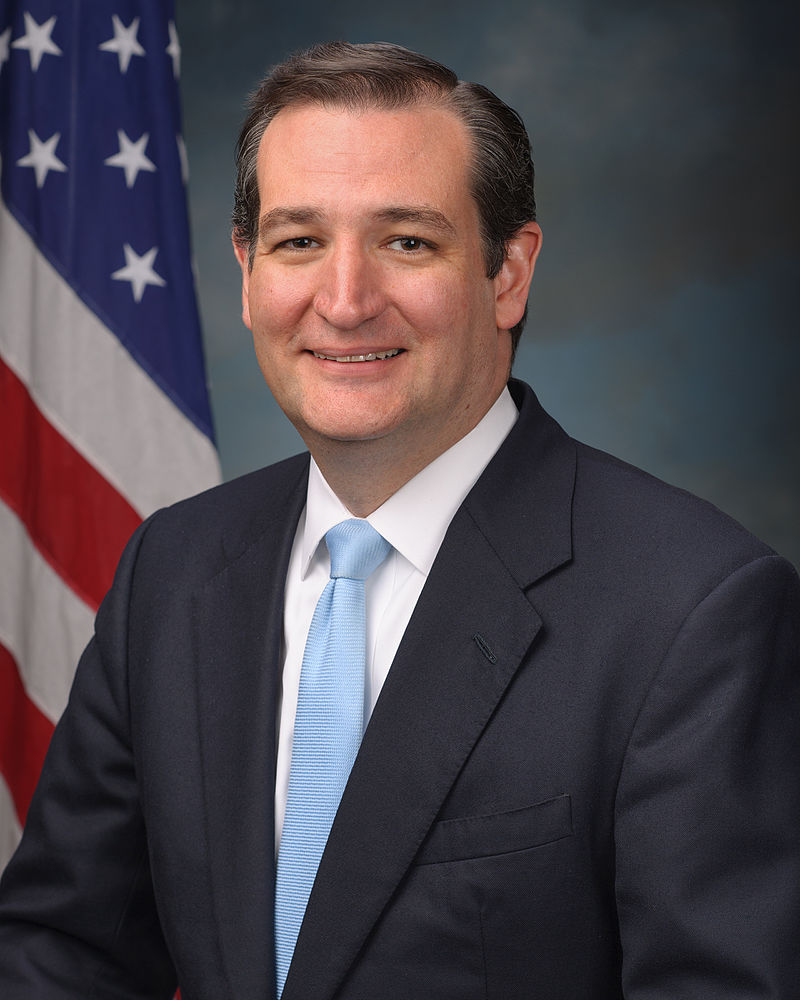
Ted Cruz on Ben Shapiro

It was a glorious weekend at Casa de Portly, deep in the heart of Dixie.  It was the kind of weekend that saw a lot of non-blog- and non-work-related productivity; in other words, I loafed a great deal, then did domestic chores around the house.

In case you missed it, on Saturday I released my Summer Reading List 2019.  If you want to read the whole list—and it’s quite good—you have to subscribe to my SubscribeStar page at the $1 level or higher.  There will be new, subscriber-exclusive content there every Saturday, so your subscription will continually increase in value.

Anyway, all that loafing and cleaning meant that I was unplugged from politics.  I did, however, manage to catch the Ben Shapiro Show “Sunday Special” with Texas Senator Ted Cruz.

I was a big fan of Cruz in the 2016 Republican presidential primaries, and I voted for him here in South Carolina.  Cruz intuited the populist mood of the electorate the way that President Trump did, and combined it with policy innovation and constitutionalism.

There’s a reason Cruz hung in there as long as he did against Trump:  he’s a canny political operator, but he also knew how to pitch a conservative message that was appealing to many voters.  I sincerely believe that had he clinched the nomination, he would have won the 2016 election (and, perhaps, by an even wider Electoral College margin than did Trump).

Cruz catches a lot of flack because he’s a little dopey and looks odd—a whole meme emerged in 2015-2016 claiming that Cruz was the Zodiac Killer—but he’s been an influential voice in the Senate.  He possesses a supple, clever mind, and has urged Republicans to make some bold, innovative reforms to the Senate (he vocally champions and has proposed a constitutional amendment for congressional term limits).

The hour-long interview with Ben Shapiro—which opens with a question about his alleged identity as the Zodiac Killer—shows how affable and relaxed Cruz really is.  I’ve never seen him appear more relaxed and genuine (and I never took him for a phony—I’ve seen him speak live at least once at a campaign rally in Florence, and spoke very briefly to him afterwards) than in this interview.

Granted, it’s friendly territory—Shapiro was a big supporter of Cruz in the primaries—but Cruz spelled out some important ideas, as well as his projections for 2020.  If you don’t have a full hour, fast forward to about the forty-minute mark for his discussion of Trump’s reelection prospects.

To summarize them briefly:  Cruz thinks it all comes out to turnout, and that Democrats will “crawl over broken glass” to vote against Trump.  He even points out that his own race against Democrat Robert Francis “Beto” O’Rourke was as close as it was because Beto ran against Trump more than he did against Cruz.  He also thinks Joe Biden is going to flame out, and one of the more radical, progressive Dems will clinch the nomination, making the prospect of a truly socialistic administration terrifyingly possible.

That said, Cruz is optimistic.  Discussing his own narrow victory over Beto in 2018, he points out Beto’s massive fundraising and staffing advantages (Cruz had eighteen paid staffers on his campaign; Beto had 805!), but explains that a barn-burning bus tour of the State of Texas pulled out conservative and middle-class voters in a big way for his reelection.

That points to one of Trump’s strengths:  the relentless pace with which he campaigns.  Trump held three and even four rallies a day in key battleground States in the final days of the 2016 election, which likely made the difference in Michigan, Wisconsin, and the Great White Whale of Republican presidential elections since the 1980s, Pennsylvania.  If Trump can get his pro-growth, pro-American message out there as effectively in 2020 as he did in 2016 and can excite voters who want to protect their nation and their prosperity, he could cruise to reelection.

Cruz’s optimism, tempered by practical challenges ahead for Republicans, really came through in the video.  Really, the entire interview reminded me why I liked Ted Cruz so much the first time.  I’d love to see him remain a major presence throughout the next five years, and to see him run for the presidency again in 2024 (him, or Nikki Haley).

Regardless, I encourage you to listen to this interview.  Take Cruz’s warning to heart:  don’t get complacent, because the Democrats aren’t.

SubscribeStar Saturday: The Portly Politico Summer Reading List 2019

Today’s post is the first in my SubscribeStar Saturday series.  To read the full post, subscribe to my SubscribeStar page.  For the first installment of SSS, ALL subscriber levels, including the $1 tier, will have access to this list.

Three years ago, I released my popular “The Portly Politico Summer Reading List 2016.”  It featured three must-read books for your summer, including a fourth “Honorable Mention.”  The same criteria from 2016 will apply to this year’s list.  To quote myself:

The books listed here are among some of my favorites.  I’m not necessarily reading them at the moment, but that doesn’t mean you shouldn’t!  These books have shaped my thinking about the many issues I’ve covered over the past two months.  I highly encourage you to check them out.

In that spirit, here is the definitive Summer Reading List 2019:

1.) Patrick J. BuchananThe Greatest Comeback: How Richard Nixon Rose from Defeat to Create the New Majority (2014) – I have to be honest—I’ve been reading this book off-and-on for nearly two years, and am about 75% through it.  That pace is not because it’s a bad book.

Quite the contrary, The Greatest Comeback is a must-read for any political history junkies.  After twin defeats in the 1960 presidential and 1962 California gubernatorial elections, Nixon was a national loser.  Buchanan, who worked for and traveled with Nixon during the long decade of the 1960s as a researcher and writer, gives a first-hand account, culled from what must be a filing cabinet’s worth of handwritten notes and newspaper clippings, of Nixon’s historic, unlikely rise to the presidency.

Nixon’s reputation now suffers from the railroading that was the Watergate scandal.  Lost in the Left’s never-ending victory lap is how shrewd Nixon’s political instincts were.  Nixon’s tireless support for Republican congressional candidates in 1966 led to historic gains in those midterm elections, likely hastening Lyndon Johnson’s political demise and restoring Republicans’ spot as a viable alternative to Democrats.  That loyalty paid off for Nixon in spades.

Consider, too, the challenges that faced Nixon going into the 1968 presidential election:  he had to defeat liberal Republicans within his own party (Buchanan expends a great deal of ink explaining the odious treachery of George Romney and Nelson Rockefeller), while also fending off potential challengers to his right, namely California Governor Ronald Reagan.  An increasingly-unhinged anti-war (and all-too-often pro-Communist) Left reviled the old “Red Hunter,” and their dominance of the press continued to hound Nixon’s every move.

And through it all, Nixon persevered, engineering the titular “greatest comeback.”  He would go on to win a forty-nine-State landslide in 1972, losing only deep-blue Massachusetts and the District of Columbia.  For that story, check out Buchanan’s sequel, Nixon’s White House Wars:  The Battle that Made and Broke a President and Divided America Forever (2017), which I will probably finishing sometime during Nikki Haley’s second presidential term.

To read the rest of The Portly Politico Summer Reading List 2019subscribe now for $1/month or more on SubscribeStar!

What is Conservatism?

Today I’m launching a summer class at my little private school here in South Carolina.  The course is called History of Conservative Thought, and it’s a course idea I’ve been kicking around for awhile.  Since the enrollment is very small, this first run is going to be more of an “independent study,” with a focus on analyzing and writing about some key essays and books in the conservative tradition.  I’ll also be posting some updates about the course to this blog, and I’ll write some explanatory posts about the material for the students and regular readers to consult.  This post will be one of those.

Course Readings:

Most of the readings will be digitized or available online at various conservative websites, but if you’re interested in following along with the course, I recommend picking up two books:

1.) Richard Weaver‘s Ideas Have Consequences ($6.29):  this will be our “capstone” reading for the summer.
2.) The Portable Conservative Reader (edited by Russell Kirk):  we’ll do some readings from this collection, including Kirk’s “Introduction” for the first week.

Course Scope:

I’ll be building out the course week-to-week, but the ultimate goal is to end with 2016 election, when we’ll talk about the break down of the postwar neoliberal consensus, the rise of populism and nationalism in the West, and the emergence of the Dissident Right.

After the introductory week, we’ll dive into Edmund Burke, then consider the antebellum debates about States’ rights.  I haven’t quite worked out the murky bit during the Gilded Age, but we’ll look at the rise of Progressivism in the early twentieth century, then through the conservative decline during the Great Depression and the Second World War.

After that, it’s on to Buckley conservatism and fusionism, as well as the challenges of the Cold War and international communism.  Paleoconservatives like Pat Buchanan and (if I’m feeling edgy) Sam Francis will get shout-outs as well.

Week 1:  What is Conservatism?

That’s the basic outline.  For the first day, we’re going to look at the question in the title:  what is conservatism?  What makes one a conservative?  Feel free to comment below on your thoughts.

After we see what students think conservatism is, we’ll begin reading through Russell Kirk’s “Introduction” in The Portable Conservative Reader.  It’s an excellent overview of the question posed.  The first section of the lengthy “Introduction” is entitled “Succinct Description,” and it starts with the question, “What is conservatism?”

Not being one to reinvent what others have done better—surely that is part of being a conservative (see Principle below)—I wanted to unpack his six major points.  Kirk argues that though conservatism “is no ideology,” and that it varies depending on time and country, it

“may be apprehended reasonably well by attention to what leading writers and politicians, generally called conservative, have said and done…. to put the matter another way, [conservatism] amounts to the consensus of the leading conservative thinkers and actors over the past two centuries.”

Kirk condenses that grand tradition into six “first principles,” derived largely from British and American conservatives.  To wit:

1.) Belief in a Transcendent Moral Order – conservatives believe there is higher authority or metaphysical order that human societies should build upon.  As Kirk puts it, a “divine tactic, however dimly descried, is at work in human society.”  There is a need for “enduring moral authority.”  The Declaration of Independence, for example, draws on the concept of “natural law” to complain about abuses of God-given rights.  The implication is that a good and just society will respect God’s natural law.

2.) The Principle of Social Continuity – Kirk puts this best:  “Order and justice and freedom,” conservatives believe, “are the artificial products of a long and painful social experience, the results of centuries of trial and reflection and sacrifice.”

As such, the way things are is the product of long, hard-won experience, and changes to that social order should be gradual, lest those changes unleash even greater evils than the ones currently present.  Conservatives abhor sudden upheaval; to quote Kirk again:  “Revolution slices through the arteries of a culture, a cure that kills.”

3.) The Principle of Prescription, or the “wisdom of our ancestors” – building on the previous principle, “prescription” is the belief that there is established wisdom from our ancestors, and that the antiquity of an idea is a merit, not a detraction.  Old, tried-and-trued methods are, generally, preferable to newfangled conceptions of how humans should organize themselves.

As Kirk writes, “Conservatives argue that we are unlikely, we moderns, to make any brave new discoveries in morals or politics or taste.  It is perilous to weigh every passing issue on the basis of private judgment and private rationality.”  In other words, there is great wisdom in traditions, and as individuals it is difficult, in our limited, personal experience, to comprehend the whole.

It’s like G. K. Chesterton’s fence:  you don’t pull down the fence until you know why it is built.  What might seem to be an inconvenience, a structure no longer useful, may very well serve some vital purpose that you only dimly understand, if at all.

4.) The Principle of Prudence – in line with Principles and , the conservative believes that politicians or leaders should pursue any reforms only after great consideration and debate, and not out of “temporary advantage or popularity.”  Long-term consequences should be carefully considered, and rash, dramatic changes are likely to be more disruptive than the present ill facing a society.  As Kirk writes, “The march of providence is slow; it is the devil who always hurries.”

5.) The Principle of Variety – the “variety” that Kirk discusses here is not the uncritical mantra of “Diversity is Our Strength.”  Instead, it is the conservative’s love for intricate variety within his own social institutions and order.

Rather than accepting the “narrowing uniformity and deadening egalitarianism of radical systems,” conservatives recognize that some stratification in a society is inevitable.  Material and social inequality will always exist—indeed, they must exist—but in a healthy, ordered society, each of these divisions serves its purpose and has meaning.  The simple craftsman in his workshop, while materially less well-off than the local merchant, enjoys a fulfilling place in an ordered society, one that is honorable and satisfying.  Both the merchant and the craftsmen enjoy the fruits of their labor, as private property is essential to maintaining this order:  “without private property, liberty is reduced and culture is impoverished,” per Kirk.

This principle is one of the more difficult to wrap our minds around, as the “variety” here is quite different than what elites in our present age desire.  Essentially, it is a rejection of total social and material equality, and a celebration of the nuances—the nooks and crannies—of a healthy social order.  “Society,” Kirk argues, “longs for honest and able leadership; and if natural and institutional differences among people are destroyed, presently some tyrant or host of squalid oligarchs will create new forms of inequality.”

Put another way:  make everyone equal, and you’ll soon end up with another, likely worse, form of inequality.

6.) The Principle of the Imperfectibility of Human Nature – unlike progressives, who believe that “human nature” is mutable—if we just get the formula right, everyone will be perfect!—conservatives (wisely) reject this notion.  Hard experience demonstrates that human nature “suffers irremediably from certain faults…. Man being imperfect, no perfect social order ever can be created.”  An Utopian society, assuming such a thing were possible, would quickly devolve into rebellion, or “expire of boredom,” because human nature is inherently restless and rebellious.

Instead, conservatives believe that the best one can hope for is “a tolerably ordered, just and free society, in which some evils, maladjustments, and suffering continue to lurk.”  Prudent trimming of the organic oak tree of society can make gradual improvements, but the tree will never achieve Platonic perfection (to quote Guns ‘n’ Roses:  “Nothing lasts forever, even cold November rain”).

Conclusion

Kirk stresses in the rest of the introduction that not all conservatives accept or conform to all of the six principles again; indeed, most conservatives aren’t even aware of these principles, or may only dimly perceive them.

That’s instructive:  a large part of what makes one conservative is lived experience.  “Conservatism” also varies depending on time and place:  the social order that, say, Hungary seeks to preserve is, of necessity, different than that of the United States.

Conservatism, too, is often a reaction to encroaching radicalism.  Thus, Kirk writes of the “shop-and-till” conservatism of Britain and France in the nineteenth century:  small farmers and shopkeepers who feared the loss of their property to abstract rationalist philosophers and coffeeshop radicals, dreaming up airy political systems in their heads, and utterly detached from reality.

If that sounds like the “Silent Majority” of President Richard Nixon’s 1968 and 1972 elections—or of President Trump’s 2016 victory—it’s no coincidence.  The great mass of the voting public is, debatably, quietly, unconsciously conservative, at least when it comes to their own family, land, and local institutions.  Those slumbering hordes only awaken, though, when they perceive their little platoon is under siege from greater forces.  When they speak, they roar.

But that’s a topic for another time.  What do you think conservatism is? Leave your comments below.

–TPP

TBT: Open Borders is the Real Moral Crisis

I’ve been writing quite a bit about immigration lately, as it’s the major issue facing the West today.  Our leaders’ inabilities to address the crisis of immigration suggests their ineffectiveness—and, perhaps, their callous indifference to the damage unrestricted and illegal immigration wreak.

President Trump rose to national prominence and won the presidency campaigning on fixing illegal immigration.  His efforts so far have been a mixed bag, as duplicitous, progressive judges overreach from their elitist perches and block Trump’s efforts at reform.

It seems a distant memory now, but all the faux-outrage from the Left just a year ago was about the “child separation” business at the border.  One still reads some echoes of those melodramatic headlines, but the underlying problem has gone unaddressed.

In fact, it’s gotten worse:  immigrants now realize that if they cross the border with a minor child, they can be swept into the interior of the country.  Once an illegal immigrant is in the nation, it’s incredibly difficult to get him out again.

It’s a sad testament that President Trump and Congress have been unable to accomplish more on this front.  As such, it’s shame that this week’s TBT still sounds all-too-familiar.

Here is “Open Borders is the Real Moral Crisis“:

I typically avoid wading into fashionable-for-the-moment moral crusades, but the hysteria over children being separated from their parents at the border is ludicrous, and demonstrates the typical “facts over feelings” emotionalism that mars our immigration debate.  That feel-goodism is why we’re even in this mess—if it can be characterized as such—in the first place.

Because I’ll be deemed a monster—“Won’t somebody please think of the children!“—for not unequivocally denouncing this Clinton-era policy, I’ll issue the usual, tedious disclaimers:  yes, it’s all very tragic; yes, it could be handled better; yes, I would have been terrified to be separated from my parents at such a young age; etc.

Now that the genuflecting to popular pieties is out of the way, let me get to my point:  this entire situation would be a non-issue if we had simply enforced our immigration lawsconsistently for the past thirty years.  President Trump isn’t the villain here (if anything, Congress is—they can take immediate action to change the policy or come up with some alternative—but I don’t even think they’re wrong this time); rather, the villains are all those who—in the vague name of “humanity” and “human rights”—ignored illegal immigration (or, worse, actively condoned it).

Sadly, it is an issue.  But what else are we to do?  Years of non-enforcement have sent the implicit but clear message to potential illegal immigrants that we don’t take our own borders (and, by extension, our national sovereignty and rule of law) seriously, and that if you’re sympathetic enough, you’ll get to skip the line.  Folks come up from Mexico and Central America fully expecting that, after some brief official unpleasantness, they can dissolve into the vastness of the United States and begin sending remittances back to their relatives—who may then pull up stakes and come.

Further, sneaking into the country illegally is a crime, and the United States has every right to enforce its laws, including those pertaining to immigration.  Mexico, similarly, has that right—and uses it unabashedly to police its own border (or to let Central American migrants waltz through on their way to the Estados Unidos).  Naturally, the punishment for breaking laws is often detainment, and the kiddies don’t join dad in his cell.

To give a common example:  what happens to the children of, say, an American heroin dealer when he’s arrested and sentenced to ten years in a drug bust?  His children—if they have no relatives willing or able to take them in—go into the foster care system.  It’s tragic, it’s terrible, but it’s part of the price of committing a felony.  No one wants it to happen, but it’s a consequence of one’s actions.  This reason is why crime is so detrimental to society at large, even beyond the immediate victims.

Unfortunately, a combination of winking at immigration enforcement (“eh, come on—you won’t get deported”), feel-good bullcrap (as my Mom would call it), and Emma Lazarus Syndrome(trademarked to The Portly Politico, 2018) have contributed to the current nightmare situation.  Now that an administration is in office that actually enforces the duly legislated law of the land—and at a point at which the problem has ballooned to epic proportions due to past lax enforcement—the problem is far thornier and more consumed with emotional and moral peril.

As any self-governing, self-sufficient adult understands, sometimes doing what is necessary is hard.  I do feel for these children who are stripped from their parents arms (although, it should be noted, usually for only a matter of hours), but who cares about my feelings?  We can have compassion for those who try to arrive here illegally, as well as their children, without attempting to take on all of their problems, and without sacrificing our national sovereignty and our laws in the process.

The United States is the most generous nation in the world—and the most prosperous—but we cannot take everyone in; to do so would not make everyone else better off, but would rather destroy what makes America the land of compassion, liberty, prosperity, and charity that it is.

***

For further reference, I recommend the following videos, the first from the brilliant Ben Shapiro, the second from Dilbert creator Scott Adams:


I’d also recommend this piece from National Review columnist Richard Lowry, which is quite good:  https://www.nationalreview.com/2018/05/illegal-immigration-enforcement-separating-kids-at-border/

And, finally, this piece from Conservative Review‘s Daniel Horowitz, which explains the true moral toll of illegal immigration—and misplaced compassion—very thoroughly:  https://www.conservativereview.com/news/the-immorality-of-the-open-borders-left/

More Never Trump Treachery

In the Culture Wars, the Right struggles with a commitment to principles, decorum, and intellectual honesty.  In every area of life, those qualities are virtues, but in the battle against the progressive Left, those virtues quickly become liabilities.

Nowhere is this handicapping more apparent than on the “Never Trump” Right.  In some cases—think neocon loons Max Boot and Bill Kristol—these figures are not even properly part of the “Right.”  In other cases, they’re effete elites—like George Will—who comprise the “loyal opposition” to the dominant Leftist paradigm.

In still others, the Never Trumpers are overly-literal ideologues who can’t accept anything but 100% ideological purity.  These are the Libertarians or “libertarian Republicans” that love 99% of what Trump has accomplished as president, but can’t abide tariffs or border control.  They point to Trump’s seemingly “authoritarian” rhetoric as evidence that the freedom-loving real estate mogul is not-so-secretly an American Mussolini.

Such is the case with Michigan Congressman Justin Amash, the self-styled “libertarian Republican,” who announced on Twitter that President Trump has committed impeachable offenses (without identifying what those offenses may be).

There are also rumors that Amash might run for president in 2020 as a Libertarian.  Given his tenuous but significant popularity in Michigan, he could siphon away enough votes from President Trump to cost him a crucial State and its electoral votes.

And herein rests the problem with so-called “libertarians” like Amash:  they’re willing to sacrifice the good—in Trump’s case, the overwhelmingly great—for the perfect.  “I can’t have Milton Friedman for President, so I’ll make sure the depraved socialists take office.”

Further, Amash has spent his entire career in politics, with the exception of one year working for his father’s company.  That’s not necessarily a bad thing, but it definitely doesn’t fit with the Randian Übermensch ideal of spergy libertarianism.  Libertarianism works great if you’re shielded completely from the vagaries of the real-world job market.

The most generous interpretation is that Amash sincerely believes that the president’s reactions to the Mueller probe constitute what he calls “impeachable conduct” (never mind that the Constitution doesn’t identify “conduct” as worthy of impeachment, just “high crimes and misdemeanors”).  I can accept that Amash has applied his ideology so rigidly—and his distaste for real political brawlers so completely—that he believes the president should be impeached.

On the other hand, given his utter lack of real-world experience, it could be that Amash is attempting to make a name for himself after he leaves Congress (or gets voted out).  There are a number of Never Trumpers who, I’m convinced, are biding their time.  Should Trump lose in 2020—or when he leaves office in 2025—they look forward to resuming their place atop the political ruling class, getting back to their ineffectual, noodle-wristed “opposition” to official, state-sanctioned Leftism.

Regardless, the Right has no room in its ranks for such traitors (the Great One, Mark Levin, characterized Amash as a “Benedict Arnold against the Constitution“).  Fortunately, Michigan State Representative Jim Lower has announced a primary challenge to Amash.  Here’s hoping Lower lowers Amash a peg or two.

To the Moon!, Part II: Back to the Moon

I’ve long been an advocate for space exploration.  I don’t possess any deep technical knowledge of aviation or aeronautics; I just think the idea of colonizing the moon is cool, and that space holds forth endless opportunities.

In the context of our own nation’s history, space exploration and colonization take on an additional significance:  space is a new frontier for liberty.  People cross the Atlantic to settle the New World, in part because of the promise of being left alone to pursue their own destinies.  What is space but a boundless, inky ocean to be crossed?  What are new worlds but potential bastions of hardscrabble liberty?

It’s been awhile since I’ve written about space exploration or lunar colonization, but today’s Scott Rasmussen Number of the Day brought the topic back to my attention.  The occasion is NASA’s announcement that it plans to put humans back on the moon by 2024—four years earlier than previously scheduled.

The rationale behind the accelerated schedule is political:  NASA officials wager that they have a better chance of accomplishing the mission prior to a change in executive administrations.  The Trump Administration has vocally supported revitalizing NASA’s role in space exploration, and Space Policy Directive 1 ordered the return by 2028 following an executive order.

A manned mission to the moon would be the first one since Apollo 17 in 1972.  If NASA succeeds in its mission, the proposed 2024 landing would be the first time a human has set foot on the lunar surface in fifty-two years—a short lifetime.

Rasmussen’s poll found that 37% of voters believe NASA will get humans back to the moon before private companies.  36% believe it will be the other way around.  59% of Americans think both NASA and private companies should be tackling space exploration—a rather prudent opinion, I would argue, though I’d like to see the private sector continue to expand in this area.

Another interesting number from the polling:  60% of men are okay with the additional $1.6 billion in funding this year that would get the project moving, while only 41% of women approve.  That’s an interesting gender gap, but not a surprising one:  women are far more likely to prefer that cash be allocated to more terrestrial matters, like bolstering social programs.  I also suspect there’s something of the boyish wonder at play here, as men are more likely to relish adventure and risk-taking.

Regardless, the prospect of returning to the moon inside of five years is exciting.  Even with pressing concerns here on Earth, we should continue to look outward to our Solar System.  What opportunities might it contain?  Like funding the border wall, $1.6 billion is a drop in the bucket of our federal budget.

And $5 a month is just a drop in the bucket of your household budget.  If you like the work you’ve read here at The Portly Politico, consider supporting it with a monthly subscription to my SubscribeStar page.  I’ll be posting exclusive weekly content there that you won’t want to miss.

Idaho’s Regulatory Reset

You can now support TPP at SubscribeStar.  Your support is appreciated, and makes daily posts possible.  Thank you!

The big, exciting news in conservatism this week is the sunsetting of all of Idaho’s state regulations.

It’s a curious situation:  all of Idaho’s regulations sunset annually, but the Idaho State Legislature usually renews all of them as a matter of course.  This year, after a contentious legislative sessions, the legislature failed to reauthorize the regulations, so the entire body of state regulations expires on 1 July 2019.

Libertarians and small government conservatives are rejoicing, and this retirement is, indeed, revolutionary—it’s essentially an opportunity to “reset” the State’s regulatory regime, starting from scratch.  That will provide a great deal of opportunity to reinstate what worked in a regulatory sense, and to keep the rest of the chaff on the threshing floor.

The Mercatus Center’s piece on the Idaho situation also points to another welcome change:  the burden of proof now shifts to new regulations, rather than those seeking the repeal of old ones:

Governor Brad Little, sworn into office in January, already had a nascent red tape cutting effort underway, but the impending regulatory cliff creates some new dynamics. Previously, each rule the governor wanted cut would have had to be justified as a new rulemaking action; now, every regulation that agencies want to keep has to be justified. The burden of proof has switched.

An enduring frustration for legislators seeking to cut regulations must be the “Helen Lovejoy Effect“:  constant emotional appeals that cutting or revising this or that rule will breed dire consequences of catastrophic, apocalyptic proportions.  The Idaho legislature’s fortunate lapse in consensus has flipped the script.

Another item of note here:  it’s intriguingly paradoxical how legislative disagreement and gridlock ultimately brought about an opportunity for real reform.  While most legislative gridlock seldom ends with such dramatically positive results, this situation demonstrates the usefulness of hung legislatures:  sometimes, getting nothing done is preferable to getting something destructive done.

From the perspective of liberty, a government not taking action is often the better outcome.  That’s why conservatives were so rankled when President Obama promised to govern via executive fiat (“I have a pen and a phone”) on the grounds that congressional gridlock necessitated such drastic action.  The Framers of the Constitution baked inefficiency into the cake:  our national legislature is supposed to act slowly and deliberately.

Of course, the total repeal of all regulations is not all sunshine and unicorn hugs.  Contra hardcore libertarians, some regulations are useful, and their benefits far exceed their costs (although the opposite is often likelier).  The challenge for Idahoans is to figure out how to get back the useful regulations without reinstating the corrosive ones.  To quote the Mercatus Center again:

The main constraint now facing Idaho state agencies is time—they could use more of it. Regulators have just two months to decide which rules should stay and which should go. With more time, they might be able to tweak and modernize those regulations deemed necessary; instead, many rules may simply be readopted without changes.

So, in the haste to reinstate beneficent regulations, the detrimental ones could also get thrown back in.  If that happens, Idaho will have squandered a virtually unprecedented opportunity to remake its regulatory regime into a more streamlined, pro-liberty apparatus.

If, however, Idaho can pull it off, it will serve as a model to other States looking to streamline their regulatory agencies and services.  That’s a promising outcome, and one that all lovers of small- and limited-government should endorse.

Support TPP at SubscribeStar.

Trade War Favors the United States

Thanks to my dad for sending along this piece from stock guru and madman Jim Cramer about the trade war with China.  I’ve been writing a great deal lately about economics (including the “Lazy Sunday IX” and “Lazy Sunday X” compilations), and I share Cramer’s nuanced view of the trade war and Trump’s tariffsGlobalization of capital is not an unalloyed good.

Cramer gives a nuts-and-bolts rundown of this latest round in the trade war with China.  Monday saw a big selloff in the market, as investors panicked about China slapping tariffs on American goods.  As Cramer points out, the biggest loser is Apple, which is also reeling from a loss in the Supreme Court that will allow a class-action monopoly suit to go ahead against the tech giant.

The two other companies that will most be affected are Boeing and Caterpillar.  Cramer points out—as does President Trump—that there is a huge backlog of potential customers waiting to purchase jets from Boeing, and Caterpillar made a deal with the devil, so screw ’em.

Otherwise, the Chinese dragon looks a lot more like a paper tiger.  In addition to blocking imports of liquefied natural gas—like jets, a product that the rest of the world is clamoring to import from the United States—China targeted a laundry list of foodstuffs:

…[W]hen the Chinese unveiled their retaliation list it was pretty pathetic. I am going to list some of them because you are going to know how little ammo they really have. Here’s the guts of the list: beans, beers, Brussels sprouts, cabbage, carrots cauliflower, broccoli, cucumbers, potatoes, sweet potatoes, rabbit meat, frog legs, almonds, cashews, apples, pineapples, dates, figs, mandarin oranges-mandarin!-hazelnuts, pears, macadamia nuts, whey as in curds and whey although curds aren’t on the list, eggs, butter, pasta, rice, corn, eels, trout, chickens, turkeys, peanuts, cakes, wine, wheat and then here’s some odd ones: televisions, DVRs, and cameras.

Note that those farm products are the necessities of life.  The production of televisions, DVRs, and cameras, as Cramer notes wryly, has been wiped out Chinese competition already, so they’re absurd non sequiturs.

I had a friend lament the collapse of the soybean farmers because of the trade war.  While I sympathize with the farmers, one could be forgiven for thinking this an example of missing the forest for the soybeans.  Someone else will buy the soybeans, and our generous farm subsidies will dull the pain of any major losses.

That’s all to say that soybeans and temporary market disruptions are a small price to pay to restore the American economy and to hobble China’s.  China is a far more serious geopolitical and economic threat than the Russian boogeyman (not to say Russia isn’t a threat), yet we’ve kow-towed to their authoritarian corporatism for decades, with ruinous results.

Yes, some products will cost more.  I spoke with a repair technician about doing some work on an old saxophone, and he said, “Your buddy Trump is why parts are so expensive.  As soon as the trade war started, prices for parts jumped 1000%.”  Based on the value he placed on my pawn shop Noblet, I’m assuming he’s engaging in a bit of genuine hyperbole.

Regardless, the technician lamented the decline of the once-great American instrument-making industry (huge in Elkhart, Indiana), saying that parts are made in China and other countries, with only a few horns still assembled in Indiana.  He mentioned, too, that Gretsch “sold its soul to the devil” as a result of cutting corners and relocating abroad to save costs.

Again, his fixation was on the high price of parts—but those parts could be made here again, at a higher-quality and lower cost.  Elkhart could once again become the global capital of instrument manufacturing, and saxophones wouldn’t be cheap, leaky Chinese toys.

In the short-term, the trade war will be painful for some investors (although Cramer argues that this latest round will calm down as early as today, with investors getting over their textbook-based fear of a Smoot-Hawley Tariff situation), and in the long-term, trade wars tend to produce only losers.

But in the Chinese case, it’s worth some short-term pain, and the disruption of reallocating resources, to regain our economic dominance against China.  Anything we can do to hobble their rise is a net benefit for the United States, East Asia, and the world.

TBT: Banned! Techno-Elites Deplatform Alex Jones

It now seems like an eternity ago, but Alex Jones’s Infowars was banned from multiple social media platforms last August.  Given Facebook’s freedom-killing decision to deplatform “controversial” right-wing figures like Milo Yiannopoulos, it seemed germane to look back at the Infowars deplatforming, as it was an instructive moment.

Conservatives have been complacent on this issue.  Yes, many conservative bloggers and YouTube personalities have denounced the Facebook deplatforming, but there’s still this sense that, “Well, it’s just Milo and Gavin McInnes, they are pretty outrageous, and so dreadfully lacking in decorum.”  We can’t have that kind of cuckiness in the conversation.  Milo might be outlandish, and McInnes makes some over-the-top, overly general statements, but that’s the whole point of free speech.  Why are we giving these tech companies a pass?

It’s not going to stop at Milo.  Indeed, it’s unclear if it even started with him.  As I detail in the post below, even more mainstream figures like Stephen Crowder have struggled against YouTube demonetization and other “soft” forms of deplatforming.  I know Milo is crass and a bit of a troll—but he’s also right and factually accurate on almost every topic.

Note, too, how Facebook threw in anti-Semitic radical Louis Farrakhan as a clear smokescreen.  “Oh, we’re not just targeting conservatives—here’s a Leftist race-baiter, too!”  Nice try.  Notice that whenever there’s been a controversial conservative figure banned, the Right always points out that Farrakhan is still on [insert social medial platform here].  Facebook couldn’t have missed that, and went for the low-hanging fruit of Farrakhanean craziness.  But even Farrakhan should be able to say his wacky, hateful stuff—“sunlight is the best disinfectant,” as I wrote in August.

As for the cuckier types on the Right, I’m getting so sick of this excessive focus on presentation-as-message.  Milo and McInnes present their ideas in funny ways, but that doesn’t mean the ideas themselves are worthy of condemnation.  Further, we’re almost too good at policing our own on the Right.  Can’t we give Milo some leeway?  The stakes are too high to get caught up on semantics.  “Oh, he texted something mean.”  Who cares?  I’m not Milo’s mom, and Ben Shapiro shouldn’t be either.

This tweet from Dissident Right babe Lauren Southern sums it up nicely:

Free speech isn’t free, and just because Facebook is a “private company” doesn’t mean it should be able to trample our freedoms.  We’re in uncharted territory, but we have to do something to protect speech for all Americans.

So, here is August’s “Banned! Techno-Elites Deplatform Alex Jones,” sadly relevant once again:

The explosive news Monday was that tech giants Facebook, Spotify, YouTube, and Apple banned Alex Jones and Infowars from their respective platforms.  While Jones is a controversial figure who peddles in rumor, conspiracy, and innuendo, the concerted actionfrom separately-owned and -managed Silicon Valley entities is unsettling.

Historian Victor Davis Hanson wrote a piece for National Review arguing that Silicon Valley giants should be regulated—or even busted up—to prevent monopolistic and anti-competitive practices, drawing parallels to the muckraking reformers of the early twentieth century who brought down Standard Oil.   I’m wary of such solutions-by-government, but Hanson was anticipating a problem that has become all-too familiar:  the massive social and cultural clout the unmoored tech giants wield.

Steven Crowder of online late-night show Louder with Crowder often pokes fun at—and complains loudly about—the various murky “terms and services” and “community guidelines” rules that are ever-shifting in continuously updated apps and platforms.  A slight change in a Facebook algorithm—or a Twitter employee having a bad day—can lead to massive reductions in traffic for a YouTuber or blogger.  Reduced—or eliminated—traffic means less revenue.  YouTubers like Crowder who helped build the platform now find their videos demonetized for the most mysterious of reasons.

Candace Owens was kicked from Twitter because she rewrote recent New York Times hire and anti-white racist Sarah Jeong’s tweets by replacing disparaging uses of “white” with “black” or “Jew.”  Razorfirst posted a video some months ago of him literally just talking about nonsense for five minutes… and it was immediately demonetized.

Now Alex Jones is banned across multiple platforms from multiple platforms—which is absolutely chilling.  Jones is certainly not without controversy, and I wouldn’t take his ramblings to heart without a heaping helping of salt, but just because he’s a kinda nutty conspiracy kook who enjoys ripping his shirt off doesn’t make his situation any less terrible.  If we write off Jones because he was “asking for it” by being kooky, then we’re missing the whole point of free speech.

And, yes, the usual objections are inevitable:  “but, TPP, the First Amendment speech protections only apply to the government!  Companies can set whatever guidelines they want!  You can use some other platform!  He still has his website.”  Yes, yes, yes, and yes—all true.  Nevertheless, the arbitrary power we’ve voluntarily—if unwittingly—yielded to these tech elites is staggering.  And this preponderance of power may be where Hanson has a point.

Is not the function of the government to protect the rights of its citizens from threats and violations, both foreign and domestic?  In this case, arbitrary bans—particularly these coordinated attacks on controversial figures—seem to be a powerful means of preventing an individual and/or entity from delivering his message in the public square.  Like the street corner doomsayer, Alex Jones has a right to be heard, even if he’s sometimes insane (for me, the jury is out on Jones; I enjoy the entertainment value of his commentary, and I think he’s probably right about 80% of the time, but then he veers off into crisis actors, etc.—the danger of a man who is charismatic and convincing).

Today, it’s a relatively buffoonish character like Jones.  Tomorrow—who knows?  Do we really want to find out?  “Hate speech” is a code word for silencing conservatives.  It’s better to publish one racist screed from a lonely nut (not referencing Jones here, to be clear) than to muzzle millions because their innocuous, mainstream conservative viewpoint might been interpreted as a “dog-whistle.”

Sunlight is the best disinfectant, and it’s often better to give madmen the rope with which to hang themselves.  When we try to silence them, they only gain in credibility (indeed, when I read the news, I immediately went… to Infowars!).