Lazy Sunday XXX: Trump, Part I

It’s hard to believe we’ve reached thirty Lazy Sundays.  I’ve found these posts are an excellent way to link to multiple posts simultaneously; I’ve written so many now that I occasionally forget that I’ve written some of them, but Lazy Sunday is always there to curate and aggregate those forgotten posts.

Indeed, today’s post marks 280 days of consecutive posting.  That’s forty weeks of at least one post per day.  Noah would be getting off the Ark right about now.

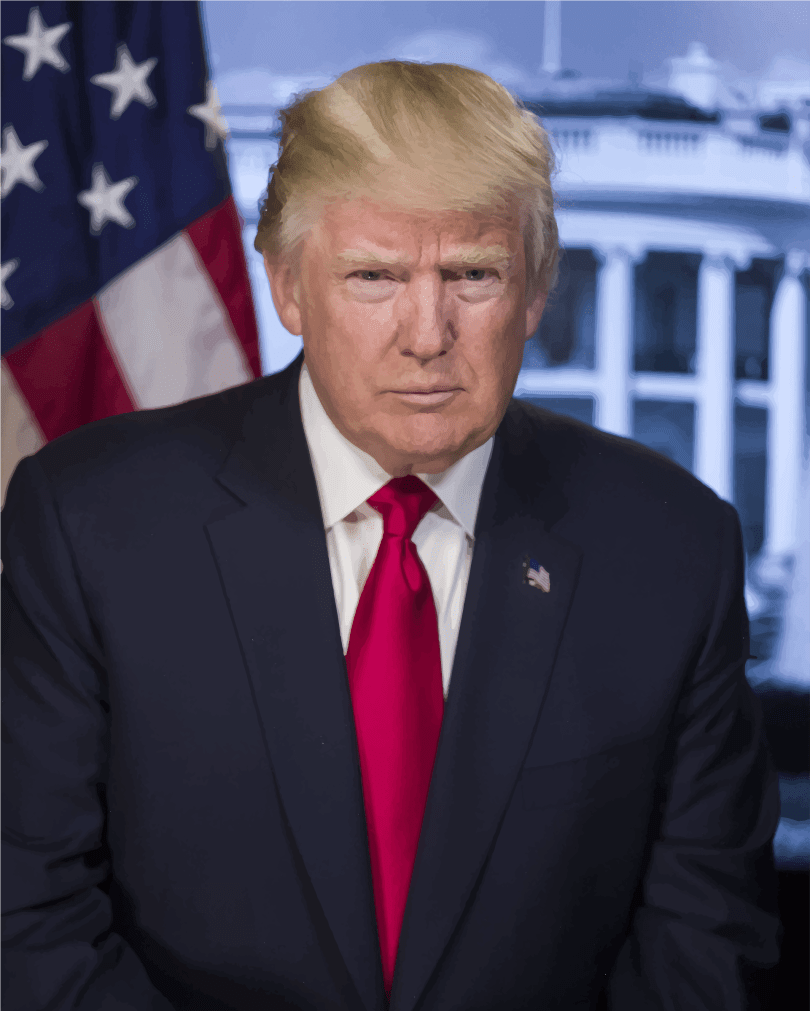
So, to celebrate the thirtieth week of posts—and to honor our amazing, if embattled, President—today’s edition of Lazy Sunday is dedicated to the God-Emperor himself, Donald J. Trump.

  • Indian Man Worships Trump as a God” – This little piece was a bit of a throwaway novelty, but I still find it amusing:  an Indian gentleman devoted himself to GEOTUS so intensely, his parents moved out of the house.  I was hoping some Twitter-savvy user would get this piece to Trump or Sarah Huckabee Sanders, and President Trump could use it as an opportunity to witness to this well-intentioned-but-misguided man.
  • Mueller Probe Complete, Trump Vindicated” – The subject of a recent TBT feature, I wrote this piece when the Mueller Report first broke and all indicators were that “Russian collusion” was, at best, way overblown.  Yes, yes—Mueller insisted that Trump wasn’t “exonerated,” but he and the Democrats had to admit sheepishly that the drum they’d been beating for nearly three years was busted (not that they actually did admit that).  Of course, now they’ve just changed from one scary Eastern European country to another with tales of “Ukrainian collusion” to bolster a bogus impeachment inquiry.  Sigh.
  • Symbolism and Trumpism” – An unfortunate side effect of Protestant efficiency and pragmatism is the lack of attention to symbols, which we tend to view with suspicion—“it might be an idol!”  But symbols matter immensely to uniting a people.  That’s the key insight this piece explores, care of an American Greatness essay about Trump’s ability to understand the need for and use of unifying symbols like the National Anthem, the American Flag, and so on.
  • Trump’s Economy and 2020” – President Trump can boast a hugely successful economy, almost directly as a result of his tax cuts and regulatory reforms.  After Trump’s election, I could almost physically sense a weight lifting off my shoulders, and those of millions of Americans—and I was doing okay even in President Obama’s moribund economy.  Even in 2016, with things gradually improving from the low-point of the Great Recession in 2009, the job market seemed tight.  By the time Trump was inaugurated in January 2017, phenomenal economic growth was well underway.  Here’s hoping that buoyant economy continues to roar through 2020.
  • “#MAGAWeek2019: President Trump’s Independence Day Speech“:  This post was a Subscribe Star exclusive, so you’ll have to pay a buck to read the full thing, but it’s about how great President Trump’s Independence Day speech was.  After all the hand-wringing from the Left and the noodle-wristed Right about Trump hosting a yuge military display on the Fourth of July (see also:  “Symbolism and Trumpism“), Trump delivered a speech that reminded us of why we can be proud to be a part of this incredible, unprecedented nation.  I didn’t hear the whole “airport at Yorktown” comment, but I’m also not attuned to picking up Trump’s every minor error and calling it treason the way Leftists are.

That’ll do it for this “big league” Lazy Sunday.  Enjoy your day off, and Keep America Great!

God Bless,

—TPP

Other Lazy Sunday Installments:

May We Never Forget

Today’s Number of the Day from pollster Scott Rasmussen is a poignant 9/11 memorial:  204 New York City firefighters have died due to illnesses from that fateful day.  That’s in addition to the 343 NYFD firefighters who gave their lives on September 11, 2001 (the NYFD maintains a list of “line of duty deaths” dating back to 1865; deaths 809 through 1151 were the result of the 9/11 terrorist attacks).  Rasmussen also notes that 2977 people died in the attacks.

Read More »

Americans Oppose Illegal Immigration

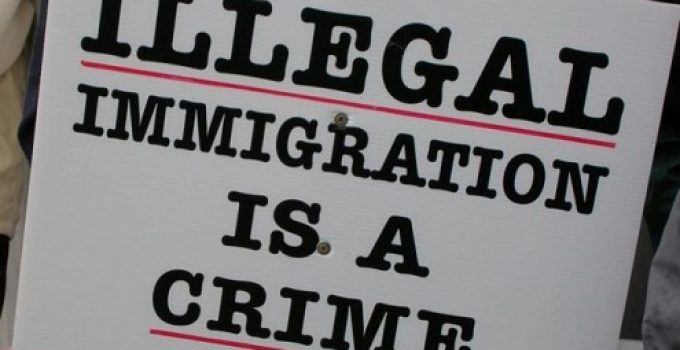
Today’s Number of the Day from pollster Scott Rasmussen notes that 76% of American voters believe that illegal immigration is bad for the country.  That is a substantial majority (and it makes you wonder about the other 24%).

When breaking that number down by partisan affiliation, it’s not surprising that 90% of Republicans believe that illegal immigration is bad.  What is somewhat surprising is that 63% of Democrats believe that illegal immigration is bad.  That suggests that opposing illegal immigration and border control continue to be winning issues.

Read More »

The Boiling Potential of the Right

Blogger photog at Orion’s Cold Fire—the gift that keeps on giving—has yet another excellent post examining the state of the Right today.  In particular, photog poses the question:  “How Will the Deplorables Get Organized?

photog uses the analogy of a sword forged from various “metals”—parts of the coalition of the Right and the non-progressive side of politics.  His argument is that, during the Cold War, some metals were included in this grand alloy that didn’t blend well with the others, but they forged together well enough to make the sword that vanquished Communism.

However, those poorly-blended alloys—which he identifies as the GOP Establishment of Conservatism, Inc.—weakened the sword in a post-Cold War context, making the weapon ineffective.  A new metallurgist—photog doesn’t name who this is, but I suspect he means Trump, or perhaps the Trumpian Right—has discarded those unassimilable lumps, and has brought back in some of the metals that were rejected in the old days (the paleoconservatives, for example).

The new sword is still being forged; right now, it’s all boiling, kinetic potential, but it hasn’t hardened into cold, steely weapon capable of dealing a death blow to progressive lunacy.  The challenge, as photog sees it, is to bring together this energetic, chaotic new coalition into a disciplined, populist-nationalist (my words, not photog’s) movement with coherent aims.

Of course, photog notes it will not be easy.  Here’s a key passage from his post:

I’ve said that it needs to be done but I’m not trying to kid anyone into thinking it will be easy.  When I said that the New Right is like a boiling pot I wasn’t kidding.  Chaos and kinetic energy are the only rules and there is absolutely no consensus between the various groups that make it up.  They range from radical separatists who are busy storing ammo for the shooting war, to Tea Party civic nationalists who can’t figure out why John McCain didn’t get elected in 2008, to religious businessmen who want the government to stop persecuting them for their beliefs, to Rust Belt forgotten men who want to stop the globalists from putting the last nail into their economic coffins.  Herding cats would be a cakewalk in comparison.  But it will need to be done if we hope to avoid being back at the mercy of the Stupid Party.

In short, the task ahead is difficult, but necessary.  Otherwise, cucky GOPe figures will come back into control, and the Republican Party will continue to be controlled opposition.

That’s another key point that photog makes, and with which I strongly agree:  a third party is suicide.  The Trumpian Right has to take control of the Republican Party.  Trump’s brilliance as that he ran a third party campaign inside one of the two major parties.  He has been at least partially successful in turning the Republican Party into a vehicle for his policies, but GOP swells have also reined in the President.

Regardless, it’s crucial that Trump wins in 2020 if we want to see the hardening of this boiling new coalition.  If Trump loses, the clucking scolds of National Review, et. al., will waste no time in saying, “we told you so!”  It may be a generation again before a populist Republican has a shot again at the highest office in the land—we’ll be consigned to thirty years of cucky Bush-cons losing meekly to increasingly insane Democrats.

On the other hand, if Trump wins, we have a golden opportunity to cement the roiling new coalition into something enduring—an FDR-style grand realignment.

2020 is going to be an interesting year.

Box Wine Aunties for Williamson

Yesterday I wrote of a “New Great Awakening,” an awakening of the fast swath of forgotten men and women to the realities of the progressive Left’s destructive ideology.  Blogger photog at Orion’s Cold Fire inspired the post with his piece “The Great Awakening,” which brought to mind a key point about our national debates:  our concerns are primarily theological, not political, in nature.

I’ve written quite a bit about Americans’ desperate search for meaning (also here), for a deeper spiritual Truth that motivates our culture and our lives.  Increasingly, Americans are abandoning traditional Christian faith, embracing instead alternative forms of spirituality, from the mundane and trite —“living your best life”—to sinister, like witchcraft.

It’s no surprise, then, that the dark horse—or, perhaps, the black cat—candidate in the Democratic presidential primaries is self-help guru and author Marianne Williamson.  Williamson made waves during the first set of debates with her “Love is a Battlefield” pronouncement, and has become something of an Internet meme.

Read More »

The New Great Awakening

I just wrapped up the last session of my History of Conservative Thought course.  We spent the last day unpacking the “Introduction” to Richard Weaver’s Ideas Have Consequences (you can read my summary here).  We also discussed tax policy (an unexpected and pleasant pre-class discussion) and spending, and completed the “Debt Fixer” simulation from the Committee for a Responsible Federal Budget.

Towards the end of class, I also briefly touched upon the 2016 election of Donald Trump to the presidency.  I spoke extemporaneously, and largely touched upon the “forgotten men and women” theme—that is, that legions of voters perceived themselves to be overlooked, ignored, or even denigrated by the political and cultural arrangements of our time, and latched onto Trump’s candidacy as the best vehicle for expressing this sense of alienation.

At the top of my mind was a series of posts from my good e-pal photog, proprietor of the excellent blog Orion’s Cold Fire.  photog has a long post up entitled “The Great Awakening” that details the slowly dawning realization that millions of Americans were bamboozled by their political elites.  I highly encourage you check it out.

That essay comes on the heels of another photog post, one of his “American Greatness Post of the Day” features.  That feature links to a long essay by Matthew Boose, “The Great Excluded and Our Nationalist Future,” which casts our current political and cultural battles as one between the champions of multiculturalism versus the traditional American patriots.  The former believe America is “open to everyone”—except, of course, the benighted conservative Americans of flyover country—while the latter believe there is more to America than a set of abstract principles, and that our borders and traditions mean something.

photog and I both exist in “the thin space between the lumpen masses of the civic nationalists and the bomb-throwing bad-thinkers of the Post America far right,” as he aptly puts it.  We don’t accept the full-blown claims of the far/Alt-Right that America is doomed and our national heritage is irredeemable, nor do we think that one’s race is a determining factor in one’s ability to be a part of the American experiment.

But we also no longer believe that just getting the policy right will solve our problems.  As Weaver diagnosed in Ideas Have Consequences, our problems run deeper, to the level of ideas, but also to the metaphysical.  As Michael Knowles has said multiple times, our essential questions are not truly political, but are theological; that is, they are questions about who we are, what we believe, and what our place in the universe is.

Thus, we have another Great Awakening in American political and cultural life, a period during which we reexamine these fundamental questions.  For too long the radical, progressive Left has dominated how these theological questions are approached and considered.  The time has come for the Right to take its message to the people, and to restore a more traditional, satisfying, and godly sense of man and his place in Creation.

TBT: [Four] Years of Excellence

President Trump officially kicked off his 2020 reelection campaign earlier this week, and it’s been almost exactly one year since the post below.  I’ve been quite impressed with President Trump, who has governed far more conservatively than I and many other conservatives could have ever hoped.  While there is still much to be done on immigration—border crossings have accelerated due to misguided progressive policies that encourage child trafficking—and the wall seems to be more an abstraction than a concrete reality, Trump has slashed taxes, created jobs, and strengthened national security.

Trump has also stacked the federal courts with conservative-leaning judges and justices.  And that’s in the face of progressive aggression and Deep State coup attempts.

His record speaks for itself.  President Trump has taken the reins of the Republican Party and has done much to shore up the Republic.  Here’s looking to four more years—and to Keeping America Great!

Father’s Day—16 June 2018—marked three years since President Donald Trump’s now-legendary descent down the golden escalator at Trump Tower, following by his controversial but true-to-form announcement that he would be seeking the Republican Party’s nomination for President.

I was, initially, a Trump skeptic, and I voted for Texas Senator Ted Cruz in the South Carolina primaries the following February.  When Trump first announced, I wrote him off—as so many others—as a joke.  I appreciated his boldness on immigration, but I still thought the PC Police and the campus Social Justice Warriors were firmly in control of the culture, and that no one could speak hard truths.

I also remembered his brief flirtation with running in 2012, and thought this was just another episode in what I learned was a long history of Trump considering a presidential bid.  At the South Carolina Republican Party’s state convention earlier in 2015, I asked two young men working on Trump’s pre-campaign (this was before The Announcement) if he was reallyserious this time.  The two of them—they looked like the well-coifed dreamboat vampires from the Twilight franchise—both assured me that Trump was for real, and I left with some Trump stickers more skeptical than ever (note, too, that this was before the distinctive but simple red, white, and blue “Trump” lawn signs, and definitely before the ubiquitous “Make America Great Again” hats).

I even briefly—briefly!—considered not voting for Trump, thinking that he was not a “real” conservative.  I still don’t think he’s a conservative in the way, say, that a National Review columnist is (although, the way they’ve gotten so noodle-wristed lately, that’s a good thing; I’ve just about lost all respect for David French’s hand-wringing, and Kevin Williamson went off the deep-end), but rather—as Newt Gingrich would put it—an “anti-Leftist.”  That’s more than enough for me.

But my conversion to Trump came only belatedly.  I can still find a notebook of notes from church sermons in which I wrote, “Ted Cruz won the Wyoming primary.  Thank God!” in the margins.

Then something happened—something I predicted would happen on the old TPP site—and I couldn’t get enough of the guy.  It wasn’t a “road to Damascus” epiphany.  I started listening to his speeches.  I read up on his brilliant immigration plan (why haven’t we taxed remittances yet?).  I stopped taking him literally, and began taking him seriously.

And I noticed it happening in others all around me.  Friends who had once disdained the Republican Party were coming around on Trump.  Sure, it helped that Secretary Hillary Clinton was a sleazebag suffused with the filth of grasping careerism and political chicanery.  But more than being a vote against Hillary, my vote—and the vote of millions of other Americans—became a vote for Trump—and for reform.

Trump made politics interesting again, too, not just because he said outrageous stuff on live television (I attended his rally in Florence, South Carolina before the SC primaries, and I could feel his charisma from 200 feet away; it was like attending a rock concert).  Rather, Trump busted wide open the political orthodoxy that dominated both political parties at the expense of the American people.

Take trade, for example.  Since World War II, both Democrats and Republicans have unquestioningly supported free trade.  Along comes Trump, and suddenly we’re having serious debates again about whether or not some tariffs might be beneficial—that maybe it’s worth paying a little more for a stove or plastic knick-knacks if it means employing more Americans.

That’s not even to mention Trump’s legacy on immigration—probably the most pressing issue of our time, and one about which I will write at greater length another time.

Regardless, after over 500 days in office, the record speaks for itself:  lower taxes, fewer regulations, greater economic growthgreater security abroad.  At this point, the only reasons I can see why anyone would hate Trump are either a.) he’s disrupting their sweet government job and/or bennies; b.) they don’t like his rhetorical style, and can’t get past it (the Jonah Goldbergite “Never Trumpers”—a dying breed—fall into this group); or c.) they’re radical Cultural Marxists who recognize a natural foe.  Folks in “Option B” are probably the most common, but they’re too focused on rhetoric and “decorum”—who cares if he’s mean to Justin Trudeau if he gets results?  The folks in “Option C” are willfully ignorant, evil, or blinded by indoctrination.

As the IG report from last Thursday revealed—even if it wouldn’t come out and say it—the Deep State is very, very real.  That there were elements within the FBI willing to use extralegal means to disrupt the Trump campaign—and, one has to believe, to destroy the Trump presidency—suggests that our delicate system of checks and balances has been undermined by an out-of-control, unelected federal bureaucracy.  Such a dangerous threat to our republic is why we elected Trump.

President Trump, keep draining the swamp.  We’re with you 100%.

SubscribeStar Saturday: Asserting Conservativism

As I’ve been developing my History of Conservative Thought course, one of my goals is to define “conservatism” positively; that is, on it’s own terms, and not merely as a reaction to progressivism.  Too often—including on this blog—we conservatives define our movement as what we’re against, rather than what we support.

That’s understandable, in part, for two reasons:  the Left’s vicious tactics are hard to ignore, and what we think of as “conservatism” is often the other side of a liberal coin.

On that second point:  conservatives often struggle to hold truly distinct positions because we’ve embraced the underlying assumptions of liberalism.  This explains the much-derided tendency of National Review to write headlines such as “The Conservative Case for [Deranged Leftist Policy Here].”  Conservatism, Inc., is also obsessed with policing our side, punching to the right as frequently as the left (take for instance, Kevin Williamson’s piece on the Crowder demonetizing situation; Williamson can barely wait to insult Crowder as “stupid” and childish, even as he feigns to defend the YouTube star).

We also tend to see compromise as part of the hurly-burly of electoral politics, so in a practical sense, we do so out of a good-faith understanding that our political opponents will do the same.  The Kavanaugh hearings largely dispelled that myth once and for all, as Lindsey Graham’s powerful reaction to that witch-hunt demonstrated.

Such is the theme of Angelo Codevilla’s latest piece, “A Conservative Resistance?”  Thanks to photog at Orion’s Cold Fire for linking to it.  Readers will recall that I wrote some months ago about Codevilla’s excellent essay on secession.

To read the rest of this post, subscribe at $1 or more on my SubscribeStar page!

Other SubscribeStar Saturday Posts:

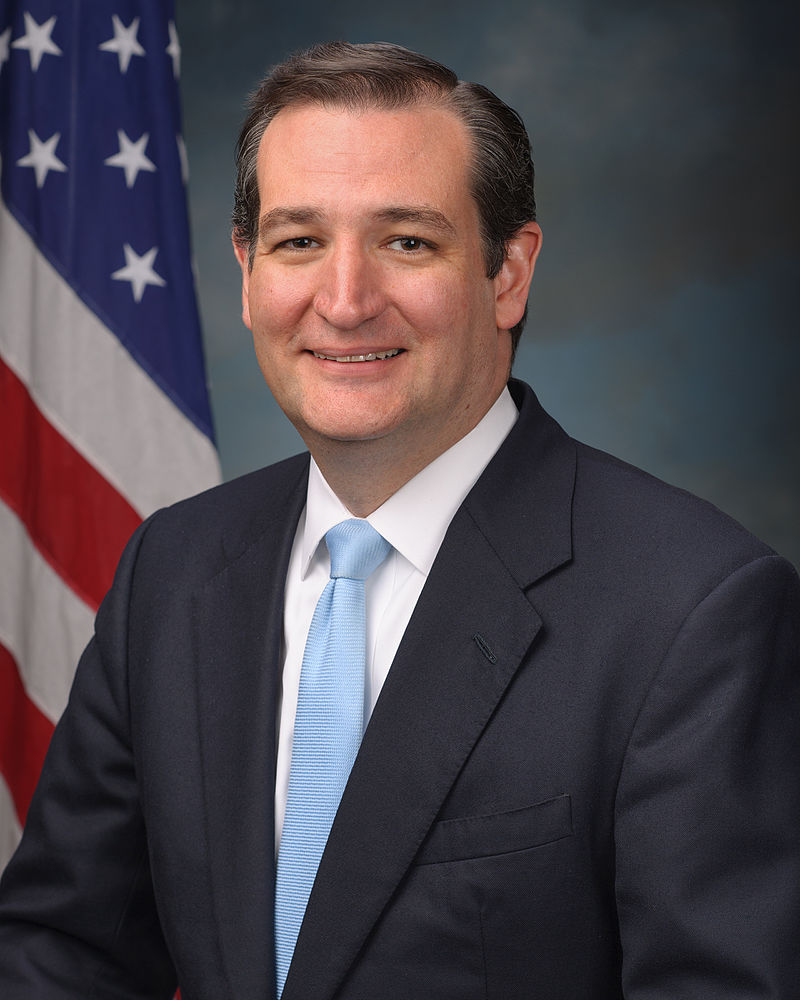
Ted Cruz on Ben Shapiro

It was a glorious weekend at Casa de Portly, deep in the heart of Dixie.  It was the kind of weekend that saw a lot of non-blog- and non-work-related productivity; in other words, I loafed a great deal, then did domestic chores around the house.

In case you missed it, on Saturday I released my Summer Reading List 2019.  If you want to read the whole list—and it’s quite good—you have to subscribe to my SubscribeStar page at the $1 level or higher.  There will be new, subscriber-exclusive content there every Saturday, so your subscription will continually increase in value.

Anyway, all that loafing and cleaning meant that I was unplugged from politics.  I did, however, manage to catch the Ben Shapiro Show “Sunday Special” with Texas Senator Ted Cruz.

I was a big fan of Cruz in the 2016 Republican presidential primaries, and I voted for him here in South Carolina.  Cruz intuited the populist mood of the electorate the way that President Trump did, and combined it with policy innovation and constitutionalism.

There’s a reason Cruz hung in there as long as he did against Trump:  he’s a canny political operator, but he also knew how to pitch a conservative message that was appealing to many voters.  I sincerely believe that had he clinched the nomination, he would have won the 2016 election (and, perhaps, by an even wider Electoral College margin than did Trump).

Cruz catches a lot of flack because he’s a little dopey and looks odd—a whole meme emerged in 2015-2016 claiming that Cruz was the Zodiac Killer—but he’s been an influential voice in the Senate.  He possesses a supple, clever mind, and has urged Republicans to make some bold, innovative reforms to the Senate (he vocally champions and has proposed a constitutional amendment for congressional term limits).

The hour-long interview with Ben Shapiro—which opens with a question about his alleged identity as the Zodiac Killer—shows how affable and relaxed Cruz really is.  I’ve never seen him appear more relaxed and genuine (and I never took him for a phony—I’ve seen him speak live at least once at a campaign rally in Florence, and spoke very briefly to him afterwards) than in this interview.

Granted, it’s friendly territory—Shapiro was a big supporter of Cruz in the primaries—but Cruz spelled out some important ideas, as well as his projections for 2020.  If you don’t have a full hour, fast forward to about the forty-minute mark for his discussion of Trump’s reelection prospects.

To summarize them briefly:  Cruz thinks it all comes out to turnout, and that Democrats will “crawl over broken glass” to vote against Trump.  He even points out that his own race against Democrat Robert Francis “Beto” O’Rourke was as close as it was because Beto ran against Trump more than he did against Cruz.  He also thinks Joe Biden is going to flame out, and one of the more radical, progressive Dems will clinch the nomination, making the prospect of a truly socialistic administration terrifyingly possible.

That said, Cruz is optimistic.  Discussing his own narrow victory over Beto in 2018, he points out Beto’s massive fundraising and staffing advantages (Cruz had eighteen paid staffers on his campaign; Beto had 805!), but explains that a barn-burning bus tour of the State of Texas pulled out conservative and middle-class voters in a big way for his reelection.

That points to one of Trump’s strengths:  the relentless pace with which he campaigns.  Trump held three and even four rallies a day in key battleground States in the final days of the 2016 election, which likely made the difference in Michigan, Wisconsin, and the Great White Whale of Republican presidential elections since the 1980s, Pennsylvania.  If Trump can get his pro-growth, pro-American message out there as effectively in 2020 as he did in 2016 and can excite voters who want to protect their nation and their prosperity, he could cruise to reelection.

Cruz’s optimism, tempered by practical challenges ahead for Republicans, really came through in the video.  Really, the entire interview reminded me why I liked Ted Cruz so much the first time.  I’d love to see him remain a major presence throughout the next five years, and to see him run for the presidency again in 2024 (him, or Nikki Haley).

Regardless, I encourage you to listen to this interview.  Take Cruz’s warning to heart:  don’t get complacent, because the Democrats aren’t.

Lazy Sunday XIII: Immigration

I’ve really been beating the drum about immigration lately, so today’s Lazy Sunday should come as no surprise.  Illegal immigration is a major crisis facing the United States and Europe, and it’s one we ignore at our peril.

Indeed, even legal immigration presents a problem if left unregulated.  Massive amounts of immigration leads easily to ethnic cloistering; if left unchecked, entire neighborhoods or cities can become unrecognizable.

An essential component of conservative nationalism is that a nation is made up of a people.  In the old European conception, that manifests itself as the nation-state:  a group of people sharing a common lineage or shared blood.  Sometimes that identity is self-consciously constructed, but it still stems from the notion that a certain people and a certain land make up the nation.

The American conception of nationalism is only slightly different:  the American people don’t have to share the same patrimony, but they do have to share similar values.  Those values are Anglo-Saxon in origin, but they can (and must) be adopted by anyone.

As such, ethnic cloistering subverts the assimilation process, placing fundamentally alien populations in the midst of natives.  That’s a recipe for conflict, as it undermines social and national cohesion.

“Nationalism” doesn’t have to be a dirty word.  There’s nothing inherently wrong with a group of people wanting to have their own nation.  No America should feel like a thoughtcriminal because he wants to protect his country from unregulated foreign invasion.

Some food for thought for your Sunday morning.

  • Open Borders is the Real Moral Crisis” – One of my first posts on immigration (and last week’s TBT feature), the context for this piece was the child separation policy and the faux outrage about it (notice how you never hear about this anymore?).  When I wrote this piece, this issue was red-hot, and I anticipated all sorts of social justice whinging.  Now that the political usefulness of child props is waning, it’s interesting to read it with fresh eyes.  My basic argument is unchanged, though:  we wouldn’t be dealing with child separation and the like if it we simply enforced the law.
  • The Facts on the Border Crisis” – This piece looked at the history of Texas Republic and the oft-forgotten Mexican War.  Texas was a major province of Mexico.  After gaining independence from Spain, the young Mexican government invited white American yanquis to settle the territory if they converted to Catholicism.  When the Mexican government attempted to abolish slavery, the American settlers—many of whom came from the Deep South with their slaves in tow—balked, demanding to keep their slaves.  When General Santa Anna attempted to enforce the Mexican constitution, the Texans rebelled.

    The point:  large, marginally-assimilated foreigners dominant in one geographic area is a recipe for disaster.  Now, Mexico is doing to the Southwest what Americans did to Texas in the nineteenth century—they even call it the Reconquista.

  • Somali Shenanigans” – Case in point:  the resettlement of Somali refugees and immigrants into Minneapolis has completely transformed the demographic makeup of a large neighborhood in the city.  That’s also changed the politics of the State’s Democrat-Farm-Labor Party, which now caters to this largely unassimilable contingent.  Indeed, they’ve now elected Ilhan Omar to Congress, a woman who allegedly married her brotherallegedly married her brother to commit immigration fraud.
  • Immigration by the Numbers” – This post details the costs, social and economic, of immigration, focusing primarily on the huge amount of American dollars sent to foreign nations as “remittances.”  Remittances are funds earned in the United States and wired back to family members in an immigrant’s home country.  It’s a massive business, accounting for $148 billion in total, with $30.02 billion going to Mexico (China also gets a pretty penny).  That’s American wealth draining off to support other countries.
  • Deportemal” – Rounding out this week’s Lazy Sunday is a little post about the lawlessness that stems from illegal immigration.  The attitude of illegals is excessively cavalier:  in addition to existing in a state of persistent illegality, they leverage their “shadow” status to avoid real penalties for petty crimes.  The frustration for legal citizens is palpable:  we’re held to a rigid legal standard, while authorities turn a blind or helpless eye to illegal activity from illegal aliens who feel entitled to breaking the law because their home countries suck.

Illegal immigration is a frustrating assault on the lives of American citizens and the rule of law.  Rather than indulge such wide-scale lawlessness, we should robustly and aggressively prosecute and deport illegals upon apprehension for any offense, from the smallest jaywalking misdemeanor to child rape and murder.  If you’re caught and you’re illegal, you’re going back!

Other Lazy Sunday Installments: