He is Risen!

Happy Easter to everyone!  Today’s post is another short one for this important holiday weekend (it also marks sixteen weeks of daily posts—shew!).

Jesus Christ died for our sins around 2000 years ago, and was resurrected three days later.  Today, Christians all over the world celebrate His death and resurrection, and eagerly await His eventual return.

According to Scott Rasmussen, 74% of Americans will celebrate Easter today, but only 40% of Americans will attend church (but, hey, that’s better than nothing).  He also writes that 67% of Americans believe Jesus Christ arose from the dead—one of the more heartening statistics I’ve read in awhile, considering Pat Buchanan’s recent piece about our declining public morality.

This Easter, I’m praying for national and spiritual renewal for America and the West.  Part of that is the need for revival across our nation.

Enjoy a day of fellowship and family.  And if you have time, check out my old “Lazy Sunday” compilation of pieces about Christianity.

Happy Easter!

–TPP

Buttigieg and Buchanan: Redefining Morality

It’s Good Friday here in Christendom, and while it feels like Christianity took one on the chin earlier this week, we know there’s victory in Jesus.

Indeed, Christianity has been compromised quite a bit lately, with the rise of “feel-good” non-denominational churches and the decline of High Protestant denominations, both succumbing, in different ways, to social justice pabulum. Blogger Dalrock writes extensively about how “conservative” churches are snookered into radical acceptance of homosexuality (and extremist feminism) as somehow Christ-like. That goes beyond “love the sinner, not the sin,” which is correct; Dalrock writes about “same sex-attracted” preachers in prominent non-denominational churches arguing that their gayness makes them “holy.”

Political pundit, noted paleoconservative, and devout Catholic Pat Buchanan has a piece on Taki’s Magazine this week about Mayor Pete Buttigieg, the out-and-proud Democratic presidential hopeful who is making waves because he’s a.) deceptively normal but b.) also gay, which isn’t as glamorous for the Left as being transgender, but it’s still their alternative lifestyle of choice. Buchanan examines “Mayor Pete’s” assertion that God made him gay, so he’s supposed to live that lifestyle (despite some very specific New Testament injunctions against homosexuality; unless Mayor Pete is the Second Coming of Christ, he’s adding to God’s Word).

Ultimately, gayness isn’t the issue (it’s just one of many bludgeons the Left wields in a relentless culture war). The issue is a persistent redefining of morality, not to mention the moral arrogance of Leftists who believe they, not God, can redefine thousands of years of moral absolutes.

Permit me to quote Buchanan at length:

Consider what has changed already.

In the 19th century, blasphemy was a crime.

In the Roaring ’20s the “vices” of booze and gambling were outlawed. Now they are major sources of state revenue.

Divorce was a rarity. Now half of all marriages are dissolved.

After the sexual revolution of the ’60s, births out of wedlock rocketed to where 40 percent of all children are born without a father in the home, as are half of Hispanics and 70 percent of all black children.

Pornography, which used to bring a prison term, today dominates cable TV. Marijuana, once a social scourge, is the hot new product. And Sen. Kamala Harris wants prostitution legalized.

In the lifetime of many Americans, homosexuality and abortion were still scandalous crimes. They are now cherished constitutional rights.

Yet, Mayor Pete’s assertion — that God made him gay, and God intended that he live his life this way, and that this life is moral and good — is another milestone on the road to a new America.

For what Buttigieg is saying is that either God changes his moral law to conform to the changing behavior of mankind or that, for 2,000 years, Christian preaching and practice toward homosexuals has been bigoted, injurious and morally indefensible.

The decline of the family and Christianity, I believe, are twin evils that brought us to this point. The two go hand in hand: without strong families, moral instruction falls to the wayside (or is delegated to progressive educators and the system that supports them). Without Christianity, the foundation that makes strong family formation possible is missing (at least, family formation loses its metaphysical component).

To be clear, we should not persecute homosexuals, and should treat them with dignity and respect. That said, we should not indulge their petulant outbursts, much less their insistence that their lifestyle is not just normal, but somehow godly. Statistically and morally, neither of those claims are valid or borne out by history or Scripture.

We should love one another, acknowledging we are all sinners in need of Christ. That does not mean we have to condone or enable sin, in whatever form. Homosexuality is particularly difficult to address, but we could start by not openly celebrating it all the time, nor should we encourage people struggling with those proclivities to define their entire being around their sexual preferences. What a terrible foundation upon which to build your identity!

Enjoy this Good Friday, and pray for direction on how we can renew our nation and our relationship with God.

The State of the Right

A major topic of discussion among conservative and/or non-Left thinkers, bloggers, and political theorists is what exactly makes one a “conservative” (or, perhaps more accurately, what combination of values and axiomatic beliefs constitute “conservatism”).  For the philosophically-minded, it’s an intriguing and edifying activity that forces one to examine one’s convictions, and the sources thereof.

I’ve written extensively about the Left and what motivates it.  To summarize broadly:  the modern progressive Left is motivated, at bottom, by a lust for power (the more cynical of Leftists) and a zealous nihilism.  These motivations take on a Puritan cultural totalitarianism that cannot tolerate even the mildest of dissent.  Witness the many examples of how Leftists across time and nations have devoured their own.

That said, I haven’t written too much lately about what it means to be a conservative.  One reason, I’m sure, is that it’s always more difficult to engage in the oft-painful exercise of self-reflection.  Another is that the lines of conservative thought have been shifting dramatically ever since Trump’s ascendancy in 2015-2016, and the cementing of his control over the Republican Party—the ostensible vehicle for conservative ideology—since then.

As such, in the kind of serendipitous moment that is quite common in blogging, today’s post shares two pieces on the lay of the conservative landscape, and the various factions within the broader conservative movement (and, politically, the Republican Party).

One is, by the standards of the Internet, an old essay by Gavin McInnes, “An Idiot’s Guide to the Right.”  Written in 2014, one month before Republicans would win control of the US Senate, McInnes’s breakdown of the Right is still fairly prescient, although it’s always interesting reading discussions of the conservative movement pre-Trump (McInnes, like many conservatives, hoped and believed that Ted Cruz was the last, best hope of the movement; that was certainly my view well into 2016).

The other is a post from Tax Day, “What’s Right,” by an upcoming blogger, my e-friend photog of Orion’s Cold Fire.  He gives a detailed breakdown of the shifting coalition of the Right at present, and his own “red-pilling” is very similar to my own (indeed, photog and I both fall somewhat on the fringes of the “civic nationlist” camp, with toes cautiously dipped into the parts of the “Dissident Right,” a term itself coined by VDARE.com‘s John Derbyshire).

Traditionally (since the end of the Second World War, that is), the old Republican coalition was a three-legged stool, bringing together economic/fiscal conservatives, social conservatives, and national security conservatives.  In the wake of the Cold War, the first two legs ceded more ground to the national security conservatives, some whom consisted of the much maligned “neoconservatives,” themselves reformed progressives who had been “mugged by reality.”

The neocons would enjoy their ascendancy during the George W. Bush administration, and they tend to be the major proponents of the dying Never Trump movement.  Their vehement hatred of Trump (see also: Bill Kristol, Senator Mitt Romney, and George Will) has largely discredited them, and they’ve shown that their true loyalty is to frosty globalism, not the United States.  They also pine for a mythical form of “decorum” in politics that never truly existed outside of the immediate postwar decades.

photog characterizes this group as essentially less strident Leftists, a group that “doesn’t shrink or grow.”  They were the “we need decorum” crowd that went big for the Never Trumpers, but who have largely made an unsteady cease-fire with the president—for now.  Bill Kristol and Max Boot, the extreme of this group, have essentially become full-fledged Leftists (making Kristol’s latest project, The Bulwark—to protect “conservatism,” ostensibly—all the more laughable).

These are the people that don’t want to vote for Trump, but might anyway, because he’s “morally reprehensible,” which is just their way of saying they think he’s icky and boorish.  These are the upper-middle class white women of the Republican Party, the ones I constantly implore to get over their neo-Victorian sensibilities and stop destroying the Republic from their fainting couches.

The biggest group, per photog, are the Conservative Civic Nationalists.  These are the people that love God and country, and like Trump because he represents the best hope to defend those very things.  McInnes, less perceptively, just calls this groups “Republicans,” although his “Libertarians” might fall into this group, too.  To quote photog at length:

The next big class of people are the Conservative Civic Nationalists.  This is the bulk of the Non-Left.  These are the normal people who have always believed in God and Country and that America was the land of freedom, opportunity and fairness.  They believed that all Americans were lucky to be living in the greatest country on God’s green earth.  They believed that the rule of law under the Constitution and especially the Bill of Rights is what made this the closest thing to heaven on earth and anyone living here should be supremely grateful to the Founding Fathers for inventing it and his own ancestors for coming here.  This is the group that has had the biggest change occur in the last couple of years.  But to define the change let’s break this group into two sub-divisions.  Let’s call them Sleepwalkers and the Red-Pilled.  Back in the early 2000s all the Civic Nationalists (including myself) were Sleepwalkers.

The “Red-Pilled” and “Sleepwalkers” dichotomy is one of the most interesting interpretations I’ve read about the Right lately, and it’s certainly true.  Trump awoke a large group of these Civic Nationalists, people that were disgruntled with the government overreach of the Obama era, but weren’t certain about the way forward.

Like myself, photog is cautiously optimistic that these folks will continue to wake up, bringing along non-political Centrists—the squishy, non-ideological middle—to bolster Trump’s reelection in 2020.  The Left’s relentless push for socialism and transgender bathrooms have done much to red-pill these folks, who find themselves struggling to articulate values that they just implicitly know are good, but which the Left insists on destroying.

There’s still much to be said about the current state of the Right, and I will be delving into it in more depth as the weeks progress.  For now, read these two essays—particularly photog’s—and begin digesting their ideas.  American politics are undergoing a major realignment, and we need people of good faith and values to stand for our nation.  Understanding the state of play is an important part of arming ourselves for the struggle.

Nehemiah Follow-Up

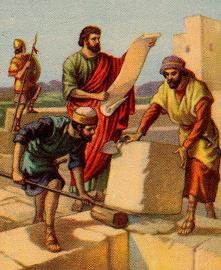
Yesterday, I posted about the Book of Nehemiah, and how the reconstruction of the wall around Jerusalem was a practical and symbolic form of national renewal and spiritual revival for the Israelites.  I drew the obvious comparison between Nehemiah’s effort, which his enemies scorned, mocked, and undermined, and that of President Trump’s to build a border wall and to enforce immigration laws.

A good friend and fellow blogger, with whom I share some Nehemiah-Trumpian parallels—for example, we’re both former secretaries for the Florence County GOP—Ms. Bette Cox, of the blog Esther’s Petition, e-mailed me the following comment.  It is reproduced here, in full, with her permission:

Good job with Nehemiah, Tyler. The most critical points, however, are found in 1:4 ff. The wall was, and is, not the most important thing in God’s eyes. Mourning. Grief. Repentance. Intercession. Far more important and essential, then and now. “Ask God what he wants prayed; pray that. Ask God what he wants to do; do that.”

Nehemiah 1:4 (KJV) reads as follows:  “And it came to pass, when I heard these words, that I sat down and wept, and mourned certain days, and fasted, and prayed before the God of heaven.”

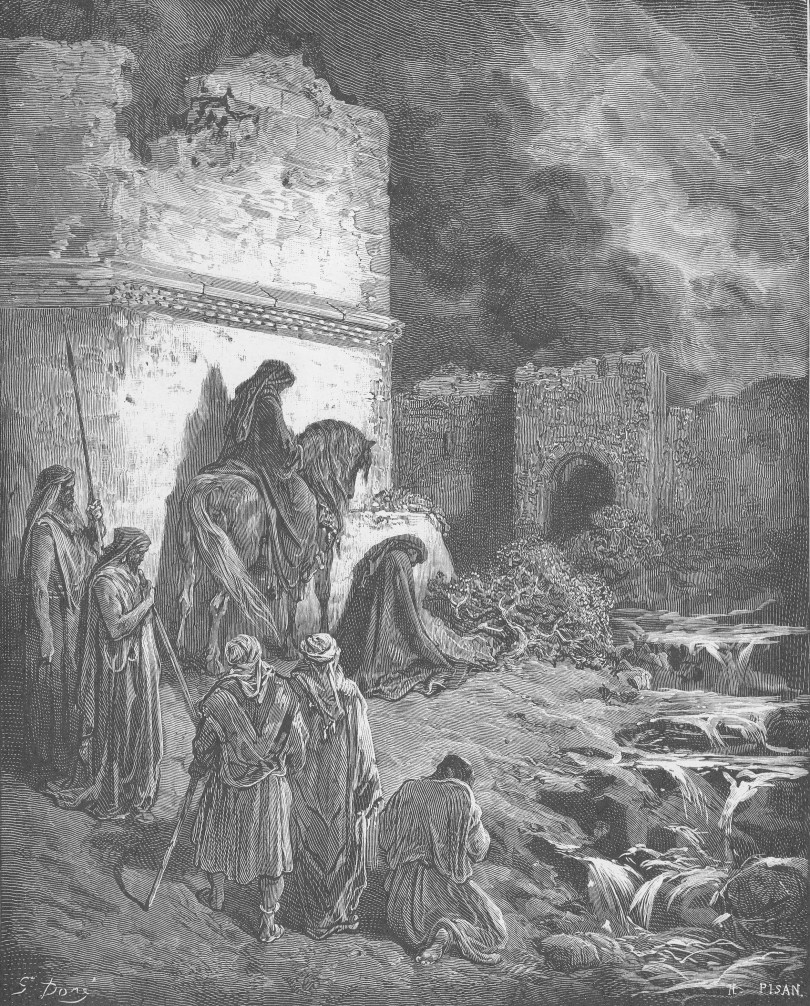
That’s a key point that I overlooked in my original post, and I wanted to write this brief follow-up to draw attention to this verse, and to thank Ms. Cox for highlighting it.  Indeed, verse 4 is the key to the entire Book of Nehemiah:  upon hearing the condition of his nation and his people, Nehemiah falls to his knees in tears, crying out to God for direction.

Another important detail:  Nehemiah asks, just two verses later, for forgiveness, not just for his people, but for himself.  He confesses his own sins to God, knowing that without full confession and repentance, he cannot follow God’s Will—indeed, he would be unable even to know what God’s Will is!

I don’t know the state of President Trump’s spiritual life, but I do believe he wants what is best for his nation.  Just as Nehemiah wept upon hearing the reduced condition of his people and their holy city, so did candidate Trump mourn (metaphorically) the degraded state of America.

For Christians, we should pray ceaselessly for God to spare the United States and to bring about national, spiritual revival and renewal.  I believe He granted us a reprieve with the unlikely election of Donald Trump, a man that, in his personal life, does not fit the mold of the “ideal” Christian.  What comes next is unclear, but we have to walk in faith, and trust in God—especially in the face of progressive lunacy and violence.

Nehemiah and National Renewal

This past Wednesday, I was asked to fill in for the pastor at the small church I attend.  Being such a small church—our average Sunday morning attendance is about forty—the pastor works another job, and he had a rare business trip.  I suppose he figured he could do worse than asking a high school history teacher to fill in for him.

Fortunately, the lesson was fairly straightforward:  he sent me a handout on Nehemiah 1:1-11, and the focus of the lesson was on the idea of spiritual renewal.

For the biblically illiterate—a shocking number of Americans today, I’m finding (I once had a class full of philosophy students who had never heard the story of the Tower of Babel, which is pretty much Sunday School 101)—the story of Nehemiah is simple:  after an extended period of exile in Babylon, the Israelites were sent back, under the auspices of the Persian Emperor Cyrus the Great, to Jerusalem.  Cyrus sponsored the rebuilding of the Temple in Jerusalem, but the city itself, as well as its walls, remained in a state of disrepair.

There were two waves of Israelite resettlement over the span of a century, but many Israelites remained in Babylon or other parts of the Persian Empire, such as the imperial capital.  Nehemiah was one of those, and would be part of a third wave of resettlement.  He served as cup-bearer to Artaxerxes, the Persian emperor at the time.  The position of cup-bearer was an important and trusted one:  he handled the emperor’s food and drink, ensuring it was not poisoned.

Beyond serving as the royal taste tester, the office carried with it important administrative duties, and gave incredible access to the emperor.  In short, it was a position of great influence, power, and prestige, which positioned Nehemiah nicely for what was to come.

Nehemiah spoke to a fellow Israelite who was visiting the imperial capital, and was distraught to hear of the poor condition of the city and its walls.  He fell to his knees, weeping and crying out to the Lord.  Nehemiah 1 details his prayer to God, calling out in adoration; confessing his and his people’s sins; thanking God for His mercy and gifts; and supplicating God for His Will to be accomplished through Nehemiah.

Specifically, Nehemiah asked God to be used to rebuild the wall around Jerusalem.  As cup-bearer, Nehemiah was able to present his petition to the emperor, who agreed to send Nehemiah to oversee the construction project.  In addition, Artaxerxes provided lumber from the royal forest, as well as funds to bankroll the endeavor.  He also sent letters with Nehemiah detailing his endorsement of the project.

Nehemiah’s work was not finished there, and it was anything but easy.  Initially, surrounding tribes criticized and mocked Nehemiah, questioning his loyalty to Artaxerxes, and saying that rebuilding the walls was a silly waste of time and effort.

However, once the wall reached half its height, his critics began plotting violence.  The plot to attack the workers reached Nehemiah, so he divided the work crews into those building the wall, and those defending their fellow workers from attack.

Having failed to stage an attack on the workers, Nehemiah’s enemies realized that the man himself was the target—cut off the head, kill the snake.  Again, God revealed this plot against Nehemiah, and he was able to avoid assassination.

Finally, the wall was rebuilt in an astonishing fifty-two days, an incredible feat of organization, ingenuity, and faithfulness.  The naysayers were humiliated, and Nehemiah instituted a period of national and spiritual renewal among the Israelites.  His reforms purified the nation spiritually and even ethnically, as old debts were forgiven and marriages to pagan women were dissolved.

It’s a powerful story—indeed, a powerful bit of history—about trusting in God in the face of extremely difficult odds.  But Nehemiah is also a story about national renewal, and the spiritual revival that came with it.

The wall around Jerusalem served a practical purpose—defending the city and its inhabitants from attack (even though the city was under the protection of the Persian Empire, the ancient Near East was, then as now, notoriously tribal, and the collapse of an empire would lead to dozens of ethnic conflicts)—but it was also a symbol of the Israelite nation.

Indeed, the author of the handout I used Wednesday evening writes that the “enemies of Israel could say, ‘What kind of God do you serve?  Look at the mess of your Holy City?’ It was a terrible witness and was cause for reproach from non-believers.”  The poor condition of the Jerusalem and its fortifications reflected the spiritual decay and corruption of the Israelites—they had intermarried with pagan women, adopting their false gods; they were living in rubble; and their reduced condition suggested that their God—the One True God—was not Who He made Himself out to Be.

It’s a bit on the nose, but I can’t help but recognize the parallels between the United States today and Jerusalem then—and between President Trump and Nehemiah (although I think Trump is closer to Cyrus the Great in terms of his spirituality and outlook).

I’m not suggesting Nehemiah was clubbing with Eastern European supermodels.  But like Trump, he faced overwhelming resistance from other nations to his wall project.  The rest of the ancient Near East feared a strong, renewed Israel.  Nehemiah’s return to Jerusalem, and the reconstruction of the wall, led to a period of national revival, as the people regained their identity, expelled the corrosive foreign influence in their midst, and renewed their commitment to God.

America is, spiritually and culturally, in similarly dire straits today.  President Trump has presented himself as a modern-day Nehemiah, come to control our borders, enforce our immigration laws, and restore America’s greatness on the world stage.  While he has made great strides in these areas, he meets resistance, duplicity, and mockery at every turn.

The story of Nehemiah tells us, however, that the struggle is worth the slings and arrows our enemies, both foreign and domestic, will lob at us.  To President Trump, I would urge the following:  stay the course, ignore the haters, take it to God, and BUILD THE WALL!