Yours portly has a lengthy post over at Free Speech Backlash today about Trump, Venezuela, and the intersection between American nationalism (“America First”) and American imperialism (the piece is called “Trump: Nationalist or Imperialist?“). “Imperialism” is a dirty word, but America is an empire, whether we like it or not. Indeed, we’ve been an empire since at least 1898, when the United States gained Puerto Rico, Guam, and the Philippines from Spain, and occupied Cuba for several years. Cuba became nominally independent, but remained a virtual American protectorate until Fidel Castro’s Communist revolution in the 1950s.
Many on the Right are concerned that the Maduro capture is something of a “heel turn,” to use wrestling parlance, for Trump’s foreign policy, and that he’s abandoning America First principles in favor of open-ended American adventurism abroad. My piece details why Maduro’s arrest is not another quagmire, and how it’s very consistent with traditional American foreign policy dating back to the Monroe Doctrine of 1823.
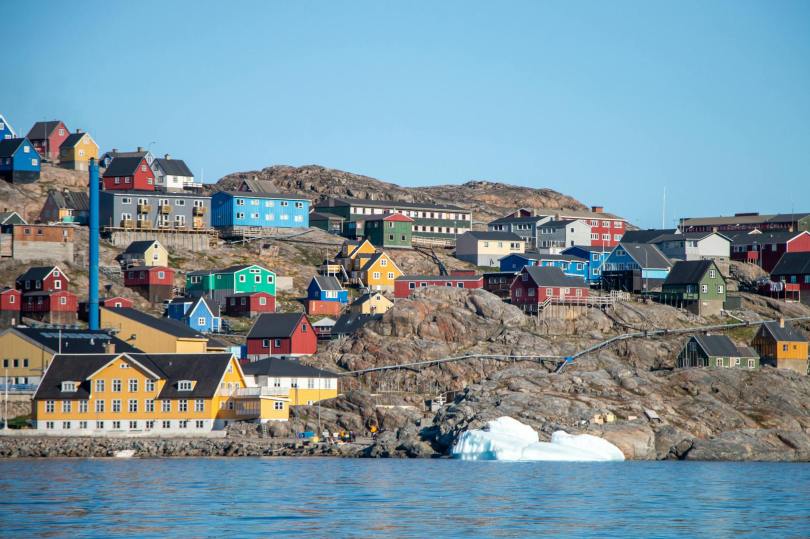
Similarly, Trump’s desire to annex Greenland, which sounds like a joke or someone playing a True Start Location Earth map in Civilization VI, is quite serious. Greenland is in the Western Hemisphere, which—whether we like it or not—is America’s hemisphere. American geopolitical strategy since 1823 has been to dominate this hemisphere to avoid a balance-of-power situation like Europe’s in the nineteenth century. It is also seeks to prevent foreign intervention into the independent nations of this hemisphere. One reason for the Maduro operation was to prevent Maduro from selling his country off to the Chinese, which would put America’s primary geopolitical rival in our backyard.
Similarly, China and Russia have designs on the Arctic, with the former particularly attempting to gain influence over the tiny Greenlandic population. Denmark is entirely too venal to combat foreign intervention in its colony, so greater, more serious powers will do so. With ice caps receding, the Arctic is the great oceanic chokepoint of the twenty-first century, and America needs Greenland to secure our interests in the Western Hemisphere—and to keep China out.
It’s unpleasant to think about Great Power politics in the twenty-first century, when we’re supposed to be beyond all that foolishness. But it is the rules-based international order of the 1990s that is the aberration, not the kinds of aggressive power plays we’re seeing today.
Taking Greenland—which the Trump Administration seems intent to do—is part of the broader return to Reality the world is experiencing. Reality is often hard, but it cannot be ignored.
I wish no violence upon Greenland or Denmark—far from it! Greenland does not need to be taken by force. At a certain point, the United States can offer Greenlanders a package so enticing, they cannot refuse. Denmark should be eager to offload an expensive asset that they are not using—and that the bankroller of their social welfare state is willing to go to great lengths to obtain.
With that, here is 15 January 2025’s “Make Greenland American“:
Read More »


 The Portly Politico