
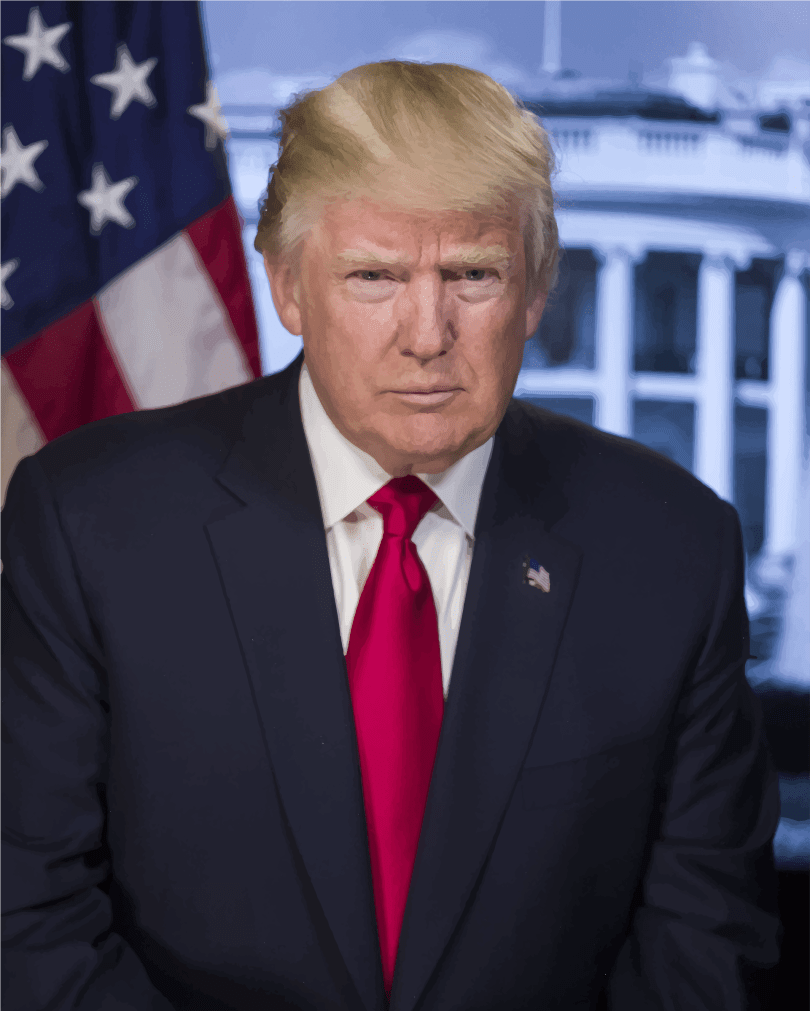
The Deep State is Real, Part II: US Ambassadors and DOJ Conspired Against Trump

Congressman Mark Meadows (R-NC) dropped a bombshell earlier this week:  Obama-era US ambassadors conspired with the Department of Justice against President Trump.  Every site I find points back to the original Washington Examiner piece linked above, although the blog Independent Sentinel has a bit more commentary, tying it back to the fake Christopher Steele dossier.

You’ll recall the Steele dossier is a document the Clinton campaign commissioned through back-channels (a law firm), which was then used to obtain a FISA warrant to wiretap then-candidate Trump’s communications.  That mendacious original sin spawned the odious “Russian collusion” narrative that lingers around the Trump Administration like a bad fart.  Andrew McCarthy in National Review calls the dossier a “Clinton-campaign product.”

Regardless, if Meadows is correct, it serves as further proof that the Washington “Deep State”—the “Swamp”—is very, terrifyingly real.  It will stop at nothing to disrupt President Trump’s America First agenda, and subvert a free and fair election.

What’s most chilling about all this chicanery is not that it targets President Trump particularly (although that certainly creates its own problems—few good, conscientious Americans will choose to run for public office, especially as conservatives, unless they have the cash and the guts to risk everything).  Rather, it suggests that our experiment in self-government is dangerously threatened by a group of unelected elites cloistered in the Washington foreign policy and law enforcement establishment.

America stands at a crossroads.  We’ve arrogated ever-more power to an unaccountable federal bureaucracy.  Many conservatives—myself included—hoped that the extended government shutdown would aid in the draining of the Swamp.  So far, though, it seems that the president is still surrounded by enemies.

We have a choice:  we continue down the current road, ceding more power to the government, and hoping against hope for some kind of “enlightened, constitutionalist despot” to restore as much of our constitutional framework as possible.  President Trump’s difficulties weeding out seditious bureaucrats suggest that path is incredibly difficult, and it will make presidential contests—as well as Supreme Court nominations—increasingly vicious.  The progressive Left has an edge in the culture, the institutions, government, and on the streets.

The other option is weed out the federal bureaucracy, strike down the administrative state, and restore power to Congress.  Restoring power to the States would also reduce the emphasis on national politics über alles.

But conservative politicians have been peddling those nostrums for years, without much headway.  Thus, we find ourselves struggling along with a feeble Congress, a dictatorial federal court system, an arrogant administrative regime, and a presidency that is both excessively powerful and, paradoxically, unable to control its own bureaucracy.

Something has to give.  President Trump has fought back ably overall, but one man alone cannot restore our constitutional order.  Indeed, that’s the whole point of our system—to diffuse power broadly.  He’s done what he could through the constitutional powers at his disposal.

I don’t know what the future holds, but if we want to continue the grand experiment in self-government, we have to hobble the Deep State—indeed, it must be destroyed.

#MAGAWeek2018 – Limited Government

For the last day of MAGA Week 2018, I’m dedicating this post not to any specific historic individual, but instead to a facet of political (conservative) philosophy:  limited government.

It’s easy to take limited government for granted, or even to fail to recognize it:  it doesn’t seem to occur organically, although modern-day economic libertarians will claim as such (never mind that this ignores most of the last 6000 years of recorded history).  Limited government is rooted in self-government, which did flourish once given a chance, but it certainly required the fertile soil of 550 years of English political history.

Limited government is not quite the same as small government.  A government can be “small” in terms of its expenditures, but still not “limited”—imagine a lean, efficiently-run dictatorship in a very small country.

Limited government, on the other hand, suggests a “smallness” of scale, but also carefully delineates the scope of the government’s purview.  The “checks and balances” and “separation of powers” of the Constitution are key ingredients, not just between the different branches of the federal government, but between the federal and State governments as well.

The whole point of our system—beautifully laid out by the Framers, but particularly James Madison—is to defuse and counterbalance power, and to submit all authority to rule of law.  The Constitution, then, is the limiting of what government can do.  Everything else is left to the people.

Unfortunately, our nation has given up our old attitude—“ask forgiveness, not permission”—for “assume you’re not allowed to do something without getting it sanctioned by some authority first.”  That’s a shocking change from the Framers’ attitude, and to our century of “salutary neglect” prior to 1763.

Recall that Americans didn’t declare independence in 1776 because taxes were too high, but that they were being taxed without their consent—without representation in Parliament.  The whole theory was that government ruled with the consent of the governed, a notion dating back to the feudal privileges of the barons at the signing of the Magna Carta at Runnymede in 1215.

Similarly, the Boston Tea Party was a response to the monopolization of tea entering the colonies—a corporatist scheme cooked up by the British government to bail out the failing, government-subsidized British East India Company.  The colonists rightly reasoned that, should the importation of tea be monopolized, any product could be subject to monopolization—potentially destroying the colonial economy under the thumb of an exploitative British government.

Americans believed—correctly—that their rights as Englishmen were being trampled, and that the British government was overstepping its bounds.  In essence, Parliament and King George III failed to apply the traditional limits of English government to their colonial possessions in British North America.

As such, our Framers put together a written Constitution (unlike Britain’s unwritten constitution, which can essentially be changed at the majoritarian whim of Parliament; thus, people arrested in Britain for posting controversial topics on Facebook—and the persecution of Tommy Robinson), one that clearly delineates the roles of the three branches of government.  The Bill of Rights prudently added the Tenth Amendment, which devolves power down to the States and the people.

As for why limited government is great, I will close with this recommendation:  watch the video below from Prager University.  Adam Corolla lays out the best case for limited government I’ve ever heard.

Enjoy—and thanks for making America great again!