Sailer on Progressive Split

Demographer and statistician Steve Sailer has a piece up at Taki’s Magazine entitled “Bernie vs. Ta-Nehisi,” detailing the major split within modern progressivism between old-school Marxists and social justice warriors.  Naturally, there’s a great deal of overlap between those groups, but Sailer looks at the major wedge between them:  their views on race.

First, let’s define our terms here:  the “old-school Marxists” like Bernie think race is a tool of the upper classes to divide the social classes.  Part of this approach, as Sailer points out, is electoral pragmatism:  align the have-nots against the haves, regardless of race, to maximize voters.  There are more non-rich people than there are rich, so promising Medicare for all and to “soak the rich” Huey Long-style can bribe voters of all stripes.

The other side—what I’ve referred to broadly referred to as the “social justice warriors”—are the ones obsessed with race, and who see racial injustice everywhere.  For Sailer, the symbolic leader of this group is racialist mediocrity Ta-Nehisi Coates, the former blogger made good because white liberals feel good about themselves when reading his rambling essays.

(I imagine it’s a sensation of righteous self-flagellation that isn’t too dangerous or life-altering for the reader:  they get the sadistic satisfaction of acknowledging their own implicit bias, racism, and privilege, while feeling like they’re making a difference because they breathlessly show their support for an erudite-sounding black guy.  But I digress.)

The former group wants to buy off all voters with as many publicly-funded goodies as possible; the latter wants to buy off minority voters with reparations and other publicly-funded goodies, all while chastising white voters (and gleefully awaiting the approaching day that whites are a minority, too).

Sailer, who refers to Coates as “TNC,” sums this division up succinctly:

The war between Bernie and TNC pits the old Marx-influenced left, with its hardheaded obsession with class, power, and money, against the new Coatesian left, which cares more about whether Marvel’s next movie features a black, female, or nonbinary superhero.

The rest of Sailer’s essay focuses on the obsession with racial identity and representation that dominates “Coatesian left.”  It’s not enough that everyone, black or white, share in Sanders’s redistributionist schemes; rather, blacks specifically must benefit at the expense of whites as a form of payback for slavery, alleged “redlining” in during the Depression, and “institutional racism.”

Further, the Coatesian/social justice Left demands “representation,” because a black superhero will magically improve the lot of black Americans.  Another Sailer quotation:

Coates’ notion that mass entertainment culture has been devoted to stereotyping black people as undeserving is, of course, absurd. But it helps explain some of his popularity in an era in which it is considered sophisticated to argue that Will Smith shouldn’t be cast as Serena and Venus Williams’ tennis dad because he’s not as dark-skinned as Idris Elba (while others argue that Smith, unlike Elba, deserves the role because he is an ADOS: American Descendant of Slaves).

Can you imagine what Socialist Senator Sanders thinks of these energies devoted to which millionaire should get richer?

Unlike Bernie, Coates is concerned with the old-fashioned comic-book virtues that appeal to 9-year-old boys: honor, status, representation, heredity, antiquity, and vengeance.

Revenge is a dish best served cold.  Maybe that’s why so many prominent Democratic presidential hopefuls are reheating such a tired idea.

Neither Sanders-style Marxism or Coatesian racial grievance will repair the United States’s fractured culture, but it will be interesting to see which side wins the Left.  Demographics suggest the latter will prevail over time.

Regardless, at bottom, both of these movements are redistributionist, and seek to plunder accumulated wealth and productivity to unprecedented degrees.  One might be traditional Marxism and the other Cultural Marxism—but they’re both Marxism.

You Can’t Cuck the Tuck

Tucker Carlson is amazing.  He says the true things on national, primetime television that the folks on the Dissident Right can only whisper on blogs.

As I alluded to Monday, Carlson made some cheeky remarks over a decade ago on a call-in shock jock radio show, Bubba the Love Sponge Show.  The Left-wing website Media Matters compiled his most controversial statements into an audio compilation, in which Carlson made rhetorically-bombastic-but-mostly-accurate observations about all kinds of hot-button social and gender topics.

Rather than issue a grovelling apology, Carlson challenged anyone who took issue with his comments to come onto his show and debate him—what we used to do in the United States when we disagreed with someone.

Last night, Carlson opened his hit show on Fox News with a blistering monologue, calling out Media Matters and its tawdry relationship with other mainstream media outlets and the Democratic Party.  Carlson called CNN anchor Brian Stelter the “house eunuch at CNN.”

It just goes to show that you can’t cuck the Tuck.  Hopefully Fox News backs up their host.  It’s also interesting seeing how based Tucker Carlson was as far back as 2006, which suggests he’s sincere in his populist peccadilloes.

Hump Day Hoax

It’s that point in the semester where everything is coming to a head all at once, so today’s post is about 12-14 hours late to the party.  Indeed, it was only about fifteen minutes before writing this post that I stumbled upon an article with a local flavor.

It seems the mayor of my adopted hometown, Lamar, South Carolina, believes that a racial hate crime was committed against her.  Her vehicle was covered in a sticky yellow substance that resembled spray paint, she claimed.

After a brief investigation—it probably involved running a finger across the hood of the car—the Darlington County sheriff’s deputy determined the mystery substance was—GASP!—pollen.

You can read the full story here: http://www.gopusa.com/hate-crime-against-darnell-mcpherson-s-c-mayor-turns-out-to-be-pollen/

I’ve met Lamar’s mayor—my mayor—before, and Mayor McPherson is a pleasant and welcoming lady.  I met her when I went to town hall to setup garbage and sewage service at my home.

Lamar is a very small town—the population, according to the 2010 census, was slightly less than 1000—and it still functions on a timetable that is even slower than the rest of the South.  In true, old-school Southern tradition, local government offices shut down on Wednesday (as do some local businesses, if I’m not mistaken), and many folks get their mail at the Post Office, rather than a mailbox (my mail wasn’t delivered for about two weeks, until a neighbor told me I had to move the box across the street, otherwise our rural route carrier wasn’t going to stop).

Needless to say, it runs on a small staff, so Mayor McPherson was in there with the town’s two administrative assistants, processing water bills and the like.  I appreciated her dedication and friendliness, and she encouraged me to get involved in the community.

As such, it’s disappointing to see this kind of hysteria from her.  From the tone of the article, she sounds like she sincerely believes some misdeed was done against her—although I’m probably being overly generous.  The Jussie Smollett hoax was clearly too ludicrous to be true; maybe the Case of the Hooded Pollinator is the same situation.

Americans Support America First Agenda

A quick Saturday night post:  a Harvard/Harris Poll (PDF), according to Breitbart, suggests there is substantial support for an “America First” agenda.  Such an agenda places the government’s priority as protecting American citizens first and foremost, and includes enforcing immigration laws, pushing for fairer trade via tariffs, and ending open-ended foreign wars.

I’ve written about the rise in economic nationalism before, including a detailed case study from BreitbartTucker Carlson’s 3 January 2019 monologue is probably the best defense of an “American First” agenda I’ve ever heard.

Economic nationalism dovetails with immigration in that enforcing immigration laws—and deporting illegal immigrants—would drive up wages for workers domestically.  I would also argue that a moratorium on most legal immigration for at least a decade would probably be prudent, to facilitate assimilation.

And, as painful as they would be, mass deportations of any illegal alien, regardless of criminal record, would do much to remove the un-assimilated, and to dissuade further incidences of border hopping.

It seems a good portion of Americans agree with at least some of these assessments.  Here is a quotation from the Breitbart piece on the poll:

Across racial lines, the vast majority of white Americans, 79 percent, and black Americans, 75 percent, said they would support a candidate who said they wanted an immigration system that benefited American citizens, rather than foreign nationals.

Similarly, more than 6-in-10 voters said they would be more likely to support a candidate in an election that spoke of the national “emergency with the savage MS-13 gang” that has been largely due to the country’s mass illegal and legal immigration system that has been supported by Republicans, Democrats, the open borders lobby, Wall Street executives, and corporate interests.

It’s encouraging to see solid support for an America First agenda, even if that doesn’t always translate to love for President Trump himself.  It does suggest, however, that if he sticks to his original campaign promises—as he has largely done—he is poised to do well in 2020.

Dr. Bradley Campbell on Tucker

A very quick post today, as my time is somewhat limited:  a guy that I went to church with way back in the day, Dr. Bradley Campbell, was on Tucker Carlson’s show recently to talk about hate crime hoaxes in the wake of the Jussie Smollett incident.

Dr. Campbell is ten years older than me, so I didn’t know him as well as my older brother, who, like Campbell, is an academic.  Campbell is a sociologist, and works at California State University-Los Angeles.

You can watch Campbell’s appearance below (about halfway through the four-minute video):

He offers a solid, two-minute summary of his latest book, The Rise of Victimhood Culture:  Microaggressions, Safe Spaces, and the New Culture Wars, which is available on Amazon (and very affordable for an academic work).  Essentially, Campbell explains to Tucker Carlson why we’re seeing a rise in hate crime hoaxes.

Campbell has another book on Amazon, The Geometry of Genocide:  A Study in Pure Sociology, which sounds interesting based on the description.  An interesting quotation from the description:

Campbell considers genocide in relation to three features of social life: diversity, inequality, and intimacy. According to this theory, genocidal conflicts begin with changes in diversity and inequality, such as when two previously separated ethnic groups come into contact, or when a subordinate ethnic group attempts to rise in status.

It sounds like a more scholarly, nuanced version of the Internet formulation “Diversity + Proximity = War.”

Regardless, kudos to Campbell.  It’s good to see someone from back home comport himself well on national television.  Tucker didn’t rip into him about anything, which is always a good sign.  Congratulations, Brad!

Lazy Sunday – APR Pieces

It’s been a busy weekend, so I’m very far behind on today’s post (about twelve hours late!).  That said, I’m worn out, so I’m phoning in this Sunday’s post.

I used to be associated with an online radio station, American Patriot Radio, in a mild way:  I would occasionally fill-in for the station’s most popular host, and I contributed some pieces for the site’s blog.

There’s no good way to navigate to these pieces on the site now, but they are, remarkably, still there.  I do not know the current status of the station, but while seeking out these pieces, I heard some streaming audio, so it may still be active, or it may be recycling old content.

Regardless, I thought it would be worthwhile to link to my writings there, as they reflect the heady days of early 2017, when the young Trump presidency seemed full of promise, and it looked as though populist uprisings would continue all over the globe.

Enjoy this grab-bag/impromptu archive of TPP submissions to APR.

8 May 2017 – “A Disheartening, but Expected, Defeat” (about the defeat of National Front candidate Marine Le Pen to France’s current president, Emmanuel Macron): https://americanpatriotradio.com/2017/05/08/a-disheartening-but-expected-defeat/

8 May 2017 – “Pat Buchanan’s America” (about the impact of Pat Buchanan’s economic and foreign policy thought on the Trump ascendancy): https://americanpatriotradio.com/2017/05/08/pat-buchanans-america/

9 May 2017 – “A New Conservatism?” (a rumination on the future of conservatism, and the possibility of a new “fusionism” to include Trumpism): https://americanpatriotradio.com/2017/05/09/a-new-conservatism/

10 May 2017 – “Comey-tose” (about the firing of former FBI Director James Comey, as well as a brief discussion of my frustration with National Review‘s hand-wringing over decorum):  https://americanpatriotradio.com/2017/05/10/comey-tose/

Enjoy this self-indulgent blast from the recent past.

–TPP

TBT: Family Matters Follow-Up Part II: The Welfare State and the Crisis of the Family

TBT for this week: https://theportlypolitico.blogspot.com/2016/08/family-matters-follow-up-part-ii.html

Last week’s featured a follow-up to one of the most read pieces on my old site, “Family Matters.”  That piece generated so many questions and comments on Facebook back in 2016 that I wrote two lengthy follow-up posts.  This post deals with the deleterious impact of the welfare state upon the family, looking first at the effect of the Great Society on the black family.  It then examines how those negative consequences spread beyond racial barriers to destroy traditional and nuclear family formation across races.

Now, over half of children born to women under 30 are born out of wedlock, regardless of race.  Economics doesn’t explain that story entirely, but misguided government policy, which placed perverse incentives on single motherhood, have driven what is ultimately a cultural and spiritual decline.

The details are in the post below, so without further ado, here is 10 August 2016’s “Family Matters Follow-Up Part II: The Welfare State and the Crisis of the Family“:

My series of posts on the decline of the traditional family unit in the United States and the West has generated a great deal of discussion (and, occasionally, some bitter recriminations).  Thus, after the overwhelming feedback and requests for clarification I received to “Family Matters,” I decided to expand upon some portions of that piece (click here to read “Follow-Up Part I” about divorce and sex education).

One of the claims of “Family Matters” concerned the “havoc” President Lyndon Johnson’s Great Society/War on Poverty wreaked on the black American families.  In the original post, I failed to link to any data or articles to substantiate this claim, but I’ve since updated the post with links to Daniel Patrick Moynihan’s famous “Moynihan Report” (actual title:  The Negro Family:  The Case for National Action) and a piece from 2015 that summarizes some of the main points of the report.

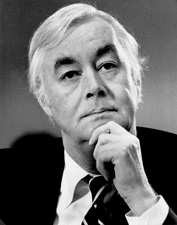
The late Daniel Patrick Moynihan–who would go on to serve as US Ambassador to India and the United Nations, then as a Democratic Senator for New York–enjoys a rare respect as a liberal among conservatives.  Though he was a leftist on many issues, he was first and foremost a scholar with a commitment to following the data wherever it took him.

The so-called “Moynihan Report”–which he wrote while working as a bureaucrat in the Department of Labor in 1965–demonstrated that many of the problems of the black community were caused only in part by discrimination, but much more so by a decline in marriage and stable family formation.  While racial discrimination was (and–I would like to think to a lesser extent–still is) a major problem in the 1960s, it alone could not explain adequately the plight of many black Americans.

Instead, what Moynihan discovered was that well-intentioned government programs inadvertently subsidized single motherhood, and were destroying the black family.  Indeed, the “national action” for which Moynihan called was that which would reinforce “the establishment of a stable Negro family structure.”  This national goal would be “difficult,” but “it almost certainly offers the only possibility of resolving in our time what is, after all, the nation’s oldest, and most instransigent, and now its most dangerous social problem.”  (Moynihan, The Negro Family)

I once heard a conservative black gentleman from Darlington, South Carolina, summarize Moynihan’s argument thus:  at a time when black men faced legitimate discrimination in the workforce, and could lose their jobs on the flimsiest of pretexts, the federal government came along offering generous support to single mothers.  By 1975–ten years after Moynihan’s prophetic report–a head of household would have to earn $88,000 (in 2015 dollars; about $22,000 in 1975) to out-earn the benefit from the federal government.  (Jack Coleman, “Juan Williams:  Daniel Patrick Moynihan ‘Had it Right’ About Breakdown of the Black Family”)  As Jason Riley, author of Please Stop Helping Us:  How Liberals Make it Harder for Blacks to Succeed wrote in a 2015 op-ed in The Wall Street Journal, “In effect, the government paid mothers to keep fathers out of the home–and paid them well.”

Not surprisingly, many women took note of this benefit.  Some of them–and, yes, I know what you’re about to read will be hard to believe, but it actually happened–calculated that they were better off divorcing their husbands or having a child out of wedlock, especially given the real, costly discrimination their husbands faced.  Government do-gooding, coupled with a legacy of racial discrimination, caused many young black children to grow up without fathers.

Initially, that might not have been a huge problem… but it metastasized.  Young boys grew up without father figures to shape them, and came to expect that leaving a woman, or having children with multiple women, was natural.  Young girls grew up thinking they had no reasonable expectation of their man sticking around.  With each generation, the problem grew worse and worse, until now roughly 72-73% of black children born in America are born to a single parent.

“[S]imply replacing one parent with a paycheck does not fulfill a child’s many needs.”

Single parenthood is sometimes the only option, but it’s a tough row to hoe.  Not only does it place financial burdens on the parent; it also removes from her or him the ability to parent a child adequately.  To quote economist Walter Williams at length:

“Whether a student is black, white, orange or polka-dot and whether he’s poor or rich, there are some minimum requirements that must be met in order for him to do well in school. Someone must make the student do his homework. Someone must see to it that he gets eight to nine hours of sleep. Someone has to fix him a wholesome breakfast and ensure that he gets to school on time and respects and obeys teachers.

“Here’s my question: Which one of those basic requirements can be accomplished through a presidential executive order, a congressional mandate or the edict of a mayor, a superintendent of schools or a teacher? If those basic requirements aren’t met, whatever else that is done in the name of education is for naught.” (emphasis added; Walter Williams, “Can Racial Discrimination Explain Much?”)

In other words, simply replacing one parent with a paycheck does not fulfill a child’s many needs.  Children born out-of-wedlock and raised by a single parent are more likely “to experience a variety of cognitive, emotional, and behavioral problems,” according to Dr. Paul Amato in “The Impact of Family Formation Change on the Cognitive, Social, and Emotional Well-Being of the Next Generation.”   That creates ripple effects for generations to come, and the cycle is difficult to break.

***

The problem was prevalent even before Moynihan wrote his report (which, not surprisingly, caused many of his fellow-liberals to accuse him of “racism” and bigotry–common tactics when faced with an unpleasant truth).  Ronald Reagan, while campaigning for Arizona Senator and Republican presidential candidate Barry Goldwater in 1964, told the story in his magisterial “A Time for Choosing” speech of a mother who divorced her husband to get a check from the government, and how she learned to do it after talking to two other women who’d also gamed the system.

We’ve now had fifty-one years of the Great Society, and while some of its programs helped alleviate malnutrition and other problems that are, thankfully, dwindling issues, its good intentions created a host of other problems.  In 1965, one could still plausibly claim that government do-gooders merely didn’t know any better.  Now, the argument seems to be, “Well, we’re trying to do the right thing, so that’s all that should matter.”  That’s prime paving stone for the road to hell.

“The decline of the family is a problem all Americans will have to address.”

Moynihan argued that black Americans in particular were experiencing the decline of family formation most heavily because of the “tangle of pathologies” stemming from centuries of slavery and a century of legal, social, and economic segregation, and that this legacy dovetailed disastrously with the perverse incentive toward divorce and single motherhood.  As he predicted, this tangle morphed into a multi-generational cycle that has ground many black Americans further into poverty.

In 2016, the negative consequences have not only magnified the problem among black Americans; it’s spread throughout American society.  There’s been a crisis among black families for fifty years; we ignored it at our peril.

The experience of black American families since the 1960s is a sad story, though there are many brave black mothers and fathers who raise their children with love and support.  They are struggling to break a dangerous cycle, one that swirls in a murky stew of cultural, social, and economic pressures against the two-parent family and traditional marriage.

Racism appears to have enhanced the deleterious effects of the welfare state in the case of black families, but now those negative consequences are increasingly color-blind.  The decline of the family is a problem all Americans will have to address.

(For additional reading, check out the works of Walter Williams, a brilliant economist and political conservative who, as it happens, is black.  Start here for an appetizer:  http://www.washingtonexaminer.com/can-racial-discrimination-explain-much/article/2556814; after that, get Race and Economics:  How Much Can Be Blamed on Discrimination?)

Video: Z-Man on 2020 Democratic Hopefuls

A quick post today—and for real this time—but this one will take you a little over an hour to digest.  Dissident Right blogger and podcaster Z-Man‘s latest video gives a detailed rundown of the current and prospective slate of 2020 Democratic candidates for the presidency, what he calls the “Tribal Circus“:

https://www.youtube.com/watch?v=0am5GPdd6Jg

I’m not usually one to insist you watch a video, but Z-Man’s video is the best comprehensive analysis I’ve seen or read about the Democratic field so far.  In a no-nonsense, quite politically-incorrect way, Z-Man breaks the field down into the competing “tribes” of the Democrats, such as the “Festive Tribe” (Hispanics), the Angry Woman Tribe, etc.

His basic analysis is that Kamala Harris is probably the biggest threat, not because the American people will like or care about her radical policies, but because she ticks off some important boxes:  she’s “black” (she’s half Jamaican and half Asian, but these inconvenient genetic details won’t matter much to the general population) and a woman.  He also argues that she comes across as shrill and “b*tchy,” and thinks that will hurt her, but he has some concerns about her ability in the general election.

Late in the podcast he touches on Congresswoman Tulsi Gabbard, who has become a bit of a pariah on the Left because of her stance on Syria and her meeting with Bashar al-Assad.  Z-Man hopes that, at the very least, Gabbard makes it onto the debate stage, not because he thinks she can win (he explicitly states that she won’t be able to win), but because he wants to see the resulting meltdown on stage as she and her opponents snipe each other.

For what it’s worth, I’m , all-aboard the Trump Train, etc.  President Trump would have to eat a baby on live TV for me to not vote for him in 2020.  That said, if I had to live some kind of nightmare scenario in which only a Democrat could be president, I’d probably go with Gabbard (naturally, I’d do way more research before making that pick).  My reasoning is not solid at this point, but she’s sacrificed actual political capital in order to stand up against religious bigotry from other Congressmen.

Unless that was a calculated move in advance of a presidential bid to win over moderates, I can’t see how she had anything to gain from such a move.  It seems like a principled stand.

Regardless, enjoy Z-Man’s video on this lazy Sunday morning.  God Bless!

Stone Cold Sunday

It’s been an eventful weekend, so I’m a bit delayed with today’s post (gotta keep the streak alive!).  That said, it’s going to be a short one.

I recently wrote a post about Roger Stone, the controversial, P.T. Barnum-esque political consultant, fashionisto, and latest victim of the Mueller witch hunt.  After doing some research on Stone’s over-the-top life, I decided to pick up his book, Stone’s Rules: How to Win at Politics, Business, and Style.

It arrived earlier this week, and I’ve struggled to put it down.  It’s fairly straightforward:  Stone dispenses his churlish wisdom gleaned from forty years in politics, sprinkled with interesting (especially if they’re true) anecdotes to illuminate the “rule” in question.  Mixed in with stories of past and current politicians are rules for dressing well for the “arena,” be it of politics or business.

In the spirit of Roger Stone—and my personal commitment to making 2019 the self-styled “Year of the Panther“—I’ve really been attempting to up my sartorial game.  While I’m not of the disposition (or constitution) to resort to some of Stone’s more outlandish tactics, I do find some of his advice applicable to many areas of life, kind of like irreverent proverbs for the morally ambiguous.  Regardless, his fashion advice is on-point, and I’m learning the value of crisp, white shirts and a good tan (Stone retells, multiple times, the well-worn tale of the 1960 Kennedy-Nixon debates, and how Kennedy spent the afternoon tanning with two babes on the roof of a building while Nixon refused to wear makeup and was recovering from surgery).

The best parts of the book are when Stone delves into some obscure moment from American political history to support his points.  These are entertaining and educational.  I’ve learned a great deal about Republican races in New Jersey!

One example from midway through the book.  “Stone’s Rule :  Never Turn Down a Major Party Nomination.”  Stone relays the story of Christine Todd Whitman, who ran for US Senate in New Jersey against Democrat Bill Bradley.  Whitman sought out advice from former President Richard Nixon, Stone’s idol (and, I learned from this book, the so-called “Sage of Saddle River,” as “Nixon came to be known in dispensing his wisdom from his modest residence in the New Jersey town of that name”).

Nixon told her to go for it.  Whitman lost the race, but clinched the Republican nomination for Governor the following year, and went on to win “in a major upset” the following year.

The takeaway:  if you win a major political party nomination and do well, even if you lose, you’ve set yourself up for future successes.  It’s a variant on “80% of life is showing up.”

There are many more choice examples (although I’m still working my way through the book).  The pages are fairly glossy and high-quality, making it a heavy book.  Stone also needed a better editor, as there are a number of typographical errors, and even a few minor issues with facts (he writes about Ross Perot spoiling the 1988 election for the Republicans, when he means the 1992 election).

Overall, though, it’s a fun, lively book.  I recommend you pick it up, especially if you’re interested in one of the more outrageous figures in modern American political history.

Secession Saturday

Care of photog at Orion’s Cold Fire, here’s a thought-provoking piece by Christopher Roach of American Greatness, “The Left Won’t Allow a Peaceful Separation“: https://amgreatness.com/2019/01/21/the-left-wont-allow-a-peaceful-separation/

Roach touches on some of the same points I bring up in my essay “Progressivism and Political Violence,” in which I diagnose some of the well-known pathologies of the Left, including its tendency towards totalitarianism. That impulse is why the Left is never content to adopt the Right’s “live and let live” mentality. Thus, the willingness to eat their own (as in the Northam non-troversy), to demonize young conservatives, to harass conservatives at dinner, and to denounce anyone who doesn’t believe whatever the latest frontier of social justice is this week.

The idea that America is in a “cold civil war”—one that is turning increasingly hot—isn’t nothing new (sadly). Controversial Dissident Right figure John Derbyshire calls it a conflict between “goodwhites”—the limousine liberals and soccer moms who think Trump is mean and who want to virtue-signal to minorities to appear cool and progressive—and “badwhites”—the rest of us folks in “flyover country” who largely want to be left alone to enjoy our faith, family, and liberty in peace.

That the cold, cultural civil war may turn hot is a cause of concern to many folks on the Right and Left. I shudder to contemplate it. Roach, in his piece, argues that a peaceful separation may one day be the result of our current Kulturkampf, but he is pessimistic that the Left would willingly let anyone leave, due to its totalitarian nature.

He also points out that, though we often forget it, the United States is, itself, a product of secession—from merry old England. As I often point out to my students, the question of whether or not States were bound permanently to the Constitution was an open question until 1865. The Jeffersonian “compact theory” argued, essentially, that the States had formed the Union and “opted in” to the Constitution. The big, open question prior to the American Civil War, then, was thus: having opted in to this arrangement, did States have the ability to opt out? A straightforward reading of the Declaration of Independence suggests heavily that, in certain extreme circumstances, they might be able to do so.

As I’ve long told my students, the Civil War answered that question conclusively by force of arms. Now, States sue the federal government through their respective attorney generals’ offices should there be any conflicts between them and the feds.

That said, as I’ve grown older, I’ve come to realize that no political question is ever truly “settled,” and no political arrangement—even one as enduring and amazing as our federal constitutional republic—can last forever. The idea of secession could be given a renewed lease should the federal government continue to overextend its authority, and should the culture wars deepen and darken.

To be clear, I’m not advocating for secession or anything of the sort. I’m merely exploring—in a very brief way—a complex idea that is, in the balance, not entirely without merit. Regardless of the motivations for the American Civil War, the notion of States’ rights—an entirely constitutional idea, per the Tenth Amendment—and of “compact theory” are quite sound, and could enjoy renewed credibility.

There is much to chew on and mull over here. I recommend you read Roach’s piece and make up your own mind. Feel free to leave comments below.

Happy Saturday!

–TPP