TBT: Southern Conservatism: John Randolph of Roanoke

A lodestar of modern conservatism is that the federal government is too powerful and overreaching, and that power should be devolved back to the States and local governments.  That such devolution rarely occurs, even under Republican presidents, is just further evidence of how entrenched the bureaucratic class is within the Beltway swamp.  It’s easy to see the extension of federal power since the New Deal programs of the 1930s and the government’s control of the economy during the Second World War, followed by Johnson’s Great Society and various big government schemes to solve our problems.

But these concerns about the growth of federal power are not new, and there were already grumblings about them in the earliest years of the Republic.  In yesterday’s History of Conservative Thought session, we analyzed John Randolph of Roanoke‘s “King Numbers” speech, in which the aging but feisty Virginia decried the overreach of federal power—in 1830!

The occasion for Randolph’s speech was the Virginia Constitutional Convention of 1829-1830, in which the State sought to revise its constitution with a number of—as Randolph called them—“innovations,” including age requirements to serve in the Virginia House of Delegates (25) and the State Senate (30).  Another proposed change was the elimination of property qualifications to vote.

Randolph vehemently opposed these reforms on the grounds that the Virginia Constitution in its then-current form was the greatest charter of government ever conceived, and that it had been wholly sufficient in serving as the sole block on the expansion of federal power.  Randolph also argued that the US Constitution, rather than dealing with the external issues of national defense and regulating foreign affairs and commerce, had instead turned its focus inwards, seeking to regulate the States.

It’s fascinating to read now, nearly two hundred years later, Randolph’s antebellum arguments against the aggrandizement of federal power, at a point when the federal government under the Constitution was barely forty-years old.  One of Randolph’s most interesting points was that, regardless of what the Constitution said it was designed to do, the reality was much different.

One of the students asked what Randolph would think if he saw things today, and I said, “He’d probably have a stroke.”  Far from being the last stand against and check on federal authority, Virginia now is the compliant handmaiden to federal expansion, as Northern Virginia is the home of the Swamp People that operate the federal bureaucracy.

It’s unfortunate that we’ve forgotten Randolph today.  Even in his own time, he was considered somewhat of an eccentric.  But eccentrics make life interesting, and this one certainly issued some strong warnings, even at that early date, about the danger of excessive federal power and the erosion of States’ rights.

With that, here is 24 June 2019’s “Southern Conservatism: John Randolph of Roanoke“:

As my History of Conservative Thought course rolls on, I’m learning more about the forgotten byways and overgrown, stately ruins of the various branches of conservatism.  Students this week are reading a couple of documents from John Adams and Alexander Hamilton, the two founders of the Federalist Party, and key to the passage of the Constitution.  Hamilton, the author of the bulk of the pro-ratification Federalist Papers, also created the financial system upon which the United States functions today.

Hamilton and Adams have both enjoyed renewed interest in recent years, Hamilton due to the smash Broadway musical about his life, and Adams from a critically-acclaimed HBO series (one that, sadly, takes some unnecessary artistic license with the past).  In the case of Hamilton, American history students are often enthusiastic to get to him in my AP US History course, and Hamilton mega-fans often know more about the first Secretary of Treasury than I do.

But we’re reading a speech from another important figure from American history, albeit one largely forgotten:  John Randolph of Roanoke.

Randolph of Roanoke, sometimes considered the “American Burke,” was part of the Virginia planter aristocracy and a staunch republican, in the sense that he opposed centralization of power while supporting a strict interpretation of the Constitution and a limited government at every level.  He was one of the so-called “Old Republicans,” a group within the dominant Democratic-Republican Party of the Jeffersonian and Jacksonian era that adhered strictly to the Constitution, and which believed the States possessed a check on the federal government’s power.

He was also a traditionalist, and his powerful “King Numbers” speech at the Virginia Constitutional Convention in 1829-1830 represents a hearty endorsement of conservative principles, prudently applied.

Randolph of Roanoke makes several important points in the speech, but two stick out to me immediately:  his detestation for the tyranny of majority (the “King Numbers” referenced throughout the speech), and his love of Old Virginia.  On the latter point, he was quite eloquent:  not only did he argue that Virginia was a bulwark against an overreaching federal government (remember, he’s making this point in 1830), he also notes that its constitution was entirely sufficient to the task.

He argues early in the speech that there is no need to change Virginia’s constitution, because no one had brought any provable objections against it!  It’s the essence of a conservative argument.  Further, Randolph of Roanoke decried the mania for what he called “innovation,” a kind of reform-for-reform’s-sake, at the expense of the tried-and-true.

As to the tyranny of the majority, Randolph of Roanoke points in “King Numbers” to the absurdity of giving some men or factions greater power simply because they can win by one or two votes.  He uses examples—unfamiliar to many modern readers—of the Tariff of 1816 (one of my tariffs the Southern planters and yeoman farmers alike found odious and burdensome) and the Missouri Compromise of 1820, the latter passing by a mere two votes.

We praise “democracy” now, but the Founders of our nation feared unbridled democracy as a form of mob rule, which would inevitably yield tyranny at the hands of a charismatic demagogue.  Randolph of Roanoke makes the rather compelling point that even in representative government, mere majoritarianism can be quite destructive, as the side with the majority actually benefits if it can seize that majority by a narrow margin:  that’s just more of their opponents who lose!

Randolph of Roanoke, like many men of his time and station, was an unapologetic defender of slavery, which likely accounts for part of his fall from our curricula (although he emancipated all of his slaves upon his death).  His anti-nationalism (in the sense that he was opposed to a powerful federal government) is also at odds with the prevailing trend in American history textbooks to applaud whenever the national government aggrandized itself at the expense of the States.

Regardless, we would do well to read him again.  He was, even for his time, a bit of an oddball, but his quick wit and vast depth of knowledge, as well as his love his State (he believed Virginia was the great inheritor of Greco-Roman and British Common Law) were inspiring to his fellow Virginians.  They could be inspiring for us, too, and all lovers of liberty.
TPP Summertime Update

Even with cities burning and an election mere months away, the summertime doldrums have hit.  “Doldrums” isn’t exactly the right word, as things are going pretty well, but the long (for me) Father’s Day weekend distracted me from the woes of the world.

There’s also the issue of unlimited free time that is summer vacation.  Don’t get me wrong—I’m not complaining—but when I have one slender hour in the day to get my blog post done, I tend to be much more productive and focused.  It takes pressure to make diamonds—or 600-word blog posts full of sweeping generalizations.

I’ve fallen a bit behind on SubscribeStar content.  I still owe $5 subs a couple of editions of Sunday Doodles, which I will have up soon.  All subscribers missed out on a SubscribeStar Saturday post, which I will also attempt to make up soon.

History of Conservative Thought is going well, and we have two more meetings before the Fourth of July break.  This Wednesday we’ll be reading documents from John Adams and Alexander Hamilton, the Federalists/Northern Conservatives.  Next week we’ll dive into Southern Conservatism with John Randolph of Roanoke and (possibly) some excerpts from Richard Weaver‘s Southern Essays.

So that’s it for a quick Monday update.  Be on the lookout for more substance tomorrow.

—TPP

Lazy Sunday LXII: The South

Poet Archibald MacLeish wrote that the American “West is a country in the mind, and so eternal.”  The American South may be the same, but it’s more—it’s a country in the soul.  It’s the culture, the faith, the land, the people—these elements truly make the South “the South.”

The South has been changing for a long time, but those old virtues are still present here, even if they are fading.  The wickedness of modernity probes its tentacles into every crevice of every society, and the South is no different.  We’ve managed to capitalize on the material benefits of modernity without sacrificing our souls entirely—yet—but the unrealized dream of the Reconstruction Era Radical Republicans to remake Southern society into the image of the North is rapidly becoming reality.

That said, the South and its more adventurous cousin, the West, have managed to hold onto the important things in life, namely faith, family, and work.  In the United States, the vast belt from my native South Carolina in the east, driving westward to Texas, and up through at least Nebraska (that’s for you, NEO), still maintain sanity in a nation that is increasingly unhinged with an addiction to postmodern progressivism.

Not to say that Northerners don’t love their families or God, but the governing ethos of Yankeedom is materialist efficiency über alles.  Even the terse attitudes and abrupt styles of conversation suggest little room for even the most cursory pleasantries.  The propensity with which Northerners sling around f-bombs is one of the more dramatic reminders of what cultural differences exist between America’s two great regions even to this day (although, alas, I hear more and more Southerners engaging in sloppy manners and foul language).

But I digress.  I’ve made enough sweeping generalizations for one Lazy Sunday.  You can read more of my sweeping generalizations about vast swaths of the country in these essays, all about fair Dixie:

  • Southern Conservatism: John Randolph of Roanoke” – I somehow had never learned about John Randolph of Roanoke (outside of a reference in Richard Weaver’s Southern Essays) until teaching History of Conservative Thought during Summer 2019.  This post was all about the feisty—some might say ornery—Virginia statesmen who constantly strove to keep Virginia strong and the federal government weak.
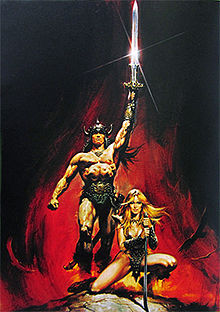
  • Reblog: Conan the Southern?” – This post looked at better post from The Abbeville Institute about Texan Robert E. Howard, the creator of Conan the Barbarian.  Howard’s tough Texas upbringing and Jacksonian derring-do inspired the ferocious barbarian hero, a self-made man in a world of evil wizards and sinister forces.
  • The Hispanicization of Rural America” – After driving through some parts of western South Carolina and noticing there were only Hispanics, I wrote this post, lamenting the replacement of white and black Southerners.  Here’s the key paragraph:

    I don’t like seeing my people—the people of South Carolina—being displaced in their communities by foreign invaders who speak a different language, who don’t care about our Constitution, and who don’t want to adopt our hard-won culture of liberty.  It took from 1215 to 1776 to get from the Magna Carta to the Declaration of Independence; do we really want to throw away 561 years of Anglo-Saxon common law and careful cultural-political development in the name of multiculturalism?

  • The Invasion and Alienation of the South” – The Abbeville Institute is the gift that keeps on giving.  This post discussed an essay called “A Stranger in a Strange Land,” about a young Louisiana woman’s sense of total alienation in an ostensibly Southern city, Dallas.  She also details the leftward shift, politically, of Southern cities, which I have observed in nearby Charlotte, North Carolina—increasingly a colony of Ohio.
  • The Cultural Consequences of the American Civil War” – An instant-classic in the TPP archives, this post originated as a LONG comment on “What Do You Think?,” a post on NEO’s Anglophilic blog Nebraska Energy Observer.  I make some bold claims about the good that was lost following the Civil War—like liberty.

Bless your heart,

TPP

Other Lazy Sunday Installments:

The Cultural Consequences of the American Civil War

On Wednesday, 13 May 2020, blogger Audre Myers posted a piece at Nebraska Energy Observer entitled “What Do You Think?”  The piece prompted readers to answer the question “Would we be the America we are if the Civil War had never been fought?”

Below is my response, which you can also view here.  The TL;DR summary of my answer is that, while it was good that the Union was preserved and that slavery was abolished, it came with some heavy fees—the expansion of federal power (and the loss of liberty inverse to federal expansion), the erosion of States’ rights, and—most importantly—the triumph of Yankee progressivism over Southern traditionalism.

The temptation is always to reduce the American Civil War to being ONLY about slavery.  Slavery was, obviously, a huge part of the Southern economy and culture, and motivated a great deal of Southern politics at the national level.  But slavery was not the be-all, end-all of the “Lost Cause.”  There were legitimate constitutional questions at play.  Indeed, an open question—one the American Civil War closed by force of arms—was that, having opted into the Constitution, could States later opt out?  John Randolph of Roanoke, among others, seemed to believe this question was legitimate, and such an exit was allowed—even acknowledged.

Of course, the slavery narrative serves modern progressive ends.  It allows for throwing the baby—States’ rights—out with the bathwater.  Suddenly, States’ rights becomes “code,” in the progressive mind, for justifying slavery or segregation.  Yes, States’ rights was invoked to support wicked things.  Nevertheless, it is fully constitutional—just ask the Tenth Amendment.

Nullification and secession were dangerous doctrines, but the loss of them also meant that the federal government could expand with far fewer limits on its power.  The States lost the nuclear option, so to speak, of bucking unconstitutional acts (although, to be fair, States can challenge such acts more peacefully through lawsuits against the federal government—even if those cases are heard in federal courts).  Seeing as we’re living in times when a peaceful separation between fundamentally opposed ideologies may be the most attractive option for the future of our nation, it’s worth reviewing the history of these ideas.

Well, that’s enough preamble.  After two days of self-indulgent, girly navel-gazing, it’s time for some substance:

Read More »

Reblog: Conan the Southerner?

I’m heading back from a glorious week in New Jersey today to return to my beloved South Carolina.  It was serendipitous, then, that I read this piece from the Abbeville Institute, “Conan the Southerner?

I recently stumbled upon the Abbeville Institute while doing some research on John Randolph of Roanoke for my History of Conservative Thought course.  It’s an institute dedicated to Southern history, and to presenting a more nuanced interpretation of the antebellum South.  Their blog features some dense, interesting bits of Southern history (I’m reading through a long-ish essay on “The South Carolina Federalists” that has taught me a great deal more about my State’s history in the period of the Early Republic), and champions constitutionalism, limited government, and a traditional way of life.

The Conan piece is an excellent—and fun—analysis of the Conan the Barbarian series of low-fantasy pulp novels, focusing on Conan creator Robert E. Howard and his Jacksonian roots in Texas.  The post’s author, Marine Corps Lieutenant Colonel Joel T. Leggett, argues that Howard’s Conan is a modern example of American mythology, one with distinctively Southern roots.

The essay is also useful as it offers a clear definition of Jacksonian principles, via historian Walter Russell Meade.  As we continue to attempt to define “populism” in the midst of Trumpian nationalism, I always relish a concise definition of the principles of the godfather of American populism, Andrew Jackson.

Meade, per Leggett, defines these principles as “self-reliance, equality, individualism, financial adventurism, and courage.”  Leggett then proceeds to demonstrate how the character of Conan embodies these qualities, and that Howard was chiefly concerned with promoting individual liberty.

That part of the essay is, for me, the most useful and enjoyable.  The qualities are certainly deeply American—and deeply Southern.  The “equality” is not the banal egalitarianism of our present age, which seeks to level off everything and everyone into conformist blandness, but the old equality of opportunity, in which every man can forge his destiny.

Tied with that is the notion of “financial adventurism.”  Leggett notes that Meade argued that “Jacksonians view money and wealth as a means to finance a lifestyle of self-definition.  The value of wealth is to enable you to be you, to live life to its fullest.”  This notion of financing “a lifestyle of self-definition” accords with my own long-term financial goals.  It also seems to be the direction that “free” speech is headed:  to exercise this right truly, one must have financial independence from social justice scolds.

And this, for Leggett, seems to be the core of Conan’s Southern Jacksonianism:  a desire for individual liberty, for a man to be able to live his life on his own terms.  Howard might have wrapped that ideal in a burly barbarian warrior-king who rose to rule a kingdom due to his own prowess, but it’s one every American should aspire towards.  In this way, Leggett makes a compelling case for Conan the Barbarian as a valuable piece of American mythology.

Southern Conservatism: John Randolph of Roanoke

MAGA Week 2019 is one week away!  Get ready to celebrate America all week long!  This year, all MAGA Week posts will be exlusive to my SubscribeStar page, so subscribe today!  $1 a month gets you full access to all posts, including new content every Saturday.

As my History of Conservative Thought course rolls on, I’m learning more about the forgotten byways and overgrown, stately ruins of the various branches of conservatism.  Students this week are reading a couple of documents from John Adams and Alexander Hamilton, the two founders of the Federalist Party, and key to the passage of the Constitution.  Hamilton, the author of the bulk of the pro-ratification Federalist Papers, also created the financial system upon which the United States functions today.

Hamilton and Adams have both enjoyed renewed interest in recent years, Hamilton due to the smash Broadway musical about his life, and Adams from a critically-acclaimed HBO series (one that, sadly, takes some unnecessary artistic license with the past).  In the case of Hamilton, American history students are often enthusiastic to get to him in my AP US History course, and Hamilton mega-fans often know more about the first Secretary of Treasury than I do.

But we’re reading a speech from another important figure from American history, albeit one largely forgotten:  John Randolph of Roanoke.

Read More »