
Lazy Sunday XL: Christmas Carols

No, it’s not an “extra large” edition of Lazy Sunday, dear reader:  it’s the fortieth edition of this hallowed tradition.  That’s forty Sundays of thematic reflections, gazing back at the output of fifty weeks of consecutive daily posts.  Yep—today marks the 350th consecutive day of posts here at The Portly Politico.  We’re just fifteen days away from reaching the one-year mark.

Just as yesterday’s SubscribeStar Saturday post on “O Holy Night” (subscribe today for just $1 a month to read it and dozens of other pieces) should have come as no surprise to readers, this Lazy Sunday continues with that theme.  Indeed, we’re looking back at the posts this week (and from last December) about Christmas music:

  • ‘Silent Night’ turns 200” (and “TBT: ‘Silent Night’ turns 200“) – I wrote this post on Christmas 2018.  At the time, the world was celebrating the 200th anniversary of a sweet, simple Christmas carol, and one of my all-time favorites.
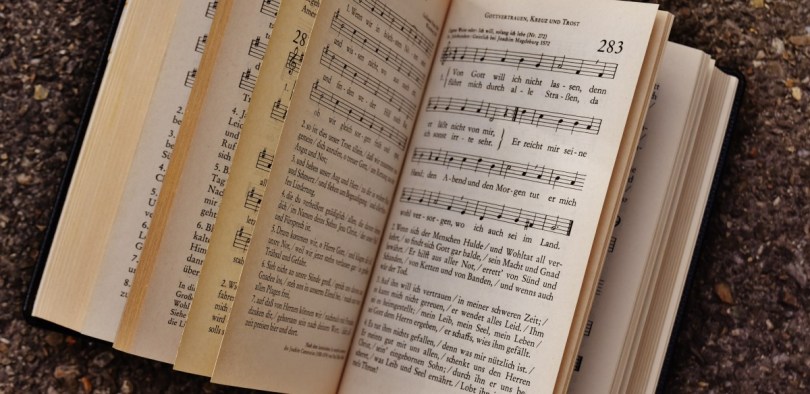
  • The Joy of Christmas Carols” – This piece is a reflection on the sheer joy of playing and singing Christmas carols.  Like traditional hymns, carols possess wonderful staying power, and they stick with you powerfully.  I’ve often caught myself singing “Joy to the World” (more below) in the middle of July.  They also beautifully and simply tell the story of Christ.
  • Joy to the World” – “Joy to the World” is somewhere in my Top 5 Favorite Christmas Carols (if such a list actually existed).  The Number One slot goes to our next entry, but “Joy” is up there, for sure.  In this post I analyze the simple but effective use of a descending D major scale to kick off the melody of a song that leaps and bounds across those eight notes, much like the soaring tones of the angels that appeared over Bethlehem that night some 2000 years ago.
  • SubscribeStar Saturday: O Holy Night” – I believe that, objectively, “O Holy Night” is the greatest Christmas song ever.  I used to say the “objectively” part as a joke—how can an opinion be objective reality?—but now I’ve come to believe it.  It’s powerful.  It’s operatic.  And for $1 a month, you can find out why.

That’s it!  We’re closing in on Christmas, rapidly.  Enjoy your Sunday, and Merry Christmas!

—TPP

Other Lazy Sunday Installments:

SubscribeStar Saturday: O Holy Night

Today’s post is a SubscribeStar Saturday exclusive.  To read the full post, subscribe to my SubscribeStar page for $1 a month or more.  For a full rundown of everything your subscription gets, click here.

The unofficial theme of the blog this week has been Christmas music.  What better way to cap off the week than with a post about the best Christmas song ever written, Adolphe Adam’s “O Holy Night“?

Like its cousin “Silent Night,” the story of “O Holy Night” involves a village’s church organ.  In 1843, the church organ of the French village of Roquemaure had recently been renovated, so the parish priest asked a local wine merchant and poet, Placide Cappeau, to write a poem to commemorate the occasion.  That poem, “Cantique de Noël,” would be set to music a short time later by composer and music critic Adolphe Adam—and Christmas history would be made.

To read the rest of this post, subscribe to my SubscribeStar page for $1 a month or more.

Size Matters

The big Christmas concert has come and gone.  It was pretty wild week, but now we’re on the downward slope.

When I first started doing these little Christmas concerts, we had maybe 100 students at the school.  There were no dance classes, and drama was kind of tacked onto English.  The focus was on the music, and in such a small environment, everything was simpler:  setup, planning, logistics.  It was all accomplished more informally.

Now the student body has nearly tripled in size.  With that growth has come added complexity.  Put it all in a gymnasium during basketball season—the sport third to only baseball and hockey for numbers of games and practices—and it makes for a herculean task.

Read More »

TBT: “Silent Night” turns 200

The Christmas season—and a pending Christmas concert—has seen me waxing melodic on the holiday’s wonderful music.  As such, today’s TBT is predictable (if anyone were interested in predicting such a thing):  it’s a look back at a short post about the 200th anniversary of the classic carolSilent Night.”

Like “Joy to the World,” “Silent Night” is one of my favorite carols.  It’s sweet and simple, but can also be rocked up (the 6/8 time signature and three-chord structure lend the tune to bluesy interpretations, and I’ll occasionally slide in some blue notes when playing the song instrumentally).

It looks like it won’t make it into our Christmas program this year—a rarity—but I’ll be sure to make room for it next year.  Its more operatic cousin, “O Holy Night,” will be our finale, though.  I’ve always linked the two tunes mentally because of their similar names and themes (and they’re both in 6/8).  “O Holy Night” really lends itself to a hard rock interpretation, as my annual “O Holy (To)Night” cover version attests.

Without further adieu, here is Christmas 2019’s “‘Silent Night’ turns 200” (now closing in on 201):

One of my favorite Christmas carols, “Silent Night,” turns 200 this Christmas season.

The carol was originally written as a poem in the aftermath of the Napoleonic Wars by a village priest, Joseph Mohr, in the village of Oberndorf, Austria, in 1816. Two years later, Mohr approached the town’s choirmaster and organist, Franz Xaver Gruber, to set the poem to music. Gruber agreed, and the carol enjoyed its first performance to a small congregation, which universally enjoyed its simple sweetness.

Since then, the humble hymn has spread far and wide, and is probably the most recognizable Christmas carol globally today. It’s been covered (likely) thousands of times; it’s certainly become a staple of my various Christmas performances.

This simple, sweet, powerful carol beautifully tells the story of Christ’s birth, as well as the import of that transformative moment in history, that point at which God became Flesh, and sent His Son to live among us.

As much as I enjoy classic hard rock and heavy metal, nothing can beat the tenderness of “Silent Night”—except the operatic majesty of “O, Holy Night,” objectively the best Christmas song ever written.

Merry Christmas, and thank God for sending us His Son, Jesus Christ.

Midweek Update

It’s crunch time here at Portly HQ.  As such, today’s post will be very brief.

I’ve been writing a lot about Christmas and music lately—’tis the season, after all.  You can catch up on yesterday’s post about “Joy to the World,” as well as Sunday’s look back at my Dokken album reviews from Christmas 2018.

One reason for the Christmas music focus is that my students have their big Christmas Concert this Friday.  It’s always a great deal of fun, and we try to go for a homemade Trans-Siberian Orchestra vibe (if only I could get the administration to spring for some laser lights and pyrotechnics).

As an independent musician and a music teacher (I also teach history), I find myself playing the role of concert impresario quite a bit.  One lesson I’ve learned is that the money people—the producers—will always have their notes and revisions, often last-minute.  Your well-oiled, tried-and-true concert formula can often get totally upended with changes.  Learning to roll with the punches is hard, but necessary.

Read More »

Joy to the World

The musical mood continues here at The Portly Politico—as does the joy (check out my “Joy of” posts here, here, and here).  The Christmas season always lifts my spirits, and the boost from my piece on Milo and Romantic music has further buoyed them (if you’d like to elevate my mood to transcendent heights, consider purchasing some of my music).

With yesterday’s post on Christmas carols, I thought it might be interesting to look deeper into the most joyous of them all:  Isaac Watts‘s “Joy to the World.”

Read More »

The Joy of Christmas Carols

Christmas puts me in a musical mood. For one, I’m somewhat contractually-obligated to put on a Christmas concert, which will consume most of my free time this week, so I’d better embrace the Christmas spirit—or else. But it’s not hard to get excited about the iconic music of the season.

(Also, Milo Yiannopoulos—the actual Milo—shared my post about his views on Romantic music, which helped make it the most trafficked post of the year so far. That was incredibly gracious of him to do, and it’s further boosted my excitement for playing and writing about music.)

As I wrote in an earlier blog post on hymnals, I’ve gradually taken over piano playing at my little Free Will Baptist church. We sing many of the traditional hymns that were written and popularized in the nineteenth and twentieth centuries, as well as some earlier selections. Shape-note hymns are often hard to play, with big intervalic leaps in the melodies and surprisingly complex harmonies.

Take that melodic variety and harmonic complexity and multiply it by a factor of ten, and you’ve got Christmas carols.

Read More »

SubscribeStar Saturday: The Tedium of (Teaching) Slavery

Today’s post is a SubscribeStar Saturday exclusive.  To read the full post, subscribe to my SubscribeStar page for $1 a month or more.  For a full rundown of everything your subscription gets, click here.

A major part of American history was, of course, slavery.  As I typed that sentence, I nearly wrote “the unfortunate legacy of slavery,” though we’re still living that, just not in the way the race-baiters and social justice warriors claim.

But phrases like “the unfortunate legacy of slavery” have become incredibly cliched.  It and similar phrases (“slavery is our great national sin”) act as magic talismans, incantations that, when invoked, protect the speaker (presumably) from the ultimate curse, the label of “racist.”

Of course, slavery was wrong, and slavery is immoral.  It was our great national sin (paid for, as Lincoln pointed out in his Second Inaugural Address, with the blood “drawn by the sword” in the American Civil War).  It continues to have an “unfortunate legacy,” in that race-baiting charlatans continue to blame it for virtually every pathology in black American culture.

Dang it… I screwed up the incantation with that last bit.  I’d better kiss my job goodbye right now.

To read the rest of this post, subscribe to my SubscribeStar page for $1 a month or more.

Milo on Romantic Music

The Christmas season always gets me excited for music, because there are so many wonderful carols and hymns about the birth of Jesus.  I will write more on the topic of Christmas carols later on in the month, but today I wanted to touch on a really niche topic:  Milo Yiannopoulos‘s love of Romantic-era music.

What got me on this topic is not just my musical mood; it was an epic Telegram thread Milo had going about… classical music.

Read More »

TBT: Hard Rock Reviews on Orion’s Cold Fire

Every year my school puts on an over-the-top Christmas concert, which is just eight days away (yikes!).  Since Christmas is the most important holiday of the year (second only to Easter in its theological significance for Christians), my belief is that we should honor Jesus’ birth with an epic rock concert.

We do all the heartwarming holiday classics (including the best Christmas song ever written, “O, Holy Night”).  We also will take a timeless 70s or 80s hard rock classic and either a.) put it into a medley of Christmas tunes and/or b.) change the lyrics to Christmas ones.  For example, one year we took Dio’s “Holy Diver” and linked it to “Joy to the World.”  We then changed the opening lyric of “Holy Diver/You’ve been down too long in the midnight sea” to “Merry Christmas!/You’ve been down too long in the Arctic Sea.”  And so on.

Anyway, in the spirit of the Christmas season, I thought I’d dig up a real deep cut:  my review of Rainbow’s Down to Earth that I wrote for Orion’s Cold Fire, when I was contributing to photog’s website more regularly.  Once I started on this year of blogging, I lacked the time to do these reviews, but I’ll hopefully write some more this Christmas (if photog will have me).

This TBT features two posts:  the post on this blog about the review, and the review itself as it appears on Orion’s Cold Fire.

Enjoy, Merry Christmas, and rock on!

—TPP

Post on The Portly Politico Linking to the Album Review

Blogger photog has graciously agreed to publish some of my short music reviews on his blog, Orion’s Cold Fire. Specifically, I’m contributing reviews of classic hard rock and heavy metal albums, genres that I believe represent the artistic and technical pinnacles of rock and roll.

My first review, of Rainbow’s 1979 album Down to Earth, is available now on OCF. Check it out—and rock on!

Review of Down to Earth on Orion’s Cold Fire

Linkhttps://orionscoldfire.com/index.php/2018/12/19/the-portly-politicos-review-of-rainbows-down-to-earth/

The good folks at Orion’s Cold Fire have generously allowed me the opportunity to contribute to the site.  I write primarily about politics, economics, and history at https://theportlypolitico.wordpress.com, but as a “semi-pro” musician (and a full-time music teacher), I enjoy occasionally critiquing music.  The purpose of this feature is to review classic 70s and 80s-era hard rock and heavy metal albums.  Why such a specific genre and time period?  Essentially, I believe this genre represents the pinnacle of rock music.  With its confluence of blues, acid rock, country-western, and all the other distinct musical “flavors” of the mid-twentieth century, rock and roll reached its greatest artistic and technical summits during the “classic rock” era.  I’ll write further about that contentious claim at a later date; but now, let’s boogie!

When considering an album to review, I more or less use this criteria:  does it sound like hard rock/heavy metal?  Have I listened to it enough to comment upon it?  And does it rock?  That’s not the best criteria, as it predisposes me to writing glowing reviews of every album, but there you have it—the highly unscientific approach I take to writing about music I generally love.

All that aside, my first album review for Orion’s Cold Fire was a no-brainer:  1979’s Down to Earth by Rainbow.  This album perfectly encapsulates the direction of rock music at that crucial turning point between punk and the New Wave of British Heavy Metal.

Down to Earth was the first and only Rainbow album to feature Graham Bonnet on lead vocals, who replaced legendary metal vocalist Ronnie James Dio.  Rainbow’s guitarist and mastermind, Ritchie Blackmore, was notorious for sacking musicians on a whim, so most of the album’s personnel was wildly different than even the previous Rainbow release.

Regardless, this album rocks.  While he’s no Dio, the songs on Down to Earth are uniquely suited for Bonnet’s vocals—probably because he wrote the melodies after the band had already recorded all of the tracks.

The album’s big hit—and Rainbow’s first hit single—is “Since You Been Gone,” a Russ Ballard-penned tune that strikes the right balance between rock and pop.  The chorus is catchy as the flu, but like any good hard rock song, the pre-chorus build really sets up the triumphant release of the chorus beautifully.  Listen to the bass and guitar after the line “Your poison letter, your telegram” and you’ll see what I mean.

That said, my favorite tracks are the opening and closing numbers, “All Night Long” and “Lost in Hollywood,” respectively.  Musically, they rock, and “Lost in Hollywood” passes what I call the “drive test”—I drive much faster when listening to it.  It also features some of Rainbow’s signature neoclassical embellishments, pointing to the rise of neoclassical metal.

Lyrically, they’re fairly depressing commentaries of the rock ‘n’ roll lifestyle, not to mention the Sexual Revolution.  “All Night Long” is sung from the point of view of a jaded, lonely rocker, searching the crowd for a babe to spend the night with him (the most poignant line, from the third verse: “I know I can’t stand another night on my own”).  “Lost in Hollywood” describes a man so dedicated to rock, he’s lost the woman who makes it all worthwhile.

There are some less memorable tracks—the neoclassically-inflected “Eyes of the World” is a commentary on humanity’s rapacious capacity for violence and waste, but is a bit ponderous; “Makin’ Love” has its moments, but is forgettable—but, from start to finish, Down to Earth is as good an introduction to classic hard rock as I can conceive.  Crank it up!