Albino Giraffes Poached

As if dancing plagues and Chinese viruses weren’t enough, albino giraffes are getting poached.

From the BBC:

Two extremely rare white giraffes have been killed by poachers in north-eastern Kenya, conservationists say.

Rangers had found the carcasses of the female and her calf in a village in north-eastern Kenya’s Garissa County.

A third white giraffe is still alive. It is thought to be the only remaining one in the world, the conservationists added.

Their white appearance is due to a rare condition called leucism, which causes skin cells to have no pigmentation.

Apparently, no one knows why these giraffes were killed; the poachers’ “motive is still unclear,” per the BBC.

Read More »

The Boogie Woogie Flu

Don’t let the title of today’s post fool you:  I’m not going to write about the coronavirus today.  I’m actually enjoying the relative freedom and flexibility of distance education, sipping car dealership coffee while I wait for my 2017 Nissan Versa Note to get a transmission flush and a belt and some wheel bearings replaced, all with appropriate social distance between me and the other people getting their cars fixed.

But in these plague-riddled times, I couldn’t resist this charming little Quora post about another, funkier plague:  the Strasbourg “Dancing Plague” of 1518.  Not that there’s anything charming about dancing yourself to hell, but it sounds a lot more fun than cloistering alone in your house for two weeks.

Read More »

Lazy Sunday LIV: Coronavirus

It was inevitable—a Lazy Sunday dedicated to the coronavirus.  This may end up being a “Part I,” depending on what happens over the next few weeks, but I’m planning on shifting away from corona talk for awhile.  There are bigger and better things in life than a Chinese biological weapon and/or Chinese culinary disaster-turned-virus.

I’ve been trying to make the most of a generally bad situation.  It’s springtime in South Carolina, so for about two weeks, we’ll enjoy pleasantly mild weather before the oppressive heat of summer hits.  Z Man has an excellent, optimistic post up today about “Springtime In The Pandemic“; it’s a must-read, and follows some of my own ideas about the possible cultural consequences of everyone being at home and resuming more traditional roles.

So this Lazy Sunday, it’s time to look back at my various posts on the dreaded virus:

  • Phone it in Friday VIII: Coronavirus Conundrum” & “Phone it in Friday IX: Coronavirus Conundrum, Part II: Attack of the Virus” – What a difference a week makes!  Between these two posts, I went from writing off the coronavirus as a bad strain of flu to being much more concerned.  Even since the second installment here, though, I’ve come to reassess the situation again. How much of this shutdown is necessary to stem the spread of the virus, and how much of it is the result of panicked media reporting?  I think it’s possible it’s a threat and the threat is overblown.  We’ll see next week, when this fifteen-day experiment in social isolation has run its course—or gets renewed.
  • SubscribeStar Saturday: Coronavirus Prepping” – When I wrote this post on 7 March 2020, I still thought the coronavirus’s threat was remote, but I was concerned about the disruption to supply chains.  I detailed my steps for preparing for the possibility of quarantines and/or shortages.  Fortunately, it seems that now grocers are catching up, and unless you’re looking for toilet paper, you can largely find what you need.
  • High-Tech Agrarianism” – This essay explored an idea I’ve been kicking around for awhile, but that takes on new urgency in the Age of Corona:  what if we combined small-scale agriculture with high technology?  Using our lawns to grow grass seems like a waste of the land and of the effort to maintain it.  What if we applied the effort of mowing and weeding to growing easy-to-maintain crops?  In our normal lives, people don’t have the time, but as we’re shifting more to telecommuting and distance learning, it seems like we’d all be able to spend a bit more time in the garden.
  • The Revival of Traditionalism?” – In line with the previous post, this piece explored the social and cultural impact of the coronavirus on gender roles.  It was vindicating to see one of the greats write on a similar topic this morning.  The upshot to this whole forced shutdown is that we’re really reevaluating what truly matters in life, as I opined about at length above.

Well, that does it for now.  Stay safe, wash your hands, and God Bless!

—TPP

Other Lazy Sunday Installments:

SubscribeStar Saturday: Distance Learning Reflections, Week One Review

Today’s post is a SubscribeStar Saturday exclusive.  To read the full post, subscribe to my SubscribeStar page for $1 a month or more.  For a full rundown of everything your subscription gets, click here.

The first week of distance learning is in the books.  I wrote a bit earlier in the week about the transition to it, as well as some first day reflections.

While it’s beneficial for many students, especially younger ones, to have direct, hands-on instruction, it seems that students are adjusting fairly well to the transition.  From an instruction perspective, it streamlines content delivery, and helps put it in a form that most of us consume anyway—via video.

With one week in the books, I thought it would be worthwhile to share some reflections about this hasty, sudden experiment in distance learning.

To read the rest of this post, subscribe to my SubscribeStar page for $1 a month or more.

The Revival of Traditionalism?

Milo Yiannopoulos posted a screen shot yesterday of an essay from The Atlantic reading “How the Coronavirus Will Send Us Back to the 1950s” (the piece, by Helen Lewis, is now called “The Coronavirus Is a Disaster for Feminism“—a silver lining to this pandemic, I suppose).  His caption reads, “HOLY SH[*]T YES PLEASE[.]”

The Lewis piece is the usual feminist hand-wringing about the disparate impact of the coronavirus on women.  Feminists always find a way to make global catastrophes about them, and not about everyone who is truly suffering.  The attitude seems to be, “yes, yes, people will die, but why do I have to make any sacrifices or trade-offs for the people I ostensibly love?”

Read More »

TBT: Trade War with China is Worth It

Amid this whole coronavirus situationconundrum, crisis, globalist meltdown—we should keep in mind that it’s all China’s fault.  That’s why GEOTUS keeps calling it the “Chinese Virus” and the “Wuhan Flu,” because those names are completely accurate.  Of course, the media is having conniption fits about the supposedly “racist” intentions and implications of those names (which are quite mild compared to my favorite, “Kung Flu”).  It’s why the only real response to charges of racism—which are designed to make conservatives apologize in panicked fear—is to ignore them.

Regardless, it’s worth remembering that China is to blame.  Whether it was the result of abhorrent, unhygienic culinary practices (the infamous “bat soup“) or a malicious (or incompetent) leak of an engineered biological weapon, China unleashed this plague upon the world.  Perhaps the strongest argument against uncritical globalization is just that:  we made ourselves excessively dependent upon a regime that is fundamentally opposed to our very existence, and which rejects our deepest held values and beliefs.

In retrospect, then, President Trump’s trade war with China looks all the more prescient.  We’ve become so dependent upon and integrated with China, we’re running short on the ingredients for essential medicines because of China’s disease.  Supply chains have been seriously disrupted, and will continue to be, it seems, for some weeks.  Thank goodness the tariffs began moving production of some goods back to the United States.

That’s an important lesson to remember:  paying a bit more for your washing machine is worth the price of having domestic production.  We don’t need to make everything in the United States, but saving a hundred bucks or so on a major appliance isn’t worth gutting our industrial capacity and leaving our middle and working classes out of work.

Oh, well.  A lesson learned too late is still a lesson learned.  When this whole fiasco is over, let’s consider a healthy dose of autarky going forward.

With that, here is August 2019’s “Trade War with China is Worth It“:

There’s a lot of disingenuous scuttlebutt flying around about a looming recession, the inverted yield curve, and the costs of the trade war with China.  I can’t help but think such doom and gloom reporting is part of an effort to undermine President Trump.  Investor and consumer confidence are emotional, fickle things, based as much on feeling as they are on hard economic data.

As such, I suspect that major media outlets are attempting a bank-shot:  scare investors and consumers enough, and they panic into a recession.  President Trump’s greatest strength at present is the booming economy and low unemployment rate; take that away, and loopy, socialist Democrats have a much better shot in the 2020 elections.  With Leftists like Bill Maher actually hoping for a recession to unseat President Trump, that’s not a far-fetched speculation at all.

The inverted yield curve is a bit academic, though, and I don’t think it’s going to have the scary impact its prophets of doom hope.  Oh, a curve on a graph is inverted—scary!  Most Americans aren’t going to respond to that in any substantial way.

On the other hand, the negative media attention around the trade war with China could negatively impact perceptions of the president.  Trade wars, in which countries throw up tariff barriers against one another’s imports, often ratcheting up the duty levels, is a game in which both sides lose out over the long-run—that is, assuming they don’t have other viable trading partners, and that they’re both evenly matched economically.

And, yes, the trade war has had some drag on the American economy—but it’s been so minuscule, only a few sectors have really felt the pain.  Meanwhile, China is really struggling.  Getting Trump out of office would serve China beautifully, as narrow-minded neoliberal economists would likely push a Biden (or Harris—gulp!) administration to end the tariffs.  China has the dubious luxury of an authoritarian system that can direct its economy, while President Trump must survive reelection to keep his trade policy going.

The case for maintaining the trade war is compelling (and it pre-dates Trump:  one of Mitt Romney’s advisers in the 2012 election, Oren Cass, wrote an essay for National Review calling for a trade war with China in 2014).  The best recent summary for why the trade war is beneficial actually comes from my hometown paper, The Aiken Standard (kudos to my Dad for sharing this piece).

Greg Roberts spells out the case in “Facts behind the U.S.-China trade war“; I highly recommend you give it a read.  As Roberts points out, in a normal trading relationship, the price of each trading nations’ currencies would fluctuate based on its relative trade imbalance with its trading partners; this fluctuation would occur until some rough equilibrium in currency values is reached.

China—in violation of its agreement not to do so upon entering the World Trade Organization—has continually depressed the value of its own currency in order to encourage a trade imbalance with the United States.  Because the Chinese currency is held artificially low, it is cheaper for the United States to import Chinese goods than to export American goods to China.  Why?  Because the Chinese currency is cheaper, Chinese goods are less expensive, and can be bought and imported cheaply.

Because China is a currency manipulator, it is not acting per its agreement upon joining the WTO.  Further, Roberts points out other violations, including China’s requirement that firms wishing to manufacture in China turn over their patents, blueprints, and other intellectual property to the Chinese government as the cost of doing business.

Here are two relevant paragraphs:

Has China kept its promise? The answer is a resounding no, since the Peoples Bank in China, which is controlled by the Communist Party, routinely devalues its currency to maintain, in the case of the U.S., a positive trade balance, which, for us, means we have a trade deficit with China, now totaling more than $300 billion annually.

China agreed to many other provisions when it joined the WTO which the country has not kept, to wit not requiring the transfer of foreign technology as a condition of market access; enterprises in China that are owned or controlled by the government have expanded rather than diminished; foreign banks have not been given the access that had been agreed to; the theft of intellectual property has not abated; among many others.

Clearly, China has acted in bad faith repeatedly.  Further, the United States has a number of alternatives for trade in the region, including Vietnam.

Also, the goods China receives from the United States are the stuff of life—soybeans and other agricultural products.  Does the United States need more cheap plastic crap?

Give Roberts’s analysis a read.  It’s the best, most succinct summary of the trade war I’ve read recently, and it will convince you of the necessity of holding the line against Chinese economic aggression.

High-Tech Agrarianism

The coronavirus situation—which I am convinced is both quite serious, but also inspiring some huge overreactions—has created a world that feels almost entirely different than it did even a few days ago.  This time last week, I was convinced that the whole thing was way overblown, and that life would largely continue apace, minus some school closures here and there.

By Friday evening I was growing more concerned, as everything began to get closed or cancelled.  I proctored the SAT Saturday morning and even went out of town that evening.  At that point, I thought the risk of my school closing was greater than it had been even two or three days before, but I still figured it was a relatively remote possibility.

Then Governor McMaster announced the closure of all South Carolina public schools (I teach at a private school, but we always follow gubernatorial closures)—and a bunch of other stuff shut down.  I picked up dinner at a Hardee’s in Florence, South Carolina Monday evening after a guitar lesson, and it was surreal—everything was gone from the front, and the cashier had to give me a lid and straw according to their new cleanliness guidelines.

(Let’s take a moment to thank all those service industry folks and long-distance truckers who are continuing to work and risking exposure; they are unsung heroes.  Also, spare a thought to people in those industries that are out-of-work at the moment.  They need our love and charity now more than ever.)

That’s all to say that, in a remarkably short period of time, the United States has undergone a major paradigm shift.  The world of Saturday, 14 March 2020 at 2 PM—when I emerged from the cocoon of extended time SAT testing—was a different than the world of Wednesday, 18 March 2020 at 9 PM (when I’m writing this very belated blog post).

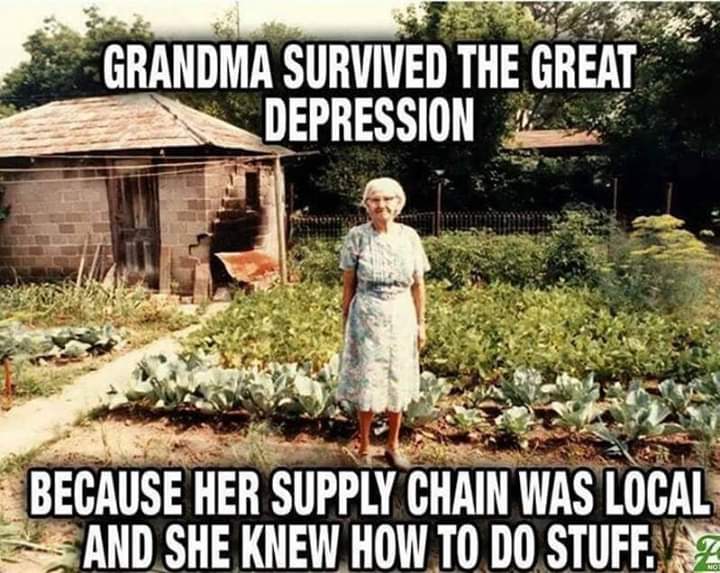
One trend—that I think will be positive if it endures—is the implicit rejection of globalism.  People are suddenly awakening, dramatically, to the manifold downsides of open borders and excessive global economic integration.  Suddenly, localism is back in vogue.

Read More »

Reflections on Distance Learning, Day One

The first day of distance learning is officially in the books.  I promise that this topic will not be the only one I write about for the next two weeks, but I am going to give updates periodically.

Being the first day, it was certainly the busiest.  Yesterday students came to school in the morning to collect whatever materials they may need for the next two week, and teachers spent the day buzzing away at recorded lectures, digital lesson plans, etc., so we’d be ready to hit the ground running at eight o’clock this morning.

A great deal of teaching is staying one or two days ahead of the students, especially when you’re first starting out.  I had a bit of that sensation—the first-year teacher drowning under a Herculean load of preps—yesterday and today, but where I’ve been lecturing on US History and Government for so long, I can riff almost effortlessly with just a few cues from my well-worn lecture slides.

Prepping for Music, ironically, has been the most difficult.  We’re using Google Meet to livestream and record lessons, which makes it pretty easy to record audio while also sharing slides with students.  With my two Music classes, though, I had to get a little creative.

Read More »

Transitioning to Distance Learning

Well, this coronavirus situation is truly shutting everything down.  South Carolina Governor Henry McMaster has shut down all public schools in the State for the rest of the month, which means my little private school is transitioning to distance learning today.  Students are coming in from 8 AM to noon to pick up whatever they need, and then we’re hitting the ground running with distance/remote learning tomorrow.

So far, everyone’s being surprisingly calm about it.  The students are probably anticipating a two-week holiday where they can blow off their work.  They’re in for a mildly rude awakening.  Part of that collective teenage instinct is probably correct:  it’s not going to be nearly as rigorous (or draining) as face-to-face classroom instruction.  But it’s not going to be two weeks of goofing off, either.

Read More »

Lazy Sunday LIII: Democratic Candidates, Part II

Last Sunday I began this two-part retrospective of the Democratic primaries.  The lengthy preamble to that post serves as an introduction, so read it first if you want to get caught up.

Here’s Part II:

  • New Hampshire Results & Analysis” – In this post, I looked at the results from New Hampshire.  Bernie Sanders doing pretty well at this point, even with the results of the Iowa caucuses still unclear.  At that time, I wrote that “South Carolina’s is Biden’s to lose,” and I was right (see below).  One thing that caught my eye:  Tom Steyer suspended his campaign after NH, but still took third in SC.  How much better would he have fared had he not announced the suspension and hung in there through SC?  The outcome likely wouldn’t have been too different, but imagine if Steyer had seized second instead of third?  The complexion of the last few weeks could have been quite different.
  • Nevada Feels the Bern” – The Nevada caucuses really marked Bernie’s rise to dominance, albeit short-lived.  Most of this post I spend analyzing the danger of a Sanders nomination and potential presidency.  But then….
  • Biden Blowout in South Carolina” – Biden destroyed his competition in South Carolina.  As I had predicted, black Americans were not going to vote for Buttigieg, and seemed skeptical of The Bern.  And Joe Biden is Obama’s heir-apparent, so he was bound to do well with Obama’s biggest supporters.
  • Super Tuesday Results” – If South Carolina weren’t enough, Biden decisively dominated the Super Tuesday primaries, as he did this past Tuesday.  Bernie is hanging in there, but his path to victory is narrowing.  I’m still holding out hope for a brokered convention, but just as South Carolina was “Biden’s to lose,” at this point, I think the same could be said of the Democratic nomination.

Of course, if Biden gets the nomination, we have to pull out all the stops to defeat him.  Bernie is dangerous because of his ideology.  Biden is dangerous because he’s an empty husk of a man in a rapidly deteriorating mental condition, who will do whatever his Democratic masters demand of him.  The erosion of freedoms may be more subtle under a Biden presidency, but they will be there, nonetheless.  Don’t succumb to the siren song of “moderation!”

Happy Sunday!

—TPP

Other Lazy Sunday Installments: