#MAGAWeek2020: The Tuck

This week is , my celebration of the men, women, and ideas that MADE AMERICA GREAT!  Running through this Friday, 10 July 2020, this year’s posts will be SubscribeStar exclusives.  If you want to read the full posts, subscribe to my SubscribeStar page for as little as $1 a month.  You’ll also get access to exclusive content every Saturday.

Read my two-part biography of Theodore Roosevelt (with your $1 a month subscription!) here and here.

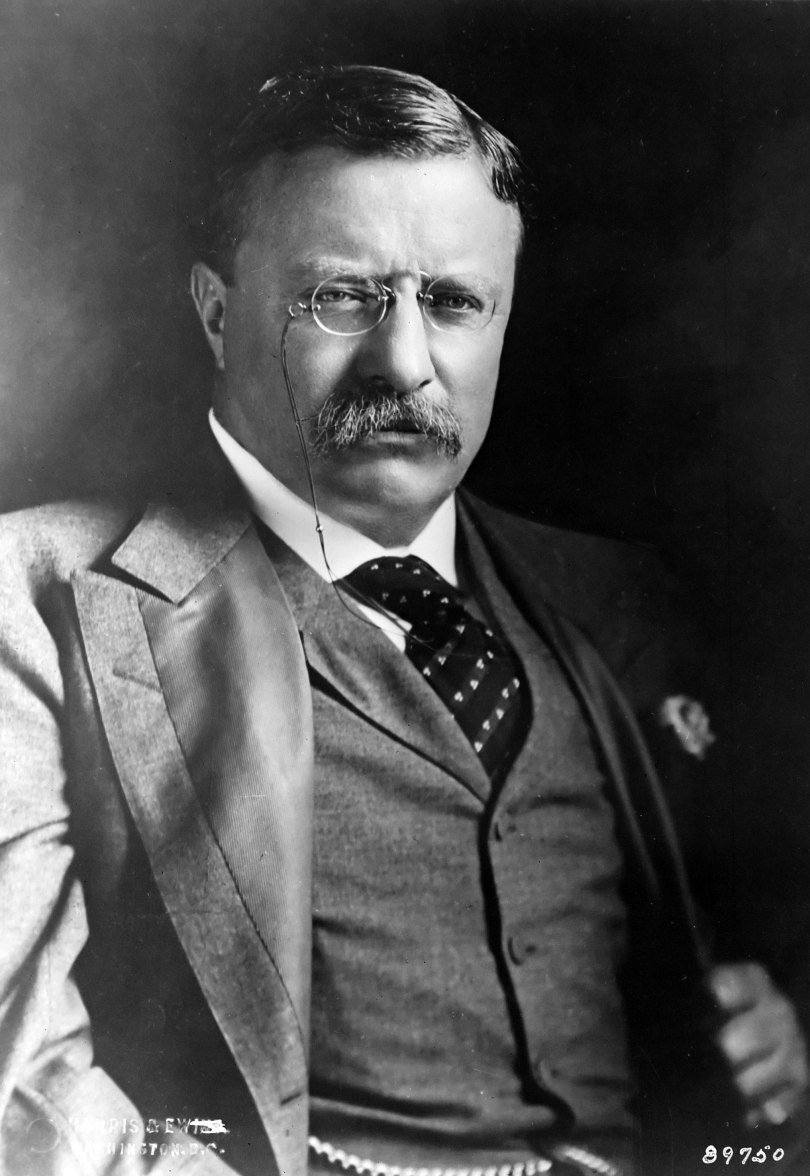
I dedicated the first two days of #MAGAWeek2020 discussing America’s manliest president, Theodore Roosevelt (Part I, Part II).  TR’s influence on the nation and the office of the presidency reverberate to the present, both for good and ill, but his impact is substantial.  One of his most vocal modern apologists—and a man with immense public influence—is the Uncuckable One:  Tucker Carlson.

There are a number of influential figures on the Right that surely have contributed to the greatness of the United States—Milo, Gavin McInnes, Michelle Malkin, Ann Coulter, etc.—through their reporting and commentary.  All have done real yeoman’s work, at great personal and professional risk, to advance conservatism, specifically America First nationalism.  Tucker Carlson, however, is able to reach an audience—and present America First ideas to that audience—so large, his influence scuttles congressional bills.

Even more importantly, it seems GEOTUS Donaldus Magnus himself listens to The Tuck.  More significant still, Carlson never backs down and never apologizes for his positions, instead defending his views with sharpness and tact—and a charmingly boyish laugh.

To read the rest of today’s post, head to my SubscribeStar page and subscribe for $1 a month or more!

#MAGAWeek2020: Theodore Roosevelt, Part II

This week is , my celebration of the men, women, and ideas that MADE AMERICA GREAT!  Running through this Friday, 10 July 2020, this year’s posts will be SubscribeStar exclusives.  If you want to read the full posts, subscribe to my SubscribeStar page for as little as $1 a month.  You’ll also get access to exclusive content every Saturday.

Yesterday featured Part I of this two-part biography of President Theodore Roosevelt.  Part I dealt largely with Roosevelt’s life and achievements outside of the presidency; today’s post will examine his accomplishments as President of the United States.

Upon the death of William McKinley—a great, if now neglected, president in his own right—the young Theodore Roosevelt ascended to the presidency.  Old Guard Republicans had sought to smother Roosevelt’s career in national politics with a long, dull tenure as Vice President.  Now—thanks to the tragedy of an assassin’s bullet—Roosevelt took the “bully pulpit.”

Roosevelt was a Progressive, in the context of the time—he embraced a number of ideas Progressive reformers pushed—but he was also fundamentally conservative.  Roosevelt sought to conserve America’s promise of a “square deal to every man,” a promise that was seriously threatened.

To read the rest of today’s post, head to my SubscribeStar page and subscribe for $1 a month or more!

#MAGAWeek2020: Theodore Roosevelt, Part I

This week marks the beginning of , my celebration of the men, women, and ideas that MADE AMERICA GREAT!  Starting today (Monday, 6 July 2020) and running through this Friday, 10 July 2020, this year’s posts will be SubscribeStar exclusives.  If you want to read the full posts, subscribe to my SubscribeStar page for as little as $1 a month.  You’ll also get access to exclusive content every Saturday.

It’s that time of year again—a week of posts!  This year, I’m kicking off the festivities with America’s youngest and most dynamic president, Theodore Roosevelt.

Roosevelt’s presidency, like that of the similarly charismatic and action-packed Andrew Jackson, is a source of controversy among conservatives.  He was very clearly a Progressive Republican, and pushed for some of the measures that have created so many difficulties for conservatives and our nation today.  He used the power and influence of his office—his “bully pulpit”—to intervene in the economy, primarily by busting up “trusts,” major monopolistic companies with immense economic and political influence.

In light of the current dominance of Big Tech oligarchs and officious technocrats in the government and private sector, however, conservatives would do well to reassess Teddy Roosevelt’s presidency.  While conservatives typically abhor excessive federal activity and intervention, Roosevelt’s robust execution mitigated the worst excesses of the Gilded Age robber barons and renewed the promise of a “Square Deal” for every American.  For that reason and more, he should be celebrated for Making America Great Again.

To read the rest of today’s post, head to my SubscribeStar page and subscribe for $1 a month or more!

SubscribeStar Saturday: Independence Day 2020

Today’s post is a SubscribeStar Saturday exclusive.  To read the full post, subscribe to my SubscribeStar page for $1 a month or more.  For a full rundown of everything your subscription gets, click here.  NEW TIER: $3 a month gets one edition of Sunday Doodles every month!

America turns 244-years old today.  We’re living through a moment that is unusually difficult, as racial grievance mongers and hipster terrorists loot cities and topple statues.  Even Mount Rushmore, where President Trump gave a powerful speech last night, is under attack—some defeated tribe sees it as a legacy of white imperialism (which, let’s be honest, ended millennia of Neolithic tribal warfare).

But America survived worse than our present crisis.  We went through a similar—and, to the discredit of today’s milquetoast (yet, to be clear, still dangerous) activists, far bloodier and gutsier—wave of radical upheaval in the 1960s and the 1970s.  We saved Europe in two World Wars.  We endured the Great Depression—and many other economic downturns.  We’ve been through four presidential assassinations (Lincoln, Garfield, McKinley, and Kennedy).  We reconciled following a protracted and brutal civil war.

It’s easy to forget sometimes, when the Leftist mobs and their corporate and governmental enablers seem so dominant, that America has conquered far greater crises than these current ructions.  What we have achieved before, we can achieve again.

To read the rest of this post, subscribe to my SubscribeStar page for $1 a month or more.

TBT: Southern Conservatism: John Randolph of Roanoke

A lodestar of modern conservatism is that the federal government is too powerful and overreaching, and that power should be devolved back to the States and local governments.  That such devolution rarely occurs, even under Republican presidents, is just further evidence of how entrenched the bureaucratic class is within the Beltway swamp.  It’s easy to see the extension of federal power since the New Deal programs of the 1930s and the government’s control of the economy during the Second World War, followed by Johnson’s Great Society and various big government schemes to solve our problems.

But these concerns about the growth of federal power are not new, and there were already grumblings about them in the earliest years of the Republic.  In yesterday’s History of Conservative Thought session, we analyzed John Randolph of Roanoke‘s “King Numbers” speech, in which the aging but feisty Virginia decried the overreach of federal power—in 1830!

The occasion for Randolph’s speech was the Virginia Constitutional Convention of 1829-1830, in which the State sought to revise its constitution with a number of—as Randolph called them—“innovations,” including age requirements to serve in the Virginia House of Delegates (25) and the State Senate (30).  Another proposed change was the elimination of property qualifications to vote.

Randolph vehemently opposed these reforms on the grounds that the Virginia Constitution in its then-current form was the greatest charter of government ever conceived, and that it had been wholly sufficient in serving as the sole block on the expansion of federal power.  Randolph also argued that the US Constitution, rather than dealing with the external issues of national defense and regulating foreign affairs and commerce, had instead turned its focus inwards, seeking to regulate the States.

It’s fascinating to read now, nearly two hundred years later, Randolph’s antebellum arguments against the aggrandizement of federal power, at a point when the federal government under the Constitution was barely forty-years old.  One of Randolph’s most interesting points was that, regardless of what the Constitution said it was designed to do, the reality was much different.

One of the students asked what Randolph would think if he saw things today, and I said, “He’d probably have a stroke.”  Far from being the last stand against and check on federal authority, Virginia now is the compliant handmaiden to federal expansion, as Northern Virginia is the home of the Swamp People that operate the federal bureaucracy.

It’s unfortunate that we’ve forgotten Randolph today.  Even in his own time, he was considered somewhat of an eccentric.  But eccentrics make life interesting, and this one certainly issued some strong warnings, even at that early date, about the danger of excessive federal power and the erosion of States’ rights.

With that, here is 24 June 2019’s “Southern Conservatism: John Randolph of Roanoke“:

As my History of Conservative Thought course rolls on, I’m learning more about the forgotten byways and overgrown, stately ruins of the various branches of conservatism.  Students this week are reading a couple of documents from John Adams and Alexander Hamilton, the two founders of the Federalist Party, and key to the passage of the Constitution.  Hamilton, the author of the bulk of the pro-ratification Federalist Papers, also created the financial system upon which the United States functions today.

Hamilton and Adams have both enjoyed renewed interest in recent years, Hamilton due to the smash Broadway musical about his life, and Adams from a critically-acclaimed HBO series (one that, sadly, takes some unnecessary artistic license with the past).  In the case of Hamilton, American history students are often enthusiastic to get to him in my AP US History course, and Hamilton mega-fans often know more about the first Secretary of Treasury than I do.

But we’re reading a speech from another important figure from American history, albeit one largely forgotten:  John Randolph of Roanoke.

Randolph of Roanoke, sometimes considered the “American Burke,” was part of the Virginia planter aristocracy and a staunch republican, in the sense that he opposed centralization of power while supporting a strict interpretation of the Constitution and a limited government at every level.  He was one of the so-called “Old Republicans,” a group within the dominant Democratic-Republican Party of the Jeffersonian and Jacksonian era that adhered strictly to the Constitution, and which believed the States possessed a check on the federal government’s power.

He was also a traditionalist, and his powerful “King Numbers” speech at the Virginia Constitutional Convention in 1829-1830 represents a hearty endorsement of conservative principles, prudently applied.

Randolph of Roanoke makes several important points in the speech, but two stick out to me immediately:  his detestation for the tyranny of majority (the “King Numbers” referenced throughout the speech), and his love of Old Virginia.  On the latter point, he was quite eloquent:  not only did he argue that Virginia was a bulwark against an overreaching federal government (remember, he’s making this point in 1830), he also notes that its constitution was entirely sufficient to the task.

He argues early in the speech that there is no need to change Virginia’s constitution, because no one had brought any provable objections against it!  It’s the essence of a conservative argument.  Further, Randolph of Roanoke decried the mania for what he called “innovation,” a kind of reform-for-reform’s-sake, at the expense of the tried-and-true.

As to the tyranny of the majority, Randolph of Roanoke points in “King Numbers” to the absurdity of giving some men or factions greater power simply because they can win by one or two votes.  He uses examples—unfamiliar to many modern readers—of the Tariff of 1816 (one of my tariffs the Southern planters and yeoman farmers alike found odious and burdensome) and the Missouri Compromise of 1820, the latter passing by a mere two votes.

We praise “democracy” now, but the Founders of our nation feared unbridled democracy as a form of mob rule, which would inevitably yield tyranny at the hands of a charismatic demagogue.  Randolph of Roanoke makes the rather compelling point that even in representative government, mere majoritarianism can be quite destructive, as the side with the majority actually benefits if it can seize that majority by a narrow margin:  that’s just more of their opponents who lose!

Randolph of Roanoke, like many men of his time and station, was an unapologetic defender of slavery, which likely accounts for part of his fall from our curricula (although he emancipated all of his slaves upon his death).  His anti-nationalism (in the sense that he was opposed to a powerful federal government) is also at odds with the prevailing trend in American history textbooks to applaud whenever the national government aggrandized itself at the expense of the States.

Regardless, we would do well to read him again.  He was, even for his time, a bit of an oddball, but his quick wit and vast depth of knowledge, as well as his love his State (he believed Virginia was the great inheritor of Greco-Roman and British Common Law) were inspiring to his fellow Virginians.  They could be inspiring for us, too, and all lovers of liberty.

More Tech Censorship

Another round of tech censorship is upon us.  The Trump campaign has been banned from streaming service Twitch (which I thought was just for gamers and girls with big boobs).  A bunch of conservative and Right-leaning personalities have been banned from YouTube, including Gavin McInnes, who built his own platform at Censored.TV.  Immigration patriot website VDare may lose its domain registrar, forcing the website to the Dark Web and TOR browsers.

Probably the most shocking is the digital defenestration of Stefan Molyneux, the grandiloquent Internet philosopher.  Molyneux’s Freedomain Radio touts itself as “the world’s number one philosophy show,” and Molyneux’s output is ponderously prolific.  Within hours of major news events, Molyneux will have long “The Truth about [Insert Controversial Figure or Event Here]” videos uploaded, meticulously researched and supported with fact-filled PowerPoints.

Lately, though, Molyneux has been posting videos of his daughter’s tadpole pool, or of the two of them building a turtle garden.  He’s also been livestreaming Doom—controversial in the Tipper Gore era of schoolmarmish censorship of video games and music, maybe, but not thirty years later, and certainly not grounds for deplatforming.

So why did the Left decide to destroy Molyneux’s livelihood?  The simple answers:  because he’s Right-wing, and because they could.

Read More »

Fifty Years of Radical Violence

On the Right, we tend to point to the 1960s as the decade when everything went wrong—the rise of the counterculture, the anti-war movement, the radicalization of campuses.  Or we’ll look back to the Progressive Era of the first two decades of the twentieth century, or the Frankfurt School that introduced “Cultural Marxism” to our universities.  Deep students of ideological infiltration will point to the American infatuation with German Idealists and the German model for higher education.

But in focusing so intensely on the 1960s, we overlook the following decade—the sleazy, variety show-filled 1970s.  Of course, what we think of as the cultural and social upheaval of the 1960s really occurred mostly in early 1970s.  Indeed, I suspect that so much of the romanticizing (on the Left) of the 1960s is because of the Civil Rights Movement, which now holds a place of uncritical holiness in our national mythology.  It probably also has to do with the dominance of early Baby Boomers in media and the culture for so long—they built the counterculture, and they still idealized their youthful misadventures as tenured radicals.

Regardless, good old Milo posted a link on his Telegram feed urging followers to “Read this.”  “This” was a book review, of sorts, of Days of Rage: America’s Underground, the FBI, and the Forgotten Age of Revolutionary Violence by Bryan Burrough.  In his review of the book, author Brian Z. Hines writes that

Days of Rage is important, because this stuff is forgotten and it shouldn’t be. The 1970s underground wasn’t small. It was hundreds of people becoming urban guerrillas.  Bombing buildings: the Pentagon, the Capitol, courthouses, restaurants, corporations. Robbing banks. Assassinating police. People really thought that revolution was imminent, and thought violence would bring it about.

Read More »

Hungry Like the Wolf

I’m puppy-sitting today, watching my parents’ ten-week-old rat terrier while they’re working and attending various doctors’ appointments.  I pray that the day I go to the doctor and various specialists as frequently as my parents do is still decades away.

Dogs are interesting critters.  It’s kind of amazing that our ancient ancestors domesticated wolves and bred them to hunt on behalf of humans, instead of merely hunting humans.  It’s even more interesting how breeding for selective traits led to various breeds.  There’s a whole art and science to animal husbandry that is fascinating.

The rat terrier, for instance, is the result of various combinations of terriers (for hunting), greyhounds (for speed), and chihuahuas (for compactness—the rat terriers had to be small enough to get into rat holes).  According to my dad, who has become something of an authority on the breed since getting the puppy, rat terriers used to be very common in the United States—most farmers had one or two to help kill pests.  Theodore Roosevelt kept one named Scamp around the White House to kill mice (although Scamp may have been a different variation of terrier).

Of course, the question that interests me is thus:  if we domesticated dogs once, couldn’t we do it again from their cousins, wolves?  Naturally, there’s no need to do it again—it was surely a long process—but doing so would help us to understand how difficult domestication was, and why our ancient ancestors thought it was worth the effort.

Read More »

Lazy Sunday LXVII: Phone it in Fridays, Part I

It’s a hot weekend here in South Carolina.  It’s been a mostly mild summer so far, but today the brutal combination of heat and humidity hit with their full rancor.  I’m currently writing this post from the third story finished attic at my parents’ house, as it’s been another big family weekend, this time to celebrate my maternal grandmother’s birthday.  Like every protagonist from Stephen King’s early work, I’m typing shirtless and drenched in sweat—an image none of you needed.

It occurred to me Friday that I’ve (improbably) hit twelve editions of Phone it in Friday, so I thought I’d cheekily dedicate the next few Sundays to looking back at past PiiF installments—a month of Fridays for a month of Sundays.  Chalk it up to laziness—I mean, that’s the point of these Sunday posts—-but I’m running out of umbrella topic ideas, and this lame tactic gives me a month to dream up some more.

So, without further ado, here’s the first installment of our Phone it in Friday Lazy Sundays:

  • Phone It in Friday – Musings & Reflections on NATO, Brexit, Etc.” – The very first PiiF goes back to 13 July 2018, before I was doing daily posts.  I believe I was sticking to a thrice-a-week MWF schedule.  The astute observer will note that I capitalized the “I” in “It” for this first installment, and lowercased it for (I believe) the rest.  The post covered Brexit, why I believe Turkey should not be in the NATO alliance (the alliance itself is probably obsolete, anyway), and President Trump’s visit to England.  Remember when Theresa May was still the Prime Minister of England and kept delaying Brexit?
  • Phone it in Friday II: Boris, Bond, and Borders” – It would be slightly over a year, on 26 July 2019, before I resorted to another PiiF.  That pithy PiiF celebrated Boris Johnson’s election as Prime Minister of Great Britain (which presaged the victory of true Brexit), the literary death of James Bond, and a Chicago Chamber of Commerce piñata bashing for illegal children.  ¡Ay caramba!
  • Phone it in Friday III: Video Killed the Blogging Star” – This PiiF featured two videos, one from the uncuckable Tucker Carlson, the other from YouTube personality RazörFist.  Watch them—they’re good.

That’s it for this week!  Time to descend from this stuffy attic and rehydrate.  I can’t be losing any water weight if I want to keep my portly status, can I?

Happy Sunday!

—TPP

Other Lazy Sunday Installments:

SubscribeStar Saturday: The Portly Politico Summer Reading List 2020

Today’s post is a SubscribeStar Saturday exclusive.  To read the full post, subscribe to my SubscribeStar page for $1 a month or more.  For a full rundown of everything your subscription gets, click here.  NEW TIER: $3 a month gets one edition of Sunday Doodles every month!

It’s that time of year again:  summer!  That means we’re due for The Portly Politico Summer Reading List 2020!

I’m actually a bit overdue for this list.  I typically publish it in early June, to give those of you blessed to enjoy summer vacation a chance to look them up.  But my long illness for the first couple of weeks of the month waylaid a number of plans, and last weekend I was occupied with family festivities, so the list is a few weeks later than I like.

But, like Sunday Doodles—a perk for $5 a month subscribers—my philosophy is “better late than never!”  And with the Independence Day holiday approaching, it’s a great time to do some reading.

For new readers, my criteria is pretty straightforward.  To quote myself from the 2016 list:

The books listed here are among some of my favorites.  I’m not necessarily reading them at the moment, but that doesn’t mean you shouldn’t!

Pretty vague, I know.  Additionally, I usually feature three books, plus an “Honorable Mention” that’s usually worth a read, too.

For those interested, here are the prior two installments:

But that’s enough yackin’.  Here’s The Portly Politico Summer Reading List 2020:

1.) Richard Weaver, edited by George M. Curtis, III and James J. Thompson, Jr., The Southern Essays of Richard M. Weaver (1999) – Regular readers know I love Richard Weaver, and I featured his masterpiece Ideas Have Consequences on the 2016 list.  The Southern Essays feature a collection of Weaver’s writings on the South.

Weaver was a literary critic and English professor at the University of Chicago, but his roots were in Asheville, North Carolina.  He possessed a deep and abiding love of and respect for Dixie, particularly its writers.  Weaver’s background in literature and poetry is evident in these essays, in which he ruminates on the abundance of prolific Southern literary types.  He also brings some nuance to the question of the American Civil War and the South’s role therein.  I believe it was in this collection that I first learned of John Randolph of Roanoke, the great, ornery Virginian who resisted federal overreach in the early nineteenth century.

Weaver’s writing can be a bit dense, but once you get used to his mid-century style, his ideas are easy enough to absorb.  I highly, highly recommend you pick up this collection.

To read the rest of this post, subscribe to my SubscribeStar page for $1 a month or more.