In Defense of the British Monarchy

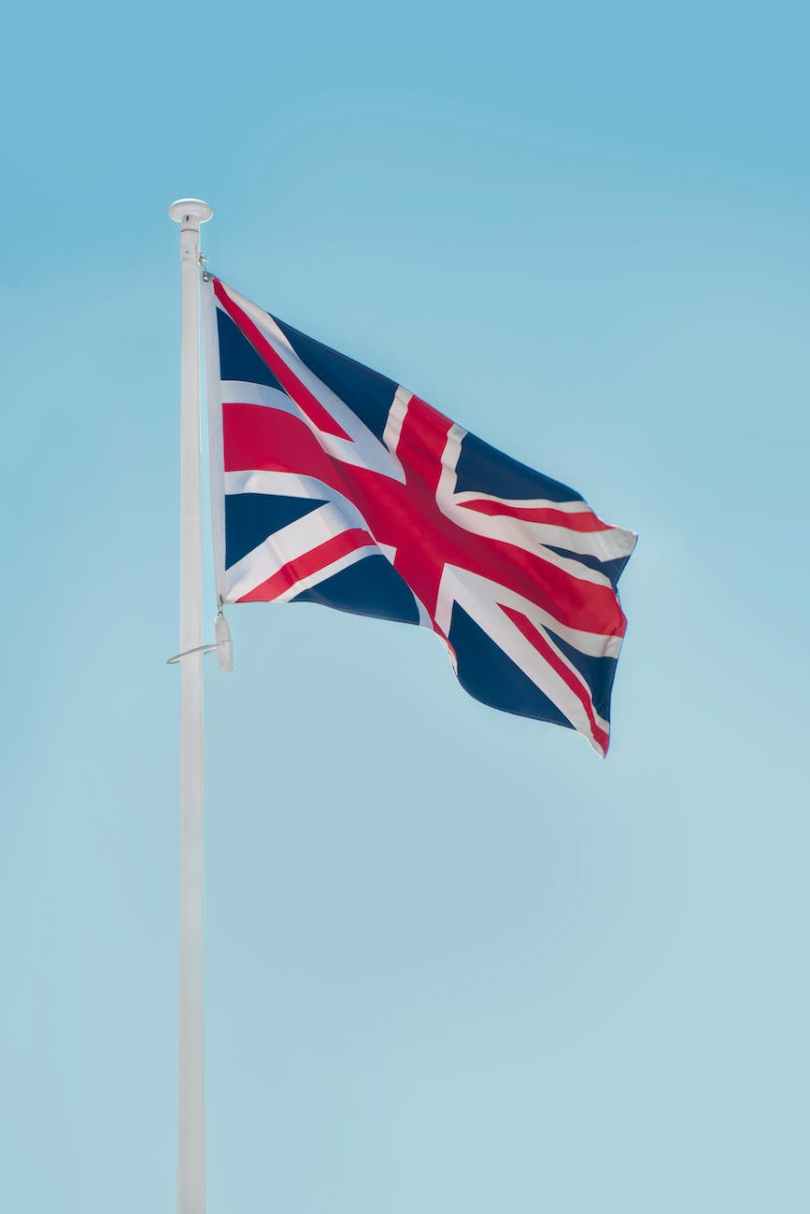
As a natural conservative, not merely a political one, I have always felt an affinity for the British monarchy, and never bought into the excessively utilitarian (and inherently radical) arguments that favor the abolition of the monarchy.  After weeks of listening to videos from The People Profiles about the monarchy, I am even more convinced in the necessity of the British monarchy as a cultural and political force.

To be clear, I do not advocate for monarchy of any form in the United States.  The reader might ask, “if it’s so beneficial to our British cousins, with whom we share quite a bit of history and culture, why isn’t it good for us?”  The answer is simple:  we’ve never had one!  Monarchy is something almost completely foreign to Americans, at least since 1776.  Our Founding was explicitly anti-monarchical, even if there were Americans willing to submit to a kingship under George Washington.

The British—and, more specifically, the English—however, have possessed a monarchy for over 1000 years, with the exception of that Cromwellian unpleasantness from 1648-1660, ending with the restoration of the Stuarts with Charles II.  That is a great deal of tradition, custom, and ceremony to toss out merely to save a few bucks on maintaining the Royal Family.

Read More »

Island Living: Vanuatuan Taxes

The FAIRtax folks, who advocate for replacing income and corporate taxes with a unified national sales tax, posted an interesting piece about the remote Pacific nation of Vanuatu (“FAIRtax in Vanuatu?“).  It discusses how the archipelago boasts incredibly low taxes:  a 15% value-added tax (“VAT”), and a business license fee of 5% (presumably, 5% of a business’s total annual revenue).

I’m personally agnostic on the adoption of a national sales tax in the United States.  I do believe it would be much better than the income tax, which I absolutely loathe, and which requires a complex and oppressive bureaucracy to administer.  I also resent sending the IRS all of my personal information every single year, including how many miles I drove and what sheet music I purchased (although those are great for those sweet, sweet tax write-offs).  If it were practical, I’d much rather see a national sales tax, or even a return to old-school tariff regimes.

The problem is that, should we ever adopt a national sales tax, it will likely accompany the national income tax.  A national sales tax also places a great deal of strain on States and localities.  Good luck having a 10% national sales tax and a 6% State sales tax (as we do in South Carolina) and a plethora of local-option sales taxes (about 2% here in Darlington County; higher in neighboring Florence County).  Tack on hospitality taxes, and it adds up fast.

For example, in neighboring Florence County, eating out automatically comes with a 10% sales tax:  the 6% State sales tax, plus local sales and hospitality taxes, totally 10%.  If we had a conservative 10% national sales tax on top, your $5 footlong (already gone—part of America’s mythological past) becomes $6 immediately.  20% sales tax means $1 of taxes for every $5 spent.  A $500 item would cost $600.

still think that’s preferable to the income tax, and instead of creating a disincentive to work, it would create a disincentive to spend.

But I digress.  For a small nation like Vanuatu—population of around 300,000—a national sales tax makes sense.  It’s a small enough area geographically and demographically that it the national sales tax is, essentially, akin to a State sales tax.  As the article from FAIRtax.org notes, the island has something of a clean slate:  no welfare, no government pensions, etc.  Most people are subsistence farmers, and tourism is the major industry.

Read More »

Guest Post: The Year Before the Year After Next Year

This week is unofficially “Ponty Week 2023,” as good old Ponty/Always a Kid for Today sent me three excellent pieces over the long July Fourth week (his third will pop this Friday).  It’s great to see one of our most steadfast and lively contributors back on the blog.

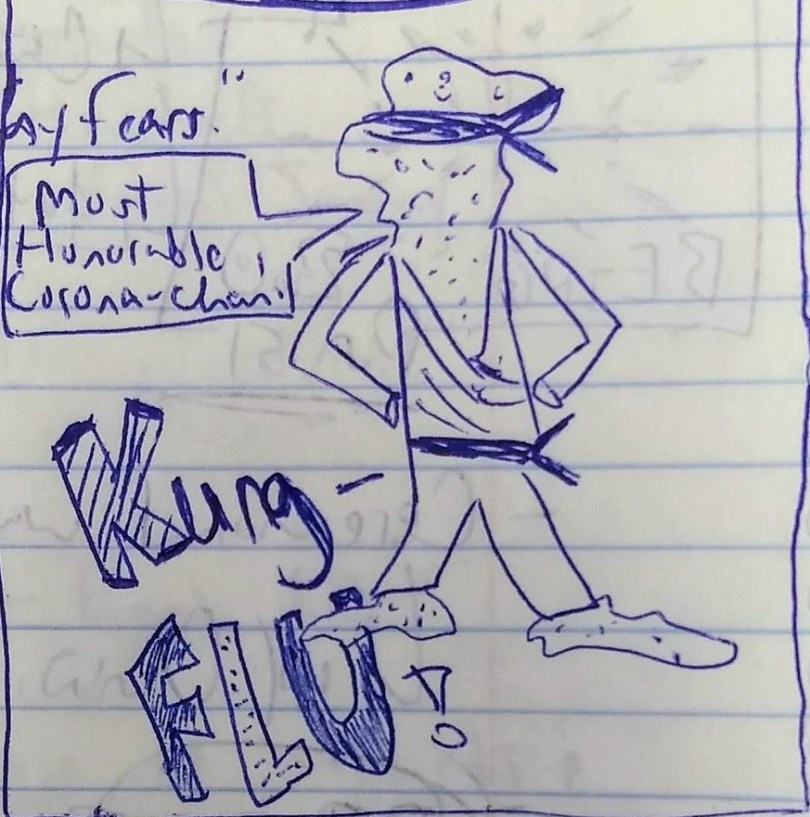
It’s interesting to think that The Age of The Virus, which so dominated our lives and thoughts for nearly two years, now seems like a distant memory, a bad dream best forgotten when one wakes up, returning to one’s senses.  That is certainly how the worst of the self-proclaimed public health czars and czarinas hope we will regard it:  a well-intentioned nightmare that we needn’t talk about any further.  They know they eroded civil liberties, wrecked the economy, and made anyone without a diaper on their face feel like crap, all over a highly survivable virus.  Better to sweep all that under the rug and let bygones be bygones.  Forgive and forget, right?

We can forgive individuals—we all had family members who hysterically insisted that flimsy paper masks would save us from ourselves—but we should never forget the heavy toll of our public health tyranny.  As Ponty points out, they’re going to try it again, and it’s going to be worse next time.

It is perhaps a bit conspiratorial (and even hysterical on my part), but I sincerely believe The Age of The Virus was a test-run for the End Times Beast system.  Just as people willingly lined up for The Vaccine, which was promised to be the ticket to a normal life, people will line up to take the Antichrist’s Mark so they can continue shopping at Niemann Marcus.  What is one’s eternal soul when there is a sale on capris?

Even if I am wrong about that particular claim, The Age of The Virus was certainly a trial run to see how obedient we’d all be.  The answer, sadly, was, “very.”  Sure, we had some ructions after the first month or so of the “two weeks to flatten the curve,” but most Americans went along sheepishly with the dictates.  Yours portly wore his mask as little as possible, but even I took two shots of The Vaccine (not because I wanted to be “normal” again, but because I didn’t know any better at the time—and I should have!).

Ponty argues that inquiries into The Age of The Virus in Britain serve no purpose other than to strengthen the regime the next time around.  I think he is only missing one point:  these inquiries remind us, the sane, about what they did to us.  We should never let them get away with it again.

With that, here is Ponty’s “The Year Before the Year After Next Year”:

Read More »

Fed Up

This Wednesday we’re taking a break from Bigfoot to talk about another terrifying creature:  the Federal Reserve System.

I don’t typically write about the Federal Reserve System because, well, I don’t really get it.  Sure, I’ve taught about it, and I get the general gist of what it is alleged to do, but like most Americans, I know that it tinkers with interest rates and is incredibly boring.

As a kid, I’d hear about Alan Greenspan and how significant he was.  Janet Yellen, the who I thought was still the chair of the Fed (nope—she’s the Secretary of Treasury now, apparently), sounds like a walrus with head cold, and strikes me as about as lively as block of wood.  These are not inspiring or interesting people, but they are immensely powerful.

Read More »

TBT^16: End the Income Tax

By the time you’re reading this post, I should have filed my taxes, and endured the annual reaming from Uncle Sam.  Now that my private music lessons have taken off (thank you, Lord!), I’m one of those productive members of society who has to pay through every orifice come tax season.

Hopefully those orifice contributions can pay for some poor child’s gender reassignment surgery, or to buy Volodymyr
Zelenskyy another ivory backscratcher.  One can only hope!  I’m confident my hard-earned dollars are in capable, unelected hands.

I doubt we’ll ever replace the income tax, but we should.  At the very least, we should make it less invasive.

With that, here is 14 April 2022’s “TBT^4: End the Income Tax“:

Read More »

TBT^2: Phone it in Friday XI: Coronavirus Conundrum, Part IV: Liberty in the Age of The Virus

The Virus is like a bad movie series that just refuses to die.  There was a controversial but impactful first release that everyone was talking about, even if they didn’t see it.  Then there was the lackluster sequel, which still enjoyed some popular support, even though ticket sales were down.

Now it feels like we’re on the tired third film, which is a watered-down, ineffectual finale (one hopes) to a premise that is played out.  Sure, critics love it, but audiences are tired of its antics.

What still seems to make it into the script of every one of these films is the part where the government bureaucrats lock everything down and release a bunch of ghosts into Manhattan (uh, wait, what?).  Meanwhile, we all kind of sit by and twiddle our thumbs and put our masks on dutifully.

What happened to the band of merry wastrels who tossed tea into Boston Harbor, rather than comply with an odious monopolization of the tea trade?  Or the plucky scofflaws who made it impossible to enforce the Stamp Act?  I’d rather disguise myself as an Indian (feather, not dot) and caffeinate the water supply than put a mask on again (but that would be cultural appropriation, of course).

In short, why don’t we get a backbone, instead of cowering behind masks and locking ourselves indoors?  We’re literally cowering before an invisible enemy with a 99%+ survival rate.

Well, liberty is never easy.  Better to stay inside watching movies and disconnecting from reality, eh?

With that, here is 29 July 2021’s “TBT: Phone it in Friday XI: Coronavirus Conundrum, Part IV: Liberty in the Age of The Virus“:

Read More »

TBT^2: Leftism in a Nutshell

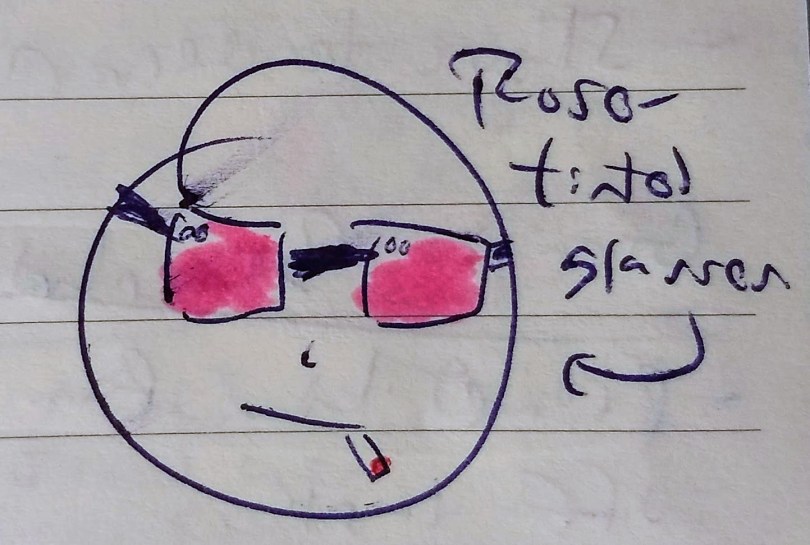
When I first wrote about the “degrowth movement” three years ago, it seemed like another kooky Leftist spin to cover for an economy that would inevitably decline under a Democratic president.  When I revisited that post last summer, it was after five months of Biden the Usurper’s economic misery and malaise, and after a year of shutdowns thanks to The Virus.

In other words, we’d tried involuntary degrowth, and it’s made us poorer.

A year on, the economy has gotten even worse.  We’re all quite aware that gas prices are through the roof.  Food prices have skyrocketed as well.  One reason I’m dieting this summer (besides the fact that I need to return to my lean, pantheric form) and skipping breakfast is because it saves a few bucks (and because I need my massive spaghetti ration to last a lot longer—I can down a pound of spaghetti with shocking rapidity).  Groceries are too expensive for binge eating.

The most recent print issue of Backwoods Home Magazine (Issue #189, July/August/September 2022) features a cover story entitled “The Return of Victory Gardens.”  That piece discusses not just the high prices of groceries, but the scarcity of items on shelves.

For years, I’ve boasted about how cheap food is.  Just a few years ago, you could pick up a loaf of bread from Dollar General for eighty-eight cents.  Granted, it wasn’t good bread, but it got the job done.  Eggs were cheap.  Butter was maybe a dollar for four sticks.  Pretty much everything you could need was easily affordable, even if it wouldn’t make for the most exciting meals.

Now, none of those items are particularly cheap.  The lowest price for a loaf of crummy (and crumbly) white bread I can find locally is around $1.49 a loaf.  I have a hook-up for eggs, so I’m covered there.  But my egg supplier tells me that I should start canning butter, because the price of that is about to go way up.

And forget about eating meat.  It looks like the grand dream of the globohomo super elites—that we’ll all be eating cricket burgers, safely isolated and subdued in our living pods—is getting closer and closer to reality.

It became a BoomerCon cliché to point to Venezuela as an example of what happens when socialism runs amok.  But the BoomerCons were right.  Unless we want to be eating pet rabbits and zoo animals, we’d better do something to shore up our food stores and increase our independence from the supply chains stat.

With that, here’s “TBT: Leftism in a Nutshell“:

Read More »

TBT: Fighting Back Against Critical Race Theory

We observed Juneteenth, the new Independence Day for black Americans, here in the United States this week.  The “national” holiday is an extremely regional celebration that dates back to 1866 in Texas.

To state the obvious but controversial:  the only reason we have Juneteenth is because of a summer of racial violence two years ago.  Apparently, our entire political system and culture has to bend over backwards to accommodate a handful of disgruntled race-baiters.

But all of that traces back to Critical Race Theory (CRT), which I described last year as an odious blend of “identity politics, Foucaultean power dynamics, Cultural Marxism, and Nineties-style corporate diversity training.”

Race-baiting isn’t anything new in America, but now it’s taken on a quasi-systematic, pseudo-intellectual, cult-like quality that has major corporations and government entities at all levels cowed.

But appeasement clearly doesn’t work.  Indeed, I’d argue it undermines CRT’s alleged goal of racial reconciliation.

I said as much in 16 June 2021’s “Fighting Back Against Critical Race Theory“:

Read More »

TBT: Egged Off

Shortly over a year ago I wrote a piece about officious bureaucrats shutting down two little girls selling chicken eggs in Texas.  The girls were trying to help people out and make a few bucks after the crazy ice storm massively disrupted Texan supply lines.

Since then, I’ve obtained a source to bring farm fresh eggs to my home on an as-needed basis; it’s one of many small blessings for which I am thankful.  With food prices even higher than they were a year ago, free eggs is a huge boon.

I ended this post with the admonishment “The time to start growing and raising our own food is now.”  But even yours portly has largely ignored his own advice.

Let’s work on changing that in 2022.

With that, here is 30 April 2021’s “Egged Off“:

Read More »

TBT^4: End the Income Tax

Here it is:  my annual call to end the income tax.  My disdain for the income tax is two-fold:  it’s incredibly annoying and invasive to file it every year; and it’s become a complicated, bureaucratic morass that attempts to social engineer our society by tweaking bits of the tax code.

I think there are downsides to a consumption tax—a national sales tax—but it makes way more sense than a tax on income.  Any tax is a disincentive to engage in the activity taxed, and no tax is perfect.  Being a necessity—perhaps an evil one—we should at least try to get the least bad tax possible.

Taxing income, then, is a disincentive to earning more income.  I faithfully track every dollar I earn in private lessons—even those paid in cash!—even though the tax burden is insane.  I suspect many Americans do not do the same, so there is already de facto tax evasion baked into an income tax.

A national sales tax would be virtually unavoidable.  That might be an argument against it.  Here’s an argument for it:  it would be a major disincentive against spending.  At a time when inflation is rocketing prices skyward, I don’t expect that such a proposal—which would make everything more expensive—will be very popular, but it would almost certainly encourage saving money.

Of course, you’d soon have all the other problems.  Industries would lobby for exemptions to the sales tax.  Should food be taxed?  If so, should it be taxed at the same rate as, say, computers?

Ah, well, forget it.  Let’s repeal the Sixteenth Amendment and let the chips fall where they may.  Tariffs aren’t so bad, eh?

With that, here is “TBT^2: End the Income Tax“:

Read More »