TBT: Federalism Denied

It’s a late post today, faithful TPP readers, as the school year is gearing up and constraints on my time increase.  Better late than never, yes?

This week’s throwback post discusses the Seventeenth Amendment, which ended the election of US Senators via their respective State legislatures, and instead moved that choice directly to the people of the several States.

One of the Progressive Era Amendments—which gave us such chestnuts as the graduated income tax (Sixteenth Amendment), Prohibition (Eighteenth Amendment), and women’s suffrage (Nineteenth Amendment)—the Seventeenth Amendment was part of a broad cultural and political shift toward, paradoxically, greater choice and enfranchisement for the electorate on the one hand, and greater government control and oversight on the other.

Americans were optimistic in the power of the government at all levels—and, increasingly, at the federal level—to solve problems like poverty and privation, naively believing that, in a democracy, the people would make wise decisions about selecting its technocratic, managerial elite.

Not surprisingly, the managerial elites gained enormous power, and the people got the shaft.

This essay explores the consequences of the direct election of US Senators, as well as why State legislatures came to support the idea.  On the one hand, States lost their representation in Congress—the Senate was designed to represent State-level interests nationally—but State legislatures were also relieved of responsibility for what was becoming an onerous duty, susceptible to corruption, or even carelessness.

Here is “Federalism Denied”:

In last Wednesday’s post, “Politics, Locally-Sourced,” I urged readers to become more interested in and educated about their local and state governments.  A keystone of modern conservative political philosophy (and of the classical liberalism of the Framers) is decentralization, the idea that power should be spread broadly, both in terms of population and geography.  Due to the massive power the federal government accrued during and after the Second World War, decentralists also argue that power should devolve from the federal government back to the States.  The federal government, of course, plays an important role in maintaining the national defense, conducting foreign affairs, and regulating interstate commerce, among a number of other constitutionally delineated areas, but a great deal of power is reserved for the States in the X Amendment.

The X Amendment reads thus:  “The powers not delegated to the United States by the Constitution, nor prohibited by it to the States, are reserved to the States respectively, or to the people.”  Clearly, then, where the Constitution is silent, the States are reserved broad powers.  They cannot become dictatorial–their constitutions must not conflict with the national supremacy of the US Constitution–but they can have broad latitude in determining statewide regulations, taxes, and the like.

In theory, at least, this federalist structure is how our nation is supposed to operate, and it manages to do so, despite significant hobbling from the federal government.  Congress has forced upon the States a number of unfunded federal mandates.  Essentially, a large portion of State budgets are consumed with fulfilling orders from Washington, D.C., without any form of assistance.  Additionally, States are often coerced into adopting certain policies or passing certain laws, lest the federal government withdraw their funding (this tactic was used to increase the drinking age from 18 to 21–not necessarily a bad thing, but the means matter almost as much as the ends; such coercion circumvents the proper amendment process).

What brought about this change, and how can we reverse it?  How can we restore the proper balance between the States and the federal government?

There are no easy answers here, and the centralization of power in the federal government occurred for a complicated host of reasons:  the acceptance of a desperate people of a greater role for the government in the economy during the Great Depression; the (temporary) success of a massively planned economy during the Second World War; the massive expansion of the welfare state during the Great Society; the (necessary) fight at the national level to protect the civil rights of black Americans; and more.

However, I would argue that a major source of this problem was the passage of the XVII Amendment.

The XVII Amendment replaced the old system of selecting senators with their direct election.  Prior to its passage, senators were selected by their state legislatures, which were themselves chosen in local elections.

There are a number of compelling arguments for why this amendment was adopted.  For one, many states had already moved to a de facto system of direct election, in which voters essentially “elected” their senator, and the state legislatures were duly pledged to vote in accord with the people’s choice.  Also, there were several scandals in which senate candidates merely bribed state legislators for their votes.  Finally, many state legislators found that voters cared more about who the legislators would elect to the Senate, not what they thought about state problems.

You can review these arguments in a (rather condescending) piece from Slate by David Schleicher entitled “States’ Wrongs.”


“[T]he States no longer have a constitutional role in the federal government.”

However, while there certainly appeared to be need for reform in senatorial elections, many of these problems still persist.  Voters are still overly-fixated on national politics, even more so than voters in the late nineteenth and early twentieth centuries.  If anything, state elections are even more focused on national issues than they were before.  Special interest groups still manage to exert influence over the Senate, and can do so even more effectively by whipping up voters.

Most importantly, though, is that the States no longer have a constitutional role in the federal government.  The Senate used to serve as the representative of the States’ interests, while the House still operates as the representative of the people’s interests.  Now the people have direct influence over both branches of Congress, and an important, necessary brake on the fickle will of the majority is gone.

States’ rights has become an ugly phrase, associated as it is with slavery and segregation.  However, just because states’ rights has been invoked to defend the indefensible doesn’t mean that it isn’t a good idea.  The States function as an important bulwark against tyranny, and federalism affords many opportunities for policy innovation and experimentation–Louis Brandeis’s “laboratories of democracy.”  Also, the geographical, ethnic, religious, and cultural diversity of the United States practically demands states’ rights, as different States have different needs, goals, and desires.

Repeal of the XVII Amendment is extremely difficult and unlikely:  people like to vote (actually, people like to know they can vote, even if they often choose not to do so).  But Congress, specifically the Senate, can do much to keep the further expansion of federal power in check.  Senator Ben Sasse of Nebraska is spearheading this effort through his speeches, delivered from the Senate floor, about the proper role of the Senate and its obligation to be an august, contemplative chamber.

We, the people, can also take steps to become more involved in state politics.  Ultimately, the drive to restore federalism starts with us.

***

For more information about the XVII Amendment and different approaches to addressing it, here are some resources:

The Campaign to Restore Federalism (pro-repeal of the XVII Amendment):  http://www.restorefederalism.org/

“Repeal the 17th:  Problems to Address” by constitutional scholar Rob Natelson:  http://tenthamendmentcenter.com/2013/08/26/repeal-the-17th-problems-to-address/

“Repeal the 17th Amendment?” by Gene Healy of the Cato Institute (great piece that is sympathetic to the idea, but recognizes the political problems involved):  http://www.cato.org/publications/commentary/repeal-17th-amendment

“States’ Wrongs” (mentioned above) by David Schleicher of Slate (anti-repeal, with some interesting historical background and a lot of elitist sneering at movement conservatives):  http://www.slate.com/articles/news_and_politics/jurisprudence/2014/02/conservatives_17th_amendment_repeal_effort_why_their_plan_will_backfire.html

Lincoln’s Favorability

One of Scott Rasmussen’s recent Number of the Day entries for Ballotpedia deals with the Abraham Lincoln’s current high favorability ratings:  90% of Americans have a favorable view of the Great Emancipator.  88% have a favorable view of our first president, George Washington.

That was certainly not the case when Lincoln was president.  He was an unlikely figure when he first took office, and many in his own party—the young Republican Party—doubted his ability to see the United States through the American Civil War.

It’s easy to forget—or even to imagine—that Lincoln believed he would not win re-election in 1864.  Thus, he picked Andrew Johnson, a pro-Union, pro-slavery Democrat from Tennessee, as his running mate.  (Of course, Lincoln never dreamed his symbolic gesture of political goodwill and unity would lead to an unqualified boor becoming president.)  Regardless, the fall of Atlanta and subsequent Union victories boosted Lincoln at the polls, securing his reelection (he was touched to find that soldiers overwhelming supported their Commander-in-Chief).

Blogger SheafferHistorianAZ at Practically Historical posted a piece recently entitled, “Finest Two Minutes,” about Lincoln’s delivery of the Gettysburg Address.  That speech is, indeed, one of the most moving and powerful political speeches in the English language, and it’s less than 300 words.

What caught my eye was this quotation:

The Chicago Times recorded, “The cheek of every American must tingle with shame as he reads the silly, flat and dishwatery utterances of the man who has to be pointed out to intelligent foreigners as the President of the United States.”

It’s instructive to remember that, while history views Lincoln fondly (SheafferHistorianAZ rates him as a “Great”-level president), he was not universally beloved at his time, and only won in 1860 because the race was split four ways:  there were two Democratic candidates (Northern and Southern), the Republican (Lincoln), and John Bell of the Constitutional Union Party.  Lincoln did not even appear on the ballot in many Southern States.  Lincoln had to earn his greatness, and much of it came with posterity.

Similarly, President Reagan was not universally beloved in his own party when he was elected in 1980.  The parallels to our current president, Donald Trump, and his own struggles with his adopted party are striking.

The lesson seems to be to aim for greatness, regardless of contemporary naysayers.  Few Americans remember George McClellan, but everyone remembers the Great Emancipator.

Happy Presidents’ Day

Happy Presidents’ Day, TPP Readers!  To honor Presidents’ Day, here is a reading list.  Enjoy with your morning coffee on a day off (or, for those of you that have to work, enjoy while engaging in rampant time-theft as you sit unnecessarily at your desk for eight hours):

I particularly like the story of the Texas Seed Bill.  Farmers in Texas were struggling through a difficult drought, and requested money from Congress to buy new seeds.  When the bill hit President Cleveland’s desk, he vetoed it, arguing that the federal government was not in the business of helping out folks with their financial problems, no matter how deserving they might be.

That was political suicide for the Democrat, who already had friction with the party’s base of Western and Southern farmers over his endorsement of the gold standard (farmers wanted “free silver” or bimetallism to inflate the currency by adding silver to it).  But, there was a silver lining:  once the Texas farmers realized they weren’t going to get the money, they worked among themselves to raise ten times the requested amount.

Once again, Americans solved their own problems.  That’s an important lesson to remember this Presidents’ Day.

The League of Nations

For the past five years, Western civilization has been observing and memorializing the Great War, what we now call the First World War. That war was so destructive, it single-handedly cost the West its mojo. Before the war, Western civilization was supremely confident, believing in the rightness and righteousness of its own ideals. After it, self-doubt and nihilism gripped the hearts of once-great nations.

Some of that antebellum self-confidence was founded on the sandy foundation of positivist idealism, and some of it on the misguided internationalism that tied European nations together in a strangling, inflexible web of secret alliances and global brinksmanship. But for all its faults—and the mostly pointless slaughter of millions of young men on the battlefields of Europe—the West was (and is) the best.

Friday, 25 January 2019 quietly marked another milestone in the rolling commemoration of the Great War: the opening, 100 years ago, of the Versailles Peace Conference, the gathering that planted the seeds for the Second World War. New Criterion published a short essay on the anniversary that discusses the maneuvering at the Conference with lively detail; it’s even more impressive when you realize the author, Daniel M. Bring, is still in college.

The League of Nations was the precursor to the United Nations, and the godfather of various supranational entities. In that context, it is rather inauspicious, and is the root of many evils. It was a stunningly ineffective organization, too, that failed to uphold its obligations to collective security.

The United States famously did not join the League, as the Senate refused to ratify the Treaty of Versailles, which included membership in the organization. Senator Henry Cabot Lodge of Massachusetts led the charge against ratification, arguing that Article X of the League charter would compel the United States to join in foreign wars that may have little bearing on actual American interests.

Such a degree of foreign policy realism would be refreshing in today’s political climate; as it was, Lodge’s reservations were entirely consistent with American foreign policy dating back to George Washington and John Quincy Adams. The United States did not formally make peace with Germany until 1921, with the signing of the Treaty of Berlin.

Without American support—and in the wake of the global Great Depression—the League of Nations floundered and failed. To quote Bring:

In discussions of (especially, recent) history, there is much said by historians about hindsight and counterfactual scenarios. What if the United States had lent its strength to the League’s success? What if the League had levied more effective sanctions and even executed military countermeasures? But in the end, these hypotheticals cannot change the past.
“All that matters is that which occurred. Within thirty years from the League’s creation, tens of millions, both soldiers and civilians, were dead in a second great war.”

The post Second World War global order has endured reasonably well, with its broad commitment to global security underpinned with American might. That order flourished, however, in the face of the long Cold War and the mostly-united fronts of a long ideological struggle with Soviet Communism. In the absence of such a major external threat—radical Islamism notwithstanding—the raison d’etre for open-ended, supranational regimes is largely gone, and such organizations are ineffective at best or tyrannical at worst.

The United Nations is a clown college for Third World dictators and their lackeys. The European Union is an undemocratic dystopia under German rule (didn’t we fight two world wars to prevent that outcome?). NATO (perhaps inadvertently) antagonizes Russia by extending into the Baltic region, and American lives are obligated to prop up those very regions should Russia interfere. Further, NATO is only truly effective with American backing and support—a major sticking point for President Trump, who wants member nations to meet their obligations to funding it (and they even balk at that minimal request).

Nineteenth-century isolationism no longer appears to be a viable option for the United States, but constant interventionism and multilateralism come with all the costs and none of the benefits of empire, and severely stretch America’s blood and treasure. An earnest reevaluation of the effectiveness of our international institutions is long overdue; kudos to President Trump for questioning the orthodoxy and probing new possibilities.

As part of that re-examination, let us look back to the idealistic, but unhappy, failure of the League—and the costs its failure entailed for humanity.

Reblog: New White Shoe Review for You

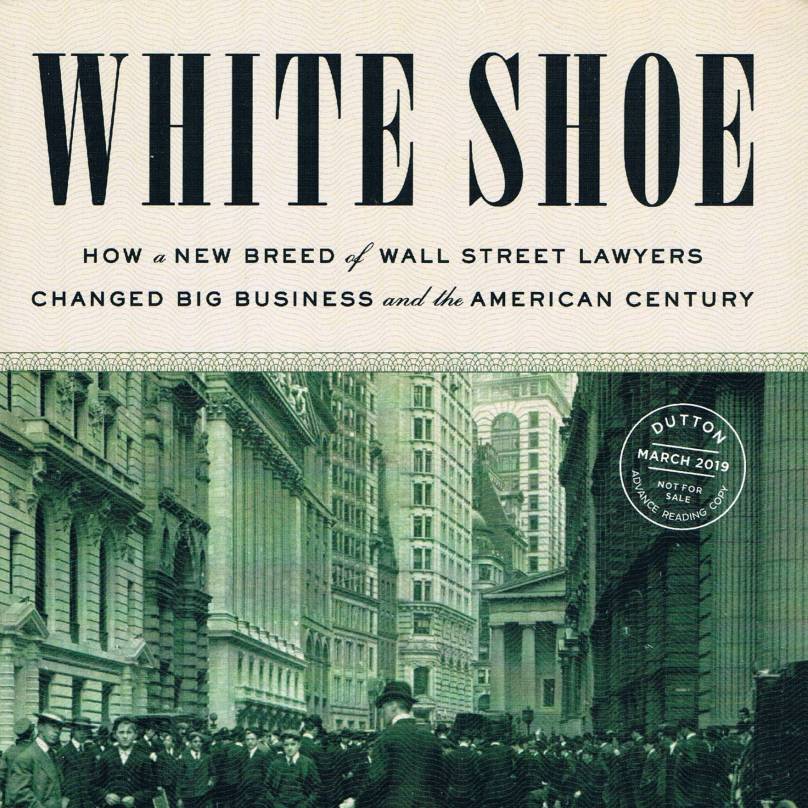
My good friend and fellow blogger Frederick Ingram of Corporate History International has written an intriguing review of what appears to be a quite intriguing book: historian John Oller’s White Shoe: How a New Bread of Wall Street Lawyers Changed Big Business and the American Century. Based on Ingram’s review alone, the book is a fascinating dive into the heady politics of early twentieth-century America, the transition from the relative laissez-faire capitalism of the so-called “Gilded Age” into the economic, political, and social reforms of the Progressive Era.

The Progressive Movement fundamentally transformed the United States, in many ways (constitutionally) for the worse. But it was an attempt to rectify some of the excesses of the Gilded Age, and to ensure that workers were not merely cogs in faceless corporate machines. In reading Ingram’s review, I heard echoes of Tucker Carlson’s recent on-air musings, particularly the idea that efficiency is not a god to be worshipped blindly, and that capitalism is great, but it should work for us, not the other way around.

The more things change, the more they stay the same: Carlson’s diagnosis of America’s current ills echoes attorney (and future Supreme Court justice) Louis Brandeis’s “curse of bigness,” the argument against efficiency-for-its-own-sake. I was struck, while reading Ingram’s review, how much our own age mirrors the period that, in many ways, begat our current crises: the Progressive Era of 100 years ago.

According to Ingram, a consensus of sorts was reached among these big Wall Street Lawyers (WSLs), which ultimately prevented radicalism and presented “capitalism with a human face”:

“The end of ‘The Last Great Epoch’ coincided with the end of World War I, flanked by the funerals of the earlier generation of great industrialists and white shoe pioneers. ‘Each year has the significance of a hundred,’ said William Nelson Cromwell in 1918, and this applied not just to armistice negotiations but vast swaths of human society. Business, law, and government in the US would be professionalized and regulated, but still relatively free by world standards. The reforms advocated by enlightened and informed WSLs formed a barrier against imported radicalism. Even rightwing attorneys backed movements such as social security, child labor prohibitions, and even minimum wage.”


Ingram, as I mentioned, is a good friend, and we’ve had some lively discussions over the years about the “big questions” of life. His thoughtfulness and reflexivity are in full display in his review here, as he links insights from this work to concurrent readings of Jordan Peterson and Christopher Andrews. He also brings in his own experiences working in “BigLaw,” as he calls it, the grueling world of billable hours and 80+-hour workweeks.

To (indulgently) block-quote Ingram once more:

“Having worked as a BigLaw accounting clerk myself, I have an issue with the Cravath System and the slavish devotion to billable hours. Is your spouse really going to leave you if you don’t make $250,000 this year? Will your children no longer look up to you? Is that worth being a cortisol-addled prick 80 hours a week, every weekday of your miserable life? Wouldn’t it be wiser to make, I don’t know, $100k or even $50k and have your peace of mind back?”


As much as I admire the energy and drive of the restless striver—and as much as I over-work myself—Ingram makes a compelling point. Money doesn’t buy happiness (although it certainly buys a great deal of freedom), and the pursuit of it can lead other, more enduring obligations—family, friends, faith—to wither.

An excellent review, from a good friend. Check it out at https://corporatehistory.international/2019/01/27/new-white-shoe-review-for-you, then pick up a copy of Oller’s book.

fridrix's avatarCorporate History International

White Shoe: How a New Breed of Wall Street Lawyers Changed Big Business and the American Century by John Oller (Dutton: 2019). Review by Frederick C. Ingram, CorporateHistory.International, January 27, 2019.

White Shoe promises to deliver an engaging and revealing tale regarding the handful of New York City attorneys who effectively created big business as we’ve known it, the “new high priests for a new century.” As an accomplished historian (The Swamp Fox: How Francis Marion Saved the American Revolution, Da Capo: 2016) and former Wall Street attorney himself (Willkie Farr & Gallagher), John Oller is well placed to fulfill this tall order.

20190127 white shoe cover squareIn a previous economy, I researched hundreds of corporations for the International Directory of Company Histories, so the prospect of peeking a little beyond the opaque public relations and investor relations curtain intrigued me. I’m also reminded of strolling along Fifth Avenue, whose equally opaque walls…

View original post 1,441 more words

The Impermanence of Pop Culture

File this under “obvious but profound”:  culture critic Kyle Smith at National Review writes about the impermanence of pop culture icons in his piece “The Great Forgetting.”  His thesis is simple:  the household names of today will almost universally be forgotten within two generations, lacking the immediate import and significance they currently hold.

An interesting point that Smith makes is that some of the biggest films, books, and music of a given age are often quickly forgotten, and we never know which particular work of art or artist will become the “shorthand” for the entire time period.  He poses the question:  which rock band will be the one that serves as the “definitive” stand-in?  My money would be on Led Zeppelin, but even giants of past genres are swiftly lost to time, with only a shrinking handful of fastidious acolytes discussing their works.

I’ve witnessed this phenomenon first-hand with my students.  Teaching keeps you young in some ways, but it has a knack for reminding you of the inexorable march of time.  Pop culture references that would resonate with students a decade ago are now almost completely foreign to them, outside of a few well-trod, well-remembered classics.

When I first began teaching, I could make South Park references (surprisingly germane when you’re teaching US Government classes) and probably half of students understood and appreciated them.  Now, I’m lucky if one or two students in a class of fifteen or twenty have ever seen an episode of the show, much less the specific episode I’m referencing.

What I’ve found cuts against this “Great Forgetting” is music.  Current acts follow the broad trend:  they’re all the rage for a year or two, then are forgotten.  But “classic” acts—by which I mean music from the 60s-80s (and, increasingly, the 90s) are remembered (at least, their songs are) better and more enduringly than acts from other ages.  Almost every middle school boy I’ve ever taught has, among the list of forgettable rap and country acts of their time, loved AC/DC (perhaps regrettable in and of itself).

I suspect that has more to do with trends in the music industry than with any particular purchase bands like AC/DC have on popular culture.  The economics of big label touring have changed to benefit legacy acts (see also:  The Rolling Stones), and the AOR or classic rock radio format hasn’t changed much since I first started listening to Eagle 102.3 FM as a junior in high school nearly 20 years ago (example:  classic rock stations still play too much Lynyrd Skynyrd).  Grandparents are taking their grandchildren to see KISS.

Besides notable exceptions in music, this trend seems even more intense in the other fine arts.  Don’t get me started on the visual arts, which produce politically-correct garbage more than actual artists these days (lest you think I’m a rube, I more-or-less taught myself art history by visiting the Columbia Museum of Art’s excellent permanent exhibit on Sundays, when it’s free, and Roger Kimball’s Rape of the Masters: How Political Correctness Sabotages Art eruditely backs up this position).  Film stars fade from memory with shocking rapidity—remember when Ben Stiller was in every movie?—and I doubt anyone outside of the ballet world can name many current dancers, much less ones from fifty year ago.

Further, we live in an age in which all of the information we could ever want about any artists is immediately available at our fingertips.  Of course, we have to know what to look for in order to find it—the paradox and conundrum of life in the Internet Age.

Most of what Smith writes about probably deserves to be forgotten, not because it’s bad, but because it’s not particularly great or memorable inherently.  But there is much excellent art that fades away, like tears in rain.  As I’ve grown older and have listened to more classical music, I’ve come to realize there’s much more than “The Big Three” of Bach, Mozart, and Beethoven.

One final reflection:  Smith’s piece touches on a desire of many, if not all, humans:  the desire to be remembered, to be immortalized.  This idea has preoccupied me as I’ve grown older, and begun to think about what kind of mark I might leave on the world (hopefully, I still have ample to leave such a mark, but there’s no guarantee of tomorrow).  We can approach that question with a sense of hopelessness—no matter we do, eventually it will be forgotten—or with carefree aplomb—do what you have to do for those around you, and don’t worry about the fleeting evanescence of fame.

The latter is the only reasonable response.  Fame is fleeting.  Do what you can to help your fellow man for the sake of building Christ’s Kingdom—the only thing that is truly eternal—and not to build up your own.  Enduring greatness in man’s eyes is the private reserve of a small few.  Eternal fulfillment in Christ is for everyone.

Saturday Reading: Communist Infiltration is Real

Thanks to fridrix of Corporate History International for sharing this piece with me a couple of weeks ago.  Check out his excellent blog, then read the piece linked below.  Happy Saturday!

Former British radical Peter Hitchens offers a lengthy, eye-opening account of alleged Communist infiltration into the highest ranks of British academia and government.  In particular, he admonishes readers to forget about socialist Jeremy Corbyn, and instead argues that the real Marxists were New Labour Blairites.  You can read the full piece here:  https://www.dailymail.co.uk/debate/article-6197097/amp/PETER-HITCHENS-reveals-REAL-truth-Communist-infiltration-Britain.html

Hitchens’s account is riveting for several reasons.  For one, it further confirms the fact of Marxist infiltration of the institutions.  That story is best told in Roger Kimball’s The Long March: How the Cultural Revolution of the 1960s Changed America, which made my popular Summer Reading List in 2016.  As a reformed social justice radical of the 1960s, Hitchens knows the figures involved—and he names names in this piece.  It’s not as conclusive as the declassified Venona cables, but he demonstrates the likelihood of widespread Cultural Marxist infiltration.

For another, I was struck by how much tougher the old-school, Soviet-style Communists were.  Hitchens writes about the true-believer, 1930s Commies who were fighting in Spain against Franco, and engaging in cloak-and-dagger espionage.  Sure, they were misguided, or even willfully wicked, people, but they were men and women of action.  Contrast that with today’s generation of snowflakes and safe-space seekers, and it seems that modern-day Communists have lost some of their luster.

Finally, Hitchens details that the “Deep State” is not a uniquely American phenomenon.  In the 1990s, British intelligence destroyed most of the documentation detailing who was involved in Marxist organizations in key positions in British society and government.  He suggests this destruction was a willful act of obfuscation, undertaken in part to shield the Blair government from suspicion of Marxist ties.

I could quote many sections of this lengthy piece, but in it’s better to read through it yourself.  Hitchens writes as a journalist, with those mildly annoying one-sentence “paragraphs,” and since it’s The Daily Mail, there are YUGE pictures of 1960s radicals that load-up slower than a porn site on dial-up, but it’s worth scrolling through to get to the meat.

That said, here’s one representative excerpt among many that demonstrates the chilling nature of Communist infiltration:

‘Moscow Gold’ was never a myth. Well into modern times, Soviet Embassy officials would leave bags of used banknotes at Barons Court underground station in London, to be collected by the Communist official Reuben Falber, who stored them in the loft of his bungalow in Golders Green, North London.

At times this rather shameful secret subsidy, direct from a police state, reached £100,000 a year – in an era when that was a lot of money.

Who knows what it was used for? But the Communist Party spent a great deal on its industrial organisation, which fomented trouble in British workplaces and strove to get Communists and their sympathisers installed in important positions in British trade unions.

This enabled Moscow to wield huge, indirect influence over the Labour Party, especially on Foreign and Defence policies.

Labour’s embrace of unilateral nuclear disarmament in the middle of the Cold War, for instance, was greatly helped by the covert Communist machine in the unions.

That machine could be incredibly unscrupulous and hard to fight.

Hardly anyone, alas, now remembers the way the tough ex-Communist Frank Chapple took on, exposed and defeated blatant Communist ballot-rigging in the crucial Electrical Trades Union (ETU) between 1959 and 1961. Much more was at stake than who ran the ETU.

How deeply we were penetrated at that time we shall probably never know, and it is certain that many of those caught up in the pro-Stalin wave of the 1940s quietly peeled away after the Soviet invasions of Hungary in 1956 and of Czechoslovakia in 1968.

But 1968 did not kill off Communism.

It began a new movement – Eurocommunism, which renounced Soviet methods but kept the key aims of transforming our society.

It would seem that the European Union, rather than being a bulwark against Marxist influence, was almost deliberately conceived as a way to advance “Eurocommunism,” a means by which to foist Cultural Marxist pabulum on the peoples of a “united” Europe.  That makes Brexit all-the-more crucial.

Happy reading, and Happy Saturday!

2018’s Top Ten Posts

2018 was a good year for The Portly Politico.  I relaunched the blog back over the summer, when I had more time to write multiple pieces a week.  With the South Carolina primary elections, it’s not surprising that some of the most traffic hit during June.

Just like the 2016 election, I was unable to dedicate the time necessary to covering the 2018 midterm elections; perhaps my greatest deficiency as a blogger is the inability to post regularly during the school year, a function of both a lack of time and focus (and, very likely, a lack of discipline).  While the blog has not gained the traction I’d hoped for six months ago, it’s been an entertaining way to put some of my thoughts to “paper,” as it were, and get some interesting feedback from you, my small coterie of loyal readers.

All navel-gazing aside, here are 2018’s Top Ten Posts, as determined by the number of views:

10.) SC Primary Run-Off Election Results – the title says it all!  I think some wayward Googlers boosted this one into the top ten.

9.) #MAGAWeek2018 – George Washington – during the Fourth of July week, I kicked off what will become an annual observance:  MAGA Week.  Each day featured an essay about some figure or idea that had made America great in his or its own way.  While I’m most proud of my lengthy overview of the career of John Quincy Adams, the post on George Washington gained the most traction with readers—a deserved victory for America’s most influential Founding Father.

8.) A Discourse on Disclaimers – I got so sick of endlessly qualifying every statement, I wrote this protesting post.  One thing the Trump presidency has taught us is that you’re never going to appease the progressives, so you’ve gotta fight back.  You’re never going to able to mollify an emotional, inherently violent beast with an appeal to decency and reason, so why bother?

7.) SCOTUS D&D – one of the lighter works of the Brett Kavanaugh character assassination, this post linked to another author’s attempt to place the Supreme Court justices on the legendary Dungeons and Dragons alignment chart.  Very fun.

6.) Progressivism and Political Violence – one of my best pieces, I would argue.  This post detailed the strong link between the progressive ideology and violence, be it the official use of state violence to enforce its way, or street-level thuggery when it’s been systematically denied the levers of power.  If Justice Ruth Bader Ginsburg kicks the bucket in 2019 and President Trump and the Republican Senate successfully appoint and confirm a conservative justice to replace her, I shudder to contemplate the hysterical bloodshed that will result as masked Antifa goons and hipster black boots take to the streets.

5.) #TBT: It’s a Thanksgiving Miracle – the only “Throwback Thursday” post to make the top ten, this was a reposting of the old blog’s 2017 Thanksgiving post, which I wrote with a freshly broken left wrist.  We all have a great deal to thank God for this year.

4.) America Should Expand into Space – one of my early pieces during the 2018 relaunch argued that the United States should make a concerted effort to continue expanding into outer space.  Why get our precious rare-earth metals from China when we can mine them from asteroids?  Speaking of…

3.) Breaking: President Trump Creates Space Force – I whooped with joy when President Trump announced the creation of Space Force.  Apparently, many readers were excited about it, too.  It’s a commonsense move:  space is the next, and final, frontier.  Why cede dominance—military, economic, cultural, or otherwise—to the ChiComs?  Make America Space Again!

2.) 4.8% Economic Growth?! – one of the first posts upon relaunching the blog, this little piece drew a good bit of attention (and probably benefited from the initial curiosity traffic).  Let the good times roll!

1.) Run-Off Elections in SC Primaries Today – this post blew all others away, with (at the time of this writing) 101 more views than its next competitor.  I was shocked, but the blog showed up in several online search results as South Carolinians sought out information about the primary run-off elections this past summer.

So there you have it!  My personal favorites didn’t always gain the traction I hoped—and some of my better essays were nowhere near the top ten—but that’s the fun of blogging:  you never know what’s going to catch readers’ attention.

Thank you all for a wonderful 2018.  Here’s looking forward to bigger and better things in 2019!

God Bless, and Happy New Year!

–The Portly Politico

“Silent Night” turns 200

One of my favorite Christmas carols, “Silent Night,” turns 200 this Christmas season.

The carol was originally written as a poem in the aftermath of the Napoleonic Wars by a village priest, Joseph Mohr, in the village of Oberndorf, Austria, in 1816. Two years later, Mohr approached the town’s choirmaster and organist, Franz Xaver Gruber, to set the poem to music. Gruber agreed, and the carol enjoyed its first performance to a small congregation, which universally enjoyed its simple sweetness.

Since then, the humble hymn has spread far and wide, and is probably the most recognizable Christmas carol globally today. It’s been covered (likely) thousands of times; it’s certainly become a staple of my various Christmas performances.

This simple, sweet, powerful carol beautifully tells the story of Christ’s birth, as well as the import of that transformative moment in history, that point at which God became Flesh, and sent His Son to live among us.

As much as I enjoy classic hard rock and heavy metal, nothing can beat the tenderness of “Silent Night”—except the operatic majesty of “O, Holy Night,” objectively the best Christmas song ever written.

Merry Christmas, and thank God for sending us His Son, Jesus Christ.

TBT: The European Union is NOT the United States

With Brexit back in the news—and Theresa May’s recent no-confidence test—it seemed like an opportune time to revisit this old chestnut from the 2016 era of the TPP blog.

Brexit should have been easy—the people voted, Europe can’t plausibly force Britain to stay in, so Britain’s out!  Great Britain owes the European Union nothing.  As I argued in 2016, Europe needs Britain.  Some kind of trade agreement could have been hammered out, as well as some basic understanding about moving between Great Britain and the EU.

I realize these issues are more complicated than I’m making them out to be, but, ultimately, can’t Britain just rip off the Band-Aid and be done?  It seems like that would be imminently doable.  Of course, that’s not what the globalist masters of Britain’s cosmopolitan elite want.

Perhaps Britons will soon get their true, hard-fought, “hard” Brexit.  I still think they struck a powerful blow against supranational tyranny, and have inspired similar movements in Europe.  The world feels much different today, in the waning hours of 2018, than it did in that hot, sticky summer of 2016.

Post-Brexit (yes, yes, I know I promised on Wednesday that I’d be moving away from Brexit posts, and you’ll soon find I wasn’t lying… completely), I’ve heard several arguments that boil down to “the European Union is good because unity will make Europe stronger.  Just look at the United States!  It was a mess under the Articles of Confederation, but came together to become a world power under the Constitution.”

The comparison is tempting and not without merit.  Certainly, the United States benefited greatly when the sovereign States ceded some of their power–such as that over the coinage and printing of money and defense–to the national government.  Putting the power to regulate interstate commerce eliminated the practice of States placing different tariff levels on British goods, for example, and aided in the creation of of a common national market.  The formation of the Supreme Court, and the subsequent creation of the federal judiciary under the Federal Judiciary Act of 1789, allowed States to adjudicate disputes more fairly.  Why couldn’t Europe achieve the same “more perfect union” with its goal of “ever closer union”?

“American nationalism derives primarily from a shared set of ideas.”

Unfortunately for Europhiles, the comparison breaks down quickly upon closer inspection.  There are three key areas of difference between the United States and the vision of a “United States of Europe”:  common language and culture; a common legal tradition grounded in the rule of law; and a legacy of representative, democratic-republicanism.  The young United States possessed these three qualities; modern Europe lacks them.

The first point–common language and culture–will be a contentious one.  There are myriad, if predictable, objections:  Americans came from many sources, not just England;  colonials expanded into territories that either belonged to American Indians, or to European competitors (notably the Dutch and the Swedes, but also the Spanish and French); settlers to different parts of British North America came from different cultural and religious groups in the British Isles; and so on.  Indeed, German almost became the official language of a young United States.

I discussed the ethnic and religious diversity of colonial and early republican America at some length in my essay “Created By Philosophy,” and previously argued that American nationalism derives primarily from a shared set of ideas (in “American Values, American Nationalism“).  However, despite this vivid and ubiquitous diversity, English culture and values ultimately became the overwhelming norm in British North America, and morphed into a distinctly American identity in the 18th century (though one that was, until independence, decidedly English).  English may not be the constitutionally official language of the United States, but it is the lingua franca of the nation (and the world), and has been so for centuries.  Every wave of immigrants (until relatively recently) has understood that mastery of English is a prerequisite to long-term success in and assimilation to American culture.

English Protestantism–infused with Scottish Calvinism and German piety–was a unifying force in the colonies.  When the First Great Awakening hit in the late 18th century, it cemented America’s culture, even as it spawned multiple new denominations.  The ultimate denominator, however, was a broadly Protestant Christian worldview (one that gradually and unevenly came to tolerate, and then to accept, Catholics, Jews, and believers and non-believers of all stripes).

“English Protestantism… was a unifying force in the colonies.”

The story of America, ideally, is that of unity within a culture that values diversity of viewpoints, but insists upon an acceptance of a basic, common, Judeo-Christian morality; thus, “E Pluribus Unum.”  That morality, in turn, informs the legal system, one descended from centuries of English common law.  Respect for the rule of law–the notion that no man, even the king, is above the law–guided the English people toward increasing freedom.

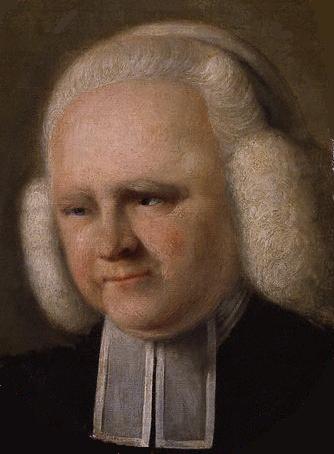
Evangelist George Whitefield knew how to preach to the masses of British North America, and he had the hair to prove it.

So, too, did it lead Americans to their independence.  The American Revolution–and the various conflicts between colonial assemblies and royal governors–of the 18th century in many ways echoed the struggles between Parliament and the Stuart monarchs in 17th-century England.  Americans did not revolt because they rejected bad tea or because they resented taxation–they revolted because they weren’t represented.  Americans did not have a say in the taxes that were (not unfairly) levied on the colonies to help pay for the French and Indian War (the similarities to the Leave campaign should be obvious).  Rule of law was circumvented, and Americans would not abide such a trampling of their rights

Thus, we come to the English–and then American–commitment to representative rule.  The United States really took the lead here, though Great Britain began expanding the franchise and reforming parliamentary representation in the 19th century as white manhood suffrage became the norm in Jacksonian America.  (Here’s a fun aside:  there used to exist parliamentary seats that represented places with no people in them.)  Regardless, the notion that the people should be represented in their government–and should be able to hold it accountable with fair, free, and frequent elections–is an important part of America’s constitutionally-limited, representative, federal republic.

Europe as an entity lacks all of these qualities.  Yes, certain members states have some of these qualities to varying degrees, but the European Union as a whole is sorely lacking in these areas.

Culture and Language:  The United States had the unique opportunity to create a nation afresh.  Europe has had no such luxury, and seems to be inexorably divided into different languages and cultures.  This division is not necessarily bad, but it makes unity much more difficult.  It explains the natural struggle against “ever closer union,” a struggle that is often visceral because people sense there is something artificial and disingenuous about the Europhile vision of a united Europe.  There are, after all, still traditionalists living (and voting) throughout Europe.

 “[S]ecularism is the new, unifying religion of Europe.”

The long, oft-ancient histories of these nations makes it even more difficult for them to share a common worldview.  Even secular, progressive Europe still experiences the lingering cultural effects of centuries of faith.  France might have thrown out God with the French Revolution, but the “First Daughter of the Church” is still suffused, albeit in a subtle, weakened way, with centuries of faith.  Such a faith culture, even hollowed out, will naturally, if imperceptibly, struggle to  reconcile itself with that of other, contradictory traditions.

I suspect this explains why the European Union seems hell-bent on advancing as many socially progressive causes as possible:  secularism is the new, unifying religion of Europe.  But there will always be push-back against this dehumanizing, nihilistic vision of man’s place in the universe.

Language, too, transmits the ideas and values of a people.  I am no linguist, but–unlike French theorists like Jacques Derrida–I believe that words have power and transmit meaning.  Such meaning is deep, part of the warp and woof of life.  Why else would educated societies devote so much time to learning and analyzing language and literature?  There’s no need to read Shakespeare if you just want to a basically literate workforce.  No, there must be some power in language.  Linguistic diversity, therefore, is a beautiful thing, but it also means that different cultural values are transmitted differently throughout Europe.  No one associates Russian, for example, with greater freedom and sober living.

But I digress.

Rule of Law:  Of course different nations in Europe have rule of law (except Belarus).  The European Union, however, does not.  Yes, it might have European law, but this law is promulgated by an unelected committee of elites, figures who don’t identify strongly with their nations of origin, but rather with a vague, secular-progressive idea of Europe, one that barely tolerates dissent or input from the people.  Furthermore, how does one reconcile, say, French civil law with English common law?  The deep divisions of history are huge hurdles to overcome.

Representative Government:  As I’ve stated many times, the European Union is not representative.  That’s why the Brexit vote was so important, and why it has drawn so many comparisons to the American Revolution:  the normal people of Britain rose up against an unelected, unaccountable elite and boldly proclaimed their right to self-determination.  Brits seized back the ability to hold their elected leaders accountable.

The elite, Europhile vision of a United States of Europe is one of non-representative, coerced redistribution.  Give the proles bread and circuses, and they will submit on bended knee to the edicts of Brussels.  Remember, the “Remain” side of the Brexit debate was primarily premised on maintaining access to EU goodies, not about the people’s ability to choose such a course.

Nothing could be further from the vision of America’s Founders and Framers.  They possessed a healthy skepticism about unbridled democracy, but recognized that the people were the source of government’s authority; that the people govern themselves most effectively; and that the people should be able to hold their leaders accountable.  Yes, liberty comes at a price–many prices, in fact.  One of those is the ever-present risk that the people will make mistakes.

Inevitably, they will.  But a common, tolerant culture; a shared respect for the rule of law; and an understanding of the rights and responsibilities of republican government will guide voters to wisdom more often than folly.

Self-government does not always fit neatly into the schemes of elite technocrats and busy-body regulators.  But it ultimately makes for a happier, freer, and more prosperous society.