Sanford Announces Presidential Bid

Former South Carolina Governor and Congressman for SC-1, Mark Sanford, announced Sunday that he is seeking the Republican presidential nomination in 2020 against incumbent President Donald Trump.  When Fox News host Chris Wallace asked Sanford why, he said that “We need to have a conversation on what it means to be a Republican.”

Sanford’s ostensible desire is to draw attention to America’s massive national debt, and our political unwillingness to address the ever-expanding, elephantine gorilla in the room.  But as local radio personality and former Lieutenant Governor Ken Ard said on his show this morning, Sanford is shining a bright light on himself as much as he is on the national debt.

Read More »

Remembering 1519

The start of the school year always means the start of the grand narrative of American history.  It dawned on me some years ago that, over the course of roughly 180 days, I undertake an annual, oral retelling of the story of the United States.  One day, I plan to record my lectures, taking the best bits, and compiling them into a lengthy podcast series.  After that, I’ll never have to teach again!

Regardless, the story always starts the same:  a brief overview of the pre-Columbian Americans (what we used to call “Indians,” and more clumsily “Native Americans”), followed up with Spanish exploration from Christopher Columbus through Hernan Cortez and on.

A major part of those early lessons is the encounter of the bloodthirsty Aztecs and the gold-mad Spaniards.  Students love the story of the advanced Aztecs, sacrificing humans to ensure the sunrise, and the arrival of the fiery-haired Cortez and his ragtag band of conquistadors and buccaneers.

Read More »

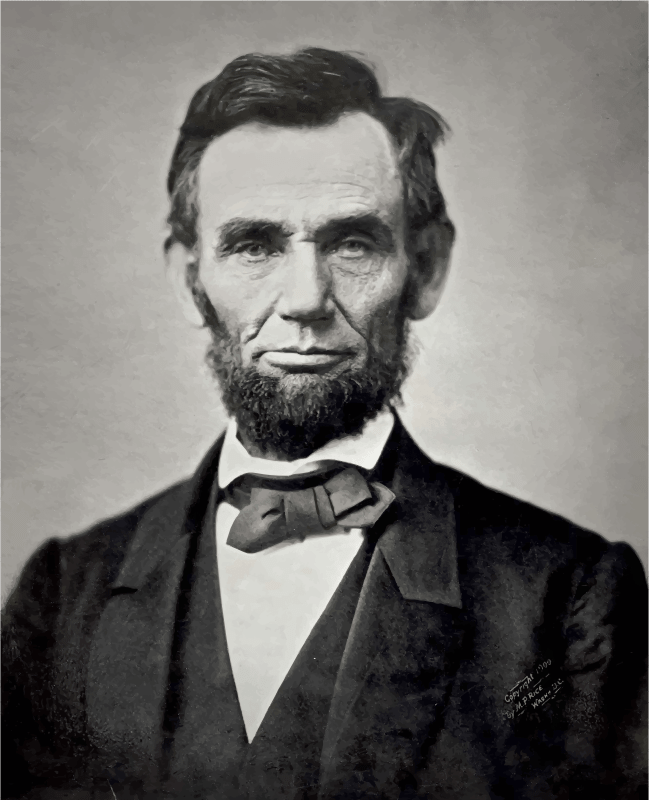
TBT: Lincoln on Education

This week’s TBT feature was also in last Sunday’s “Lazy Sunday XXIV – Education.”  With the school year in full swing, it’s always enjoyable to look back at the benefits of education—a reminder of why getting education right is so important.

Abraham Lincoln was largely self-educated, and he was motivated, it seems, by both a desire to improve his condition in life, and by a genuine love of learning.  As an avid reader myself, I can related to the anecdote (relayed below) of young Abe walking around with “a book in his hand or in his pocket.”

This little piece was an “Historical Moment,” a monthly feature for the Florence County (SC) GOP’s public events.  If I recall correctly, the FCGOP Chairman skipped over my segment in the program (presumably by mistake, but perhaps to save time), so while I wrote this brief talk for the September 2018 meeting, I did not deliver it publicly until the October meeting (it was published on this blog in September).

I hope you’ll find this adaptation of my talk enjoyable.  Here is “Lincoln on Education“:

We’re gathered here tonight to hear from members of and candidates for School Board; in that spirit, I’d like to speak briefly about education, particularly the education of the first Republican President, Abraham Lincoln.

From what I’ve read, Lincoln’s entire formal education consisted of around a year of schooling.  He would have a week or two here and there throughout his childhood in Kentucky and Indiana, and then return to working on the family’s farm.

Despite little formal education, Lincoln taught himself throughout his life.  He loved to read, and would read deeply on a variety of subjects, obtaining books whenever and wherever he could.  One of his contemporaries commented that “I never saw Abe after he was twelve that he didn’t have a book in his hand or in his pocket. It didn’t seem natural to see a feller read like that.”  When he sat for the bar exam, he’d read law books on his own time to prepare.

Lincoln also believed in education as a source of patriotism, morality, and self-improvement—what we might call “upward mobility.”  He was not a man who wanted to stay on the farm, and his self-education was a means to escape poverty.

If you’ll indulge me, I’d like to quote Lincoln at length from his 1832 speech “To the People of Sangamo County”:

“Upon the subject of education, not presuming to dictate any plan or system respecting it, I can only say that I view it as the most important subject which we as a people can be engaged in. That every man may receive at least, a moderate education, and thereby be enabled to read the histories of his own and other countries, by which he may duly appreciate the value of our free institutions, appears to be an object of vital importance, even on this account alone, to say nothing of the advantages and satisfaction to be derived from all being able to read the scriptures and other works, both of a religious and moral nature, for themselves. For my part, I desire to see the time when education, and by its means, morality, sobriety, enterprise and industry, shall become much more general than at present, and should be gratified to have it in my power to contribute something to the advancement of any measure which might have a tendency to accelerate the happy period.”

Here we can see Lincoln’s belief that education lays the foundation for patriotism—we understand our freedoms better when we understood what they cost, and that others lack them.  We see, too, the power of education to teach us the virtuous and the good.  From that morality flows, as Lincoln said, “sobriety, enterprise, and industry,” the tripartite tools to improve our material conditions.

Patriotism, morality, and industry—these were the three benefits of education Lincoln espoused.  Coming from the man who wrote the Gettysburg Address, I think we should take Lincoln’s views on education seriously.

Belated SubscribeStar Saturday: A Little American History – And Some Reflections on Teaching It

This past weekend’s SubscribeStar Saturday post was delayed until Sunday evening.  The end of the first week of school, followed by a very late night/early morning drive, with that followed up by a long day of family events, meant that my perfect attendance record for Saturday posts had to suffer.

But you can read that post—which went up last night—with a subscription to my SubscribeStar page!

Here’s a sneak peek:

Robert Kennedy was a strong contender for the Democratic Party primary in 1968, especially among the progressive wing, before Sirhan Sirhan, a Palestinian terrorist, shot him. His death left Vice President Hubert Humphrey as the only viable candidate. Remember, LBJ declined to run for reelection in 1968 because the Vietnam War was so deeply unpopular among antiwar Democrats, many of whom were radicals who were exerting greater control over their party (sound familiar?).

The Democratic National Convention devolved into riots and chaos, with Humphrey nearly succumbing to tear gas in his Chicago hotel room. Humphrey managed to close the gap with Nixon, but it was a three-way race (with segregationist George Wallace, Governor of Alabama, running as a third party candidate), and Nixon won on a law and order platform.

To read the rest of this post, subscribe to my SubscribeStar page for $1 a month or more.

Lazy Sunday XXIV: Education

The school year is back in full swing, and I am already beat.  It looks like it’s going to be a good year, and I have some very bright students, but my teaching load is substantially busier than last year, and my private lesson empire continues to grow.  Those are all blessings, but it means a lot more work for yours portly.

That’s all to say that I thought this Sunday’s edition of Lazy Sunday would be perfect for looking back at my education-related posts:

  • Lincoln on Education” – a little post consisting of remarks I made to the Florence County (SC) Republican Party back in September 2018 (actually, it may have been October—one of my “Historical Moments” was skipped in the program accidentally, so I reused it the following month).  I looked at the education—and the views thereon—of President Abraham Lincoln.  He was an avid learner, and saw education as the means by which he could improve himself.  Apparently, it worked!
  • Teachers Quitting in Record Numbers – Reflections on Education” – this lengthy post outlines my own observations about why teachers quit the profession—and some of its major problems.  My main idea was “flexibility”:  in pay, in lesson plans, and in certification.  Public education is a great deal for bad teachers—they coast along, cashing a paycheck no matter how well they do—but a poor one for good teachers.  Private education is great, but it can’t compete, at least in the rural South, with public education in terms of teacher pay and benefits.

    But the biggest concern is what I elegantly dubbed “administrative bullcrap.”  Teachers get loaded down with all of these duties that are only distantly related to their alleged jobs:  molding young minds.

  • The State of Education” – this post details the travails of a New York City French teacher, a good teacher whose experiences in multiple schools illustrate how public education is a bad gig for good teachers.  The stories are jaw-dropping, but hardly surprising now:  zero administrative support for discipline, a “talent show” that nearly devolves into a sweaty orgy, violent outbursts from animalistic students, etc.  Terrifying stuff.
  • Sailer and Spotted Toad on Education” – this post was a bit “meta”—it’s an overview of a review of a book.  That makes my post tertiary commentary at best.  The post looks at demographer Steve Sailer’s review of blogger Spotted Toad’s book 13 Ways of Going on a Field Trip: Stories about Teaching and Learning a narrative memoir detailing Toad’s decade teaching in public schools in the Bronx.  I’ve picked up the book but still haven’t read it (I’m working through Milo’s Middle Rages: Why the Battle for Medieval Studies Matters to America; review coming soon), but it looks to be an interesting read.
  • SubscribeStar Saturday:  The State of Education Update” – this post is an update of “The State of Education,” written nearly on the eve of my return to this present school year.  As SubscribeStar Saturday exclusive, you’ll have to subscribe to my SubscribeStar page for $1 a month or more to read it.  Tantalizing, no?

So, there you have it.  Now to fulfill my obligation to my wonderful SubscribeStar subscribers and get their delayed post done.

Happy School Year!

–TPP

Other Lazy Sunday Installments:

Ratcheting up Towards Civil War

I’ve been catching up on photog’s excellent blog Orion’s Cold Fire, and boy did I miss a doozy.  Good ol’ photog regularly presents his pick for American Greatness “Post of the Day,” and on August 7, he wrote about a sobering Angelo Codevilla piece, “Igniting Civil War.”

Meanwhile, Southern history think-tank The Abbeville Institute posted an essay Monday asking “Is Political Separation in Our Future?”  These pieces suggest that something cataclysmic is looming for the United States.  Are they right to be concerned?

Read More »

Ideas Have Consequences – Introduction

Tomorrow is the last day of my History of Conservative Thought class for the summer term.  It was a fun course to run, though if I offer it in the future, I’m hoping to firm it up and make it a bit more organized, with some lecture slides to go along with the document readings.

To end the course, students are reading the “Introduction” to Richard Weaver’s Ideas Have Consequences (1948), one of my favorite books of all time.  I reread the introduction before the start of every school year, especially if I’m teaching Philosophy, as it helps remind me why knowledge and learning are important.

They’re writing short papers about the “Introduction,” which we’ll discuss in class tomorrow.  To aid them—and, hopefully, to convince you to read Ideas Have Consequences yourself—I’m briefly summarizing Weaver’s ideas in this post.

Weaver starts his book declaring that it “is another book about the dissolution of the West.”  He argues that due to the “widely prevailing Whig theory of history,” modern man has come to believe that history is always proceeding in an upward direction—that is, that things are always getting better.

Weaver disagrees, of course, arguing that “modern man has become a moral idiot.”  He laments that, not only are people able to agree on the facts of their situation, they are utterly incapable of recognizing their own fallen state.  Despite that moral idiocy, man “has been not only his own priest but his own professor and ethics, and the consequence is an anarchy which threatens even that minimum consensus of value necessary to the political state.”  Put another way, people have decided subjectively that they know right and wrong, independent of any transcendent moral order or God, and the results are personal and political chaos!

Weaver goes on to recount the horrors modernity and self-deification have wrought:  massive wars, ruined cities, lost lives, and a general, nagging sense of powerlessness.  Weaver references specifically the destruction of the Second World War (though not by name), suggesting that the optimistic Whiggish interpretation of history is, on its face, verifiably false.

So, who is to blame for this general malaise in Western civilization?  According to Weaver, the “best representative of change… over man’s conception of reality” is William of Occam.  Most readers will know Occam from the concept of Occam’s Razor, the notion that the simplest explanation is usually the correct one.

Weaver, however, focuses on Occam’s doctrine of nominalism, a doctrine that “denise that universals have a real existence.”  In other words, there are no true universal, transcendent ideals—justice, mercy, grace, virtue, etc.—and no metaphysical Truth or higher power.  Further, nominalism “banish[ed] the reality which is perceived by the intellect… to posit as reality that which is perceived by the senses,” setting man “on the road to modern empiricism,” the idea that only that which we experience is “true.”

Weaver proceeds to take us down that road:  nature comes to be seen as fully intelligible, merely a set of “rational mechanism[s]” to be uncovered and understood; man comes to believe that does suffer from original sin, but is rather a perfectible being; any flaws from which humans suffer are necessarily due to their environment, not their own choices.

Most significantly, belief in God and religion—a higher Form of Truth that binds together the cosmos—become reduced to “‘humanized’ religion,” like deism (the belief in a Creator that set the universe into motion, but who never intervenes with His Creation).  These reduced religions are little more than venerable institutions with the veneer of respectability, but which succumb to the materialism of the humanist.

Soon humans lose all free will, becoming the materialist machines of nature like any other animal.  Institutions crumble, which man “rationalizes with talk of emancipation,” believing himself to be free from the restrains of the benighted past.

An interesting point that Weaver makes is that, in order to feel some semblance of the old virtues—ideals that men sense they should uphold, but which they cannot understand or articulate—they fight wars with “increased frequency,” invoking ideas like justice, honor, and valor in service to materialist ends.

Of course, there are those who champion modernity.  These “apostles of modernism,” as Weaver calls them, “usually begin their retort [to Weaver’s position] with catalogues of modern achievement, not realizing that here they bear witness to their immersion in particulars,” as opposed to transcendentals.  That is the source of my own critique of capitalism, the best socioeconomic system that materialist modernism can offer.  Weaver notes that many great civilizations have shown with effervescent splendor in their dying gasps of relevance, so merely having beautiful, ingenious stuff doesn’t mean a civilization isn’t dying.

Perhaps the best passage from Weaver’s “Introduction” is what I call “Weaver’s drunk,” located on page 15 of the 1984 paperback edition linked here.  Weaver argues that the material wealth and comfort of modernity holds within it its own destruction—the more comfort we have, the less willing we are to do the work necessary to maintain it.  Weaver compares this situation to that of the drunk who is so addicted to his drink, he is incapable of doing the work necessary to sustain his addiction.  He may succeed for a time, but the more besotted he becomes, the less capable he is.

There are so many nuggets of wisdom and Truth in just the “Introduction” to this work, and I haven’t touched on all of them.  I encourage everyone to read through the full “Introduction”—and the entire book—as soon as possible.  Reading it now, some seventy-one years after its original publication, is sobering due to its prophetic nature.  The situation Weaver described has not improved.  It is imperative, now more than ever, that we consume Weaver’s work and begin pushing for a revival of religious belief and a traditional view of the cosmos, and our place in it.

 

Rudyard Kipling’s “The Mother Hive”

To start yesterday’s History of Conservative Thought class, I had students skim through Rudyard Kipling’s 1908 short story “The Mother Hive.”  I stumbled upon the reading in our class text, Russell Kirk’s The Portable Conservative Reader.

It is a grim little fable that warns about the perils of progressivism infiltrating a proud but weakened nation.  In the story, a deadly wax-moth sneaks into a large but bedraggled beehive during a moment of confusion.  She quickly steals away to the cell of the youngest bees, who have yet to take their first flight.  There, she fills their impressionable heads with gentle words and promises of a glorious future, all while covertly laying her eggs.

One young bee, Melissa, who has just returned from her first flight, is suspicious of the beautiful stranger’s soothing words, but the wax-moth plays the victim and insists that she’s only spreading her “principles,” not the eggs of her hungry future children.

Read More »

Ocarina of Time Soundtrack Review

While I was up in New Jersey—I’m mentioning that about as frequently as Ben Shapiro mentioning that his wife is a doctor—my older brother sent me a review of the original soundtrack for The Legend of Zelda: Ocarina of Time.  I highly recommend you check out both the review and the soundtrack.

Ocarina of Time was the major Legend of Zelda release for the Nintendo 64 (N64), and it was an instant classic.  It’s also a testament to the strength of its soundtrack that I never really appreciated how different composer Koji Kondo‘s pieces were for the game.

Read More »