Birth(day), Death, and Taxes

“Nothing in life is certain except death and taxes,” the old saying goes.  But we are also born, those of us fortunate enough not to fall prey to the abortion industry.  Today marks my thirty-fifth birthday.  I celebrated by paying $162.57 in vehicle property taxes to Darlington County, South Carolina.

Yesterday, I purchased a new vehicle, my first new car in thirteen-and-a-half years, and only the third I’ve ever owned.  It’s a 2017 Nissan Versa Note SV.  The other two were a 1988 Buick Park Avenue Electra, which I bought from my older brother for $800, after my grandparents gave it to him one year, and a 2006 Dodge Caravan, which those same grandparents gave to me as a college graduation gift (after the Buick was totaled when a lady ran a yield sign and smashed into me).

The Buick is long gone, but I kept the Dodge.  I figure it’s worth more to me as stuff-hauler than I would have gotten in trade-in value.  Of course, that means maintaining insurance on both vehicles, and paying taxes on each.

Well, I awoke today to the news that our military assassinated Iranian General Qassem Soleiman last night.  When I first read that Soleiman was “assassinated,” I was picturing a fate similar to the death of the “austere religious scholar,” the ISIS guy, al-Baghdadi: covert operatives swooping in under cover of darkness, swiftly and surely relieving the general of his life.

Read More »

TBT: How the Reformation Shaped the World

It’s a brand new year, and I’m excited for what it holds.  For this week’s TBT, I looked back to the first post of 2019—which then snowballed into a year-and-counting of daily posts.

This piece drew inspiration from a Pager U video (links below), and featured some of my off-the-cuff reflections on the influence of the Protestant Reformation.

I’ll let the original speak for itself.  Here is 2019’s “How the Reformation Shaped the World“:

There’s a video up on Prager University called “How the Reformation Shaped the World” (PDF transcript for those who prefer to read).  Stephen Cornils of the Wartburg Theological Seminary gives an adequate, broad overview of the impact of the Protestant Reformation (albeit with some noise about Martin Luther’s anti-Semitism, which, while accurate, smacks of throwing a sop to politically-correct hand-wringers).  You can view the video in full below.

I’ve written about the influence of Christianity (and it was, notably, Protestant Christianity) on the founding of America, and I’ve discussed how shared Protestantism helped create an American identity.  Indeed, I would argue that, without Protestantism, there would be no America, as such.

I would also argue—perhaps more controversially—that America’s commitment to Protestantism as opposed to Catholicism allowed the nation to avoid the anticlerical upheavals seen in France and other predominantly and officially Catholic countries.  While there were official, established churches at the State level into the 19th-century—which I wrote about in “The Influence of Christianity on America’s Founding“—the lack of federal establishment, and the general movement towards greater religious liberty, ensured a proliferation of Protestant denominations in the early Republic.

Catholicism inherently insists upon a top-down hierarchy of control.  Luther’s view of man’s relation to God is horizontal, as Bishop James D. Heiser argues in his extended sermon The One True God, the Two Kingdoms, and the Three Estates (one of my Christmas gifts, incidentally, and a good, quick read for just $5).  That is, every man is accountable to God directly, and is responsible for accepting Christ and maintaining his relationship with God.  That horizontal, rather than vertical, relationship infuses Western Civilization with a sense of individualism, the effects of which have been far-reaching and both positive and negative.

Regardless, the impact of the Protestant Reformation is staggering to consider.  The Catholic Church in the 16th century was an increasingly sclerotic and corrupt institution, one that had fallen from its great height as the pacifying influence upon a barbaric, post-Roman Europe (of course, the Counter Reformation reinvigorated and, in part, helped purify the Church).  With the advent of the printing press and translations into national languages, conditions were ripe for an explosion of religious reform in the West.  The ripple effects of the Reformation still pulse through Western life and culture.

That said, I’m not anti-Catholic, nor is that the intent of this post.  In today’s political and theological climate, committed followers of Christ must band together, be they Catholic or Protestant.  I don’t “buy” Catholic theology in toto, but I respect the Catholic Church’s longstanding traditions and consistent institutional logic.  Thomas Aquinas’s cosmological argument in the Summa Theologica is pretty much what I learned growing up as an Evangelical Protestant.  And I’m broadly sympathetic to the traditional Catholic argument that the Reformation busted up the orderly cosmos of medieval European society (see Richard Weaver‘s various essays for further elucidation of this idea).  A side effect of the Reformation naturally includes many of the cons of modernity.

Ultimately, too, Christians face the double-threat of modern progressive ideology and radical Islamism.  I’ve written about the former in detail, but not so much the latter.  For the moment, suffice it to say that the two are temporary, uneasy, but powerful allies against a traditionalist, conservative, Christian worldview, and both are deeply antithetical to Western values and culture.

These are some broad and slapdash thoughts, ones which I will gradually develop in future posts as necessary.  Any useful resources or insights are welcome—please share in the comments.

Happy New Year!

One Year in the Books: Looking Back

Thanks for a great 2019, dear readers.  If you’d like to support the blog, please subscribe to my SubscribeStar page for $1 a month or more.  Or just leave a comment and share my posts with your friends and families.  Thank you!

Today’s post marks the 365th day of consecutive posts.  On December 31, 2018, I wrote “2018’s Top Ten Posts” to look back at the year (I downsized a bit this year, only looking at “2019’s Top Five Posts“).

At the time, I was enjoying—as I am presently—the glory of Christmas Break.  The blog had largely been dormant following a blitz of posting during the Summer of 2018, with only occasional posts here and there, such as transcriptions of my various “Historical Moments” mini-talks.  Over the Christmas season, I was trying to get back into writing.  I wasn’t in the custom of churning out 600+ words on a daily basis, so it took a bit more effort to sit down and write a post.

I never intended to keep a 365-day streak going.  At first, I didn’t even realize WordPress tracked such activity.  But I noticed (probably with this moderately popular post) that I had a three-day “steak,” as WordPress calls it.

So I decided to try to write something everyday for the month of January 2019.  January tends to be a slow month in the school year, with everyone groggily easing back into intellectual activity during the grayest month of the year.  I also find the cold intellectually stimulating—the bracing bite of mid-winter always seems to get the creative juices flowing.

Read More »

Lazy Sunday XLII: 2019’s Top Five Posts

2019 is winding down, and with this being the last Sunday of the year, it seemed like the perfect opportunity to look back at the most popular posts of 2019.

These posts aren’t necessarily the best posts—although that’s an entirely subjective measure—just the ones that received the most hits.

When looking through the most popular posts, there were a few surprises.  One thing I’ve learned from blogging is that posts I pour my heart and soul into may walk away with five views (and, oftentimes, only one!).  Then other posts that I dash off in a hurry to make my self-imposed daily goal take off like Rossini rockets, garnering dozens of hits.

Some of that is timing and promotion.  I find that the posts I have ready to launch at 6:30 AM do better on average.  But some generous linkbacks from WhatFinger.com really created some surprises here at the end of the year, surpassing even the exposure I received from Milo Yiannopoulos.  Writing posts about hot, current news items, the dropping links about said items in the comment sections of prominent news sites, also helps drive traffic, but I often lack the time required to do such “planting” (and it is a practice that can come across as spammy if not done with finesse).

Some posts take on a life of their own; I see consistent daily traffic from one of the posts on this list, “Tom Steyer’s Belt.”  Apparently, a bunch of people are as mystified as I am with Steyer’s goofy, virtue-signalling belt.

Well, it’s certainly been an adventure.  And while it may be premature—there are still two days left in the year!—here are the Top Five Posts of 2019:

Read More »

Christmas and its Symbols

It’s Christmas!  Imagine “Hark! The Herald Angels Sing” played on an uptempo French horn and a crackling fire.  That’s how I imagine Christmas morning—like a 1970s Christmas variety show.

In all seriousness, it’s truly the most wonderful time of the year.  Christ is born!  It’s a day for celebrating His Birth with family and friends.  Just like the Wise Men of yore, we exchange presents to celebrate (and to stimulate the economy).

Read More »

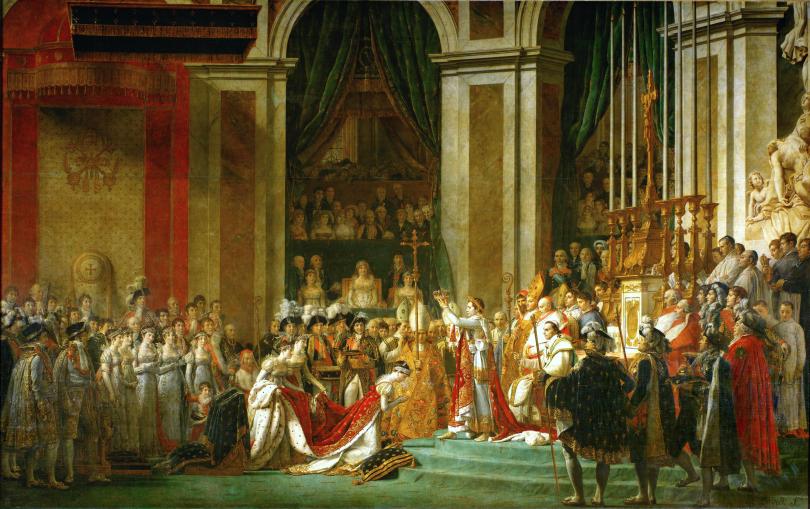
Napoleonic Christmas

It’s Christmas Week!  And what a glorious week it is.  It’s been raining persistently in South Carolina since Sunday morning, but I’m enjoying the coziness of the hygge—warm coffee and lazy reading.

PragerU had a little video up this morning from historian Andrew Roberts about Napoleon.  It’s an interesting take on the not-so-short French emperor—an apologia, really (for those that prefer reading—as I often do—to watching videos, here is a PDF transcript).

Roberts argues that Napoleon was not the necessary precursor to Hitler, et. al.; rather, Napoloen was “sui generis“—a man unto himself.  While I believe the ideas of the French Revolution did unleash the totalitarian forces of Hitlerism, Stalinism, Maoism, and all the rest—a murderous, bloody Pandora’s Box—I’ve never considered Napoleon among their ranks.

Read More »

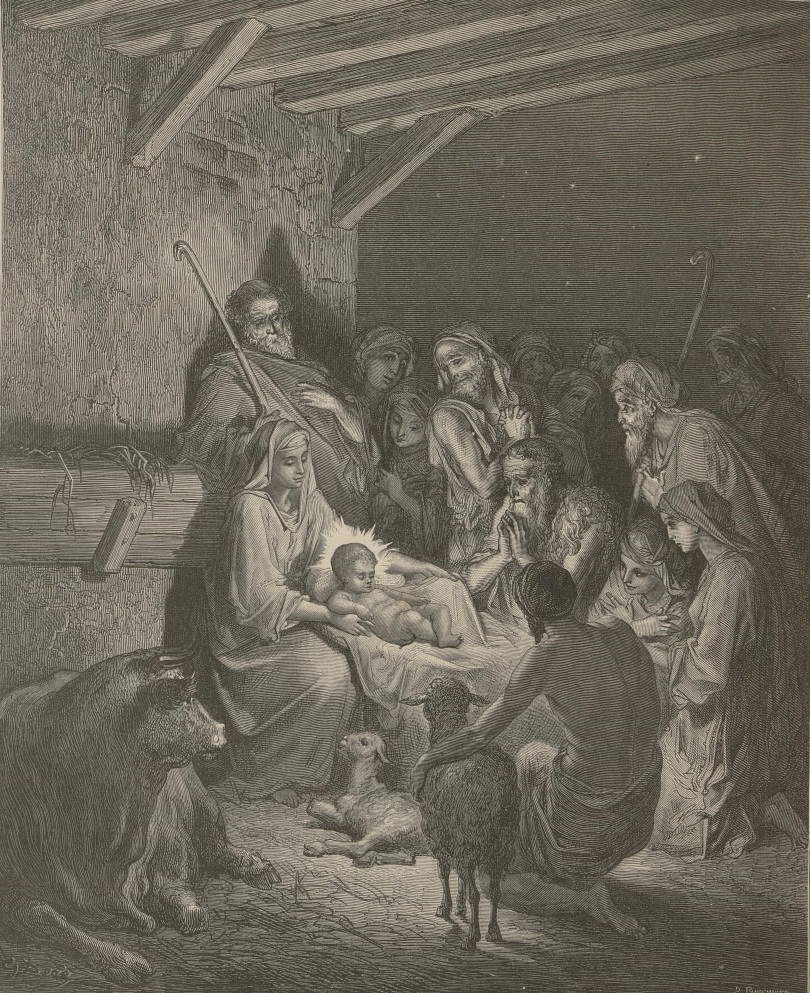
Away in a Manger

The political scene still strikes me as incredibly boring—a sad testament to how jaded our politics have become, that we don’t get more riled up about impeachment proceedings.  It’s also a testament to the perfidy and disingenuous of congressional Democrats:  everyone knows the articles of impeachment are a politically-motivated farce and, to use GEOTUS’s preferred name, a “witch hunt.”

It’s sad that President Trump will be impeached, and I’m nervous that squishy neocons and RINOs in the Senate will betray him.  That would be the ultimate kick in the teeth—the elites backhanding their own citizens for daring to challenge their aloof rule.  I shudder to contemplate the fall out should conviction and removal in the Senate occur.

Until then, it’s all a distracting media circus, with the Democrats and press engaged in a frenzied dance around the cannibal’s pot.  Even then, it manages to be incredibly dull.  At least actual cannibals have some conviction.

All that said, let’s look at more Christmas carols!  Next up:  “Away in a Manger.”

Read More »

SubscribeStar Saturday: O Holy Night

Today’s post is a SubscribeStar Saturday exclusive.  To read the full post, subscribe to my SubscribeStar page for $1 a month or more.  For a full rundown of everything your subscription gets, click here.

The unofficial theme of the blog this week has been Christmas music.  What better way to cap off the week than with a post about the best Christmas song ever written, Adolphe Adam’s “O Holy Night“?

Like its cousin “Silent Night,” the story of “O Holy Night” involves a village’s church organ.  In 1843, the church organ of the French village of Roquemaure had recently been renovated, so the parish priest asked a local wine merchant and poet, Placide Cappeau, to write a poem to commemorate the occasion.  That poem, “Cantique de Noël,” would be set to music a short time later by composer and music critic Adolphe Adam—and Christmas history would be made.

To read the rest of this post, subscribe to my SubscribeStar page for $1 a month or more.

Size Matters

The big Christmas concert has come and gone.  It was pretty wild week, but now we’re on the downward slope.

When I first started doing these little Christmas concerts, we had maybe 100 students at the school.  There were no dance classes, and drama was kind of tacked onto English.  The focus was on the music, and in such a small environment, everything was simpler:  setup, planning, logistics.  It was all accomplished more informally.

Now the student body has nearly tripled in size.  With that growth has come added complexity.  Put it all in a gymnasium during basketball season—the sport third to only baseball and hockey for numbers of games and practices—and it makes for a herculean task.

Read More »

TBT: “Silent Night” turns 200

The Christmas season—and a pending Christmas concert—has seen me waxing melodic on the holiday’s wonderful music.  As such, today’s TBT is predictable (if anyone were interested in predicting such a thing):  it’s a look back at a short post about the 200th anniversary of the classic carolSilent Night.”

Like “Joy to the World,” “Silent Night” is one of my favorite carols.  It’s sweet and simple, but can also be rocked up (the 6/8 time signature and three-chord structure lend the tune to bluesy interpretations, and I’ll occasionally slide in some blue notes when playing the song instrumentally).

It looks like it won’t make it into our Christmas program this year—a rarity—but I’ll be sure to make room for it next year.  Its more operatic cousin, “O Holy Night,” will be our finale, though.  I’ve always linked the two tunes mentally because of their similar names and themes (and they’re both in 6/8).  “O Holy Night” really lends itself to a hard rock interpretation, as my annual “O Holy (To)Night” cover version attests.

Without further adieu, here is Christmas 2019’s “‘Silent Night’ turns 200” (now closing in on 201):

One of my favorite Christmas carols, “Silent Night,” turns 200 this Christmas season.

The carol was originally written as a poem in the aftermath of the Napoleonic Wars by a village priest, Joseph Mohr, in the village of Oberndorf, Austria, in 1816. Two years later, Mohr approached the town’s choirmaster and organist, Franz Xaver Gruber, to set the poem to music. Gruber agreed, and the carol enjoyed its first performance to a small congregation, which universally enjoyed its simple sweetness.

Since then, the humble hymn has spread far and wide, and is probably the most recognizable Christmas carol globally today. It’s been covered (likely) thousands of times; it’s certainly become a staple of my various Christmas performances.

This simple, sweet, powerful carol beautifully tells the story of Christ’s birth, as well as the import of that transformative moment in history, that point at which God became Flesh, and sent His Son to live among us.

As much as I enjoy classic hard rock and heavy metal, nothing can beat the tenderness of “Silent Night”—except the operatic majesty of “O, Holy Night,” objectively the best Christmas song ever written.

Merry Christmas, and thank God for sending us His Son, Jesus Christ.