TBT: The Influence of Christianity on America’s Founding

My high school American history classes are getting into the American Civil War—or the War of Northern Aggression, or the War for Southern Independence, or whatever you’d like to call it—this week, so we’ve been talking about beginnings a good bit.  The Civil War had deep roots that go back not just to the 1840s or 1850s, and not even to the Constitutional Convention in 1787.

Indeed, the fundamental division dates back to the English Civil War in the 1648, when the Puritan Roundheads under Oliver Cromwell ousted and beheaded Charles I, and established the English Republic (which—the English having little taste for radicalism or dictatorships, fortunately collapses in 1660 with the restoration of the Stuart monarchs).  Loyalists to the king and the monarchical order were the aristocratic Cavaliers.  Those same Puritans of East Anglia settled heavily in Massachusetts following the Pilgrims’ famous landing at Plymouth Rock, and the Cavaliers—in body and spirit—dominated the tidewater plantations of the South.

Read More »

Lazy Sunday XXII: Reading

Summer is drawing to a close, and with it free time for reading.  One of my enduring frustrations as a student was the lack of time to read what I enjoyed (even though my English and history courses in high school and college often presented me the opportunity to read many excellent works).

As an adult, the situation has improved only marginally, as work often eats up most of my time, both during the day and at night.  As a blogger and politics junkie, I also tend to read vast quantities of quick news stories and opinion pieces, while neglecting longer-form works that would be more satisfying.

Reading short articles on the Internet is like scarfing down a box of Cheez-Its:  it’s enjoyable in the moment, but it just raises my blood pressure and leaves me unfilled: an unhealthy indulgence in large quantities.  A good book, or even a well-crafted short story, is like a steak dinner:  filling, satisfying, and sustaining.

I’ve released two reading lists, in 2016 and 2019 (the full 2019 list is a SubscribeStar exclusive), but I thought this Sunday I’d feature some recent posts on books, short stories, and pieces I’ve enjoyed:

  • McClay & Sheaffer on American History” – This piece examines a new American history textbook from Wilfred McClay, who once mailed me a copy of the Italian novel The Leopard after I wrote to him (he’d written about the book for a conservative publication).  My girlfriend’s father actually owns a copy of this book, and I had an opportunity to flip through its glossy pages while in New Jersey.  My post offers up an analysis of the state of American history education.
  • Summer Reading: The Story of Yankee Whaling” – I was still in the process of reading The Story of Yankee Whaling, a fascinating account of America’s whaling heyday aimed at younger readers, when I wrote this post.  It was a charming—and hugely informative—book, which gave me access to an entire forgotten industry and its role in American history.  The book dealt with its subjects sympathetically and unapologetically; there is no hand-wringing about whether or not it was right to kill whales for their blubbery oil.  Instead, it simply detailed—and what thrilling detail!—the tough lives of whalers, and the gory particulars of their bloody, necessary trade.
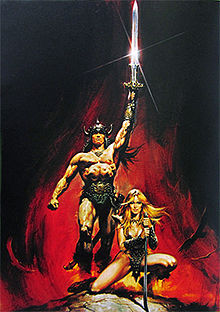
  • Reblog: Conan the Southerner?” – This post dealt with an interesting piece from the Abbeville Institute, a Southern history website with a strong Jeffersonian streak.  The original post details the influence of rural Texas and its mores upon the creation of the Conan the Barbarian character.  Strength, honor, integrity, hard work—these are the hard-won morals of the titular barbarian king, and they are deeply rooted in the Southern tradition.
  • Rudyard Kipling’s ‘The Mother Hive’” – my History of Conservative Thought class read this chilling short story one morning as an icebreaker.  It’s about the insidious infiltration of a dangerous foreign element into a proud but aging beehive.  The infiltrator—a wax-moth—fills the heads of the young bees with abstract claims of a utopian society, all-the-while laying its eggs and creating great strains on the hive.  Fewer healthy bees are born, much less willing to work to support the colony, so more and more work is shouldered by a diminishing number of healthy workers.  It all ends in a fiery blaze, with hope for the future, as a young Princess and her loyal retinue escape to rebuild.  Written in 1908, the story sounds like it describes the modern West today—a terrifying warning that, I fear, we have not heeded.

So, there you have it.  A little extra summertime reading for you before the academic year resumes.  Teachers at my school report back in the morning, and students are in the following week.  Yikes!  Where did the summer go?

Enjoy your Sunday,

TPP

Other Lazy Sunday Installments:

Friday Night Recommendation: The Abbeville Institute

The Internet is a vast place, with a niche for everything.  It’s interesting to consider how much import users put into their own little online worlds—they know everything about what makes their little corner of the web tick, or click—but, if you’re outside of that niche, it’s almost like it doesn’t exist.  It’s like planets filled with intelligent life that cannot perceive or know one another, except when one spunky interstellar craft stumbles upon a distant world.

Regardless, this phenomenon certainly exists online, which explains, in part, why some Americans know everything wicked the progressive Left is unleashing upon our world, while others are blissfully unaware of their impending dooms.  One website that is doing yeomen’s work on our side is the Abbeville Institute.

Read More »

The New Great Awakening

I just wrapped up the last session of my History of Conservative Thought course.  We spent the last day unpacking the “Introduction” to Richard Weaver’s Ideas Have Consequences (you can read my summary here).  We also discussed tax policy (an unexpected and pleasant pre-class discussion) and spending, and completed the “Debt Fixer” simulation from the Committee for a Responsible Federal Budget.

Towards the end of class, I also briefly touched upon the 2016 election of Donald Trump to the presidency.  I spoke extemporaneously, and largely touched upon the “forgotten men and women” theme—that is, that legions of voters perceived themselves to be overlooked, ignored, or even denigrated by the political and cultural arrangements of our time, and latched onto Trump’s candidacy as the best vehicle for expressing this sense of alienation.

At the top of my mind was a series of posts from my good e-pal photog, proprietor of the excellent blog Orion’s Cold Fire.  photog has a long post up entitled “The Great Awakening” that details the slowly dawning realization that millions of Americans were bamboozled by their political elites.  I highly encourage you check it out.

That essay comes on the heels of another photog post, one of his “American Greatness Post of the Day” features.  That feature links to a long essay by Matthew Boose, “The Great Excluded and Our Nationalist Future,” which casts our current political and cultural battles as one between the champions of multiculturalism versus the traditional American patriots.  The former believe America is “open to everyone”—except, of course, the benighted conservative Americans of flyover country—while the latter believe there is more to America than a set of abstract principles, and that our borders and traditions mean something.

photog and I both exist in “the thin space between the lumpen masses of the civic nationalists and the bomb-throwing bad-thinkers of the Post America far right,” as he aptly puts it.  We don’t accept the full-blown claims of the far/Alt-Right that America is doomed and our national heritage is irredeemable, nor do we think that one’s race is a determining factor in one’s ability to be a part of the American experiment.

But we also no longer believe that just getting the policy right will solve our problems.  As Weaver diagnosed in Ideas Have Consequences, our problems run deeper, to the level of ideas, but also to the metaphysical.  As Michael Knowles has said multiple times, our essential questions are not truly political, but are theological; that is, they are questions about who we are, what we believe, and what our place in the universe is.

Thus, we have another Great Awakening in American political and cultural life, a period during which we reexamine these fundamental questions.  For too long the radical, progressive Left has dominated how these theological questions are approached and considered.  The time has come for the Right to take its message to the people, and to restore a more traditional, satisfying, and godly sense of man and his place in Creation.

Ideas Have Consequences – Introduction

Tomorrow is the last day of my History of Conservative Thought class for the summer term.  It was a fun course to run, though if I offer it in the future, I’m hoping to firm it up and make it a bit more organized, with some lecture slides to go along with the document readings.

To end the course, students are reading the “Introduction” to Richard Weaver’s Ideas Have Consequences (1948), one of my favorite books of all time.  I reread the introduction before the start of every school year, especially if I’m teaching Philosophy, as it helps remind me why knowledge and learning are important.

They’re writing short papers about the “Introduction,” which we’ll discuss in class tomorrow.  To aid them—and, hopefully, to convince you to read Ideas Have Consequences yourself—I’m briefly summarizing Weaver’s ideas in this post.

Weaver starts his book declaring that it “is another book about the dissolution of the West.”  He argues that due to the “widely prevailing Whig theory of history,” modern man has come to believe that history is always proceeding in an upward direction—that is, that things are always getting better.

Weaver disagrees, of course, arguing that “modern man has become a moral idiot.”  He laments that, not only are people able to agree on the facts of their situation, they are utterly incapable of recognizing their own fallen state.  Despite that moral idiocy, man “has been not only his own priest but his own professor and ethics, and the consequence is an anarchy which threatens even that minimum consensus of value necessary to the political state.”  Put another way, people have decided subjectively that they know right and wrong, independent of any transcendent moral order or God, and the results are personal and political chaos!

Weaver goes on to recount the horrors modernity and self-deification have wrought:  massive wars, ruined cities, lost lives, and a general, nagging sense of powerlessness.  Weaver references specifically the destruction of the Second World War (though not by name), suggesting that the optimistic Whiggish interpretation of history is, on its face, verifiably false.

So, who is to blame for this general malaise in Western civilization?  According to Weaver, the “best representative of change… over man’s conception of reality” is William of Occam.  Most readers will know Occam from the concept of Occam’s Razor, the notion that the simplest explanation is usually the correct one.

Weaver, however, focuses on Occam’s doctrine of nominalism, a doctrine that “denise that universals have a real existence.”  In other words, there are no true universal, transcendent ideals—justice, mercy, grace, virtue, etc.—and no metaphysical Truth or higher power.  Further, nominalism “banish[ed] the reality which is perceived by the intellect… to posit as reality that which is perceived by the senses,” setting man “on the road to modern empiricism,” the idea that only that which we experience is “true.”

Weaver proceeds to take us down that road:  nature comes to be seen as fully intelligible, merely a set of “rational mechanism[s]” to be uncovered and understood; man comes to believe that does suffer from original sin, but is rather a perfectible being; any flaws from which humans suffer are necessarily due to their environment, not their own choices.

Most significantly, belief in God and religion—a higher Form of Truth that binds together the cosmos—become reduced to “‘humanized’ religion,” like deism (the belief in a Creator that set the universe into motion, but who never intervenes with His Creation).  These reduced religions are little more than venerable institutions with the veneer of respectability, but which succumb to the materialism of the humanist.

Soon humans lose all free will, becoming the materialist machines of nature like any other animal.  Institutions crumble, which man “rationalizes with talk of emancipation,” believing himself to be free from the restrains of the benighted past.

An interesting point that Weaver makes is that, in order to feel some semblance of the old virtues—ideals that men sense they should uphold, but which they cannot understand or articulate—they fight wars with “increased frequency,” invoking ideas like justice, honor, and valor in service to materialist ends.

Of course, there are those who champion modernity.  These “apostles of modernism,” as Weaver calls them, “usually begin their retort [to Weaver’s position] with catalogues of modern achievement, not realizing that here they bear witness to their immersion in particulars,” as opposed to transcendentals.  That is the source of my own critique of capitalism, the best socioeconomic system that materialist modernism can offer.  Weaver notes that many great civilizations have shown with effervescent splendor in their dying gasps of relevance, so merely having beautiful, ingenious stuff doesn’t mean a civilization isn’t dying.

Perhaps the best passage from Weaver’s “Introduction” is what I call “Weaver’s drunk,” located on page 15 of the 1984 paperback edition linked here.  Weaver argues that the material wealth and comfort of modernity holds within it its own destruction—the more comfort we have, the less willing we are to do the work necessary to maintain it.  Weaver compares this situation to that of the drunk who is so addicted to his drink, he is incapable of doing the work necessary to sustain his addiction.  He may succeed for a time, but the more besotted he becomes, the less capable he is.

There are so many nuggets of wisdom and Truth in just the “Introduction” to this work, and I haven’t touched on all of them.  I encourage everyone to read through the full “Introduction”—and the entire book—as soon as possible.  Reading it now, some seventy-one years after its original publication, is sobering due to its prophetic nature.  The situation Weaver described has not improved.  It is imperative, now more than ever, that we consume Weaver’s work and begin pushing for a revival of religious belief and a traditional view of the cosmos, and our place in it.

 

Rudyard Kipling’s “The Mother Hive”

To start yesterday’s History of Conservative Thought class, I had students skim through Rudyard Kipling’s 1908 short story “The Mother Hive.”  I stumbled upon the reading in our class text, Russell Kirk’s The Portable Conservative Reader.

It is a grim little fable that warns about the perils of progressivism infiltrating a proud but weakened nation.  In the story, a deadly wax-moth sneaks into a large but bedraggled beehive during a moment of confusion.  She quickly steals away to the cell of the youngest bees, who have yet to take their first flight.  There, she fills their impressionable heads with gentle words and promises of a glorious future, all while covertly laying her eggs.

One young bee, Melissa, who has just returned from her first flight, is suspicious of the beautiful stranger’s soothing words, but the wax-moth plays the victim and insists that she’s only spreading her “principles,” not the eggs of her hungry future children.

Read More »

Reblog: Conan the Southerner?

I’m heading back from a glorious week in New Jersey today to return to my beloved South Carolina.  It was serendipitous, then, that I read this piece from the Abbeville Institute, “Conan the Southerner?

I recently stumbled upon the Abbeville Institute while doing some research on John Randolph of Roanoke for my History of Conservative Thought course.  It’s an institute dedicated to Southern history, and to presenting a more nuanced interpretation of the antebellum South.  Their blog features some dense, interesting bits of Southern history (I’m reading through a long-ish essay on “The South Carolina Federalists” that has taught me a great deal more about my State’s history in the period of the Early Republic), and champions constitutionalism, limited government, and a traditional way of life.

The Conan piece is an excellent—and fun—analysis of the Conan the Barbarian series of low-fantasy pulp novels, focusing on Conan creator Robert E. Howard and his Jacksonian roots in Texas.  The post’s author, Marine Corps Lieutenant Colonel Joel T. Leggett, argues that Howard’s Conan is a modern example of American mythology, one with distinctively Southern roots.

The essay is also useful as it offers a clear definition of Jacksonian principles, via historian Walter Russell Meade.  As we continue to attempt to define “populism” in the midst of Trumpian nationalism, I always relish a concise definition of the principles of the godfather of American populism, Andrew Jackson.

Meade, per Leggett, defines these principles as “self-reliance, equality, individualism, financial adventurism, and courage.”  Leggett then proceeds to demonstrate how the character of Conan embodies these qualities, and that Howard was chiefly concerned with promoting individual liberty.

That part of the essay is, for me, the most useful and enjoyable.  The qualities are certainly deeply American—and deeply Southern.  The “equality” is not the banal egalitarianism of our present age, which seeks to level off everything and everyone into conformist blandness, but the old equality of opportunity, in which every man can forge his destiny.

Tied with that is the notion of “financial adventurism.”  Leggett notes that Meade argued that “Jacksonians view money and wealth as a means to finance a lifestyle of self-definition.  The value of wealth is to enable you to be you, to live life to its fullest.”  This notion of financing “a lifestyle of self-definition” accords with my own long-term financial goals.  It also seems to be the direction that “free” speech is headed:  to exercise this right truly, one must have financial independence from social justice scolds.

And this, for Leggett, seems to be the core of Conan’s Southern Jacksonianism:  a desire for individual liberty, for a man to be able to live his life on his own terms.  Howard might have wrapped that ideal in a burly barbarian warrior-king who rose to rule a kingdom due to his own prowess, but it’s one every American should aspire towards.  In this way, Leggett makes a compelling case for Conan the Barbarian as a valuable piece of American mythology.

Southern Conservatism: John Randolph of Roanoke

MAGA Week 2019 is one week away!  Get ready to celebrate America all week long!  This year, all MAGA Week posts will be exlusive to my SubscribeStar page, so subscribe today!  $1 a month gets you full access to all posts, including new content every Saturday.

As my History of Conservative Thought course rolls on, I’m learning more about the forgotten byways and overgrown, stately ruins of the various branches of conservatism.  Students this week are reading a couple of documents from John Adams and Alexander Hamilton, the two founders of the Federalist Party, and key to the passage of the Constitution.  Hamilton, the author of the bulk of the pro-ratification Federalist Papers, also created the financial system upon which the United States functions today.

Hamilton and Adams have both enjoyed renewed interest in recent years, Hamilton due to the smash Broadway musical about his life, and Adams from a critically-acclaimed HBO series (one that, sadly, takes some unnecessary artistic license with the past).  In the case of Hamilton, American history students are often enthusiastic to get to him in my AP US History course, and Hamilton mega-fans often know more about the first Secretary of Treasury than I do.

But we’re reading a speech from another important figure from American history, albeit one largely forgotten:  John Randolph of Roanoke.

Read More »

McClay & Sheaffer on American History

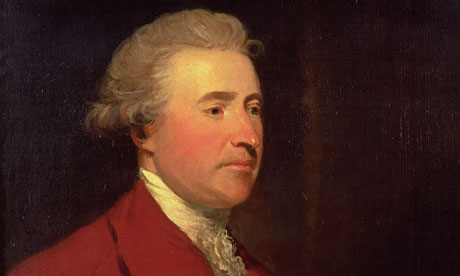
It’s been a history-packed week for yours portly.  Tuesday morning my History of Conservative Thought students and I continued our examination of Edmund Burke, the great Member of Parliament and godfather of Anglosphere conservatism.  Burke foresaw the radical nature of the French Revolution well before the guillotining began.

On Thursday, I had the opportunity to substitute a colleague’s summer course, Terror and Terrorism, a popular course he’s run for several summers now.  Students in that course read excerpts from John Jacques Rousseau’s Social Contract (PDF, the same one the students read, in part), a political philosophy perhaps the polar opposite of Burkean traditionalism.

Rousseau’s theory of the “general will” is, I would argue, responsible for the radicalism of the French Revolution—which wrought the Bolshevik (Russian) Revolution, the Maoist revolutions of the Great Leap Forward and the Cultural Revolution, and on and on.  There’s a reason one of my Conservative Thought students claims that “the French Revolution was the first Communist revolution,” by which he means it contained within it the collectivist ideals of Rousseau’s general will.

But I digress.  In the spirit of all that historical musing, I thought I’d recommend two pieces I’ve read recently about the historian’s craft, and the dangers of applying a progressive lens to our understand of the past.

The most recent piece is a post from Practically Historical, entitled “Expunging Our Past.”  Gordon Sheaffer‘s pithy historical posts are enlightening and engaging, and fits with an argument he makes in this post:

“History should be popular.  Our past must be understood by the citizenry- historical studies targeted only at academics cannot be how we measure the discipline.  There is a way to make history insightful and enjoyable.”

Amen!  One of my great frustrations while in graduate school was the ponderous relativism inherent in the jargon-laden, hyper-focused monographs we were forced to read.  I certainly acknowledge the usefulness and necessity of thoroughly researching a small corner of our historical experience, but what happened to the grand, sweeping histories of the eloquent generalist?

When I was a younger man, I relished reading accessible (but, nevertheless challenging) works of history, especially broad overviews of a time period or nation.  It’s fascinating to learn about the minutiae, to be sure, but a good historian should be able to give the broad strokes and the colorful details.

But the real point of Sheaffer’s piece is that the progressive revisionists are attempting to reduce American history to a Marxist (and Manichean) story of class struggle.  That trend dates back to Progressive Era historian Charles Beard, who famously argued that the Constitution was merely an economic arrangement that benefited the wealthy Framers, protecting their wealth and privilege at the expense of the common man.

Archfiend (and political scientist, not historian) Howard Zinn continued that theme in the popular-but-inaccurate A People’s History of the United States, which has sadly been adopted in many school districts across the country as an American history textbook.  Zinn presented American history as a procession of plutocrats exploiting the working people and racial minorities for personal aggrandizement, rather than the rich tapestry of hard-working yeoman and laborers who really built the country under the protective auspices of the Constitution.

Just as Burke was the antidote to Rousseau, so historian Wilfred McClay serves as a corrective to the partisan excesses of Zinn.  He’s written a new textbook, Land of Hope, which strives to be a “well-written and appealing history of the United States that, while being informed by the best scholarship, does not lose sight of the big picture about our nation’s admirable and exceptional history.”

McClay argues that without a proper foundation in our own nation’s history, we are unable to govern ourselves.  Quite true:  I would argue that a large part of our current national discontent and brutal culture war is that we have two very different visions of America.  The one is an America that is strong, liberty-loving, fair-minded, and great; the other is of an America that is exploitative, prejudiced, greedy, and callous.

That’s why I’ve long argued that simply requiring students to take an American history course to graduate from high school and/or college isn’t enough to move the needle.  It does no good if the course is a collection of progressivist pabulum or a crash-course in victim studies.  There’s no guarantee your high school history teacher—likely certified from a progressive education program—will actually teach American history fairly or accurately, much less your community college adjunct.

There are a ton of choice tidbits in this interview McClay gave to Encounter Books, the publisher of Land of Hope, but here’s a good excerpt on Zinn:

Encounter: Howard Zinn said that his goal in writing A People’s History of the United States was to create a “quiet revolution” in our understanding of American history. Did he succeed in that endeavor?

McClay: Yes and no. He succeeded in unsettling many aspects of the consensus in which American historical writing was embedded. He did this to an astonishing degree, particularly since he was not himself a historian. But he did not succeed in providing a substitute account of American history that goes beyond simplistic melodrama. Most honest historians will acknowledge that, even if they are sympathetic to Zinn’s leftist politics.

Encounter: Why was Zinn’s account so popular?

McClay: It is engagingly written, and gives a simple-minded, moralistic, account of the past as the struggle between the white hats and the black hats, the Children of Light and the Children of Darkness. For some people, including many Americans who have felt disillusioned by our national flaws, this has been irresistible.

He also rails against the AP US History exam, which used to the “gold standard,” as he puts it, but which has suffered due to constant “tinkering with the exam, and interjection of themselves into what teachers actually teach in AP courses.”  I teach APUSH, and what McClay writes is absolutely true.  It’s bad enough teaching to a test every year—you don’t have the opportunity to luxuriate in the warm waters of historical detail—and it’s worse when the College Board tries to alter the exam every five minutes.

To close, one more powerful quotation from McClay:

Students should learn that history is not merely an inert account of self-explanatory details, but is a task of reflection that calls to our deepest sense of our humanity. And learning our history, the history of our own country, is part and parcel of learning who we are, and learning about the society of which we are already a part.

Again, I say, amen!

History of Conservative Thought Update: Edmund Burke

A bit of a delayed post today, due to a busier-than-usual Monday, and the attendant exhaustion that came with it. The third meeting of my new History of Conservative Thought class just wrapped up, and while I should be painting right now, I wanted to give a quite update.

Last week, we began diving into the grandfather of modern conservatism, Edmund Burke. Burke prophetically saw the outcome of the French Revolution before it turned sour, writing his legendary Reflections on the Revolution in France in 1789 as the upheaval began. Burke argued that the French Revolution ended the greatness of European civilization, a Europe that governed, in various ways, its respective realms with a light hand, and a sense of “moral imagination.”

To quote Burke reflecting on the Queen of France:

“I thought ten thousand swords must have leaped from their scabbards to avenge even a look that threatened her with insult. But the age of chivalry is gone. That of sophisters, economists, and calculators, has succeeded; and the glory of Europe is extinguished forever. Never, never more, shall we behold that generous loyalty to rank and sex, that proud submission, that dignified obedience, that subordination of the heart, which kept alive, even in servitude itself, the spirit of an exalted freedom. The unbought grace of life, the cheap defence of nations, the nurse of manly sentiment and heroick enterprise is gone! It is gone, that sensibility of principle, that chastity of honour, which felt a stain like a wound, which inspired courage whilst it mitigated ferocity, which ennobled whatever it touched, and under which vice itself lost half its evil, by losing all its grossness.”

What a powerful excerpt! The “sophisters, economists, and calculators,” indeed, reign in the West. What Burke was driving at here was that the rationalistic, abstract bureaucrats who would abandon tradition in their quest for a perfect society would sacrifice everything that made their country great, and life worth living.

Burke was also arguing that there is more to obedience to a government or king than the mere threat of power. People are invested in their country and society—and willing to submit to authority—because of organic culture from which it grows. Uprooting the great tree of tradition in favor of abstract foundations merely destroys the tree, and plants its seedlings in shallow ruts of stone. What grows will be anemic and pitiful by comparison.

Volumes could and have been written about Burke, but I’ll leave it here for now. Next week we’re getting into the development of Northern and Southern conservatism, which should make for some pre-Independence Day fun.